
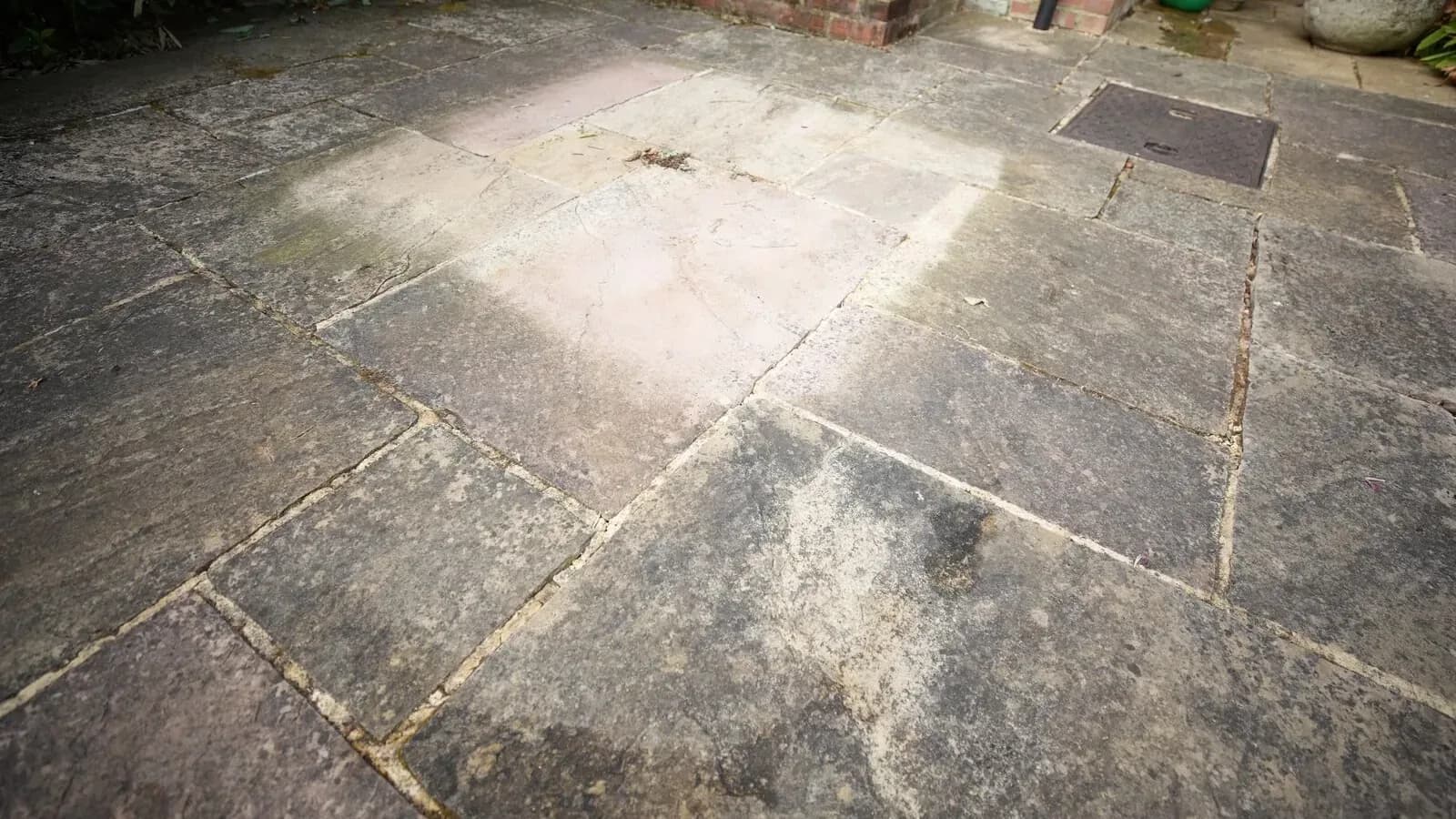
A patio can become surprisingly slippery in winter even when the slabs look reasonably clean. The usual causes are algae or other biological growth, persistent moisture, fallen leaves and, during cold spells, frost or ice. Shaded paving dries slowly, giving growth more opportunity to develop. Smooth or worn surfaces can feel especially slippery when wet.
The right response depends on what is making the patio slippery and what it is made from. Removing growth and keeping drainage clear can reduce slip risk, but cleaning will not prevent ice from forming. This guide explains what to look for, what to avoid and when professional patio cleaning makes sense.
Why Does a Patio Get Slippery During Winter?
Winter brings several conditions together: shorter days, lower temperatures, frequent rain and less sunlight on the paving. Water can remain on the surface for long periods. Dirt and organic debris build up, while algae already present on slabs can make a damp patio feel slick underfoot.
A slippery surface is not always caused by one problem. A north-facing patio may have a thin film of algae, wet leaves around the edges and water gathering in a low spot. Understanding the combination matters more than simply reaching for a stronger cleaner.
How algae creates a slippery film
A green tint or thin film on paving is a common sign of biological growth. Algae often thrives in damp, shaded places, including areas beneath pots, along walls and around joints. It may be more noticeable after rain, but the growth can be present before the whole patio looks green.
If the surface becomes slick whenever it rains, algae is one possible explanation. However, the colour of the slab alone cannot confirm the cause: staining, dirt and the paving finish can look similar.
Moss and lichen on paving
Moss tends to establish itself in joints, cracks and persistently damp edges. It can trap moisture and make walking areas uneven or less predictable. Lichen often appears as firmly attached patches and may be harder to remove without specialist consideration. Persistent dark spots are not necessarily moss; our guide to black spot on a patio explains the difference.
These growths are not identical and should not be treated as though one cleaning method suits them all. The patio material, jointing and condition of the surface should guide any cleaning decision.
Wet leaves and organic debris
Leaves can form a slick layer when wet or decomposing. They also hide algae, uneven slabs and puddles underneath. Removing leaves regularly is a simple way to identify developing problems and keep commonly used routes clearer.
Why Is My Patio Slippery When Wet?
Rain changes the amount of grip available between footwear and paving. Where a surface is very smooth, contaminated by growth or coated with dirt, water can make that loss of grip more noticeable. This is why a patio may feel normal on a dry afternoon and hazardous the next morning.
The UK Health and Safety Executive identifies contamination, flooring, cleaning, environmental conditions and footwear as interacting factors in slips. There is rarely a single universal fix. A clean patio may still need attention if its surface finish or drainage contributes to poor grip.
Can a Patio Be Slippery Without Looking Green?
Yes. Early biological growth can be thin and difficult to notice. Rainwater, leaf residue, ice and a naturally smooth paving finish can also contribute without obvious green discolouration. Look for a pattern: does slipperiness appear in one shaded corner, across the whole patio after rain, or only during freezing weather?
Do not test a doubtful area by deliberately stepping onto it. Inspect it from stable ground and keep children, visitors and pets away from the affected route until the issue has been assessed.
Which Patio Surfaces Become Slippery in Winter?
Different paving products have different surface textures and finishes. Their condition also changes over time. A cleaning method suitable for concrete may be inappropriate for certain natural stones, delicate joints or a coated surface.
Porcelain patio tiles
Outdoor porcelain is sold in a variety of finishes. Some products are designed with textured surfaces for external use, but the actual wet-weather performance depends on the specific tile. Dirt or algae can still accumulate on textured porcelain. Check the manufacturer's guidance rather than assuming every porcelain patio behaves the same way.
Natural stone patios
Natural stone varies considerably in texture, porosity and sensitivity. Some stones can be marked or damaged by unsuitable products or aggressive cleaning. If you do not know what stone was installed, identifying it before treating stains or growth is the safer starting point.
Concrete slabs and block paving
Concrete paving and block paving can collect dirt and algae, particularly near shaded joints. Powerful washing can dislodge jointing material or affect vulnerable surfaces when used incorrectly. An assessment should include both the paving and the joints, not only visible green areas. The same applies where a block-paved driveway meets the patio and shares its shade.
How Do Frost and Ice Change the Risk?
They add a second hazard that cleaning cannot remove. Water left in puddles or on the paving can freeze when temperatures drop, and ice is a separate problem from algae. Removing algae may improve conditions during wet, non-freezing weather, but it does not stop frost forming or make the patio safe during icy conditions.
Avoid washing a patio immediately before a frost. Fresh cleaning water can remain in joints or low spots, creating an additional freezing risk. In icy weather, restrict access to affected areas and follow appropriate winter maintenance measures for the site.
Where Does Slippery Growth Usually Appear?
Start by looking at the places that stay wet longest. North-facing patios, areas shaded by fences or buildings, spaces beneath garden furniture and routes beside walls may dry more slowly than open paving. Steps, slopes and transitions between surfaces deserve extra attention because a loss of footing there can have more serious consequences.
Also check whether water pools after rain, whether leaves gather against the house and whether nearby planting restricts airflow. If standing water is persistent, cleaning alone may not address the underlying drainage issue.
What Should You Do When Your Patio Becomes Slippery?
First, avoid using the affected patch and make sure other people know it is slippery. Clear loose leaves and movable debris only from a stable position, without walking across the suspect area. Check weather forecasts before planning any further work, especially when freezing temperatures are possible.
If the area is needed for daily access, consider an alternative route until the problem is resolved. For steps or a frequently used entrance, a professional assessment may be more appropriate than experimenting with cleaners.
How Can You Clean a Slippery Patio Without Causing Damage?
The safest cleaning method starts with identifying the paving material, the type of growth and any manufacturer or installer instructions. Some surfaces tolerate routine gentle maintenance; others need specialist equipment, products or techniques. There is no single household solution that is suitable for every patio. Our guide on how to clean green off a patio covers the cleaning itself in more detail.
Avoid applying unverified chemical mixtures, mixing cleaning products or assuming that a stronger solution produces a better result. Do not rely on abrasive scrubbing or high-pressure spraying without checking whether the finish, pointing and surrounding plants can tolerate it.
When pressure washing is appropriate
Pressure washing can remove surface contamination in suitable circumstances, but it is not automatically the best choice. An inappropriate nozzle, pressure or technique can affect joints, coatings and vulnerable stone. Professional cleaning should select a method according to the actual surface rather than treating every patio in the same way.
Why household chemicals need caution
Do not assume that bleach or another household cleaner is suitable simply because it is widely used. Products can be incompatible with particular paving, metal fittings, plants or drainage arrangements. Follow product and surface manufacturer instructions and avoid chemical mixing.
When Should You Book Professional Patio Cleaning?
Professional help is worth considering when algae returns repeatedly, several areas are slippery, access is awkward or the paving is expensive or delicate. Steps, slopes and main access routes also justify a more cautious approach. A surface assessment can identify suitable cleaning methods and whether there are separate drainage or maintenance issues to address. Chiltern Surface Co's patio cleaning service covers natural stone, porcelain and concrete paving in a range of conditions.
For slippery paving in the colder months, Chiltern Surface Co offers winter cleaning for slippery paths, steps and patios across Buckinghamshire, Oxfordshire and Berkshire. Each visit starts with an assessment of the surface. Slippery growth is then removed with a method suited to the material, and where the surface and the weather allow, the Chiltern EverGuard™ Treatment is applied to help slow regrowth. Results depend on the surface and the weather, and no treatment removes every slip risk.
If your patio stays slippery through the winter, book a free site visit and we will look at the paving, the joints and the routes you use most.
How Can You Reduce Algae and Moss Returning?
No patio stays clear of growth for good, especially in a shaded garden. However, practical maintenance can help slow accumulation and make changes easier to spot. Remove wet leaves regularly, keep drainage routes unobstructed, move pots or furniture where practical to inspect beneath them and arrange appropriate cleaning when growth begins to return.
Some patios need more frequent attention than others. A shaded side patio used every day may benefit from checks throughout autumn and winter, whereas a sunnier patio could remain clear for longer. The best schedule depends on local conditions, material and previous growth.
Chiltern EverGuard™ and planned winter visits
Where the surface and conditions are suitable, Chiltern Surface Co follows cleaning with the Chiltern EverGuard™ Treatment to help slow the return of slippery growth. Chiltern EverGuard™ inhibits regrowth, typically for two to three years, depending on the surface and its environment. It helps reduce regrowth; it does not prevent ice or remove the need for periodic inspection and maintenance.
For recurring problems, winter cleaning can be planned as a single visit or as two visits, one in early winter and another later in the season. A heavily shaded or regularly used patio is the kind of area where a planned return visit tends to help.
Choosing a suitable winter cleaning window
A suitable weather window matters. The surface must be cleaned and, where appropriate, treated in conditions compatible with the work. Chiltern Surface Co does not wash paving immediately before a frost, and treatment is applied only when conditions allow. This means an appointment may need to move when the forecast changes.
Do Slippery Steps and Paths Need Attention Too?
Consider the whole walking route, not just the main seating area. Steps, garden paths, side returns and door thresholds can become slippery even when the patio itself appears clean. They may also remain shaded for longer or collect runoff from nearby surfaces. Our guide on how to stop paths and steps going green and slippery looks at those routes in detail, and slippery decking in winter covers timber and composite boards.
If the problem extends beyond the patio, ask for the route to be considered together. Consistent access and appropriate weather planning matter, particularly where older residents, visitors or delivery drivers use the area.
Final Thoughts
If your patio is slippery in winter, the likely explanation is a mixture of persistent moisture, algae or moss, fallen leaves and sometimes frost. A green patio needs attention, but a patio does not have to look green to present a slip risk. Identify the material, check where water gathers and avoid cleaning methods that could damage the paving.
Where growth is recurring or the route is important for everyday access, professional surface cleaning can remove slippery growth and reduce slip risk. Chiltern Surface Co can assess patios, steps and paths and advise whether the Chiltern EverGuard™ Treatment is suitable. To arrange it, book a free site visit.
Frequently asked questions
Why has my patio suddenly turned green?
Green growth becomes more visible where moisture lingers and sunlight is limited. It may appear sudden after a wet spell, although growth often develops over time. An assessment can help distinguish algae from other discolouration.
Will rain wash algae off patio slabs?
Rain is unlikely to provide a reliable clean. It may leave algae and organic material in place and keep the patio damp. Removing contamination requires a method suitable for the paving.
Can I put salt on a slippery patio?
Do not apply de-icing products without checking compatibility with the paving, joints, surrounding planting and local guidance. Salt is not a treatment for algae, and some materials may be adversely affected by de-icers.
Is a textured patio always safe when wet?
No. Texture can affect grip, but contamination, pooling water, ice and footwear also influence slip risk. Even paving designed for outdoor use still needs maintenance.
Will cleaning prevent my patio becoming icy?
No. Cleaning addresses dirt and biological growth; frost and ice require separate winter precautions. Avoid walking on icy paving and manage access during freezing conditions.
How often should I get my patio professionally cleaned?
There is no fixed interval for every property. Frequency depends on shade, rainfall, drainage, surface type and how quickly growth returns. Where growth keeps coming back, Chiltern Surface Co can plan one winter visit or two, one early and one later in the season.