
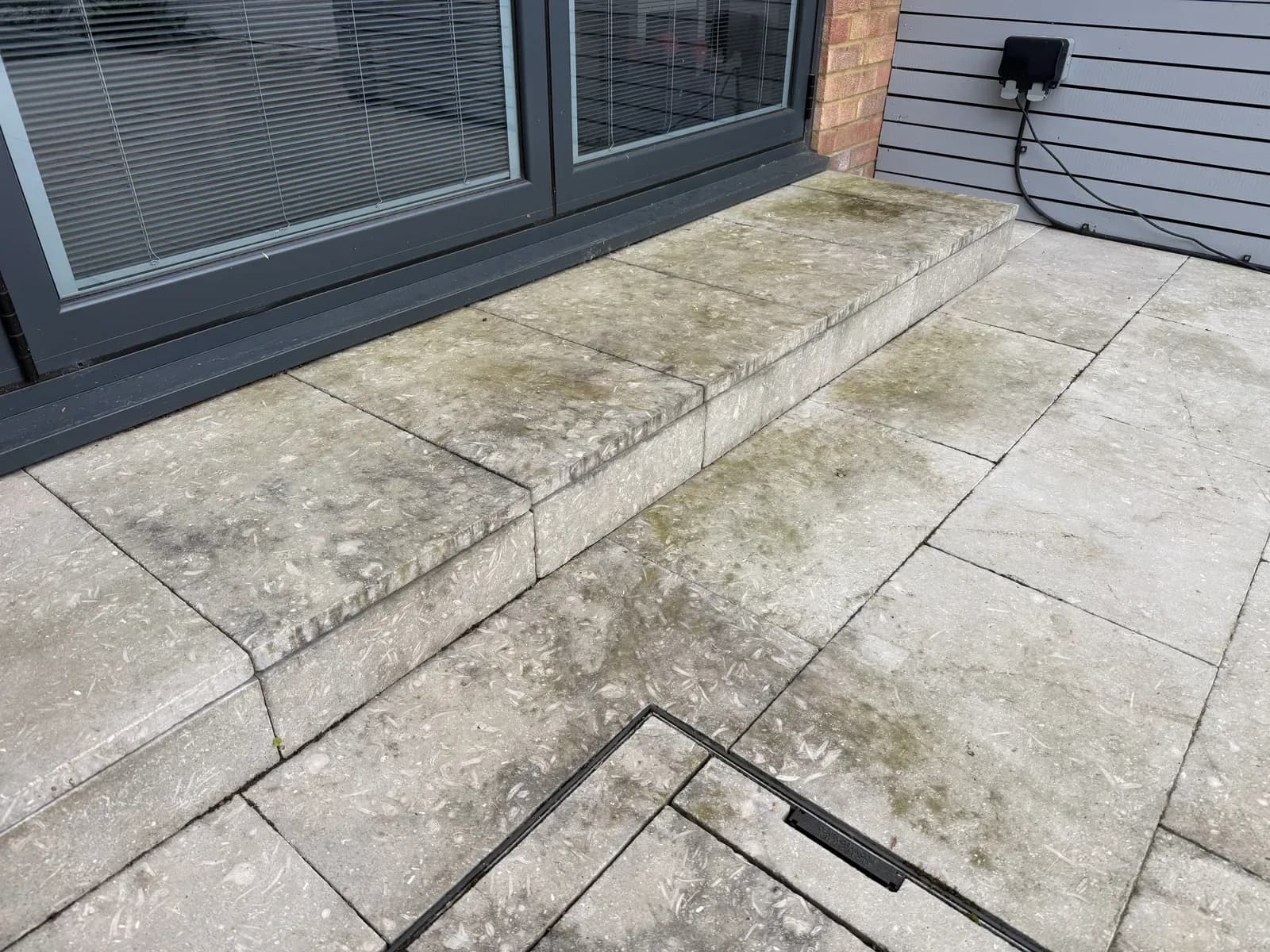
If you want to know how to clean green off patio surfaces, this guide gives you the answer. You’ll learn how to remove green algae, moss, mould, mildew, and slippery growth from patio slabs safely while helping stop it from coming back.
Green patio slabs are a common problem, especially in damp and shaded gardens. After winter, many patios look dull, slimy, and unsafe. That green layer is often algae, but it may also include moss, mould, mildew, or organic biofilm.
At Chiltern Surface, we clean patios with care and expert surface knowledge. A concrete patio, porcelain patio, sandstone patio, limestone patio, and block paving area all need different treatment. The goal is not just to make your patio look clean for a week. The goal is to clean it safely and help it stay cleaner for longer.
Why Does a Patio Turn Green?
A patio turns green when moisture, shade, and organic matter build up on the surface. Green algae thrives where slabs stay damp and sunlight is limited.
Common causes include:
- Rain and wet weather
- Shaded garden areas
- Poor drainage
- Leaves left on the patio
- Moss spores
- Low airflow
- Porous patio slabs
- Winter grime
- Plant pots trapping moisture
In the UK, green growth is very common because patios often stay wet for long periods. Even high-quality paving can turn green if the conditions are right.
That is why regular slippery patio cleaning is important. Green algae does not only look bad. It can also make the patio unsafe underfoot.
What Is the Green Stuff on Patio Slabs?
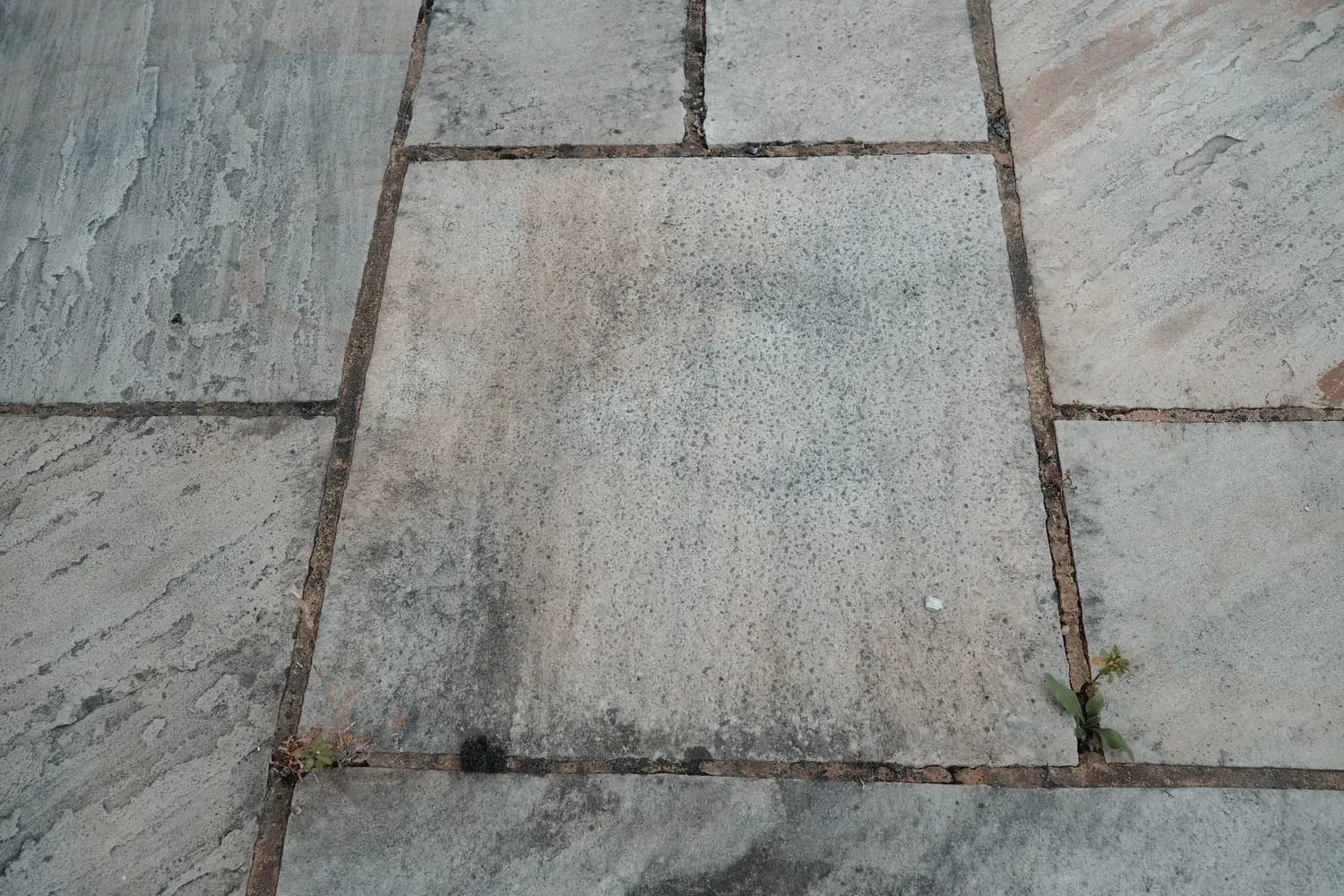
The green layer on patio slabs is usually algae. However, it can also be mixed with moss, mildew, mould, or lichen.
Here is the simple difference:
Green algae often looks like a thin green film. It spreads across damp slabs and can feel slippery.
Moss is thicker and usually grows in joints, cracks, corners, and shaded edges.
Mould and mildew can appear in damp areas and may leave dark or green marks.
Lichen can create tougher spots that grip into the surface. Some lichen appears black, white, grey, or green.
Knowing the difference matters because not all growth is removed the same way. A quick rinse may remove some algae, but deep moss and lichen often need stronger treatment.
Is Green Algae on Patio Dangerous?
Green algae on patio surfaces can be dangerous because it creates a slippery layer. This is worse after rain, frost, or morning dew.
A green patio can increase the risk of:
- Slips
- Falls
- Stained shoes
- Dirty indoor floors
- Surface staining
- Faster moss growth
- Poor garden appearance
If your patio is used by children, older family members, guests, or pets, algae should be removed as soon as possible.
Best Way to Clean Green Off Patio
The best way to clean green off patio slabs is to remove loose debris, apply the right cleaner or treatment, scrub the surface, rinse fully, and improve the conditions that caused the growth.
A safe basic method is:
- Clear the patio
- Sweep leaves and dirt
- Apply warm water or patio cleaner
- Scrub with a stiff brush
- Rinse with clean water
- Treat algae-prone areas
- Improve drainage and sunlight
For light green growth, this may be enough. For heavy algae, moss, or lichen, professional cleaning gives better results.
Step 1: Clear the Patio First
Before cleaning, remove all furniture, plant pots, BBQs, toys, rugs, and garden items. Green growth often hides underneath these objects.
Pay close attention to:
- Under plant pots
- Around outdoor furniture legs
- Shaded corners
- Steps
- Patio edges
- Drainage areas
These spots often stay damp longer, so algae grows faster there.
Step 2: Sweep Away Loose Dirt and Leaves
Use a broom or stiff brush to remove leaves, soil, dust, and loose moss. This simple step makes a big difference.
Wet leaves can stain patio slabs and feed organic growth. If leaves sit on the surface through autumn and winter, the patio is more likely to turn green.
Regular sweeping helps reduce algae, moss, and mildew before they spread.
Step 3: Use Warm Soapy Water for Light Green Growth
For mild green algae, warm soapy water can help. It is simple and safe for many patio surfaces.
Use a small amount of washing-up liquid in warm water. Apply it to the green area, scrub with a brush, and rinse well.
This works best when the algae is fresh and light. It may not fully remove thick algae, moss roots, or lichen.
Always rinse well. Soap residue can make slabs slippery if left behind.
Step 4: Use a Patio Algae Remover
A patio algae remover is designed to target green organic growth. It can be more effective than water alone, especially on damp patios.
When using any algae remover:
- Read the instructions
- Check it suits your patio type
- Test a small area first
- Keep pets and children away
- Protect nearby plants
- Allow the correct dwell time
- Rinse if required
Some products keep working after application, while others need rinsing. Always follow the product guidance.
Step 5: Scrub with a Stiff Brush
A stiff brush helps remove algae from textured patio slabs. Scrubbing is especially useful for concrete, paving slabs, and block paving.
Use steady pressure and work in small sections. Focus on green patches, joints, corners, and shaded areas.
For porcelain or delicate natural stone, use a softer brush. A harsh brush may scratch the surface.
Never use a wire brush. It can damage slabs and may leave metal particles that rust later.
Step 6: Rinse Thoroughly with Clean Water
After scrubbing, rinse the patio with clean water. Remove dirty water, loose algae, and cleaner residue.
If residue dries on the slabs, it can leave marks or make the surface slippery again.
For porcelain patios, rinsing is extra important because dirty water can dry into streaks or cloudy patches.
Can You Pressure Wash Green Algae Off Patio?
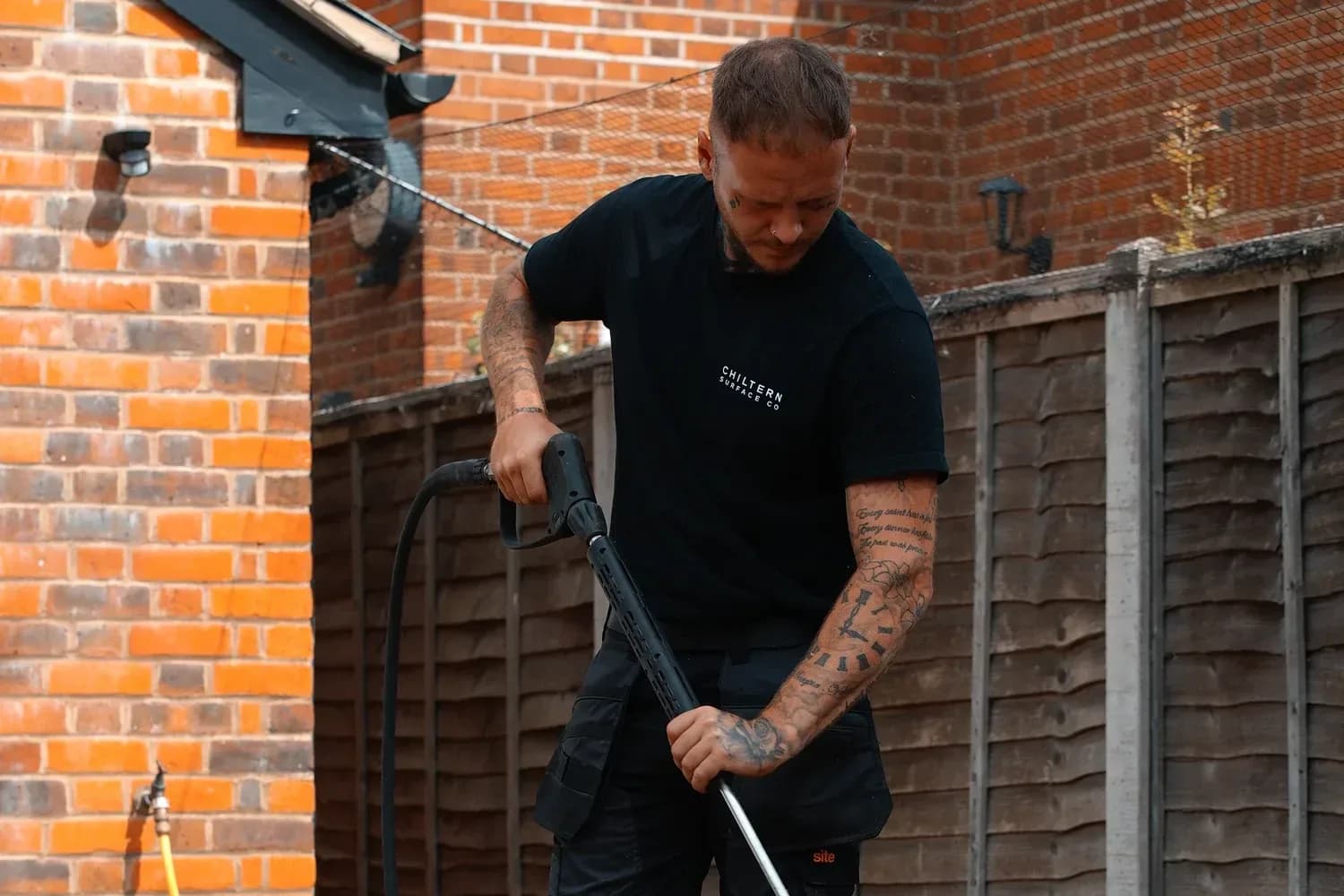
Yes, a pressure washer can remove green algae from patio slabs. It is useful for larger areas and heavy surface dirt.
However, pressure washing must be done carefully.
Use these tips:
- Start with low pressure
- Use a wide fan nozzle
- Keep the nozzle moving
- Do not spray too close
- Avoid blasting joints directly
- Test a hidden area first
- Avoid high pressure on soft stone
Pressure washing may remove the visible green layer, but algae can return if spores remain or the area stays damp. For longer-lasting results, a treatment may be needed.
How to Clean Green Patio Slabs Naturally
If you prefer natural methods, you can clean green patio slabs with warm water, brushing, steam, and regular maintenance.
Natural options include:
- Warm water scrubbing
- Steam cleaning
- Regular sweeping
- Manual moss removal
- Improved drainage
- More sunlight and airflow
Some people use vinegar or baking soda. These can help in some cases, but they are not suitable for every surface. Vinegar is acidic and may affect natural stone or nearby plants.
Natural cleaning works best when green growth is light. Heavy algae or moss may need professional care.
Can Bleach Remove Green Algae from Patio?
Bleach can remove or lighten green algae on some hard-wearing patio slabs. However, it must be used with great care.
Bleach can:
- Harm plants and lawns
- Irritate skin and eyes
- Discolour some slabs
- Damage natural stone
- Affect pets
- Leave harmful runoff
Never use neat bleach. Never mix bleach with other cleaners. Always test first and rinse thoroughly.
For delicate surfaces, professional moss and algae removal is safer.
How to Remove Green Algae from Concrete Patio
Concrete patios are usually tough, but they are porous. Green algae can sit on the surface and in tiny pores.
To clean concrete:
- Sweep the patio
- Apply warm water or suitable cleaner
- Scrub with a stiff brush
- Pressure wash carefully if needed
- Rinse fully
- Treat algae-prone areas
Concrete can handle more cleaning power than soft stone, but too much pressure can still leave marks.
How to Remove Green Algae from Porcelain Patio
Porcelain is dense and low-porous, but algae can still grow on the surface, especially in textured anti-slip areas.
To clean porcelain:
- Sweep away debris
- Use a pH-neutral cleaner
- Scrub with a soft or medium brush
- Rinse very well
- Remove standing water with a squeegee if needed
Avoid oily products, wax cleaners, wire brushes, and dirty mop water. These can leave streaks or residue.
How to Remove Green Algae from Sandstone Patio
Sandstone is more delicate and porous. It needs gentle care.
For sandstone:
- Avoid strong acids
- Avoid harsh bleach
- Avoid aggressive pressure washing
- Use a stone-safe cleaner
- Scrub gently
- Rinse with clean water
Green algae on sandstone may return quickly if the surface stays damp. Professional cleaning can help treat the growth safely without damaging the stone.
How to Remove Green Algae from Limestone Patio
Limestone can be sensitive to acidic cleaners. Vinegar and strong acid products should be avoided.
Use:
- pH-neutral stone cleaner
- Soft brush
- Low-pressure rinsing
- Professional cleaning for heavy growth
High pressure can mark limestone, so take care.
How to Remove Green Growth from Block Paving
Block paving often turns green around joints because moisture and organic matter collect there.
To clean block paving:
- Sweep thoroughly
- Remove weeds and moss
- Scrub joints carefully
- Use controlled pressure washing
- Treat algae-prone areas
- Re-sand joints if needed
After pressure washing, jointing sand may need replacing. This helps keep blocks stable and reduces weed growth.
How to Stop Patio Going Green Again
Cleaning is only half the job. Prevention is what keeps your patio looking better for longer.
To stop algae regrowth:
- Sweep leaves weekly
- Move plant pots often
- Improve drainage
- Cut back overhanging plants
- Let sunlight reach the slabs
- Clean spills quickly
- Rinse muddy areas
- Book seasonal patio cleaning
- Treat algae-prone areas early
If water sits on the patio, algae will return faster. Solving drainage and shade issues makes a big difference.
Best Time to Clean Green Off Patio
Spring is a great time to remove winter algae. Autumn is also useful because it prepares the patio before wet weather sets in.
Avoid cleaning during freezing weather. Water can enter small cracks and freeze, which may cause damage.
Choose a dry, mild day. This helps the patio dry properly after cleaning.
Common Mistakes to Avoid
When cleaning green patio slabs, avoid these mistakes:
- Using high pressure too close
- Using bleach on delicate stone
- Not testing cleaners first
- Letting dirty water dry
- Skipping the rinse
- Using wire brushes
- Ignoring poor drainage
- Leaving wet leaves on the patio
- Thinking pressure washing alone prevents regrowth
A careful method gives a cleaner and safer result.
When Professional Patio Cleaning Is Better
DIY cleaning can work for light algae. However, professional cleaning is better when:
- The patio is very slippery
- Green growth keeps returning
- Moss is thick in the joints
- Black spots are present
- The patio is natural stone
- The area is large
- Pressure washing could damage the surface
- You want longer-lasting results
Chiltern Surface can assess the surface and choose the right cleaning method.
Professional Moss and Algae Removal by Chiltern Surface
Chiltern Surface provides expert professional patio cleaning for homeowners who want a safe, clean, and long-lasting finish.
Our service may include:
- Surface inspection
- Algae and moss assessment
- Safe pressure washing
- Soft washing where suitable
- Specialist algae treatment
- Careful rinsing
- Joint and edge cleaning
- Aftercare advice
We do not clean every patio the same way. Your patio gets the method that suits its surface and condition.
Why Choose Chiltern Surface?
Your patio is part of your home. It should be cleaned with skill, not guesswork.
Chiltern Surface offers:
- Surface-specific cleaning
- Professional equipment
- Careful pressure control
- Safe treatment options
- Premium finish standards
- Local service
- Honest advice
- Long-term results
Whether your patio is green, slippery, mossy, or dull, we can help restore it with care.
About How to Clean Green Off PatioConclusion
Learning how to clean green off patio surfaces helps keep your outdoor space safer, cleaner, and more attractive. Green algae, moss, mould, and mildew are common in damp UK gardens, but the right cleaning method can make a big difference.
For light growth, warm water, brushing, rinsing, and regular maintenance can help. For heavy algae, slippery slabs, moss-filled joints, or delicate surfaces, professional cleaning is the safer choice.
Chiltern Surface provides expert moss and algae removal with careful methods and premium results.
Contact Chiltern Surface today to restore your patio and enjoy a cleaner, safer, better-looking outdoor space.
Frequently asked questions
What is the best way to clean green off patio slabs?
The best way is to sweep first, apply a suitable algae remover or warm soapy water, scrub with a brush, and rinse thoroughly. Heavy growth may need professional cleaning.
Why does my patio keep turning green?
Your patio likely stays damp or shaded. Poor drainage, leaves, plant pots, and low sunlight all encourage algae growth.
Can pressure washing remove green algae?
Yes, pressure washing can remove visible algae. However, it may not stop regrowth unless the area is treated and maintained.
Is green algae on patio slabs slippery?
Yes. Green algae can make patio slabs very slippery, especially after rain or frost.
Can I use bleach to remove green algae?
Bleach may work on some hard surfaces, but it can damage plants, pets, natural stone, and coloured slabs if used incorrectly.
How do I remove green algae naturally?
Use warm water, scrubbing, steam cleaning, and regular sweeping. Improve drainage and sunlight to slow regrowth.
How often should I clean green patio slabs?
Most patios need deep cleaning once or twice a year. Shaded and damp patios may need more frequent care.
When should I call a professional about green algae on a patio?
Call a professional if algae keeps returning, the patio is slippery, the surface is delicate, or moss and black spots are present.