
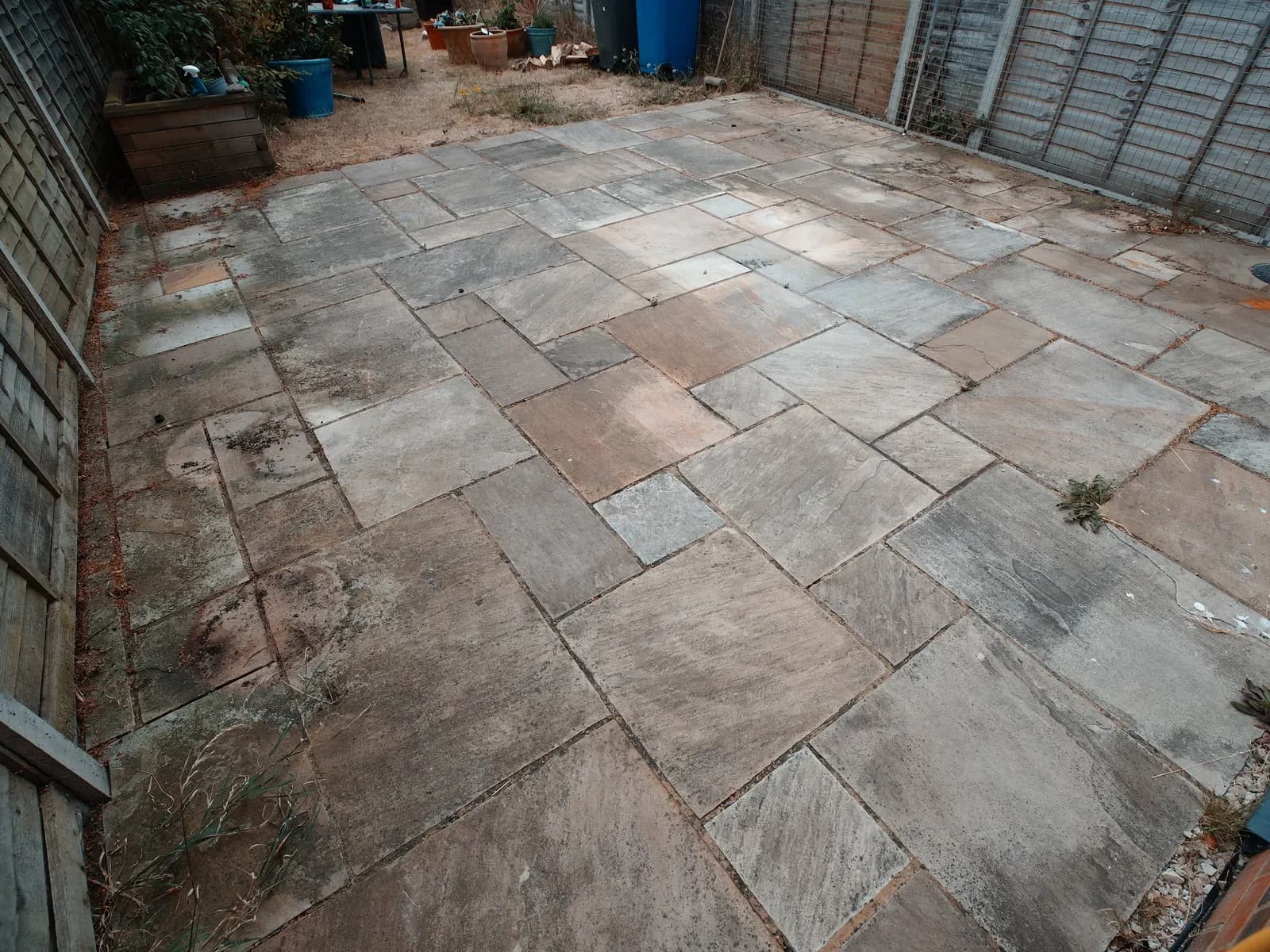
If you want to know how to clean a patio without chemicals, this guide gives you safe and simple answers. You’ll learn how to remove dirt, moss, algae, stains, and grime using natural patio cleaning methods that are better for pets, plants, children, and your outdoor space.
A clean patio can change the whole look of your garden. It makes the space feel brighter, safer, and more welcoming. However, many homeowners do not want to use strong bleach, harsh acids, or heavy chemical cleaners near their lawn, plants, pets, or drains.
The good news is that you can often clean a patio naturally with warm water, brushing, steam, careful pressure washing, and good maintenance. These methods may need a little more effort, but they are safer and kinder to your outdoor surfaces.
At Chiltern Surface, we understand that every patio is different. A concrete patio, porcelain patio, sandstone patio, and block paving area will not all need the same method. That is why safe cleaning starts with choosing the right approach for the surface.
Why Choose Chemical Free Patio Cleaning?
More homeowners are now choosing chemical free patio cleaning because they want a safer garden. Patios are used by children, pets, guests, and family members. So, it makes sense to avoid harsh products where possible.
Natural cleaning methods can help:
- Protect nearby plants and lawns
- Reduce harsh runoff into drains
- Keep outdoor areas safer for pets
- Avoid strong chemical smells
- Lower the risk of surface damage
- Support a cleaner garden environment
- Make routine patio maintenance easier
Of course, not every stain can be removed with water alone. Deep oil marks, black spots, and heavy lichen may need professional treatment. Still, regular natural cleaning can reduce the need for stronger products later.
Can You Really Clean a Patio Without Chemicals?
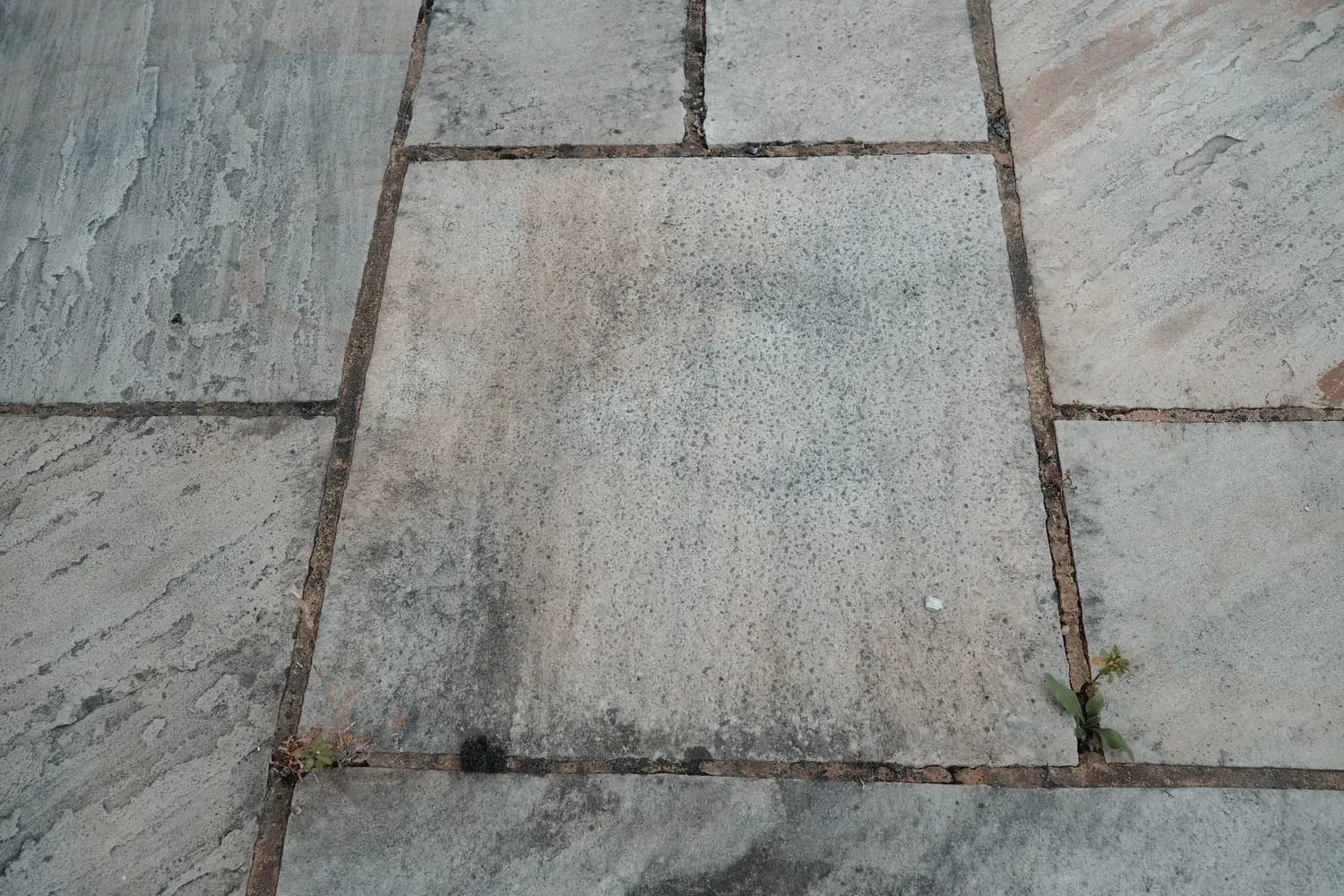
Yes, you can often clean a patio without chemicals, especially if the dirt is not too deep. Warm water, brushing, steam, and pressure washing with clean water can remove a lot of surface grime.
Natural methods work well for:
- Loose dirt
- Mud
- Dust
- Light algae
- Mild moss
- Bird mess
- Leaf marks
- General grime
- Light stains
- Slippery green growth
However, old stains may need more care. The key is to clean regularly. If dirt is left for months or years, it becomes harder to remove naturally.
Best Natural Patio Cleaning Methods
There are several safe ways to clean patio slabs naturally. The best method depends on the surface and the type of dirt.
These methods are simple, but they must still be used with care. Natural does not always mean risk-free. For example, vinegar is acidic, and boiling water can harm nearby grass or plants.
Step 1: Clear the Patio First
Before any natural patio cleaning, clear the full area. Remove garden furniture, plant pots, toys, outdoor rugs, barbecues, and storage boxes.
This helps you clean evenly and spot hidden dirt. Areas under plant pots often collect algae, water marks, and dark rings. Corners and edges usually hold damp leaves and moss.
Once the patio is clear, check for:
- Cracks
- Loose slabs
- Damaged joints
- Weeds
- Heavy moss
- Standing water
- Stained sections
This quick check helps you avoid causing damage during cleaning.
Step 2: Sweep Away Loose Dirt and Leaves
Sweeping is simple, but it is one of the most important steps. A good sweep removes loose dirt, leaves, dust, grit, and moss fragments.
Use a broom or stiff brush. Work from one side of the patio to the other. Pay close attention to corners, joints, and edges.
This step matters because loose grit can scratch some surfaces during scrubbing. Also, wet leaves can stain patio slabs if left too long.
For best results, sweep your patio weekly. This small habit makes deep cleaning much easier.
Step 3: Use Warm Soapy Water
Warm soapy water is one of the safest ways to clean a patio naturally. It works well for light dirt, food spills, bird mess, and general grime.
How to use warm soapy water
- Fill a bucket with warm water.
- Add a small amount of mild dish soap.
- Pour it over one section of the patio.
- Scrub with a stiff brush.
- Rinse with clean water.
- Repeat section by section.
Do not use too much soap. If soap dries on the surface, it can leave streaks or make the patio slippery.
Step 4: Scrub with a Stiff Brush
A stiff brush is a powerful tool for eco friendly patio cleaning. It can lift dirt from textured slabs, joints, and shaded areas.
Use firm pressure, but do not scrape aggressively. On delicate surfaces, such as some natural stone or porcelain tiles, use a softer brush.
Scrubbing helps remove:
- Mud
- Moss
- Algae film
- Grime
- Light stains
- Surface dirt
For stubborn areas, apply warm water first and let it sit for a few minutes. This softens the dirt and makes scrubbing easier.
Step 5: Rinse Thoroughly with Clean Water
After scrubbing, rinse the patio well. Use a garden hose or buckets of clean water.
This step removes dirty water, loosened grime, and soap residue. If dirty water dries on the surface, it can leave marks behind.
Always rinse toward a safe drainage area. Try not to wash dirty water into flower beds, lawns, or ponds.
Using Baking Soda for Natural Patio Cleaning
Baking soda, also known as bicarbonate of soda, can help with mild stains and greasy marks. It is gentle and easy to use.
How to use baking soda
- Wet the stained area.
- Sprinkle baking soda over the mark.
- Leave it for 15–20 minutes.
- Scrub with a brush.
- Rinse fully with clean water.
Baking soda works best on fresh marks. It may not fully remove old oil stains or deep black spots, but it can improve the look of light stains.
Can You Clean Patio Slabs with Vinegar?
White vinegar is often used for natural cleaning. It can help with light algae, water marks, and some surface stains.
However, vinegar is acidic. That means it should be used carefully. It may not be suitable for all patios, especially some natural stone surfaces.
How to use vinegar safely
- Mix vinegar with water.
- Test a small hidden area first.
- Apply lightly.
- Do not leave it too long.
- Scrub gently.
- Rinse very well.
Avoid using vinegar near delicate plants or lawns. Also, do not use it often on natural stone unless you are sure the surface can handle it.
How to Remove Moss Naturally
Moss grows well in damp, shaded areas. It often appears between patio joints, around edges, and under plant pots.
To remove moss naturally, follow these steps:
- Brush away loose moss.
- Pull thick growth from joints by hand.
- Pour warm water over the area.
- Scrub the surface and joints.
- Rinse well.
- Improve airflow and sunlight.
Moss often returns if the patio stays damp. So, prevention is just as important as cleaning.
To slow moss regrowth:
- Trim overhanging plants
- Move pots regularly
- Clear leaves quickly
- Improve drainage
- Brush shaded areas often
How to Remove Algae Naturally
Green algae can make patios slippery, especially in wet weather. It is common in shaded gardens and areas that do not dry quickly.
To remove algae naturally, use warm water, brushing, steam, or water-only pressure washing.
A good method is:
- Sweep the area first.
- Apply warm water.
- Scrub with a brush.
- Rinse well.
- Repeat if needed.
If algae keeps returning, the area may need better airflow, more sunlight, or professional cleaning.
Steam Cleaning a Patio Without Chemicals
Steam cleaning is one of the best options for eco friendly patio cleaning. It uses heat rather than harsh products.
Steam can help loosen:
- Algae
- Moss
- Mildew
- Dirt
- Grime
- Organic growth
It is also useful for homeowners who want a safer cleaning method around pets and children.
Professional steam cleaning can be more effective than DIY scrubbing because the equipment produces controlled heat and pressure.
Pressure Washing Without Chemicals
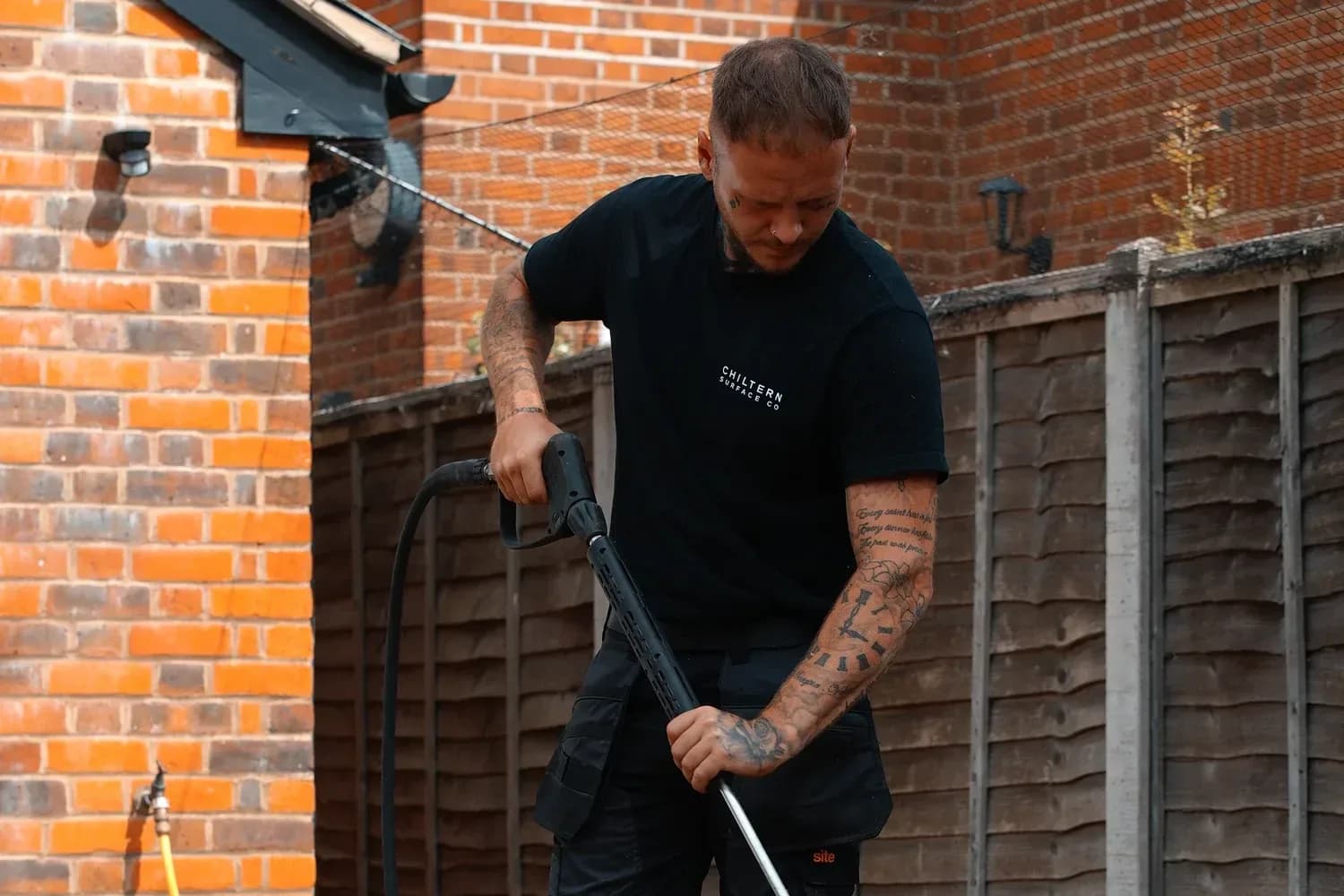
You can pressure wash a patio using only clean water. This is a good option for larger patios or heavy surface dirt.
However, pressure washing must be done with care.
Safe pressure washing tips
- Use low to medium pressure.
- Keep the nozzle moving.
- Do not spray too close.
- Avoid blasting joints directly.
- Test a small area first.
- Do not use high pressure on weak slabs.
Too much pressure can damage pointing, loosen jointing sand, or mark delicate surfaces. If unsure, call a professional.
How to Clean Different Patio Surfaces Naturally
Not all patios should be cleaned the same way.
Porcelain can look streaky if dirty water dries on it. Sandstone can be sensitive to acidic products. Block paving needs care around joints. This is why surface knowledge matters.
How to Remove Weeds Without Chemicals
Weeds can grow between slabs and block paving joints. You can remove them without weed killer.
Natural weed removal methods include:
- Pulling weeds by hand
- Using a weeding tool
- Pouring boiling water carefully
- Brushing joints often
- Re-sanding block paving joints if needed
Be careful with boiling water. It can damage nearby grass, flowers, and roots.
How to Remove Bird Mess Naturally
Bird mess should be cleaned quickly because it can stain and smell unpleasant.
Simple method
- Soften the mess with warm water.
- Leave it for a few minutes.
- Scrub gently.
- Rinse fully.
Do not scrape dry bird mess with metal tools. This can mark the patio.
How to Remove BBQ Grease Naturally
BBQ grease can leave dark marks on patio slabs. Fresh grease is easier to remove than old grease.
Try this:
- Blot fresh grease with kitchen towel.
- Do not rub it wider.
- Sprinkle baking soda over the mark.
- Leave it to absorb oil.
- Scrub with warm soapy water.
- Rinse fully.
For deep oil stains, professional patio cleaning may be needed.
Common Mistakes to Avoid
Even when using natural methods, mistakes can happen.
Avoid:
- Using metal brushes
- Overusing vinegar
- Letting dirty water dry
- Using too much soap
- Blasting joints with high pressure
- Cleaning delicate stone too harshly
- Leaving moss roots behind
- Ignoring poor drainage
- Waiting too long between cleans
The best results come from gentle, regular care.
How to Keep a Patio Clean Without Chemicals
Prevention is the easiest form of cleaning. A few simple habits can keep your patio looking better for longer.
Natural patio maintenance tips
- Sweep once a week.
- Remove leaves before they rot.
- Move plant pots often.
- Use trays under pots.
- Rinse muddy footprints quickly.
- Clean spills straight away.
- Improve drainage where water sits.
- Trim plants that create heavy shade.
- Book seasonal professional cleaning.
These steps reduce moss, algae, staining, and grime.
When Natural Cleaning Is Not Enough
Natural cleaning is great for regular maintenance. However, some issues need expert help.
Call a professional if you notice:
- Heavy black spots
- Deep oil stains
- Thick moss growth
- Slippery algae returning quickly
- Damaged joints
- Large stained areas
- Delicate stone surfaces
- Stains that do not lift
Chiltern Surface can assess the patio and choose the safest cleaning method. The goal is always to clean effectively while protecting the surface.
Professional Eco Friendly Patio Cleaning by Chiltern Surface
Chiltern Surface provides careful, premium patio cleaning for homeowners who want a cleaner and safer outdoor space.
Our approach is built around:
- Surface-safe cleaning
- Careful pressure control
- Reduced chemical use where possible
- Eco-conscious cleaning methods
- Moss and algae treatment advice
- Long-lasting results
- Professional finish standards
We do not treat every patio the same. A porcelain patio needs different care from sandstone, concrete, or block paving. That is why our process starts with understanding the surface.
Why Choose Chiltern Surface?
Your patio is part of your home. It deserves more than a quick blast with a pressure washer.
Chiltern Surface offers:
- Professional exterior cleaning knowledge
- Careful surface assessment
- Safe and effective methods
- Premium attention to detail
- Honest aftercare advice
- Local, reliable service
- Results that improve kerb appeal
Whether your patio is stained, slippery, dull, or covered in moss, we can help restore it with care.
About How to Clean a Patio Without ChemicalsConclusion
Learning how to clean a patio without chemicals is a smart way to keep your outdoor space safer, fresher, and more natural. With warm water, brushing, baking soda, steam, and careful rinsing, you can remove a lot of dirt, moss, algae, and grime without harsh products.
For light maintenance, natural methods work very well. For deep stains, slippery growth, or delicate surfaces, professional help is the safer choice.
Chiltern Surface provides expert, eco-conscious patio cleaning with careful methods and premium results.
Contact Chiltern Surface today to restore your patio and enjoy a cleaner, safer, better-looking outdoor space.
Frequently asked questions
What is the best way to clean a patio without chemicals?
The best way is to sweep first, scrub with warm soapy water, rinse thoroughly, and repeat where needed. For deeper dirt, steam cleaning or water-only pressure washing can help.
Can I clean a patio naturally with baking soda?
Yes. Baking soda is useful for mild stains, grease marks, and general grime. Apply it to a damp area, let it sit, scrub, and rinse well.
Is vinegar safe for patio cleaning?
Vinegar can help with some light marks, but it is acidic. Always dilute it, test a small area first, and avoid using it on sensitive natural stone.
How do I remove moss from a patio naturally?
Brush away loose moss, pull thick growth from joints, use warm water, scrub well, and improve sunlight and drainage to reduce regrowth.
How do I remove algae from a patio without chemicals?
Use warm water, scrubbing, steam cleaning, or careful pressure washing with clean water. Regular sweeping also helps stop algae building up.
Can I pressure wash a patio without chemicals?
Yes. Water-only pressure washing can remove surface dirt and grime. Use controlled pressure and avoid damaging joints or delicate slabs.
Is chemical free patio cleaning safe for pets?
Natural methods such as warm water, brushing, and steam cleaning are usually safer for pets than harsh chemical cleaners. Always rinse the area well before pets return.
How often should I clean my patio naturally?
Sweep weekly, rinse monthly, and deep clean in spring and autumn. Damp or shaded patios may need more regular care.