
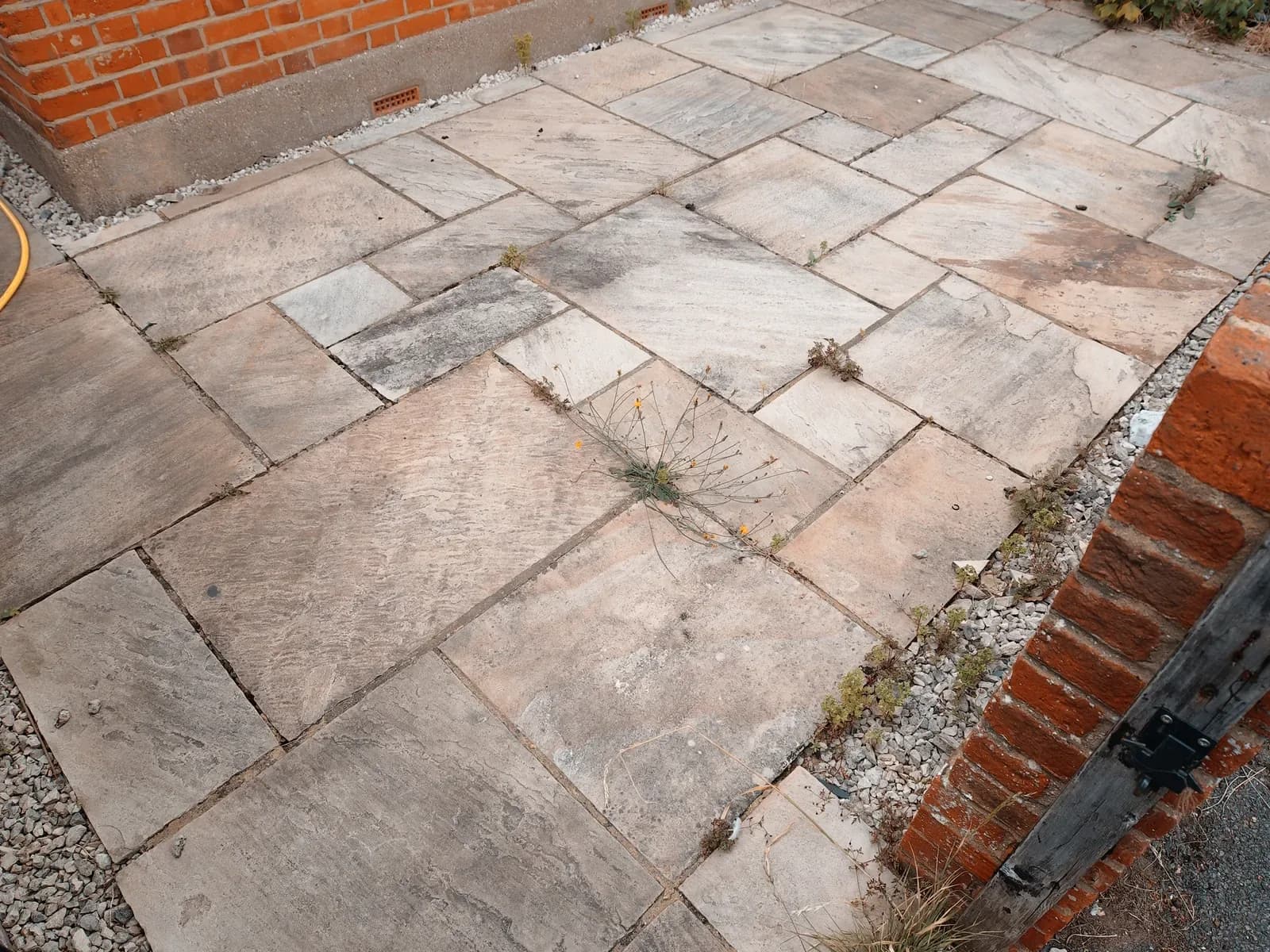
If you want to know how to clean patio slabs with bleach, this guide explains the safest way to do it. You’ll learn how bleach works, what surfaces to avoid, how to protect plants and pets, and when professional patio cleaning is the better choice.
Patio slabs often become dirty because of rain, shade, moss, algae, mud, leaves, and everyday use. Over time, this creates green growth, slippery patches, black marks, and dull-looking paving. Many homeowners turn to bleach because it is easy to find and can help lift organic growth.
However, bleach must be used with care. It can damage plants, stain clothing, irritate skin, affect pets, and harm certain patio materials. At Chiltern Surface, we always recommend choosing the safest method for the surface, not just the strongest product.
Can You Clean Patio Slabs with Bleach?
Yes, you can clean patio slabs with bleach, but only on suitable surfaces and only when it is diluted properly. Bleach can help remove green algae, mould, mildew, moss staining, and some surface grime.
It works best on:
- Man-made concrete slabs
- Some concrete paving slabs
- Hard-wearing patio tiles
- Non-delicate outdoor surfaces
You should be more careful with:
- Sandstone
- Limestone
- Natural stone
- Porous paving
- Older slabs
- Coloured or sealed surfaces
- Areas close to lawns and plants
Bleach is strong. It may lighten or stain certain materials. So, always test a small hidden area first.
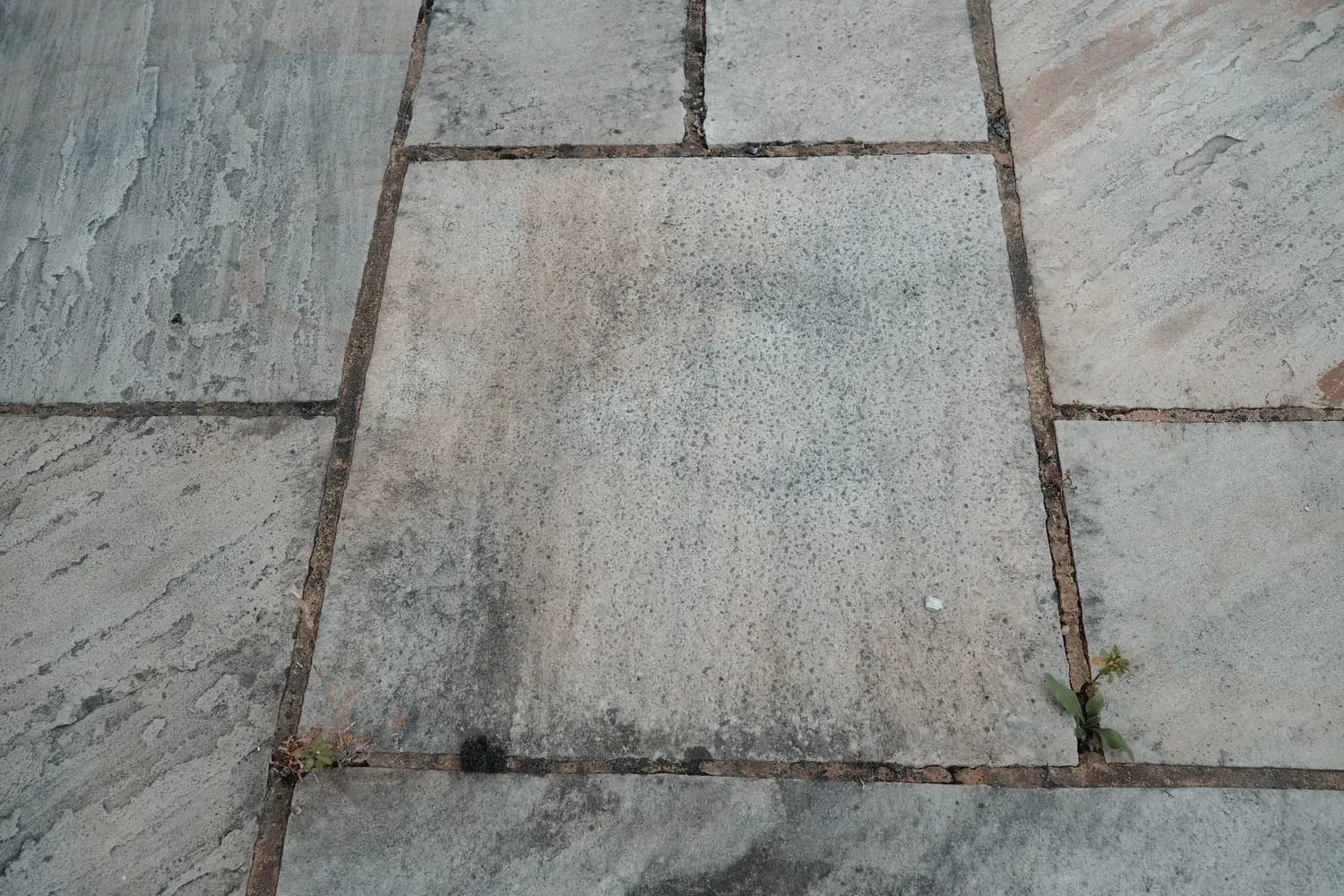
Why Bleach Is Used for Patio Cleaning
A bleach patio cleaner works because bleach breaks down organic growth. This includes algae, moss, mould, and mildew. These are common causes of slippery patios in the UK.
Bleach may help with:
- Green growth
- Slippery patches
- Moss marks
- Surface grime
- Mould and mildew
- Some dark staining
However, bleach is not a magic fix. It may not fully remove black spot, deep lichen, oil stains, rust marks, or long-term staining. These often need specialist treatment.
Safety First: Before You Use Bleach
Before learning how to clean patio slabs with bleach, safety must come first. Bleach can be harmful if handled badly.
Use:
- Protective gloves
- Safety goggles
- Long sleeves
- Old clothing
- Waterproof footwear
Also make sure:
- Children stay away
- Pets are kept indoors
- Nearby plants are covered
- Windows and doors are closed
- The area is well ventilated
- Bleach does not run into ponds or lawns
Never mix bleach with other cleaners. Mixing bleach with vinegar, ammonia, or acidic products can create dangerous fumes.
Getting the Strength Right Is the Hard Part
This is where most DIY bleach cleaning goes wrong. Too strong and you can bleach the colour out of the slab permanently, damage pointing, or kill surrounding planting. Too weak and it does very little, so people reapply and compound the risk.
There is no single safe strength, because it depends on the surface, its porosity, its age, whether it has been sealed, and how much growth is present. That is a judgement made in front of the patio, not from an article.
If you are unsure, do not guess on a surface you cannot replace. We assess the slab first and choose a method suited to it — often a controlled soft wash rather than bleach at all.
How to Clean Patio Slabs with Bleach Step by Step
Step 1: Clear the Patio
Remove furniture, pots, toys, BBQs, rugs, and garden items. This helps you apply the bleach solution evenly.
Step 2: Sweep Loose Debris
Use a broom or stiff brush to remove leaves, soil, moss, grit, and dust. This makes the bleach work better.
Step 3: Protect Plants and Grass
Wet nearby plants with clean water before starting. Cover delicate plants where possible. Try to stop bleach water from running into flower beds.
Step 4: Test a Small Area
Apply a small amount of diluted bleach to a hidden slab. Wait 10–15 minutes, then rinse. Check for colour change or damage.
Step 5: Apply the Treatment Evenly
Whatever treatment the surface can take should be applied evenly and kept off walls, doors, metalwork and planting. Never let it pool, and never let it run into a drain or a flower bed.
Step 6: Let It Sit Briefly
Let the solution sit for around 10–15 minutes. Do not let it dry on the surface.
Step 7: Scrub with a Stiff-Bristled Brush
Scrub the slabs using steady pressure. Focus on algae, moss, and slippery areas.
Step 8: Rinse Thoroughly
Rinse the patio fully with clean water. This is very important. Leftover bleach can keep affecting the surface, plants, and pets.
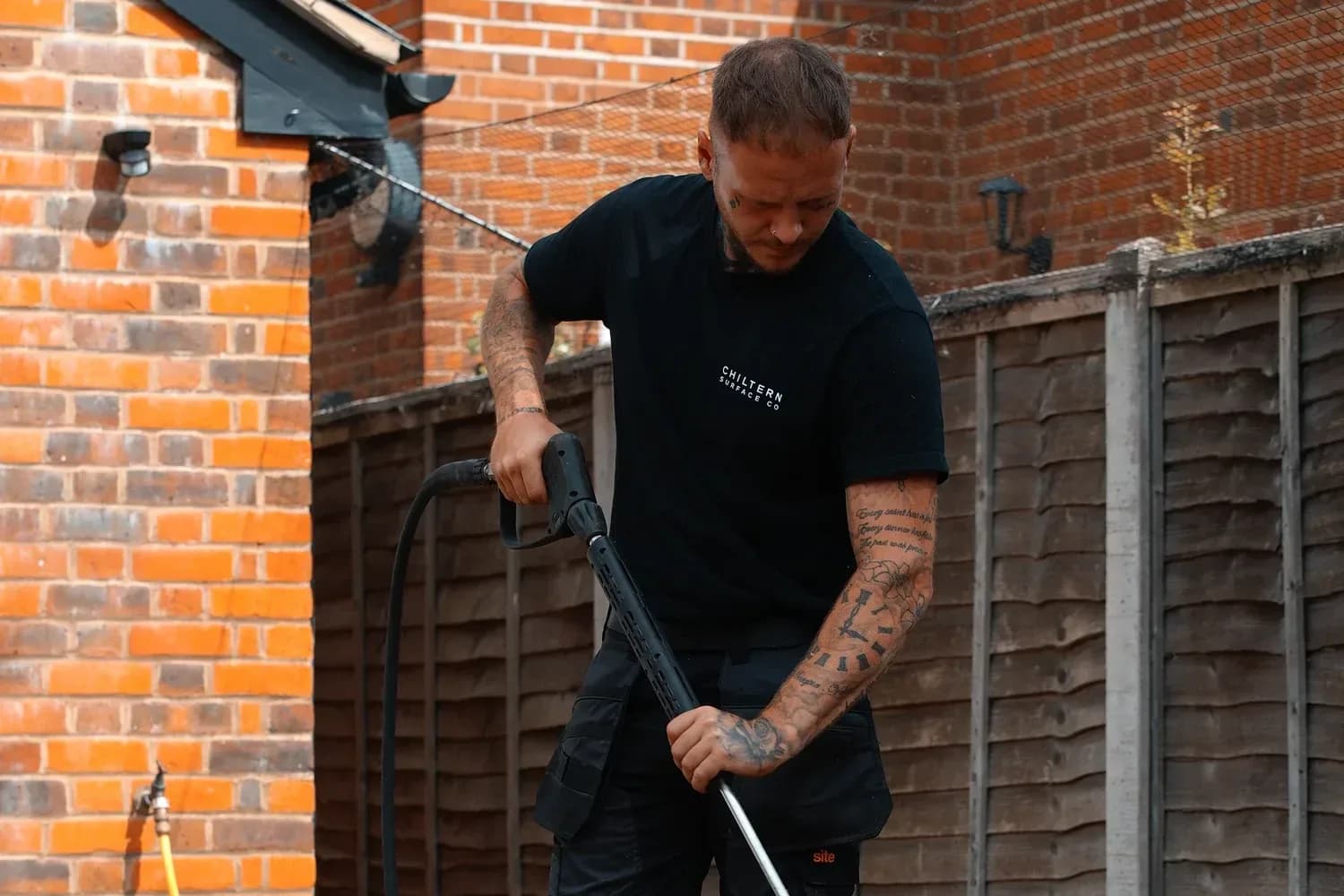
How to Remove Algae from Patio Slabs with Bleach
Green algae is one of the most common reasons people search for how to clean patio slabs with bleach. Bleach can lighten and kill algae on many concrete slabs.
For algae:
- Use diluted bleach
- Apply evenly
- Leave for a short dwell time
- Scrub with a stiff brush
- Rinse very well
If algae keeps returning, the patio may have poor drainage, heavy shade, or trapped moisture. In that case, cleaning alone will not solve the root problem.
How to Remove Moss from Patio Slabs with Bleach
Bleach can help with moss staining, but thick moss should be removed by hand first.
Best method:
- Pull out thick moss from joints
- Sweep away loose growth
- Apply diluted bleach
- Scrub the joints carefully
- Rinse fully
Avoid blasting joints with high-pressure water after bleach use. This can loosen sand or pointing.
Can Bleach Remove Black Spot from Patio Slabs?
Bleach may lighten black spot, but it often does not remove it fully. Black spot is usually caused by lichen. It grips tightly to the surface and can be very stubborn.
If black spots remain after cleaning, do not keep applying stronger bleach. This may damage the patio.
A professional treatment is usually safer and more effective. Chiltern Surface can assess the surface and use a method suited to the material.
Surfaces You Should Not Clean with Bleach
Bleach is not right for every patio.
Avoid or use extreme care on:
- Sandstone
- Limestone
- Slate
- Marble
- Natural stone paving
- Coloured slabs
- Sealed patios
- Delicate grout
- New paving
- Damaged slabs
Natural stone is often porous. Bleach may cause uneven colour, dull patches, or surface issues.
Common Mistakes When Using Bleach on Patio Slabs
Avoid these mistakes:
- Using neat bleach
- Skipping the test patch
- Letting bleach dry on the slabs
- Mixing bleach with other cleaners
- Not wearing gloves or goggles
- Allowing runoff into plants
- Using bleach on delicate stone
- Forgetting to rinse thoroughly
- Letting pets walk on the surface too soon
Good cleaning is not just about the result. It is also about safety.
Bleach vs Pressure Washing
Bleach and pressure washing do different jobs.
Sometimes, a careful combination works best. But this should be done properly. At Chiltern Surface, we choose the method based on surface type and condition.
Better Alternatives to Bleach
Bleach is not always the best option. Safer alternatives may include:
- Warm soapy water
- Steam cleaning
- Controlled pressure washing
- Professional soft washing
- Surface-safe patio cleaners
- Manual moss removal
- Regular sweeping and rinsing
For families with pets, children, or delicate gardens, lower-risk methods may be a better choice.
How Often Should You Clean Patio Slabs?
Most patios benefit from cleaning once or twice a year.
A good schedule:
Regular maintenance means you are less likely to need harsh cleaning later.
Professional Patio Cleaning by Chiltern Surface
Chiltern Surface provides expert patio cleaning for homeowners who want clean, safe, and long-lasting results without risking damage.
Our professional approach may include:
- Surface inspection
- Stain and algae assessment
- Safe cleaning method selection
- Controlled pressure washing
- Soft washing where suitable
- Moss and algae treatment
- Careful rinsing
- Aftercare advice
We do not use one method for every patio. Concrete, porcelain, sandstone, limestone, and block paving all need different care.
Why Choose Chiltern Surface?
Your patio is part of your home. It should be cleaned with care, not guesswork.
Chiltern Surface offers:
- Professional surface knowledge
- Safe and careful cleaning
- Premium results
- Local service
- Honest advice
- Surface-specific methods
- Long-term patio care
If your patio is slippery, stained, dull, or covered in green growth, we can help restore it safely.
About How to Clean Patio Slabs with BleachConclusion
Knowing how to clean patio slabs with bleach can help you remove green growth, algae, mould, and surface grime. However, bleach must be used carefully. Always dilute it, test a small area, protect plants and pets, wear safety gear, and rinse thoroughly.
Bleach is not suitable for every patio. Natural stone, porous slabs, sealed surfaces, and delicate paving may need a safer approach.
For reliable, premium patio cleaning, Chiltern Surface can assess your surface and choose the right method for a cleaner, safer, better-looking outdoor space.
Contact Chiltern Surface today to book professional patio cleaning and restore your patio with expert care.
Frequently asked questions
Is bleach safe for patio slabs?
Bleach can be safe on some concrete and man-made patio slabs when diluted properly. It is not suitable for every surface, especially delicate natural stone.
What strength of bleach should I use on a patio?
We do not publish a mixing strength, because the right answer depends entirely on the surface and its condition — and getting it wrong is usually irreversible on natural stone. If a patio genuinely needs a chemical treatment, it is worth having it assessed first.
Can bleach damage patio slabs?
Yes. Bleach can discolour some slabs, affect sealed surfaces, and damage porous natural stone if used incorrectly.
Do I need to rinse bleach off patio slabs?
Yes. Always rinse thoroughly with clean water. This helps protect the surface, plants, pets, and surrounding areas.
Can bleach remove moss from patio slabs?
Bleach can help kill moss and lighten moss staining, but thick moss should be removed manually first.
Can bleach remove black spots?
Bleach may lighten black spots, but it often will not remove lichen fully. Professional treatment is usually better.
Can I use bleach near plants?
Be very careful. Bleach can harm plants and grass. Wet plants first, cover them if possible, and control runoff.
Is professional patio cleaning better than bleach?
For deep stains, delicate surfaces, black spot, or heavy algae, professional cleaning is safer and usually gives a better finish.