
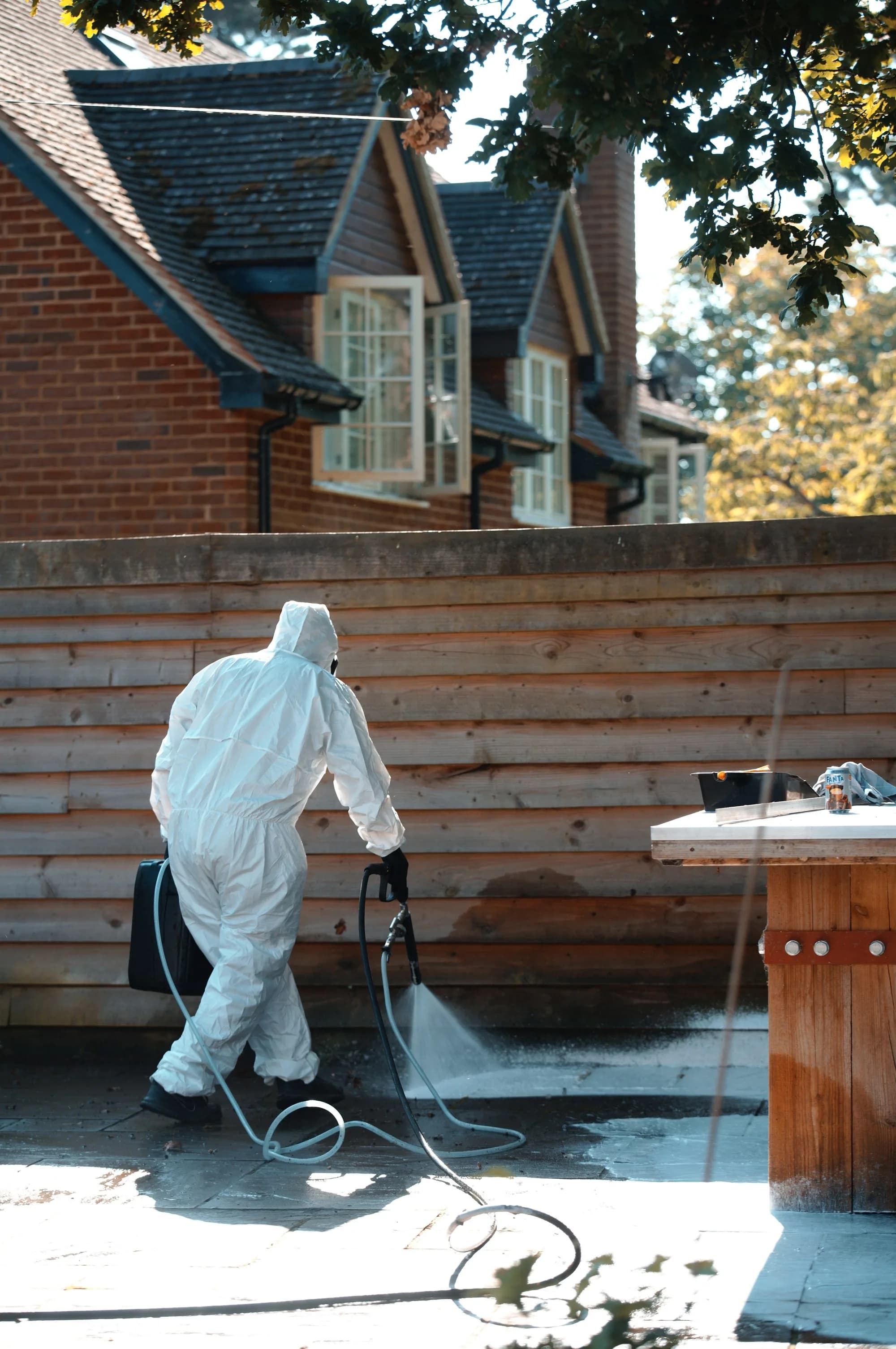
How to Restore a Patio in 2026
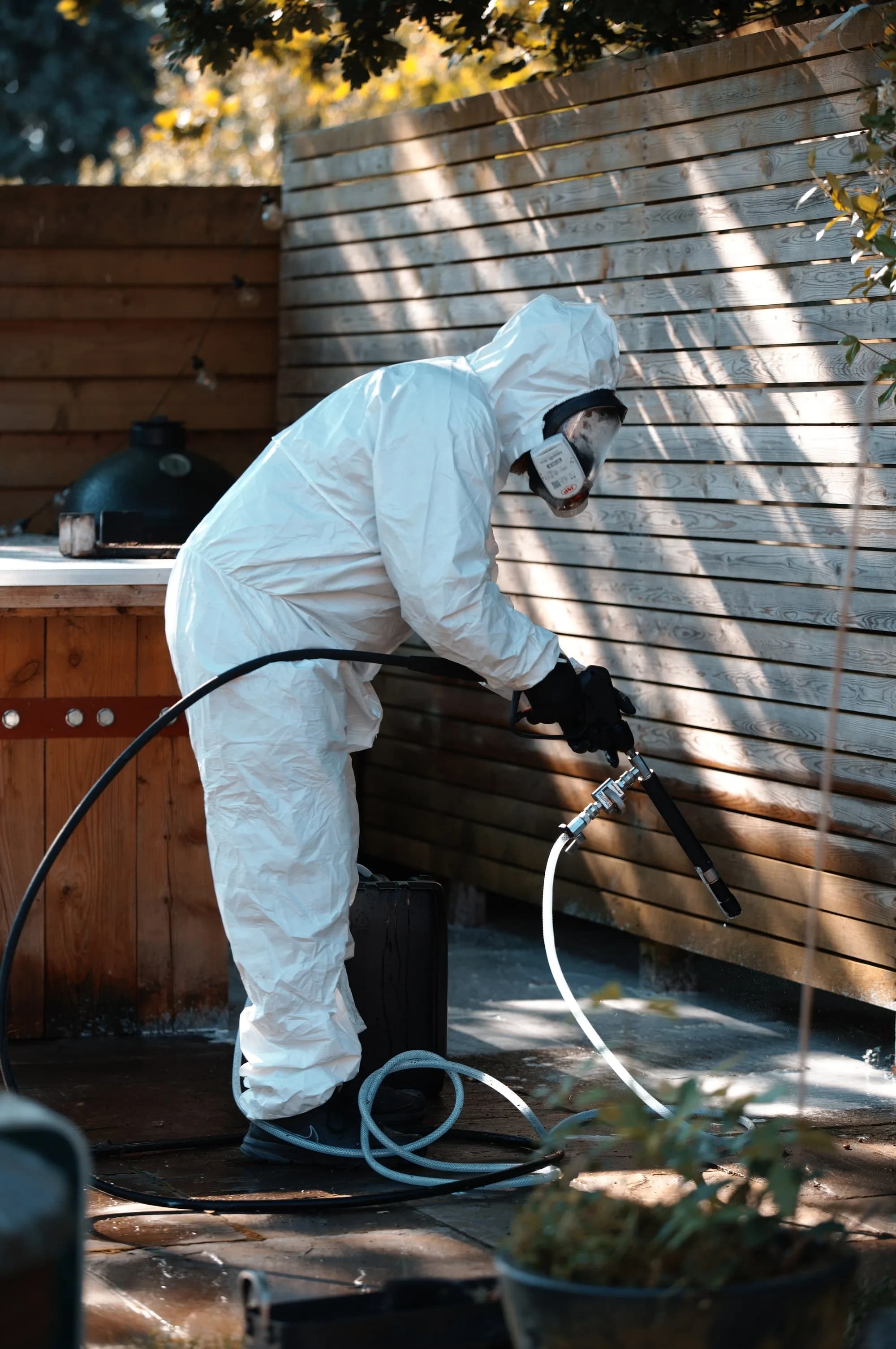
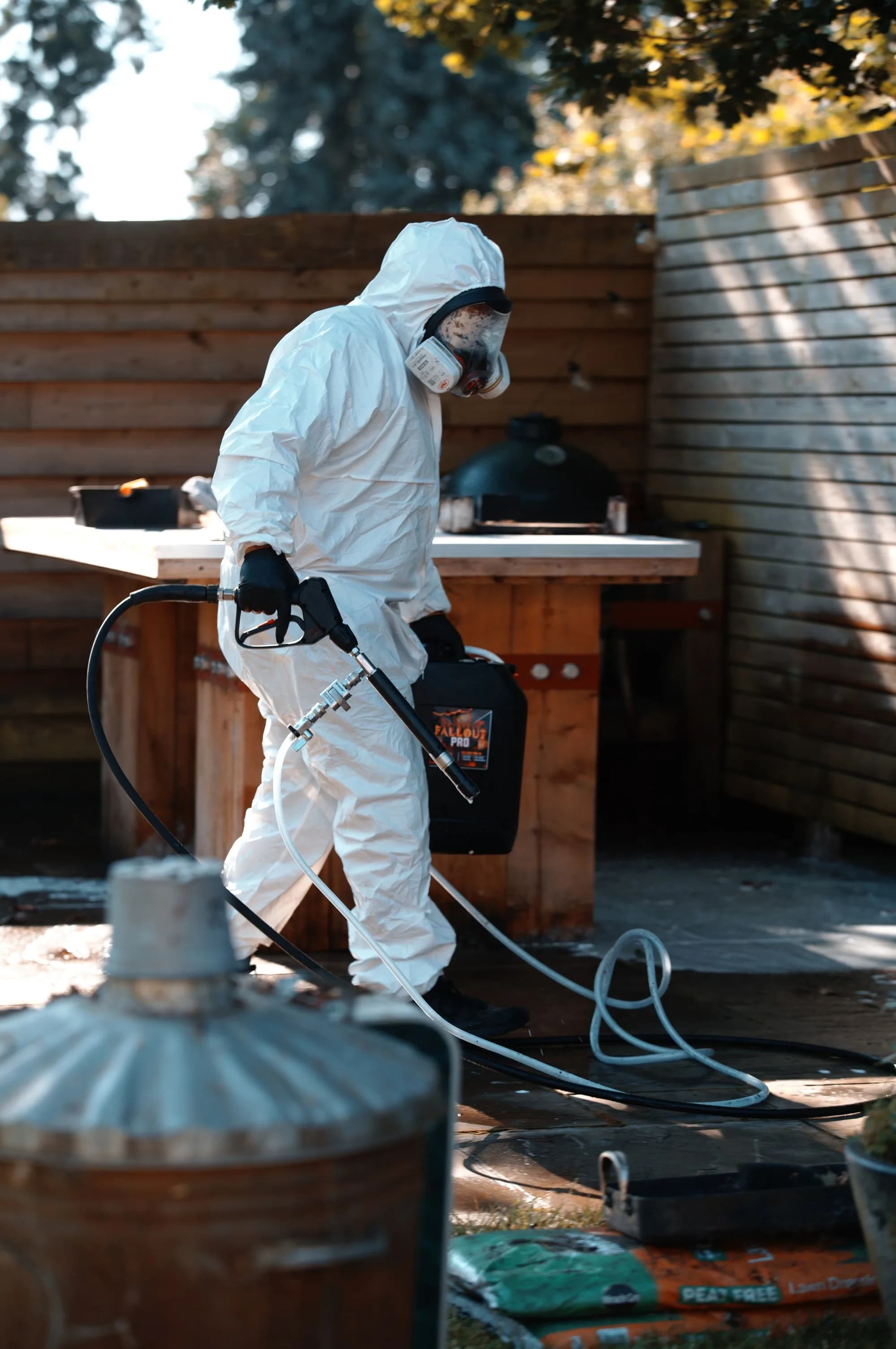
To restore a patio, clean the surface, remove weeds, treat stains, repair joints, fix loose slabs, and apply suitable protection. This guide explains how to restore a patio without damaging natural stone, porcelain, concrete, brick, or block paving. A stable patio usually needs restoration, not replacement. A patio with movement, failed drainage, or widespread broken slabs needs repair work before cleaning or sealing.
How to Restore a Patio Without Replacing It
How to restore a patio without replacement starts with separating surface wear from structural failure. Dirt, algae, moss, faded colour, black spot, low joints, and weeds often support restoration. Rocking slabs, sinking corners, cracked bedding, and standing water show deeper problems.
Check Whether the Patio Still Feels Stable
Walk every slab and note rocking, movement, hollow sounds, and raised edges. Mark problem areas with removable chalk before cleaning begins. A stable patio can accept cleaning, treatment, repointing, and suitable sealing.
Check Whether Water Drains Correctly
Pour water across 3 test areas measuring 3 feet by 3 feet (91cm by 91cm). Watch how water travels towards drains, lawns, planting beds, or walls. Standing water increases algae, frost damage, joint failure, and staining.
Check Whether Replacement Makes More Sense
Replace sections when slabs crack across multiple areas or the base has failed. Restoration cannot correct a collapsed foundation or poor level design. A professional assessment protects your budget before you restore the surface.
How to Restore a Patio by Material
How to restore a patio correctly depends on the paving material. Each material reacts differently to pressure, chemicals, brushing, jointing, and sealant. Identify the patio type before choosing any product or machine.
Natural Stone Patios
Natural stone includes sandstone, limestone, granite, slate, and travertine. Sandstone often absorbs dirt and black spot. Limestone reacts badly to acidic cleaners. Granite tolerates more cleaning pressure than softer stones.
Porcelain Patios
Porcelain resists absorption but still collects algae, soil, grout haze, and traffic film. Use a pH-neutral cleaner and a soft-bristle brush for routine restoration. Avoid steel brushes because metal particles can stain joints.
Concrete and Brick Patios
Concrete slabs, brick pavers, and block paving tolerate controlled washing when stable. Old concrete can expose aggregate under strong pressure. Brick joints can empty when a jet follows the gap.
How to Restore a Patio with Proper Preparation
To prepare a patio for restoration, clear objects, sweep debris, protect nearby areas, and inspect joints. Preparation improves results because dirt often hides damage, stains, and drainage problems.
Clear Furniture and Plant Pots
Move furniture, planters, barbecues, bins, rugs, and storage boxes away from the patio. Keep a 3-foot (91cm) clear working edge around the paved area. Photograph marks, joints, cracks, and drains before cleaning.
Remove Loose Debris
Sweep leaves, soil, gravel, petals, moss clumps, and grit into a collection bag. Organic debris feeds algae and weed seeds when left inside joints. Dry sweeping also makes stains easier to identify.
Protect Plants and Adjacent Surfaces
Cover delicate plants such as lavender, box, hydrangea, and hosta. Rinse nearby planting before and after treatment. Protect painted doors, timber fences, glass, render, and metal furniture.
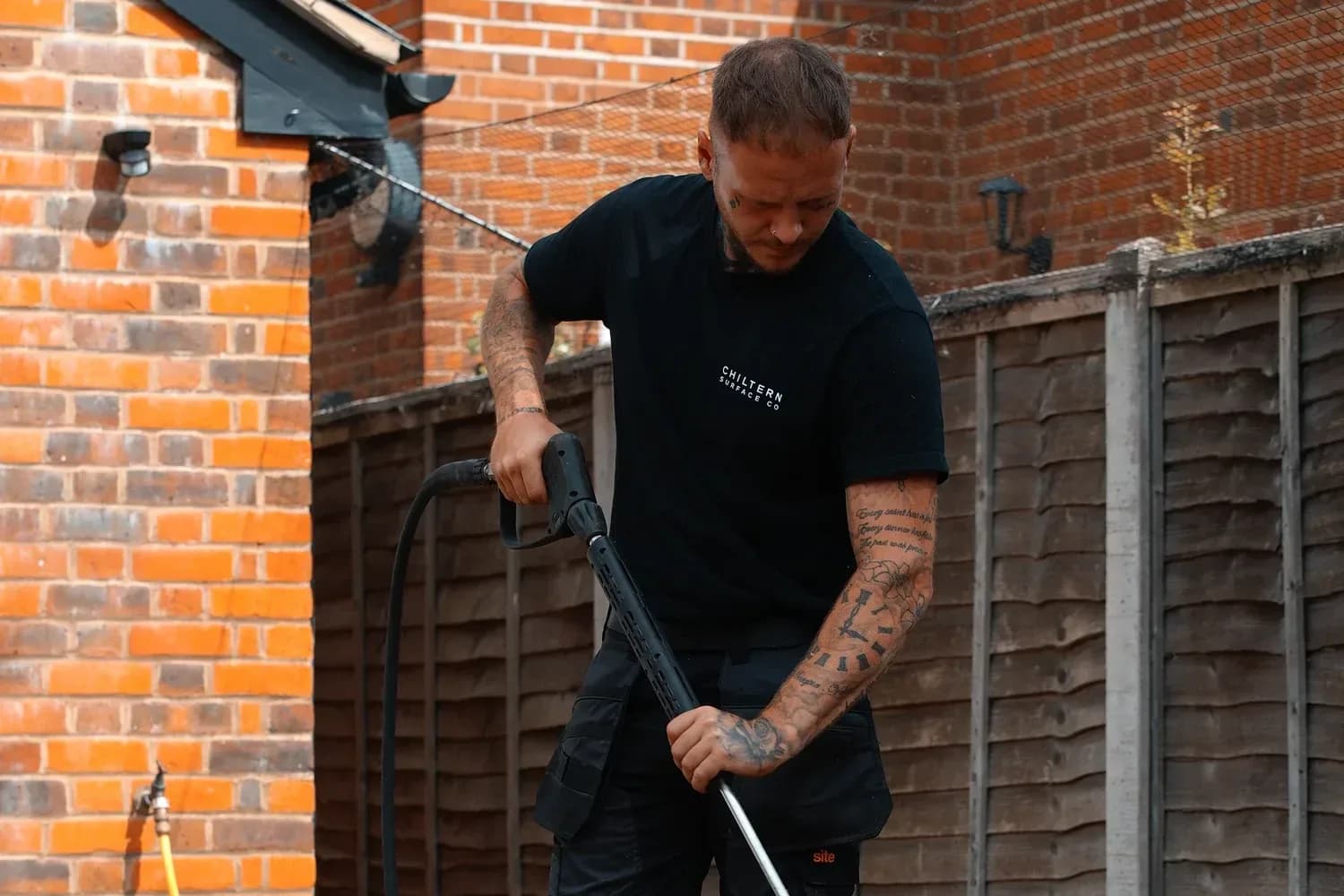
Chiltern Surface Co uses a surface-specific cleaning approach before choosing pressure, soft washing, or treatment-led restoration.
How to Restore a Patio Step by Step
How to restore a patio step by step means completing 7 stages in the right order. Cleaning before joint repair exposes the real condition. Sealing before repair traps defects and weakens the result.
1. Remove Weeds from Joints
Remove weeds with a patio knife, crevice tool, or narrow scraper. Pull roots where practical, not only visible leaves. Avoid digging out sound bedding beneath stable slabs.
2. Apply the Correct Cleaner
Choose a cleaner that suits the surface. Use pH-neutral products for limestone, sandstone, porcelain, and sealed stone. Use alkaline cleaners for many concrete surfaces when the label allows.
3. Scrub or Wash Evenly
Scrub small areas with a soft-bristle or medium-bristle outdoor brush. Use controlled pressure on suitable surfaces only. Keep the nozzle at least 12 inches (30cm) away from delicate paving.
4. Treat Stubborn Stains
Treat black spot, algae, lichen, oil, rust, and tannin marks with stain-specific products. One cleaner cannot treat every stain. Test a hidden area before full application.
5. Rinse the Patio Thoroughly
Rinse cleaner residue from slabs, joints, drains, glass, and nearby planting. Do not push dirty runoff into ponds, borders, or neighbour drains. Collect heavy debris before water carries material away.
6. Repair Joints and Loose Slabs
Repair failed joints after the patio dries. Reset loose slabs before applying fresh jointing. Use compatible jointing compounds such as Sika FastFix or Marshalls Weatherpoint when suitable.
7. Apply Suitable Protection
Apply sealant or biocide after cleaning, drying, and repairs. Some patios need an impregnating sealer. Other patios need biocide treatment or aftercare advice instead.
How to Restore a Patio by Surface Type
How to restore a patio by surface type prevents staining, erosion, and joint damage. Match cleaning strength to the most delicate surface present. A mixed patio needs the gentlest suitable method.
How to Restore Sandstone Patio Slabs
To restore sandstone patio slabs, remove debris, treat black spot, clean gently, and inspect joints. Sandstone absorbs organic staining faster than porcelain. Specialist black spot treatment often works better than pressure alone.
How to Restore Limestone Patio Slabs
To restore limestone patio slabs, avoid acid cleaners and harsh bleach. Use pH-neutral cleaning and controlled brushing. Limestone can etch when acidic products contact the surface.
How to Restore Porcelain Patio Tiles
To restore porcelain patio tiles, sweep, wash with pH-neutral cleaner, rinse, and dry. Use low to medium pressure only where the joint system allows. Keep a fan nozzle around 20 inches (50cm) from the tile surface.
How to Restore Concrete Patio Slabs
To restore concrete slabs, remove weeds, degrease marks, clean evenly, and repair cracks. Do not chase stains with a narrow high-pressure jet. Forceful pressure can expose aggregate and create stripes.
How to Restore Brick and Block Patios
To restore brick or block patios, clean the surface and rebuild the joints. Pressure can remove sand between units. Fresh kiln-dried sand or polymeric sand helps stabilise joints after drying.
How to Restore a Patio with Specialist Stain Treatment
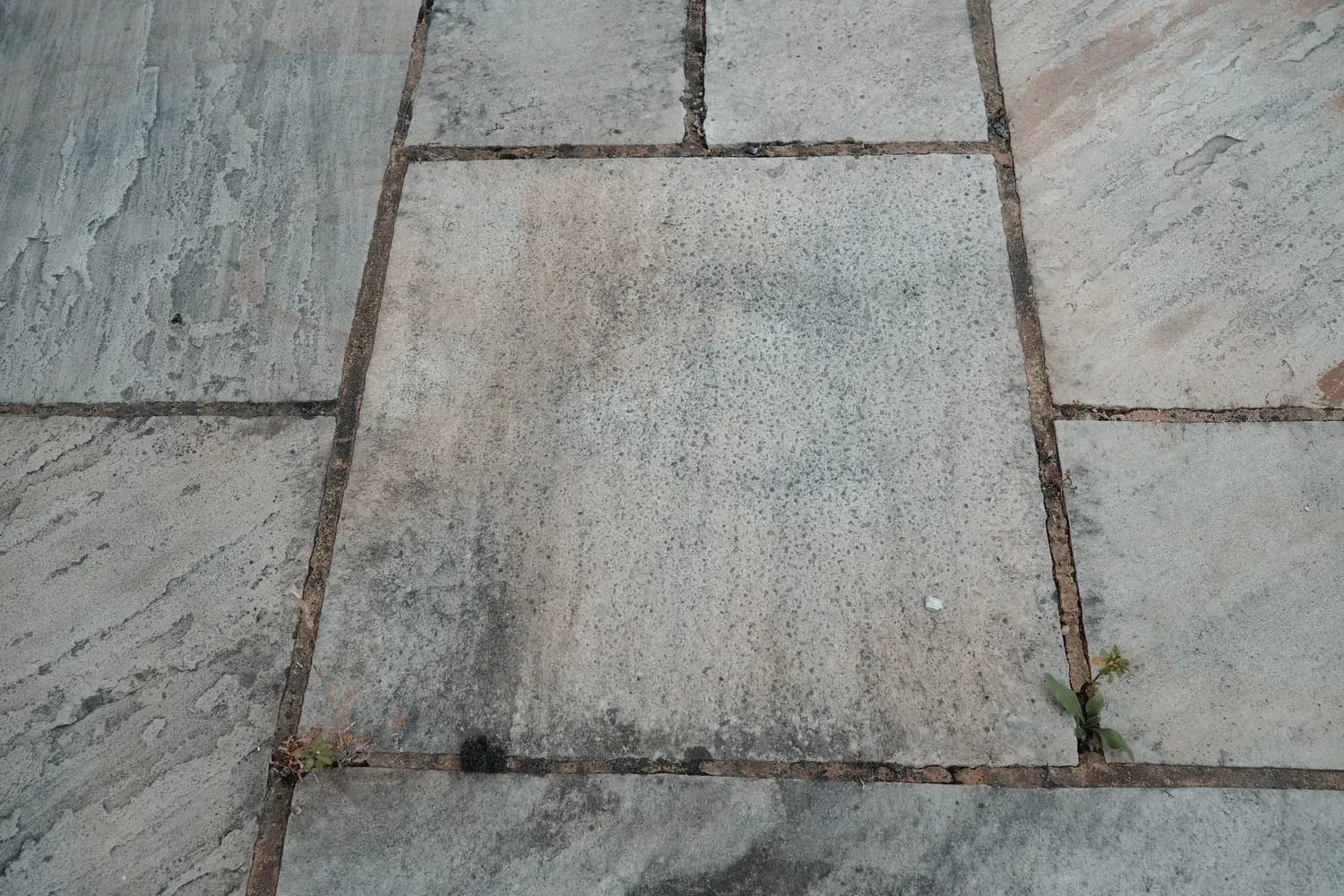
How to restore a patio with stains depends on stain type and paving porosity. Black spot, rust, oil, tannin, and efflorescence need different treatments. The wrong product can set the stain or damage the slab.
Black Spot and Lichen
Black spot often embeds into porous stone. Pressure washing removes surface dirt but leaves deeper black colonies. A specialist treatment targets embedded organic growth more effectively.
Algae and Moss
Algae and moss thrive in shade, damp corners, and poor drainage. Biocide treatment reduces remaining spores after cleaning. Chiltern Surface Co answers common patio questions about black spot, algae, moss, and realistic results.
Oil, Grease, and Barbecue Marks
Oil and grease need absorbent treatment and degreasing. Fresh contamination responds faster than old staining. Deep oil can remain visible inside porous stone or concrete.
Rust and Tannin Marks
Rust can come from furniture legs, fire pits, tools, or fertiliser granules. Tannin marks often come from leaves, acorns, oak furniture, and plant pots. Use stain-specific products after a small test patch.
How to Restore a Patio by Repairing Joints
How to restore a patio properly includes joint repair, not only surface cleaning. Failed joints allow water, weeds, insects, and movement. Loose slabs create trip hazards and damage nearby edges.
Remove Failed Jointing
Rake out loose pointing with a joint rake, patio knife, or plugging chisel. Remove debris to a depth that suits the new jointing system. Clean the joint sides before refilling.
Repoint with Compatible Material
Choose traditional sand and cement, modern jointing compound, or polymeric sand. Sand and cement suits some concrete and stone patios. Sweep-in compounds suit many domestic patios when the joint width matches instructions.
Reset Loose Slabs
Lift loose slabs only when you can repair bedding safely. Add or replace bedding material, then return the slab to the correct level. Maintain a fall of at least 1 in 60 where the patio design requires drainage.
How to Restore a Patio with Sealant or Treatment
Sealing helps some patios resist stains, moisture, and easier dirt build-up. Sealing does not suit every material, finish, or previous coating. Apply sealant only after cleaning, drying, joint repair, and compatibility testing.
When Sealing Helps
Sealing helps porous materials such as sandstone, limestone, concrete, and some brick pavers. An impregnating sealer sits within the pore structure. A topical sealer forms a visible film on the surface.
When Sealing Causes Problems
Sealing can trap moisture, dirt, old coatings, and cleaning residue. Poor sealing can create clouding, peeling, patchiness, and slippery finishes. Never seal moving slabs or damp joints.
When Biocide Works Better
Biocide treatment can slow organic regrowth after cleaning. Biocide suits shaded patios affected by moss, algae, and lichen. Treatment-led care can be safer than film-forming sealant on some surfaces.
Quick Reference: Patio Restoration Tasks
| Task | Timing | Method | Difficulty |
|---|---|---|---|
| Inspect material and joints | Before cleaning | Walkover, photos, movement check | Easy |
| Clear debris and furniture | 20-45 minutes | Sweep, bag debris, protect plants | Easy |
| Remove weeds | 30-90 minutes | Crevice tool, patio knife, root removal | Moderate |
| Deep clean slabs | 1-4 hours | Cleaner, brush, controlled pressure | Moderate |
| Treat black spot | 30-120 minutes | Specialist product and dwell time | Advanced |
| Repair joints | 2-6 hours | Rake out, refill, finish joints | Advanced |
| Dry before sealing | 24-72 hours | Natural drying and moisture check | Easy |
| Apply protection | 1-3 hours | Biocide or compatible sealant | Advanced |
How to Restore a Patio Without Causing Damage
How to restore a patio safely also means avoiding shortcuts. Most damage comes from maximum pressure, wrong chemicals, wet sealing, and ignored movement. A careful process protects the surface and the surrounding property.
Blasting Joints with High Pressure
High pressure can remove jointing compound, sand, and loose mortar. Aim across the slab face rather than directly along the joint. Use the lowest effective pressure and a fan nozzle.
Using Acid on Sensitive Stone
Acidic products can damage limestone, marble, travertine, and some sandstone. Vinegar also creates etching on acid-sensitive stone. Use pH-neutral cleaners where stone type is uncertain.
Sealing Before the Patio Dries
Wet pores and joints trap moisture under sealant. Trapped moisture can create whitening, peeling, bubbling, and poor adhesion. Wait 24-72 hours after washing, depending on weather and material.
Ignoring Loose Slabs
Loose slabs need repair before cleaning or sealing. Movement breaks new joints and creates trip hazards. Restoration lasts longer when bedding and edges remain stable.
How to Restore a Patio Yourself
Yes, you can complete light patio maintenance yourself when the surface remains stable. Professional restoration suits black spot, heavy staining, loose slabs, failed joints, and delicate materials. A trained team reduces the risk of damage.
DIY Jobs That Make Sense
You can sweep, remove light weeds, wash with mild cleaner, and rinse a sound patio. You can maintain furniture feet, move pots, and clear drainage channels. You can test products on hidden areas before wider use.
Jobs That Need Professional Care
Book professional care for limestone, sandstone, porcelain, black spot, failed pointing, and recurring algae. Professional equipment controls pressure, runoff, treatment strength, and surrounding protection. Chiltern Surface Co provides patio restoration work across Marlow and Buckinghamshire.
How to Restore a Patio with Planned Maintenance
How to restore a patio for lasting results includes simple maintenance after the main work. Clean patios last longer when debris, weeds, and standing water stay under control. A planned routine prevents heavy restoration every year.
Weekly and Monthly Care
Sweep the patio once weekly during spring and summer. Remove leaves, grass cuttings, soil, berries, and flower heads before marks form. Rinse food spills and barbecue grease on the same day.
Seasonal Care
Inspect joints 2 times yearly in spring and autumn. Clear drainage channels before winter. Treat early algae growth before the patio becomes slippery.
Long-Term Protection
Review sealer performance every 2-3 years where a sealer suits the material. Schedule biocide aftercare where shade and damp conditions return. Ask for a professional check when stains or movement return quickly.
How to Restore a Patio with Chiltern Surface Co
How to restore a patio well starts with the correct assessment, surface-safe cleaning, joint repair, and aftercare. Chiltern Surface Co inspects the material, condition, staining, drainage, access, and surrounding surfaces before recommending work. Book a free site visit through the patio cleaning service. Chiltern Surface Co will provide a clear quotation and restoration plan.
Frequently asked questions
Can every old patio be restored?
No. A stable patio with dirt, stains, weeds, and joint failure can often be restored. A patio with widespread movement, failed bedding, or poor drainage often needs repair or replacement.
Does pressure washing restore a patio?
No. Pressure washing only completes part of patio restoration. Full restoration can include weed removal, stain treatment, joint repair, slab resetting, sealing, and aftercare.
Should you seal a patio after restoration?
Not always. Sealing depends on the material, finish, moisture level, joint condition, and previous coatings. Biocide treatment or aftercare can suit some patios better.
Can black spot be removed from patio slabs?
Yes, on many natural stone surfaces. Results depend on stone type, stain depth, age, and previous cleaning attempts. Specialist treatment usually works better than pressure washing alone.
How often should you restore a patio?
Most patios need deep restoration every 2-5 years. Shaded patios often need more frequent treatment. Routine sweeping and early stain removal extend results.