
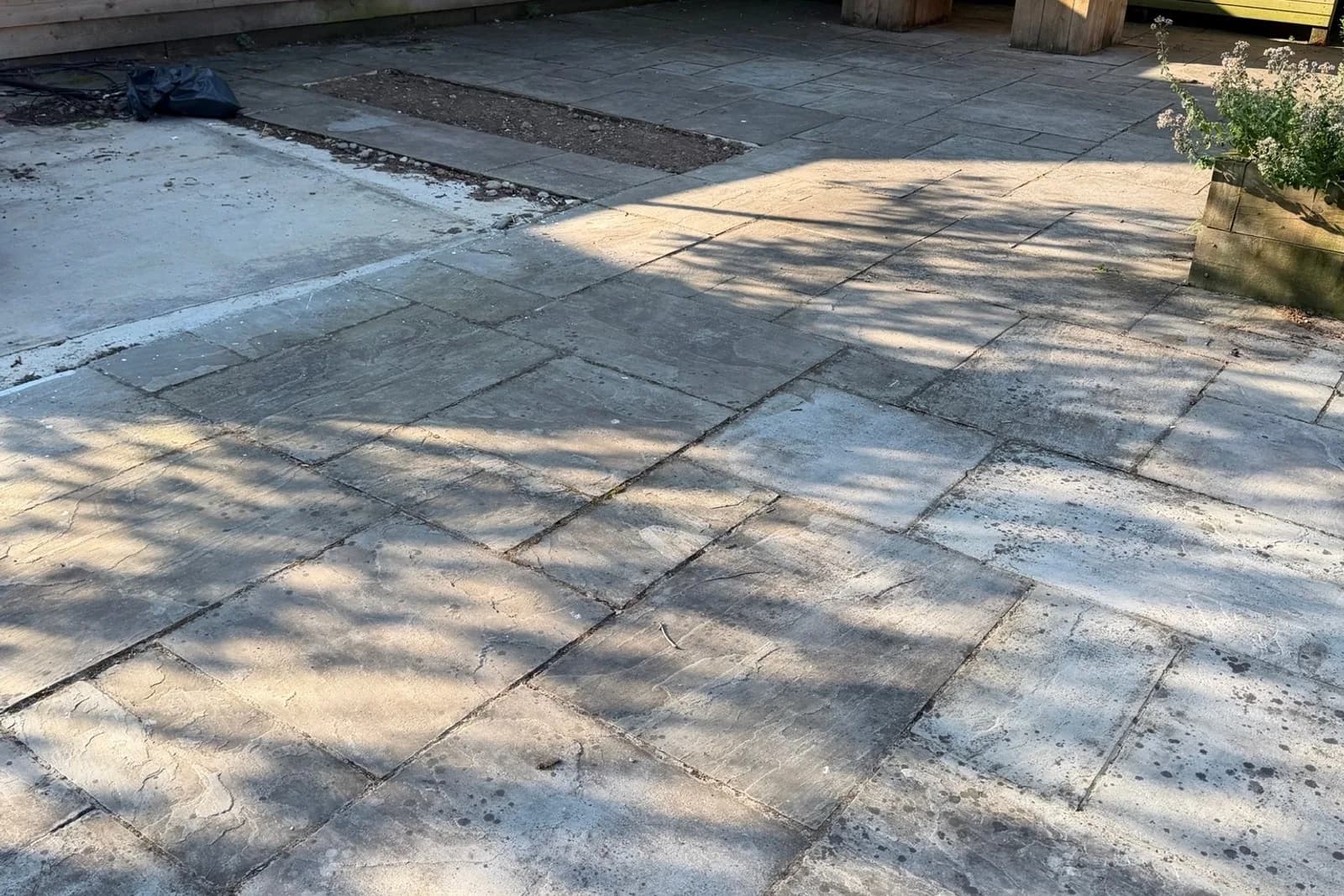
You can clean concrete without high-pressure equipment by sweeping, pre-treating stains, scrubbing with a suitable cleaner, and rinsing thoroughly. Learning how to clean concrete without pressure washer damage also protects sealants, edges, joints, plants, and nearby drainage.
Concrete pores hold dirt, algae, oil, rust, and organic staining. Manual cleaning controls chemical strength, brush pressure, water use, and runoff.
What Is the Safest Way to Clean Concrete Without High Pressure?
The safest method uses mild cleaner, controlled scrubbing, clean water, and complete drying. Knowing how to clean concrete without pressure washer equipment starts with the gentlest suitable treatment.
Check the Concrete Type and Condition
Inspect the surface before choosing any cleaner. Identify plain concrete, sealed concrete, coloured concrete, stamped concrete, or pattern-imprinted concrete.
Look for cracks, loose edges, flaking sealer, exposed aggregate, weak repairs, and standing water. Cleaning can worsen damaged areas when force or chemicals reach unstable material.
Test every product on a hidden patch measuring 6 inches (15cm) across. Wait for complete drying before judging colour, texture, or sealer changes.
Protect Plants, Walls, and Drainage
Move furniture, planters, vehicles, mats, and decorative objects. Sweep walls, doors, drains, and channel edges.
Wet nearby plants with clean water before applying any labelled outdoor cleaner. Cover sensitive foliage with breathable sheeting during short treatment periods.
Block dirty water from entering surface drains whenever product labels prohibit discharge. Collect residue with a wet vacuum, absorbent pads, or a floor squeegee.
Avoid Dangerous Chemical Combinations
Use 1 cleaning product at a time. Never combine bleach, acids, ammonia, degreasers, or proprietary outdoor cleaners.
Chemical mixtures can release toxic gases or damage concrete. Follow label dilution, contact time, protective equipment, and disposal instructions.
Avoid household vinegar on concrete. Acid can etch cement paste, lighten patches, weaken finishes, and damage some sealers.
What Tools Do You Need for Manual Concrete Cleaning?
You need 8 basic items for most jobs. Knowing how to clean concrete without pressure washer tools requires controlled, non-metal equipment.
Use these tools:
· Wear waterproof gloves and eye protection.
· Use a stiff nylon deck brush.
· Carry 2 buckets for cleaner and rinse water.
· Sweep with a firm outdoor broom.
· Apply cleaner with a watering can or pump sprayer.
· Rinse with a garden hose or clean watering can.
· Move water with a rubber floor squeegee.
· Collect fresh spills with absorbent granules.
Avoid wire brushes, metal scrapers, and sharp tools. Metal can scratch concrete, leave rust particles, and damage decorative finishes.
A 12-inch (30cm) brush head balances coverage and control. Use a hand brush around edges, drains, steps, and joints.
Quick Reference: Manual Concrete Cleaning Tasks
| Task | Timing | Method | Difficulty |
|---|---|---|---|
| Remove loose debris | 10-15 minutes | Sweep twice with a firm outdoor broom | Easy |
| Treat fresh spills | 15-30 minutes | Apply absorbent granules, press, collect, and repeat | Easy |
| Pre-treat stains | 10-20 minutes | Apply a surface-compatible cleaner to marked areas | Moderate |
| Scrub the surface | 5-10 minutes per 4 feet x 4 feet (1.2m x 1.2m) | Work with a stiff nylon deck brush | Moderate |
| Rinse and collect residue | 10-20 minutes | Use clean water and direct runoff safely | Moderate |
| Allow full drying | 4-24 hours | Keep vehicles, furniture, and coverings off the surface | Easy |
How to Clean Concrete Without Pressure Washer Step by Step
To understand how to clean concrete without pressure washer equipment, work in small sections. Controlled stages prevent missed patches, residue, streaks, and runoff.
Step 1: Clear and Sweep the Surface
Remove vehicles, furniture, pots, bins, mats, toys, and tools. Pull weeds before wet cleaning.
Knowing how to clean concrete without pressure washer force begins with sweeping in 2 directions.
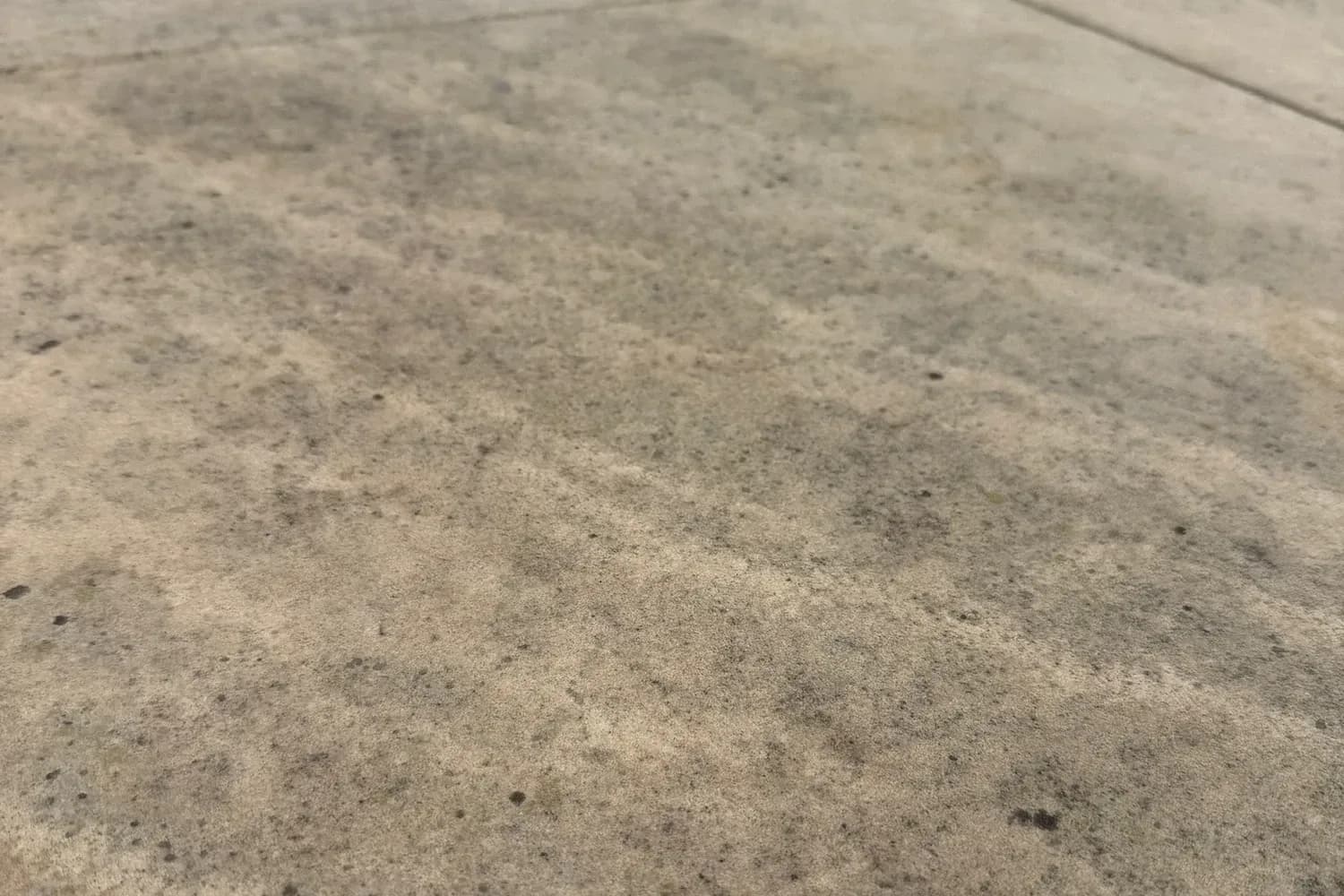
Inspect the cleared surface under dry conditions. Mark oil, rust, algae, leaf tannin, tyre marks, paint, and chewing gum separately.
Step 2: Absorb Fresh Oil or Grease
Cover fresh oil with clay granules, cat litter, sawdust, or commercial absorbent. Press the material into the spill.
Leave the absorbent for 15 minutes on small spills. Leave deeper spills for 2 hours when the product instructions permit.
Sweep the material into a strong bag. Follow local disposal rules because oil-soaked absorbent should not enter household drains.
Step 3: Pre-Wet Bare Concrete
Lightly wet bare concrete with clean water. Pre-wetting reduces rapid cleaner absorption and supports more even treatment.
Avoid puddles before applying cleaner. Excess water weakens the solution and moves contamination across the slab.
Skip pre-wetting when the manufacturer requires a dry surface.
Step 4: Apply the Correct Cleaner
Knowing how to clean concrete without pressure washer damage requires compatible chemistry. Use mild detergent for soil and pH-neutral cleaner for sealed concrete.
Choose an alkaline concrete degreaser for oil, grease, tyre residue, or food fat. Choose an oxygen-based outdoor cleaner for algae and organic staining.
Apply enough solution to wet the working section. Prevent the cleaner from drying before scrubbing or rinsing.
Step 5: Scrub in Overlapping Sections
Scrub one 4-foot x 4-foot (1.2m x 1.2m) section at a time. Use short, overlapping strokes.
Work across textured concrete in 2 directions. Cross-scrubbing reaches shallow pits, stamped patterns, broom marks, and exposed pores.
Apply steady brush pressure rather than sharp force. Aggressive scrubbing can wear weak sealer, coloured finishes, and fragile repairs.
Step 6: Rinse Thoroughly
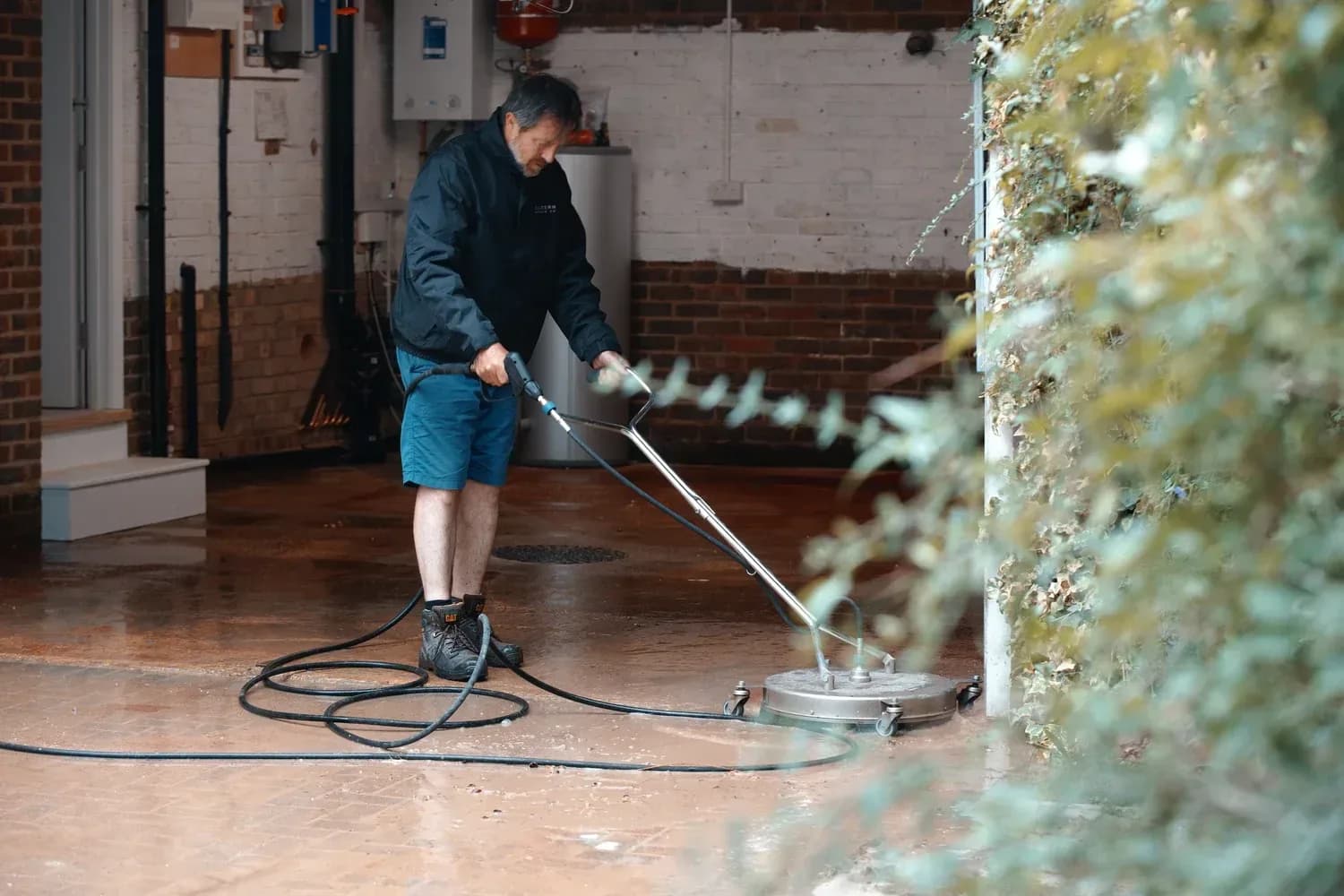
Rinse each finished section with clean water. Push dirty water toward a safe collection point with a rubber squeegee.
Repeat rinsing until foam, cleaner, soil, and loosened residue disappear.
Work from the highest point toward the drainage or collection area.
Step 7: Inspect After Drying
Allow the concrete to dry completely before judging results. Wet concrete hides remaining stains and makes colour differences less visible.
Inspect the surface after 4-24 hours. Drying time depends on shade, temperature, airflow, porosity, and previous sealing.
Repeat only the stain treatment when marks remain. Avoid repeating the full clean without a clear reason.
How to Clean Concrete Without Pressure Washer by Stain Type
To learn how to clean concrete without pressure washer force, match the cleaner to the stain. One product cannot treat every contaminant.
How to Remove Oil and Grease
Knowing how to clean concrete without pressure washer force matters most with oil. Absorb fresh oil before adding water.
Apply a labelled concrete degreaser. Agitate with a nylon brush and follow the stated contact time.
Rinse and collect residue carefully. Repeat treatment for old staining because deep oil often needs 2 or 3 applications.
Professional treatment can reduce stubborn contamination that penetrates deeply. Chiltern explains realistic results during a site assessment.
How to Remove Algae, Moss, and Lichen
Knowing how to clean concrete without pressure washer damage helps protect porous surfaces. Sweep growth, then apply a compatible oxygen cleaner.
Allow the product to work for the stated contact time. Scrub algae after treatment loosens the growth from the pores.
Rinse surrounding plants before and after treatment. Keep pets and children away until the surface dries and the label permits access.
Lichen and black spot anchor below the visible surface. Deep growth often needs professional treatment rather than repeated household scrubbing.
How to Remove Rust Marks
Knowing how to clean concrete without pressure washer force does not justify household acids. Use a compatible specialist rust remover.
Apply the product to a 6 inches (15cm) test area first. Rinse at the exact time stated on the label.
Treat the rust source after cleaning. Metal furniture, fertiliser granules, irrigation water, and corroding fixings can create repeat marks.
How to Remove Leaf and Tannin Stains
Sweep wet leaves quickly after storms. Tannin colour can enter porous concrete during prolonged contact.
Apply an oxygen-based cleaner to brown or yellow marks. Scrub gently, rinse fully, and allow the surface to dry.
Older tannin staining often fades through 2 controlled treatments.
How to Remove Tyre Marks and General Grime
Use a concrete degreaser for dark tyre residue. Work the cleaner across each mark with a nylon brush.
Use warm water and mild detergent for soil, dust, food residue, and light traffic film. Rinse until the water runs clear.
Avoid solvent cleaners unless the concrete or sealer manufacturer approves use. Solvents can soften coatings and spread oily residue.
How to Clean Concrete Without Pressure Washer Damage on Different Finishes
To understand how to clean concrete without pressure washer damage, identify the finish first. Decorative and sealed surfaces need gentler handling.
Plain and Broom-Finished Concrete
Knowing how to clean concrete without pressure washer equipment helps on porous slabs. Plain concrete tolerates firm nylon brushing and compatible alkaline cleaner.
Pre-wet unsealed concrete when the cleaner instructions allow. Keep sections evenly damp during treatment and rinse before product residue dries.
Check cracks before scrubbing. Loose repairs and crumbling edges need repair rather than aggressive cleaning.
Sealed and Pattern-Imprinted Concrete
Knowing how to clean concrete without pressure washer damage protects decorative coatings. Use pH-neutral cleaner on sealed or pattern-imprinted concrete.
Avoid hard scrubbing on faded colour, worn sealer, or exposed decorative layers. Cleaning cannot replace missing sealer or restore damaged pigment.
Book a professional assessment when the finish looks patchy. Chiltern offers cleaning and resealing for worn pattern-imprinted concrete driveways.
Stamped, Coloured, and Exposed Aggregate Concrete
Use soft or medium nylon bristles on decorative finishes. Hard brushes can create uneven sheen.
Avoid acids on coloured concrete. Acid can alter pigments, expose aggregate, and produce permanent tone changes.
Rinse exposed aggregate carefully because loose stones can move from damaged areas. Repair unstable sections before cleaning.
How Should You Clean Concrete Patios and Driveways Differently?
Patios need closer control around plants, furniture, food areas, and doors. Knowing how to clean concrete without pressure washer damage changes by location.
Cleaning a Concrete Patio
Knowing how to clean concrete without pressure washer equipment suits small patios. Remove furniture, barbecues, rugs, and storage boxes first.
Use a mild detergent for routine soil. Choose targeted products for algae, black spot, rust, or food grease.
Chiltern's patio cleaning service treats concrete and paving with methods matched to the surface condition. Professional treatment also addresses embedded organic growth.
Cleaning a Concrete Driveway
Knowing how to clean concrete without pressure washer force helps with targeted driveway stains. Mark oil, coolant, tyre residue, and rust first.
Divide large driveways into sections measuring 6 feet x 6 feet (1.8m x 1.8m). Complete one section before continuing.
Keep runoff away from roads, gardens, drains, and neighbouring property. Use absorbent barriers around contaminated wash water.
Cleaning Garage Floors and Covered Concrete
Ventilate covered areas before applying cleaner. Keep ignition sources away from vehicle fluids, solvents, and contaminated absorbents.
Use limited rinse water inside garages. Collect dirty liquid with a wet vacuum or squeegee and absorbent pads.
Allow the floor to dry before parking. Damp floors can remain slippery and can trap moisture beneath stored items.
Which Products Are Safe for Cleaning Concrete by Hand?
Safe choices include mild detergent, pH-neutral cleaner, oxygen cleaner, and labelled degreaser. Knowing how to clean concrete without pressure washer damage requires product compatibility.
Mild Detergent for Routine Dirt
Use plain washing-up liquid without bleach, ammonia, or disinfectant additives. Add only a small amount to warm water.
Use the detergent on dust, soil, food residue, and light grime. Rinse thoroughly because soap residue attracts dirt and creates slipperiness.
pH-Neutral Cleaner for Sealed Concrete
Use a pH-neutral cleaner on sealed, coloured, and decorative surfaces. Neutral products reduce the risk of coating damage.
Check compatibility with acrylic, polyurethane, epoxy, or penetrating sealers.
Specialist Cleaner for Defined Stains
Use a labelled degreaser for oils. Use a rust remover for iron marks. Use an oxygen cleaner for organic staining.
Follow the stated dilution and dwell time. More product does not produce safer or better results.
Never mix cleaning products. Rinse the surface and tools fully before changing products.
When Is Manual Cleaning Better Than Pressure Washing?
Manual cleaning suits small areas, light grime, delicate finishes, and targeted stains. Knowing how to clean concrete without pressure washer force reduces stress around repairs.
Choose manual cleaning below 100 square feet (9.3 square metres). A brush-and-rinse method gives practical control across patios and paths.
Choose manual cleaning when concrete shows weak edges, old repairs, flaking sealer, or decorative detail. High pressure can enlarge existing damage.
Choose professional cleaning for large areas, heavy organic growth, deep oil, black spot, or widespread discolouration. Professional equipment provides controlled, even treatment.
Chiltern follows a surface-specific cleaning approach rather than applying one pressure level everywhere. A site assessment determines the safest method.
How Often Should You Clean Concrete Without a Pressure Washer?
Clean general concrete 2 times yearly and treat fresh stains immediately. Knowing how to clean concrete without pressure washer equipment supports routine care.
Sweep patios, paths, and driveways every 1-2 weeks during leaf fall. Regular sweeping prevents damp organic debris from feeding algae.
Wash lightly soiled concrete every 6 months. Schedule spring and autumn cleaning for UK weather patterns.
Inspect shaded sections every 3 months. North-facing areas, tree-covered driveways, and damp patio corners develop organic growth faster.
Reapply sealer only after proper cleaning and drying. Follow the original sealer manufacturer's maintenance interval and preparation instructions.
When Should You Book Professional Concrete Cleaning?
Book professional cleaning for deep stains, widespread growth, or damaged surfaces. Knowing how to clean concrete without pressure washer equipment has practical limits.
Request help for large driveways, steep access, drainage restrictions, repeated algae, black spot, or old oil staining.
Request help when pattern-imprinted concrete needs resealing. Cleaning and coating preparation require compatible products and even surface results.
Request help when manual treatment changes colour or texture. Stop treatment immediately and allow the concrete to dry before further work.
Chiltern provides professional driveway cleaning for concrete, pattern-imprinted concrete, block paving, resin-bound, tarmac, and gravel surfaces.
Frequently asked questions
Can washing-up liquid clean concrete?
Yes. Plain washing-up liquid removes light soil, food residue, and surface grime. Rinse thoroughly to prevent slippery soap residue.
Can baking soda clean concrete?
Yes. Baking soda can treat small marks with gentle brushing. Test sealed or coloured concrete before wider use.
Should you use vinegar on concrete?
No. Vinegar contains acid that can etch cement paste, alter colour, and damage some sealers.
Can you remove old oil stains without pressure washing?
Yes, but deep stains need repeated treatment. Use absorbent material first, then apply a labelled concrete degreaser.
Does manual cleaning work on algae and black spot?
Yes for light algae, but deep growth needs specialist treatment. Lichen and black spot anchor within porous concrete.
What Should You Do Next?
Knowing how to clean concrete without pressure washer force starts with surface identification, targeted products, controlled scrubbing, and thorough rinsing. Stop when concrete shows damaged sealer, loose repairs, deep contamination, or widespread growth. Repeated treatment can create uneven colour and runoff. Book a free Chiltern site visit when manual treatment cannot deliver safe, even results. Chiltern Surface Co will inspect the surface and provide a clear quotation. Excerpt Learn how to clean concrete without a pressure washer using safe, practical methods for dirt, algae, oil marks and weather staining. Discover when DIY cleaning works and when professional surface care delivers better results.