
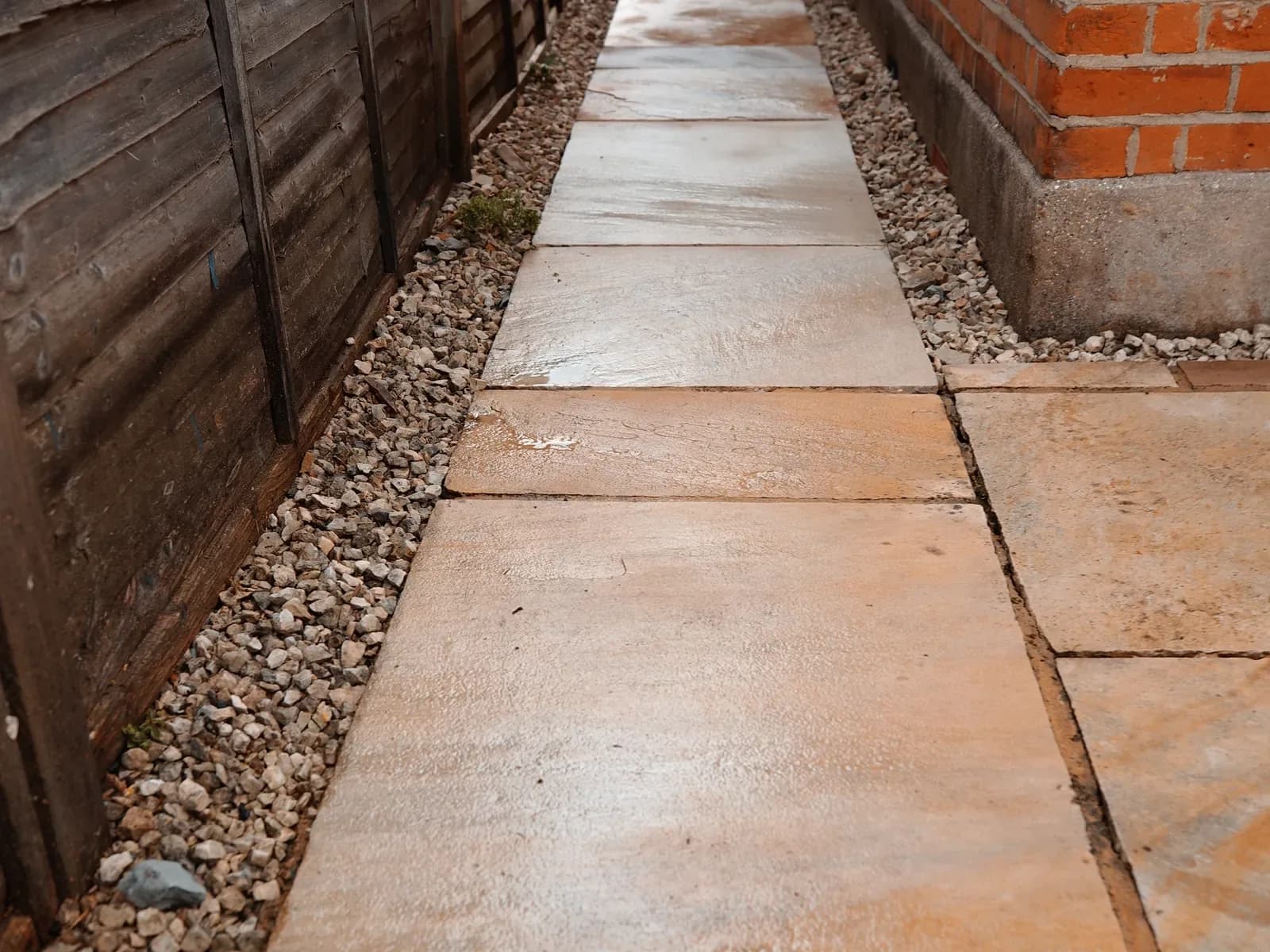
Having a concrete patio makes a garden appear open, clean, spacious and convenient to use. However, with time, such a patio may begin to collect various types of stains, including green algae, moss, oil marks and black spots. What is worse, the accumulation of these stains can lead to the patio becoming slippery.
Fortunately, a concrete patio can usually be cleaned effectively, provided the correct technique is used. Unfortunately, most homeowners resort to applying high pressure to clean such a patio or employ inappropriate cleaning agents or DIY techniques which only bring temporary results.
The following article describes how to clean a concrete patio surface properly, explains the reasons why such a patio may become dirty, outlines the most effective ways of cleaning a concrete patio, and highlights when professional patio cleaning is advisable.
Why Concrete Patios Become Dirty
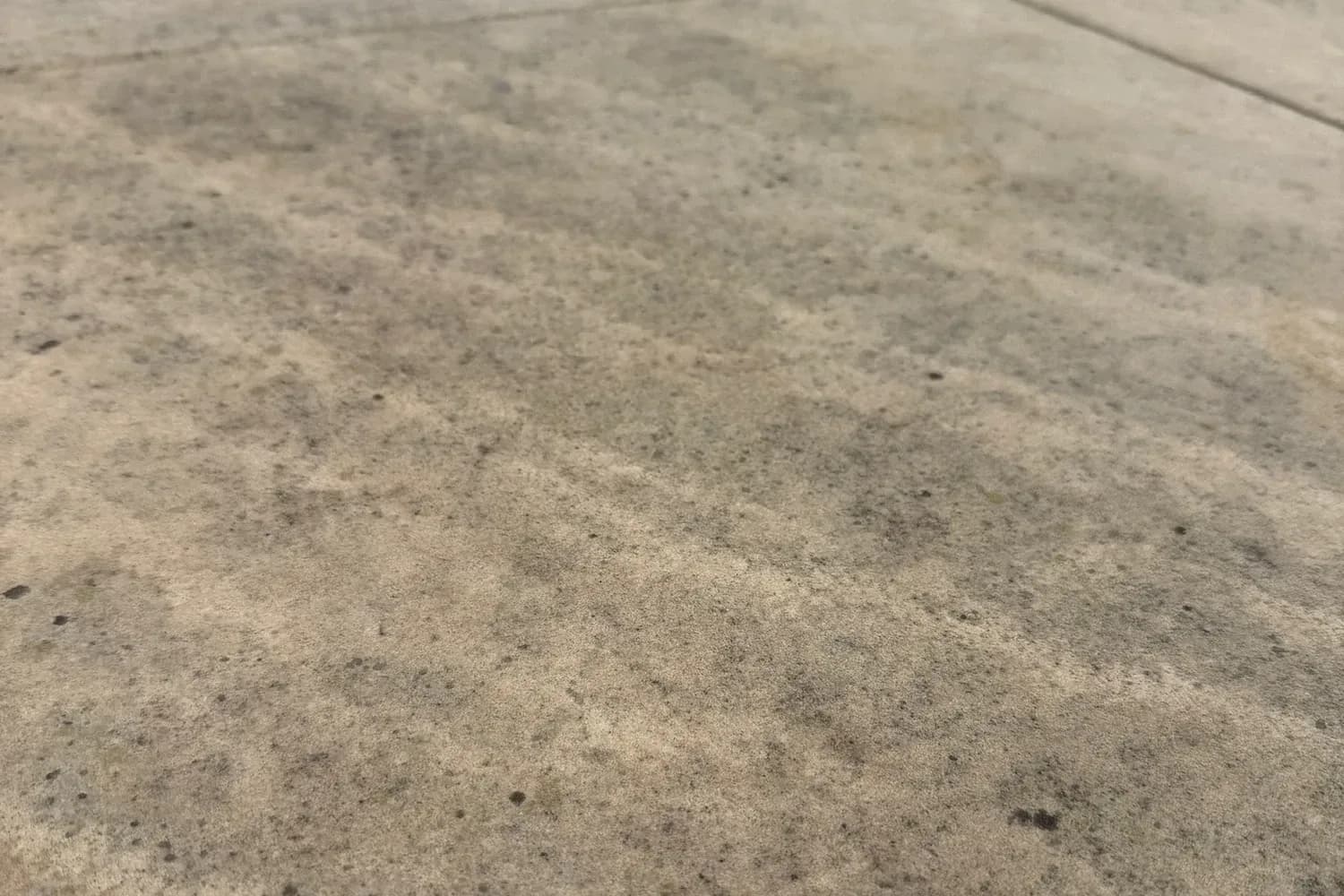
Although concrete patio surfaces appear to be smooth, their surface structure contains tiny pores capable of retaining dust, soil, moisture, grease and organic matter, like algae and moss. Consequently, if this matter becomes trapped within the pores, no amount of raining will clean it.
As a rule, concrete patios suffer due to their being dirty mostly after winter. Specifically, in the UK, concrete patios can easily turn dirty due to such factors as damp climate, shaded gardening spaces, branches and leaves of overhanging trees, insufficient drainage and excessive humidity.
Some of the most common reasons why a concrete patio turns dirty include:
- Moss in corners and along cracks and joints
- Green algae in shaded areas of the patio
- Black spots due to lichen, especially if the concrete patio is old
- Oil and grease stains left by barbecues, outdoor equipment and other devices
- Furniture or plant stands creating rusty marks
- Dirt and mud accumulated by foot traffic
- Leaves and other debris resting on the patio
In fact, at first, such marks will probably only affect the visual aspect of the patio. However, as soon as algae or moss develop sufficiently, they will make the patio slippery. Therefore, regular concrete patio cleaning is recommended as it will provide the surface with extra safety, cleanliness and convenience.
The Best Ways of Cleaning a Concrete Patio Surface
Unfortunately, when dealing with cleaning a concrete patio surface, most people think about applying pressure straightaway. Indeed, the best way of cleaning a concrete patio surface is the staged one.
First of all, one should clear the patio, sweeping away all the dirt, treating the stains, scrubbing problematic areas, rinsing the surface properly and drying it. When dealing with algae, moss or lichen, one might additionally require special treatments to make the concrete patio surface less susceptible to staining.
The main stages of the process include:
- Removing furniture, flower pots, toys and all kinds of garden equipment
- Sweeping away leaves, dirt, soil, twigs and moss which are not firmly attached
- Inspecting the patio surface to determine its condition
- Treating it with the appropriate concrete patio cleaning agent or special treatment
- Scrubbing all stains
- Rinsing the patio surface with clean water
- Allowing it to dry
Optional sealing of the concrete patio surface
As one can see, this method proves to be effective as it addresses both dirt and stains stuck to the surface. However, while a pressure washer may seem to solve the problem, it may actually make it recur soon since it cannot address algae or moss.
Tools You Might Need for Cleaning a Concrete Patio
It will be easier and safer to carry out a patio cleaning process when possessing the required tools. The necessary tools include:
- Stiff bristle brush
- Broom or leaf blower
- Garden hose
- Bucket
- Detergent
- Patio concrete cleaner
- Degreaser for oil spots
- Safety gloves and goggles
It is recommended that you do not use any wire brushes as they may cause scratches on the concrete surface. In addition, they may leave minute metal particles which will further cause rusting. Moreover, you are supposed to avoid acid patio cleaning solutions unless absolutely sure about their compatibility with your patio.
How to Prepare Your Concrete Patio Surface for Cleaning
In order to clean the patio successfully, you are supposed to prepare it adequately. As the first step, one should remove all the furniture and equipment from the patio. In this case, you will probably have to sweep the patio twice because, otherwise, some areas of it may dry out unevenly.
Another point to take into account is that you should examine the patio surface. Specifically, you will need to check it for signs of cracking, crumbling and weakness, especially if the concrete surface is old. In this case, one should refrain from cleaning it with high pressure as it may make its condition even worse.
How to Clean a Concrete Patio Surface Without Using a Pressure Washer
A pressure washer may prove to be ineffective in cleaning a concrete patio. Fortunately, there is an alternative way which does not involve using it.
First of all, you are supposed to dilute a mild detergent in warm water and then pour the mixture onto the patio surface, allowing it to stay there for 10-15 minutes. Then you will have to scrub the patio surface using a stiff bristle brush.
Such a simple method works for concrete patios, which do not require powerful cleaning agents to get rid of their dirtiness. It is recommended in case when the patio requires periodic light cleaning. Besides, it can be considered to be relatively safe for older concrete.
Nevertheless, the above-discussed method will hardly allow one to tackle oil spots, black spots, heavy algae and moss stains. In these cases, one would have to resort to more powerful cleaning techniques.
Using a Pressure Washer to Clean a Concrete Patio Surface
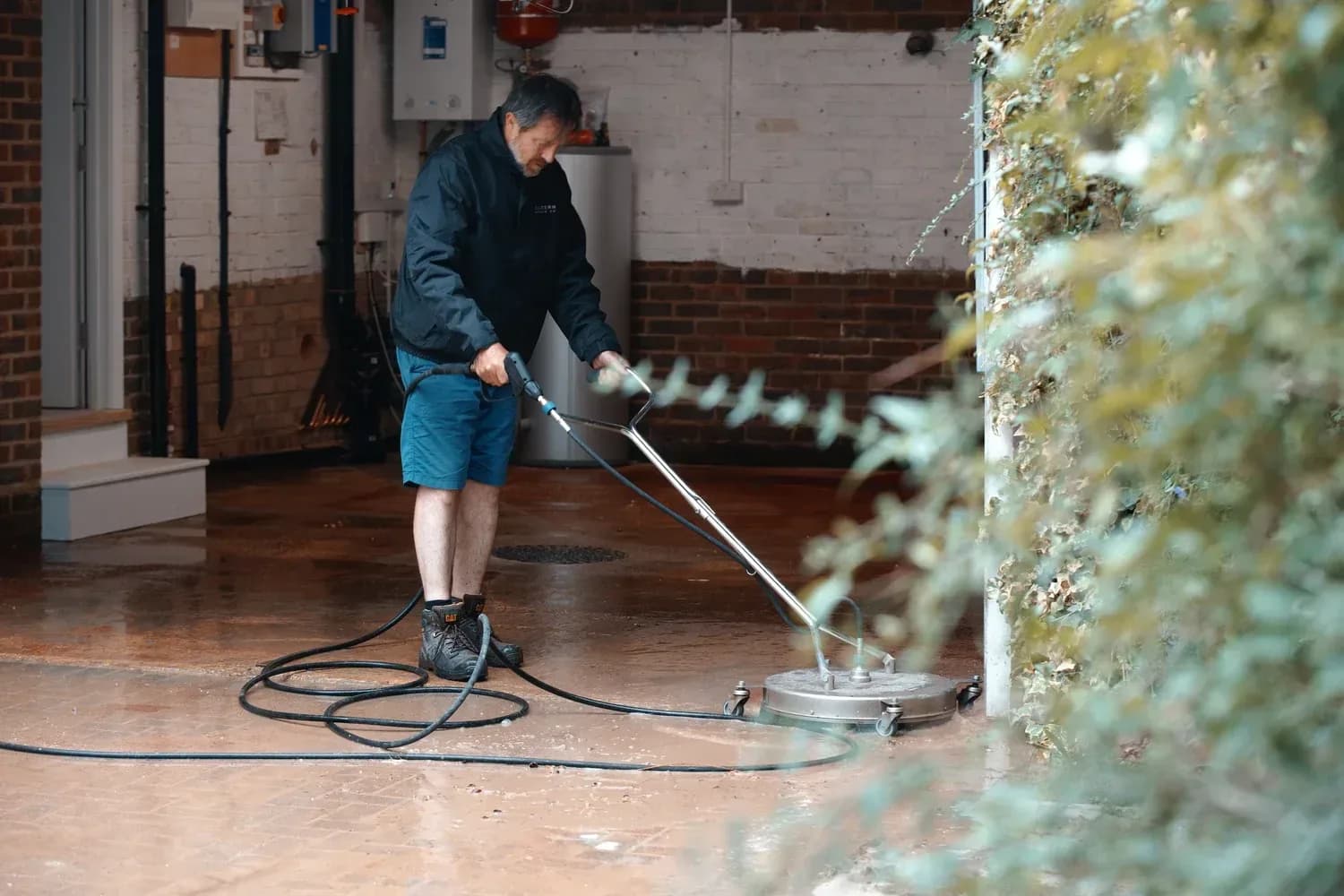
A pressure washer is known for its effectiveness in cleaning concrete patio surfaces. Nevertheless, the pressure applied should not be too high as it may damage the patio. In addition, it may leave lines and marks making the surface even more dirty.
When employing a pressure washer, one should use the lowest pressure at first and never keep the nozzle close to the patio surface. One should additionally test the surface in a small and hidden area before applying more pressure to it.
One should clean the patio surface in even passes, trying to avoid strokes. In addition, a special attachment for cleaning patio surfaces will produce an even effect.
One should be careful when dealing with joints, cracks, edges, and old patios because of the danger of damaging them. If in doubt, you should prefer professional patio cleaning services to such high risk.
Difference Between Soft Wash and Pressure Wash
It is commonly believed that using a pressure washer is the only way to clean a patio surface. While this may be true in some cases, soft wash can provide longer-lasting results and make a difference.
Specifically, the former uses the force produced by pressure to make the patio cleaner whereas the latter uses a concrete patio cleaner solution in order to break down moss, algae and mildew, thus providing a gentler way of cleaning a patio surface. A combined method is the best way to clean a concrete patio.
The cleaning technique chosen by Chiltern Surface for your concrete patio depends on the condition of the concrete, its type, age and staining problems.
How to Remove Green Algae from a Concrete Patio
Green algae are among the most common problems faced by owners of concrete patios. Usually, algae appear when the concrete patio does not have enough sun or airflow, thus remaining damp and dirty. Such a patio will not only appear unsightly, but it will become slippery as well.
In order to remove algae from concrete surfaces, one needs to sweep it, apply a specific patio treatment and allow it to take effect. Then you are supposed to scrub it and rinse the patio with plenty of water.
While cleaning the patio, it is essential to remember that simply wiping algae off the patio surface will hardly produce any results as this growth will grow again within weeks if not addressed.
How to Remove Moss from a Concrete Patio Surface
Moss tends to appear in shaded areas of concrete patio, in particular, along joints, cracks, corners and edges. As moss retains moisture, a concrete patio with moss becomes particularly slippery and vulnerable to dirt.
In order to remove moss from the patio surface, one needs to sweep it, apply a patio cleaning solution, wait until the moss gets affected by it and rinse the patio.
It is vital to avoid the temptation to blast moss off a patio surface as this will cause spores to disperse on it. To reduce future occurrences of moss growth, one needs to trim overgrown areas, sweep away leaves regularly and identify places where water accumulates.
In other words, moss poses the danger not only to the aesthetic look of a patio surface but to the safety of people using it.
How to Remove Oil Stains from a Concrete Patio
One of the main difficulties in cleaning oil stains on concrete patio surfaces lies in the fact that oil tends to be readily absorbed by concrete. This is why fresh oil stains are relatively easier to remove than old ones, and therefore, they should be removed promptly.
When cleaning a fresh stain, one needs to first wipe off the excess oil with an absorbent material, like a paper towel, and then apply a concrete cleaner. Afterward, one needs to wait until the patio cleaner takes effect and then rinse the patio surface thoroughly.
Sometimes, however, it becomes necessary to apply several coats of patio cleaner in order to remove stains properly. If this is not possible, one might consider resorting to professional patio cleaning services.
How to Remove Black Spots and Lichen From Concrete Patio Surface
Lichen spots appearing on concrete patios can be particularly difficult to remove as this kind of algae grows into cracks and grips tightly to the surface. While a pressure washer might make such stains lighter, it will not succeed in eliminating their root.
Therefore, when removing black spots, one needs to apply special concrete patio cleaning agents designed specifically for the purpose of dealing with lichen.
One should be extremely careful when using different cleaning solutions because it is very easy to mix some chemicals accidentally, thereby causing serious damage to one's lawn, garden, flowers, pets or other adjacent structures.
How to Remove Rust from Concrete Patio Surface
Rust stains typically appear in places where people store rusty items, such and barbecues, fire pits, tools or plant stands. It is particularly difficult to remove them as they tend to leave ugly marks.
When attempting to deal with rust stains on concrete, one needs to choose a patio cleaning agent designed specifically for the purpose of addressing rust stains. However, when selecting one, one needs to ensure that such a solution does not have acids contained as it may cause concrete to appear lighter than usual.
In order to prevent rust from accumulating on the patio surface, one needs to use rubber feet for any rusty furniture or equipment or avoid leaving anything rusty directly on the patio surface.
Rust stains are particularly tricky in that respect because, having been cleaned successfully, they can appear again.
Should You Use Vinegar, Baking Soda or Bleach for Patio Cleaning
Vinegar, baking soda and bleach are often recommended for patio cleaning. These agents can indeed be helpful in certain situations, but one should understand that their effect may not be the same in each specific instance.
Namely, baking soda can help get rid of mild stains as it is relatively soft and harmless to concrete. Vinegar is likely to prove to be effective in some cases but it may be considered to be too aggressive and not appropriate for all concrete surfaces. Finally, bleach can help lighten the colour of a patio surface, yet, it can be dangerous to plants and flowers.
It is highly advisable to resort to a special concrete patio cleaner when trying to tackle patio problems or simply ask professionals for help.
The Benefits of Sealing Your Concrete Patio After Cleaning It
One can increase the resistance of his/her concrete patio surface by coating it with a sealant which will protect it from water and prevent stains from penetrating it.
Sealing concrete patios can help:
- Prevent oils and greases from getting absorbed by the concrete surface
- Reduce the speed of moss or algae growth
- Increase the water resistance of concrete patios
- Make future cleaning efforts less laborious
- Ensure that concrete surfaces retain their attractive look
- Contribute to the general protection of concrete patios
One should understand that not all concrete patios may require sealing and, in any case, one needs to select a proper patio sealant. It will differ depending on the type of concrete surface and finish, the surface's age and condition and other related features.
How Often Should You Clean Your Concrete Patio Surface
Usually, concrete patios require a comprehensive cleaning procedure at least once per year, while shaded patios may be cleaned more frequently. However, in order to keep them clean, one should follow such a schedule of patio cleaning as:
- Weekly sweeping of dirt and leaves
- Monthly rinsing with water if required
- Deep cleaning at least once per year, preferably during winter time
- Early detection of moss or algae and their removal
- Sealing every couple of years, if necessary
By adhering to the described patio cleaning plan, one will save himself/herself from much effort in the long run.
Common Mistakes Made During Cleaning Concrete Patios
People often make mistakes when trying to clean concrete patios. It happens because they focus exclusively on achieving immediate results instead of considering the safety of the process.
Common mistakes associated with patio cleaning are the following:
- Applying too much pressure
- Holding the nozzle too closely to the patio surface
- Using wire brushes
- Mixing incompatible agents
- Allowing dirty water to dry on the patio
- Ignores moss and algae treatment
- Trying to clean during freezing weather
- Forgetting to rinse the patio surface
- Failing to perform the initial test
As mentioned previously, professional patio cleaning is strongly recommended for patios which have already sustained substantial damage.
Professional Concrete Patio Cleaning by Chiltern Surface
Chiltern Surface specialises in the careful cleaning of exterior concrete patio surfaces in order to ensure that they remain safe and presentable for a long period of time.
Our company offers comprehensive examination of the concrete patio surfaces in order to determine the most suitable way of cleaning them.
Depending on the type of staining, the age of concrete patio and other factors, we are able to propose the most beneficial cleaning strategy for your garden space.
Professional patio cleaning service may include:
- Initial inspection of the patio surface
- Removal of debris and furniture
- Controlled pressure washing, if necessary
- Soft washing, if applicable
- Treatment of algae and moss
- Special stain-focused cleaning
- Safe rinsing and finishing touches
- Optional sealing of patio
Professional Patio Cleaning Services in Marlow and Nearby Areas
Chiltern Surface provides professional patio cleaning services in the areas of Marlow, Buckinghamshire and nearby regions.
Why Opting for Professional Patio Cleaning Makes Sense
DIY patio cleaning can produce good results if one faces only minor problems. However, if the patio is heavily stained and contains such elements as moss, algae, black spots, oil spots, rust marks and other elements of dirtiness, professional cleaning may prove to be more effective.
Benefits of professional patio cleaning include:
- Use of high-quality equipment
- Safe pressure levels
- Concrete patio cleaning solutions that fit your patio perfectly
- Effective removal of stains
- Reduced risks of damaging the patio
- Long-lasting effect
- Better final look
Clean patio surfaces create a more comfortable environment for spending time outdoors with the family or having meals outside.
Why Having Clean Patios Is Beneficial for You
A dirty patio is not only unpleasant to look at. Moreover, algae, moss and other elements accumulate on such patios, causing them to become slippery. Hence, patio cleaning is beneficial because it:
- Decreases slipperiness
- Improves the general look of the garden
- Improves usability of outdoor spaces
- Protects the patio from various contaminants
- Improves first impression
- Adds aesthetic appeal to the house
It will be easier to sell or rent out one's flat or house if patios are properly cleaned. Outdoor surfaces will be the first to catch people's attention, so their clean appearance plays an essential role.
Concrete Patio Cleaning Tips
After cleaning your patio, you might consider following the tips below.
- Sweep away leaves regularly, especially in autumn
- Rinse any spills that occur quickly before they settle
- Move plants around, so that they do not remain in the same place for long
- Place flower pots on trays to avoid ring stains
- Elevate any metal patio furniture to prevent rust
- Prune plants blocking sunlight
If there is any place where standing water tends to accumulate, one should definitely take care of improving drainage. This will help to prevent moss, algae and stains from accumulating.
These simple tips will keep your patio clean and presentable.
Best Cleaning Methods for Different Types of Stains
Light stains can be removed with the help of mild cleaning agents and a brush, as mentioned above.
Green stains may be successfully tackled by soft wash treatment.
Moss stains will be eliminated in case when thick moss is wiped away and then a patio treatment is applied.
Oil stains will be tackled through first absorbing excess oil and then applying a special patio cleaner, waiting until it dries and rubbing the area.
Black spots can be handled by applying special treatments.
Rust stains will be removed through the application of a concrete patio cleaner specifically for the purpose of tackling rust stains.
Heavy stains will probably require high pressure cleaning.
Old patios will require a gentler cleaning technique to avoid damaging them.
Each concrete patio requires an individual approach as far as its cleaning is concerned. Otherwise, one will face the risk of damaging it.
about How to Clean Concrete PatiosConclusion
Nowadays, knowing how to clean concrete patio surfaces effectively ensures safety of your family members, improves the visual aspect of your garden and extends life of patios considerably.Since each patio requires an individual approach to cleaning, the best way of cleaning a patio is the use of appropriate cleaning agents and techniques or professional concrete patio cleaning services.
Frequently asked questions
What is the best way to clean a concrete patio surface?
There are two options – DIY patio cleaning with the help of appropriate cleaning solutions and professional patio cleaning carried out by specialists. The latter is particularly effective for heavily stained concrete patios.
Can I pressure wash a concrete patio surface?
Yes, you can. However, you should exercise caution in applying too much pressure as it will damage the patio surface. In addition, you should never forget about the test in a concealed area.
How to clean my concrete patio without a pressure washer?
This can be done by washing the patio surface using warm water and a mild cleaning solution, then rinsing the patio thoroughly.
How to remove oil stains from concrete patio surface?
When trying to remove oil spots on concrete patio surfaces, one needs to first absorb excess oil with the help of an absorbent material, such as paper towels, and then apply a patio cleaner.
Why does my patio turn green?
Your patio probably turns green because algae tend to develop in shaded spaces where it is relatively moist.
Do I have to seal my concrete patio after cleaning it?
Sealing patio surfaces is a way to extend their life expectancy, so it is recommended to apply it once or twice per decade.
How often should I clean concrete patio surface?
As has been already said, most concrete patios require deep cleaning annually while shaded patios should be cleaned more frequently.
Can I use bleach for cleaning a concrete patio surface?
Although bleach may help lighten certain stains, it can potentially destroy your flowers and lawn. Thus, one had better not use it for patio cleaning purposes.