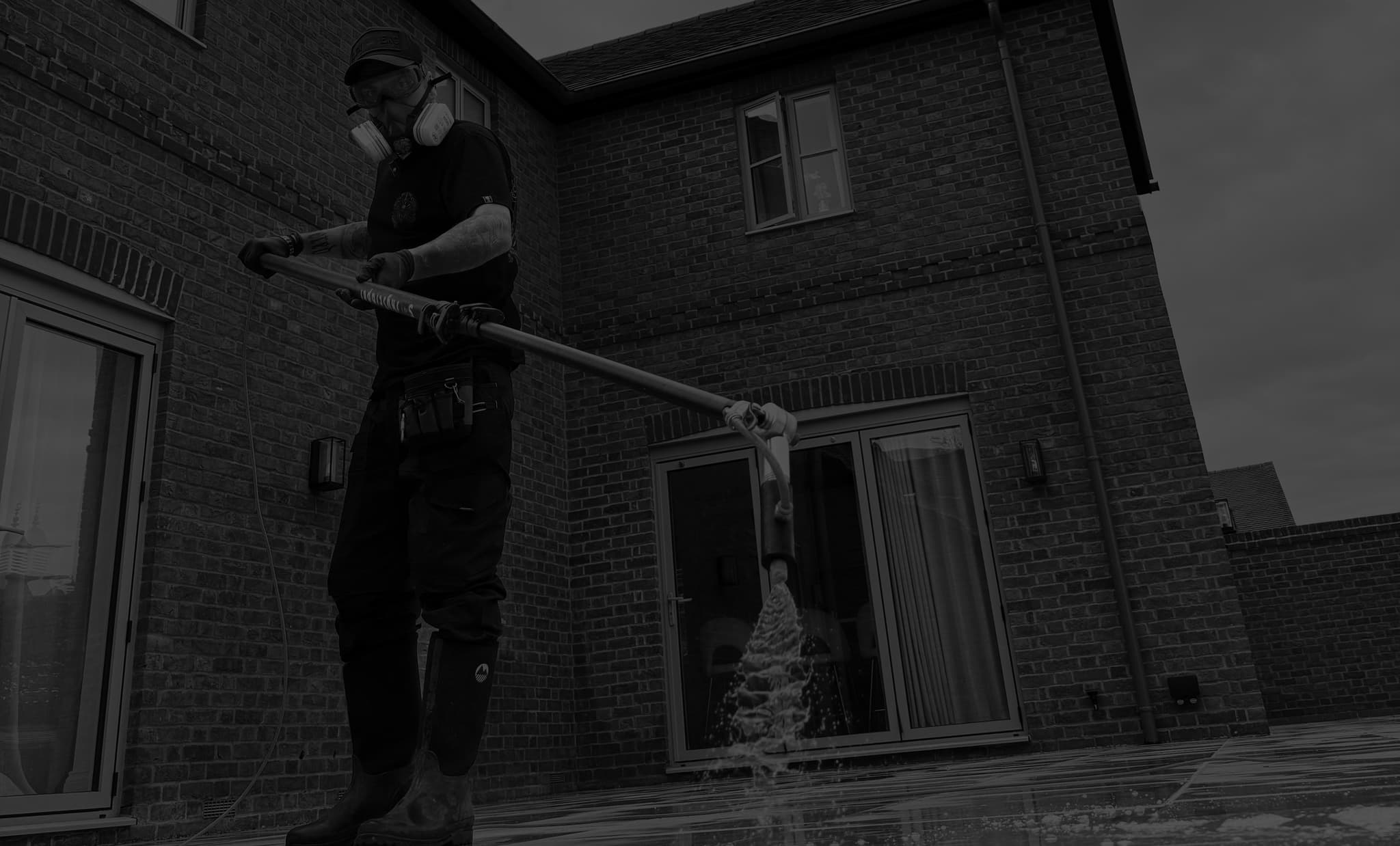
Block Paved Driveway Cleaning in Hazlemere
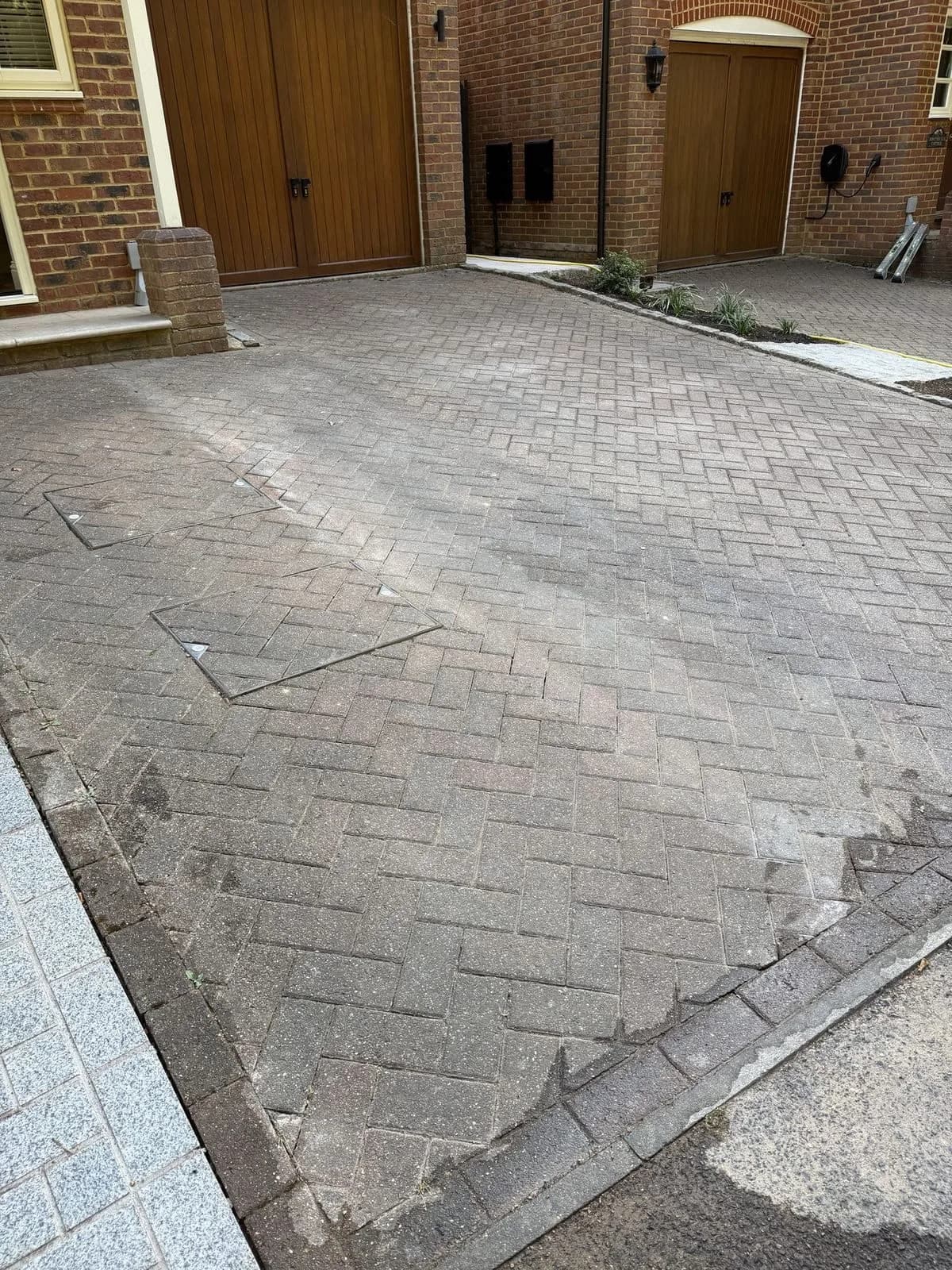
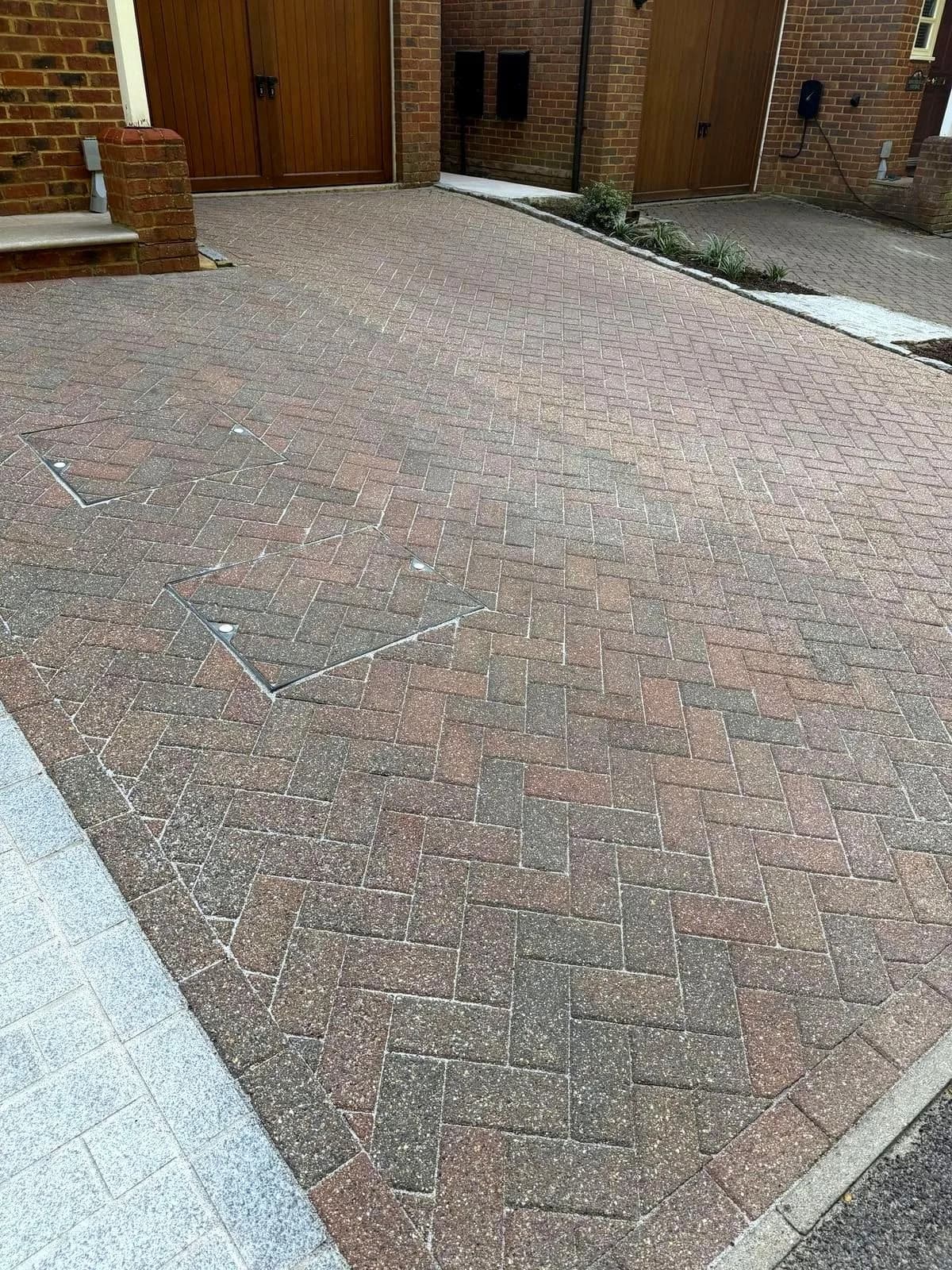
Block paved driveway cleaning in Hazlemere, Buckinghamshire: 20 years of black spot and lichen removed from 45m² of paving and the joints renewed.
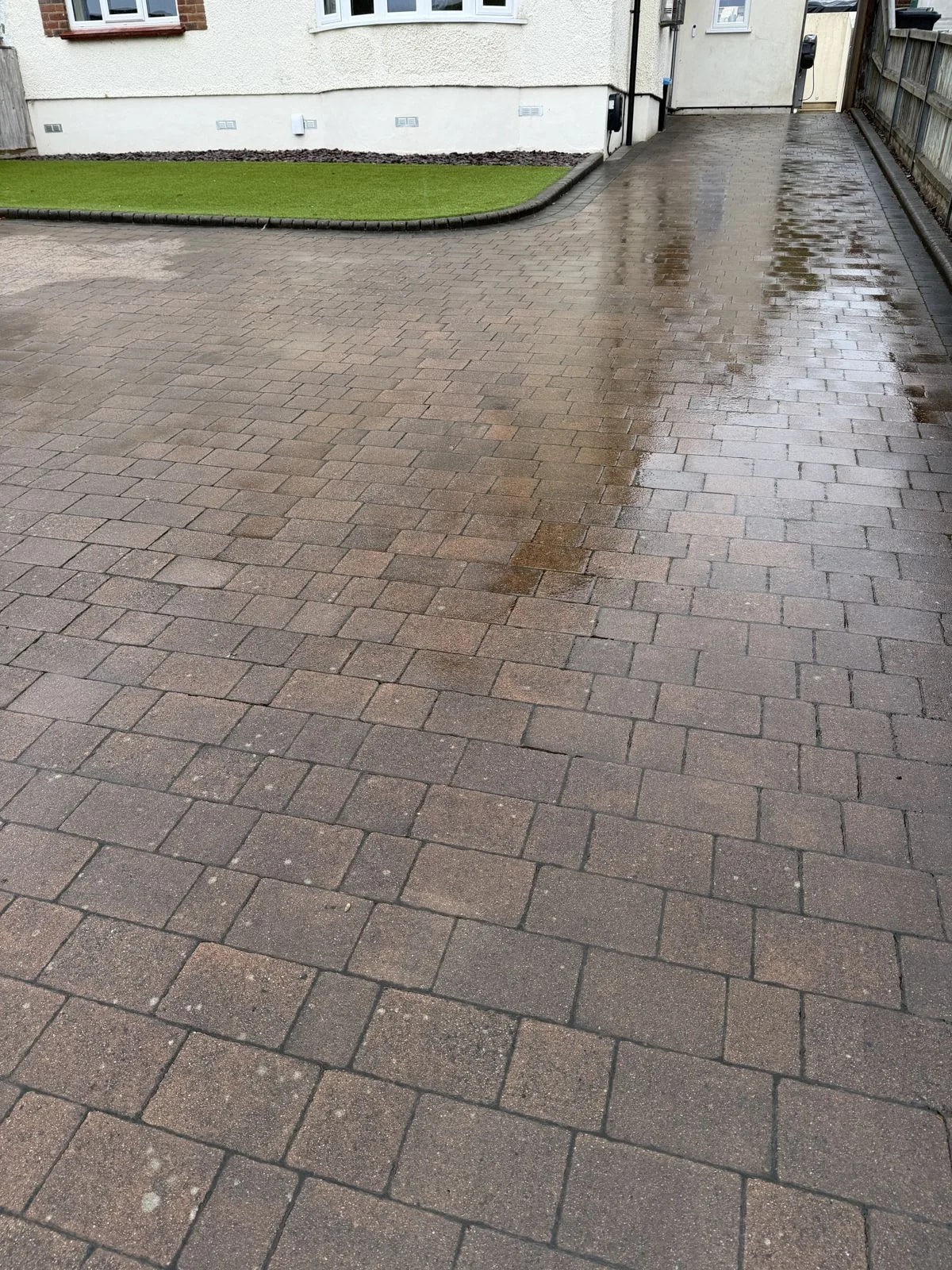

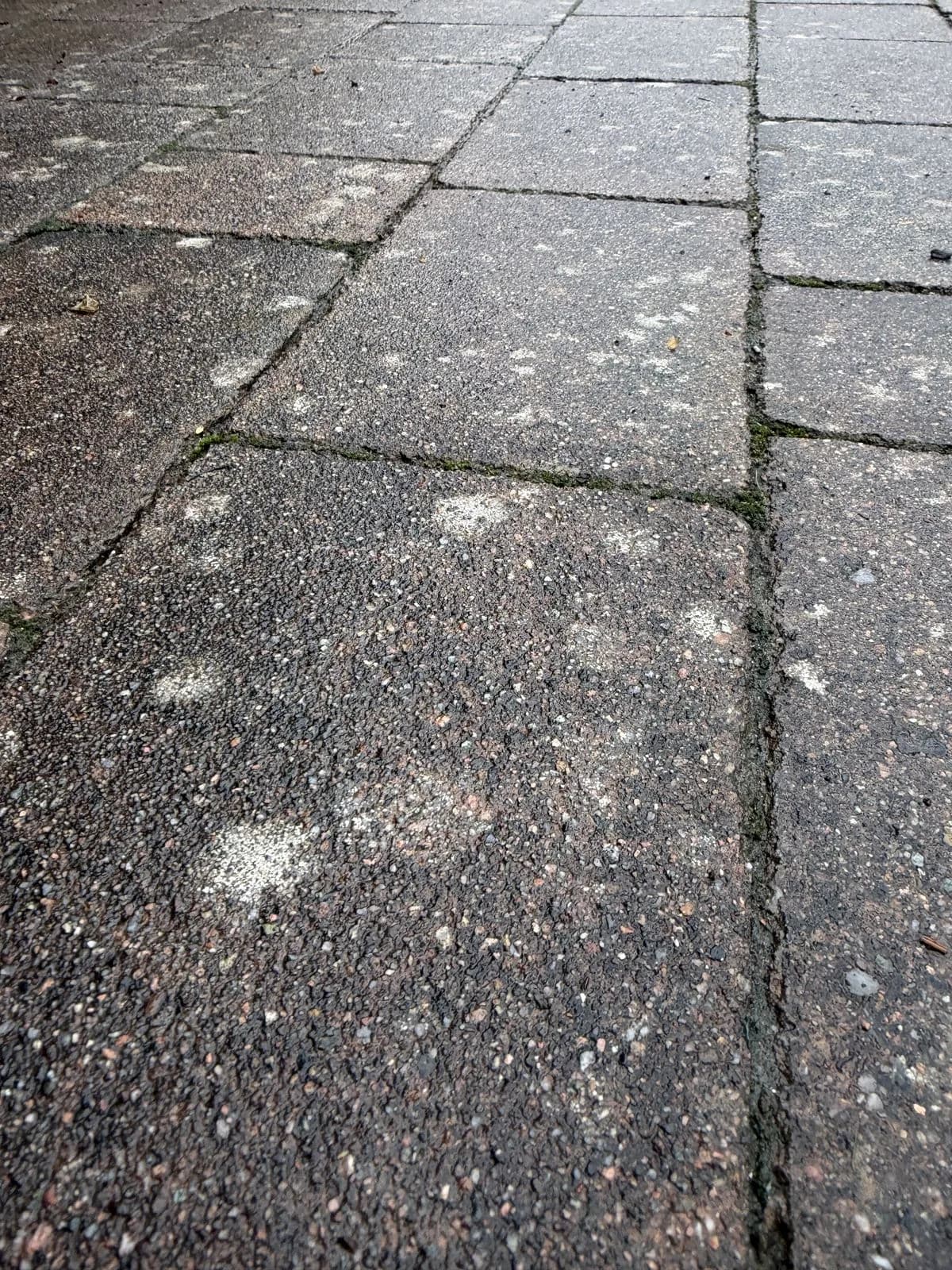
A substantial area of block paving affected by lichen, black spot, organic growth and accumulated environmental soiling — approached not as a pressure‑washing job, but as a complete block‑paving restoration.
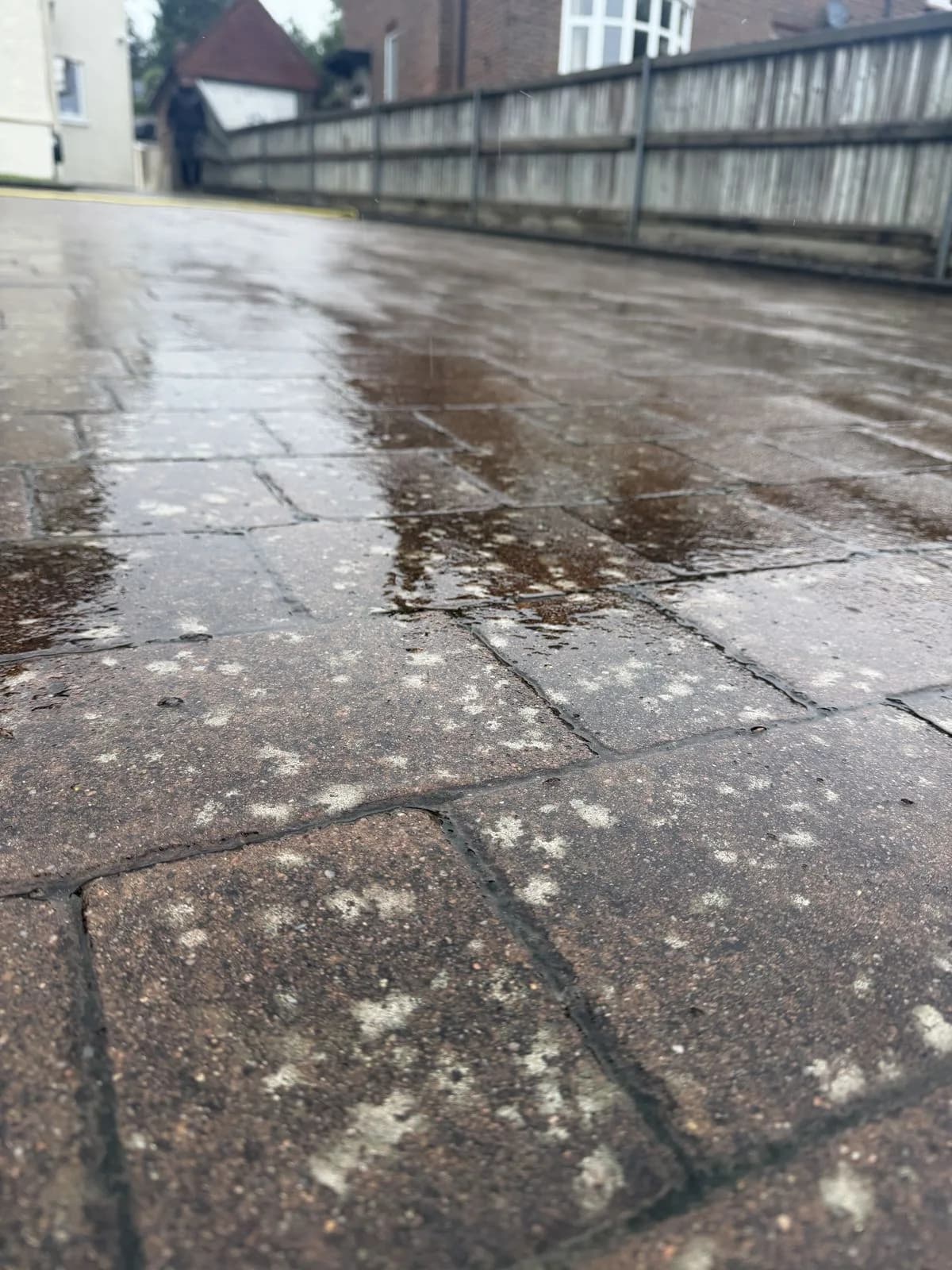
Brian contacted Chiltern Surface Co to restore the block‑paved driveway at his home in High Wycombe, Buckinghamshire.
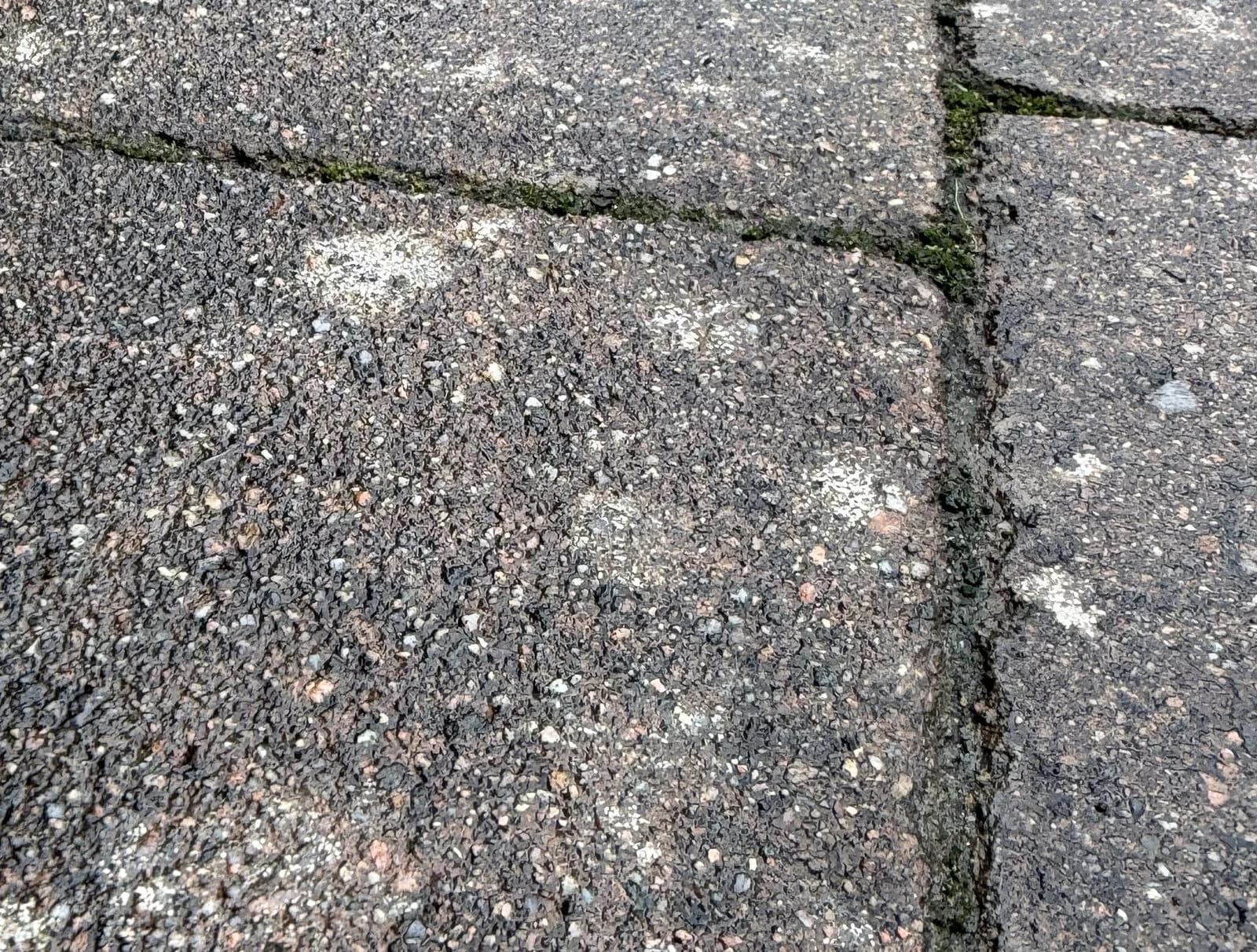
At approximately 150m², this was a substantial area of block paving affected by lichen, black spot, organic growth and accumulated environmental soiling. The growth and soiling had dulled the original appearance of the blocks, while the joints contained old sand, dirt and organic material.
Rather than treating the project as a straightforward pressure‑washing job, we approached it as a complete block‑paving restoration.
The aim was to thoroughly clean the paving, remove the old sand and organic material from the joints, carry out the necessary minor repairs, reinstate and stabilise the jointing and apply a treatment to help protect the driveway against future organic regrowth.
Our initial site visit identified several areas of damaged paving. However, with the driveway heavily soiled, the full condition of the individual blocks could only be properly assessed once the surface had been professionally cleaned.
We therefore recommended cleaning the complete driveway before carrying out a detailed inspection and replacing the blocks that required attention.
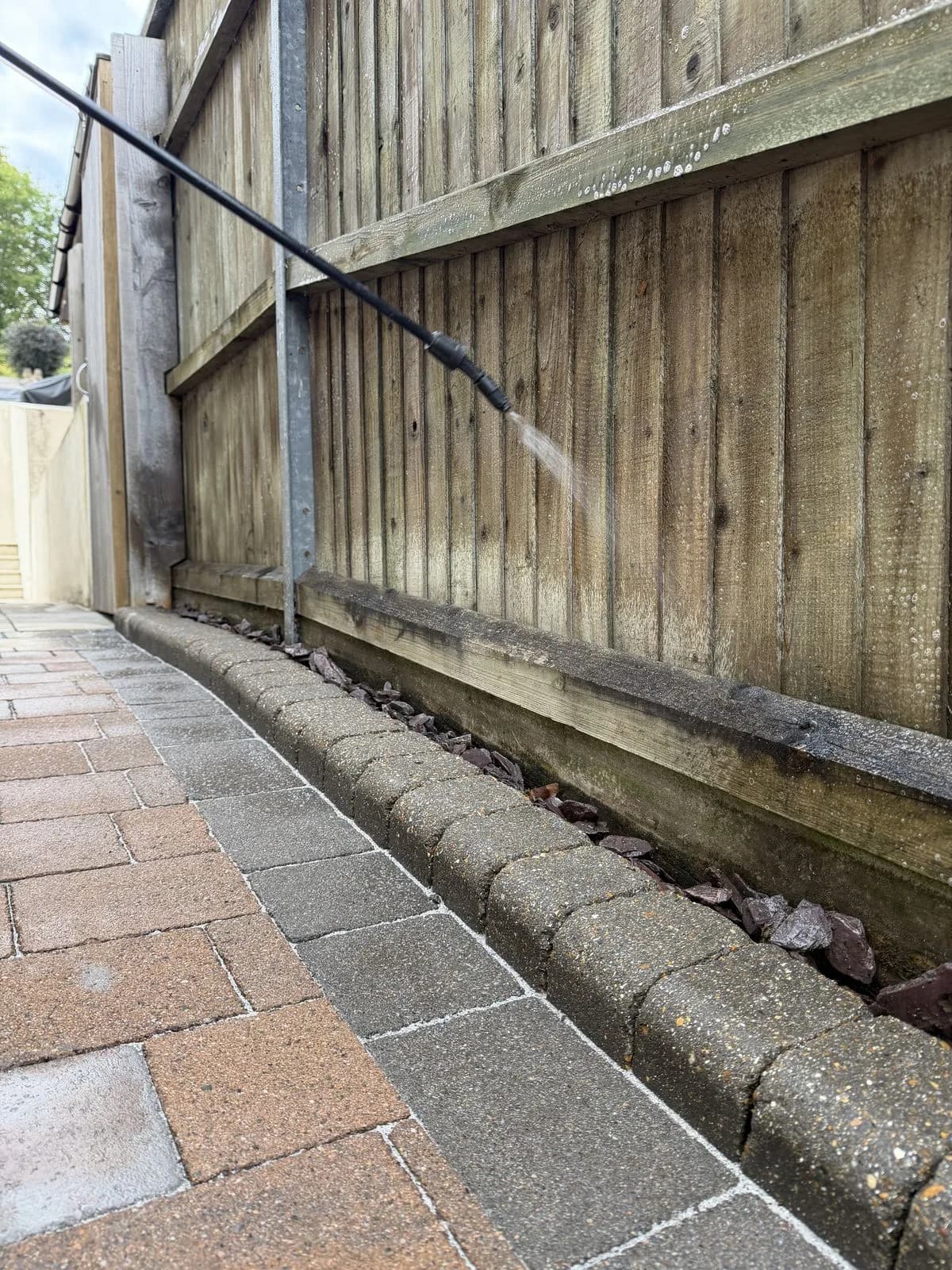
The driveway also featured slate edging around sections of the paving. Rather than simply cleaning around it, we removed the individual slate pieces so that both the slate and the paving beneath could be properly cleaned.
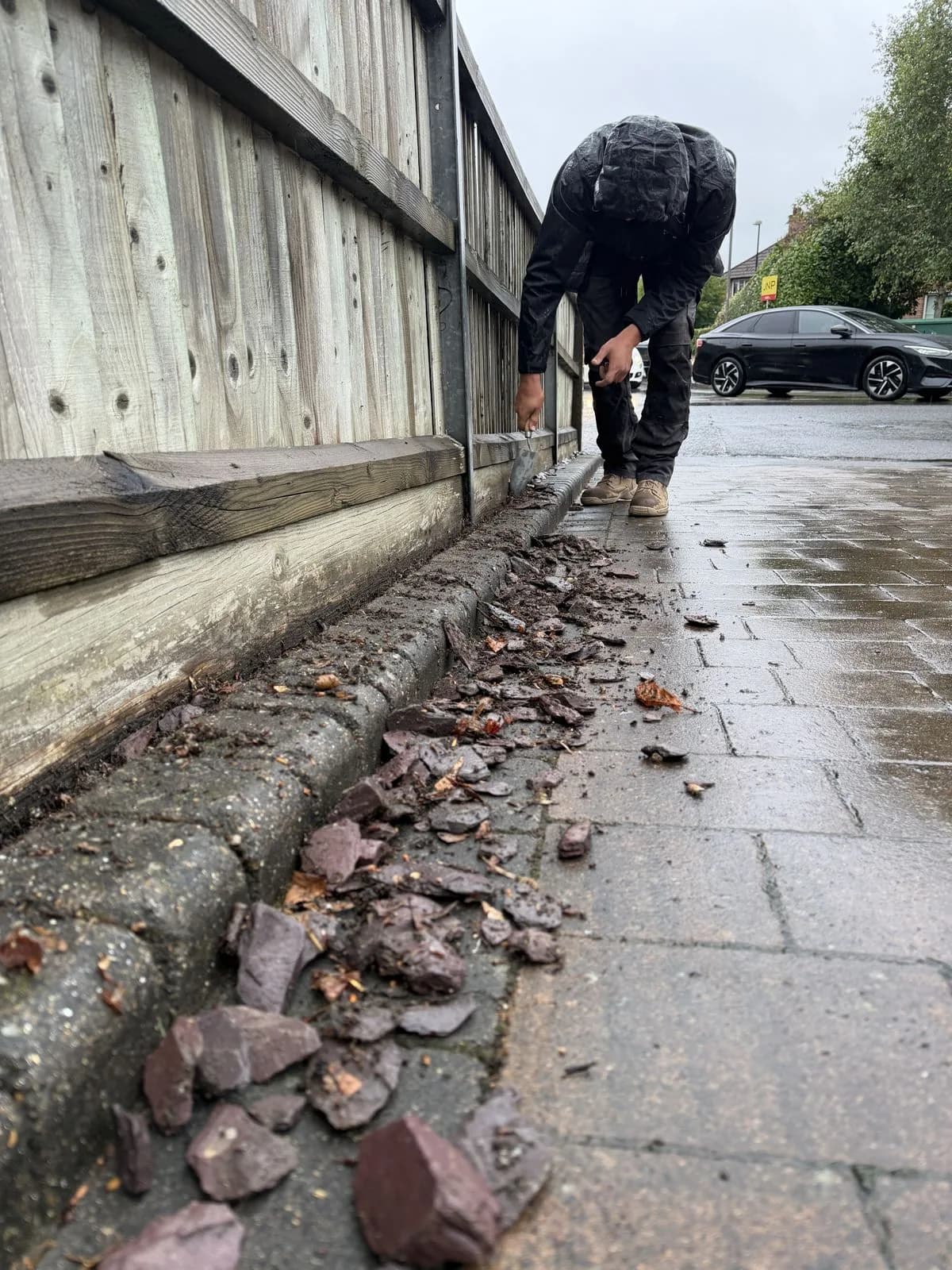
Wanting, as always, to do that little bit extra, we decided straight away to remove all of the plum slate between the fence and the driveway boundary and clean every piece off for Brian.
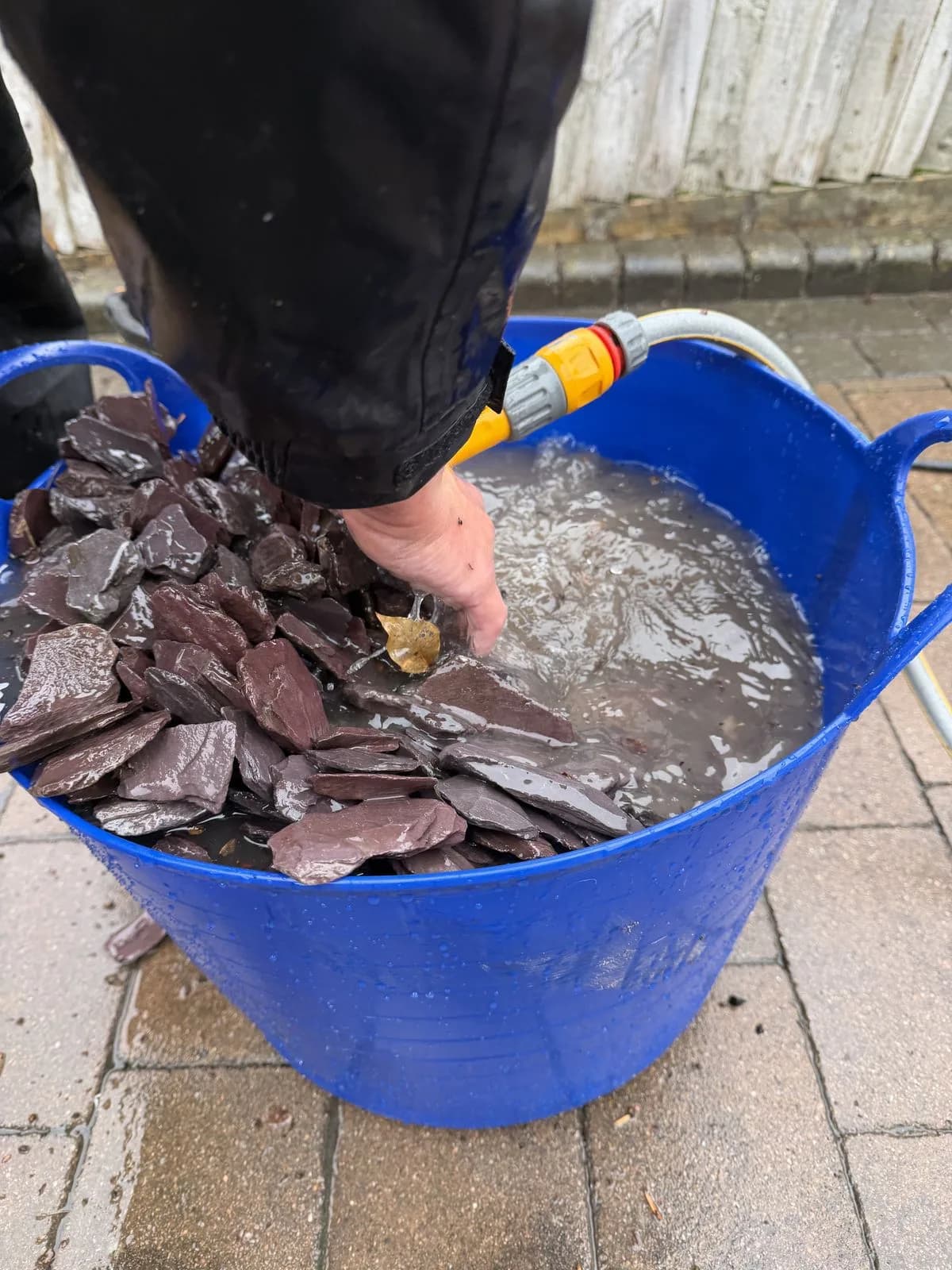
Each piece was cleaned separately, removing the dirt and organic contamination that had accumulated around it. This also allowed us to properly clean the block paving underneath and around the edges.
Once cleaned, the slate could be reinstated to retain the original detail and give the completed driveway a much sharper finish.
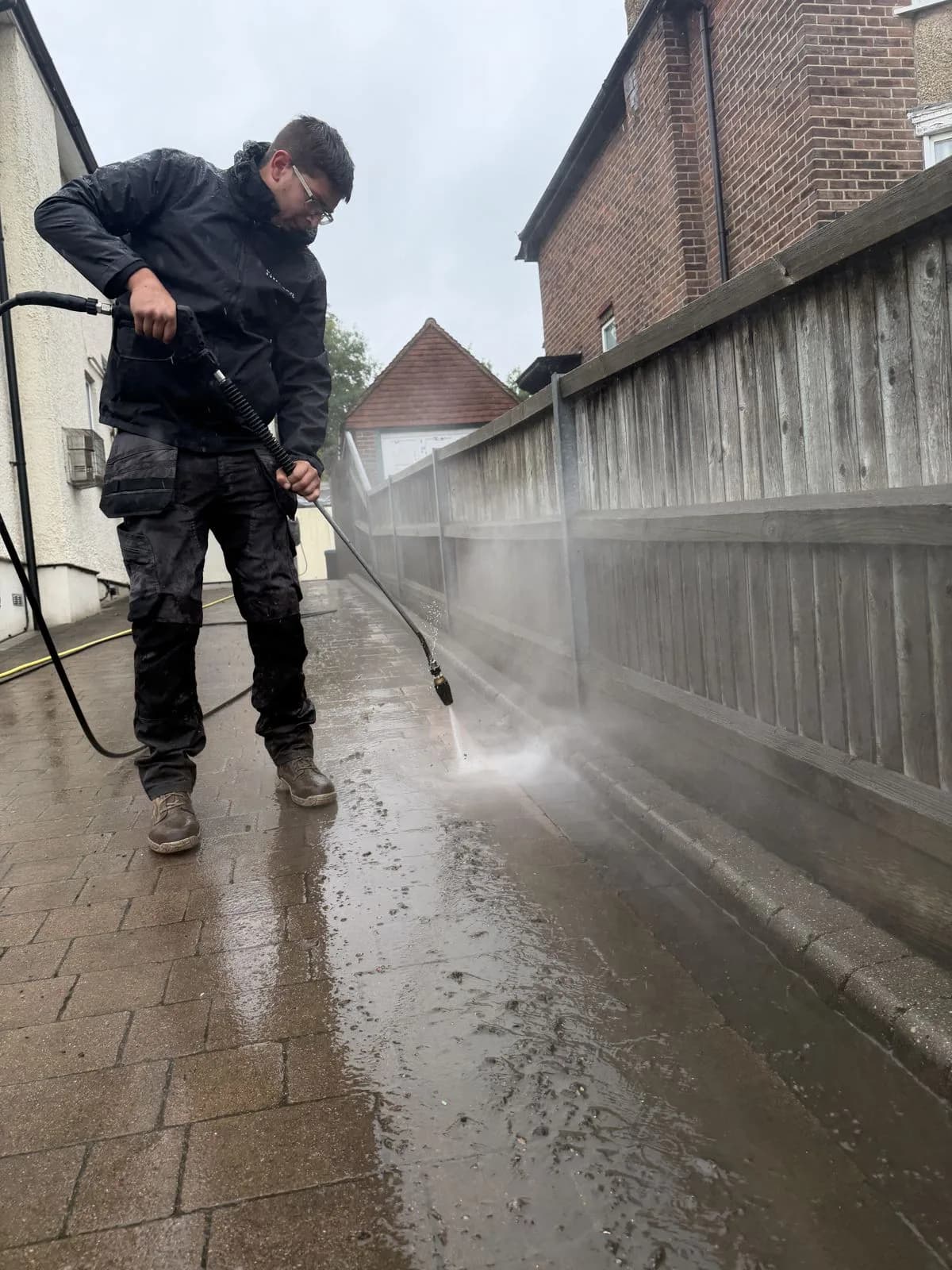
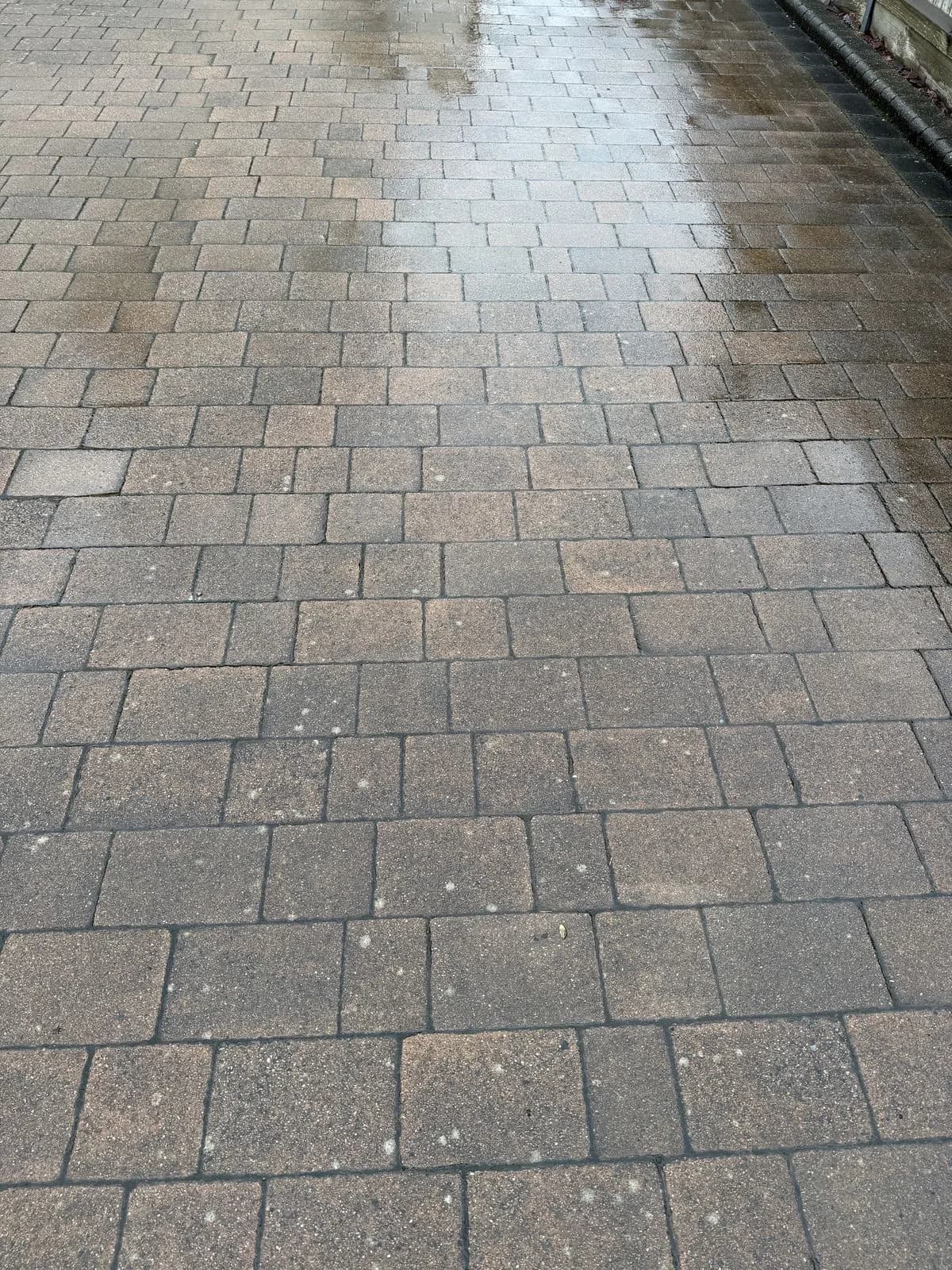
We then carried out a thorough deep clean across the approximately 150m² driveway.
The cleaning process removed lichen, black spot, organic growth and accumulated environmental soiling, revealing the original colour and variation within the block paving.
At the same time, we thoroughly cleared the joints, removing the existing sand and organic material in preparation for the new jointing system.
This stage also gave us a much clearer view of the condition of the paving and allowed us to identify the individual blocks requiring replacement.
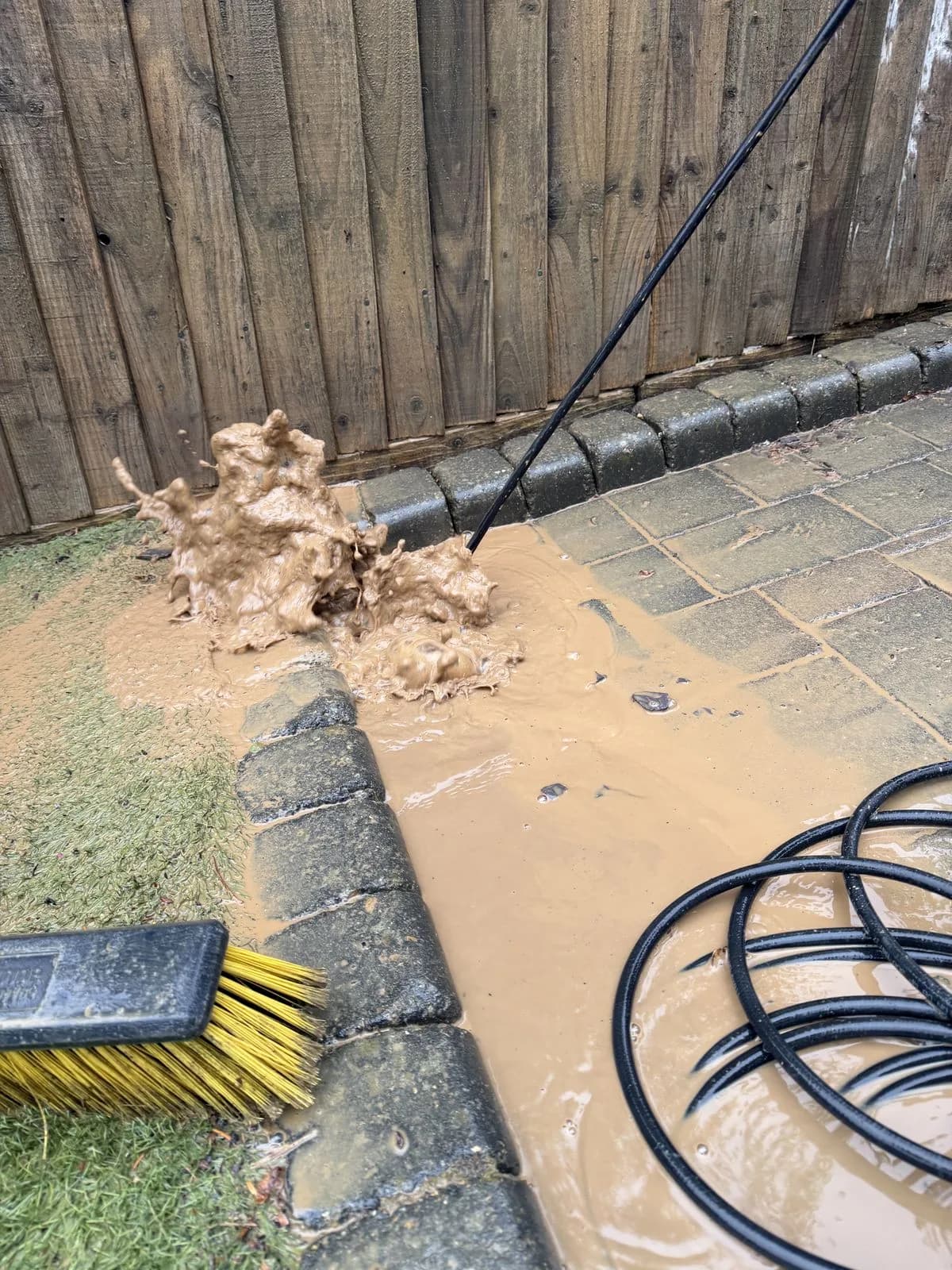
During the restoration, it quickly became evident that there were issues with the drain at the bottom of the driveway.
Although this was not part of the original scope of works, we used our drainage hoses to clear the blockage while we were on site, leaving Brian's drainage running clear.
It is part of the way we approach a restoration: if we identify something during the works that we can reasonably address for the client, we will always try to help.
Once the driveway was clean, we carried out a detailed inspection and identified the individual paving blocks that required replacement.
The damaged blocks were removed and suitable replacements installed, matching the existing paving as closely as possible.
With the cleaning and remedial work complete, the driveway was then allowed to dry fully before the jointing process began. Polymeric sand cannot be worked into damp joints and will not set correctly on a wet surface, so this stage is governed by the weather rather than the schedule. On this project that meant returning for a second day rather than forcing the jointing in poor conditions.
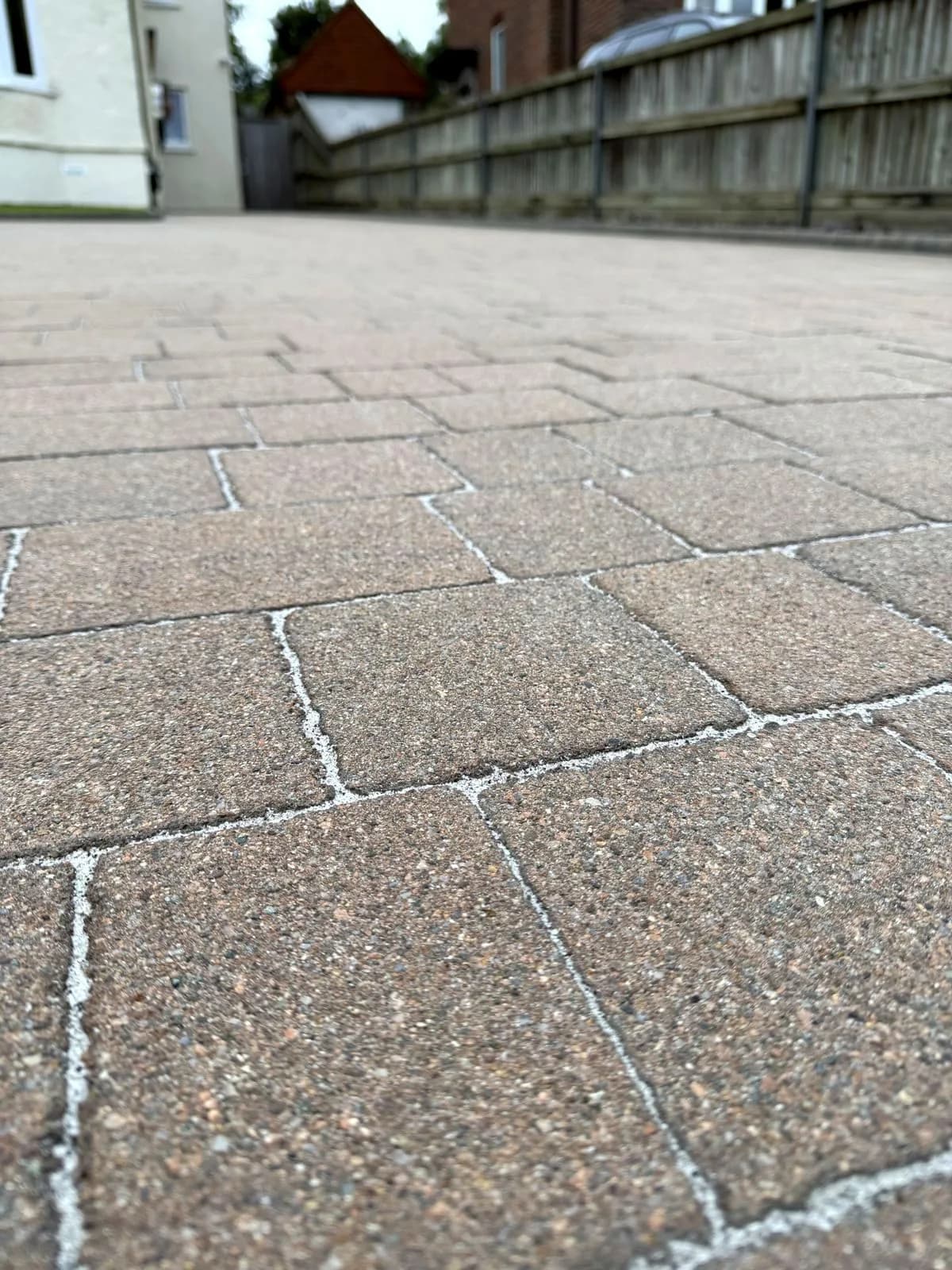
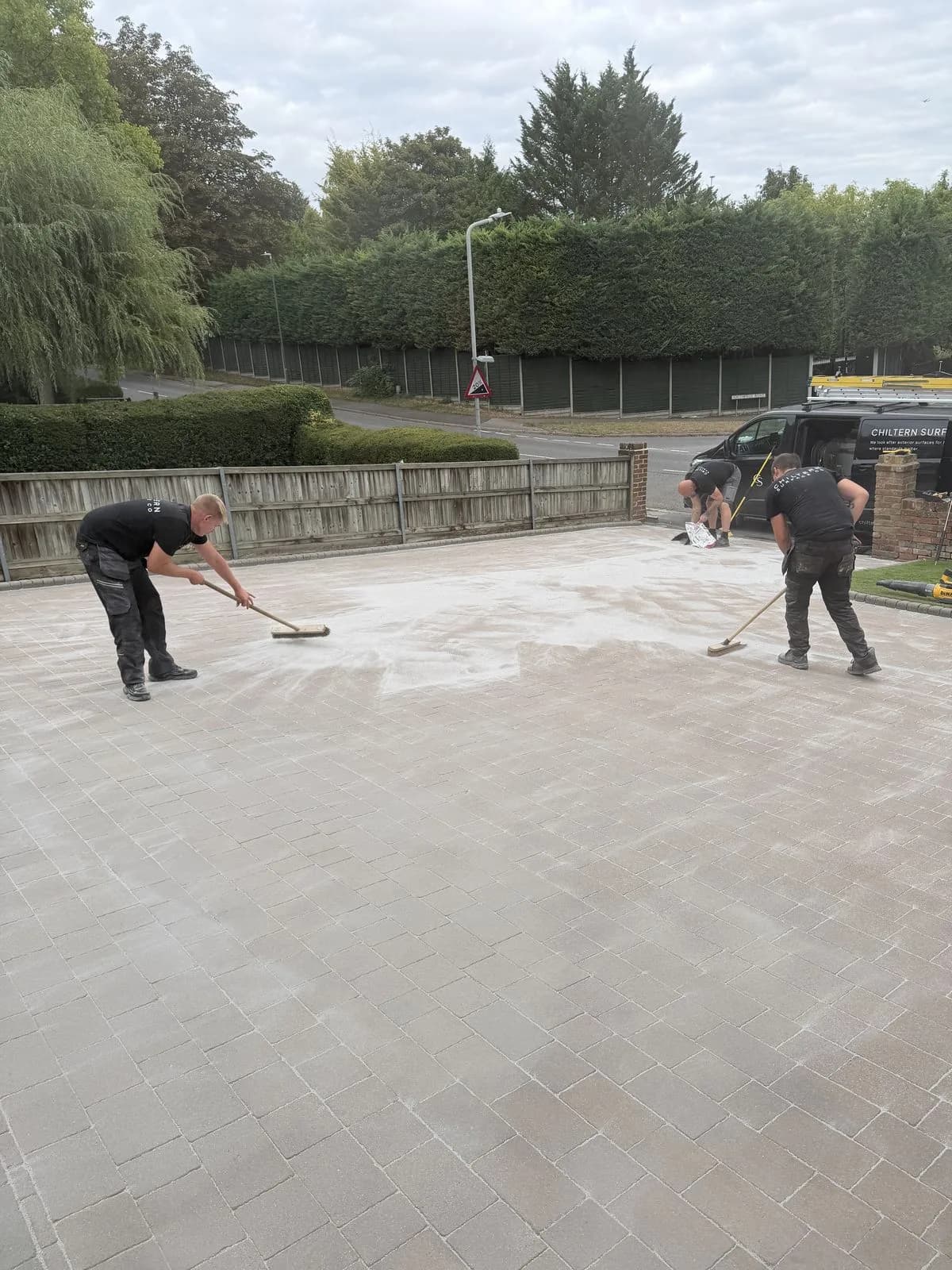
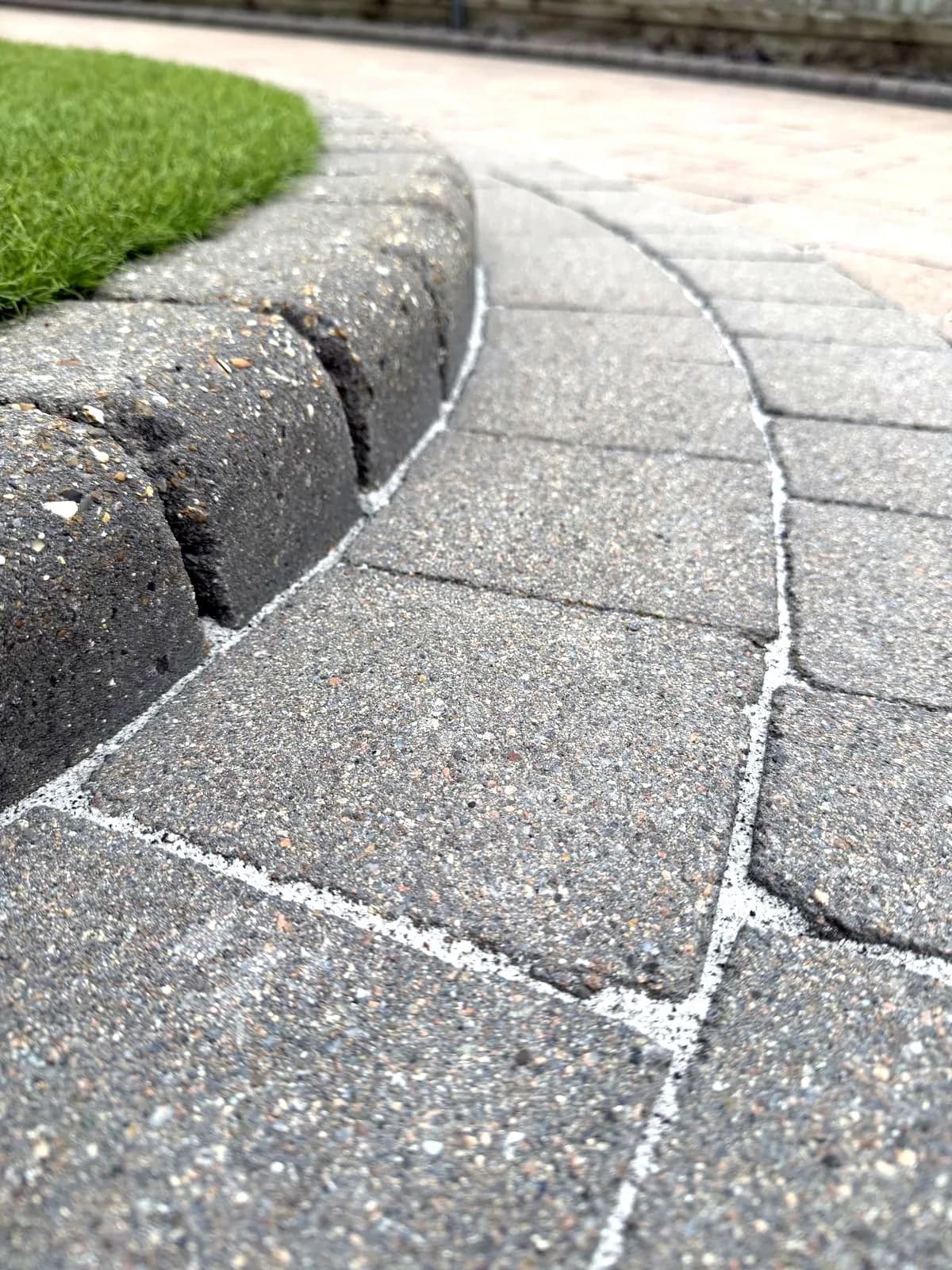
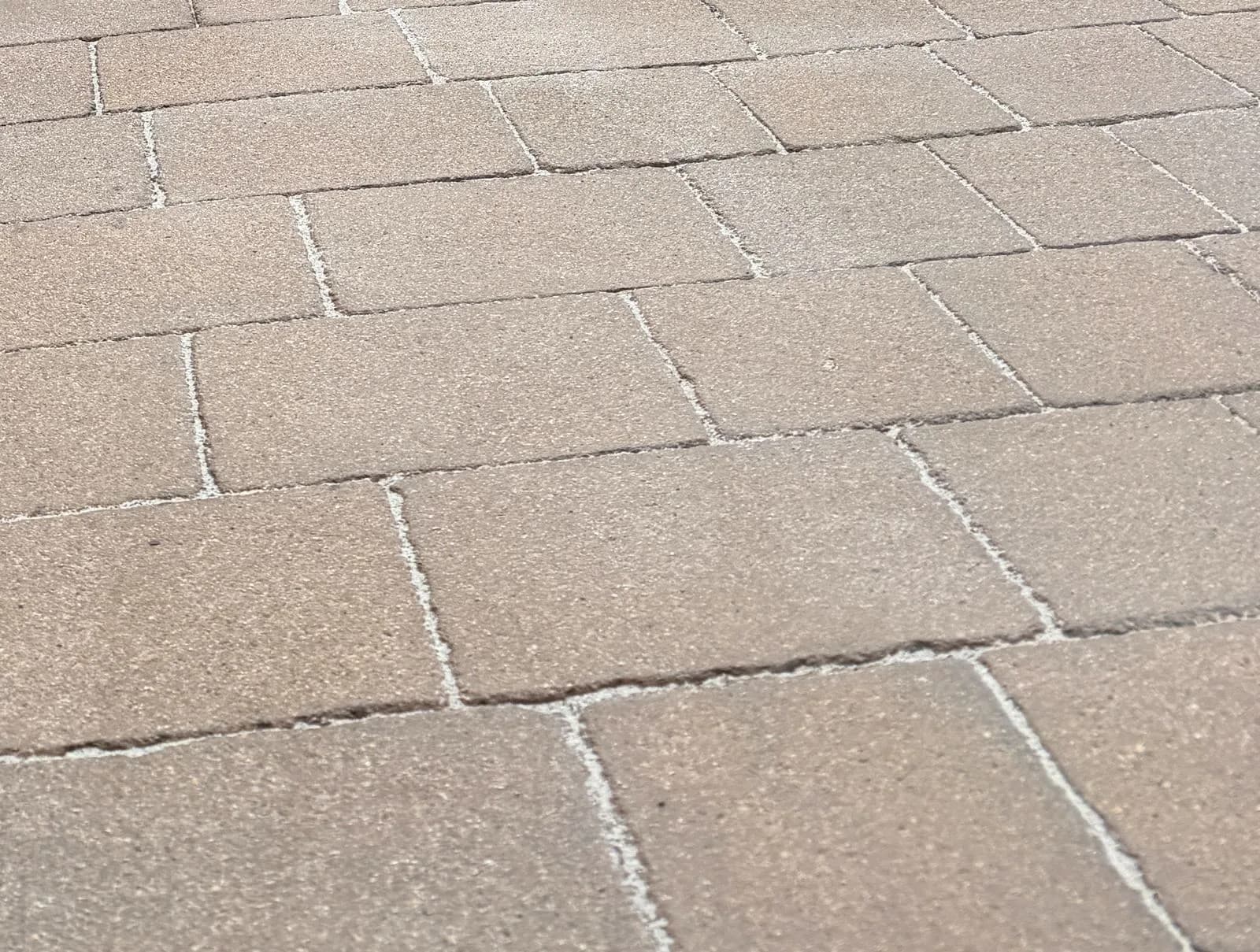
Once the block paving was clean and dry, fresh polymeric sand was applied across the driveway and carefully worked into the joints.
Polymeric sand provides a more durable and stable joint than conventional kiln‑dried sand, helping to reduce joint erosion, movement and weed growth.
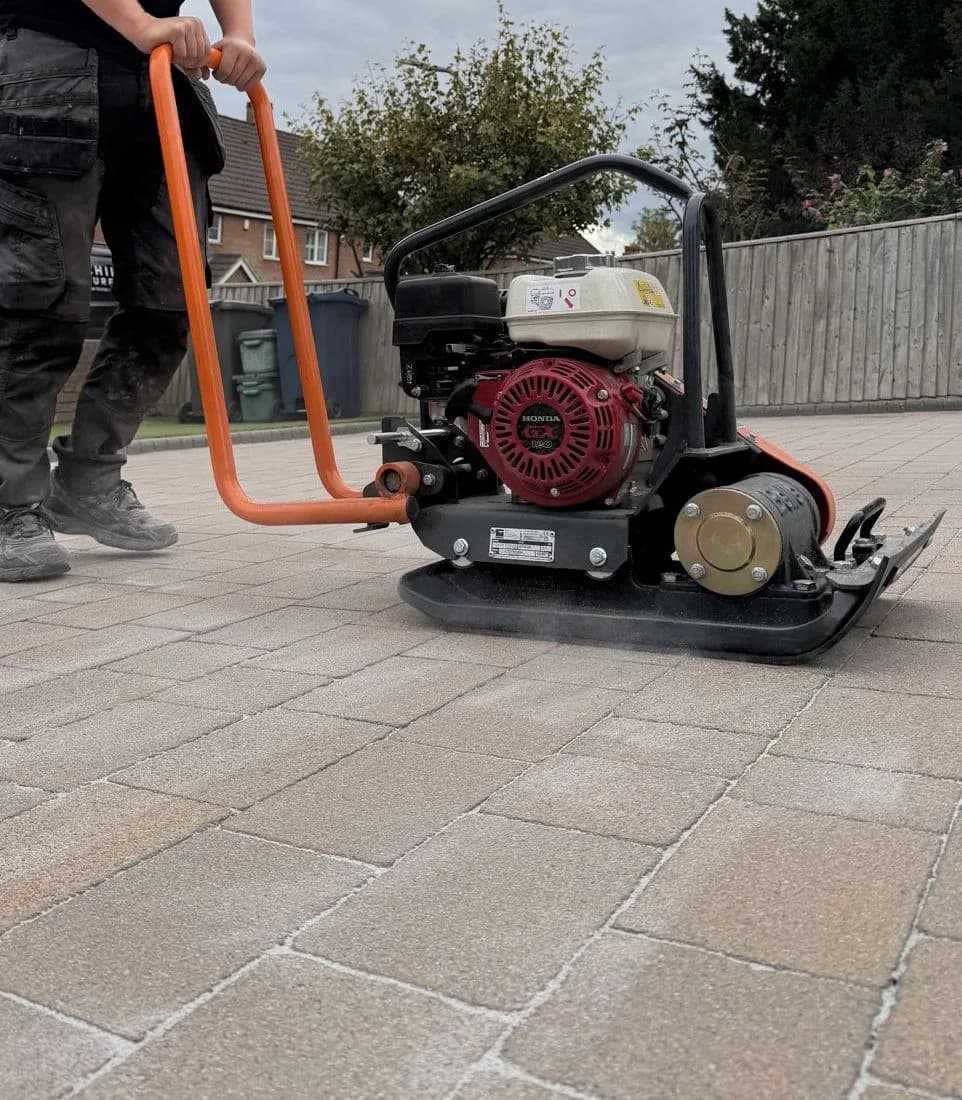
The driveway was then mechanically compacted using a plate compactor.
Mechanical compaction is a vital part of any block‑paved driveway restoration undertaken by Chiltern Surface Co.
The sand between the blocks on a block‑paved surface is responsible for its stabilisation. That stabilisation is compromised if re‑compaction and a second re‑sanding are not undertaken.
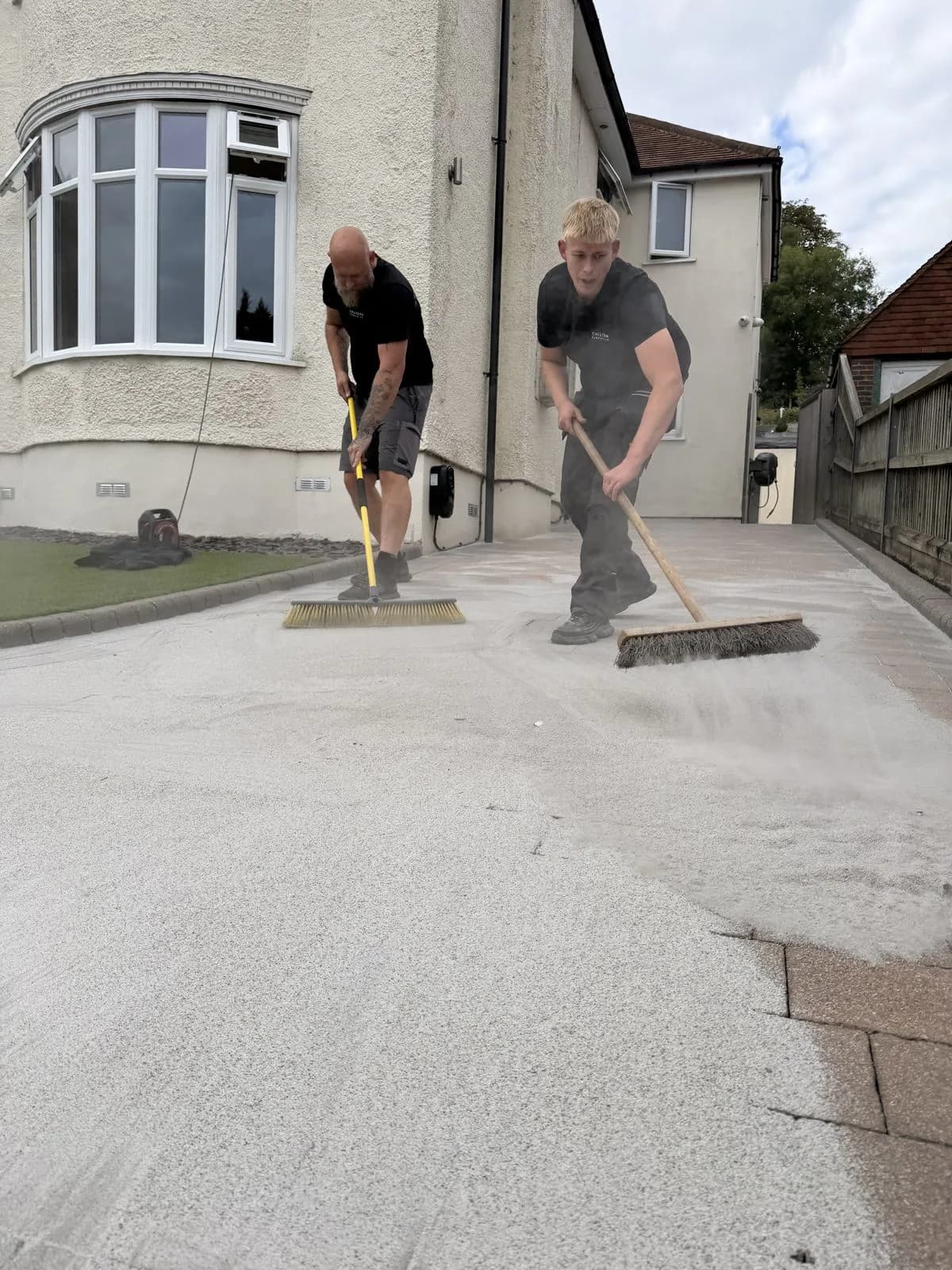
Following compaction, we carried out a second application of polymeric sand to ensure the joints were properly filled throughout the driveway.
Once the surface had been carefully checked and excess material removed, the polymeric sand was activated in accordance with the manufacturer's process.
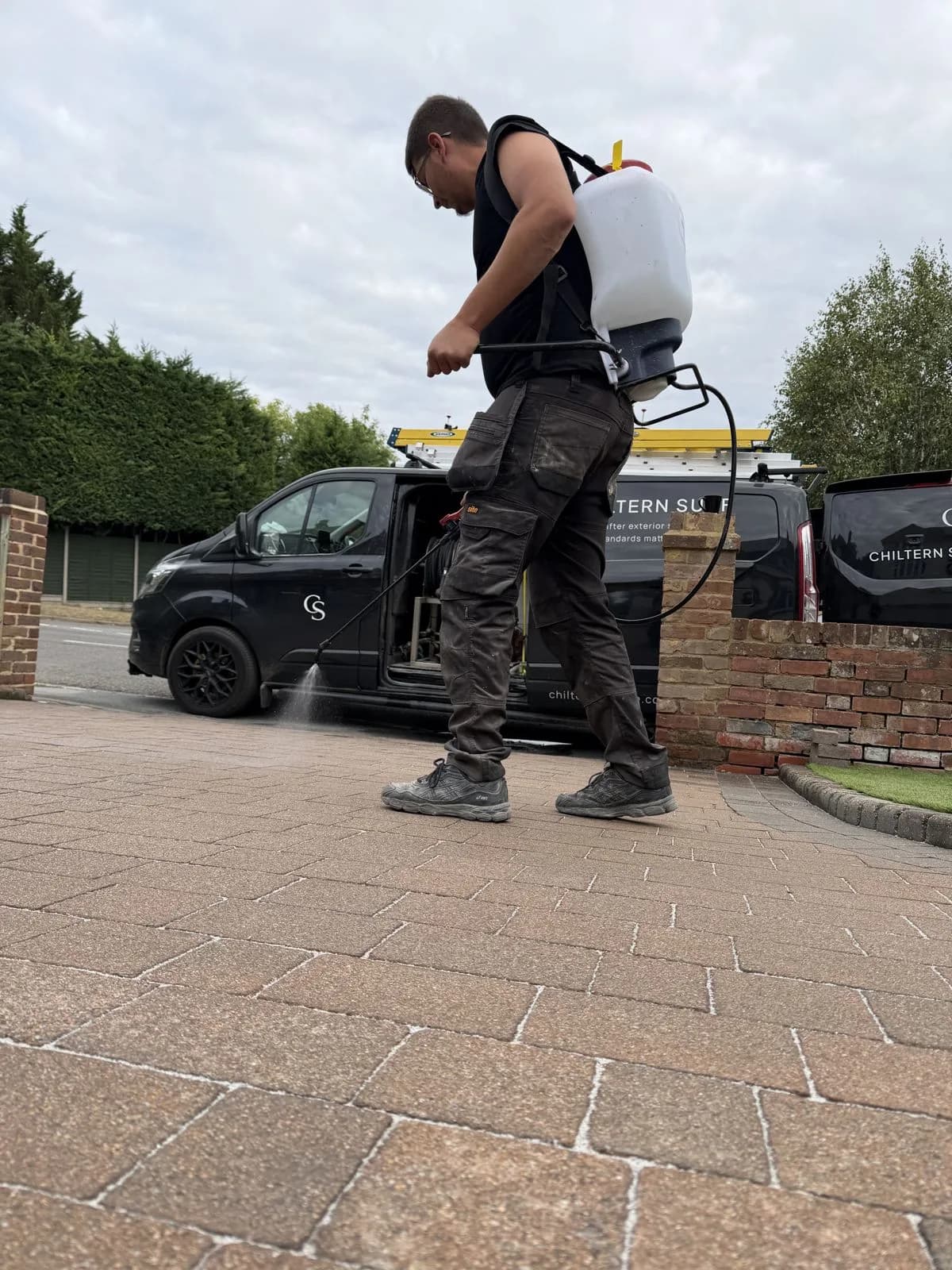
The final stage was the application of Chiltern EverGuard™ biocide treatment across the completed driveway.
Chiltern EverGuard™ penetrates the surface and targets the microscopic organic spores responsible for algae, lichen, moss and black spot. This helps inhibit organic regrowth and provides longer‑term protection following the initial restoration.
For a driveway that had been heavily affected by lichen and black spot, this final treatment was an important part of the process.
While carrying out the work, we also noticed green organic growth developing on sections of the adjacent fencing.
As we already had the appropriate biocide treatment on site, we treated the affected fencing for Brian as a complimentary extra.
It wasn't part of the original scope of works, but it was a simple opportunity to improve another area of the property while we were there.
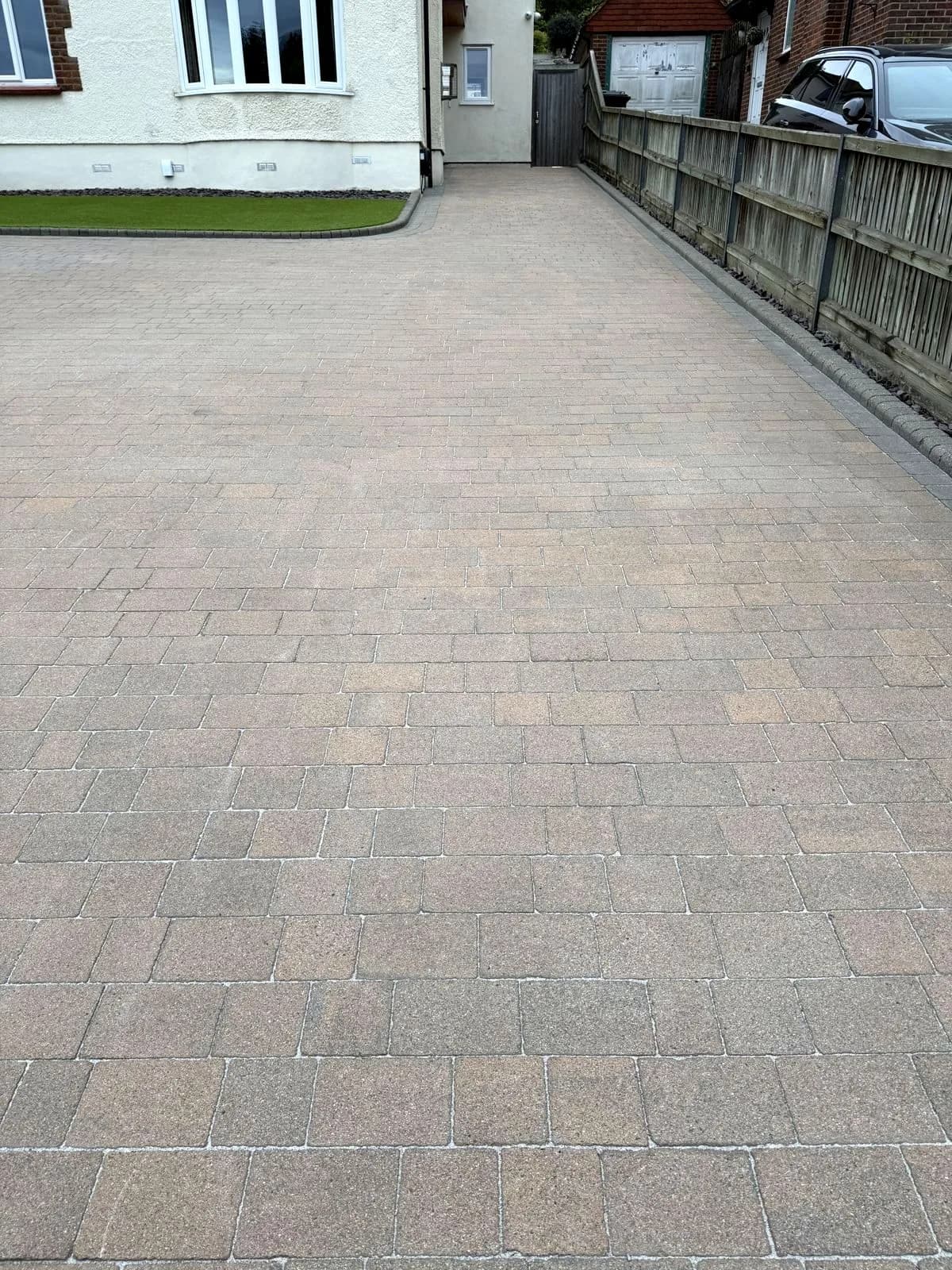
The completed restoration transformed approximately 150m² of weathered and heavily soiled block paving.
The deep clean removed the lichen, black spot, organic growth and accumulated environmental soiling, bringing back the colour and definition of the individual paving blocks.
Damaged blocks were replaced, the slate edging was cleaned and reinstated, the driveway was re‑jointed with polymeric sand and mechanically compacted before receiving its final Chiltern EverGuard™ treatment.
The result was not simply a cleaner driveway, but a complete restoration: cleaned, repaired, re‑jointed, stabilised and protected for the future.
Chiltern Surface Co carried out this block‑paved driveway restoration in High Wycombe, Buckinghamshire. We also offer driveway cleaning, patio cleaning, roof cleaning and roof moss removal across Oxfordshire and Berkshire, including Henley‑on‑Thames, Thame, Maidenhead and Windsor.
Our approach goes beyond conventional pressure washing. Depending on the condition of the driveway, a restoration can include deep cleaning, specialist treatment for black spot and lichen, joint clearance, replacement of damaged blocks, polymeric re‑sanding and mechanical compaction, and long‑term protection with Chiltern EverGuard™.
Block paved driveway cleaning in Hazlemere, Buckinghamshire: 20 years of black spot and lichen removed from 45m² of paving and the joints renewed.
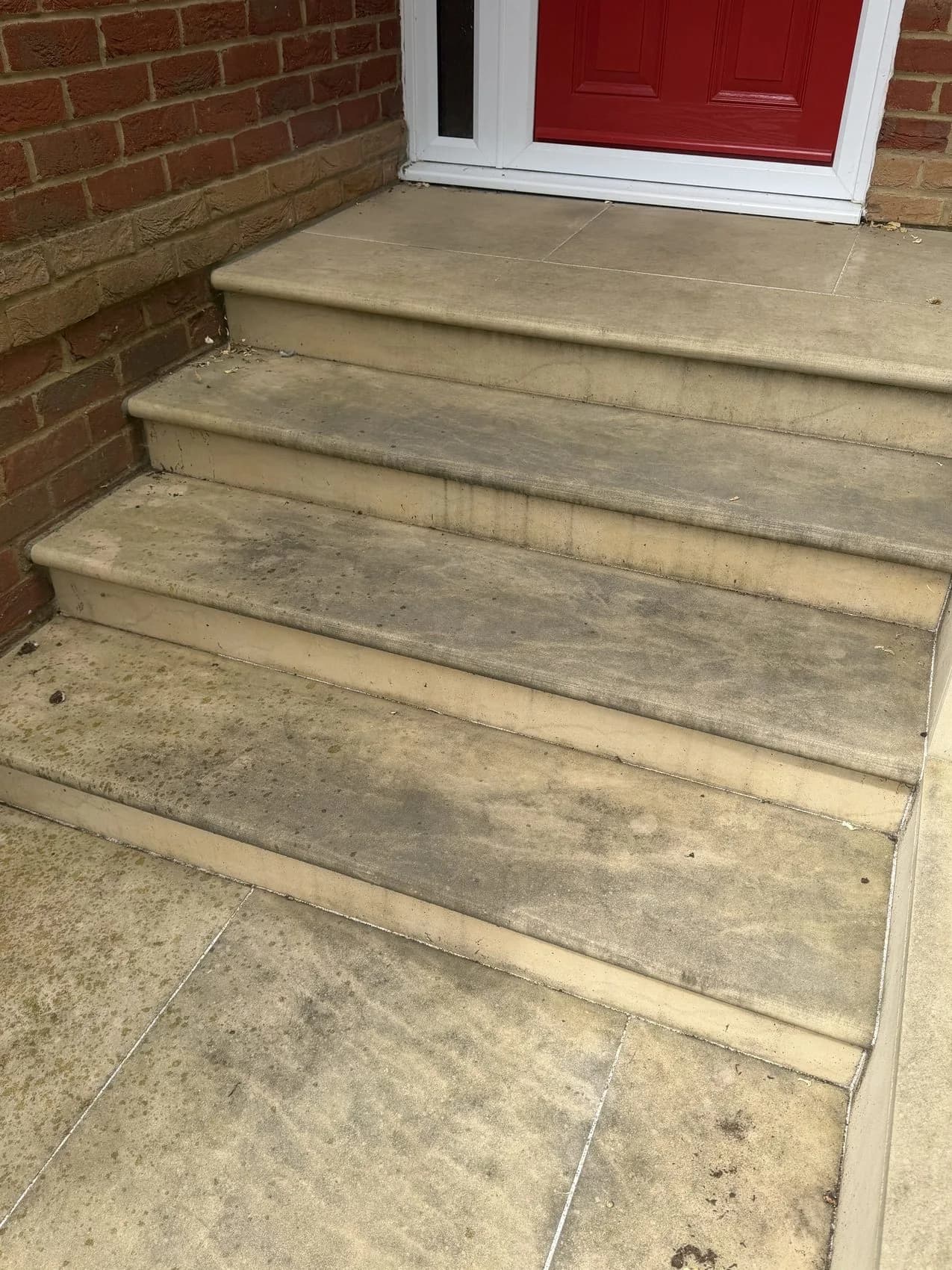
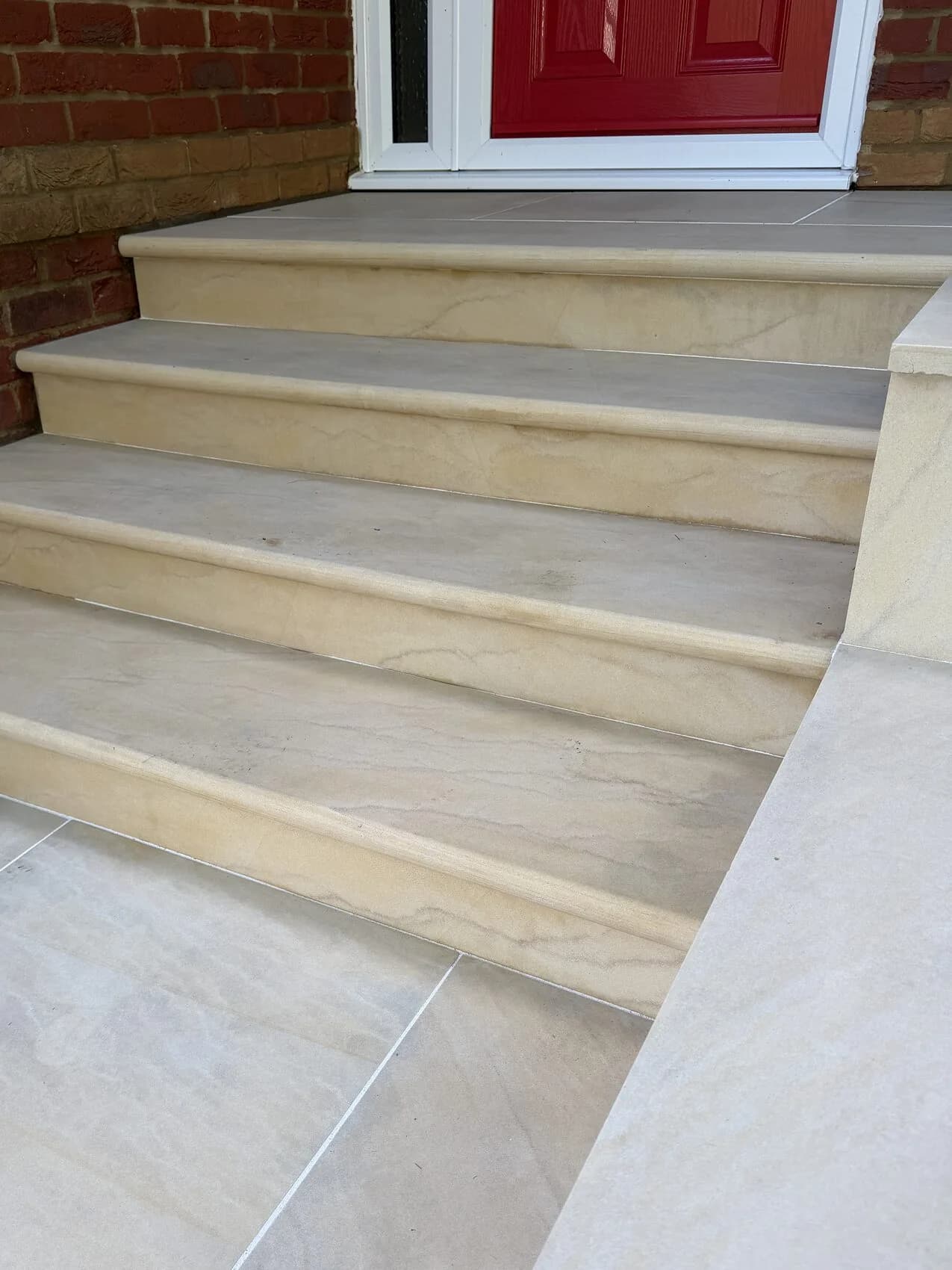
Indian sandstone step cleaning and block paving cleaning in High Wycombe, including polymeric re-sanding, compaction and Chiltern EverGuard™ treatment.

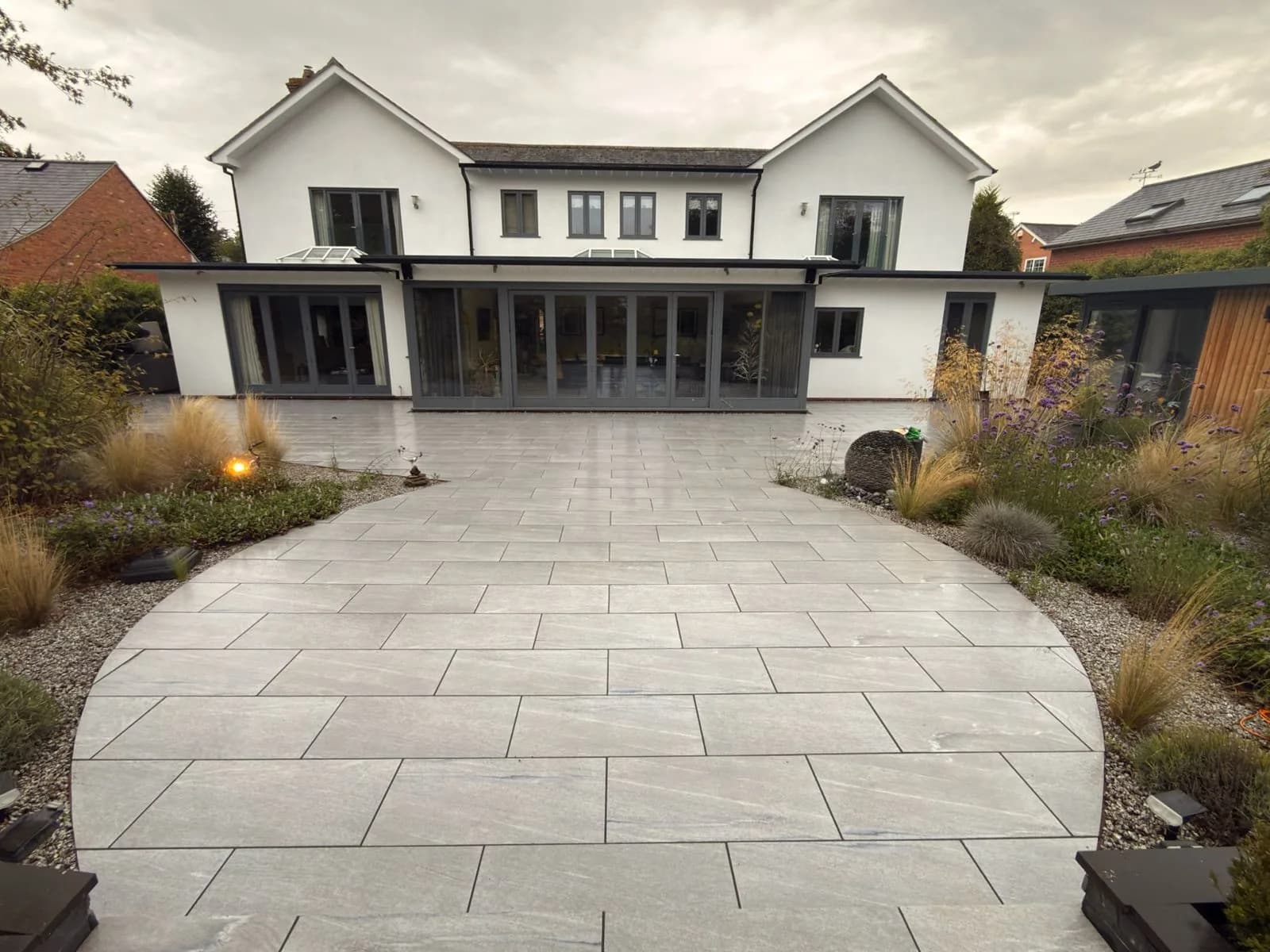
A full-house soft wash of the render, soffits and fascias, then a porcelain patio deep clean, joint grinding and complete repoint by Chiltern Surface Co.
Chiltern Surface Co
We’ll come to your property, inspect the surfaces, recommend the correct approach, and provide a clear quote. No pressure, no obligation — just information.
We assess your surfaces and recommend the right approach for the best, long-lasting results.
You'll receive a detailed, transparent quote with no hidden extras.
We'll provide honest advice so you can decide what's right for you.
Speak directly with the owner and get expert advice you can trust.