
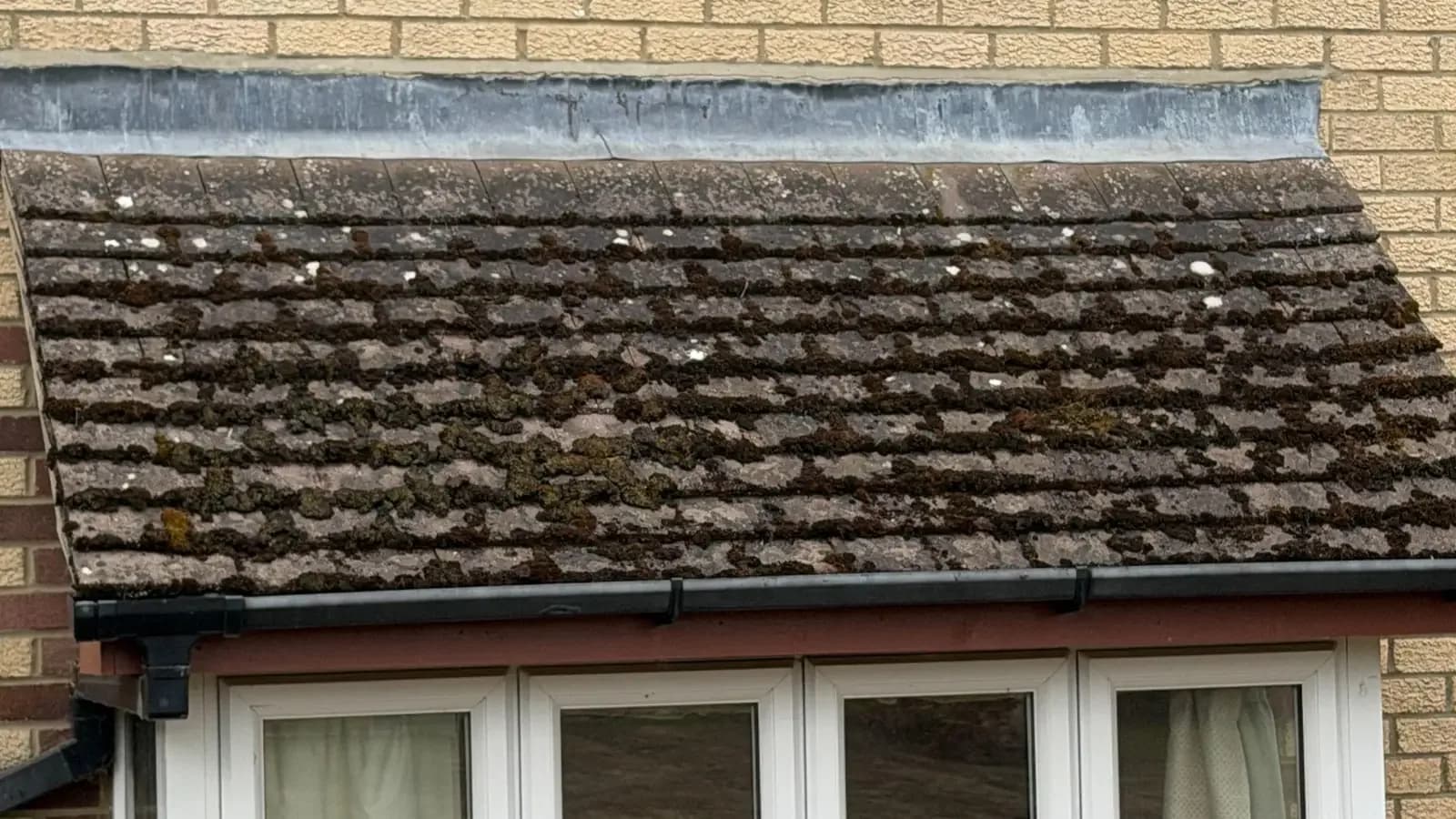
The clearest signs your roof needs cleaning are heavy moss, blocked drainage points, falling debris and widespread biological staining. A few light patches do not automatically justify a full clean, especially when water still drains freely.
Roof cleaning should solve a defined problem. The problem may involve drainage, appearance, inspection access or biological growth. Cleaning should not replace repairs when tiles, flashing or the roof structure have failed.
What Are the Main Signs Your Roof Needs Cleaning?
A roof usually needs assessment when growth becomes extensive, starts entering gutters or hides important junctions. The condition matters more than a fixed cleaning schedule.
The table below separates common observations from sensible next steps. You can make every initial check from ground level or through an upstairs window.
| What you can see | What the sign can mean | Appropriate next step | Priority |
|---|---|---|---|
| Light, isolated moss | Common surface growth with no drainage effect | Monitor during routine checks | Low |
| Thick moss across tiles | Established growth retaining debris and hiding the surface | Arrange a roof assessment | Moderate |
| Moss inside gutters | Roof debris is entering the drainage system | Check roof and clear gutters | High |
| Blocked valleys or outlets | Water flow may be restricted | Arrange prompt inspection | High |
| Dark or coloured staining | Algae, lichen, pollution or material weathering | Identify the stain before treatment | Moderate |
| Cracked or slipped tiles | A roof defect rather than a cleaning problem | Contact a competent roofer | High |
| Internal damp or leaks | Possible water ingress or condensation | Investigate the cause promptly | Urgent |
1. Moss Has Become Thick or Widespread
Thick moss covering broad roof sections deserves assessment because the growth can conceal tiles, joints and previous repairs. Heavy growth also sheds material into lower roof areas.
Moss commonly establishes on shaded, rough or slow-drying surfaces. North-facing slopes and roofs beneath trees often carry more growth. Concrete, clay and slate still require different cleaning decisions.
Light moss remains common across UK roofs. Removal becomes more relevant when moss blocks gutters, outlets or roof drainage points.
2. Moss Is Falling Into Gutters or Onto Paths
Falling moss shows that established growth is detaching and moving through the property's drainage route. Clumps can enter gutters, downpipes, gullies and channel drains.
Repeated deposits below one roof slope can indicate a larger accumulation above. Clear fallen moss from paths because wet material reduces grip.
3. Valleys and Drainage Points Look Blocked
Debris inside roof valleys, box gutters or outlets warrants prompt attention because water needs an unobstructed route away. Leaves can combine with moss and create dense organic material.
Restricted flow does not prove that water has entered the building, but restricted flow warrants inspection and clearance.
4. Biological Staining Is Spreading
Green, red, black or pale crusted marks can indicate algae, microorganisms, pollution or lichen. Colour alone cannot confirm the contaminant or the required cleaner.
Algae often creates green or dark films. Lichen forms flatter, crusted colonies that can adhere strongly. Ordinary weathering or mineral staining can resemble biological growth from the ground.
Do not assume every dark mark needs the same chemical. The surface type, coating condition and staining source should guide treatment.
5. Debris Is Collecting Beneath Trees
Leaves, twigs and seed material can hold moisture and supply the dirt in which moss and lichen establish. Valleys, dormers and junctions collect more debris than open roof slopes.
Overhanging branches also reduce sunlight and airflow. Pruning can improve drying where tree condition and local restrictions allow. A qualified tree professional should handle large or protected trees.
6. The Roof Looks Uneven or Unusually Weathered
Uneven colour can justify closer inspection, but faded tiles do not automatically need cleaning or painting. One slope may weather faster because exposure, shade and rainfall differ.
A clean cannot restore pigment that has naturally weathered from a tile. Aggressive washing can remove more colour from some concrete finishes. Set expectations after a small test and close inspection.
When Does a Mossy Roof Not Need Cleaning?
A lightly mossed roof may only need monitoring when tiles remain sound and drainage stays clear. Cleaning should offer a practical benefit beyond satisfying a sales script.
Moss can look untidy without creating an immediate maintenance problem. The location and density of growth matter. Scattered patches on an open slope differ from compacted moss inside a valley.
NFRC advises homeowners to treat claims about moss removal and roof painting with caution. The association also warns that forceful washing and unnecessary foot traffic can crack or damage tiles.
When Monitoring Is Reasonable
Monitoring is reasonable when growth remains light, gutters run freely and no defects appear from the ground. Photograph the same elevation during each check. Comparable images reveal change better than memory.
Inspect after autumn leaf fall and prolonged wet weather. Watch for increasing coverage, overflowing gutters and debris below the eaves. Do not climb onto the roof to confirm a minor concern.
When Appearance Is the Main Concern
Cleaning for appearance remains a valid choice, but cosmetic cleaning still needs a surface-appropriate method.
Ask what level of improvement is realistic. Some weathering remains part of the roofing material rather than removable dirt. A responsible quotation should separate cleaning outcomes from repair or recolouring claims.
Which Signs Mean the Roof Needs Repair Instead of Cleaning?
Leaks, slipped tiles, failed flashing, sagging and widespread tile deterioration require roofing assessment rather than cleaning alone. Cleaning can expose defects, but cleaning cannot correct them.
Cracked, Loose or Missing Tiles
Cracked or displaced coverings create a repair question. A cleaner should record visible defects before starting. A roofer should replace or secure failed components where necessary.
Age, frost, impact, foot traffic and fixing failure can crack tiles. The cause affects the repair recommendation.
Damaged Flashing or Failed Mortar
Loose flashing around chimneys, rooflights and abutments can allow water to reach vulnerable junctions. Failed ridge or hip mortar also requires roofing attention.
Cleaning around weak details can worsen an existing defect. The site assessment should identify vulnerable areas before water or treatment reaches the surface.
Internal Damp, Staining or Daylight
Water marks inside the loft or upper rooms call for investigation. Damp insulation, stained rafters or visible daylight can indicate defects. Condensation can produce similar symptoms, so diagnosis matters.
Do not book cleaning as a cure for an unidentified leak. Ask a competent roofer to trace the water route and assess ventilation, coverings and junctions.
A Sagging or Distorted Roofline
A visible dip or curve can indicate a structural issue. Surface cleaning has no role in correcting rafters, trusses or deck failure. Restrict access below any area that appears unstable.
Arrange professional roofing advice promptly. A structural problem can exist even when the tiles look relatively clean.
How Can You Inspect for Signs Your Roof Needs Cleaning Safely?
Inspect from the ground with binoculars, from secure windows or through professional drone imagery. Do not walk on a wet, mossy or unfamiliar roof.
View every accessible elevation because rear slopes often receive different shade and tree cover.
What to Check From Ground Level
Check the density and location of moss. Look at valleys, gutters, roof edges, chimneys, dormers and rooflights. Note any broken tiles or uneven lines.
Watch the property during steady rain from a safe position. Gutters should contain and direct water. Overflowing at one point suggests a blockage, poor fall, damaged fitting or insufficient capacity.
How Photographs Improve the Assessment
Take photographs from the same position and use optical zoom rather than leaning from windows. Date the images. Repeat the photographs after 3 to 6 months when the issue remains minor.
Clear images help a contractor understand access and growth. Images cannot confirm hidden battens, membranes or fixings.
When a Drone Inspection Adds Value
A drone can reveal valleys, ridges and hidden elevations without unnecessary tile traffic. Drone imagery improves information, but imagery does not replace physical investigation of a suspected defect.
Chiltern Surface Co uses inspection findings to choose between manual removal, controlled cleaning and treatment. Our roof moss guidance explains why no single method suits every roof.
How Do Moss, Algae, Lichen and Dirt Look Different?
Moss forms raised green clumps, algae creates flatter films, and lichen forms attached crusted patches. Dirt and atmospheric staining usually lack a living structure.
A roof beneath trees can carry moss, leaf residue, algae and bird deposits together.
Moss Forms Raised Growth
Moss has stems and leaves that create visible cushions or clumps. Dry moss can look brown or dull green. Wet moss becomes brighter and heavier.
Established growth often concentrates between profiles and tile edges.
Algae Creates Films and Streaking
Algae often appears as a thin green or dark film. Runoff patterns can create streaking. Algae does not respond like compacted moss because algae sits differently on the surface.
A suitable low-pressure treatment can address biological films where the roof permits.
Lichen Forms Firmly Attached Patches
Lichen creates pale, yellow, grey or dark crusted colonies. Established lichen can attach strongly to porous surfaces. Forceful scraping can mark or chip vulnerable tiles.
Treatment can produce gradual visual change rather than immediate removal. A realistic plan should explain expected timing and residual staining.
What Roof-Cleaning Method Matches Each Warning Sign?
The correct method follows the roof material, condition, contamination and access requirements. The warning sign identifies the problem, not the machine.
Manual moss removal suits many roofs with heavy raised growth. Controlled low-pressure cleaning can suit specific sound coverings. Soft washing or targeted treatment can address biological contamination without relying on force.
Wienerberger warns that high-pressure washing can strip colour from concrete tiles and drive water into interlocks or headlaps. Where any water-assisted method is suitable, direction and pressure require careful control.
Manual Moss Removal
Manual removal lifts bulk growth with tools selected for the tile profile. The operative should avoid digging into tile surfaces or disturbing laps. Safe access and debris containment form part of the method.
A compatible follow-up treatment can help reduce biological regrowth where assessment supports its use.
Controlled Low-Pressure Cleaning
Low pressure can remove loosened contamination from sound, suitable tiles. The operator should work with the roof layout and avoid directing water beneath laps.
Older tiles, weak mortar and previous repairs can still require a gentler approach.
Soft Washing and Biological Treatment
Soft washing uses suitable chemistry and low water pressure to treat organic growth. The product must suit the roof material. The contractor must control contact time, application and runoff.
Chiltern EverGuard™ Treatment can help reduce future biological regrowth after suitable preparation. Typical protection lasts 12-24 months, depending on material, environment, weather and maintenance. The treatment does not remove the need for ongoing maintenance.
Why a Real Project Helps Explain Method Choice
Different roofs require different combinations of access, removal, cleaning and treatment. Chiltern Surface Co's clay roof project involved drone inspection, cherry-picker access, moss removal, controlled low-pressure cleaning and drainage checks.
The project does not prove that every clay roof needs the same process. The project shows how access, condition and contamination shape a specific plan.
What Common Roof-Cleaning Claims Should Concern You?
Be cautious when a contractor declares that every mossy roof needs urgent cleaning or one fixed method. A reliable recommendation should follow an inspection.
Question claims that cleaning will stop leaks, restore structural strength or permanently prevent regrowth.
Every Patch of Moss Causes Damage
Light moss does not automatically mean damage. Heavy growth can obstruct drainage, retain debris and conceal defects. The difference deserves explanation rather than alarm.
Pressure Washing Works on Every Roof
Pressure washing does not suit every tile, slate, membrane or coating. High force can remove finishes, disturb weak components and push water beneath overlaps.
Ask why the proposed method suits the exact roof. A contractor should explain pressure, water direction, access and protection measures.
Roof Paint Extends Every Roof's Life
Roof coating requires credible product evidence and compatibility with the covering. Paint cannot repair a cracked tile, failed fixing or weak roof structure.
Ask for independent UK accreditation supporting any performance claim. Review the existing roof warranty before approving cleaning or coating work.
Cleaning Permanently Stops Regrowth
No roof remains isolated from spores, rainfall, shade and airborne debris. Treatment can slow biological return. Future maintenance still depends on exposure and surroundings.
When Should You Arrange a Professional Roof Assessment?
Arrange an assessment when growth affects drainage, covers large areas or prevents you from judging the roof's condition. Seek roofing advice first when leaks or structural defects appear.
A cleaning assessment should record roof material, age, pitch, access and contamination. The assessor should also consider gutters, downpipes, conservatories, solar panels, gardens and neighbouring property.
Ask what the quotation includes. Moss removal, treatment, gutter clearance, access equipment and waste handling can appear as separate items. A lower figure can cover a smaller scope.
Professional work makes particular sense on high, steep or fragile roofs. Roof access creates a greater risk than the cleaning task itself. DIY observation from ground level remains reasonable; DIY roof walking does not.
Understand the Roof Before Choosing the Treatment
The meaningful signs your roof needs cleaning relate to growth density, drainage, debris and visibility. Light moss without another problem rarely demands urgency.
Start with a safe inspection and a clear reason for cleaning. Treat cracks, leaks and structural concerns as roofing defects rather than dirt.
If heavy growth or blocked drainage makes the next step unclear, arrange professional roof cleaning advice through a Free Site Assessment. Chiltern Surface Co will assess the covering, condition, access and contamination before recommending an appropriate approach.
Frequently asked questions
Does every mossy roof need cleaning?
No. Light moss can remain a cosmetic issue when tiles are sound and drainage stays clear. Heavy growth or blocked outlets deserves assessment.
Are black streaks always algae?
No. Dark marks can come from algae, lichen, pollution, water movement or material weathering. Identify the cause before choosing treatment.
Can roof cleaning fix a leak?
No. Cleaning cannot repair cracked tiles, failed flashing or structural defects. A roofer should diagnose the water entry point.
Can I inspect my roof without climbing onto it?
Yes. Use binoculars, secure windows, dated photographs or professional drone imagery. Never lean from a window or stand on an unsecured ladder.
How often should a roof be cleaned?
There is no universal interval. Roof material, shade, trees, drainage, exposure and growth rate determine when assessment or cleaning becomes worthwhile.