
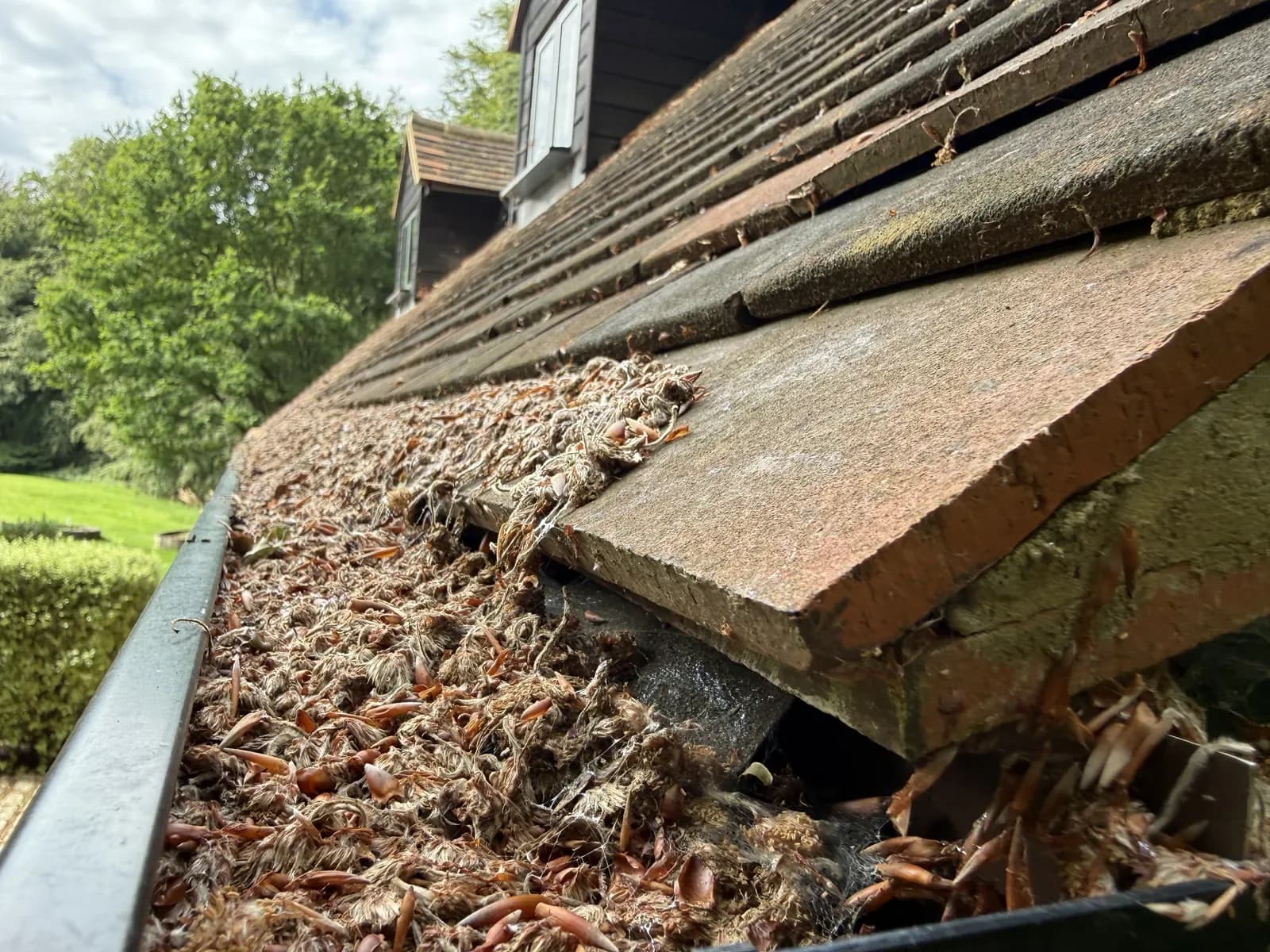
To understand how to clean roof gutters, remove loose debris, flush each channel and confirm every downpipe drains freely. Choose ground-level tools or professional help whenever height, access or roof condition creates avoidable risk.
Clean gutters protect roof edges, fascias, walls, paths and drainage. A careful method also prevents leaves, moss and silt from entering downpipes.
Quick Reference: Roof Gutter Cleaning Tasks
| Task | Typical Timing | Recommended Method | Difficulty |
|---|---|---|---|
| Inspect gutters and roofline | 5-10 minutes | Ground-level visual check during dry weather | Easy |
| Remove loose leaves and twigs | 15-30 minutes | Gutter scoop, vacuum or telescopic claw | Moderate |
| Flush gutter channels | 10-20 minutes | Garden hose with controlled flow | Moderate |
| Clear a blocked downpipe | 15-40 minutes | Hose, drain snake or wet and dry vacuum | Moderate |
| Confirm final drainage | 5-10 minutes | Run clean water towards each outlet | Easy |
How to Clean Roof Gutters Safely Before You Start
The safest starting point is a ground-level inspection. Knowing how to clean roof gutters safely starts with checking height, access, cables and visible damage.
Health and Safety Executive guidance treats roof work as high-risk work. Roof edges, fragile surfaces and unsuitable access equipment create serious fall hazards.
Choose Ground-Level Cleaning Where Possible
To understand how to clean roof gutters from ground level, use a telescopic vacuum, gutter claw or hose wand. Ground-level equipment limits ladder movement.
Ground tools suit loose leaves, light silt and reachable downpipe outlets. Compacted debris, damaged guttering and complex rooflines need professional inspection.
Check Weather, Access and Electrical Risks
Choose a dry, calm day. Wet paving, wind and poor visibility increase risk around ladders, hoses and electrical cables.
Keep every ladder and pole away from overhead power lines. Move bins, furniture, planters and toys before positioning cleaning equipment.
Use a ladder only on firm, level ground. A ladder stand-off keeps the ladder away from weak gutters and improves access to the channel.
Stop When the Roofline Shows Damage
Stop work when you see sagging channels, loose brackets, split joints, rust, rotten fascia boards or displaced roof tiles. Cleaning pressure can worsen existing damage.
A professional inspection separates a simple blockage from a repair problem. The inspection also prevents cleaning water from entering damaged roof edges.
What Tools Do You Need for Roof Gutter Cleaning?
Use tools that remove debris without forcing material into the downpipe. The right tools determine how to clean roof gutters without creating deeper clogs.
Choose Ground-Level Gutter Cleaning Tools
Useful ground-level tools include telescopic gutter vacuums, curved hose wands, gutter claws and inspection cameras. Each tool targets a different debris type.
A vacuum collects dry leaves, needles and loose silt. A hose wand flushes light residue after you remove larger material.
A gutter claw pulls local clumps towards an accessible point. An inspection camera helps you check hidden outlets and gutter guards.
Choose Ladder-Based Gutter Cleaning Tools
A secure collection setup supports how to clean roof gutters from a ladder. Use a scoop, bucket, S-hook, hose and drain snake.
Choose a scoop narrower than the gutter channel. A narrow scoop reaches beneath brackets and reduces pressure against gutter joints.
Attach the bucket securely to the ladder. Keep both hands available when climbing and maintain 3 points of contact.
Wear Suitable Personal Protective Equipment
Wear waterproof gloves, eye protection and non-slip footwear. Gutters can contain sharp metal, bird waste, insects, stagnant water and broken roof fragments.
Wear close-fitting clothing that cannot catch on brackets or ladder fittings. Wash exposed skin after handling wet organic debris.
How to Clean Roof Gutters Step by Step
A safe method for how to clean roof gutters works from roofline debris towards each outlet. Remove solids before water, then test each downpipe.
Remove Loose Roofline Debris First
Roofline debris affects how to clean roof gutters because loose material can refill channels quickly. Clear reachable leaves, twigs and moss without stepping onto tiles.
Chiltern Surface Co links gutter blockages with moss and organic build-up on roofs. Professional roof cleaning can address the source when roof debris repeatedly enters gutters.
Scoop Leaves and Compacted Silt
To remove gutter debris, start near the outlet and lift large clumps into a bucket. Keep debris away from the downpipe opening during removal.
Break compacted silt into small sections with a plastic scoop. Avoid metal scrapers because metal edges can scratch coatings and damage uPVC.
Move the ladder after clearing each reachable section. Keep your belt buckle between the ladder stiles and never stretch sideways.
Flush the Gutter Towards the Downpipe
To flush the gutter, start at the end furthest from the downpipe. Use a steady garden-hose flow and watch the water path.
Clean water should travel along the channel without pooling. Standing water often signals poor fall, sagging sections or a restricted outlet.
Keep pressure low around joints, end caps and seals. High-force water can loosen fittings and drive dirty water behind fascias.
Test the Downpipe and Final Water Flow
To test the downpipe, direct clean water into the outlet and watch the discharge point. A clear downpipe produces a steady, unrestricted flow.
Check every joint for drips during the flow test. Check the ground outlet for backing up, splashing or water returning around the pipe.
Finish roof gutter cleaning by collecting debris from paths and lawns. Dispose of contaminated sludge separately from clean garden leaves.
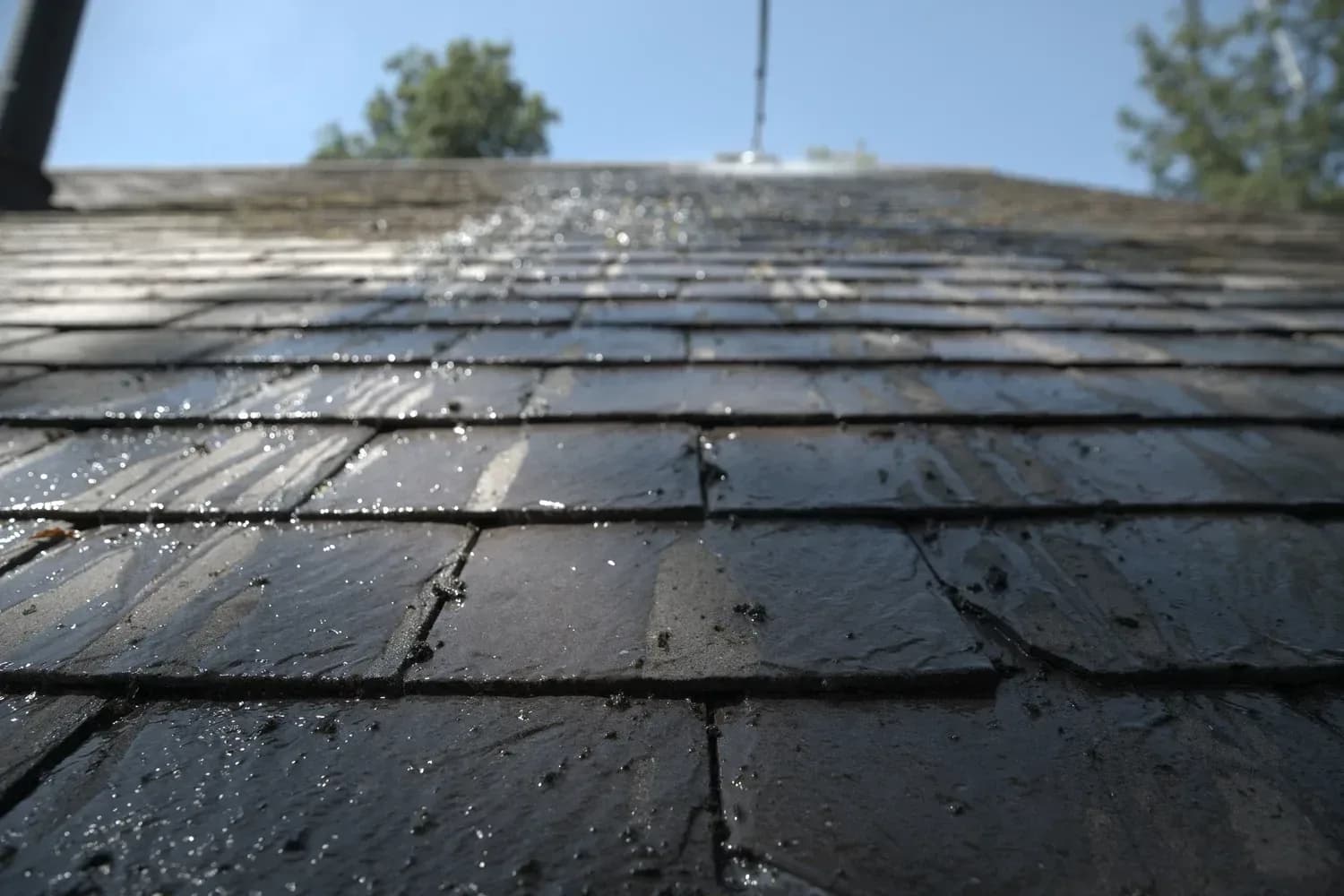
How to Clean Roof Gutters Without a Ladder
Ground access changes how to clean roof gutters without a ladder. Use a telescopic vacuum or controlled hose attachment from firm ground.
Use a Telescopic Gutter Vacuum
A telescopic vacuum offers one answer to how to clean roof gutters from firm ground. Position the nozzle above debris and work towards each outlet.
A wet and dry vacuum handles leaves, needles, moss fragments and light silt. Heavy rooted growth and compacted sludge need manual or professional removal.
Check collected debris after each section. Large tile fragments, mortar pieces or rust flakes indicate a wider roofline problem.
Use a Telescopic Hose Wand
To use a hose wand, remove large debris before rinsing. Direct water along the channel rather than towards roof tiles, windows or open vents.
Keep water pressure controlled. A hose wand should rinse residue, not blast sealed joints or thin gutter material.
Stop immediately when water spills behind the gutter. Overflow behind the channel suggests blockage, incorrect alignment or roofline damage.
Use a Gutter Claw for Local Blockages
To use a gutter claw, position the jaws around visible leaf clumps and pull debris towards you. Empty the claw after each controlled movement.
A claw works best on loose leaves and twigs. A claw cannot confirm hidden downpipe blockages or inspect sealed drainage connections.
How to Clear a Blocked Roof Downpipe
Downpipe condition changes how to clean roof gutters after debris removal. Locate the blockage before applying water, then use controlled mechanical cleaning.
Locate the Downpipe Blockage
Testing the outlet shows how to clean roof gutters without worsening a blockage. Immediate overflow suggests a top blockage; slow flow suggests deeper debris.
Tap accessible pipe sections gently with a gloved hand. A dull, solid sound can indicate packed leaves, moss or silt.
Disconnect removable lower fittings only when you understand the drainage route. Some downpipes connect directly to underground drainage systems.
Break Up the Blockage Safely
Feed a flexible drain snake into the pipe without forcing sharp bends. Rotate the snake gently, withdraw loosened debris and test the flow again.
Use a wet and dry vacuum at an accessible outlet for loose material. Seal the hose around the opening with a damp cloth.
Avoid forcing high-pressure water into a sealed blockage. Trapped pressure can separate joints and push dirty water into walls or roofline gaps.
Check Underground Drainage Connections
Check the gully or underground connection after clearing the downpipe. Water must leave the pipe without rising around the connection.
Stop when underground drainage remains slow. A drainage specialist should inspect buried pipework, root ingress or collapsed sections.
How Often Should You Clean Roof Gutters?
Clean most roof gutters 2 times each year. Frequency matters when planning how to clean roof gutters. Schedule autumn and spring visits.
Clean Most Gutters 2 Times Each Year
A twice-yearly schedule supports how to clean roof gutters before summer storms and winter rainfall. Use spring and late autumn as standard timings.
Record the debris collected during each clean. Light debris at both visits can support a reduced schedule after repeated checks.
Clean Tree-Exposed Gutters Every 3 Months
Clean gutters every 3 months around pine, oak, beech and mature garden trees. Pine needles and compacted leaves can block narrow outlets quickly.
Quarterly gutter maintenance also suits shaded roofs with recurring moss. Roof moss fragments can enter channels throughout the year.
Inspect Water Flow After Heavy Storms
Inspect gutters from ground level during ordinary rainfall. Overflow, uneven discharge and water behind the gutter indicate a blockage or alignment problem.
Arrange an extra clean after storms that deposit branches, leaves or roof debris. Never climb during rain or strong wind.
What Damage Can Blocked Roof Gutters Cause?
Blocked gutters redirect rainwater towards surfaces that need protection. Knowing how to clean roof gutters also means understanding overflow damage.
Overflow Can Stain Fascias and Walls
Overflowing water leaves streaks on fascia boards, soffits, render and masonry. Repeated wetting supports algae growth and surface discolouration.
Chiltern Surface Co provides soft wash treatments for gutters, soffits and fascias affected by organic staining and weathering.
Standing Water Can Strain Gutter Fixings
Wet leaves and silt add weight to gutter channels. Heavy channels can sag, pull brackets loose and open joints.
Standing water also exposes metal gutters to longer moisture contact. Scratched coatings and existing rust can deteriorate faster.
Poor Drainage Can Affect Paths and Foundations
Water spilling beside a building saturates planting beds, splashes lower walls and erodes jointing around paths. Persistent discharge can overwhelm local drainage.
Direct every downpipe towards a suitable drain, gully or controlled outlet. Keep the discharge point clear of leaves and soil.
How Should Different Gutter Materials Be Cleaned?
Match the cleaning method to the gutter material. Material type changes how to clean roof gutters safely and without surface damage.
Clean uPVC Gutters Gently
Clean uPVC with plastic scoops, soft brushes and low-pressure water. Avoid sharp tools, abrasive pads and strong solvents.
Check rubber seals and clipped joints during rinsing. Brittle or distorted fittings need replacement before further cleaning.
Check Aluminium and Steel for Corrosion
Clean coated aluminium and galvanised steel without scraping protective finishes. Remove leaves carefully and inspect scratches, seams and fixing points.
Rust staining, flaking coatings and perforation require repair advice. Cleaning cannot restore metal that has lost structural thickness.
Treat Cast Iron Gutters With Extra Care
Clear cast iron channels with hand tools and controlled water. Cast iron sections carry substantial weight and can crack around weak joints.
Look for peeling paint, rust, movement and leaking unions. A specialist should assess damaged cast iron before cleaning continues.
Which Roof Gutter Cleaning Mistakes Cause Damage?
The most damaging mistakes involve excessive force, unsafe access and incomplete drainage checks. Common mistakes show how to clean roof gutters without causing damage.
Avoid Excessive Water Pressure
Avoid high-pressure jets near joints, roof tiles, render and painted surfaces. High pressure can loosen seals, spread debris and force water behind the roofline.
Use pressure only after testing a small area and confirming material condition. A garden hose usually provides enough force for final rinsing.
Avoid Pushing Debris Into Downpipes
Remove solids before flushing. Water can carry leaves and moss into narrow downpipe bends, creating a deeper blockage.
Cover the outlet temporarily while scooping nearby debris. Remove the cover before the final flow test.
Avoid Leaning or Walking on Roof Tiles
Never lean your body sideways from a ladder. Climb down and reposition the ladder after each reachable section.
Never walk on roof tiles to reach gutters. Clay, slate and cement tiles can crack, slip or conceal fragile areas.
When Should You Use a Professional Service?
Professional help answers how to clean roof gutters when height, damage or restricted access increases risk. Specialist equipment also improves hidden roofline inspection.
Choose Professional Help for High Gutters
Hire a professional for two-storey gutters, conservatory obstructions and steep ground. Safe access needs appropriate ladders, towers or ground-based vacuum systems.
Professional help also suits properties where the working height exceeds normal domestic equipment. Never improvise access with chairs, boxes or short ladders.
Choose Professional Help for Roof Moss and Debris
Repeated gutter blockages often begin with moss, leaves and fragments on the roof. Cleaning only the gutter leaves the source untreated.
A roof and gutter assessment can identify moss growth, tile condition, blocked outlets and staining around the roofline. The assessment supports a coordinated cleaning plan.
Choose Professional Help for Damaged Rooflines
Book an assessment when gutters sag, leak, pull from fascias or show corrosion. Cleaning should follow repair advice when the roofline cannot handle normal water flow.
Chiltern Surface Co assesses surface type, condition, drainage and nearby materials before recommending work through a tailored assessment.
Keep Roof Gutters Clear and Protect the Whole Roofline
Learning how to clean roof gutters helps you protect drainage, fascias, soffits, walls and roof edges. Remove solids first, rinse gently and test every downpipe.
Stop DIY work when access, height or damage creates risk. A professional assessment helps decide how to clean roof gutters safely.
Book a free Chiltern Surface Co site visit through our surface assessment process for the right exterior cleaning service.
Frequently asked questions
Can you learn how to clean roof gutters without climbing a ladder?
Yes. Telescopic vacuums, gutter claws and hose wands can remove light debris from ground level. Hidden clogs still need proper inspection.
Should you use a pressure washer on roof gutters?
No, not as the first method. Remove solids manually or by vacuum, then use controlled water for rinsing. Excessive pressure can damage joints.
How often should roof gutters be cleaned in the UK?
Clean most gutters 2 times yearly. Increase cleaning to every 3 months near mature trees, recurring moss or heavy seasonal debris.
Can blocked gutters damage a roof?
Yes. Backed-up water can wet roof edges, fascias and soffits. Persistent moisture can worsen existing defects and encourage organic growth.
Do gutter guards remove the need for cleaning?
No. Gutter guards reduce large debris but still collect pollen, needles, moss and silt. Inspect guards and outlets during each maintenance visit.