
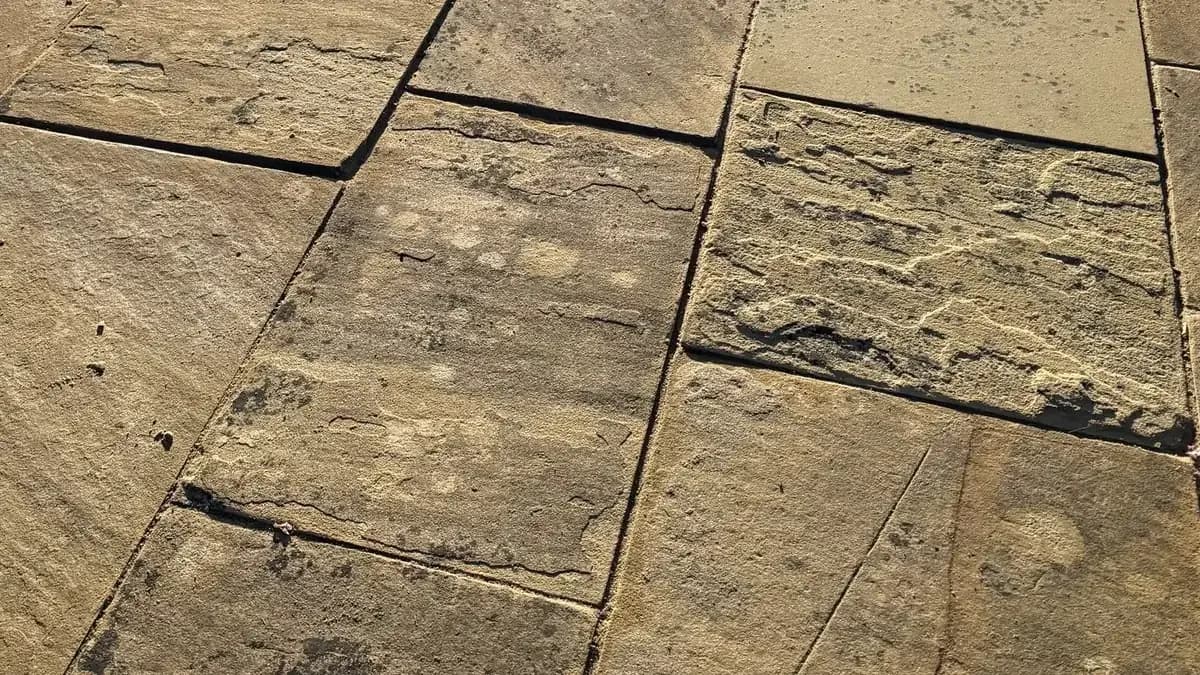
To remove cement or mortar stains from paving, lift loose deposits carefully, identify the paving material and use a compatible cement-residue remover. Work on a small test area first, keep the treatment controlled and rinse the surface thoroughly.
The correct method depends on whether you have a fresh smear, a raised deposit, a thin cement haze or chemical damage left by an earlier cleaning attempt. Pressure washing alone rarely removes cement that has bonded to the paving, while unrestricted use of brick acid can leave a worse mark than the original stain.
Can Cement or Mortar Stains Be Removed From Paving?
Most surface deposits can be improved, and many can be removed completely when treatment begins early. A thin residue on porcelain usually responds differently from hardened mortar on sandstone, so no single cleaner suits every patio or driveway.
The realistic result depends on 4 factors: the paving material, the type of residue, the age of the mark and any treatment already attempted. Cement sitting above the surface offers a better prospect than cement drawn into an open-textured stone. Acid etching, bleaching or iron staining can remain after the cement has gone because the surface itself has changed.
Begin by deciding whether the unwanted material is physically attached to the slab or has left discolouration within the surface. That distinction prevents repeated chemical treatment of a mark that no longer contains cement.
Identify the Mark Before You Choose a Cleaner
Cement and mortar marks do not all require the same response. Examine the texture, colour and position of the residue before applying water, pressure or chemicals.
Fresh mortar smears
Fresh mortar normally appears as a damp grey smear near newly pointed joints. Remove the bulk promptly with a clean plastic tool, then lift the remaining film with clean water and a sponge. Avoid flooding uncured joints or dragging the smear across clean slabs.
Hardened mortar deposits
Hardened deposits feel raised and solid. Mechanical removal can reduce the bulk, but forceful chiselling can chip slab edges or fracture a brittle surface. A compatible residue remover may soften the remaining cement after the raised material has been reduced carefully.
Cement haze and grout residue
Cement haze forms a thin, dull film across the paving after pointing or grouting. The film can look pale when dry and become less obvious when wet. A surface-safe cement and grout residue remover usually gives better control than aggressive scraping.
Efflorescence or acid damage
Efflorescence looks like a white, powdery or crystalline bloom created by soluble salts. Acid damage can appear as pale patches, dull areas or orange-brown staining. Neither problem should automatically receive another application of cement remover. Accurate diagnosis matters because additional acid can deepen permanent discolouration.
Match the Treatment to the Paving Material
The paving material decides which chemistry and level of agitation the surface can tolerate. Check invoices, product information or spare slabs when the material is uncertain. A discreet test patch cannot compensate for a cleaner that the manufacturer excludes.
| Paving material | Sensible first approach | Main risk | DIY difficulty |
|---|---|---|---|
| Porcelain | Plastic scraper, then a compatible residue remover | Scratching polished finishes or weakening joints | Low to moderate |
| Sandstone | Stone-safe product after a test patch | Colour change, iron staining or surface erosion | Moderate to high |
| Limestone | Manufacturer-approved non-aggressive treatment | Acid etching, bleaching and loss of finish | High |
| Concrete paving | Controlled mechanical removal and approved cleaner | Exposed aggregate, pale patches and joint damage | Moderate |
| Block paving | Targeted treatment followed by joint inspection | Lost jointing sand and uneven colour | Moderate |
Sandstone paving
Sandstone contains natural minerals and varies in porosity, density and colour. Strong hydrochloric acid can react with minerals in some sandstone and produce orange-brown staining. Choose a product explicitly approved for the exact stone, and stop if the test patch changes colour or texture.
Limestone and travertine paving
Limestone and travertine contain calcium carbonate, which reacts with acids. Brick acid, vinegar and unsuitable patio cleaners can etch the face, lighten dark limestone or remove a honed finish. Treat cement contamination on these surfaces as a specialist problem unless the paving manufacturer approves a specific product.
Porcelain paving
Porcelain absorbs very little water, so mortar residue usually remains close to the surface. The dense face often allows controlled use of a suitable cement-residue remover. Protect grout lines, metal edging and adjacent natural stone, and avoid blades or abrasive pads that can scratch the finish.
For wider maintenance advice, Chiltern Surface Co’s guide to clean porcelain paving explains how to clean the surface without treating every mark as ordinary dirt.
Concrete slabs and block paving
Concrete-based paving contains cement, so a strong cement remover can attack the surface as well as the stain. Over-treatment can expose aggregate, create pale patches or soften mortar joints. Block paving also requires joint inspection because rinsing and pressure can remove jointing sand.
How to Remove Fresh Cement or Mortar From Paving
To remove fresh cement or mortar from paving, lift the material before it cures and avoid spreading the residue. Wear gloves, protect nearby plants and keep runoff away from drains and ponds.
Use the edge of a plastic scraper or wooden spatula to pick up the bulk. Wipe the tool between passes so each movement removes material instead of transferring it. Follow with a clean damp sponge, changing the water frequently. Work towards the centre of the affected slab rather than washing slurry across neighbouring paving.
Do not scrub wet mortar into textured sandstone or concrete. Scrubbing can drive fine cement into pores and make the eventual haze wider. Protect recently completed pointing as well; excessive rinsing can weaken the joint face before the mortar cures.
How to Remove Dried Cement or Mortar Stains From Paving
To remove dried cement or mortar stains from paving, reduce raised material first and treat the remaining bond with compatible chemistry. A controlled sequence gives you more information and creates less risk than starting with high pressure or concentrated acid.
1. Confirm the surface and protect the area
Identify the slab, read the cleaner label and check the manufacturer’s exclusions. Move furniture and pots, cover sensitive metalwork and pre-wet nearby planting. Prevent treatment water from entering surface drains.
2. Remove loose and raised deposits
Hold a plastic or wooden scraper at a shallow angle and work from the outside of the deposit towards its centre. Do not use a steel wire brush on porcelain, coated concrete or soft natural stone. Avoid hammering directly against slab edges or pointing.
3. Complete a representative test patch
Choose a small area with the same paving, finish, sealer and weather exposure as the visible stain. Apply the product at the label dilution and dwell time. Rinse the patch fully, allow it to dry and inspect the colour, sheen and texture before treating a larger area.
4. Apply a compatible cement-residue remover
Treat only the affected section unless the manufacturer specifies a wider wash. Keep the product wet for the stated dwell time and agitate with a nylon brush where permitted. Do not extend the dwell time to compensate for a weak first result. Repeat only when the dry test area shows that another controlled application remains safe.
5. Rinse thoroughly and inspect when dry
Rinse with clean water using controlled flow. Collect residue where required and prevent acidic water reaching plants, metals or drainage channels. Judge the result after complete drying because wet paving can conceal haze, bleaching and colour differences.
Can You Use Brick Acid on Paving?
Brick acid is not a universal paving cleaner. Products containing hydrochloric acid can dissolve cement residue, but the same reaction can attack limestone, concrete products, mortar joints and minerals within natural stone.
Black limestone presents a particular risk because acid can alter the surface and leave grey or pale patches. Imported sandstone can develop iron staining after unsuitable acid treatment. Even acid-resistant porcelain installations include vulnerable materials such as cement joints, metal trims and nearby stone.
Do not select a product because the label says “patio cleaner” or “brick cleaner”. Confirm compatibility with the paving manufacturer and cleaner manufacturer. Marshalls also advises careful chemical selection and recommends a proprietary mortar-stain cleaner for light bonded residue rather than uncontrolled chemical use. See the manufacturer cleaning guidance for further general information.
Will a Pressure Washer Remove Mortar Stains?
A pressure washer can remove loose debris and help rinse suitable surfaces, but water pressure does not reliably dissolve bonded cement. Increasing pressure can damage the paving before the stain releases.
A narrow jet or turbo nozzle can score soft stone, expose aggregate in concrete, widen joints and remove jointing sand. High pressure can also drive loosened slurry into adjacent pores. Use pressure as a controlled rinsing tool only when the paving and jointing can tolerate it.
Professional treatment normally combines diagnosis, suitable chemistry, careful agitation and controlled rinsing. Chiltern Surface Co’s professional patio cleaning service matches the method to natural stone, porcelain or concrete rather than treating pressure as the complete solution.
Common Mistakes That Can Make the Stain Worse
Most avoidable damage comes from treating every grey or white mark as the same problem. The following errors can turn removable residue into permanent surface damage:
- Applying concentrated brick acid without identifying the paving material.
- Using vinegar or another household acid on limestone, travertine or cement-based paving.
- Chiselling hardened mortar against slab edges or textured stone faces.
- Holding a pressure-washer nozzle close to the stain until the surface changes.
- Adding more cleaner before the first test patch has dried completely.
- Allowing contaminated rinse water to dry across clean slabs or metalwork.
Bleach does not dissolve cement. Bleach can treat organic contamination such as algae, but it does not address the mineral bond in mortar. Mixing bleach with acidic cleaners can release dangerous chlorine gas, so never combine cleaning products.
When Is DIY Mortar-Stain Removal Reasonable?
DIY treatment is reasonable for a small, recent deposit on a known, unsealed surface when the manufacturer confirms a compatible product. You should have a discreet place for a test patch, safe drainage control and enough spare time to let the test dry before continuing.
Stop if the surface lightens, darkens, becomes rougher or develops orange-brown marks. Stop also when you cannot identify the slab, the stain covers a wide area or an earlier acid treatment has already changed the finish. More chemical does not reverse chemical damage.
A contractor who caused fresh contamination should first receive the opportunity to inspect and correct the work. Photograph the affected paving before treatment, retain product information and avoid experimental cleaning that could complicate responsibility for the damage.
When Does Professional Surface Restoration Make More Sense?
Professional assessment makes sense when the paving is limestone, valuable natural stone, sealed, honed or polished. It also makes sense for widespread haze, thick deposits, contaminated joints and marks that changed colour after brick-acid use.
A specialist should distinguish surface mortar from iron staining, efflorescence, reflective staining and acid etching. Each problem requires a different response. Some deposits can be removed; some discolouration can only be reduced; severe damage can require individual slab replacement.
If the wider patio also needs joint repairs, stain treatment or protection, a planned restore your patio approach can prevent one cleaning step from undermining another.
How to Prevent Cement and Mortar Stains During Pointing
Prevention gives a more reliable result than removing cured cement. Keep the mortar workable but not wet enough to slump, use a pointing trowel or mortar gun and trim material before it reaches the slab face. Brush loose crumbs only after the mortar has firmed enough not to smear.
Clean accidental contact immediately with methods approved for the paving system. Change sponges and rinse water often. Masking can help on highly textured or pale slabs, but adhesive and trapped moisture can also mark some surfaces, so test masking materials first.
Follow the jointing-product instructions for wetting, application and final cleaning. Brush-in compounds, traditional mortar and slurry-applied grouts have different requirements. A technique that suits porcelain can stain porous sandstone.
Remove the Cement Without Sacrificing the Paving
Successful mortar-stain removal begins with 2 correct identifications: the residue and the paving material. Once those are clear, use the least aggressive effective method, test it properly and judge the result only after drying.
For widespread residue, valuable natural stone or uncertain acid damage, arrange a Free Site Assessment with Chiltern Surface Co. We will inspect the surface, explain the realistic options and provide a clear Free Quotation without pressure.
Frequently asked questions
Can dried cement be removed from sandstone paving?
Yes, many surface deposits can be reduced or removed, but sandstone needs a compatible stone-safe product. Avoid generic brick acid because mineral reactions can create permanent orange or pale staining.
Does vinegar remove mortar from paving slabs?
Vinegar can react with light cement residue, but vinegar remains an acid. Avoid vinegar on limestone, travertine, concrete products and any surface whose manufacturer excludes acidic cleaning.
How soon should mortar stains be cleaned?
Remove accidental smears before they cure, without flooding fresh joints. For hardened residue, follow the jointing and cleaner manufacturers’ timing because premature chemical cleaning can weaken new mortar.
Can a wire brush remove cement from paving?
A wire brush can scratch porcelain, mark natural stone and leave metal particles that rust. Use a suitable nylon brush unless the paving manufacturer approves another tool.
Will sealing hide mortar stains?
No. Sealer can deepen colour and make existing marks more visible. Remove or assess the contamination before sealing, then confirm that the cleaned surface is dry and suitable.