
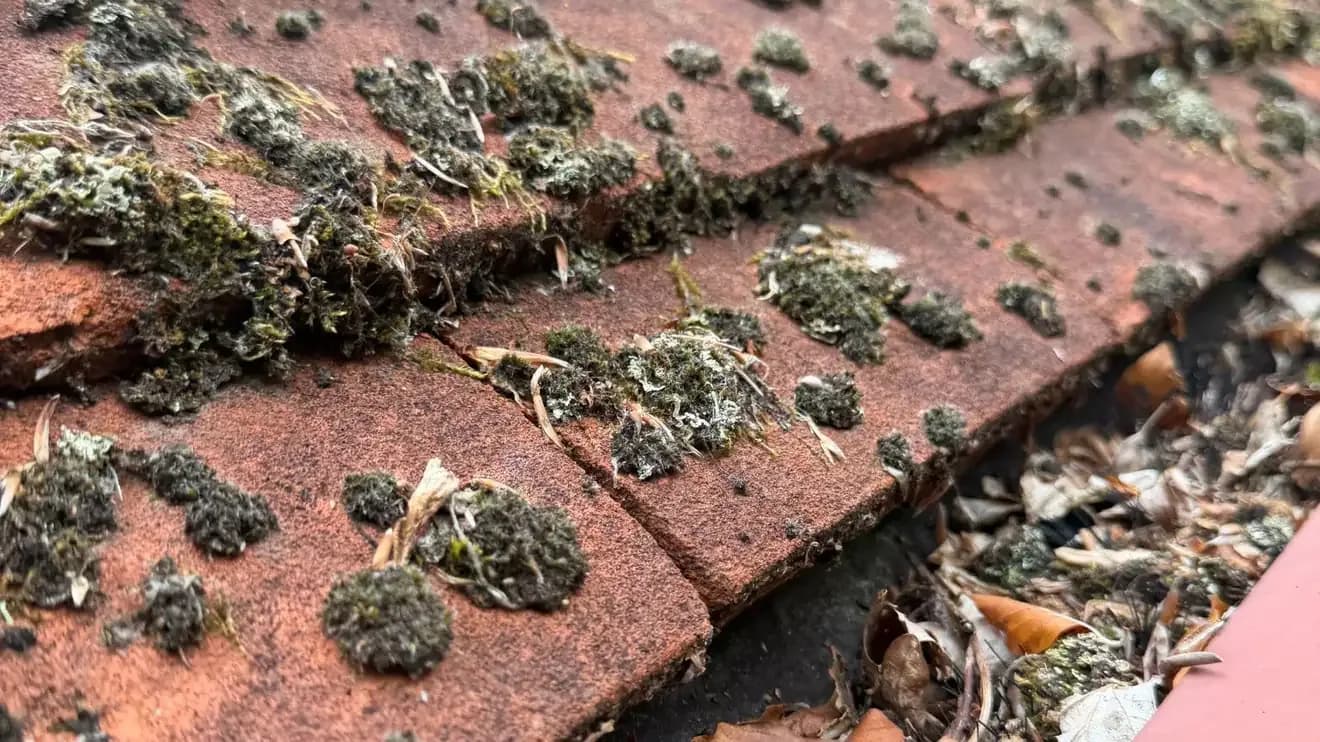
To remove lichen from roof tiles safely, treat the biological growth with a roof-compatible product and allow the dead lichen to release gradually. Avoid tearing firmly attached patches away from clay, concrete or slate because aggressive scraping can remove part of an already weathered surface.
Lichen differs from loose dirt and moss. Mature colonies attach closely to microscopic pits and textured finishes. A suitable method therefore depends on the roof material, tile condition, contamination and access, not on which machine produces the fastest visible change.
What Is Lichen and Why Does It Grow on Roof Tiles?
Lichen is a partnership between a fungus and a photosynthetic organism, usually an alga or cyanobacterium. The combined organism survives on exposed surfaces with little nutrition and tolerates conditions that stop many plants from growing.
On roofs, lichen often appears as flat white, grey, yellow, green or black patches. Some growth looks powdery, while mature crustose lichen forms hard discs that sit tightly against the tile. North-facing slopes, overhanging trees and slow-drying roof areas often show heavier colonisation.
Dirt, bird deposits and airborne particles help create a surface where biological growth can establish. Shade and persistent moisture extend the time tiles remain damp after rain. Roof pitch and tile texture also affect how quickly water drains and the surface dries.
How lichen differs from moss and algae
Moss forms soft, raised clumps with small stems and leaves. Established moss can shed into gutters or grow around laps and interlocks. Algae usually produces green films or dark streaks and spreads across damp areas.
Lichen grows more slowly and bonds more firmly. A brush can dislodge loose moss, but the same action can tear stubborn lichen from the tile face. That difference explains why roof lichen often needs treatment and patience rather than harder scrubbing.
Why white and black lichen need realistic expectations
White and black lichen can leave distinct circular marks after treatment. The organism can die before the visible body releases from the surface. Natural rainfall and weathering then help loosen the remaining material.
The roof may improve substantially without becoming evenly coloured on the treatment day. Tile age, porosity and previous weathering influence the final appearance. An honest quotation should separate biological control from an unrealistic promise of instant colour restoration.
Does Lichen Need to Be Removed From Every Roof?
No, light lichen growth does not automatically mean a roof has failed or needs urgent cleaning. The decision should consider drainage, roof condition, the extent of growth and the homeowner's appearance goals.
Sparse lichen on stable tiles may represent a mainly cosmetic issue. Heavy growth mixed with moss and debris can slow drying, obscure damaged areas and contribute material to valleys and gutters. Cleaning becomes more useful when contamination interferes with maintenance or creates a neglected appearance.
An inspection matters because cleaning cannot correct cracked tiles, slipped slates, failed flashing or weak ridge mortar. Those defects need roofing work. A cleaner should identify visible concerns and recommend a roofer when the roof needs repair before treatment.
The independent advice published by Which? Trusted Traders also warns homeowners against unnecessary work and exaggerated claims. A condition-led recommendation protects the roof better than assuming every patch of lichen must disappear immediately.
How to Remove Lichen From Roof Tiles Safely
To remove lichen from roof tiles safely, inspect the covering, plan secure access, clear loose organic matter and apply a suitable low-pressure treatment. The treatment should kill the growth without relying on force to strip it from the surface.
The exact sequence changes with the roof. A roof covered in thick moss needs careful bulk removal before treatment. A roof with flat lichen and little loose material may need minimal mechanical preparation. Fragile tiles or uncertain coverings can require specialist advice before any cleaning starts.
Assess the roof before choosing a method
A proper assessment identifies tile type, age, pitch, access and visible deterioration. The contractor should look for cracks, spalling, loose mortar, slipped units, damaged flashings and previous coatings. Solar panels, rooflights, conservatories and neighbouring boundaries can change the access plan.
The inspection should also trace runoff. Downpipes can feed water butts, ponds or planted areas that need protection. A treatment plan that ignores gutters and drainage can move contamination or cleaning solution into the wrong place.
Remove loose moss and debris without attacking the lichen
Loose leaves, heavy moss and surface debris can prevent even treatment coverage. Operatives can remove those deposits with roof-profile scrapers and controlled hand tools where the tile condition allows.
The aim is not to gouge every visible mark away. Firmly bonded lichen should remain for treatment when scraping risks damage. Metal wire brushes, sharp blades and forceful abrasion can score finishes and expose weaker material beneath the surface.
Our guide to safe roof moss removal explains why bulk moss and attached lichen need different handling.
Apply a roof-compatible treatment at low pressure
A professional soft-wash or biocidal product targets living contamination. The contractor chooses the dilution and application rate from the product label, roof material and level of growth. Low-pressure equipment distributes the treatment without using water force as the main cleaning action.
The product must receive the specified dwell time and suitable weather. Immediate rain can dilute some treatments, while strong sun can dry others too quickly. Temperature, wind and surface moisture all affect application.
Allow the treated lichen to release gradually
Treatment does not always make mature lichen vanish during the visit. The organism changes colour as it dies, then loosens through weathering. Rain, wind and natural surface movement help the dead material detach over time.
Some roofs show a clear improvement within weeks. Stubborn colonies can take several months to weather away. Reinspection and a targeted second treatment can be more appropriate than increasing pressure or scraping harder.
Which Method Suits Each Roof Tile Material?
Different roof coverings respond differently to cleaning. Even tiles made from the same material can vary because of age, finish, exposure and previous maintenance.
| Roof covering | Main concern | Suitable starting approach |
|---|---|---|
| Clay tiles | Brittleness, surface flaking and age-related weathering | Inspect carefully and favour low-pressure treatment with minimal abrasion |
| Concrete tiles | Worn colour coatings and textured surfaces | Treat biological growth and avoid excessive pressure on the tile face |
| Natural slate | Cracked slates, loose fixings and fragile edges | Use specialist access and controlled low-pressure treatment |
| Artificial slate | Manufacturer restrictions and uncertain composition | Confirm the product and manufacturer guidance before cleaning |
| Coated tiles | Colour loss or incompatibility with chemicals | Test discreetly and follow coating-specific instructions |
Removing lichen from clay roof tiles
Clay tiles can remain durable for decades, but older units may become brittle or show surface delamination. Lichen can sit within pits and weathered areas. Pulling mature colonies away can remove loose surface material with them.
A careful contractor limits foot traffic and selects treatment around the tile condition. The goal is to control growth while preserving sound material. Historic or handmade tiles need particularly cautious assessment.
Removing lichen from concrete roof tiles
Concrete tiles often have textured surfaces that support lichen attachment. Older colour coatings can already show natural fading before cleaning begins. High-pressure washing can create uneven colour or expose aggregate when the surface has deteriorated.
Low-pressure treatment reduces reliance on mechanical force. A test area helps establish how the roof responds and what visual result remains realistic after the growth releases.
Removing lichen from slate roofs
Natural slate needs specialist handling because individual slates can crack, slip or lift. Ageing nails, hooks and battens can add hidden weaknesses. Walking directly across the roof can damage a covering that looked stable from the ground.
A controlled treatment applied from suitable access equipment can reduce disturbance. Chiltern Surface Co's explanation of soft wash roof cleaning covers how low-pressure treatment can suit stable slate and tiled roofs after assessment.
Can You Pressure Wash Lichen Off Roof Tiles?
Pressure washing is not the default method for removing roof lichen. A strong jet can remove visible growth quickly, but the same force can damage finishes, disturb weak pointing and drive water beneath tile laps.
An upward spray presents a particular problem because pitched roofing relies on overlapping units to shed water downwards. Water forced against the laps can reach areas that normal rainfall does not. Overspray also spreads dirty water and biological debris across walls, windows and neighbouring properties.
Some stable coverings can tolerate carefully controlled professional washing after inspection. The pressure, flow, temperature, nozzle and working direction all need control. That specialist decision should not become a general recommendation for homeowners using a domestic pressure washer.
Wienerberger's roof-tile cleaning guidance also advises against high-pressure jet washing because it can damage finishes and force water into interlocks and headlaps.
Can You Scrape Lichen From Roof Tiles?
You should not aggressively scrape firmly attached lichen from a weathered tile. Gentle removal can suit dead, loosened material when the covering remains sound, but treatment should do the main work on stubborn colonies.
Hand tools work better for thick moss than flat lichen. A profile-matched scraper can lift moss without digging into the tile face. Lichen needs more judgement because the visible patch can be attached to a fragile coating or flaking surface.
Wire brushes and abrasive attachments increase the risk of scratches and surface loss. They can also create a patchy finish by cleaning isolated areas more harshly than the surrounding roof. If the only way to remove a mark is to damage the tile, the mark should remain and weather gradually.
Do Household Lichen Remedies Work on Roof Tiles?
Household bleach, vinegar, washing-up liquid and improvised mixtures appear frequently in online discussions. Those recipes do not account for tile material, runoff, concentration, surrounding plants or compatibility with metals and coatings.
Bleach-based products can harm planting and discolour incompatible surfaces when users mix or apply them incorrectly. Acidic products can affect cementitious materials and metals. Combining cleaning chemicals can also release dangerous fumes.
Use only a product specifically suitable for the roof surface and biological contamination. Follow its label for dilution, protective equipment, dwell time and environmental controls. Professional-strength products also require competent handling and Control of Substances Hazardous to Health assessment.
Is DIY Roof Lichen Removal Safe?
Ground-level observation is reasonable, but accessing a roof to treat lichen is rarely a sensible DIY job. Roof tiles become slippery when damp, and cleaning solution increases that risk. A long lance does not solve every safety problem because the operator still needs controlled application and runoff management.
Homeowners can photograph the roof from the ground, inspect the loft after heavy rain and watch gutters during a downpour. Accessible low-level gutters can sometimes receive simple maintenance from a stable position. Work that requires walking on tiles, leaning from a ladder or spraying above people should go to a trained contractor.
Ask any contractor how the team will reach the roof, protect the grounds and control chemicals. Public liability insurance alone does not explain the working method. A clear quotation should identify access, preparation, treatment, clean-up and the expected improvement period.
How Long Does Roof Lichen Removal Take to Work?
Professional treatment can kill lichen quickly, but the visible remains often take weeks or months to release. The timeline depends on colony thickness, lichen type, tile texture, weather and the cleaning system.
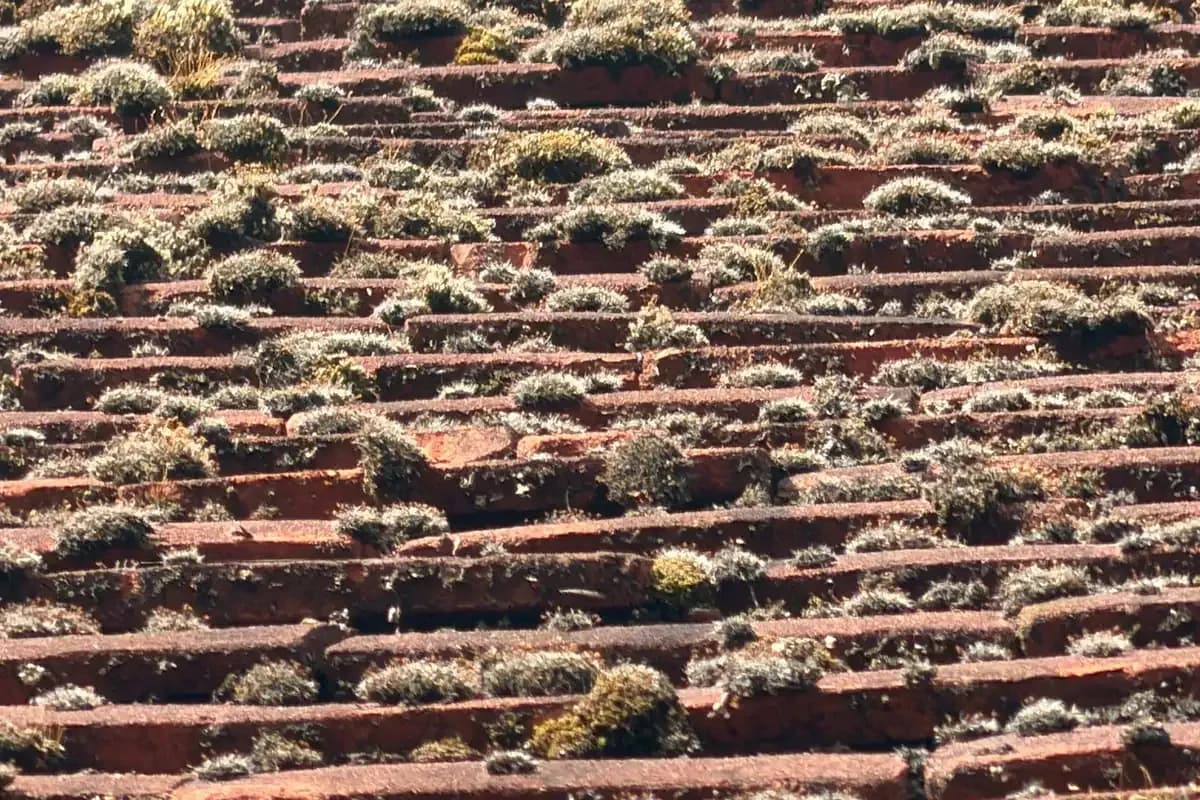
A rapid process can produce a cleaner appearance during the visit when the roof can tolerate rinsing or controlled steam. A treatment-led process creates a more gradual change and uses natural weathering to reduce mechanical disturbance.
Neither route guarantees that an old roof will regain a uniform original colour. Protected areas can retain stronger colour than exposed tiles, and dead lichen can leave pale discs temporarily. The contractor should explain whether the priority is immediate appearance, low disturbance or a balance between both.
How Can You Reduce Lichen Regrowth?
No treatment makes a roof permanently resistant to biological growth. Spores return through the air, and damp shaded conditions continue to support colonisation.
Trimming suitable overhanging branches can improve light and airflow, although a qualified tree professional should handle protected or large trees. Keeping gutters and valleys clear helps rainwater leave the roofline. Periodic ground-level checks also identify new growth before it becomes extensive.
Where appropriate, Chiltern EverGuard™ Treatment can help reduce future biological regrowth for approximately 12–24 months. The actual period depends on roof material, orientation, nearby vegetation, local weather and maintenance. The treatment is not permanent and does not replace inspection.
When Should You Arrange Professional Roof Lichen Removal?
Professional help makes sense when lichen covers a large area, the roof is steep or fragile, or safe access needs specialist equipment. A professional assessment also helps when the roof contains mixed materials, solar panels, conservatory sections or difficult boundaries.
Choose a contractor who explains why a method suits the roof. Be cautious with anyone who recommends the same pressure setting or chemical recipe for every property. The quotation should describe protection for plants, gutters, downpipes and neighbouring surfaces.
Chiltern Surface Co assesses the surface, condition and contamination before recommending work. The team aims for significant improvement where the tile condition allows and sets a realistic timetable for lichen to release.
Arrange a Free Site Assessment
The safest way to remove lichen from roof tiles is to control the growth without sacrificing the tile surface. That requires the right access, treatment and expectations for the particular roof.
If you want surface-specific advice, arrange a Free Site Assessment through Chiltern Surface Co's professional roof cleaning service. You will receive a clear recommendation and Free Quotation based on the roof material, condition and contamination.
Frequently asked questions
Does lichen damage roof tiles?
Lichen does not automatically mean the tiles have failed. Heavy growth can retain moisture and conceal deterioration, while aggressive removal can cause more damage than the lichen itself.
What kills lichen on roof tiles?
A roof-compatible biocidal or soft-wash treatment controls living lichen. The correct product, dilution and dwell time depend on the roof material and manufacturer's instructions.
Will rain remove dead lichen?
Rain and normal weathering help loosen treated lichen gradually. Thick or mature growth can remain visible for several months after treatment.
Can bleach remove roof lichen?
Bleach can affect biological growth, but improvised use creates avoidable risks. Incorrect concentration and runoff can damage plants, metals, coatings and nearby surfaces.
Will lichen return after roof cleaning?
Yes, lichen can return because no treatment removes future airborne spores. Shade, dampness, roof texture and nearby trees influence how quickly regrowth appears.