

Brick Cleaning and Soft Washing in Beaconsfield
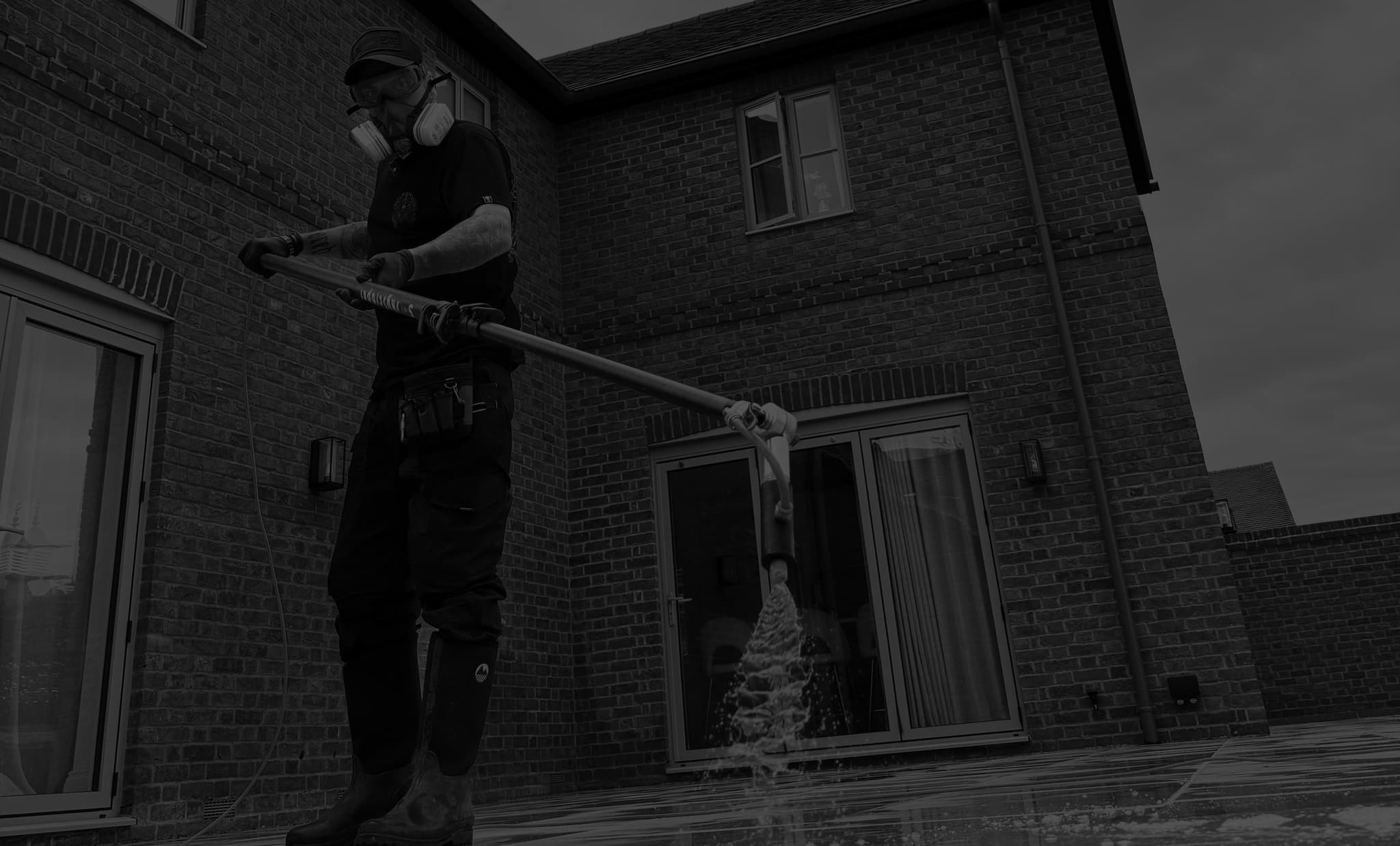
Brick cleaning and soft washing in Beaconsfield: black algae and lichen treated on brick retaining walls and copings, then rinsed at low pressure.
Solar Panel Cleaning · Buckinghamshire
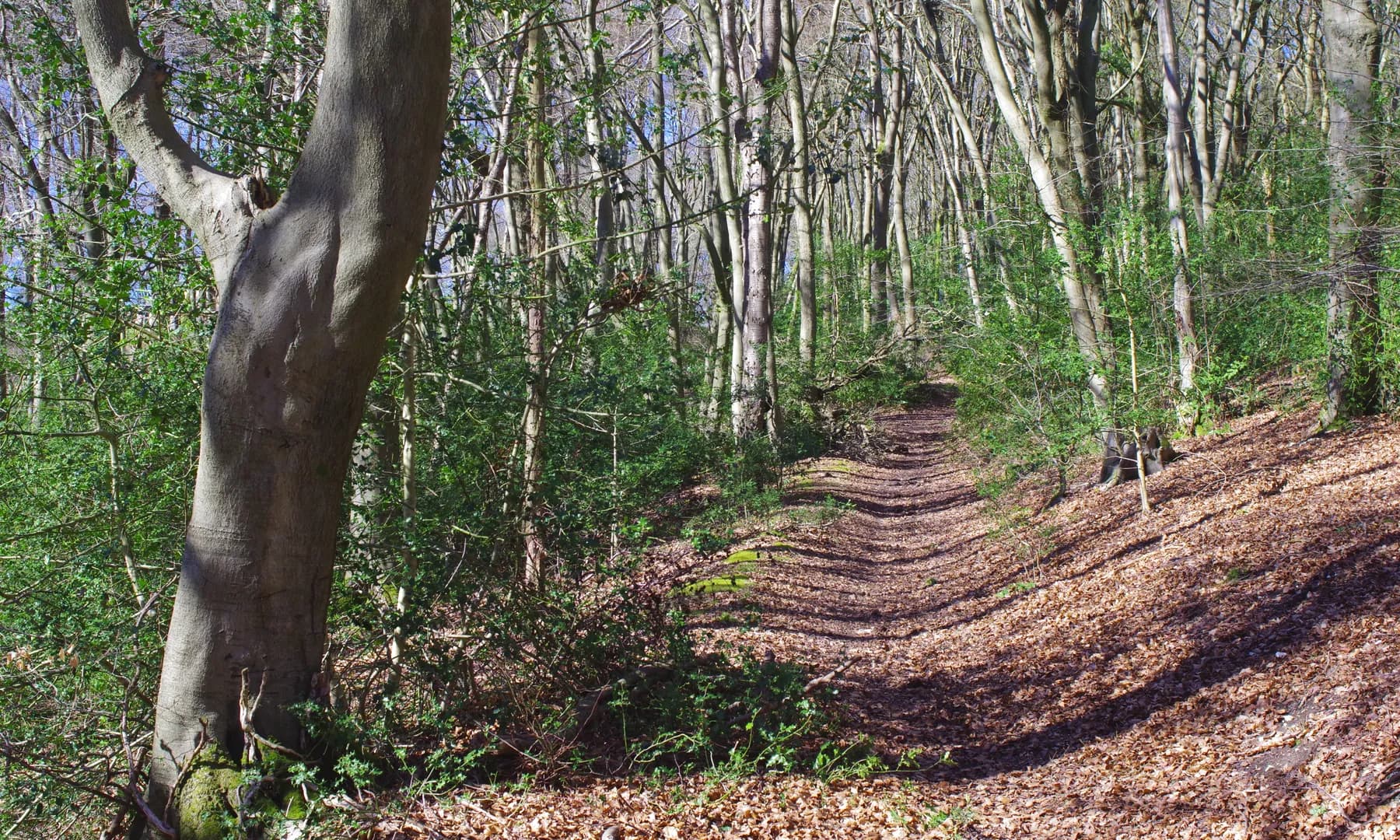
Penn sits high on a Chiltern ridge with beech woodland close on every side. Panels here contend with leaf litter, lichen and woodland birds, and we clean them gently with de-ionised water and a soft brush.
Living by the woods
Trees bring shade, birds and a steady fall of leaves, seed and sap. On a panel, all of that settles in the same place and stays there, because the glass is smooth enough for it to cling yet angled just enough for rain to run past it. Lichen and moss follow wherever debris collects and the surface stays damp.
Penn village
Penn stretches along a ridge of the Chiltern Hills, with Tylers Green beside it and beech woods and commons all around. The Penn and Tylers Green conservation area takes in the historic core near Holy Trinity Church, larger older houses along the ridge and many vernacular cottages of flint and brick.
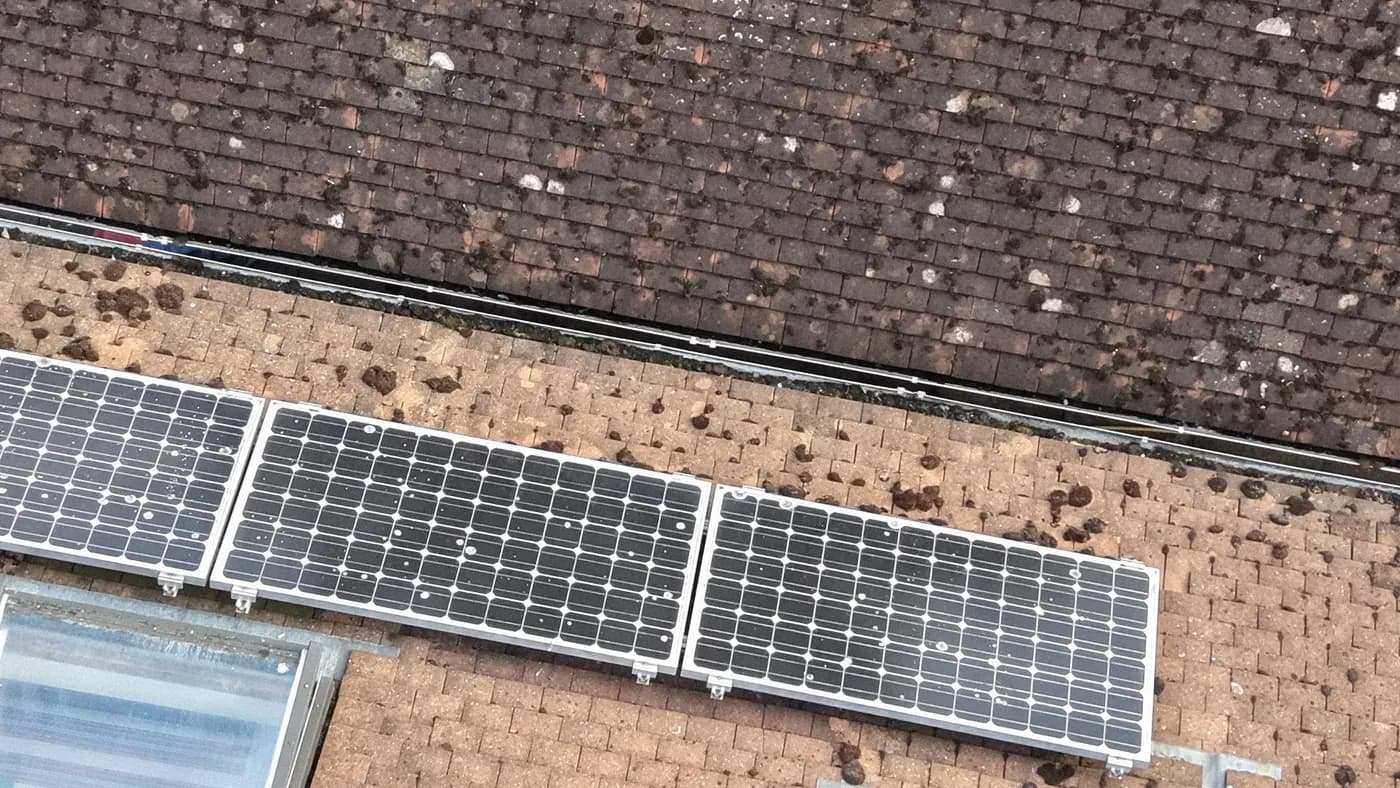
The village has a historic tile-making tradition, and plain clay tiles still cover many of its roofs. They are handsome and long-lived but can become brittle with age, which matters when a solar array sits among them. Add tall trees, sheltered gardens and slow-drying shade, and you have the conditions in which lichen, moss and woodland debris build up on and around panels.
Lichen and moss
Old clay tiles in shade often carry lichen and moss, and an array sitting among them is in the path of that growth. It lodges first in the corners and along the lower frame, where leaf fragments and water collect, then creeps along the seal line. Lichen can also take hold in small patches on the glass itself if a panel has been left for a long time.
Woodland debris
In autumn, beech leaves and the husks of their nuts drift onto roofs near woodland and lodge against the bottom edge of an array. Through the year, birds that live along the woodland edge perch on ridges and chimneys and leave droppings on the glass below.
In summer, some trees shed a sticky residue that dries to a dull film. Each of these shades the glass in its own way, and a soft brush with plenty of de-ionised water deals with all of them without anything abrasive.
Protecting the roof
The panels are not built for foot traffic, and neither is an aged clay tile roof. A misplaced foot, or a ladder resting against the tiles near an array, can crack tiles that are difficult to match.
Cleaning from the ground with a long water-fed pole avoids that risk on most homes. Where a roof is too tall, or the ground below too uneven or densely planted, we explain what access would be needed at the site visit and agree it before anything else is decided.
How we clean
Each clean follows the same order. On a wooded plot we simply allow more time for the frames, the corners and the debris lodged against them.
We check the panels, the tiles around them and the trees overhead, note any growth, cracks or lifted seals, and confirm how each part of the array can be reached.
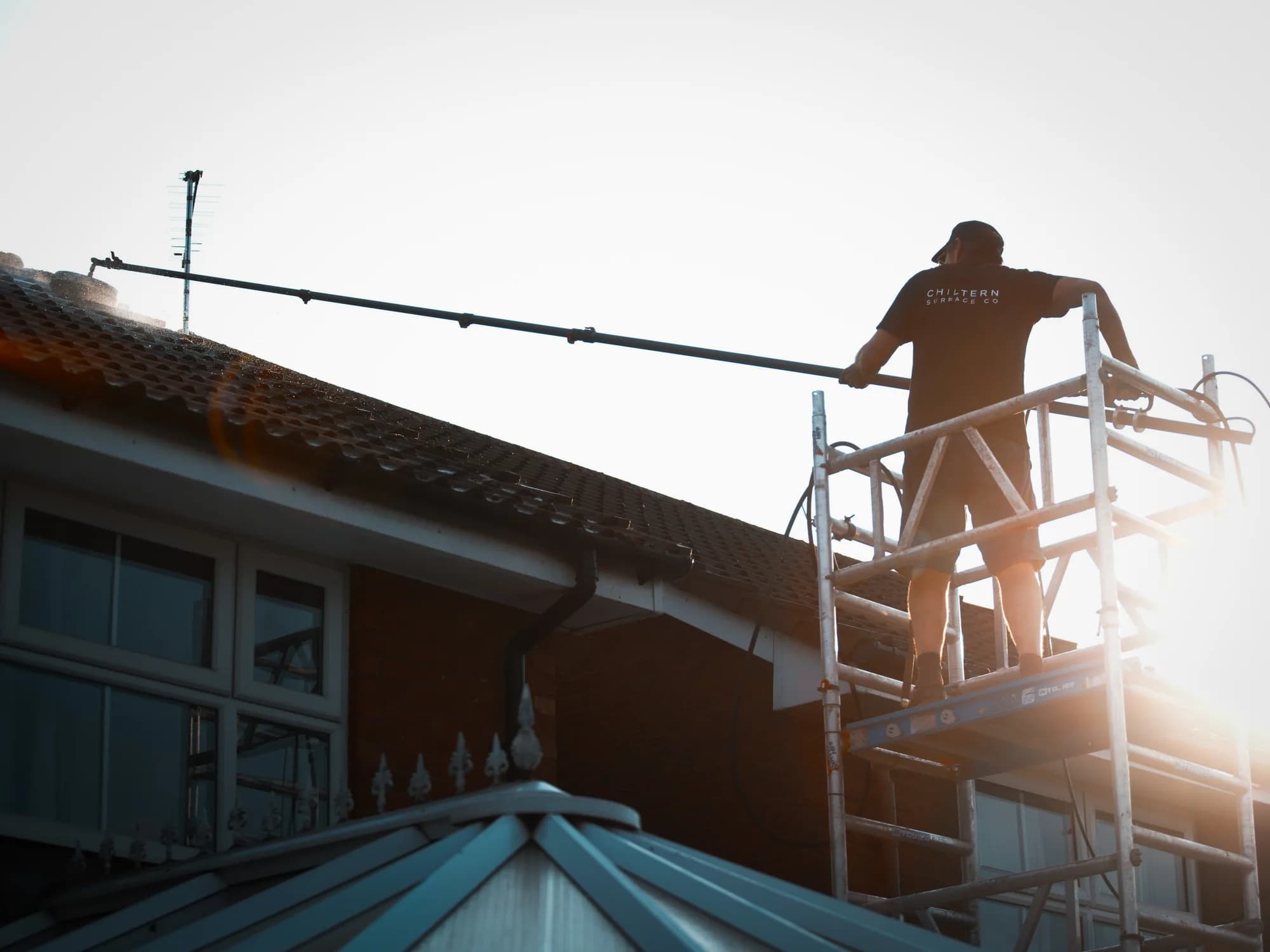
A soft-bristle brush on a pole supplied with de-ionised water loosens lichen, droppings and sap from the glass. The work is done from the ground wherever the access allows.
Moss, leaf litter and beech husks are worked out of the frame edges and corners, where they hold moisture and give regrowth a foothold.
A final rinse in de-ionised water carries away the loosened material. The glass dries naturally with nothing wiped across it, so no streaks or mineral spots remain.
We mention anything we spotted that is not ours to fix, such as cracked tiles beside the array, a loose panel clip or heavy growth elsewhere on the roof.
Realistic results
Panels come up clear of growth, droppings and debris, and the frames are free of moss. Very old lichen can leave faint traces where it was attached. Near woodland, fresh debris begins to arrive soon afterwards, so cleaning is maintenance rather than a one-off.
We also do not attach a generation figure to the result, because the change depends on how heavily shaded the glass was and on the weather.
Brick cleaning and soft washing in Beaconsfield: black algae and lichen treated on brick retaining walls and copings, then rinsed at low pressure.
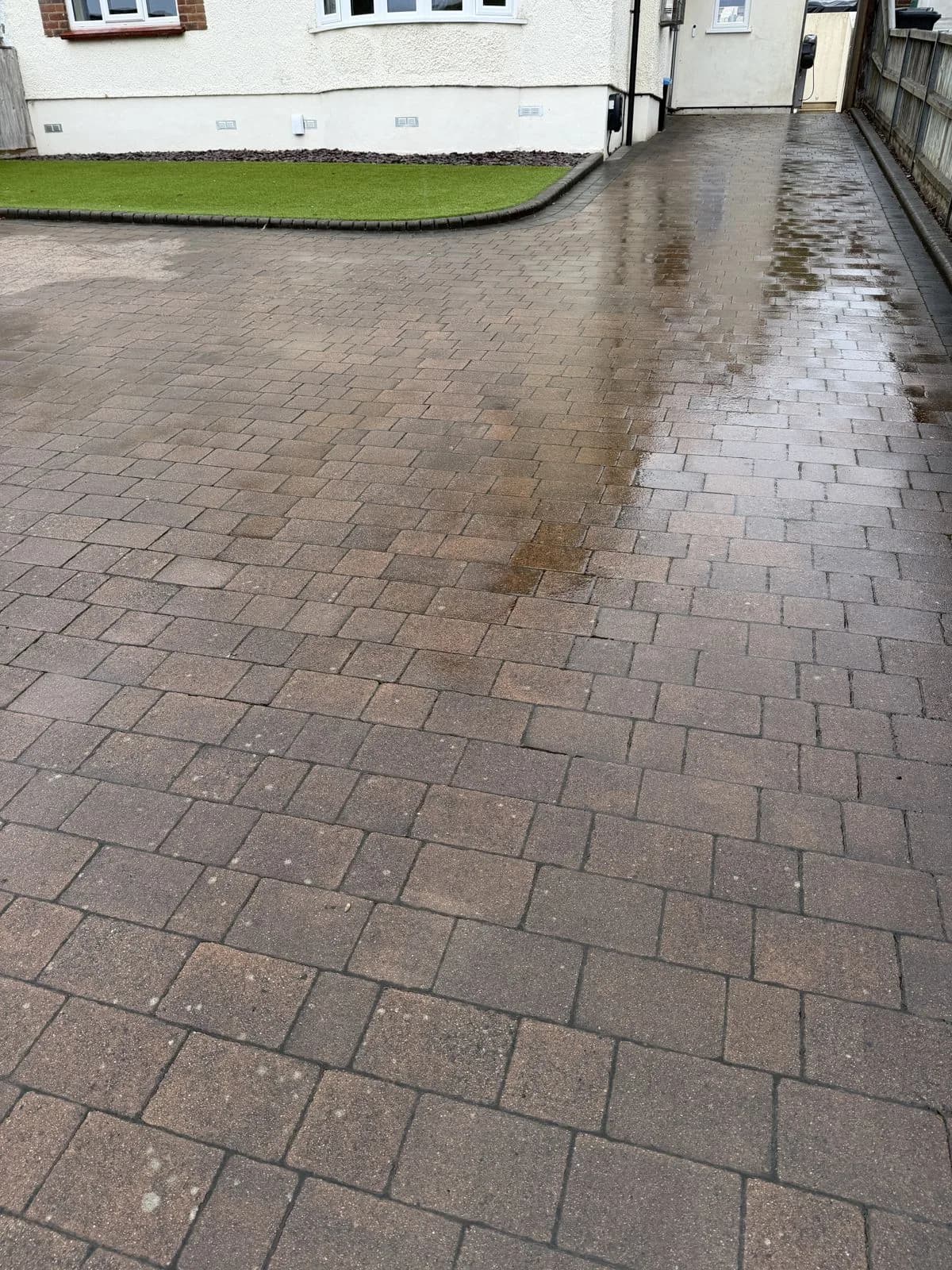
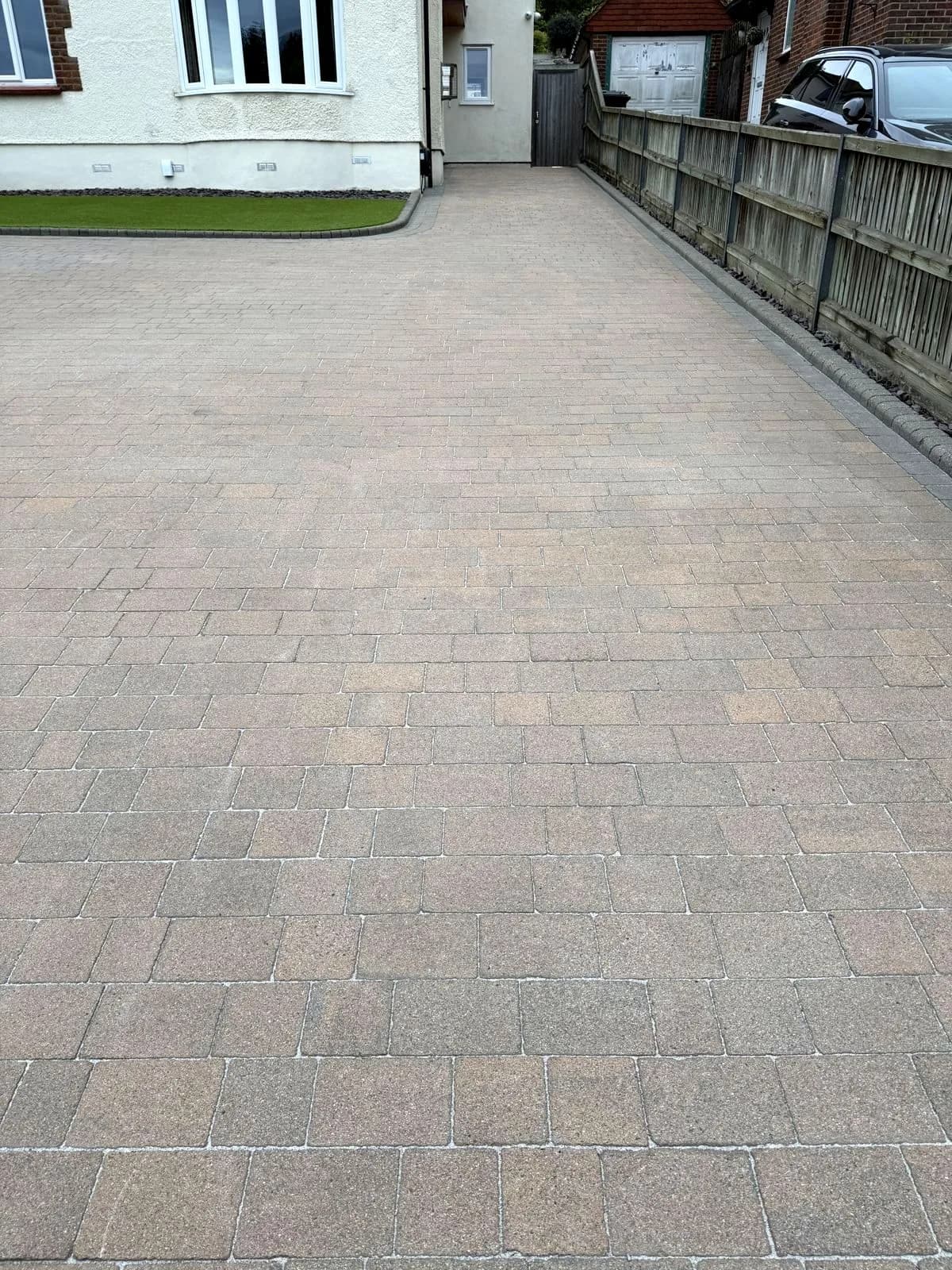
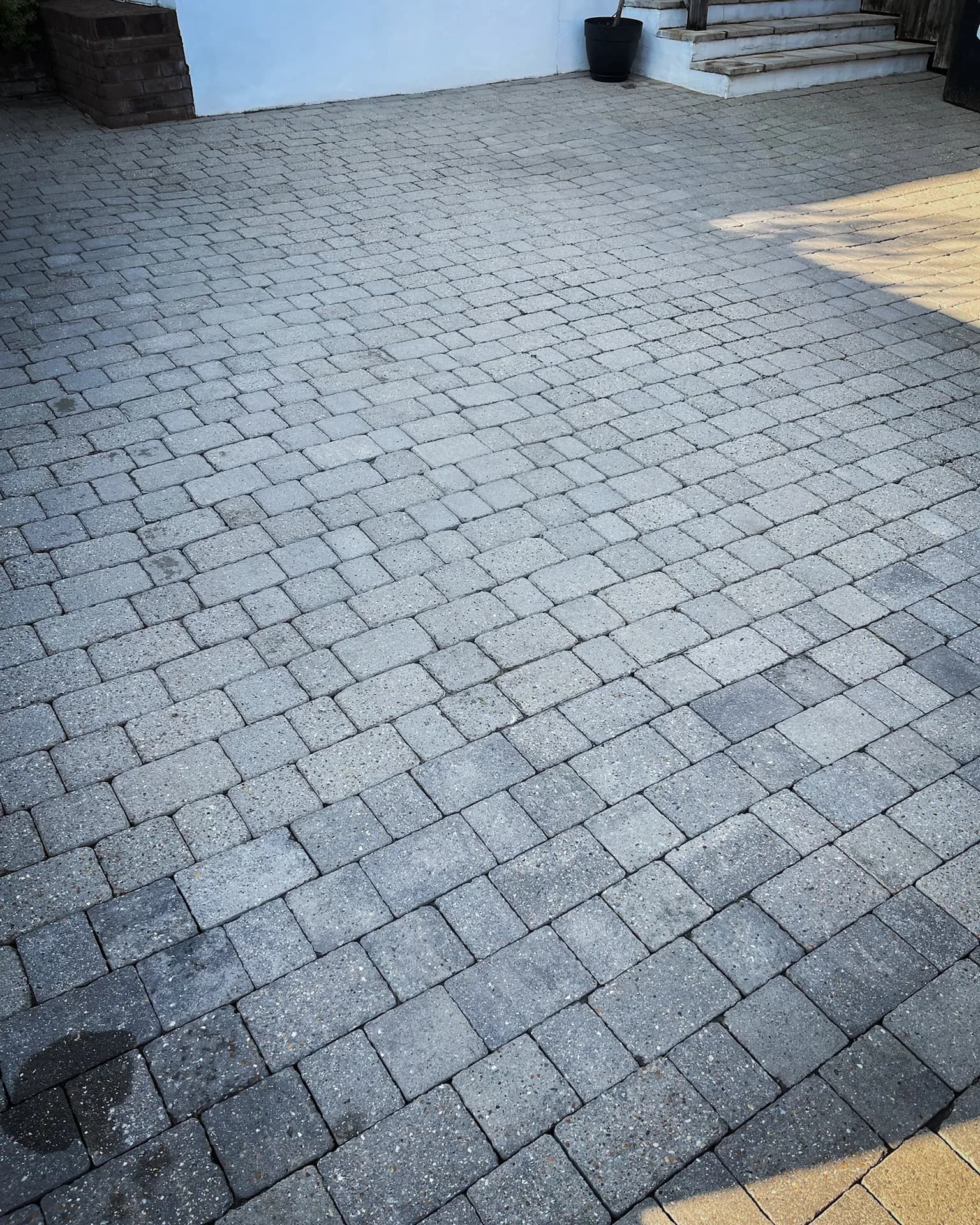
Restoring a 150m² block paved driveway in High Wycombe: deep clean, damaged blocks replaced, polymeric re-sanding, compaction and Chiltern EverGuard™.
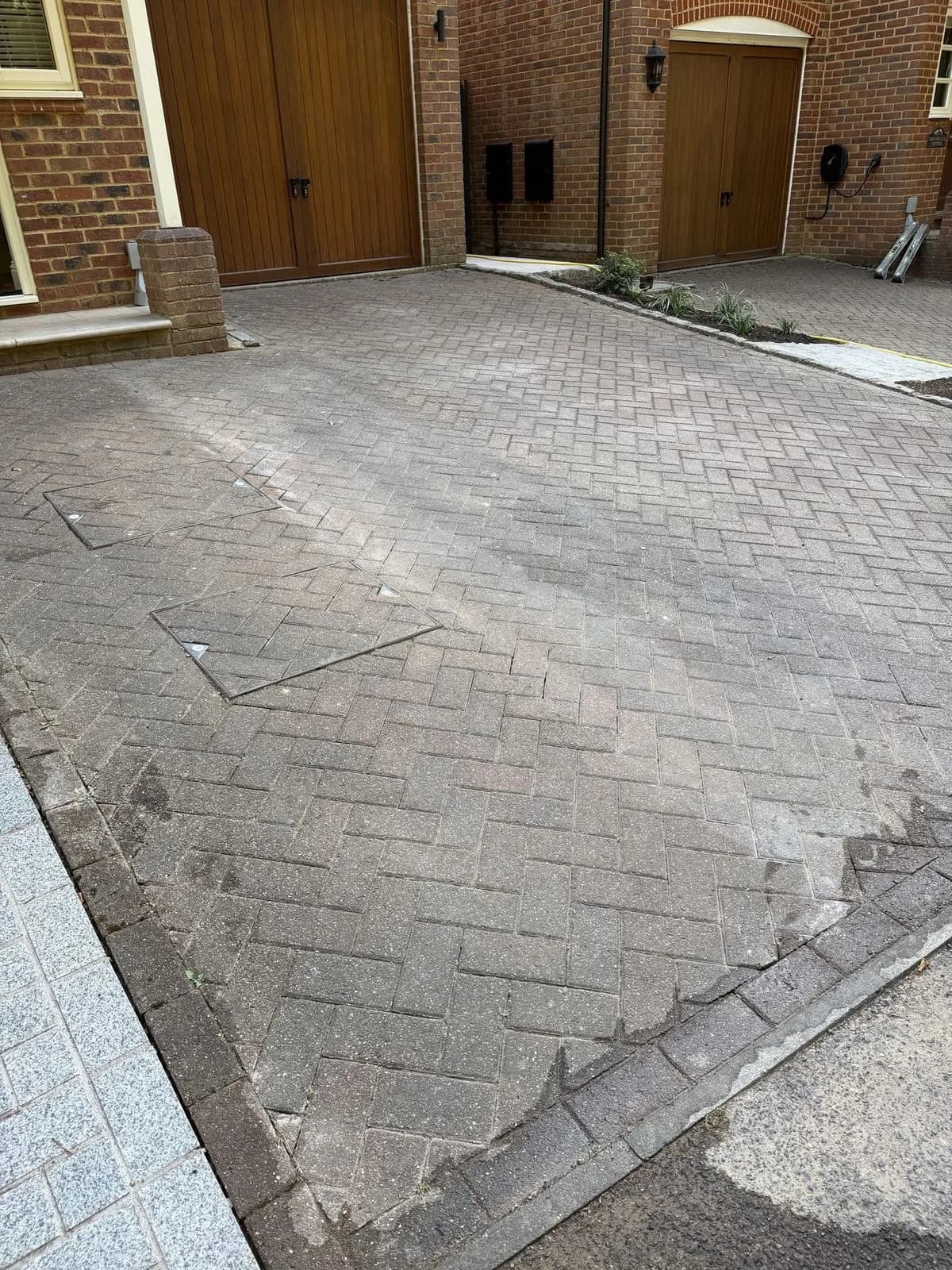
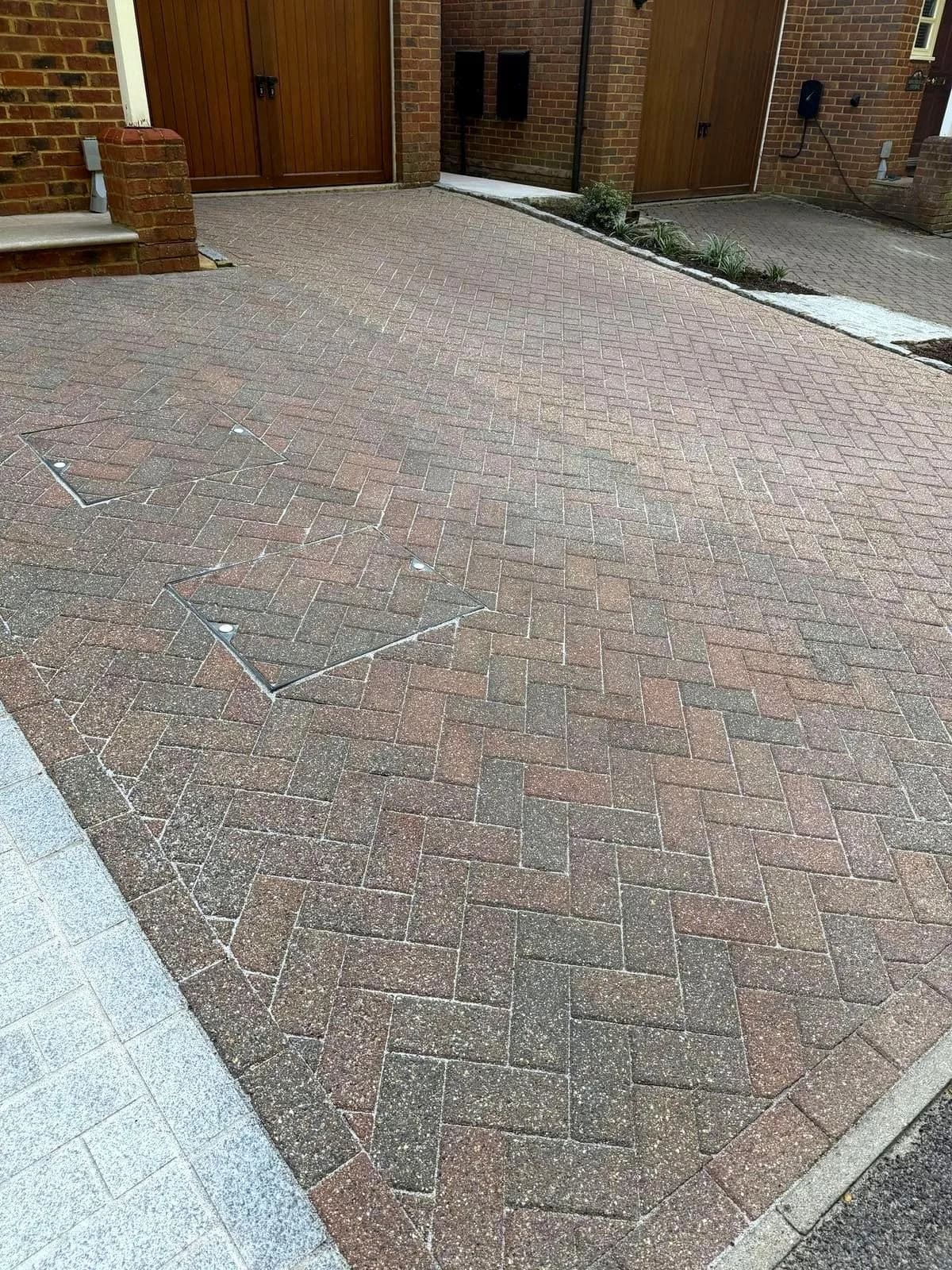
Block paved driveway cleaning in Hazlemere, Buckinghamshire: 20 years of black spot and lichen removed from 45m² of paving and the joints renewed.
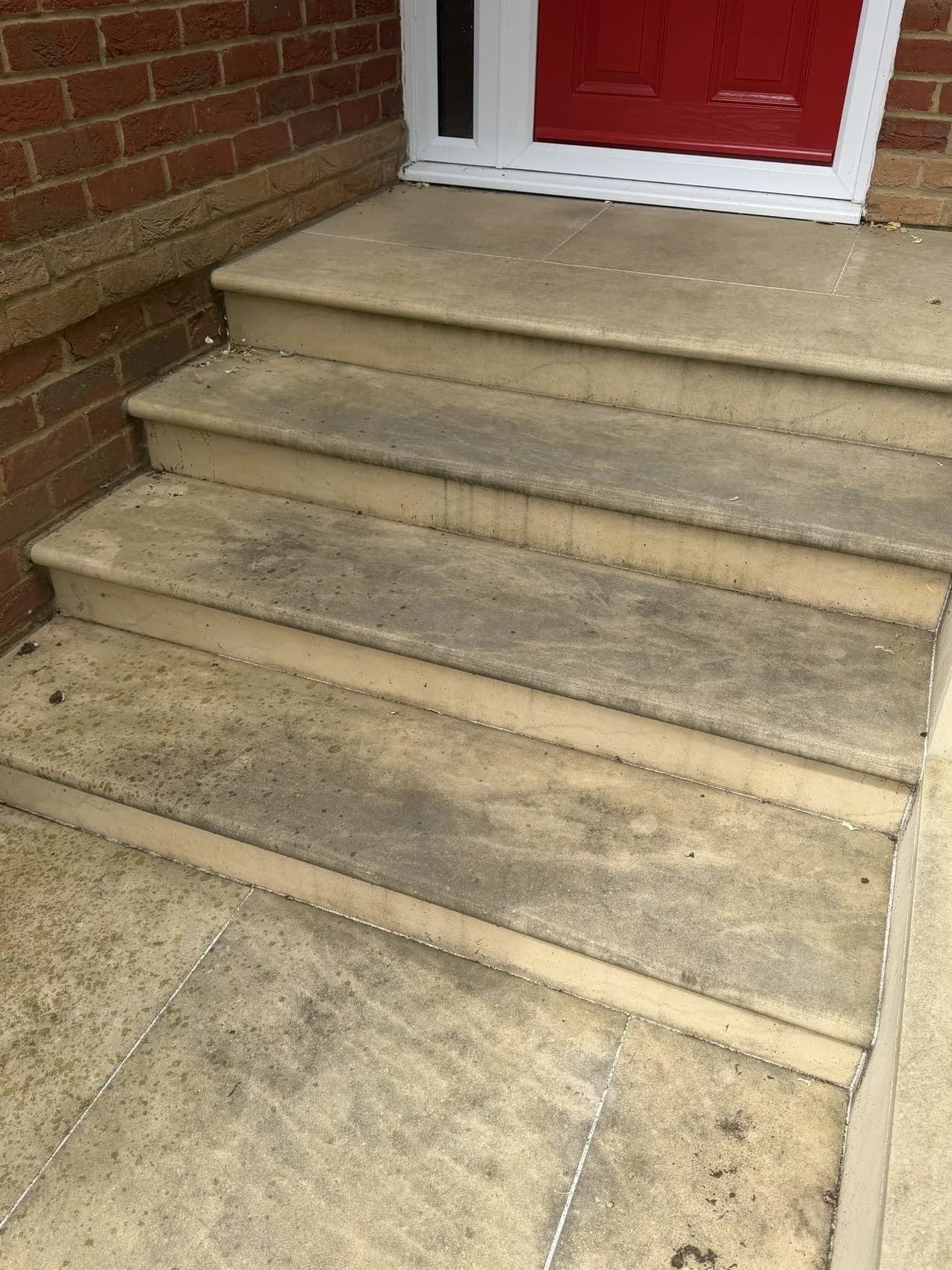
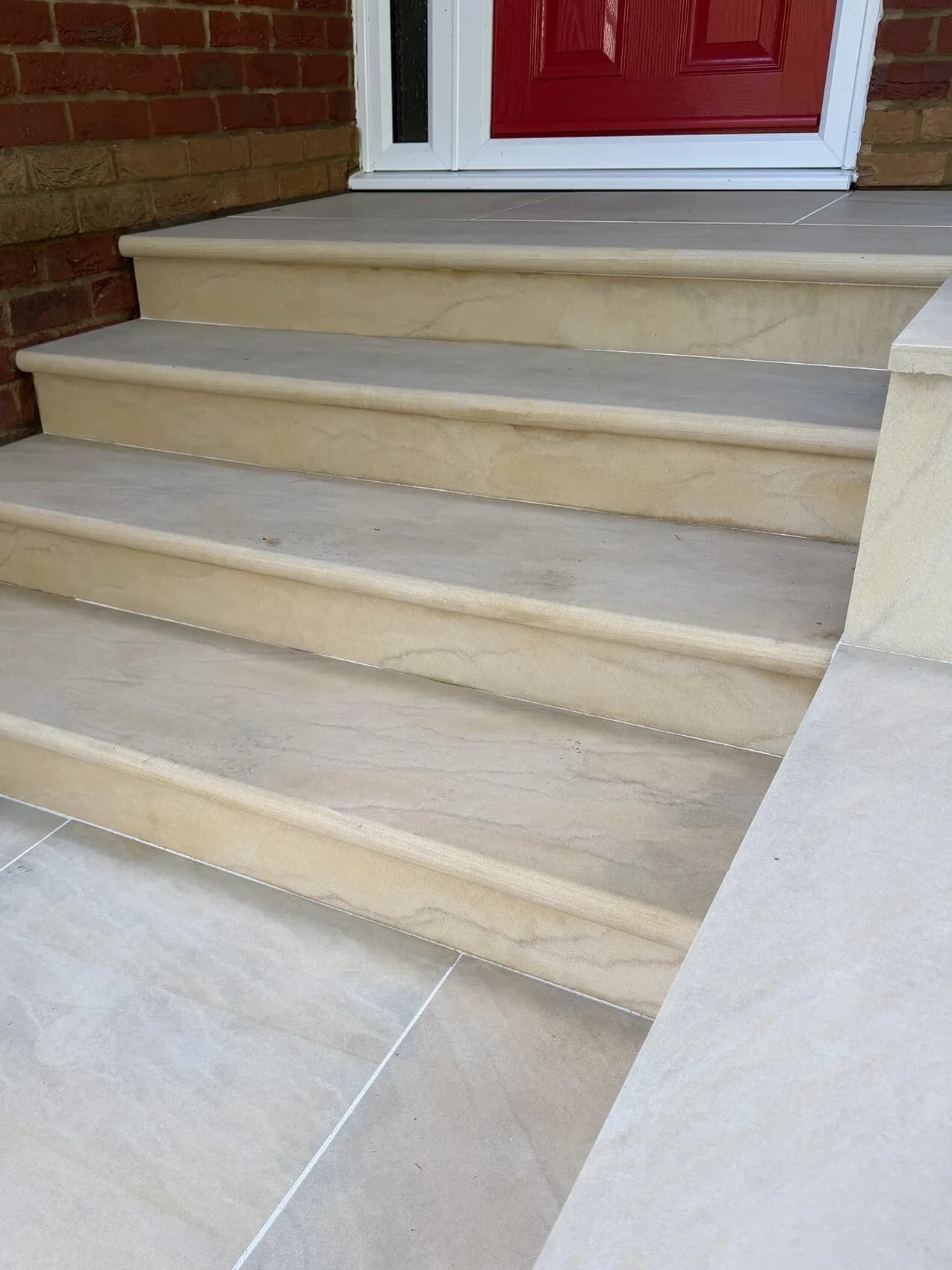
Indian sandstone step cleaning and block paving cleaning in High Wycombe, including polymeric re-sanding, compaction and Chiltern EverGuard™ treatment.
Why us
Working from the ground spares the older clay tiles around the array, which can be brittle and hard to replace if they crack.
Nothing but de-ionised water and a soft brush, so no chemicals reach the roof, the garden or the woodland beyond it.
We spend time on the frame edges and corners, where moss and leaf litter gather first and hold water against the seals.
We tell you when panels do not yet need cleaning and never promise a fixed gain in generation to win the work.
Nearby
From Penn we also clean panels in Tylers Green, Knotty Green, Forty Green, Penn Street, Winchmore Hill and Hazlemere. Several of these sit just as close to the beech woods, so the same attention to frames and debris applies.
Solar Panel Cleaning in nearby towns
What Clients Say
Thank you to every client who has trusted us with their home. Your reviews mean a great deal to us. We’re proud to be fully insured, certified professionals — delivering proven results with a customer-focused approach on every single project.
5-Star Rated On Google
Questions
Not quickly, but it is worth removing. Lichen holds moisture against the frame and seals and shades the glass where it grows. Left for years, it becomes harder to remove cleanly, so it is better dealt with during regular cleaning.
No. We work from ground level with a water-fed pole wherever the access allows, which keeps weight off both the panels and the older clay tiles that surround many arrays in the village.
No. Cleaning removes the growth and debris that are there now, but spores and leaf litter keep arriving from the trees. Clearing the frames regularly slows how quickly moss can establish, which is why we suggest an interval rather than a single visit.
No. Solar panels are cleaned with de-ionised water and a soft brush only. Lichen is softened with water and worked off gently; anything more aggressive puts the glass, the seals and the garden below at risk.
Typically once a year, and twice for arrays directly under or beside trees. We suggest an interval after seeing how much growth and debris the panels carry and how quickly it seems to build.
Usually it helps, but by how much varies. Clearing lichen, droppings and debris lets more light reach the cells. The effect depends on how shaded the glass was, the direction the array faces and the weather, so we do not quote a figure.
No. Cleaning adds nothing to the building and alters nothing about it. Our care is practical rather than procedural: older tiles and nearby planting are protected by working from the ground.
More from us
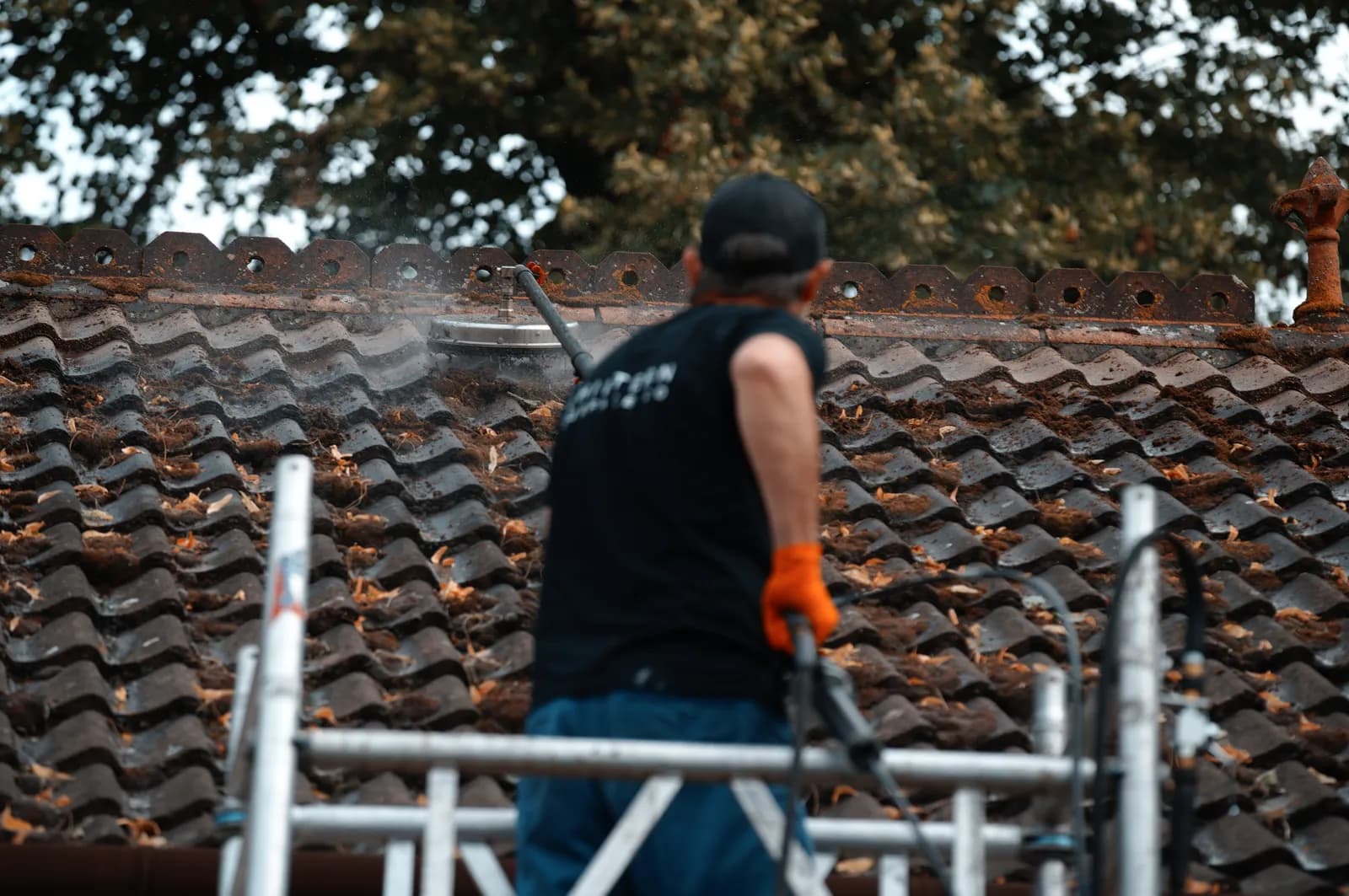
Carefully remove moss, algae and lichens to protect your roof and enhance kerb appeal.
Learn Moreabout Roof Cleaning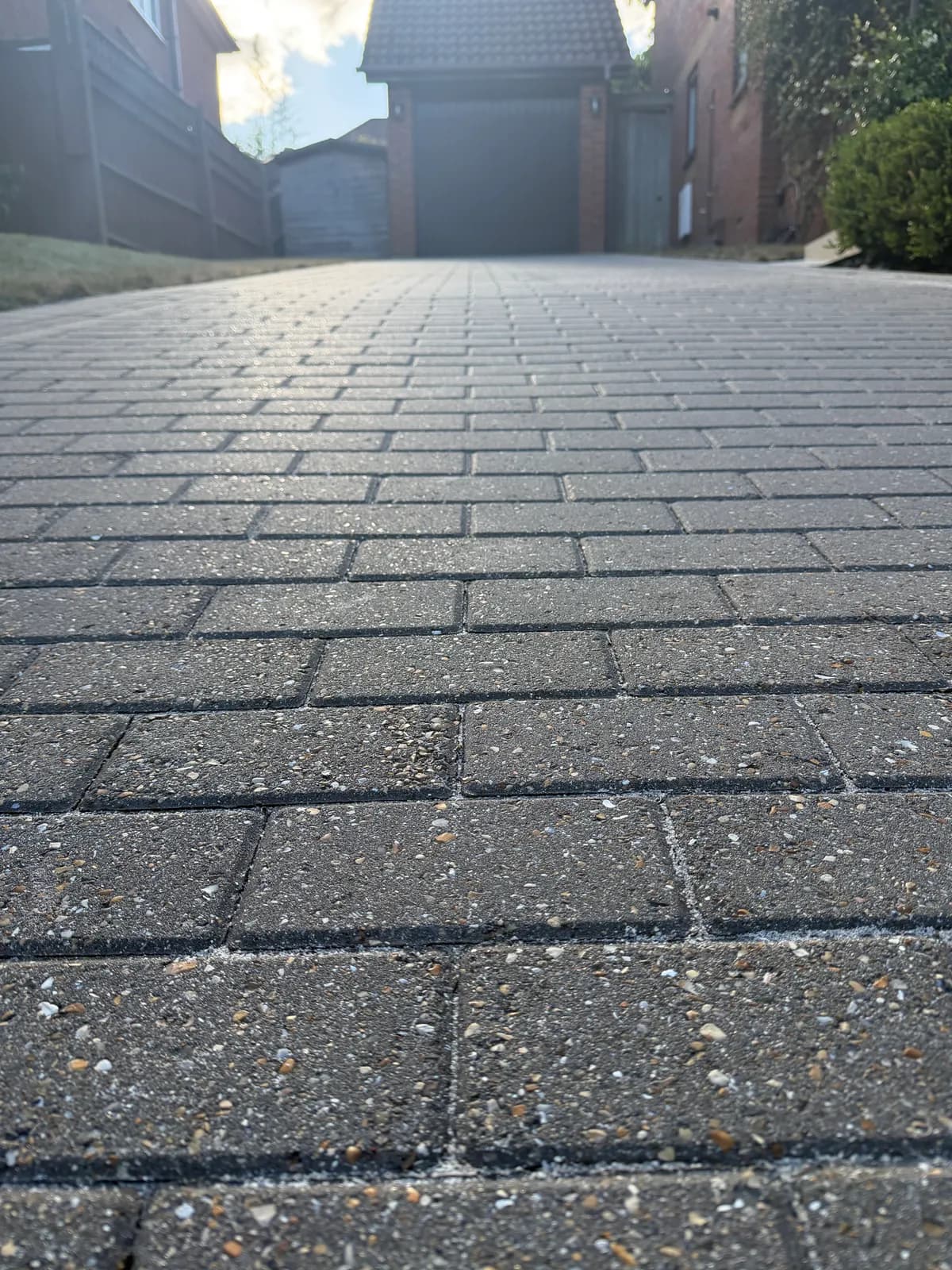
Professional cleaning for block paving, tarmac and resin driveways, restoring colour and removing stains.
Learn Moreabout Driveway Cleaning
Specialist cleaning and restoration for natural stone, porcelain and concrete patios.
Learn Moreabout Patio Cleaning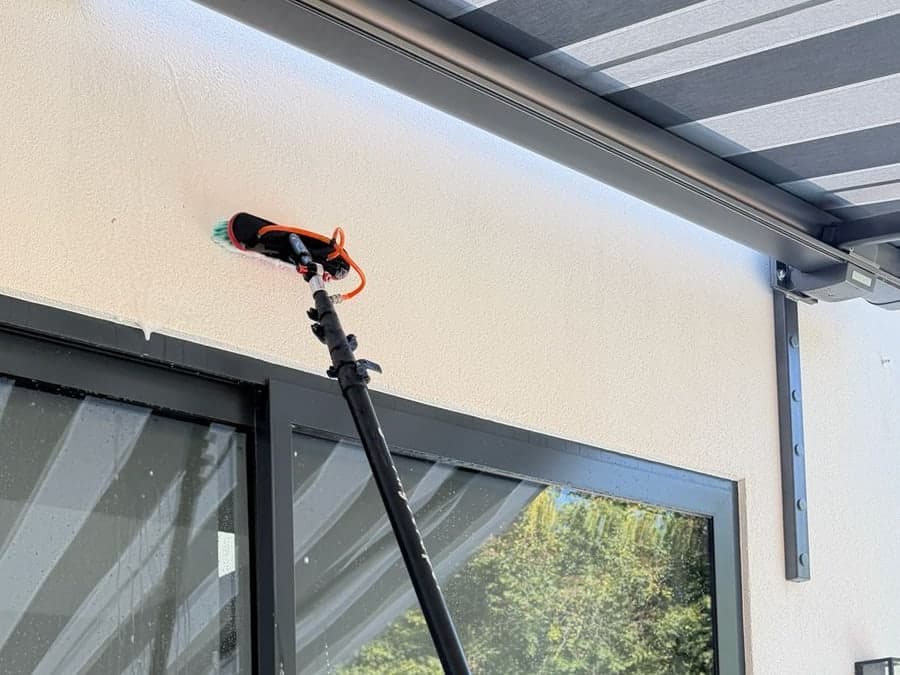
Low pressure soft wash treatment designed to safely remove algae, mould and grime from exterior surfaces.
Learn Moreabout Soft Wash Treatment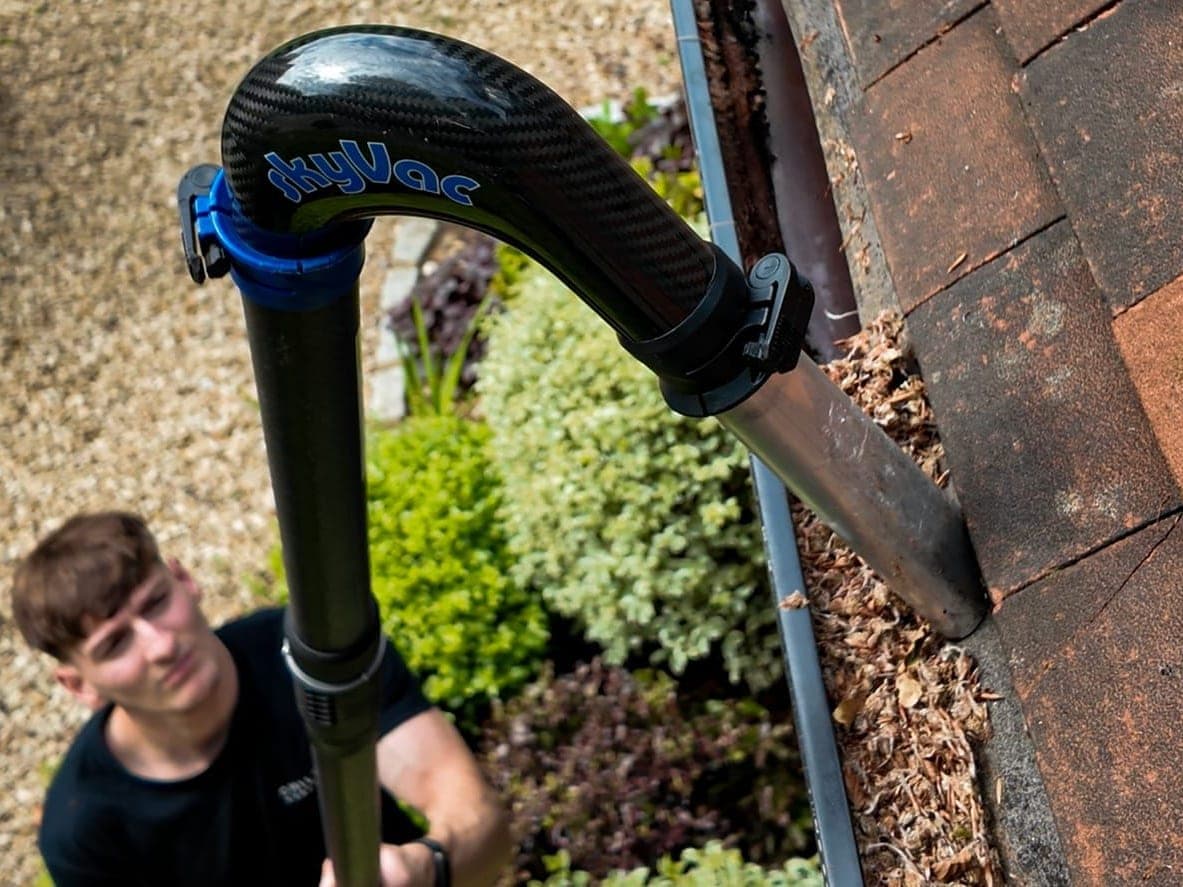
Clear and flush blocked gutters and downpipes to protect your walls, fascias and foundations.
Learn Moreabout Gutter Cleaning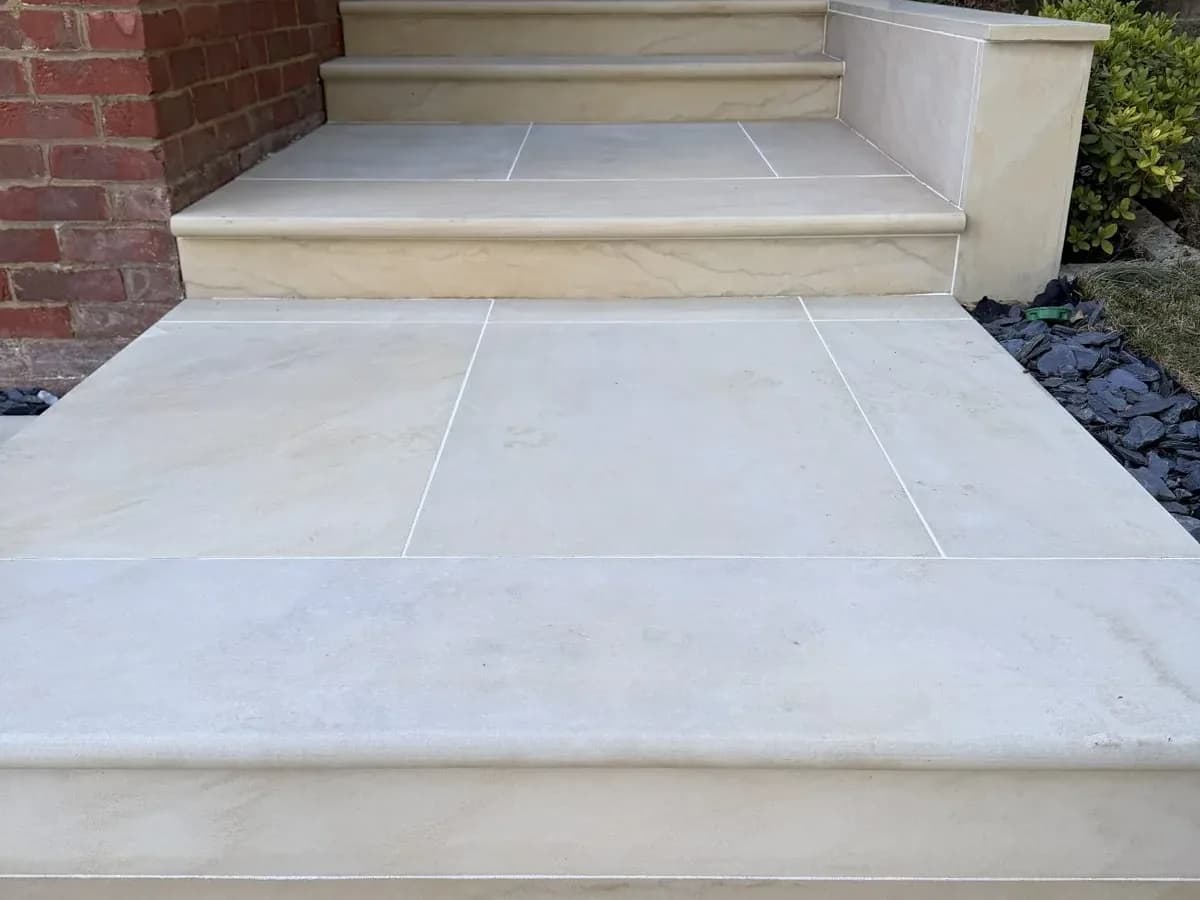
Winter cleaning that removes slippery algae and moss from paths, steps and patios, planned around the forecast.
Advice
Chiltern Surface Co
We will look at your array and the trees around it, explain what is growing on the glass and how we would clear it. A clear quotation follows, and the decision is yours alone.
We assess your surfaces and recommend the right approach for the best, long-lasting results.
You'll receive a detailed, transparent quote with no hidden extras.
We'll provide honest advice so you can decide what's right for you.
Speak directly with the owner and get expert advice you can trust.