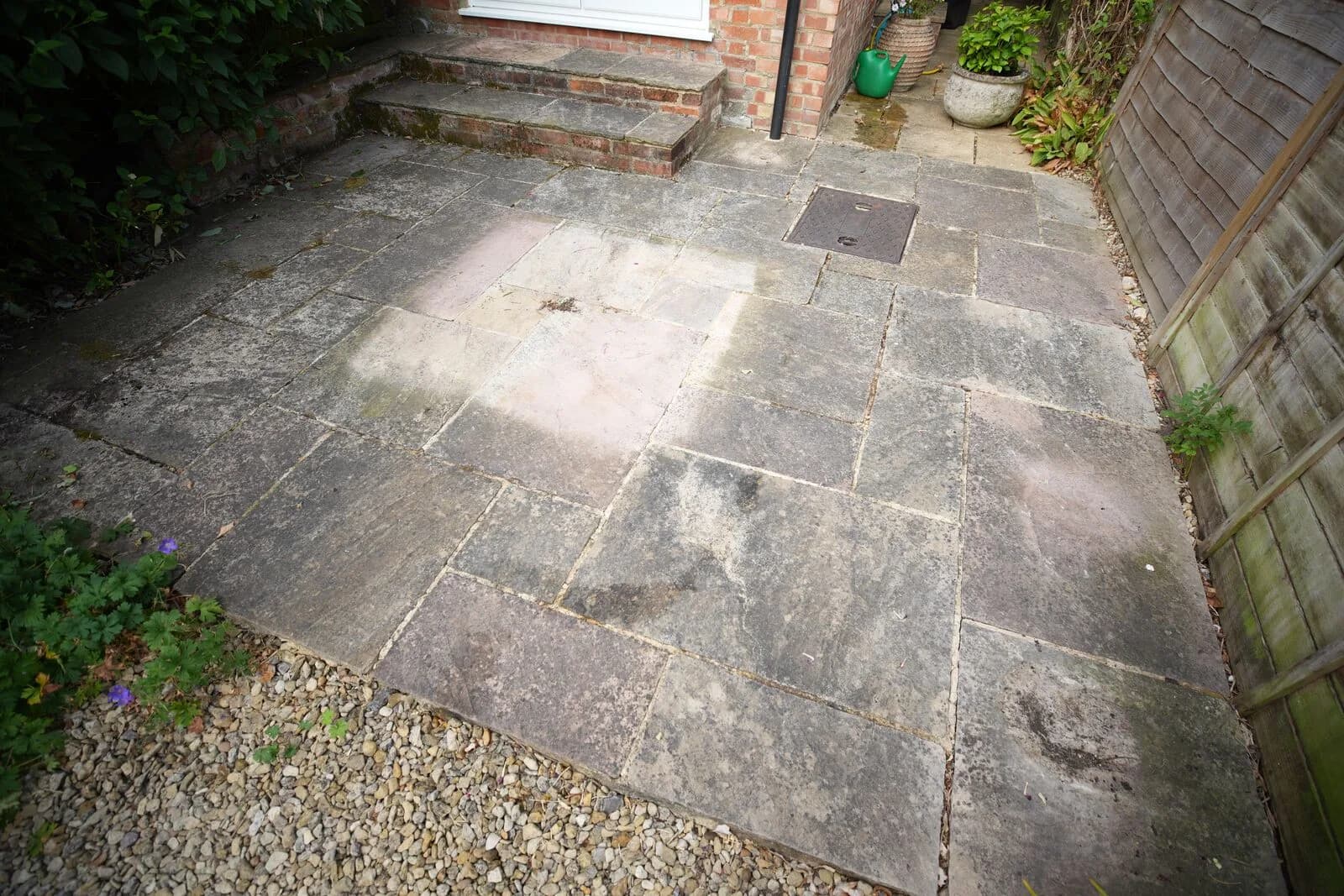
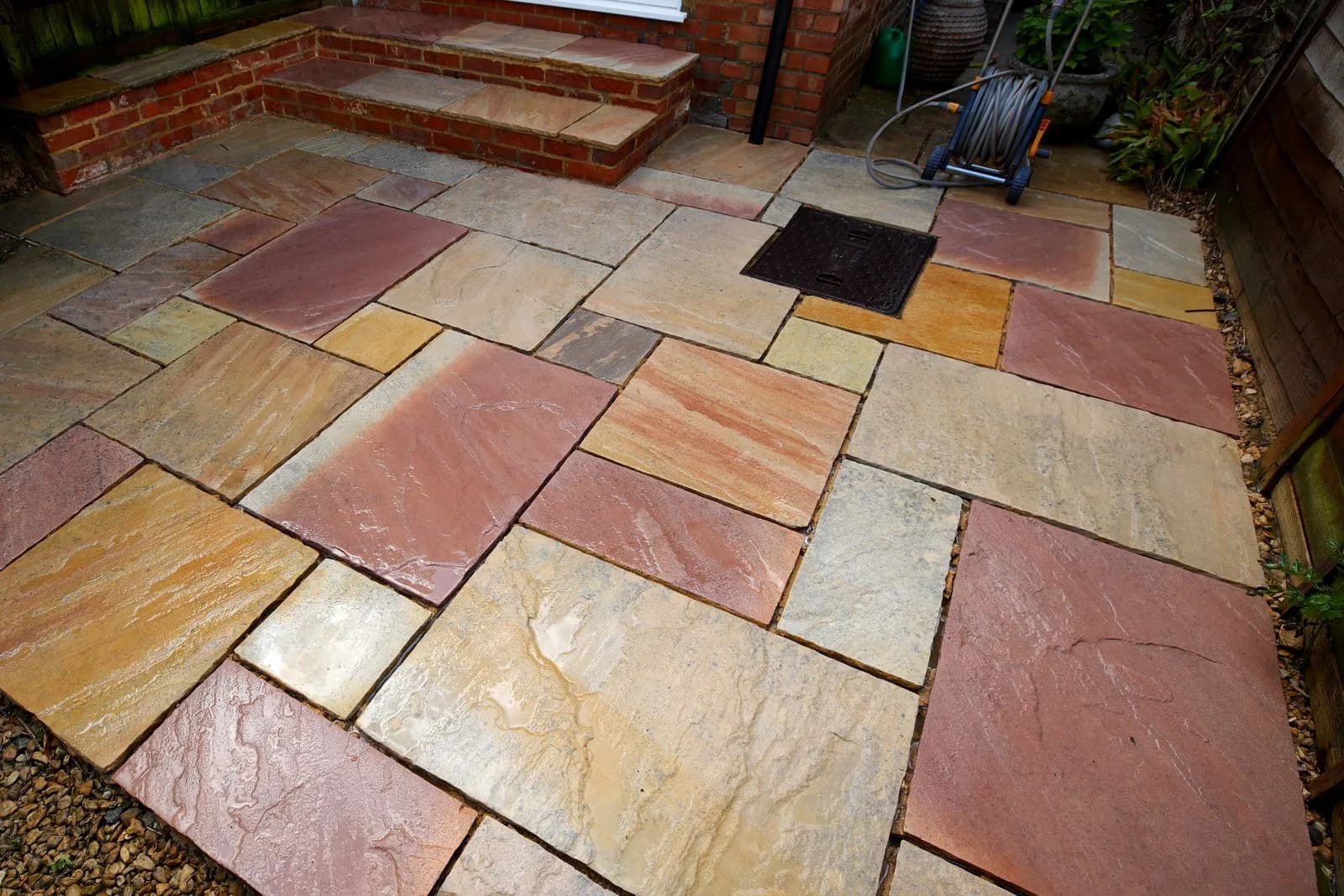
Sandstone Patio Cleaning and Re-Jointing in Oxford
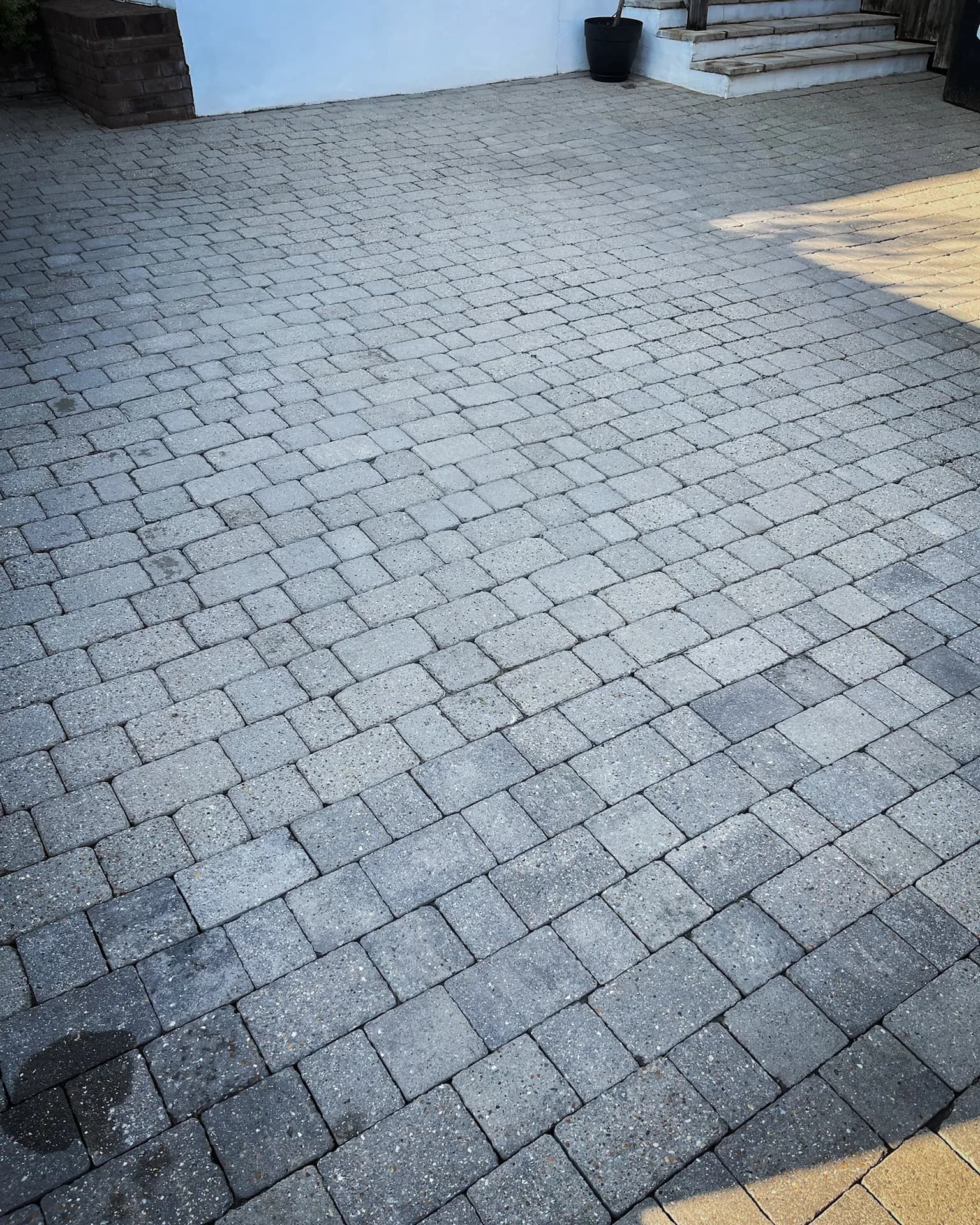
Sandstone patio cleaning and repointing in Oxford: progressive black spot removal, loose slab repairs, Chiltern EverGuard™ and a complete resin repoint.
Solar Panel Cleaning · Oxfordshire
Between the Thames and the open fields around it, panels in Wallingford gather pollen, field dust and bird mess that rain does not lift. We wash them with purified water and a soft brush, then let them dry naturally.
The short version
Most of what dulls a solar panel is a thin, stubborn layer rather than thick dirt. Lifting it needs gentle agitation and enough rinsing, and the quality of the water matters as much as the brush. We use de-ionised water throughout, so the glass can be washed, rinsed and left alone to dry with nothing added and nothing left behind.
Around Wallingford
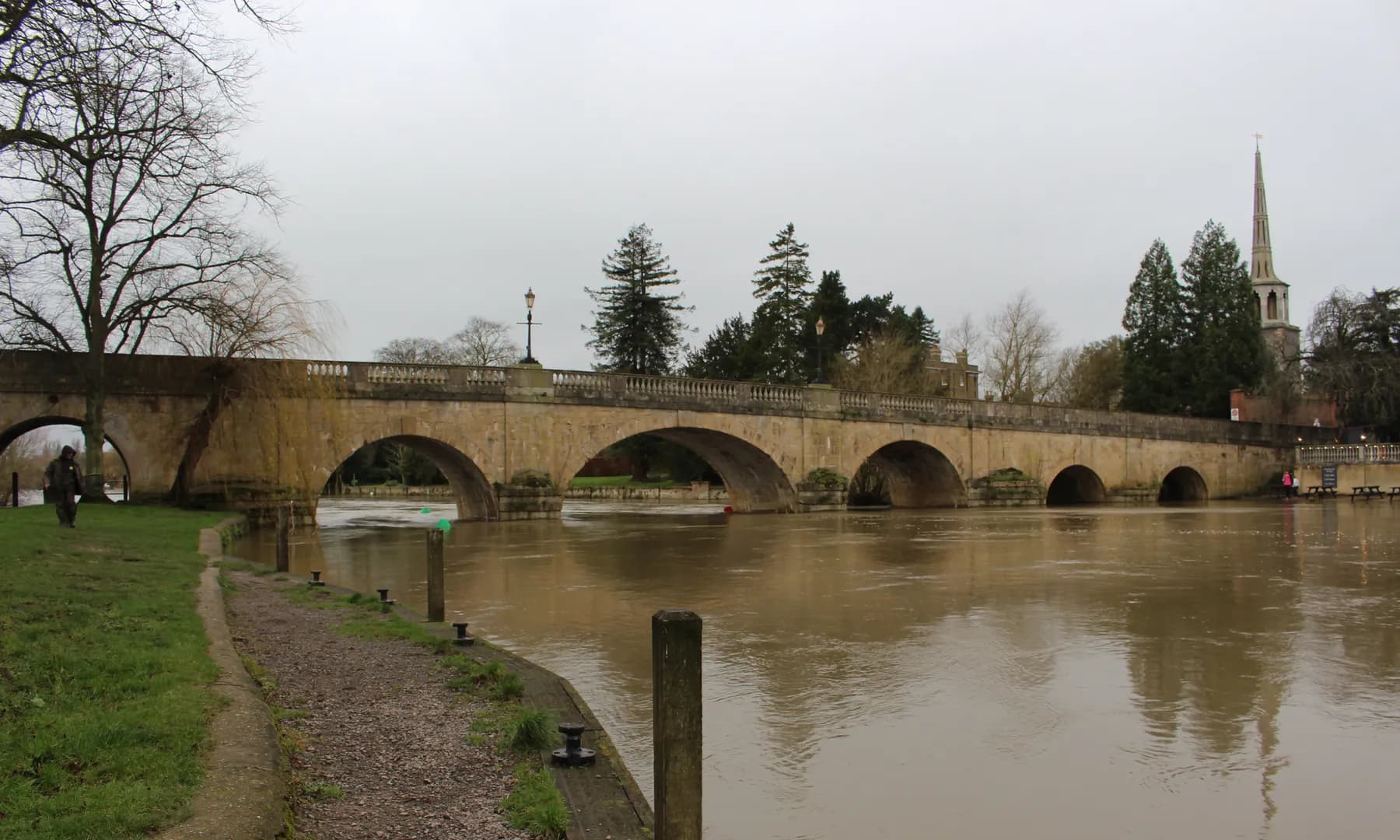
Wallingford sits on the west bank of the River Thames, with an old market centre of period buildings surrounded by established family homes and newer residential streets. Many of those houses have mature gardens, and where solar panels have been added they may be on the main roof, an extension or a garage.
Step beyond the town and the land opens out into farmland and riverside villages. That mix shapes what lands on the glass. Panels near gardens and trees collect pollen, sap and leaf fragments, while those facing open ground pick up fine dust carried on the wind through spring and summer. Shaded corners by the river can also let moss settle along the lower frames.
The water
Ordinary tap water carries dissolved minerals. When droplets evaporate from glass, those minerals stay behind as spots and rings, which is why a car washed with a hose and left in the sun rarely looks right. De-ionised water has had those minerals taken out, so it dries without marking.
That changes how the job is done. Because the final rinse leaves nothing on the surface, the panels can dry on their own and nobody needs to towel or wipe across the glass. It also means no soap is used at any stage, so nothing runs off the array into the gutters, the drains or the borders underneath.
Seasonal film
In spring and early summer, pollen settles across an array as a fine, slightly tacky coating. Dry spells add airborne dust, and the two bind together with dew into a haze that a passing shower only rearranges. Panels set at a shallow angle hold on to more of it, because the water runs off them slowly.
This kind of film is easy to miss from the garden. The panels still look dark from below, and only up close does the glass show a dull, even layer. A soft brush fed with pure water loosens it without scrubbing, and a thorough rinse carries it away.
Installations
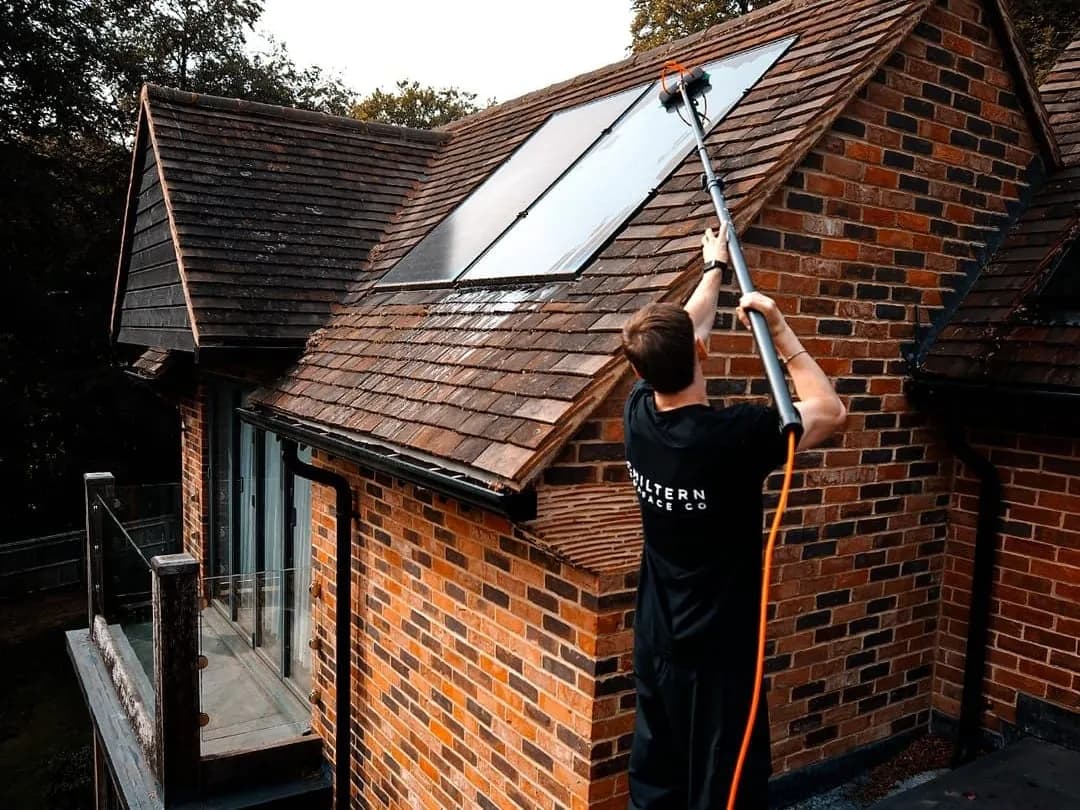
The method stays the same from one installation to the next: purified water, a soft brush and no pressure. What changes is how close we can get and which parts need extra care.
On the day
Before any of this happens, a free site visit confirms how each panel will be reached. The clean itself then follows the same order every time.
We confirm the panel layout, pitch and the safest position for the pole, and look over the frames and seals before the glass gets wet.
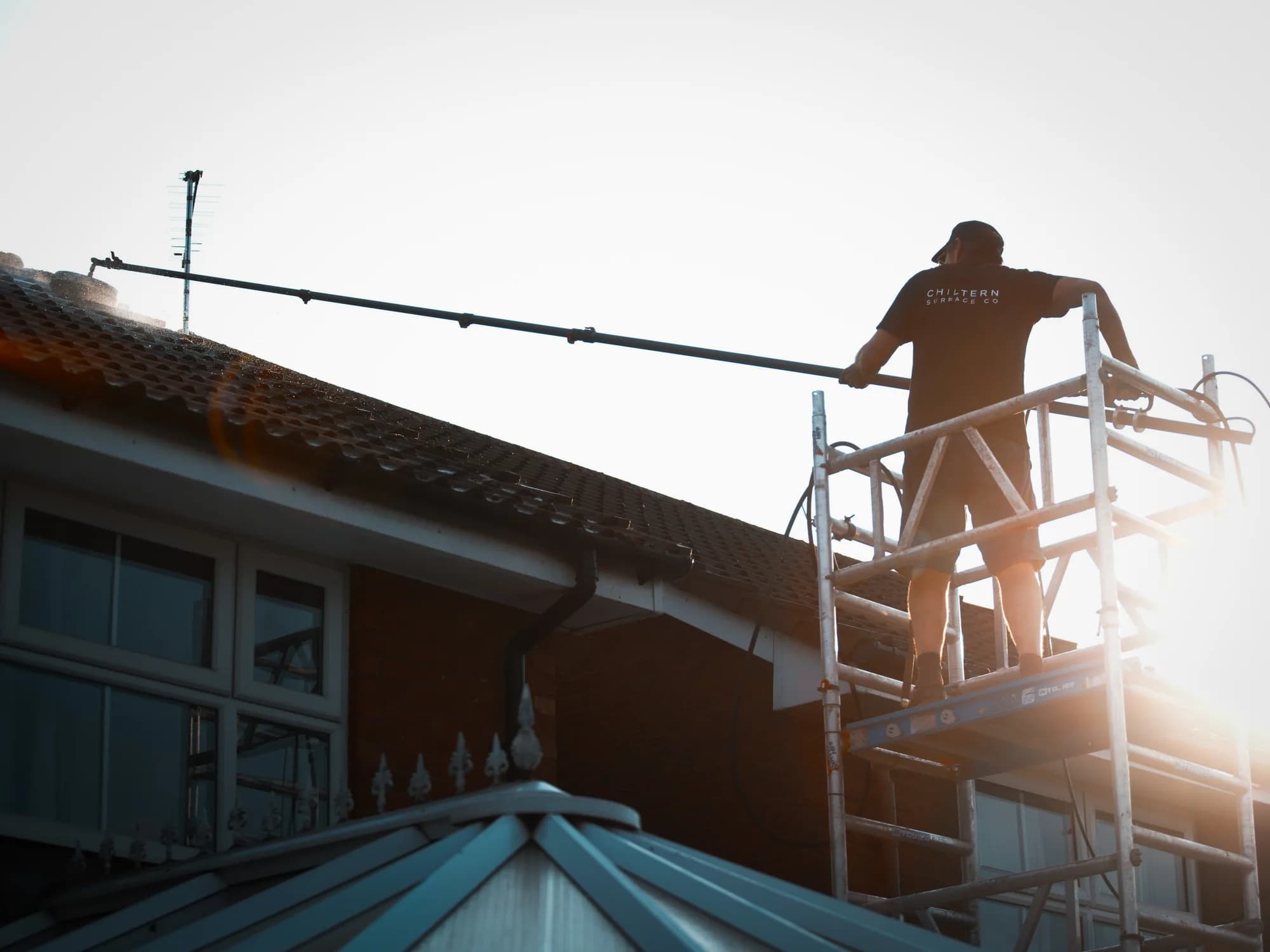
Water from the pole flows through soft bristles as they move across the glass, lifting pollen, dust and dried bird mess without detergent or scraping.
Moss and grit that gather where the bottom frame meets the glass are worked out of the corners and edges, not just the open face of each panel.
A last pass of de-ionised water takes away what has been loosened, and the panels dry in the air. We then tell you about anything we spotted on the frames or fixings.
Realistic results
Cleaning restores clear glass. It does not change how the system was designed, how it faces or what shades it, and it is not an electrical check. Because generation depends on so many other things, we never put a percentage on the difference a clean will make.
Pollen, dust and birds come back each year, so a clean is maintenance to repeat at sensible intervals. Any sign of damage we notice, such as a cracked panel or a lifted seal, is a matter for a solar installer.
Sandstone patio cleaning and repointing in Oxford: progressive black spot removal, loose slab repairs, Chiltern EverGuard™ and a complete resin repoint.
Why us
No detergents and no chemicals, so the glass is left bare and nothing is rinsed onto your roof, into the drains or across the garden.
Purified water lets the panels dry spot-free on their own, so the glass is touched only by soft bristles during the wash.
A water-fed pole reaches most domestic arrays from the ground. Where it cannot, we explain that at the site visit rather than on the day.
Our operatives are fully insured, and the work is agreed in a clear quotation so you know what is included before booking.
Nearby
Our panel cleaning also reaches the villages around Wallingford, among them Crowmarsh Gifford across the bridge, Cholsey, Benson, Brightwell-cum-Sotwell, Shillingford and Moulsford. The site visit and the method are the same wherever the array is.
Solar Panel Cleaning in nearby towns
What Clients Say
Thank you to every client who has trusted us with their home. Your reviews mean a great deal to us. We’re proud to be fully insured, certified professionals — delivering proven results with a customer-focused approach on every single project.
5-Star Rated On Google
Questions
Detergent leaves a film that attracts fresh dirt, and tap water leaves mineral spots as it dries. Reaching the panels from a ladder or the roof also carries more risk than the job deserves. Purified water on a pole avoids all three problems.
No. De-ionised water dries without leaving marks, so the panels are simply left to dry in the air. Towelling would mean more contact with the glass for no benefit.
Yes. Ground-mounted panels are easier to reach, so each one can be brushed and rinsed individually, frames and edges included. The method is the same purified water and soft brush we use on a roof.
Yes. Flat-plate and evacuated-tube collectors are cleaned with the same de-ionised water, taking extra care around the manifolds and seals, which are built differently from a photovoltaic panel.
It depends. Removing dirt clears shading from the glass, but how much that matters varies with how dirty the panels were, the season, their orientation and the system itself. That is why we do not quote a percentage.
There is no single right month. Many owners like a clean after the spring and summer pollen has settled, while panels under trees or near open fields may benefit from two visits a year. Once a year suits most homes.
No. Most domestic arrays are cleaned with a water-fed pole from ground level. If an array cannot be reached that way, we will explain why at the site visit before anything is booked.
More from us
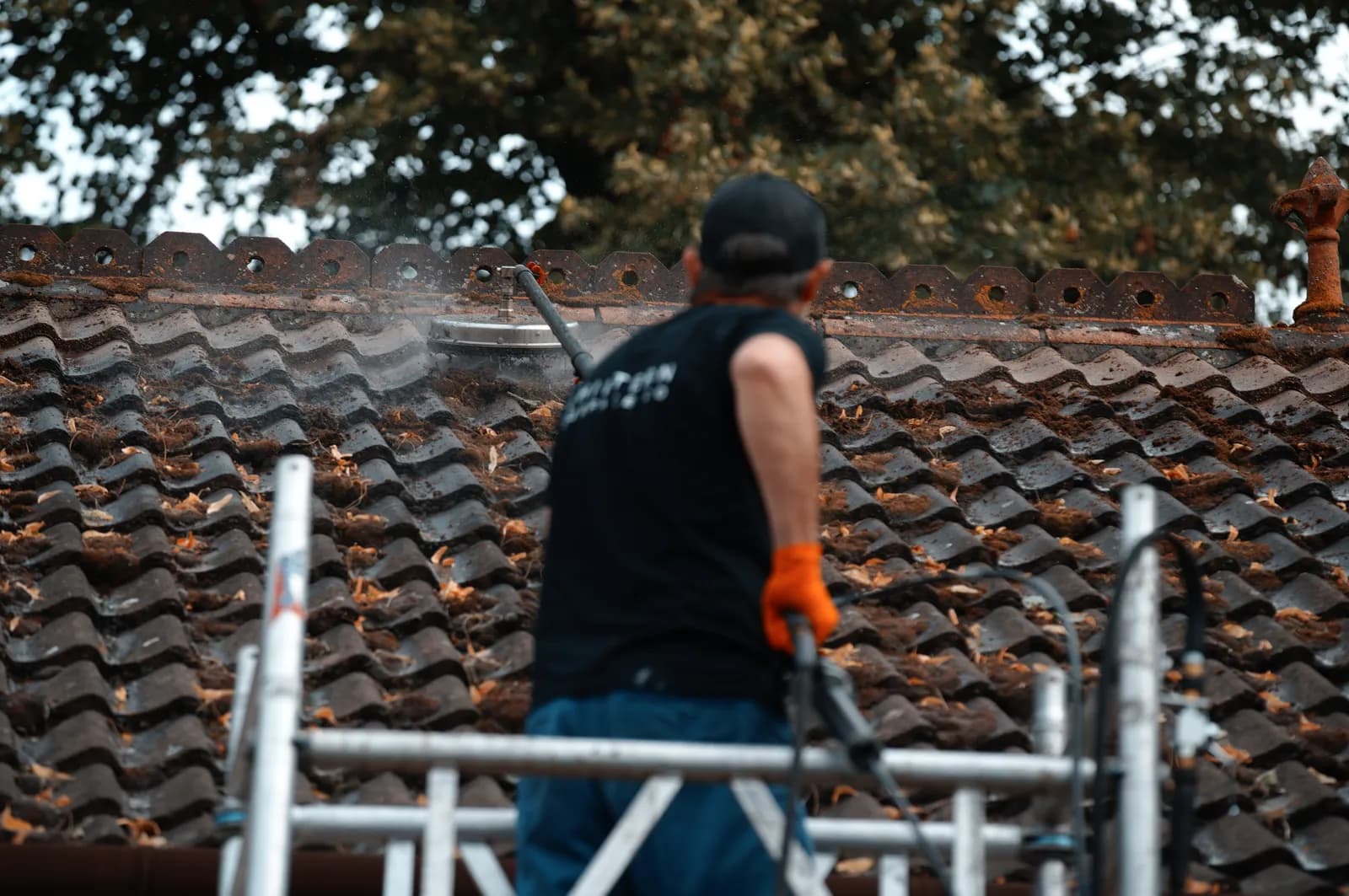
Carefully remove moss, algae and lichens to protect your roof and enhance kerb appeal.
Learn Moreabout Roof Cleaning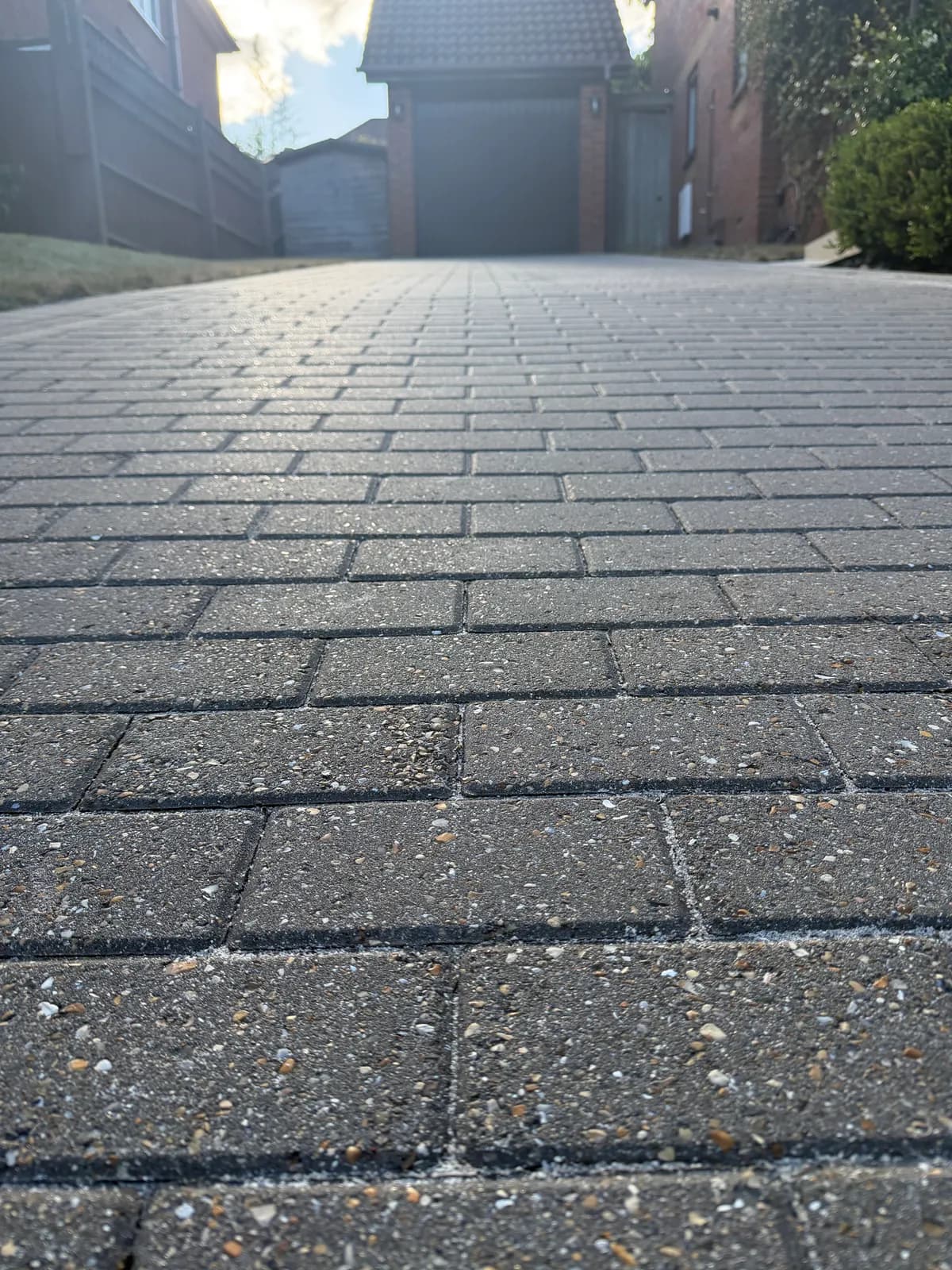
Professional cleaning for block paving, tarmac and resin driveways, restoring colour and removing stains.
Learn Moreabout Driveway Cleaning
Specialist cleaning and restoration for natural stone, porcelain and concrete patios.
Learn Moreabout Patio Cleaning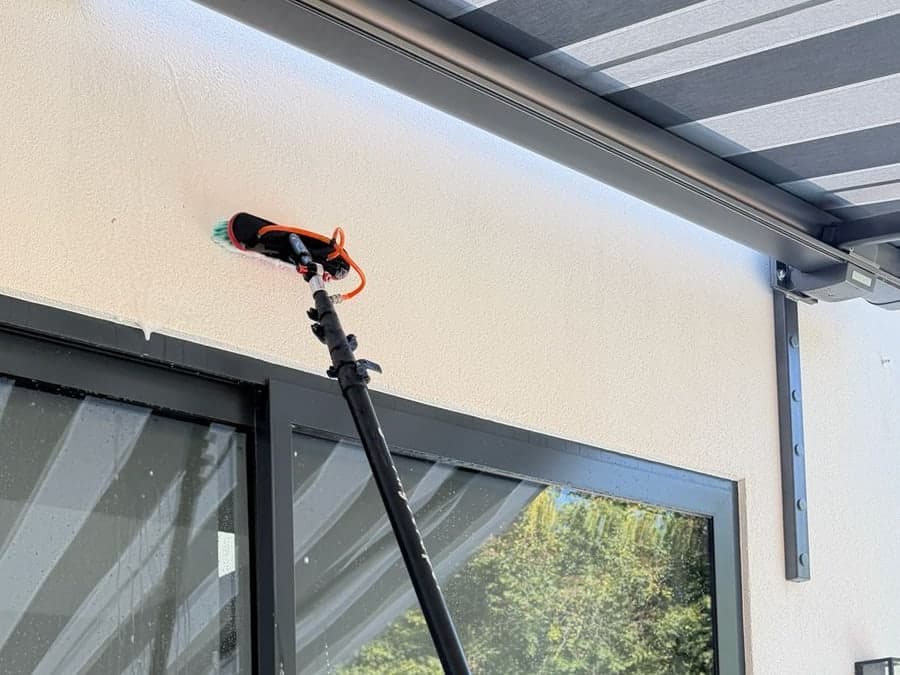
Low pressure soft wash treatment designed to safely remove algae, mould and grime from exterior surfaces.
Learn Moreabout Soft Wash Treatment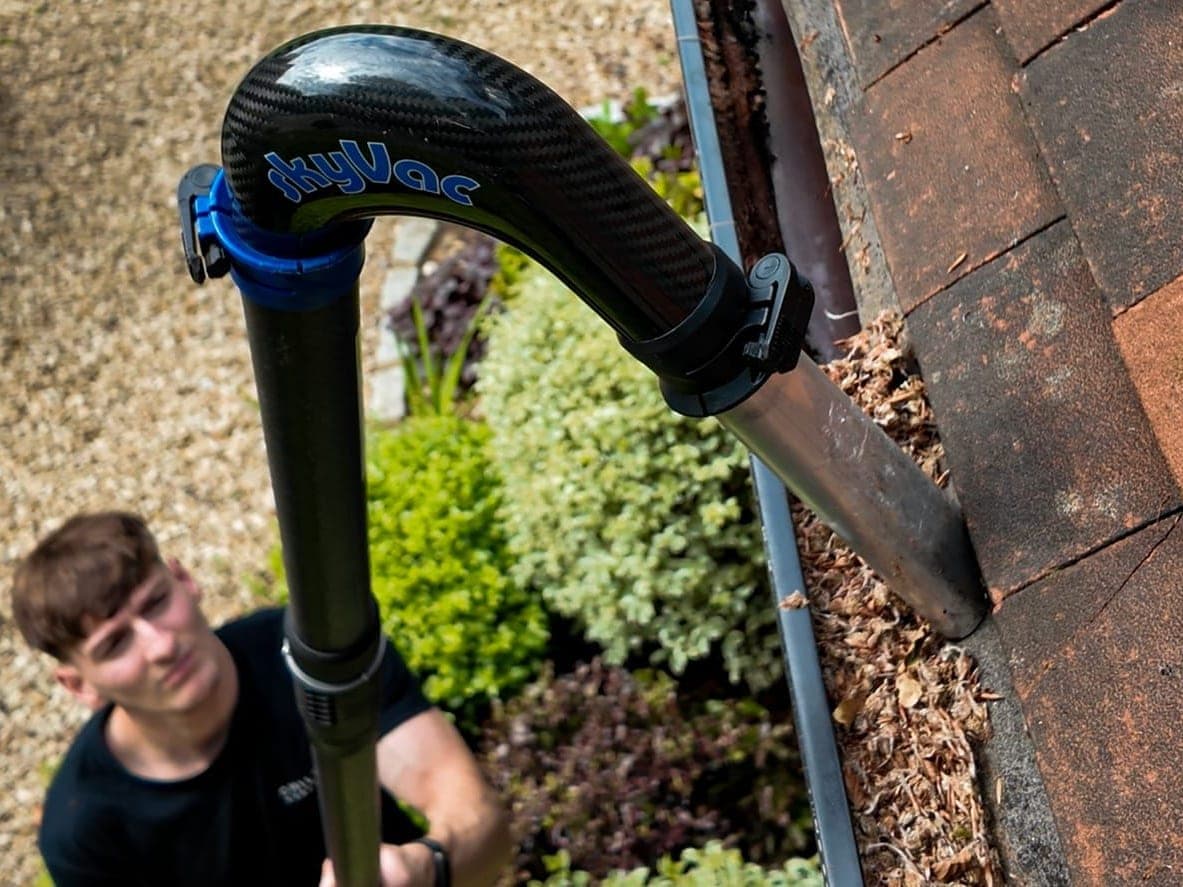
Clear and flush blocked gutters and downpipes to protect your walls, fascias and foundations.
Learn Moreabout Gutter Cleaning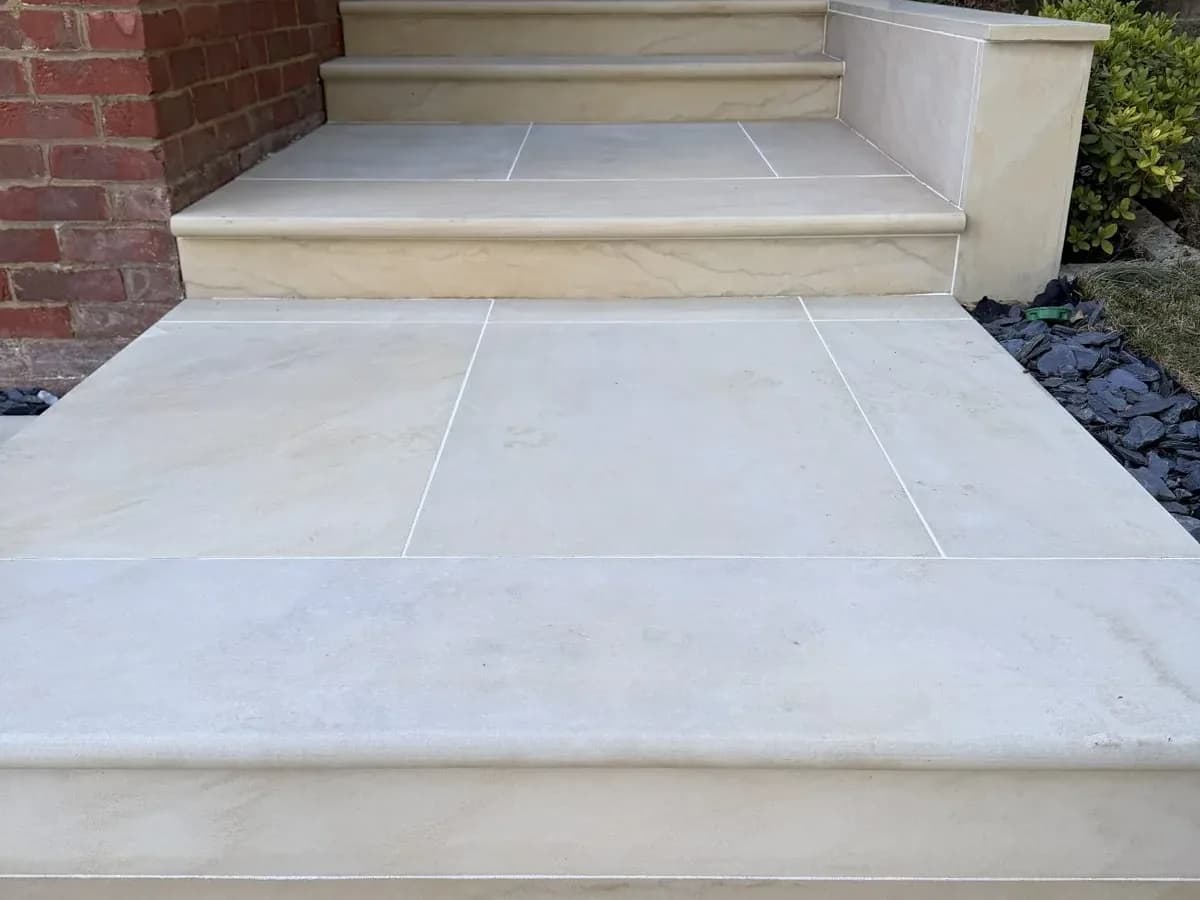
Winter cleaning that removes slippery algae and moss from paths, steps and patios, planned around the forecast.
Advice
Chiltern Surface Co
We will check the panels, the access and what has built up on the glass, then explain how we would clean them. A clear quotation follows, and there is no pressure to go ahead.
We assess your surfaces and recommend the right approach for the best, long-lasting results.
You'll receive a detailed, transparent quote with no hidden extras.
We'll provide honest advice so you can decide what's right for you.
Speak directly with the owner and get expert advice you can trust.