Indian Sandstone Patio Cleaning and Repointing in Henley-on-Thames
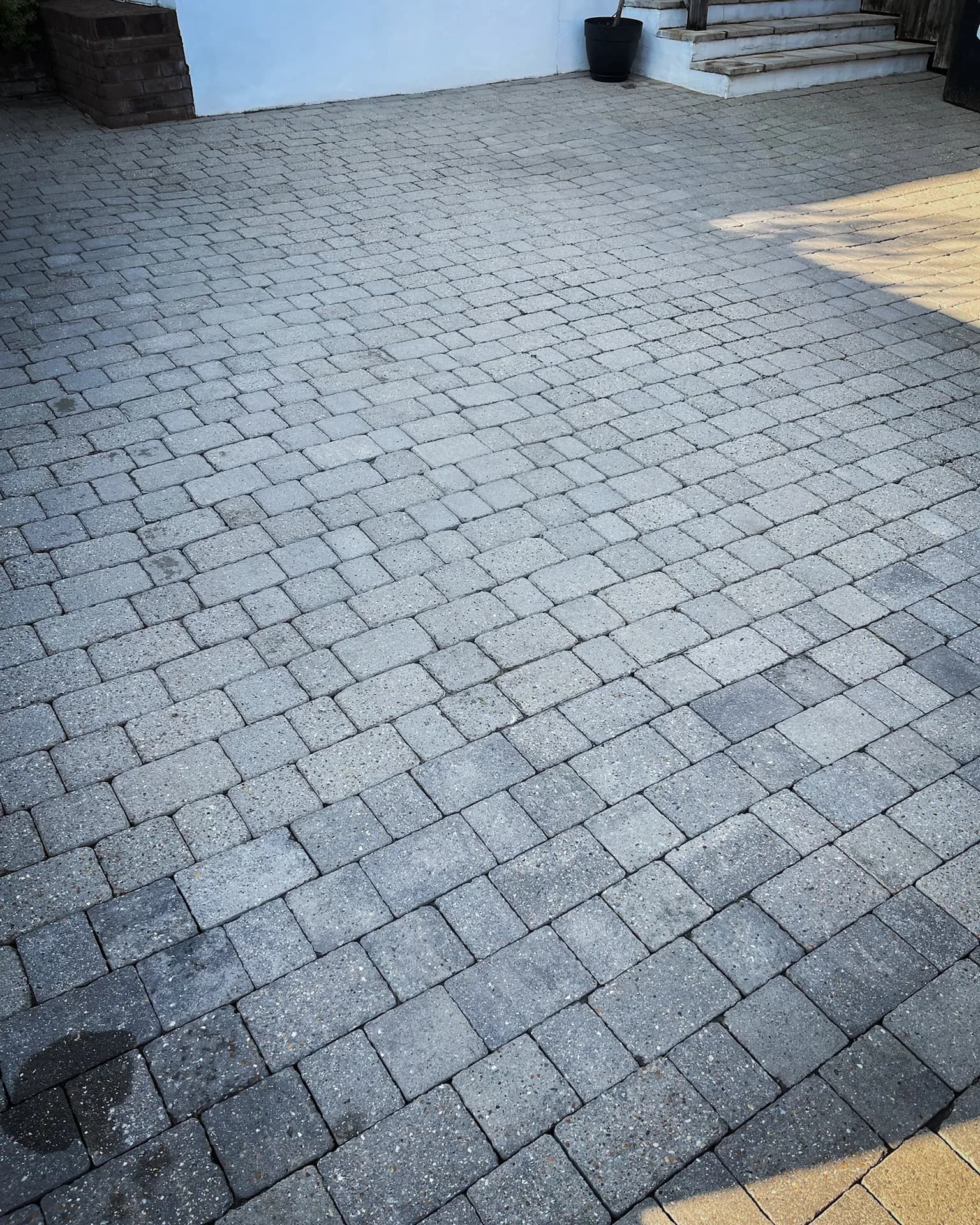
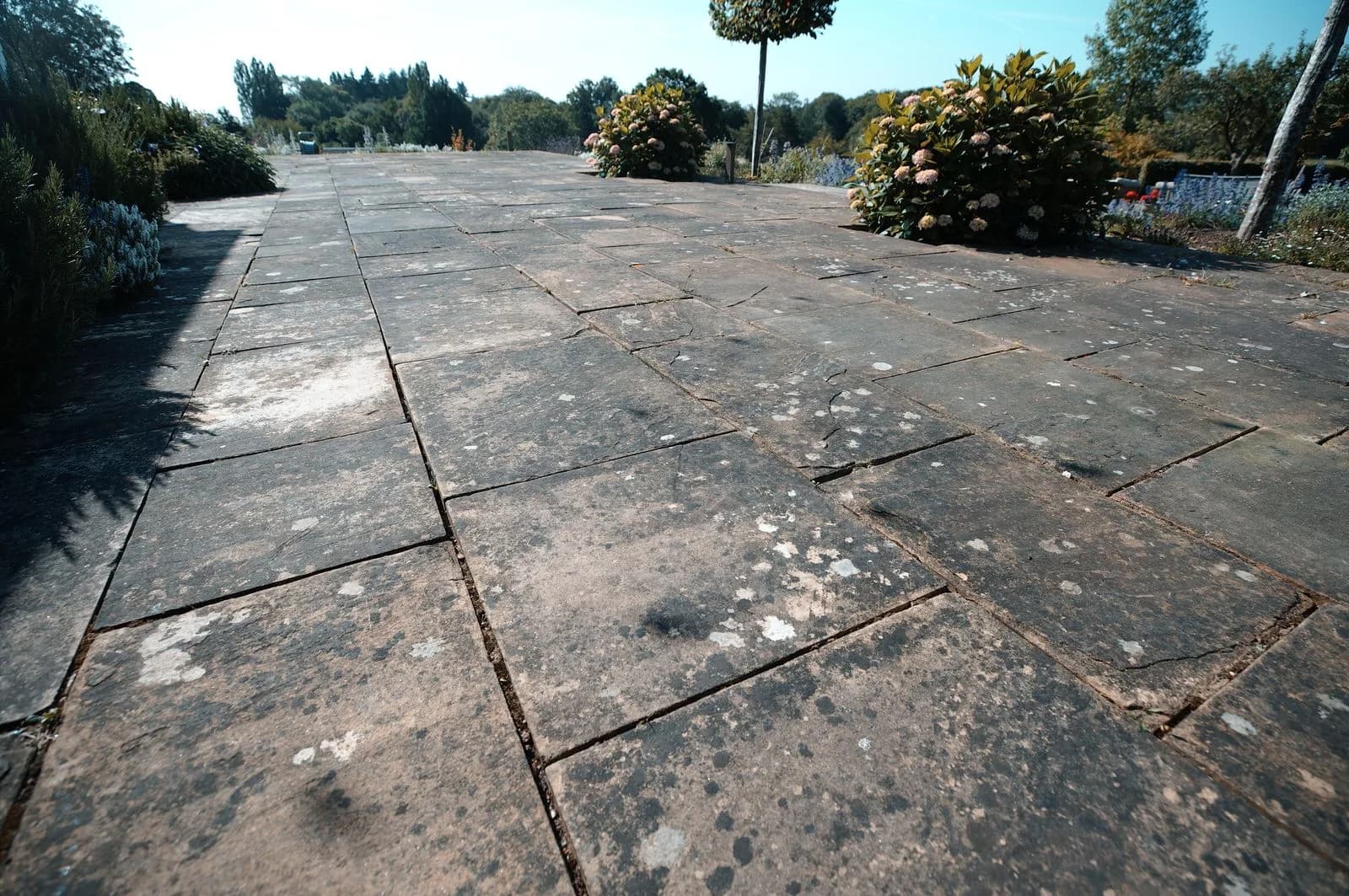
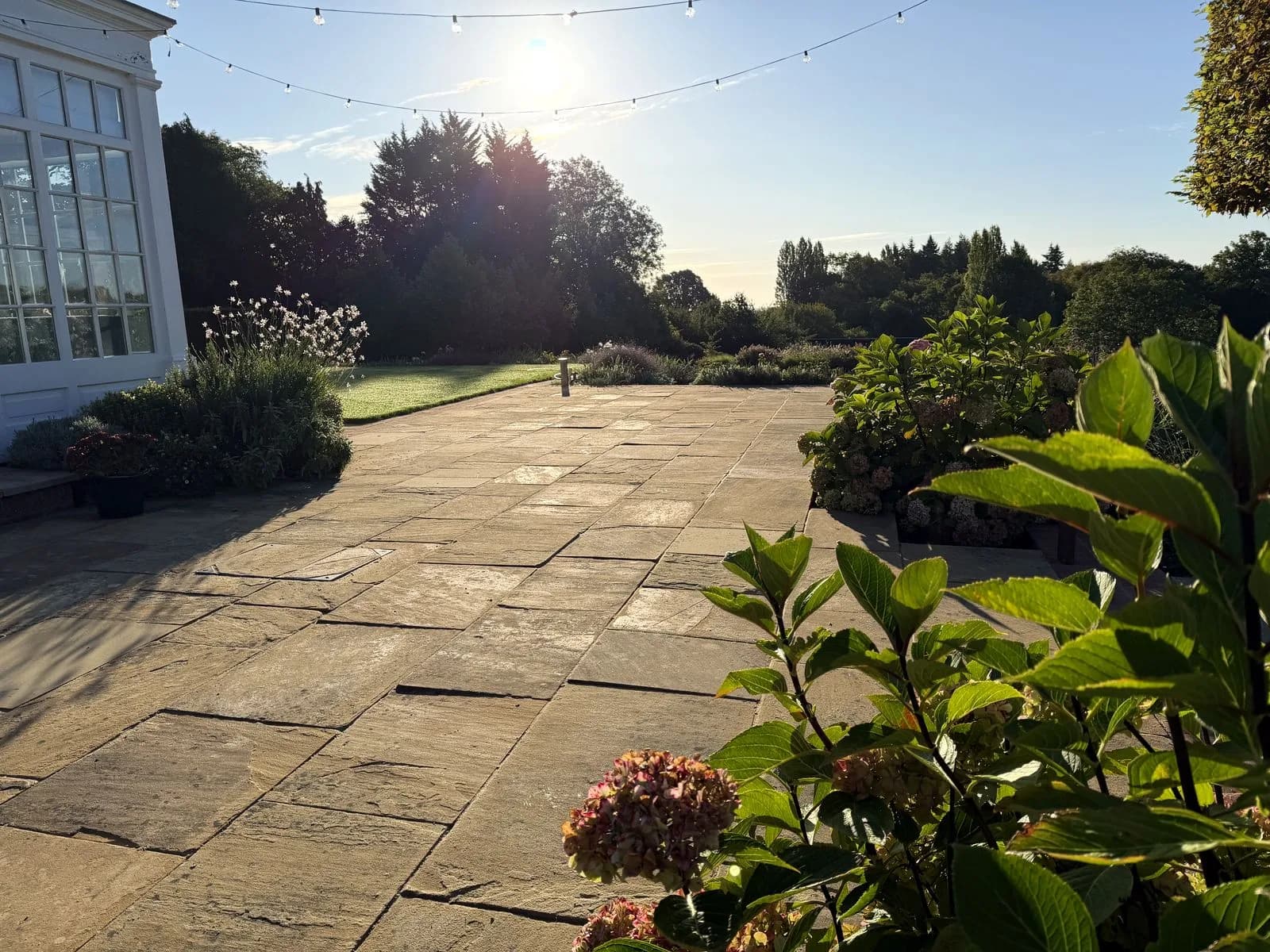
185m² Indian sandstone patio in Henley-on-Thames: black spot improved, loose slabs relaid and the patio fully repointed, with Chiltern EverGuard™ protection.
Soft Wash Treatment · Berkshire
Reading is a brick town, with streets of Victorian red and patterned brick alongside inter-war suburbs and modern estates. We soft wash brick, pebbledash and render at low pressure, telling growth apart from the marks that cleaning cannot change.
Brick first
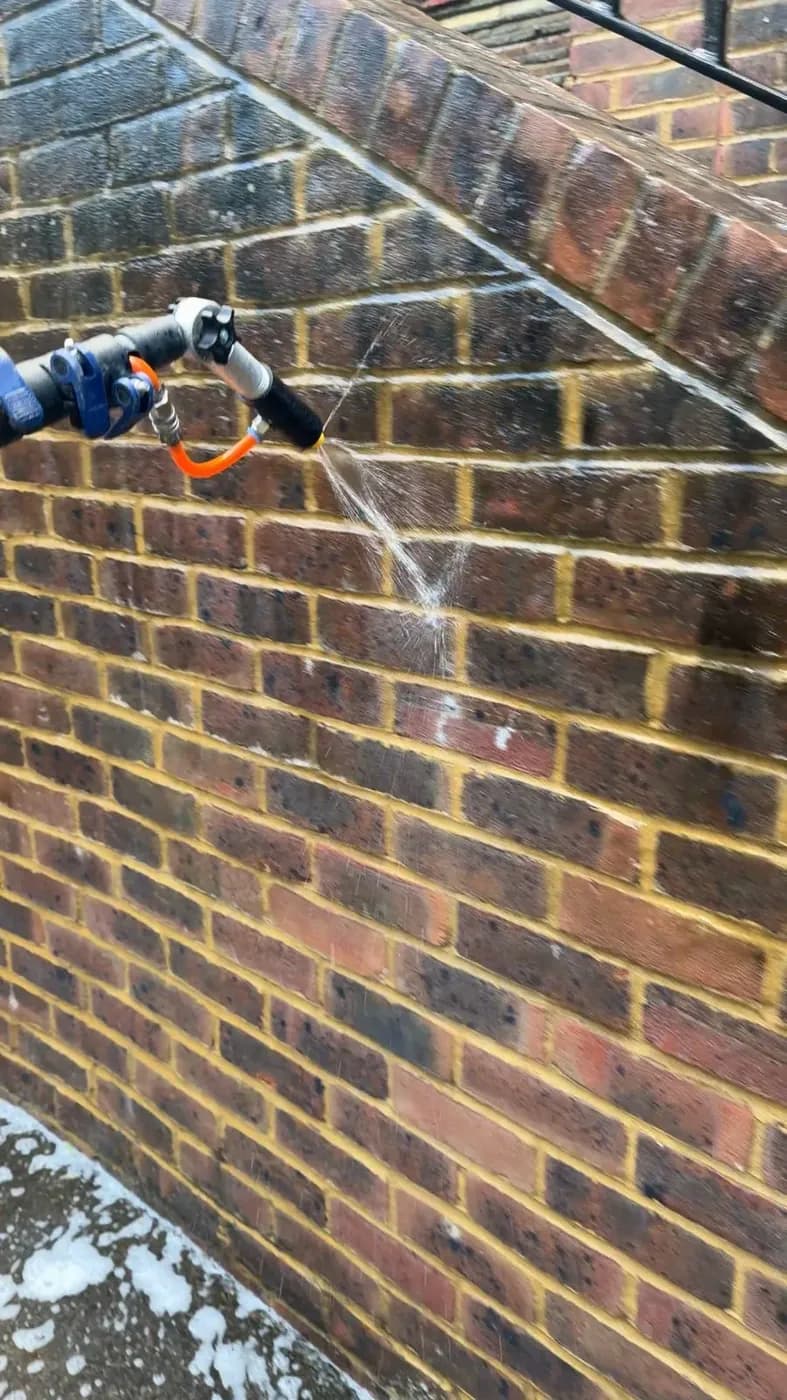
A Victorian brick wall carries more than one kind of mark. Green algae in the shaded joints, dark lichen on the lower courses, old soot, rust from fixings and the natural variation of the brick itself can all sit on one elevation. Only some of those are growth, and growth is what soft washing is designed to treat.
Reading homes
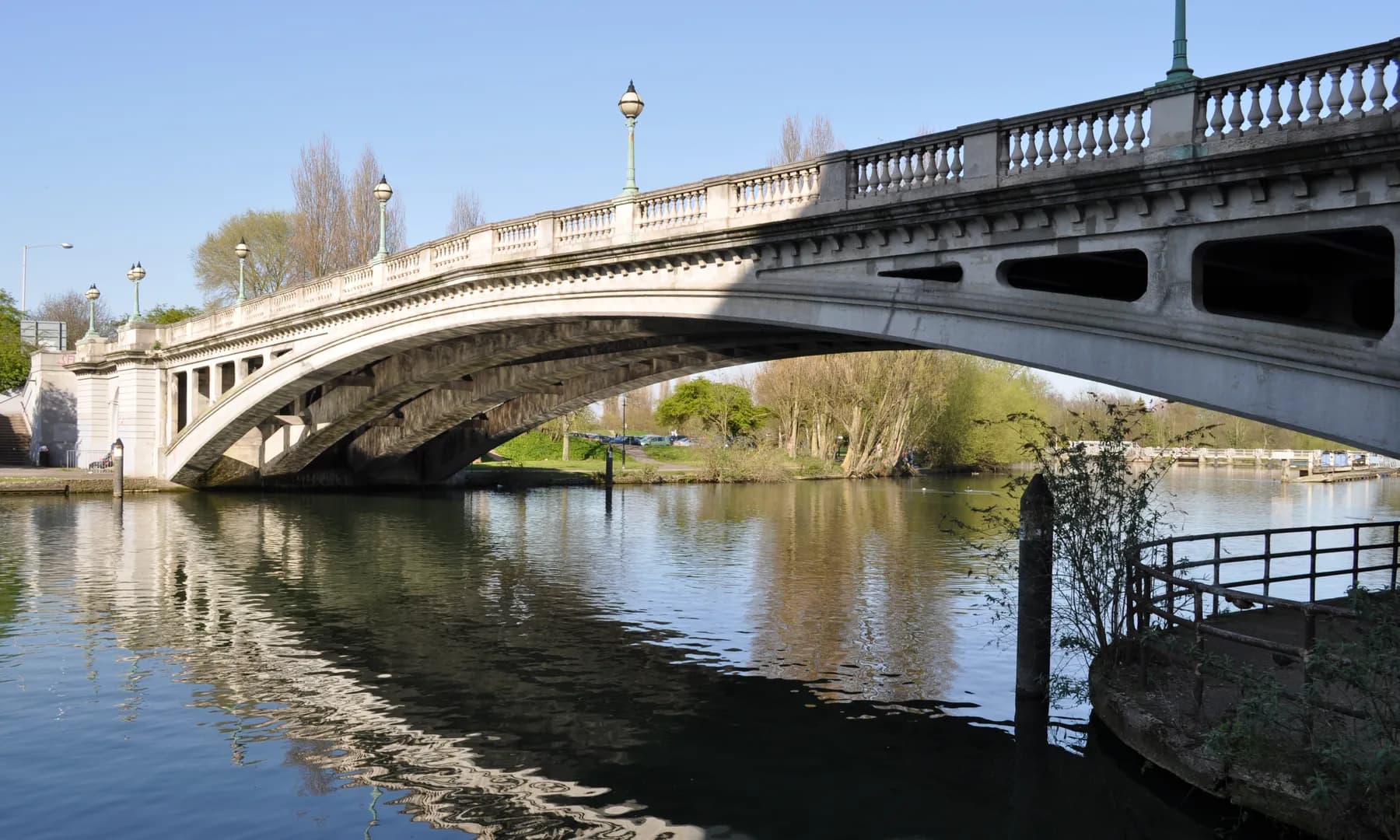
Reading expanded rapidly in the Victorian period, and many of its streets are lined with red brick houses, some laid in patterned brickwork using contrasting colours. Edwardian homes, inter-war suburbs, modern developments and older properties in areas such as Caversham fill out the picture, and the borough protects numerous conservation areas.
Close to the Thames corridor, and in leafy or shaded parts of the town, walls take longer to dry after rain. That is where algae, lichen and dark staining settle: on north-facing elevations, in the narrow gaps between terraced houses and on garden walls behind mature planting.
Telling marks apart
Before anything is applied, we work out what each mark on the wall actually is. Growth responds to a soft wash. Other marks have their own causes, and a stronger mix or more pressure will not shift them; it only puts the brick face and the joints at risk.
Patterned brickwork
Where a façade was laid in contrasting bricks, a film of algae and grime flattens the pattern into one dull colour. Soft washing lifts that film evenly, so the difference between the bricks reads again without either colour being scoured.
Even treatment is the point. Cleaning a patch at a time can leave the pattern sharper in some areas than in others, so we work across the whole elevation and rinse it down evenly from top to bottom.
Mortar and pointing
Older lime mortar is softer than the brick around it, and in a weathered wall it may already be recessed or crumbling. A concentrated jet goes straight for the joints, washing out mortar that should stay where it is. With a soft wash, the solution does the work and the joints are left alone.
If pointing is loose or missing, we note it at the site visit. Cleaning will make it easier to see, but repointing is a job for a bricklayer, and in a conservation area the owner may need advice from the local authority first.
Pebbledash and roughcast
Inter-war semis often carry pebbledash or roughcast render, and the stones and ridges give algae and dirt countless small ledges to cling to. Pressure strikes the high points and misses what sits in the hollows, and it can loosen stones that are already weak. A low-pressure solution reaches into the texture instead.
Painted pebbledash is checked first, because a tired coat can lift. Where the dash itself is hollow or falling away, we say so before any treatment goes on.
Our process
The order is fixed. The solution, the contact time and the rinse are set by the brick, mortar and render we find.
We look at each elevation, identify the brick, mortar and render, and separate growth from soot, rust and natural variation before recommending anything.
Planting, lawns, glass and painted joinery are covered or wetted down, and front gardens and shared paths are kept clear while we work.
A suitable solution is applied at low pressure and left to act on the algae and lichen, so the joints and the brick face take no force.
The elevation is rinsed down evenly, top to bottom, so patterned brickwork and textured render come back to one consistent finish.
The Chiltern EverGuard™ Treatment is applied to the clean surface, and we point out any pointing, render or paint that needs another trade.
Fair expectations
A soft wash makes a significant improvement where growth is the problem. A Victorian wall will still look like a Victorian wall, and that is as it should be.
185m² Indian sandstone patio in Henley-on-Thames: black spot improved, loose slabs relaid and the patio fully repointed, with Chiltern EverGuard™ protection.
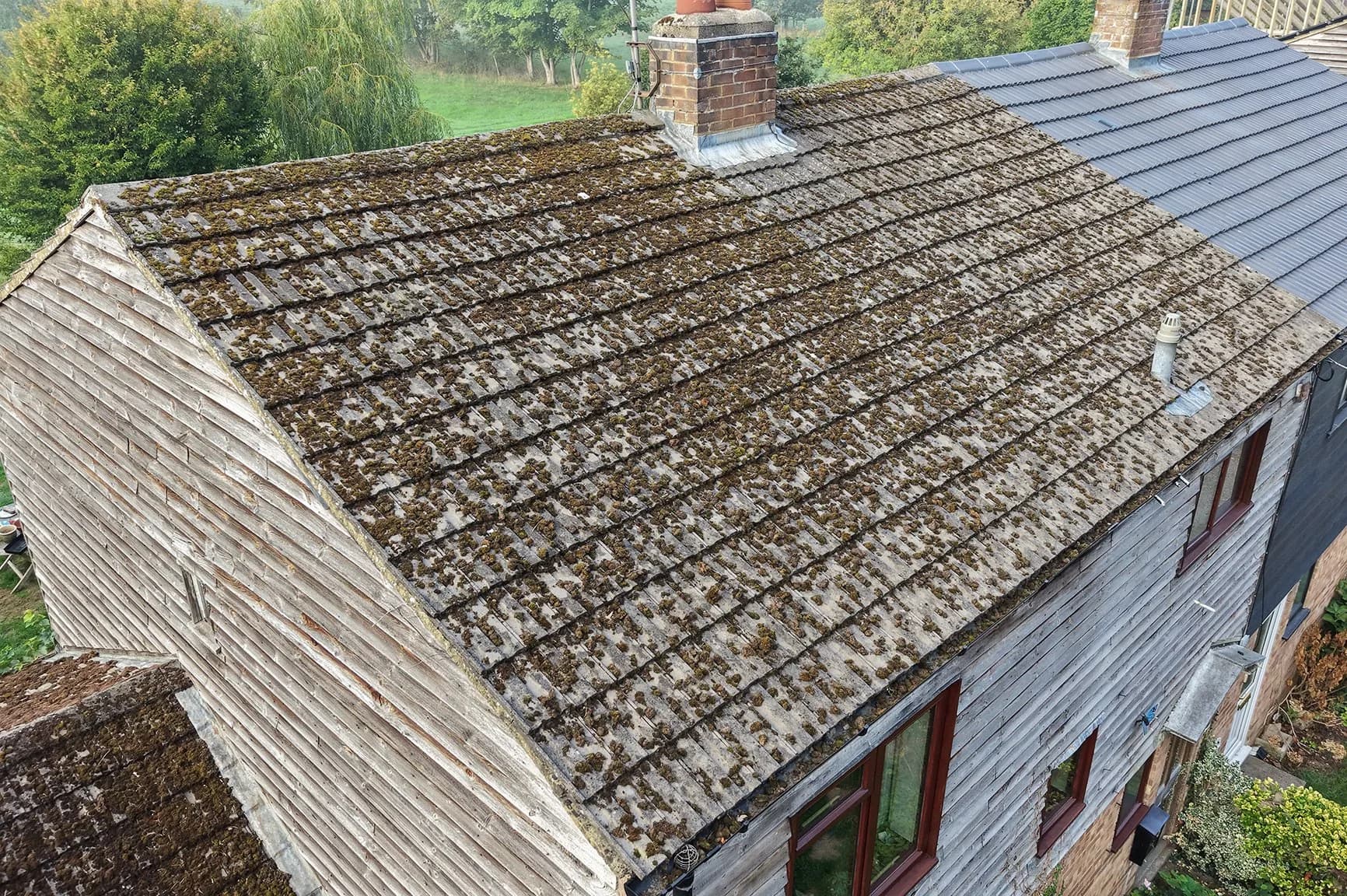
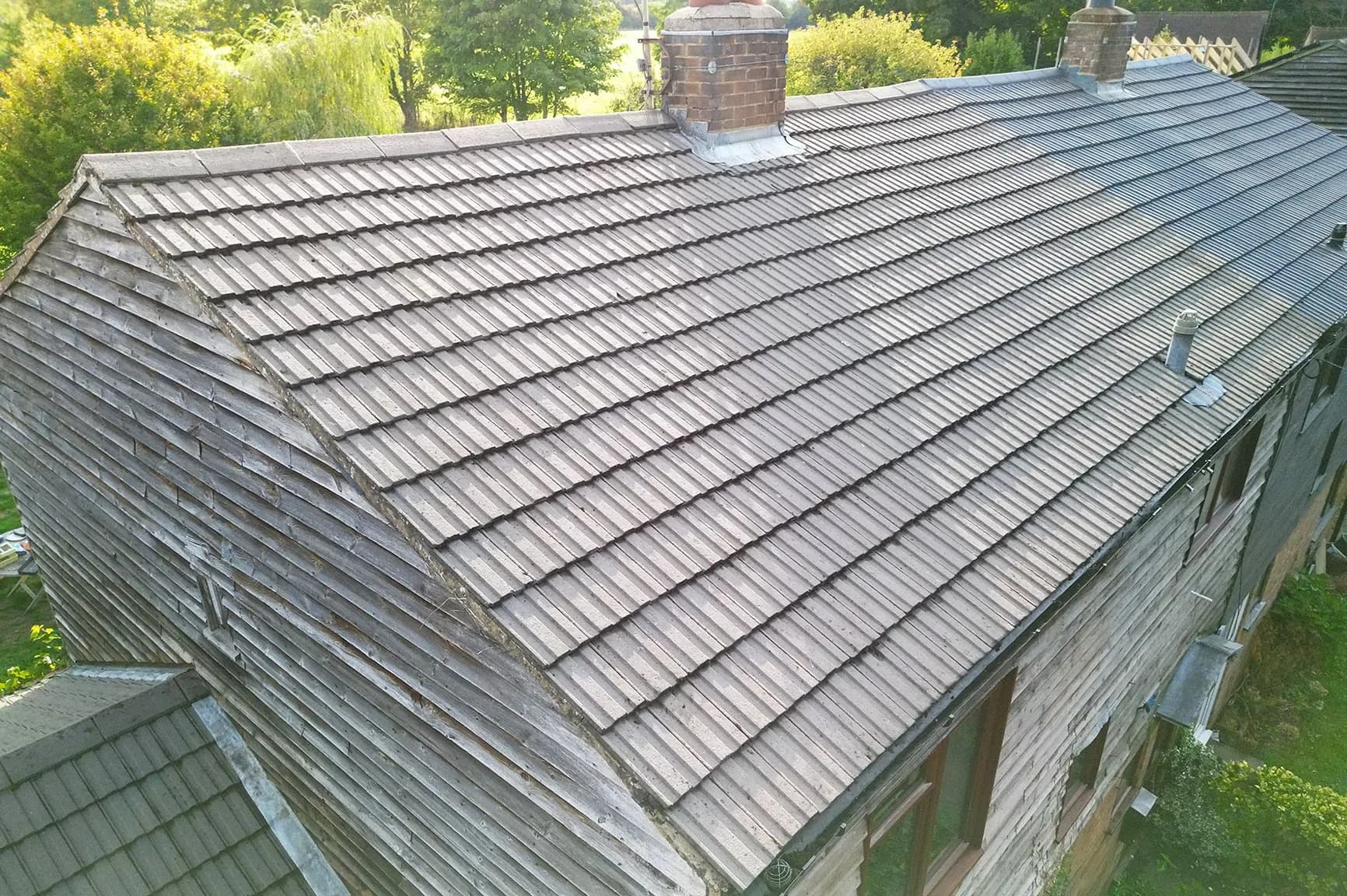
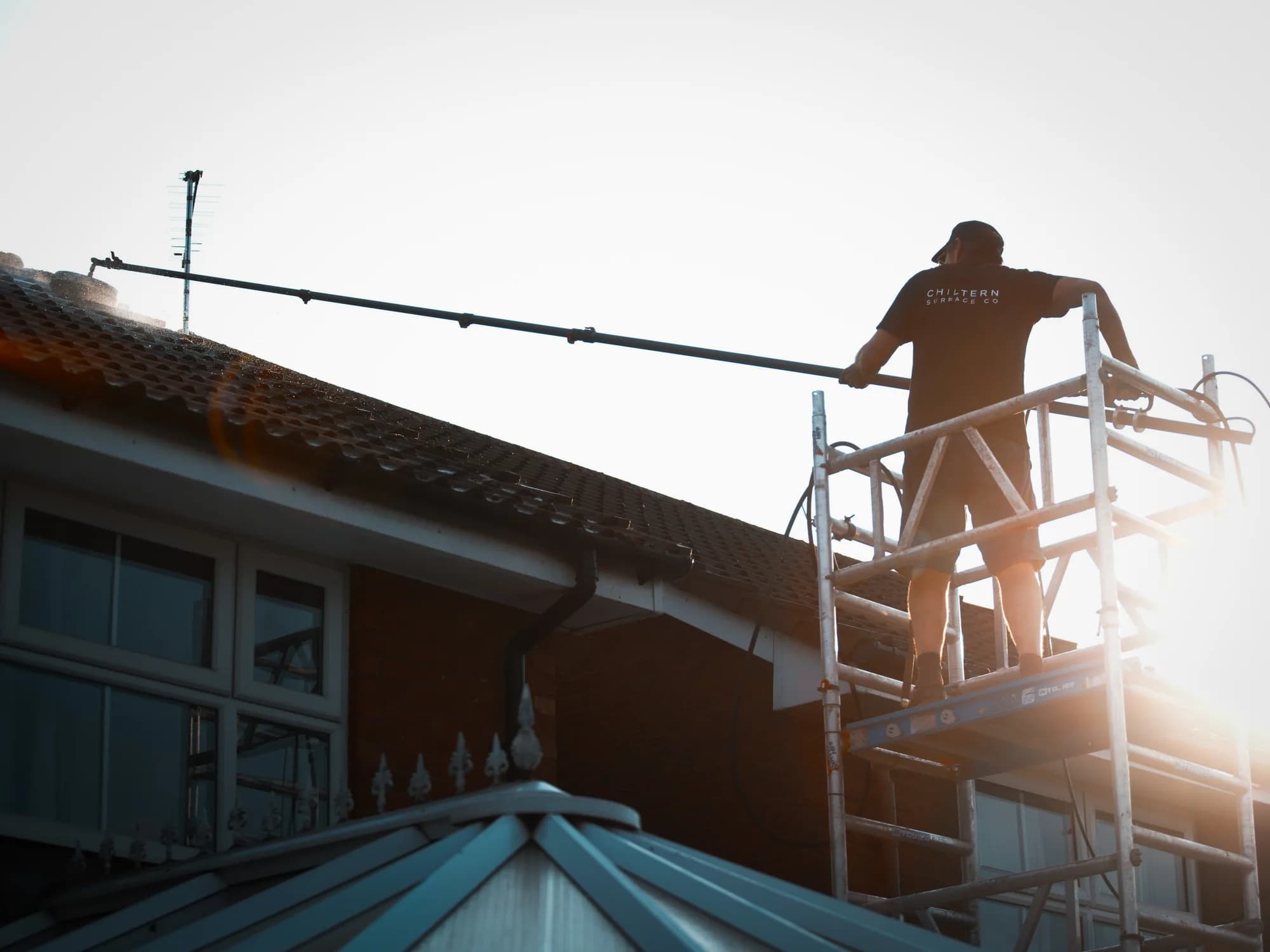
Roof moss removal in Henley-on-Thames from powered access: low-pressure cleaning, gutters cleared and Chiltern EverGuard™ protection on a concrete tile roof.
Why us
We tell growth apart from soot, rust and colour variation, so the effort goes where a soft wash can genuinely help.
Low pressure throughout means old lime mortar stays in the joints and the brick face is not scoured.
Whole elevations are treated and rinsed evenly, so patterned brickwork reads as one consistent wall again.
Fully insured, with front gardens, paths and planting protected and the street left as tidy as we found it.
Nearby
We also visit homes in Caversham north of the river, Tilehurst and Calcot to the west, Earley and Woodley to the east, and Shinfield to the south. Each area has its own mix of ages and materials, assessed property by property.
Soft Wash Treatment in nearby towns
What Clients Say
Thank you to every client who has trusted us with their home. Your reviews mean a great deal to us. We’re proud to be fully insured, certified professionals — delivering proven results with a customer-focused approach on every single project.
5-Star Rated On Google
Questions
No. It deals with algae, lichen and other growth. Old soot can lighten, but rust marks and the brick's natural colour variation are not growth and will remain. We explain which is which at the site visit.
No, not when it is done properly. The solution works on the growth at low pressure, so there is no jet washing out the joints. Where pointing is already loose, we tell you before starting.
Yes. Pebbledash and roughcast suit a low-pressure treatment well, because it reaches into the texture rather than striking only the high points. Hollow or loose areas and tired paint are checked first.
Yes. Careful low-pressure cleaning is appropriate for older fabric. Anything beyond cleaning, such as repointing or altering a façade, is a matter for the owner and the local authority.
Because it rarely sees the sun and air barely moves through it, so the walls stay damp long after rain. Algae establishes fastest wherever moisture lingers, and narrow side passages are a classic example.
It depends on shade, moisture and exposure. The Chiltern EverGuard™ Treatment applied after cleaning helps reduce regrowth, and its protection typically lasts between 12 and 24 months, with shaded passages towards the shorter end.
More from us
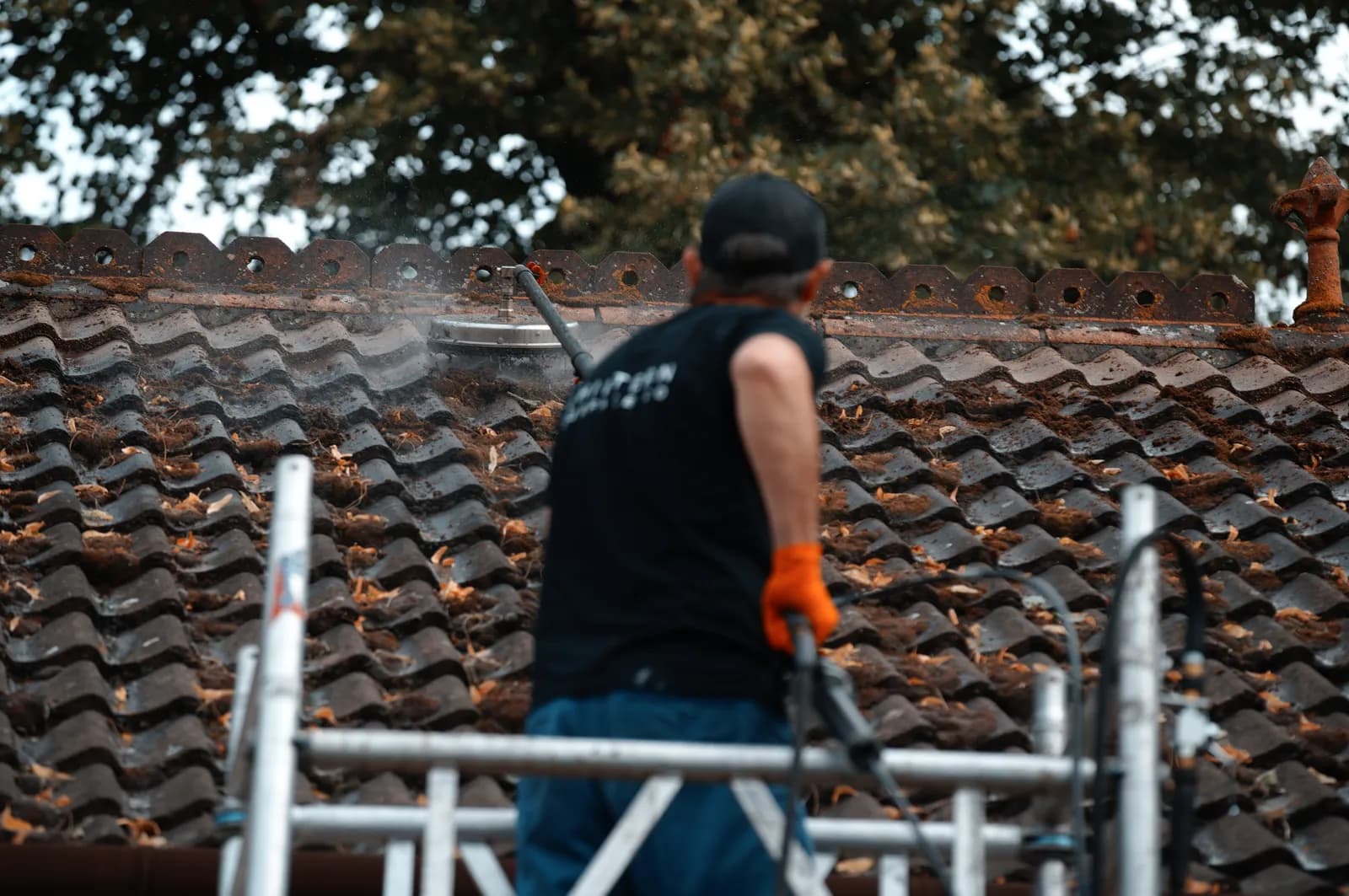
Carefully remove moss, algae and lichens to protect your roof and enhance kerb appeal.
Learn Moreabout Roof Cleaning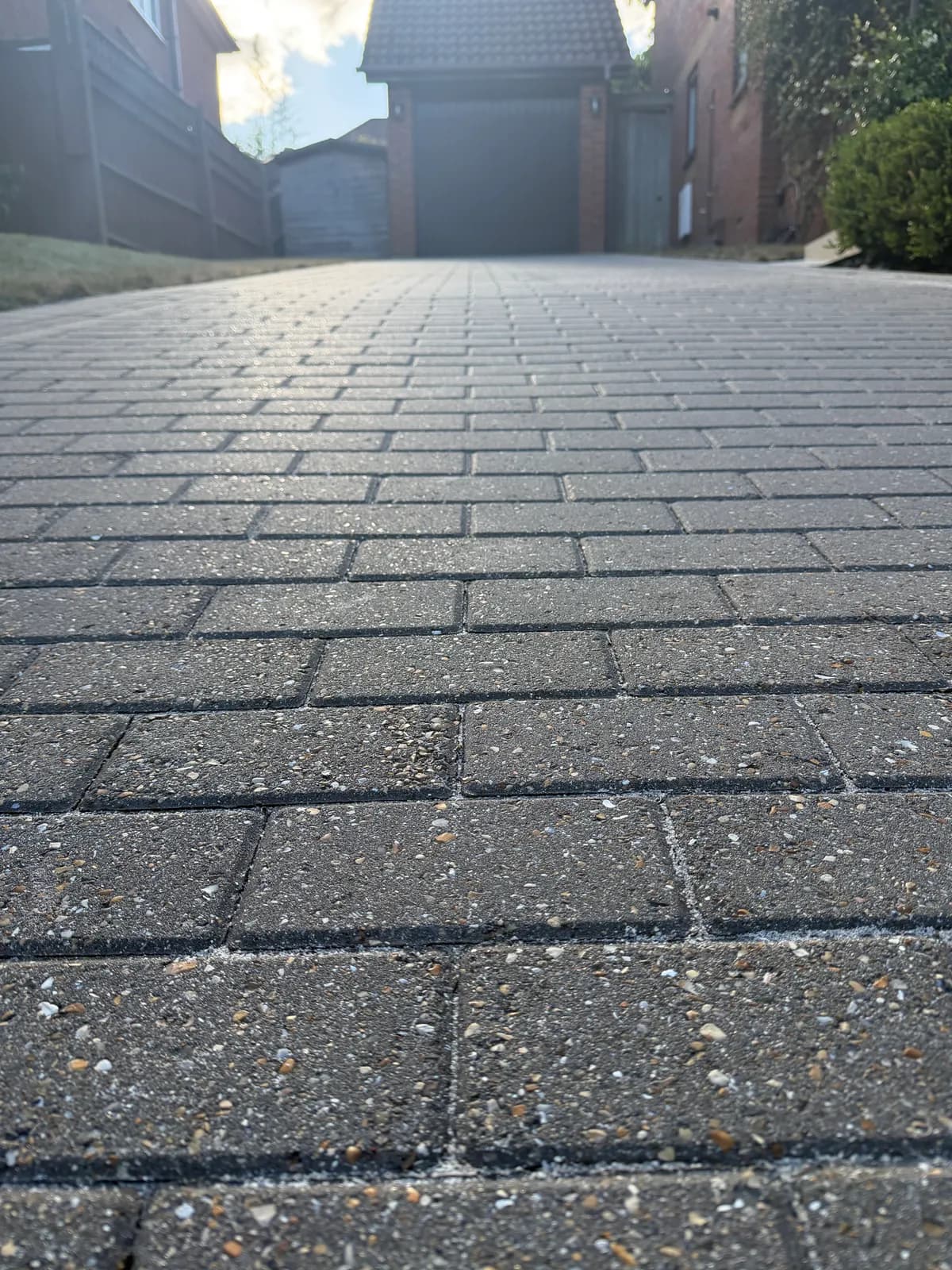
Professional cleaning for block paving, tarmac and resin driveways, restoring colour and removing stains.
Learn Moreabout Driveway Cleaning
Specialist cleaning and restoration for natural stone, porcelain and concrete patios.
Learn Moreabout Patio Cleaning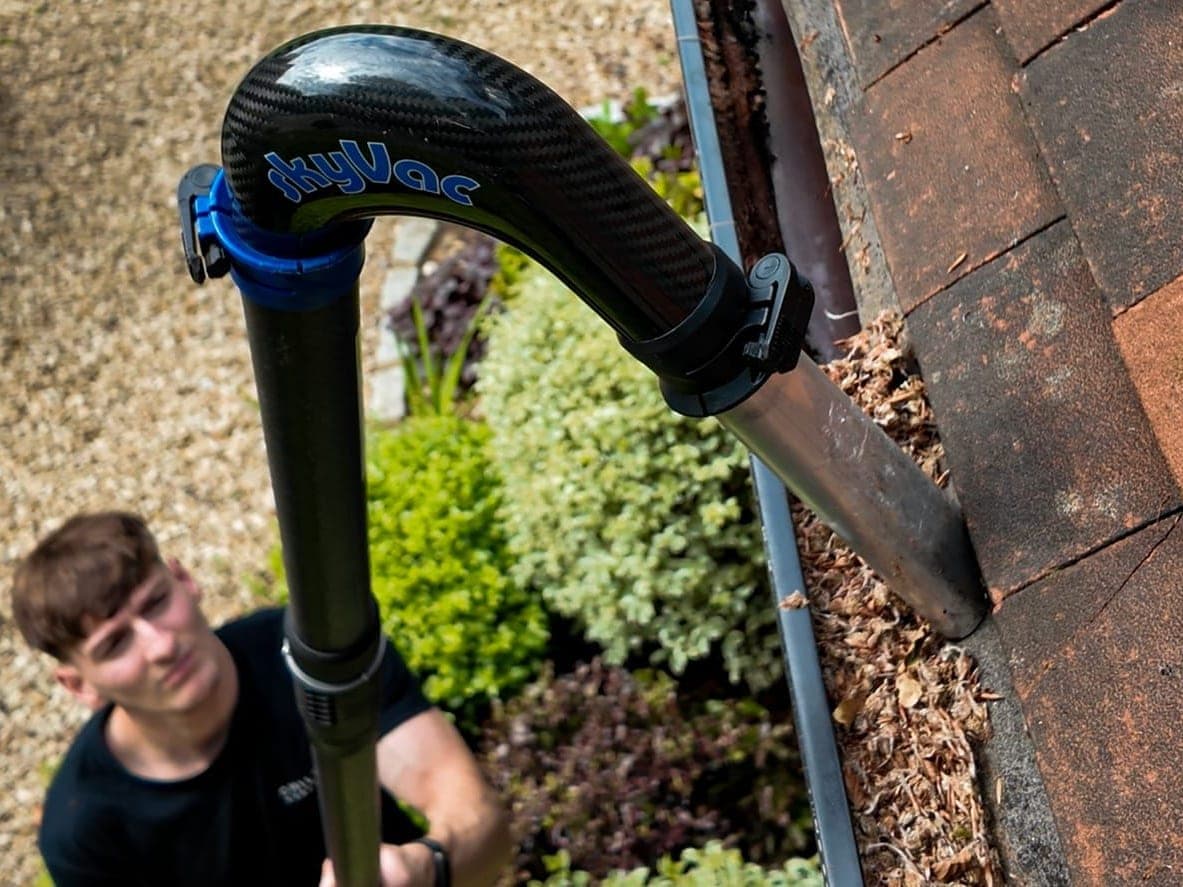
Clear and flush blocked gutters and downpipes to protect your walls, fascias and foundations.
Learn Moreabout Gutter Cleaning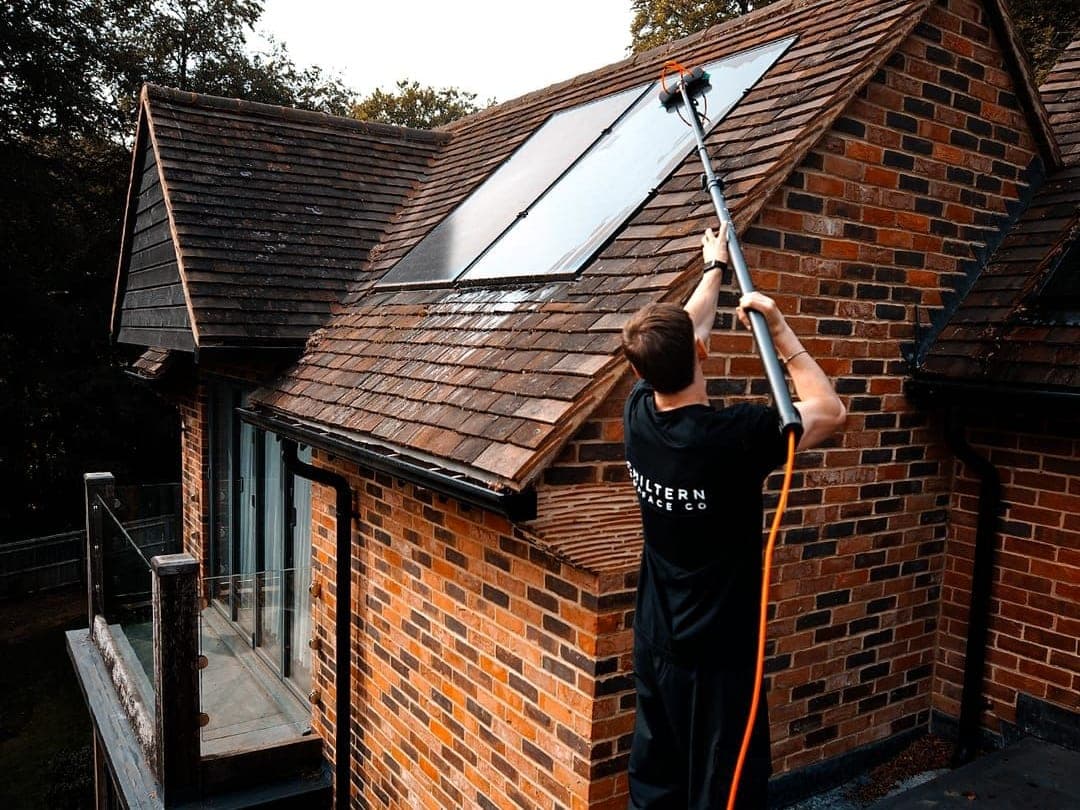
Pure-water cleaning that removes grime and shading to restore your panels' output and efficiency.
Learn Moreabout Solar Panel Cleaning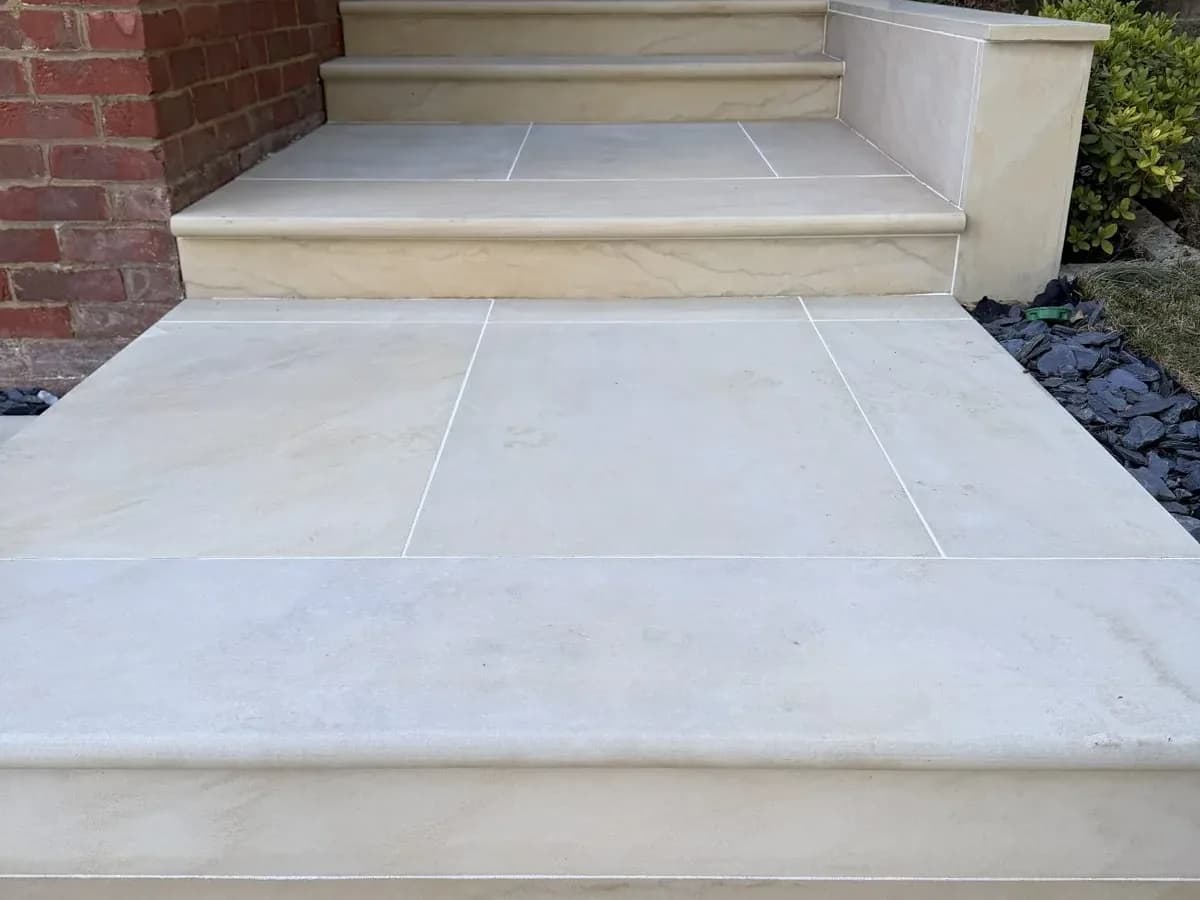
Winter cleaning that removes slippery algae and moss from paths, steps and patios, planned around the forecast.
Advice
Looking after a commercial building, a managed site or a portfolio? Render and masonry cleaning is handled by our commercial team, surveyed and priced as a specified job.
Chiltern Surface Co
We will look at the walls with you, show you which marks are growth and which are not, and explain how we would treat them. A clear quotation follows the visit.
We assess your surfaces and recommend the right approach for the best, long-lasting results.
You'll receive a detailed, transparent quote with no hidden extras.
We'll provide honest advice so you can decide what's right for you.
Speak directly with the owner and get expert advice you can trust.