Block Paved Driveway Cleaning in High Wycombe
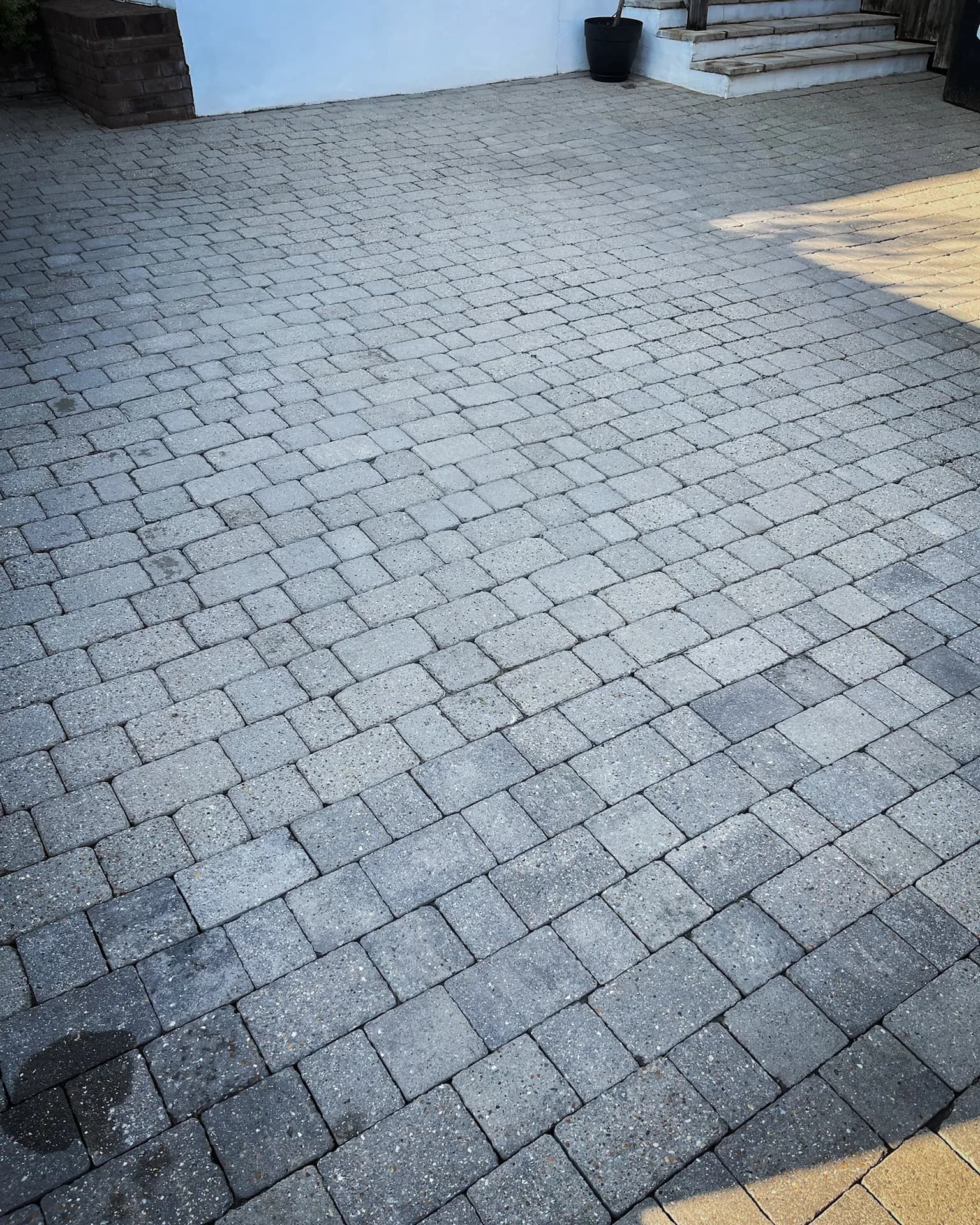
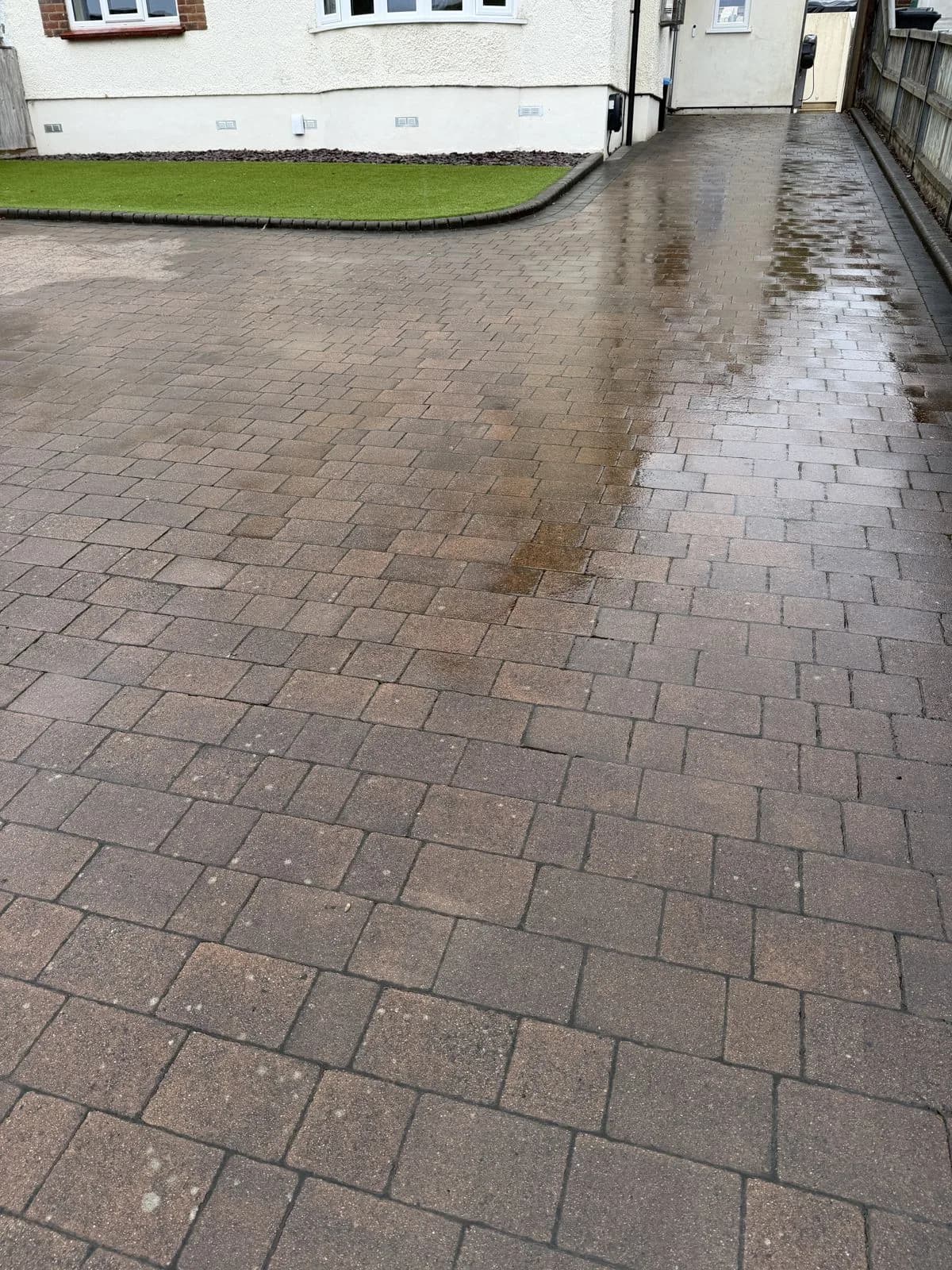
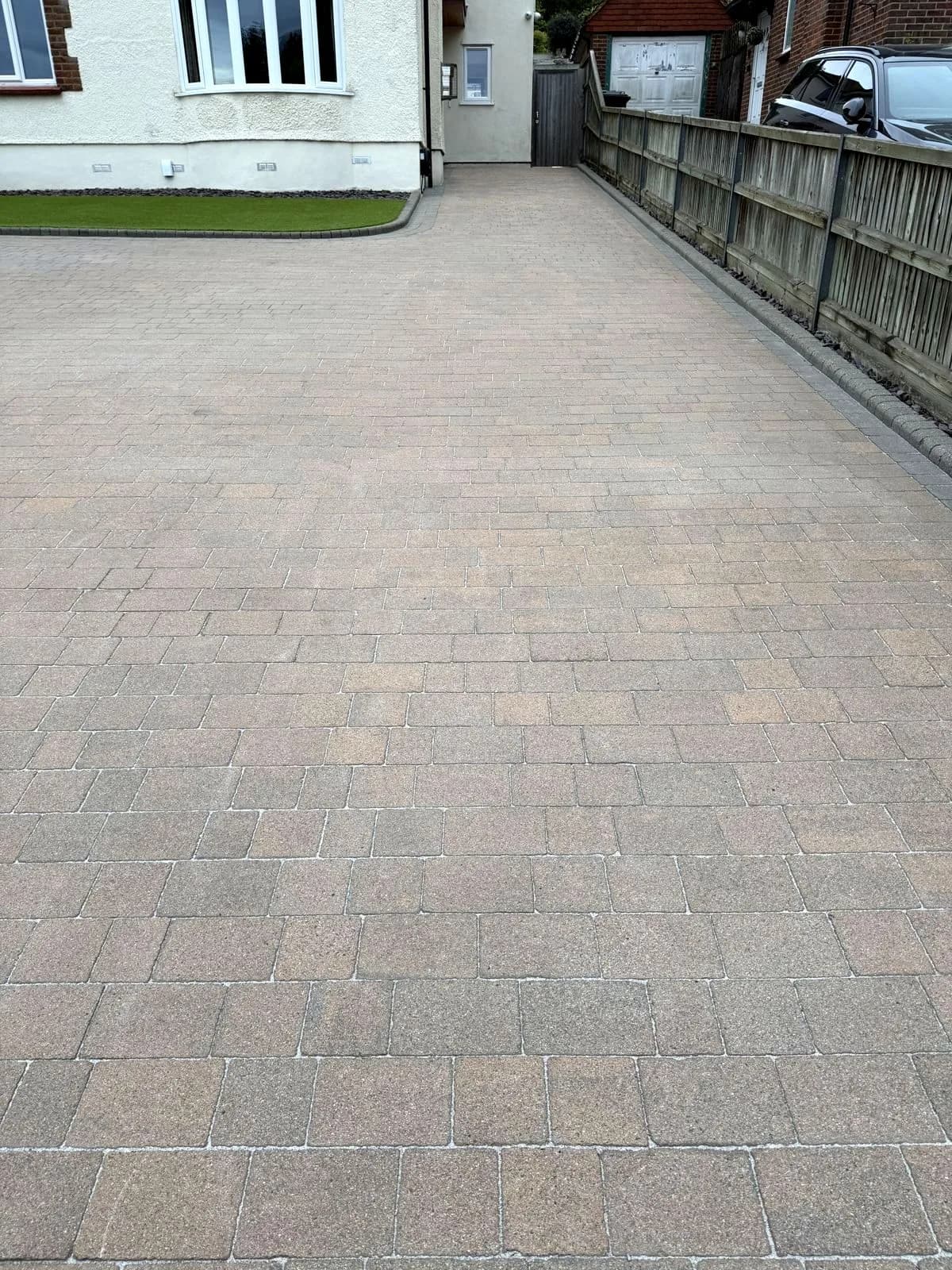
Restoring a 150m² block paved driveway in High Wycombe: deep clean, damaged blocks replaced, polymeric re-sanding, compaction and Chiltern EverGuard™.
Driveway Cleaning · Buckinghamshire
Amersham is two places in one: the old market town in the Misbourne valley and Amersham on the Hill above it. Their driveways differ as much as their houses, and we clean each one by its material, its gradient and its age.
How we start
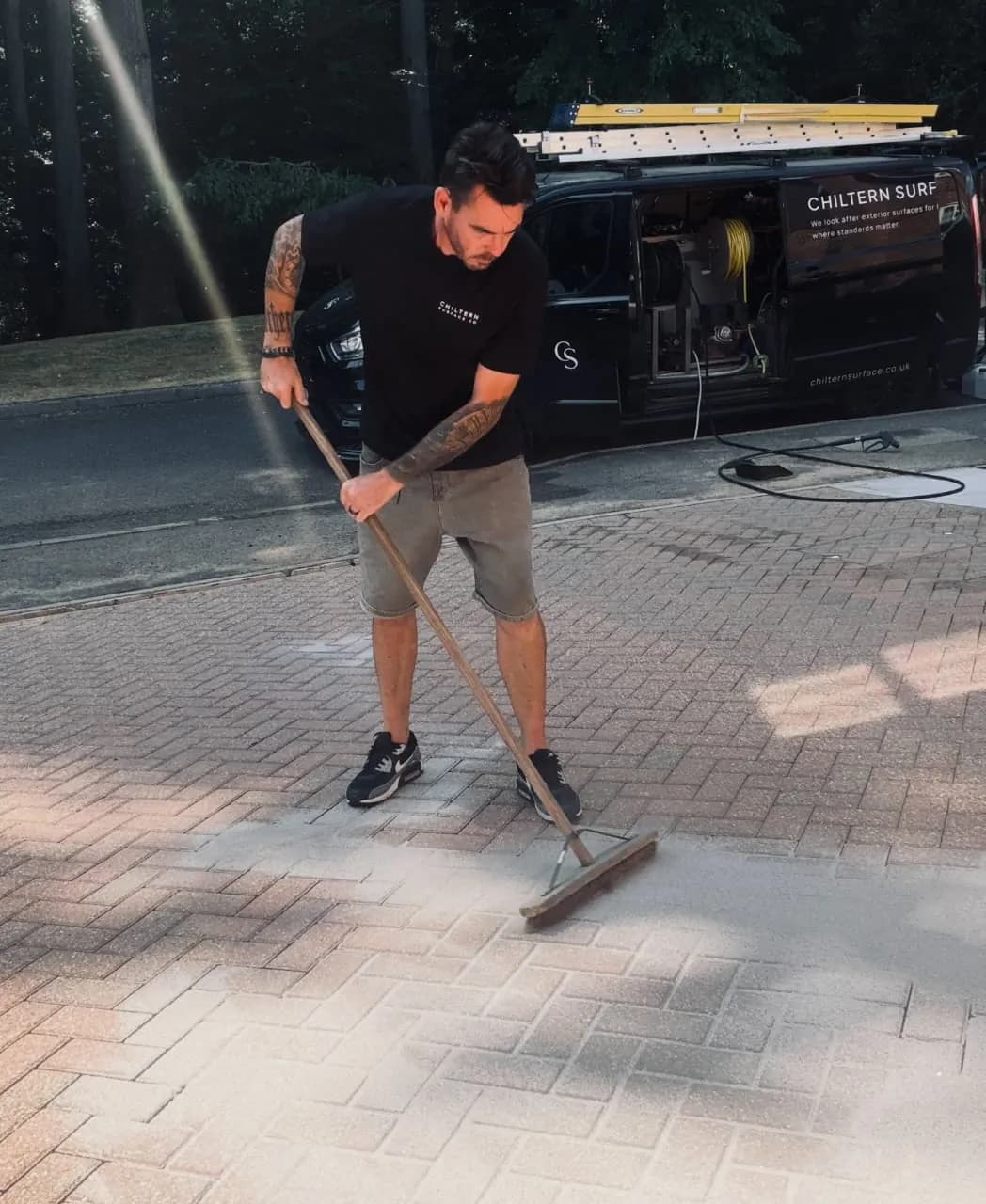
Before any water touches the drive, we identify what it is made of, how firmly it is bedded and where water runs when it rains. Those three things decide the pressure, whether heated water is suitable and how the joints will be finished. It is a slower start than simply switching on, and it is the reason the result holds.
Amersham driveways
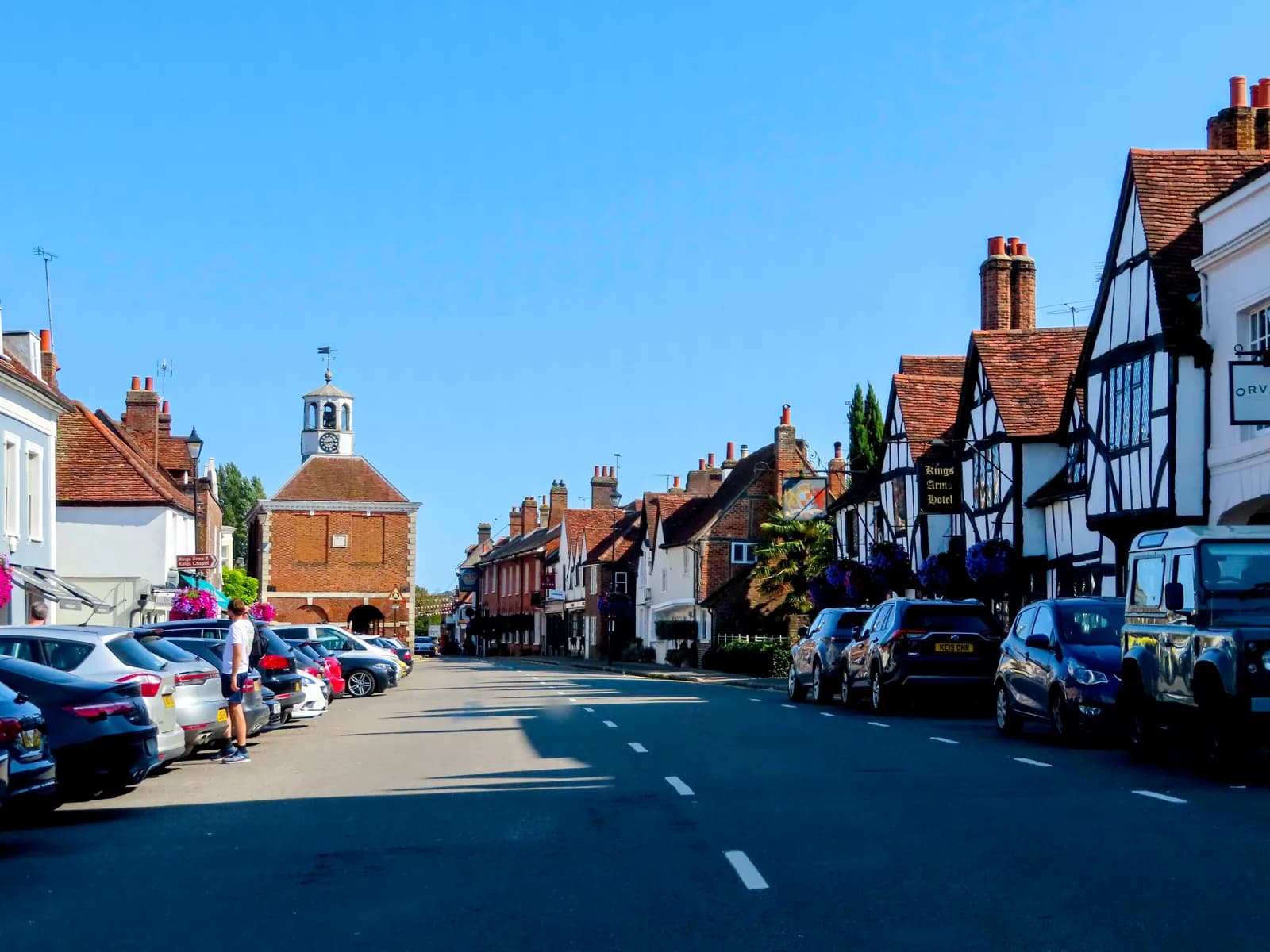
Old Amersham lies along the floor of the Misbourne valley, its High Street lined with historic buildings inside a conservation area. Frontages here are often small and old: natural stone, setts, worn brick paving or gravel in front of period houses, sometimes on damp, low ground close to the river.
Amersham on the Hill grew up around the railway from the late nineteenth century, and its roads carry inter-war, post-war and later homes. Driveways up there are more often concrete, tarmac and above all block paving, much of it laid on roads that climb steadily between the two parts of town. Wooded slopes on either side keep plenty of drives in shade.
Block paving
A block-paved drive holds together through its joints. The sand packed between the blocks locks them against one another, so they spread the weight of a car instead of rocking or sinking. As that sand washes out, gaps open, weeds root in them and the blocks begin to shift.
Cleaning removes whatever sand is left along with the dirt, so the joints are always part of the job. Once the surface is dry we compact it with a vibrating plate compactor and fill every joint with Chiltern Polymeric Sand. It helps stabilise the paving and gives better protection than conventional kiln-dried sand against weed growth, erosion, washout and the damage caused by repeated freezing and thawing.
Sloping drives
On a sloping drive, rain does not soak away evenly. It runs downhill, carrying grit and leaf debris with it, and settles at the bottom near the garage or the pavement. That lower strip stays wet for longest, which is where moss gathers first and where joints lose their sand fastest.
We clean a slope from the top down so loosened dirt is not washed back over finished paving, and we look closely at the low end and the edges where water collects. Treating the growth rather than just washing it off is what changes the pattern on a slope; otherwise it returns to exactly the same places.
Older frontages
Natural stone is not one material. Sandstone, limestone, granite and slate differ in hardness and in how much water they absorb, and older stone may be softer at the surface than it looks. Each is assessed at the site visit before the method and the pressure are chosen.
We remove algae, moss, lichen and staining from stone and old brick paving, and tell you beforehand what we expect to lift and what is likely to stay. On a period frontage, some weathering and colour variation is part of its character rather than dirt.
How it runs
Each stage below happens on every driveway we restore. The re-sanding stage applies wherever there are sand-filled joints to refill.
We identify the material, check how well it is bedded, look at the gradient and drainage, and agree the pressure, the method and the treatment before any work is booked.
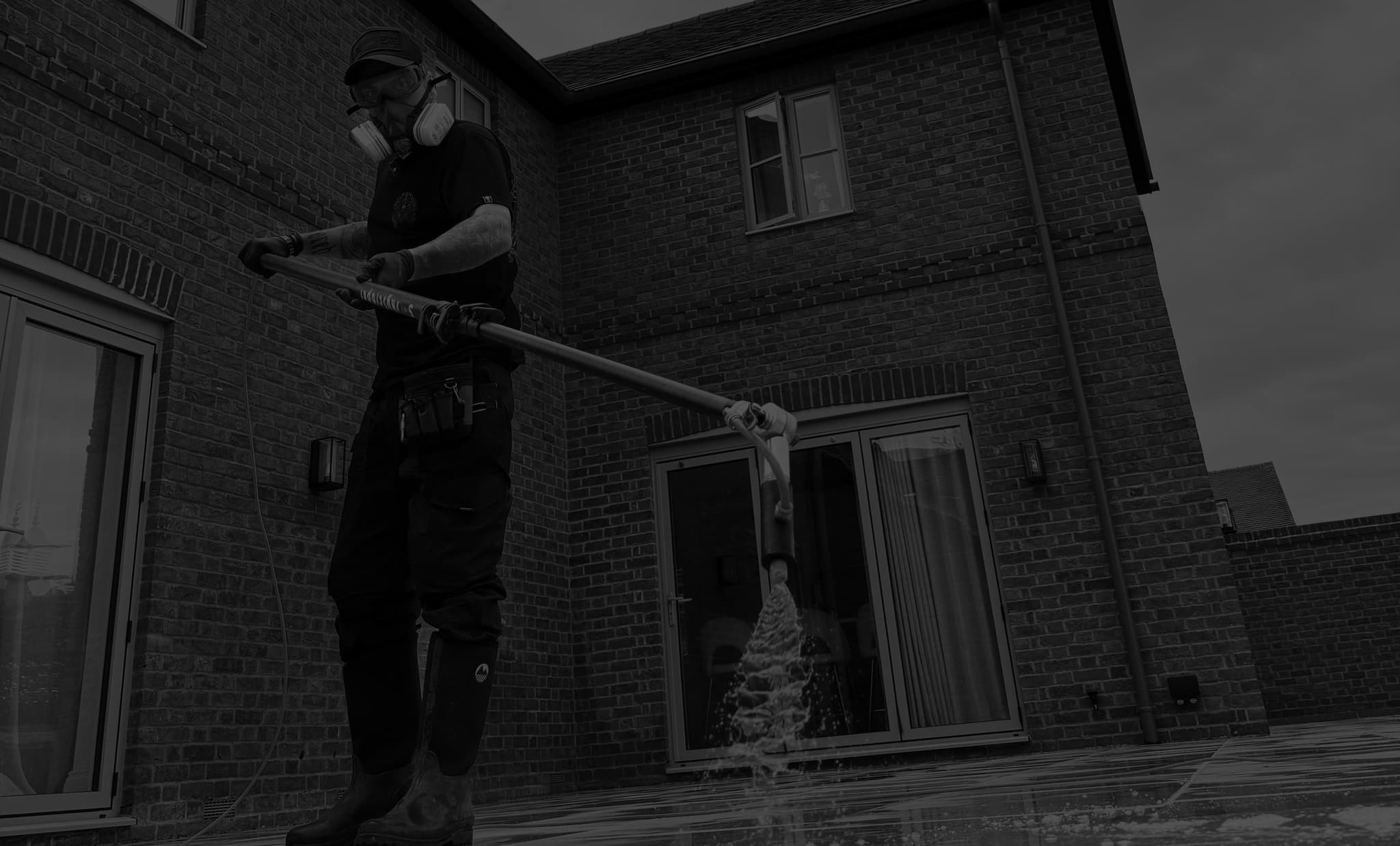
Dirt, algae, moss and the old jointing material are removed evenly across the surface, working downhill on a slope and using heated water only where the material allows.
Organic growth is cleared from the joints. When the paving is dry, a vibrating plate compactor settles the blocks back into their bed before any sand goes in.
The joints are filled with Chiltern Polymeric Sand and the surplus is swept away, leaving every joint full from one edge of the drive to the other.
The cleaned drive is finished with the Chiltern EverGuard™ Treatment to help reduce how quickly algae and moss return, and we explain what to expect over the coming months.
Honest limits
Cleaning and re-sanding bring a tired drive back a long way, and the improvement is usually significant. It is still restoration rather than resurfacing. Blocks that have sunk, stone that has cracked and concrete that has spalled will look cleaner but remain as they are. Old repairs in a different material stay visible, and oil that has soaked in deeply may fade without disappearing. Chiltern EverGuard™ protection typically lasts between 12 and 24 months, and a shaded slope will sit towards the shorter end of that range.
Restoring a 150m² block paved driveway in High Wycombe: deep clean, damaged blocks replaced, polymeric re-sanding, compaction and Chiltern EverGuard™.
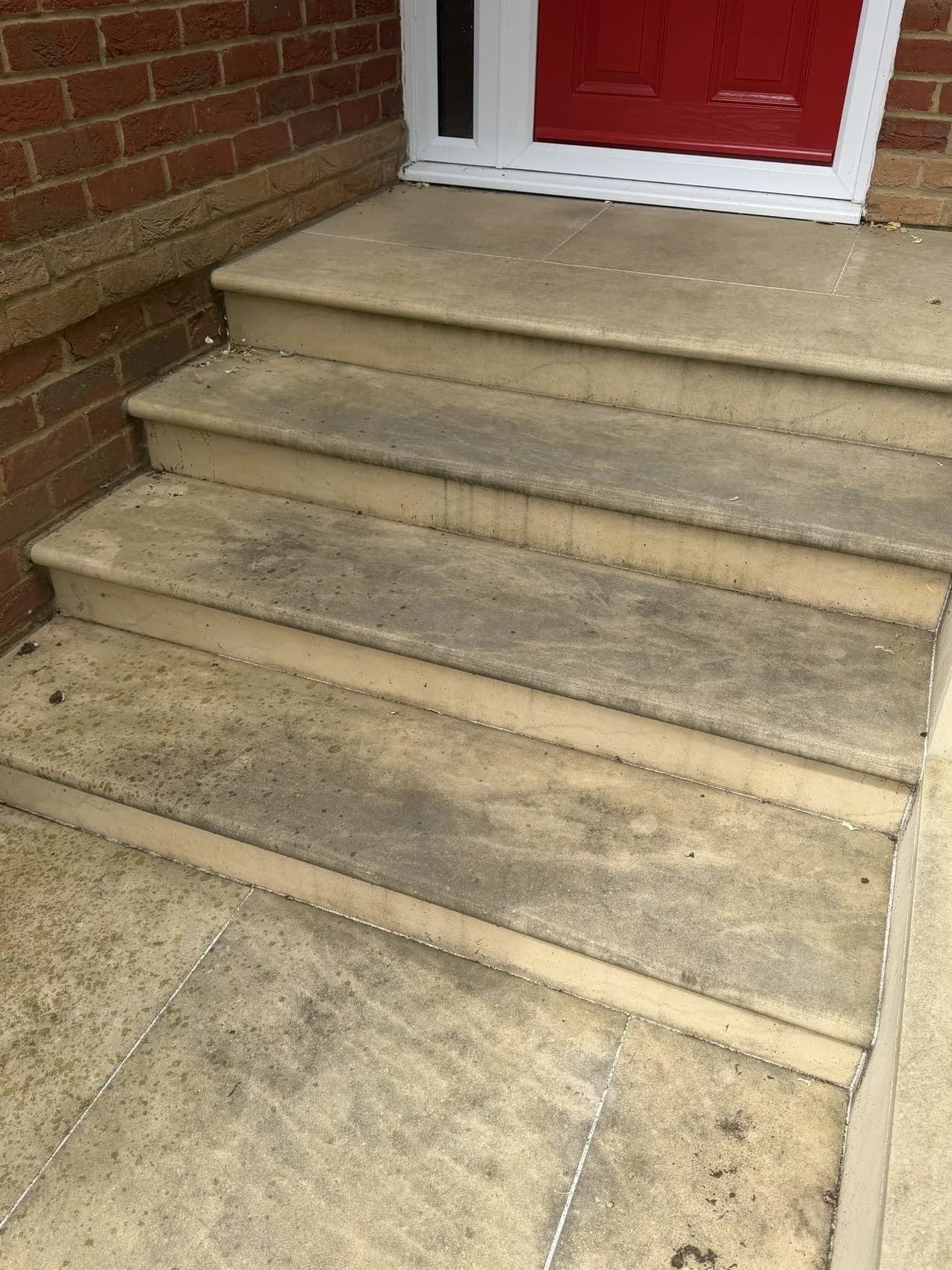
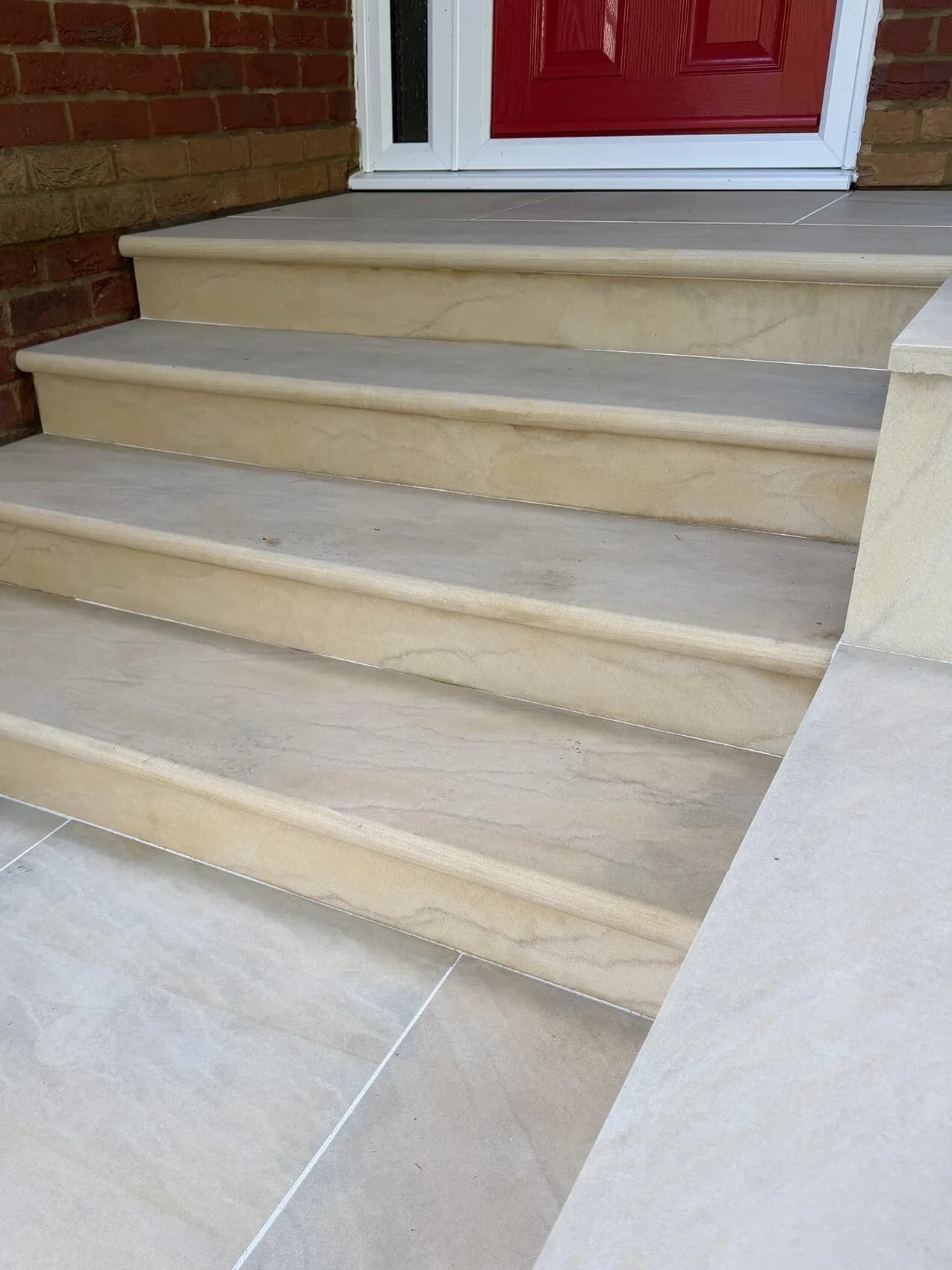
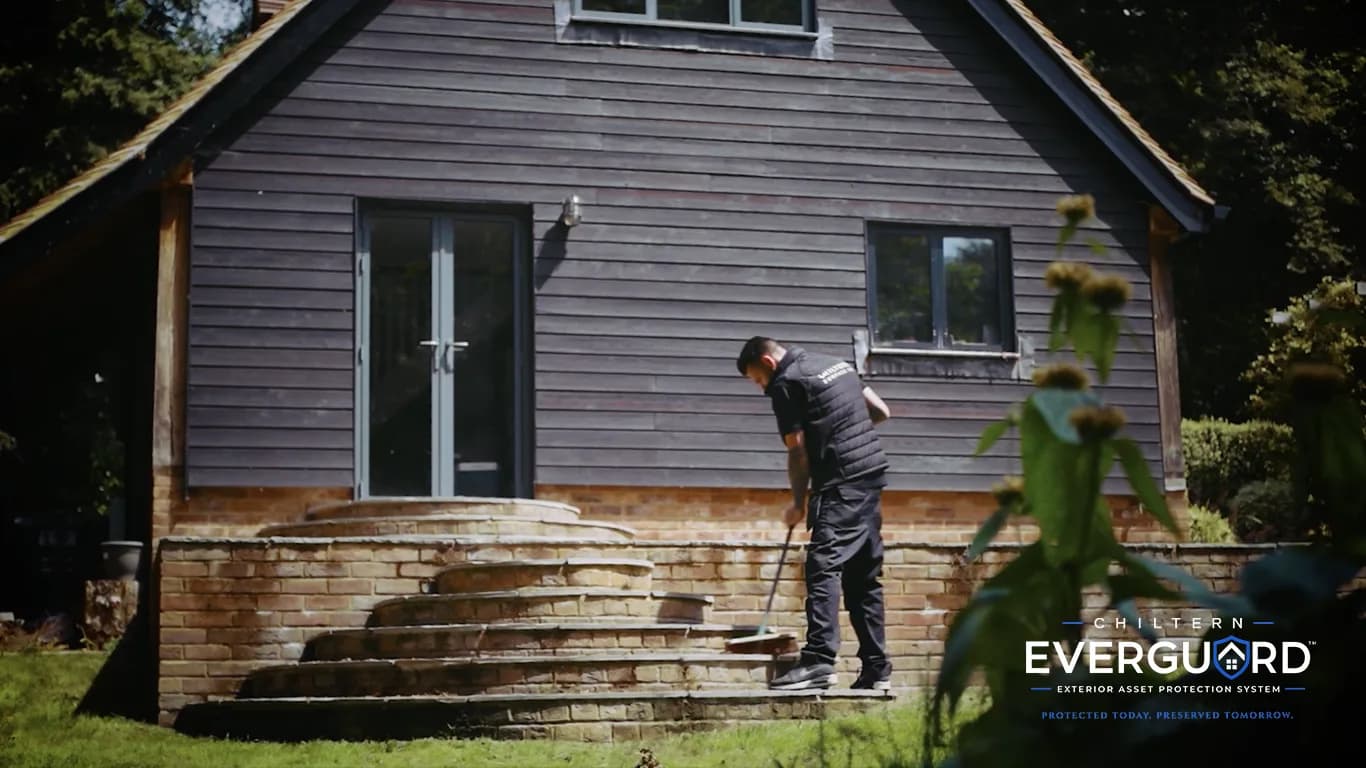
Indian sandstone step cleaning and block paving cleaning in High Wycombe, including polymeric re-sanding, compaction and Chiltern EverGuard™ treatment.
Why us
Compaction and Chiltern Polymeric Sand are part of every block paving restoration, because the joints are what keep the blocks in place.
Stone, setts and old brick paving are assessed one by one, and we tell you what will lift before we start rather than afterwards.
Every restored drive is finished with Chiltern EverGuard™, so the growth is addressed as well as removed from the surface.
Our operatives are fully insured, and the person who assessed the drive takes responsibility for how it is finished and handed back.
Nearby
We also restore driveways in Chesham Bois, Little Chalfont, Coleshill, Hyde Heath, Winchmore Hill and Penn Street. These villages share the same mix of older and newer homes, and many sit closer to woodland than the town itself.
Driveway Cleaning in nearby towns
What Clients Say
Thank you to every client who has trusted us with their home. Your reviews mean a great deal to us. We’re proud to be fully insured, certified professionals — delivering proven results with a customer-focused approach on every single project.
5-Star Rated On Google
Questions
Often, yes. Old Amersham has more natural stone, setts and old brick paving, which call for a gentler, more careful method. Amersham on the Hill has more block paving, concrete and tarmac. Same town, genuinely different approaches.
Water runs down the slope and settles at the lowest point, so that strip stays wet for longest. Moss and algae establish wherever paving rarely dries. Cleaning removes the growth, and the treatment that follows helps slow its return.
No. Every block-paved drive we restore is refilled with Chiltern Polymeric Sand after cleaning and compaction. It helps stabilise the paving and resists weed growth and joint washout better than conventional kiln-dried sand.
Yes, after assessment. We look at the type of stone, how worn it is and how the joints are filled, then choose a method and pressure to suit. Where weathering is set into the surface, we will say so beforehand.
Typically between 12 and 24 months. It depends on the property's location, the surroundings, the surface and how it is maintained. A shaded drive near woodland tends to sit at the shorter end, and an open one at the longer.
Yes. Resin-bound drives are cleaned at low pressure using methods chosen for resin systems, and finished with Chiltern EverGuard™ like every other drive. We check the condition of the resin at the site visit first.
More from us
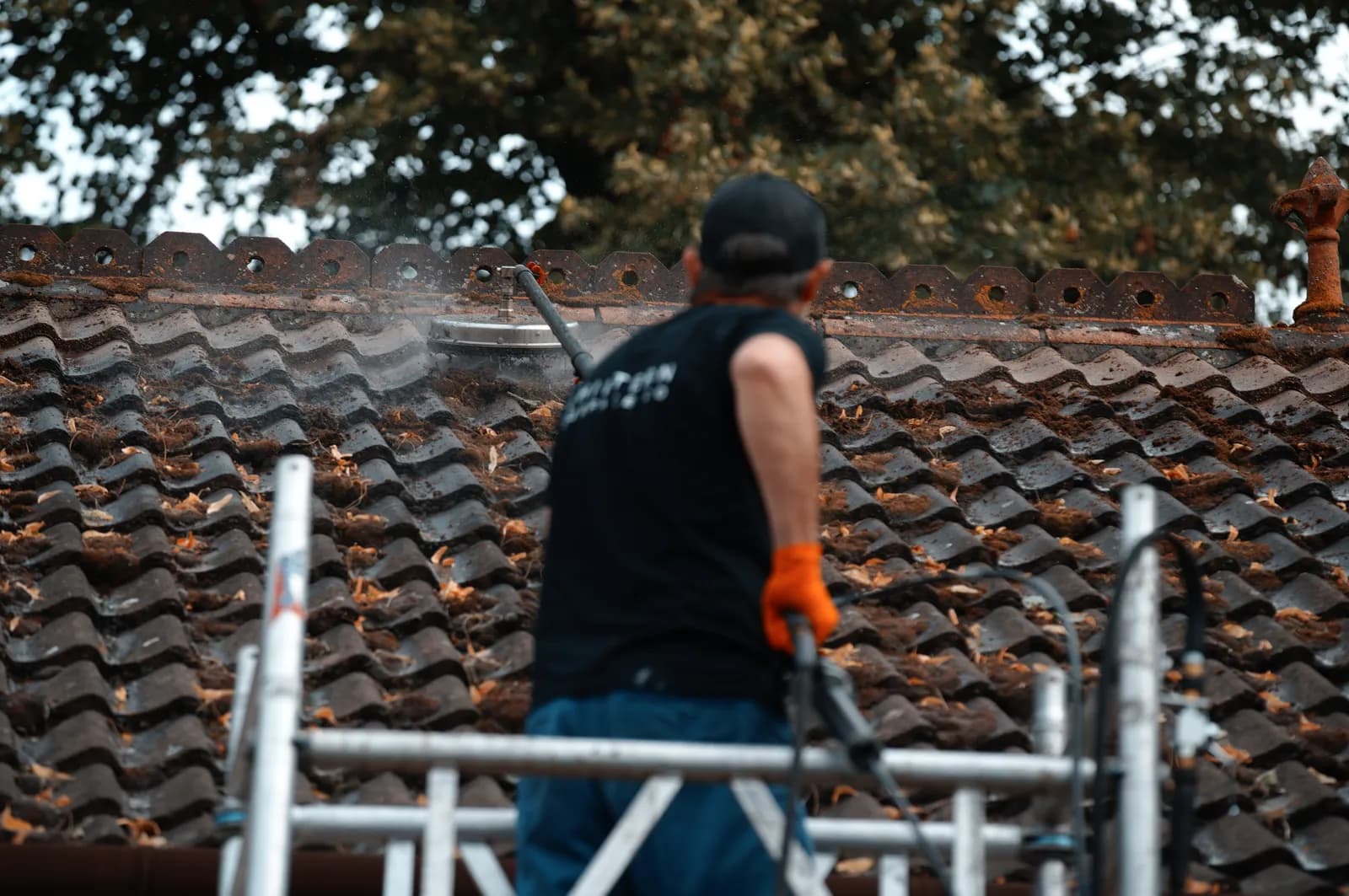
Carefully remove moss, algae and lichens to protect your roof and enhance kerb appeal.
Learn Moreabout Roof Cleaning
Specialist cleaning and restoration for natural stone, porcelain and concrete patios.
Learn Moreabout Patio Cleaning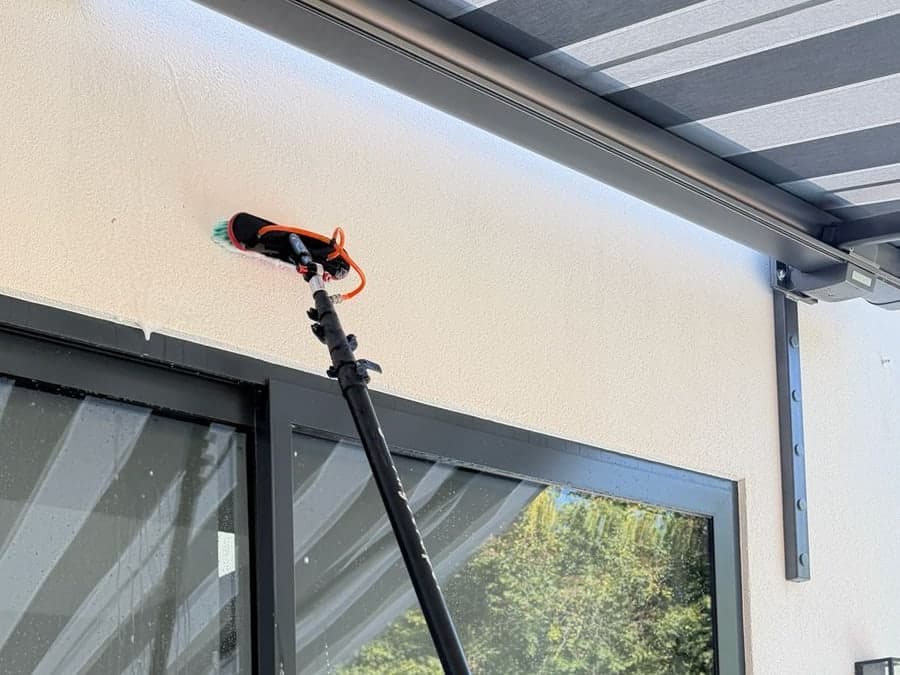
Low pressure soft wash treatment designed to safely remove algae, mould and grime from exterior surfaces.
Learn Moreabout Soft Wash Treatment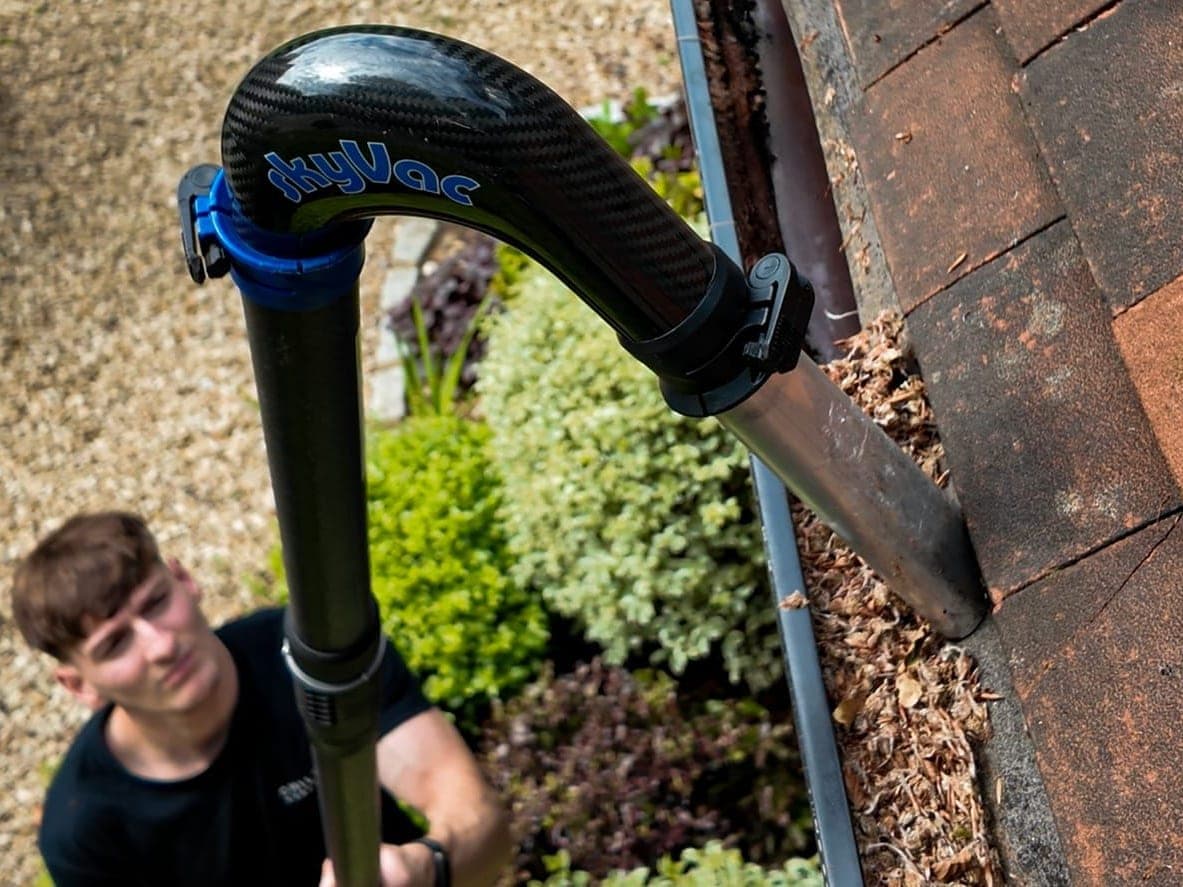
Clear and flush blocked gutters and downpipes to protect your walls, fascias and foundations.
Learn Moreabout Gutter Cleaning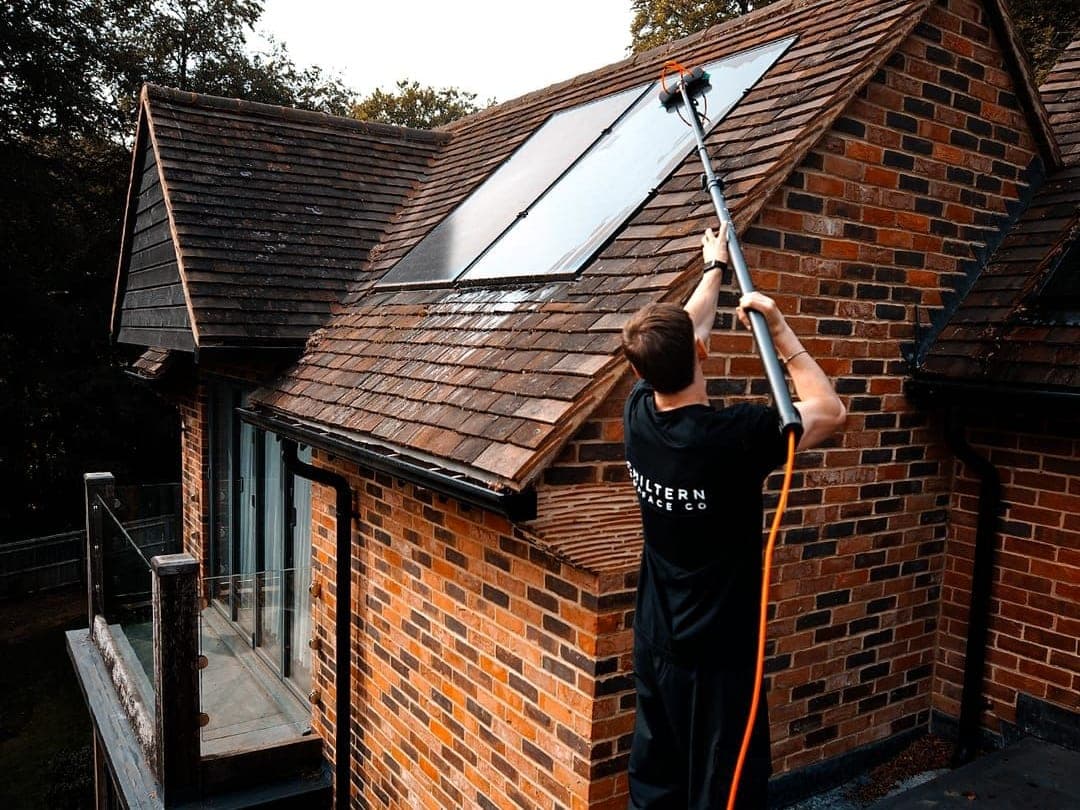
Pure-water cleaning that removes grime and shading to restore your panels' output and efficiency.
Learn Moreabout Solar Panel Cleaning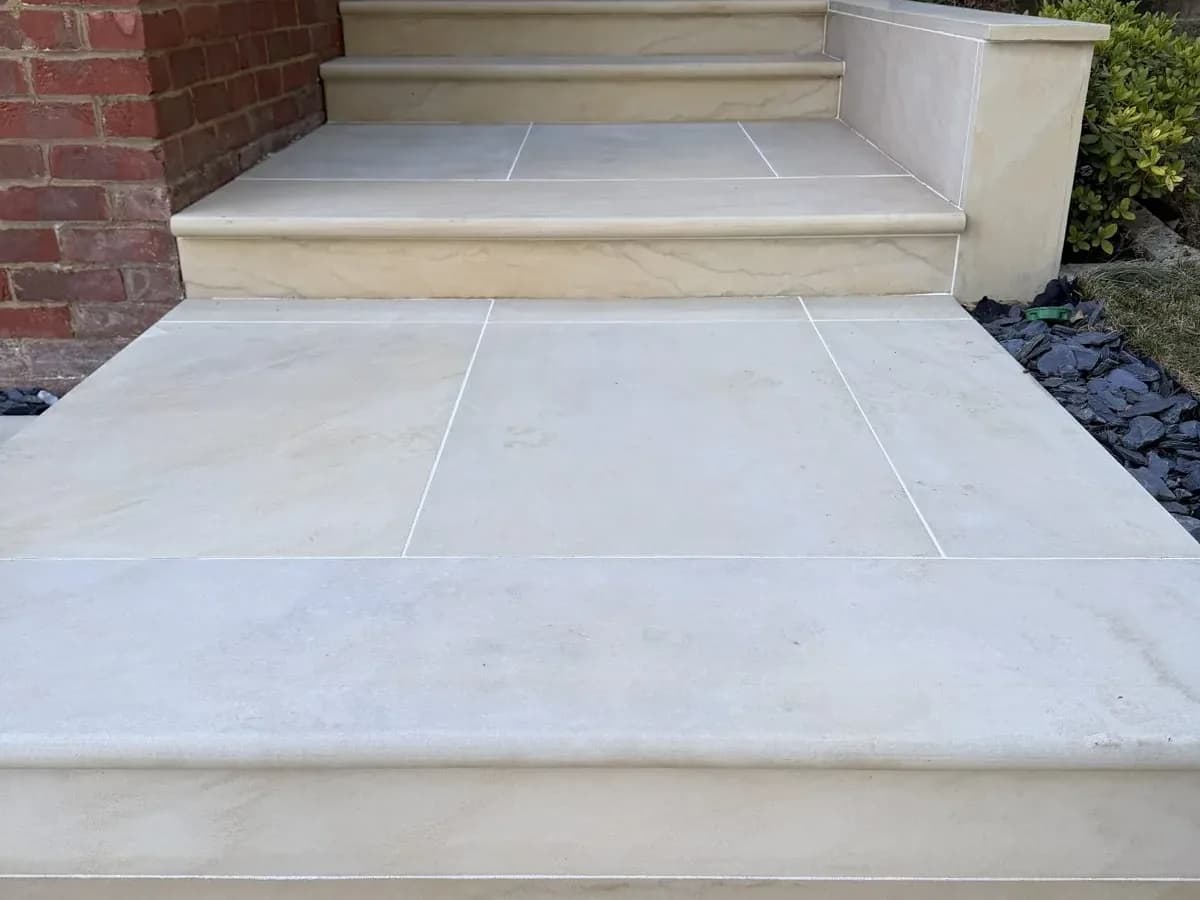
Winter cleaning that removes slippery algae and moss from paths, steps and patios, planned around the forecast.
Advice
Looking after a commercial building, a managed site or a portfolio? Car park and walkway cleaning is handled by our commercial team, surveyed and priced as a specified job.
Chiltern Surface Co
We will look at the surface, the joints and the slope with you, explain the method we would use and why, and send a clear quotation afterwards. There is no pressure to decide on the day.
We assess your surfaces and recommend the right approach for the best, long-lasting results.
You'll receive a detailed, transparent quote with no hidden extras.
We'll provide honest advice so you can decide what's right for you.
Speak directly with the owner and get expert advice you can trust.