Sandstone Patio Cleaning and Repointing in Princes Risborough
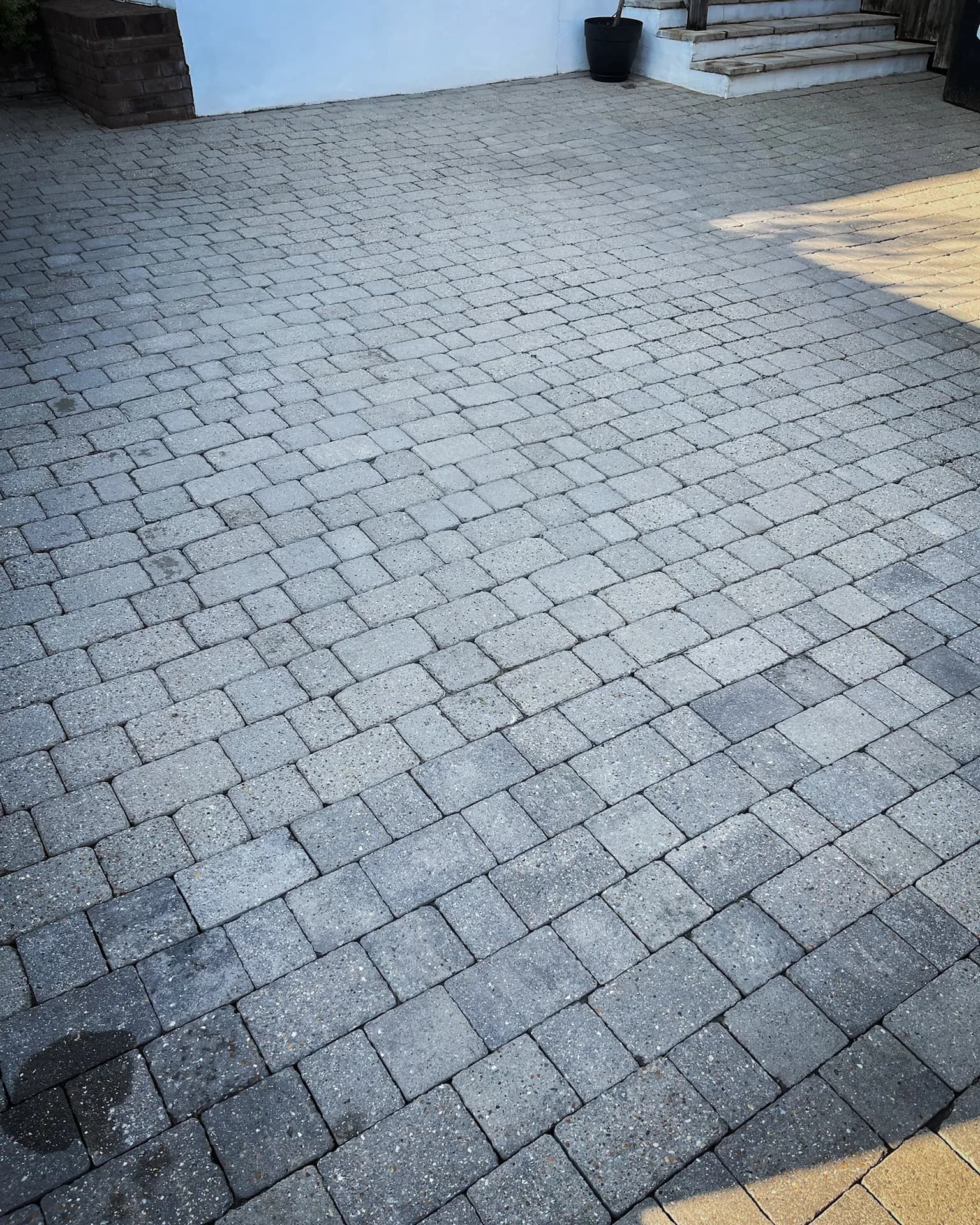
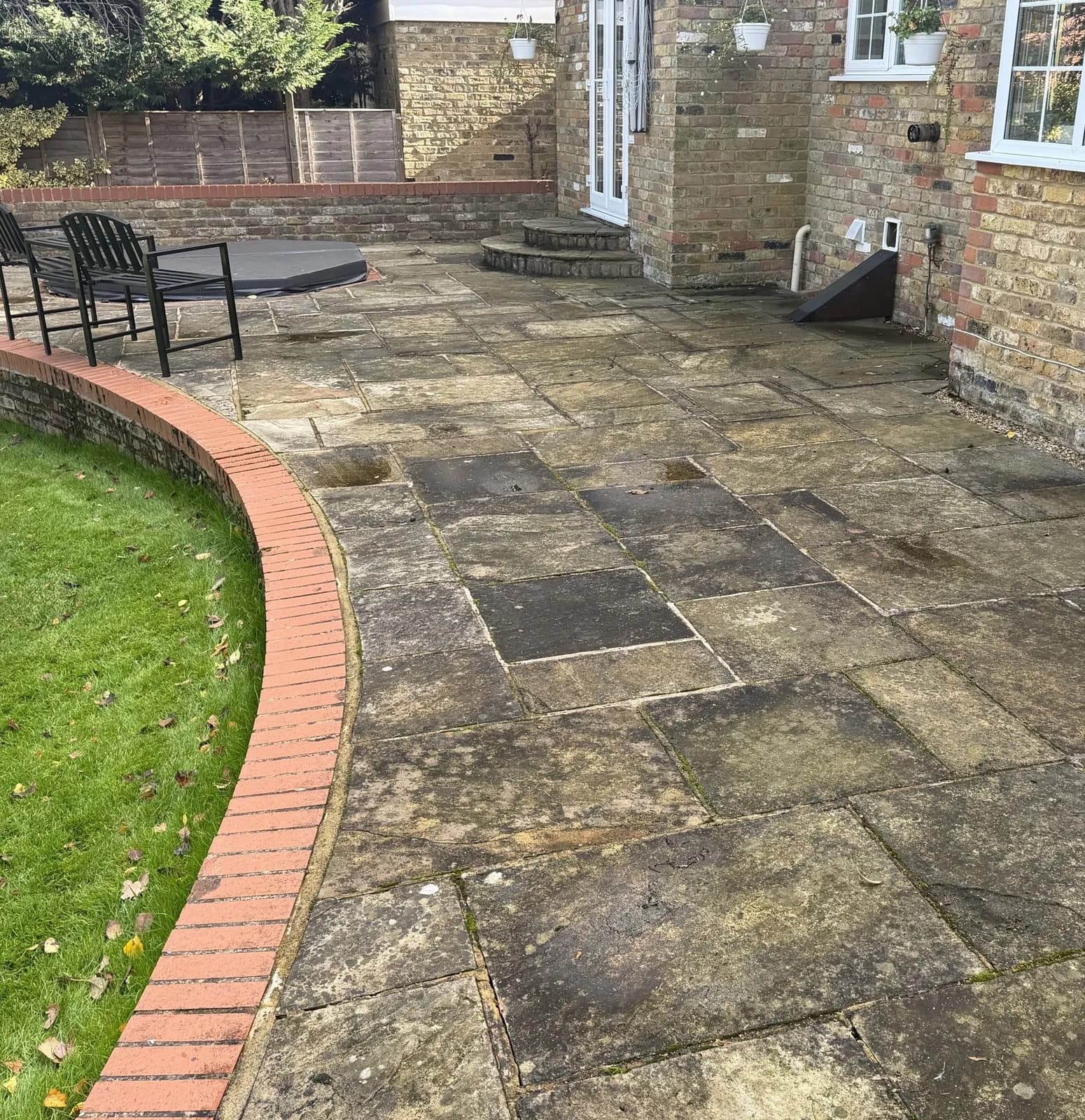
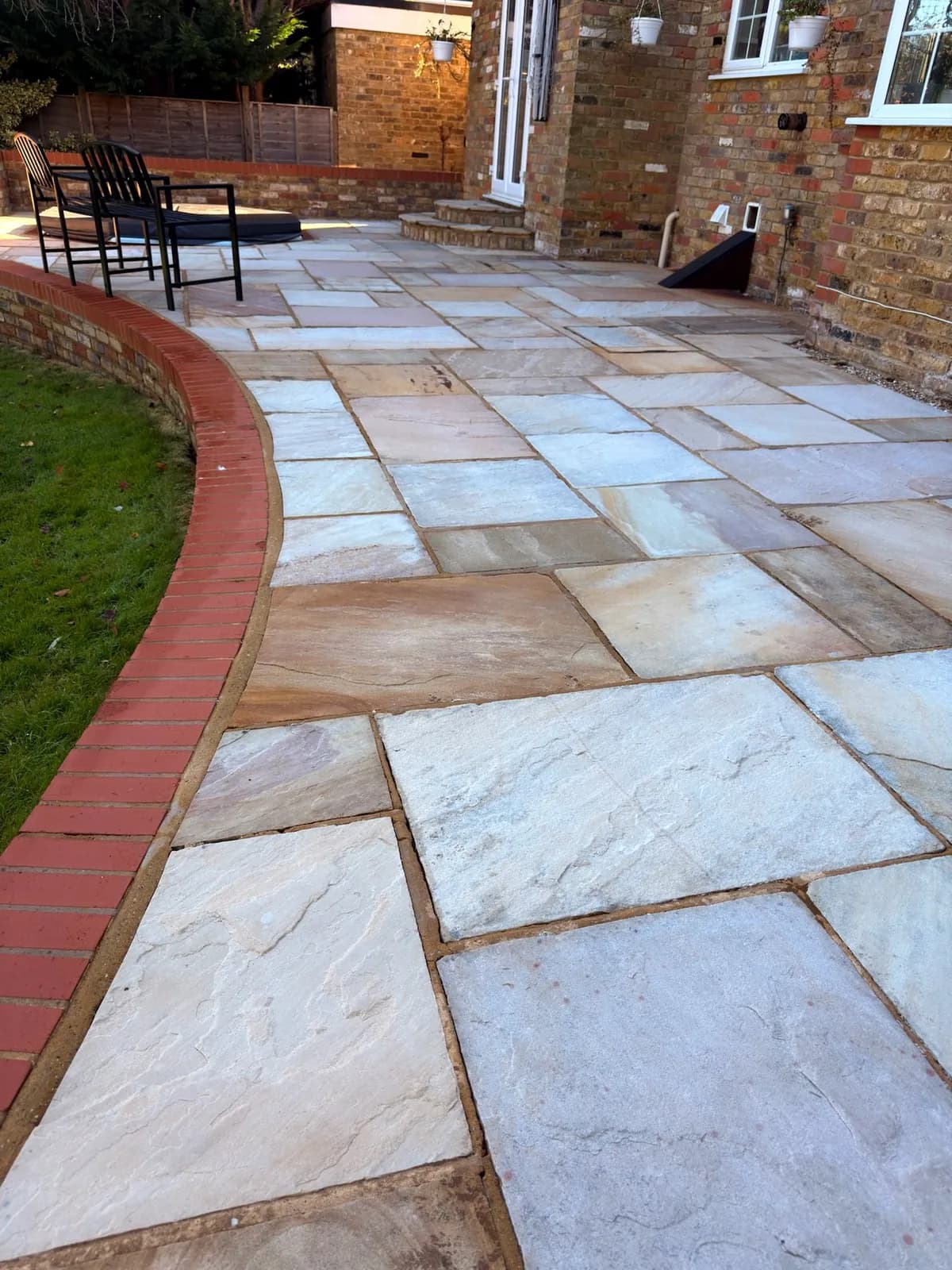
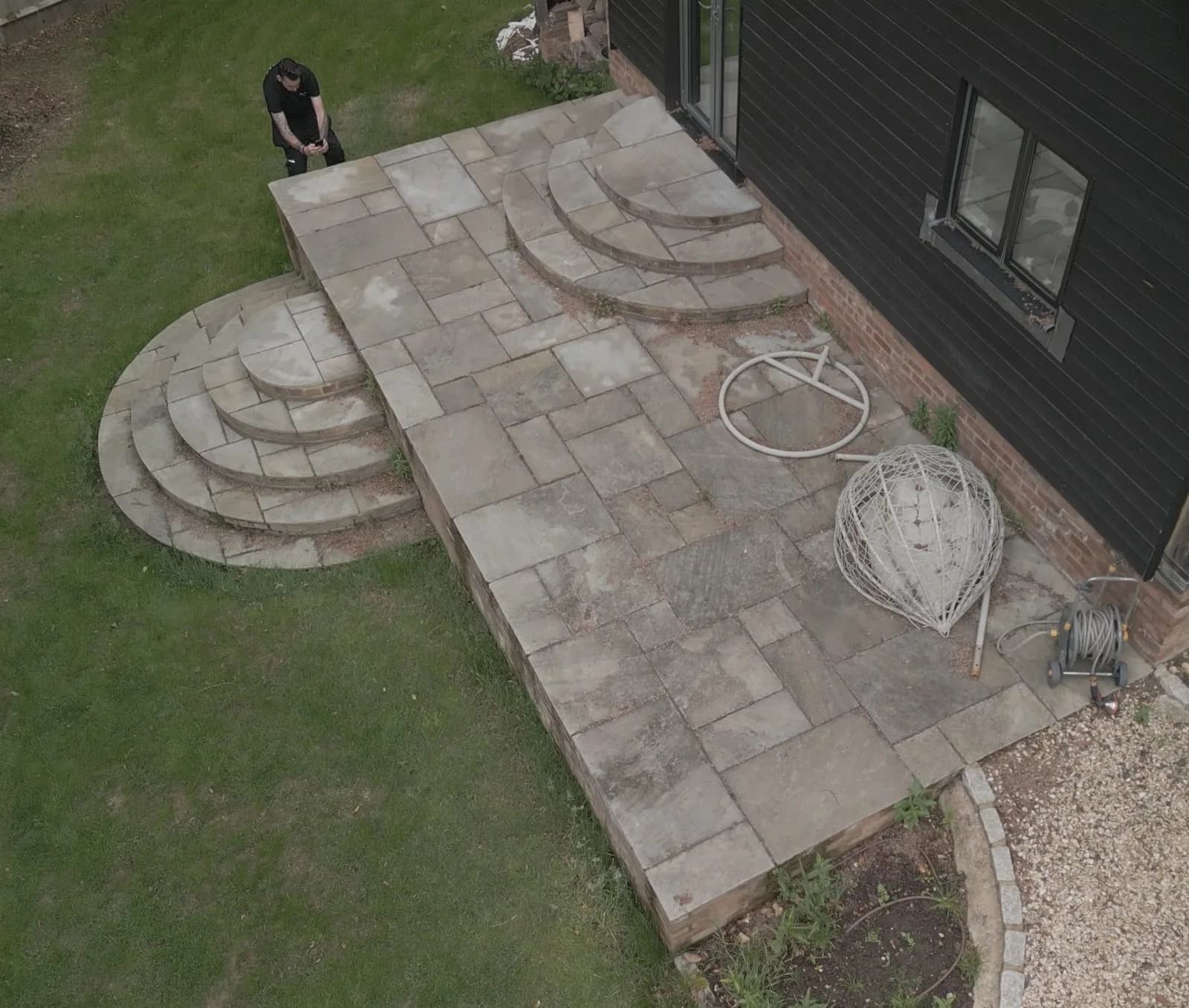
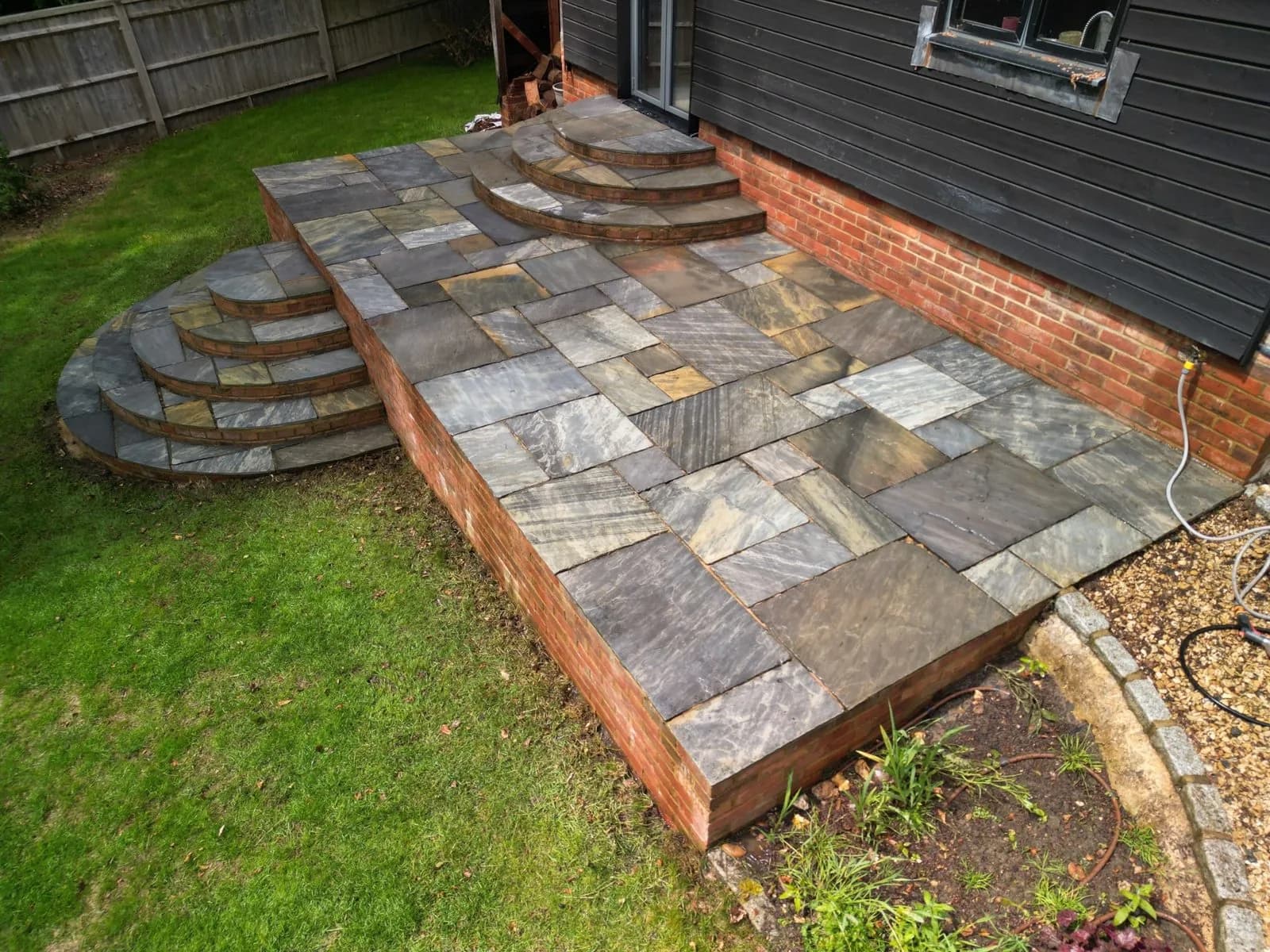
Indian sandstone patio cleaning in Princes Risborough: black spot and algae treated, back steps relaid and repointed, protected with Chiltern EverGuard™.
Patio Cleaning · Buckinghamshire
Amersham is two towns on one hillside, and their patios age differently. Old paving in the valley sits in damp, sheltered gardens; newer sandstone and porcelain up the hill face other problems. We match the clean to each.
Where we begin
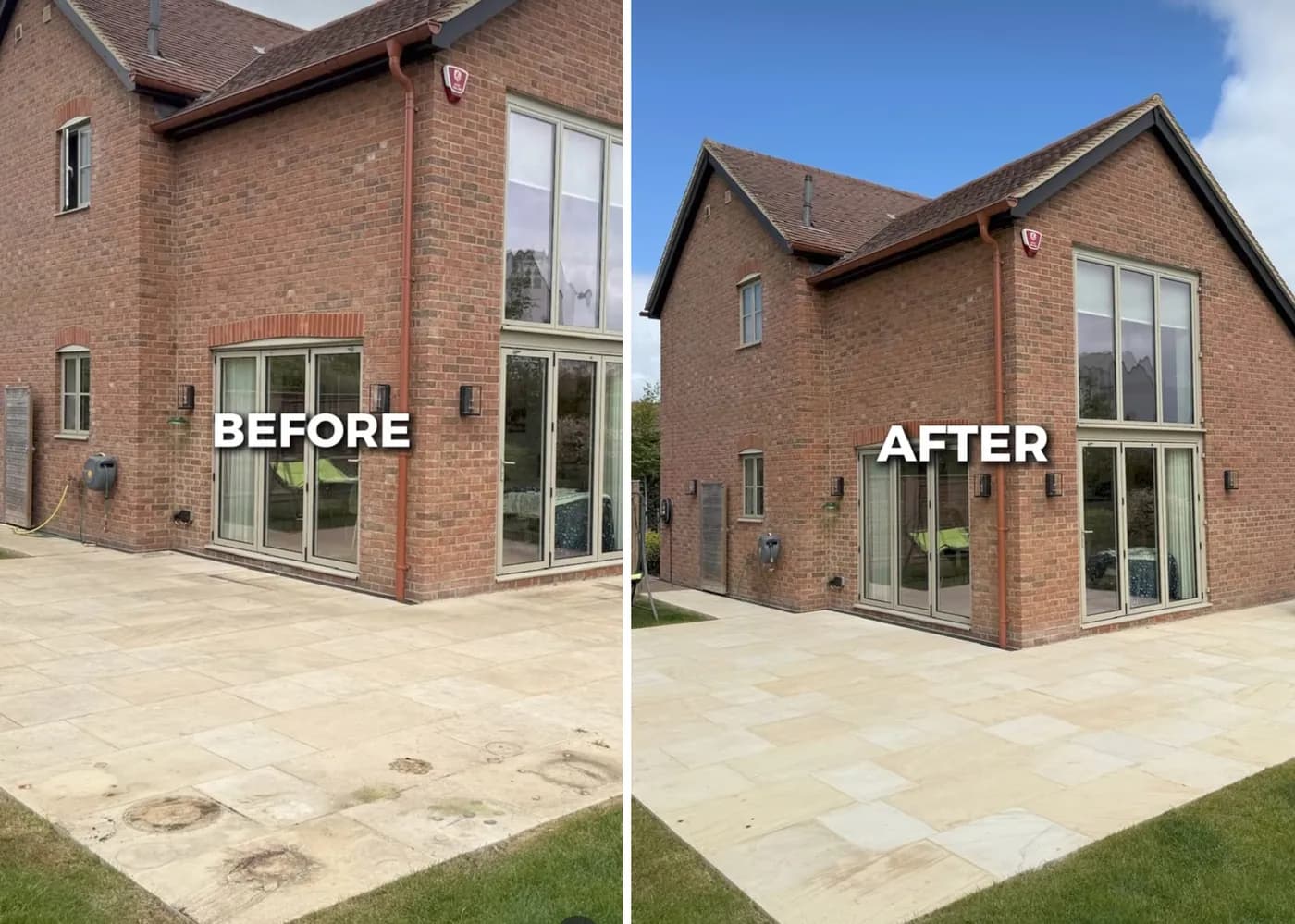
A sheltered patio of older stone beside a period house and an open sandstone terrace behind a later family home are not cleaned the same way. We start by finding out what has been laid, how sound it is and what is actually growing on it, and only then recommend the pressure, the treatment and any jointing work.
Amersham gardens
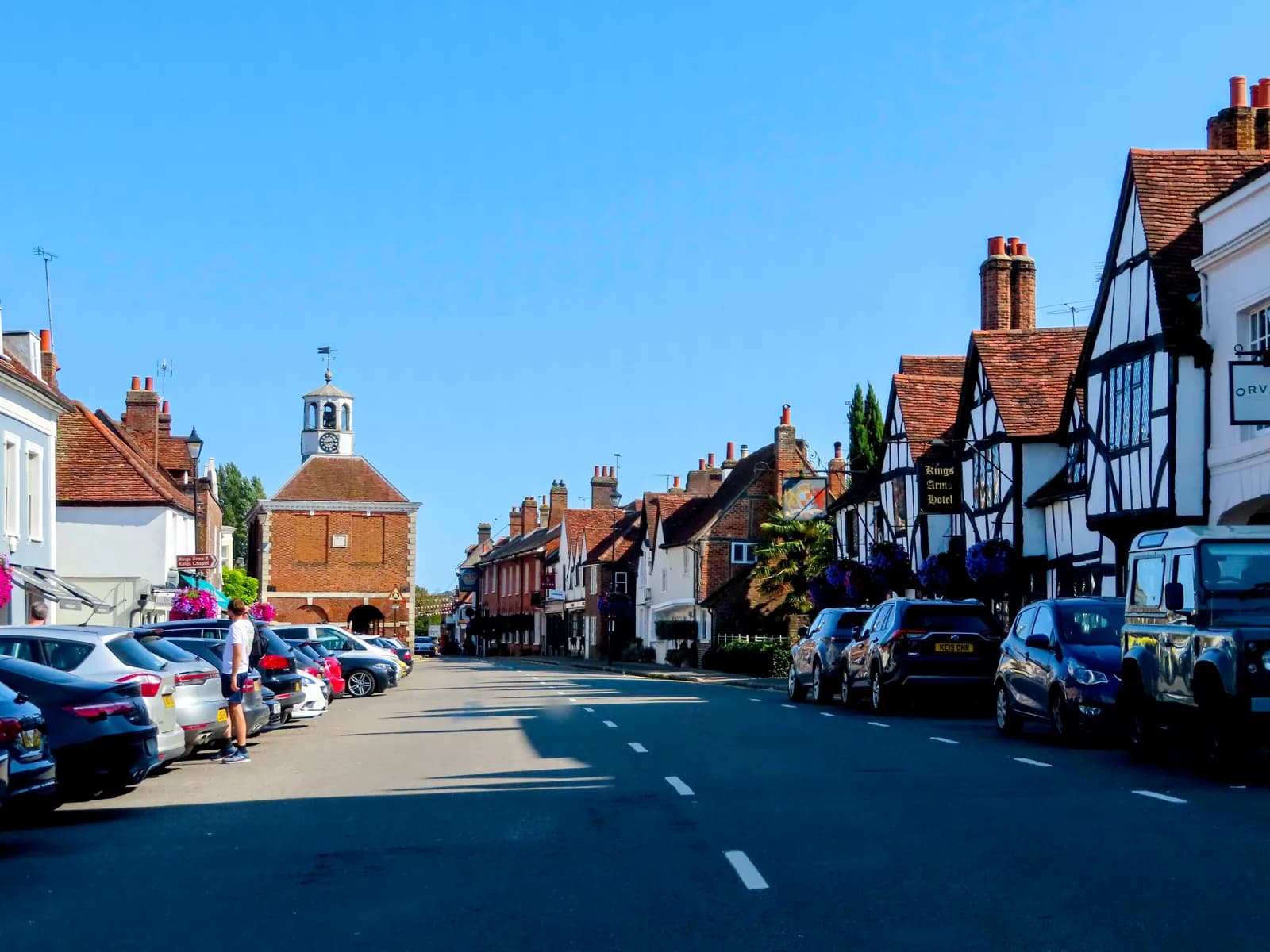
Old Amersham lies along the valley of the River Misbourne, with its historic high street, period houses and gardens enclosed by walls and mature trees. Cool air and moisture settle on the valley floor, and paving tucked behind old buildings can go days without full sun. Moss and algae find those corners first, and black spot follows on porous stone.
Amersham on the Hill grew up later around the railway, and its roads are largely twentieth-century and newer housing. Gardens there tend to be more open, with Indian sandstone, concrete slabs and porcelain more common than older stone. Exposure dries them faster, but patios under garden trees or along shaded boundaries still turn green and spotted.
Older paving
Paving around older houses in the valley may be softer stone or brick that has weathered for a long time, often laid close to walls with soft brick and lime pointing. High pressure aimed at that kind of surface can open its face, loosen joints and drive water into the masonry beside it.
On these patios we work at low pressure, lean more on treatment than on force and keep run-off away from vulnerable walls and planting. Some honest weathering is part of the character of old stone, and we aim to clean it rather than make it look recently quarried.
Later gardens
Newer gardens bring a different set of materials, each with its own weak point.
Black spot
Black spot is a lichen that roots into the pores of natural stone. A hard wash may brighten the slab around it, but the marks remain because the organism is held below the surface. More pressure mainly wears the stone.
We treat black spot with a specialist application alongside controlled cleaning. Once the patio is clean, the Chiltern EverGuard™ Treatment goes into the surface to target the live growth still in the stone and help reduce regrowth. Protection typically lasts between 12 and 24 months, depending on shade, the paving and its upkeep.
Our method
What happens at each stage is decided at the site visit. The order rarely changes, because each step prepares for the next.
At a free site visit we confirm the paving material, look at its age and condition, check the joints and walls beside it and decide what can realistically be achieved.
Pots and furniture are moved, and planting, lawn edges, doors and masonry close to the patio are protected or kept clear before cleaning begins.
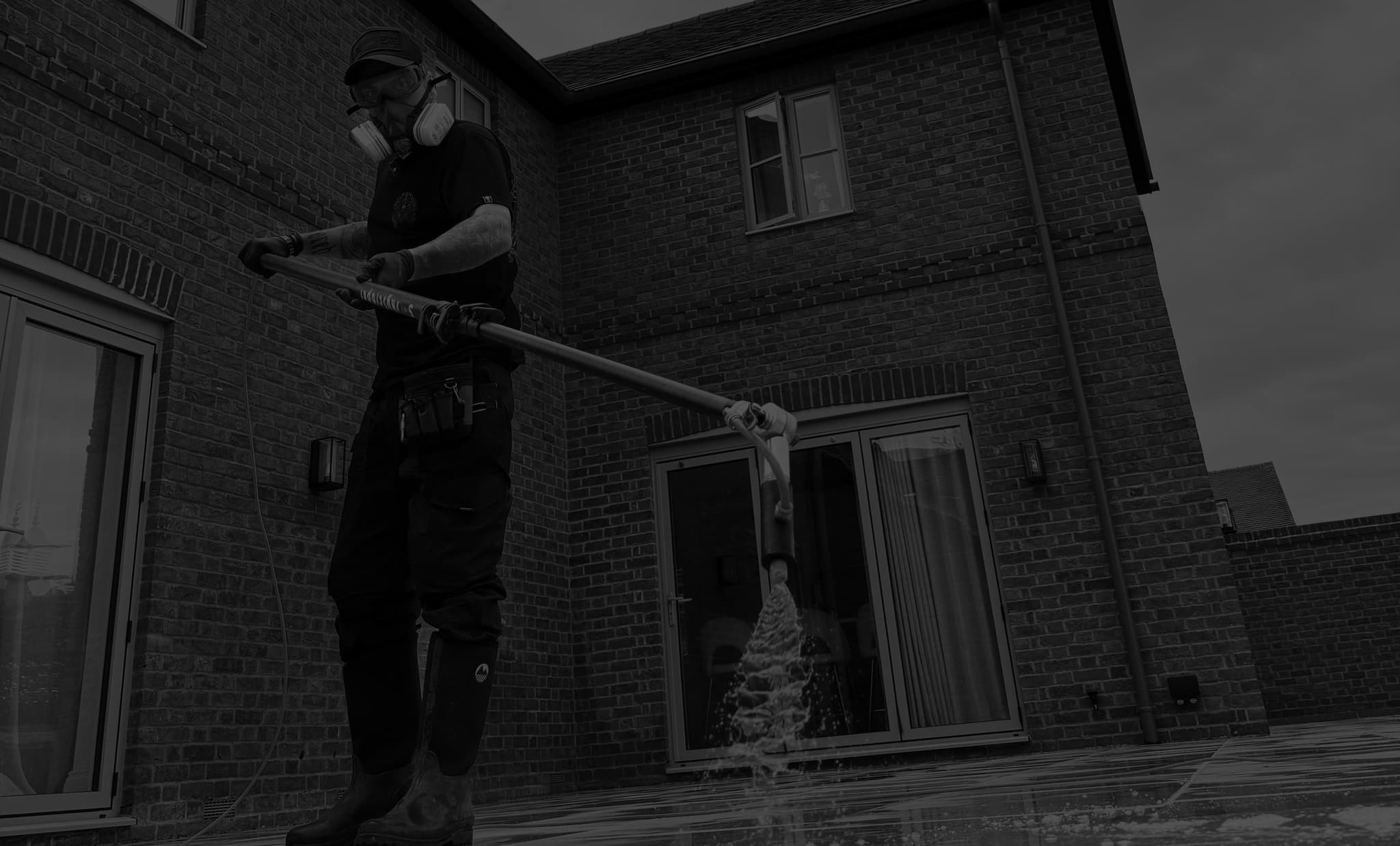
Older, softer paving is cleaned at low pressure with more reliance on treatment; robust modern slabs can take a firmer clean. Either way, the setting is the lowest that works.
Black spot and lichen receive a specialist application. Jointing that has washed out or broken down is re-sanded, so the slabs are bedded firmly once more.
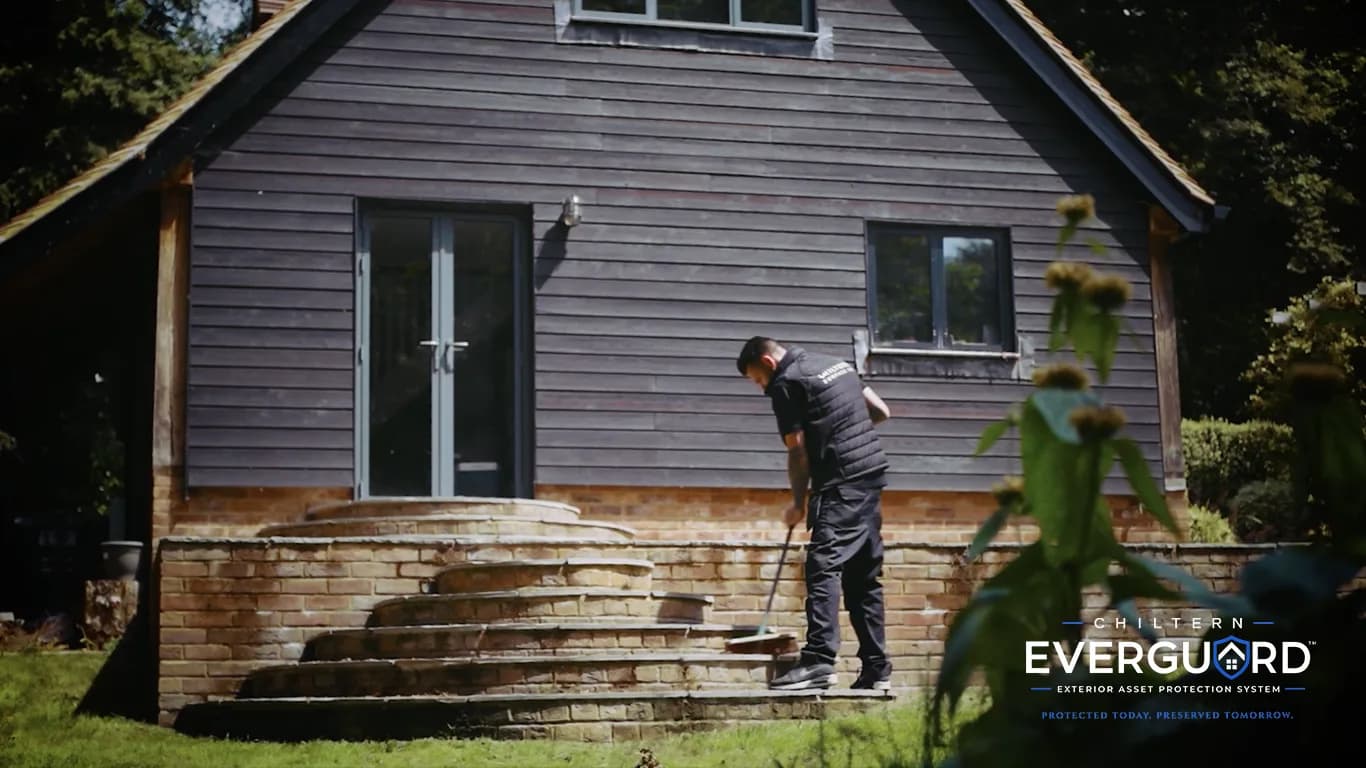
With the patio clean, Chiltern EverGuard™ is applied to slow the return of growth, and we explain the simple aftercare that keeps it looking better for longer.
Realistic results
Most patios show a significant improvement, and we aim to restore the original appearance where the condition allows. Cleaning does not repair stone, and older paving in particular may keep some marks of its age. Patios on the shaded valley floor will also see growth return sooner than open ones up the hill, even after treatment.
Anything we think will not lift is pointed out at the site visit, before you decide.
Indian sandstone patio cleaning in Princes Risborough: black spot and algae treated, back steps relaid and repointed, protected with Chiltern EverGuard™.
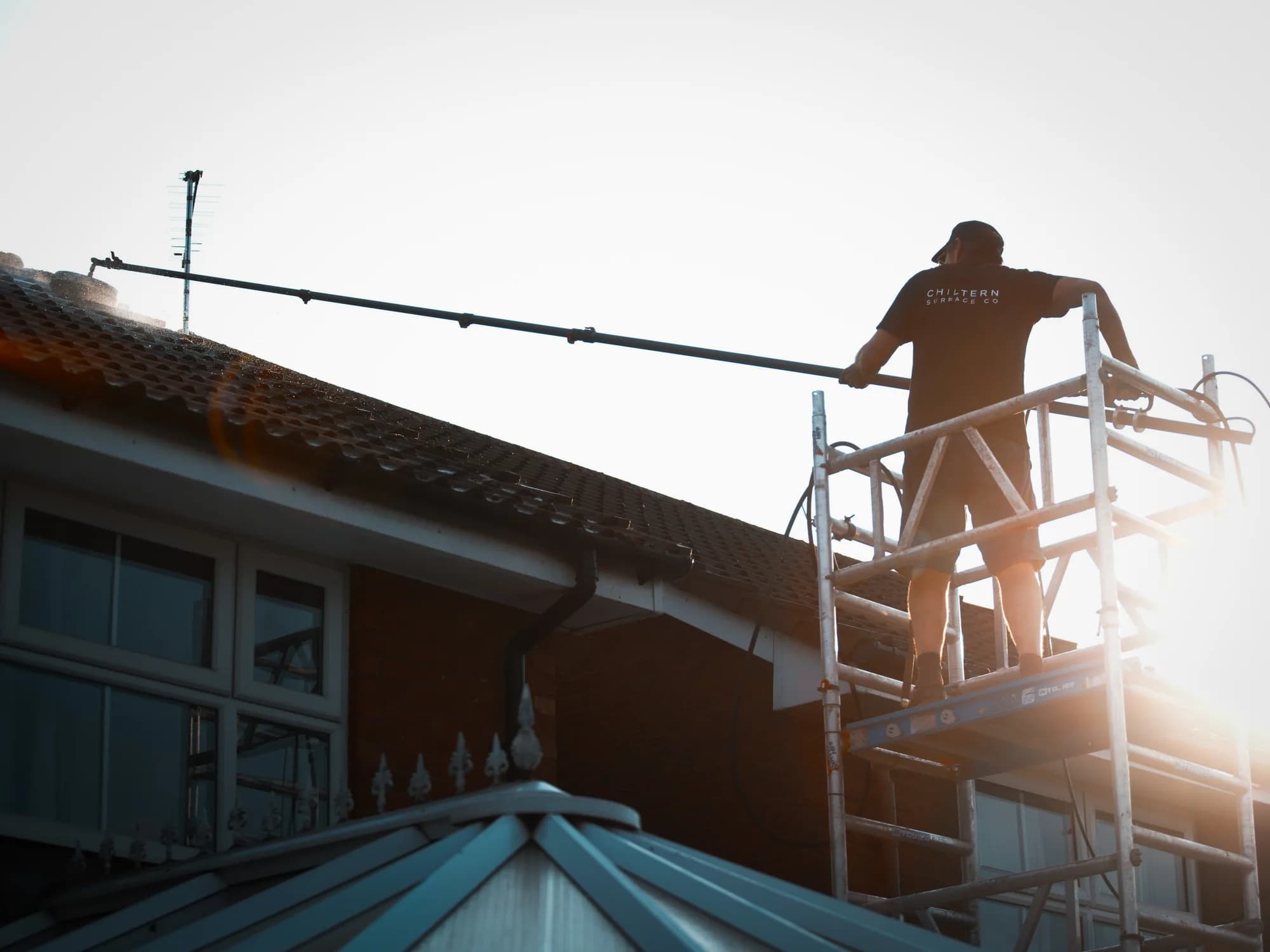
Natural sandstone patio cleaning in Marlow — heavy moss, algae and early black spot removed, protected with Chiltern EverGuard™, plus a full gutter clean.
Why us
Soft, weathered paving near period houses is cleaned at low pressure, with treatment doing the work force would otherwise do badly.
Sandstone, porcelain, concrete and older stone each get their own approach, decided after we have seen the patio rather than before.
Where cleaning reveals washed-out jointing, we re-sand it, so the patio is left stable underfoot as well as clean.
Work is carried out by fully insured operatives, and you are told plainly what was done and what was applied at the end.
Nearby
We also clean patios in the surrounding area, including Chesham Bois, Little Chalfont, Coleshill, Hyde Heath, Winchmore Hill and Penn Street. Gardens there range from wooded and sheltered to open, and the method changes with them.
Patio Cleaning in nearby towns
What Clients Say
Thank you to every client who has trusted us with their home. Your reviews mean a great deal to us. We’re proud to be fully insured, certified professionals — delivering proven results with a customer-focused approach on every single project.
5-Star Rated On Google
Questions
Yes, in most cases, once we have assessed it. Older, softer stone is cleaned at low pressure and relies on treatment rather than force. If paving is already breaking up or too fragile, we will say so at the site visit rather than clean it.
Damp air settles on low ground, and gardens enclosed by walls and trees get little drying sun. Algae and moss grow wherever paving stays wet, so sheltered patios on the valley floor usually turn green faster than open ones on higher ground.
Yes, usually to a significant degree. It needs a specialist application as well as controlled cleaning, because the lichen sits within the stone. Long-established marks can leave a faint shadow, and heavily affected patios can need a second visit.
Sometimes. Loose, brushed-in sand can be disturbed during cleaning, particularly where it has already broken down. We check the joints afterwards and re-sand them where needed so the slabs stay firm.
Yes, used at the right pressure. Porcelain is dense and hard-wearing, so it cleans readily. The care goes into an even result across the slabs and into the joints, which can be damaged by careless work.
No. It helps reduce how quickly algae, moss and black spot return, typically for between 12 and 24 months. Shaded, damp patios tend towards the shorter end of that range, and new spores always keep arriving.
More from us
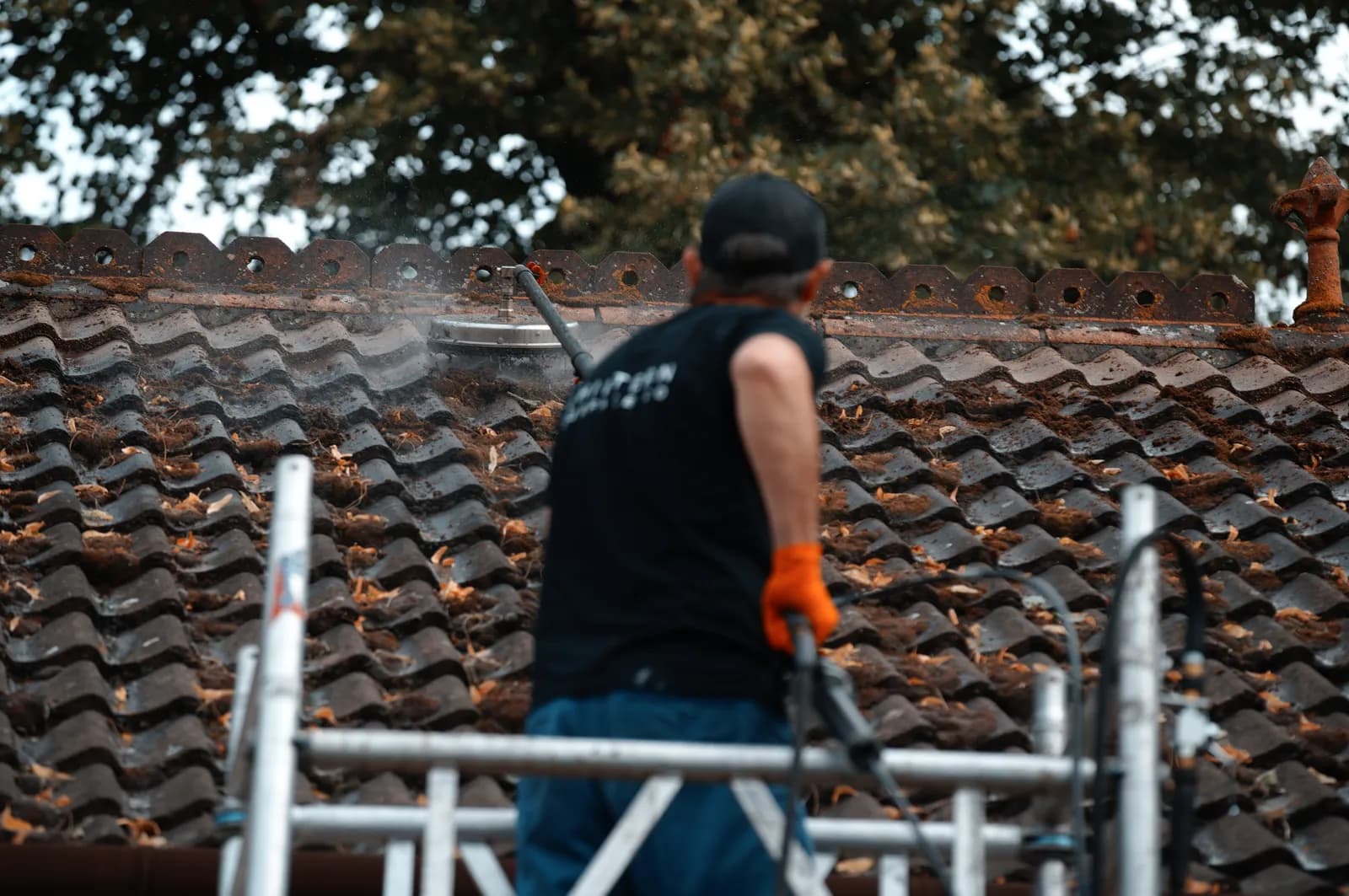
Carefully remove moss, algae and lichens to protect your roof and enhance kerb appeal.
Learn Moreabout Roof Cleaning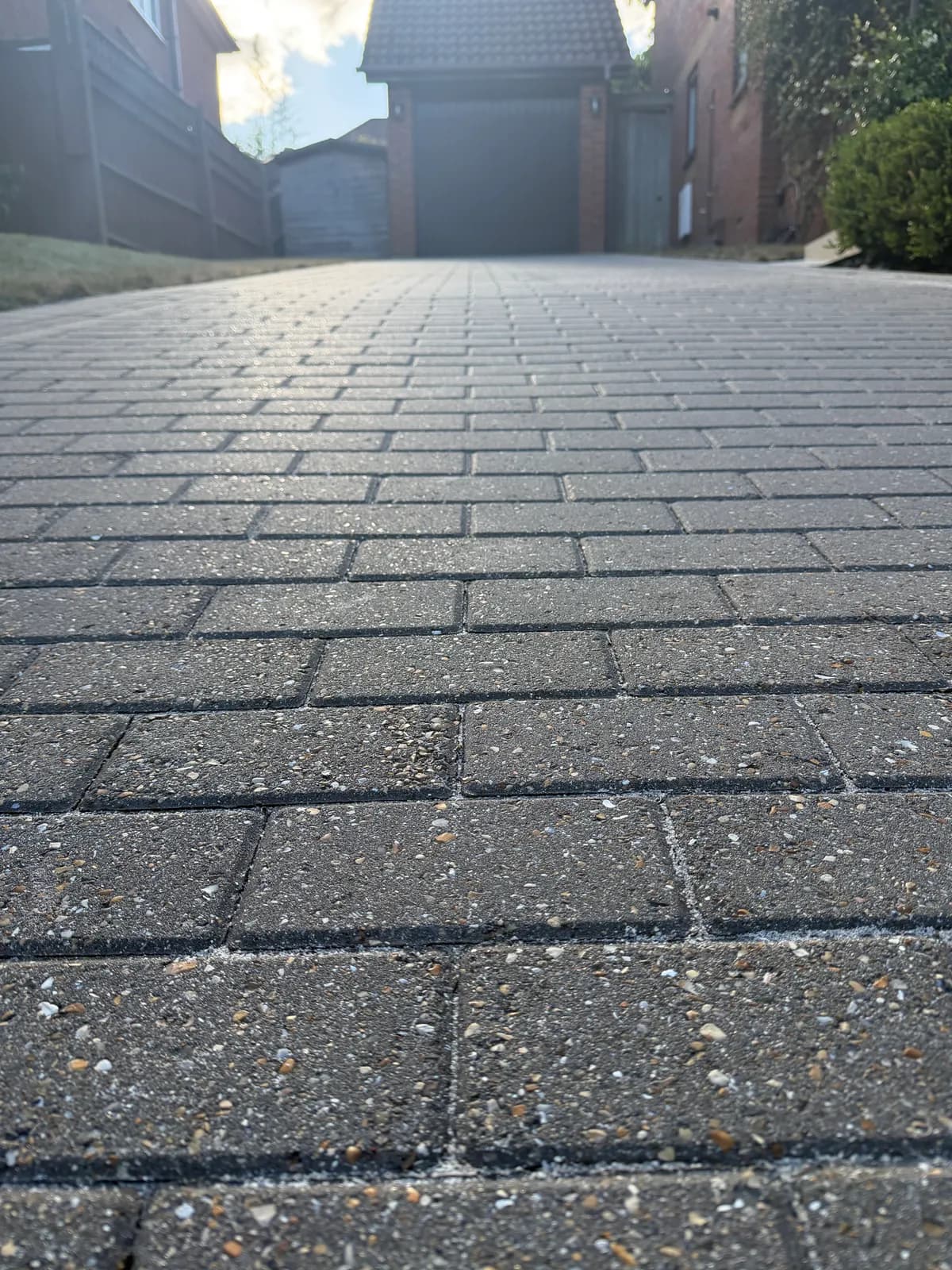
Professional cleaning for block paving, tarmac and resin driveways, restoring colour and removing stains.
Learn Moreabout Driveway Cleaning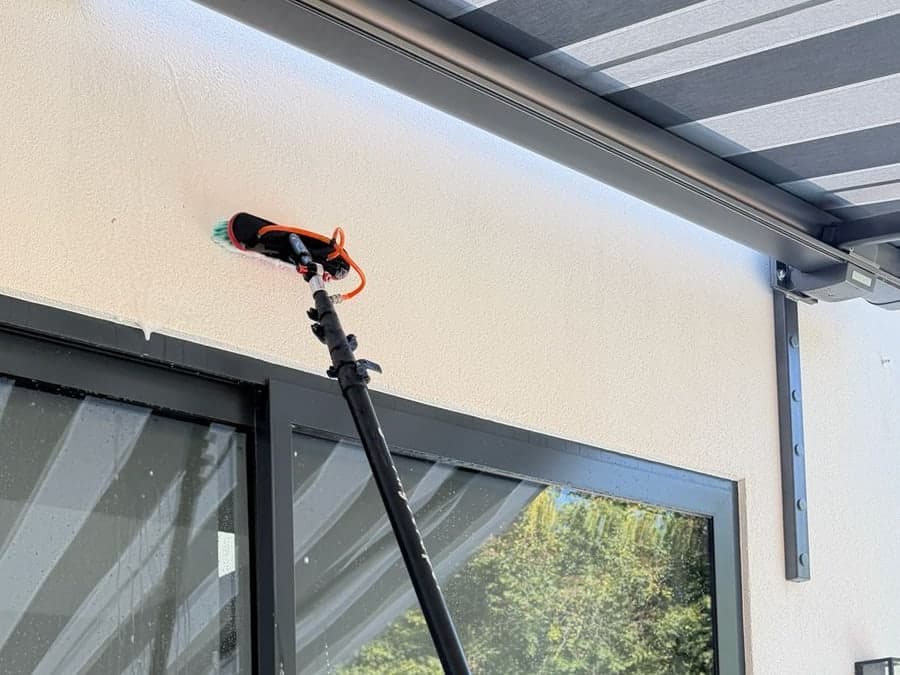
Low pressure soft wash treatment designed to safely remove algae, mould and grime from exterior surfaces.
Learn Moreabout Soft Wash Treatment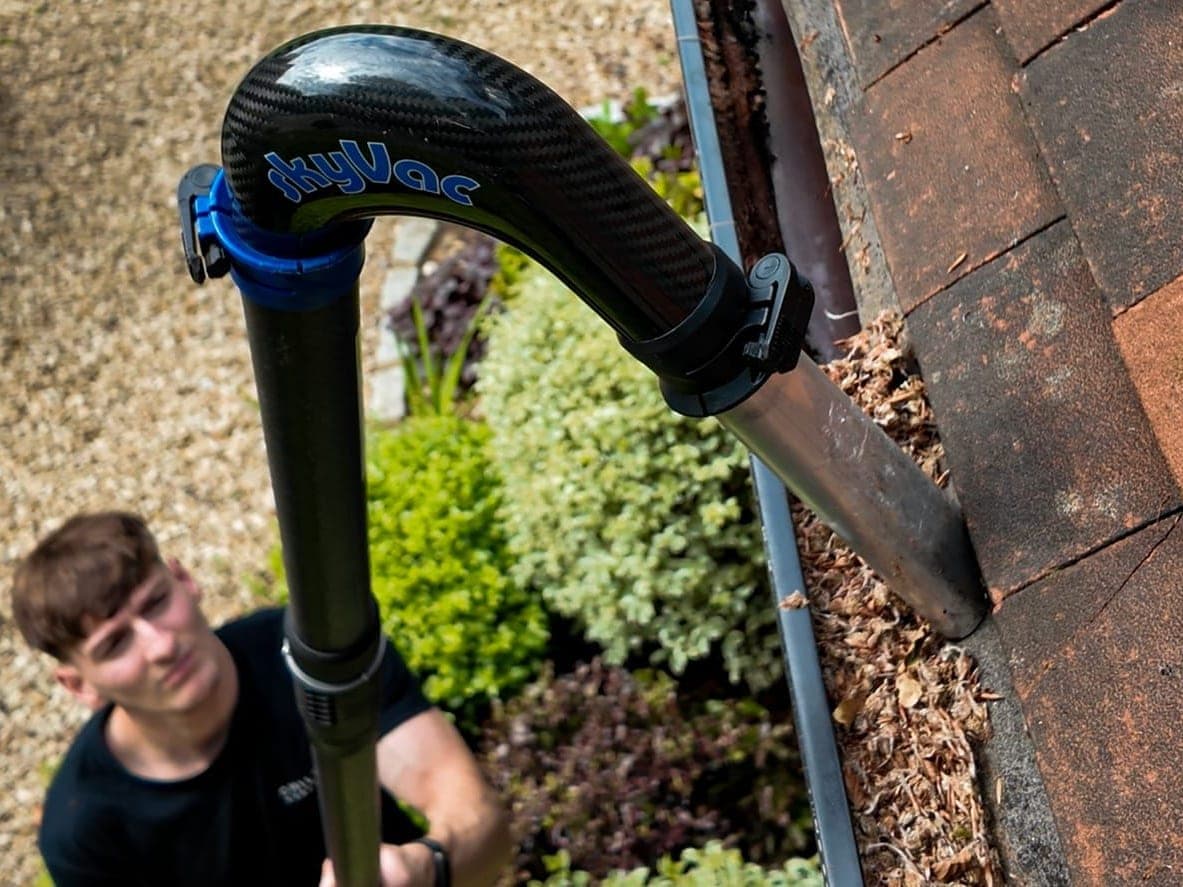
Clear and flush blocked gutters and downpipes to protect your walls, fascias and foundations.
Learn Moreabout Gutter Cleaning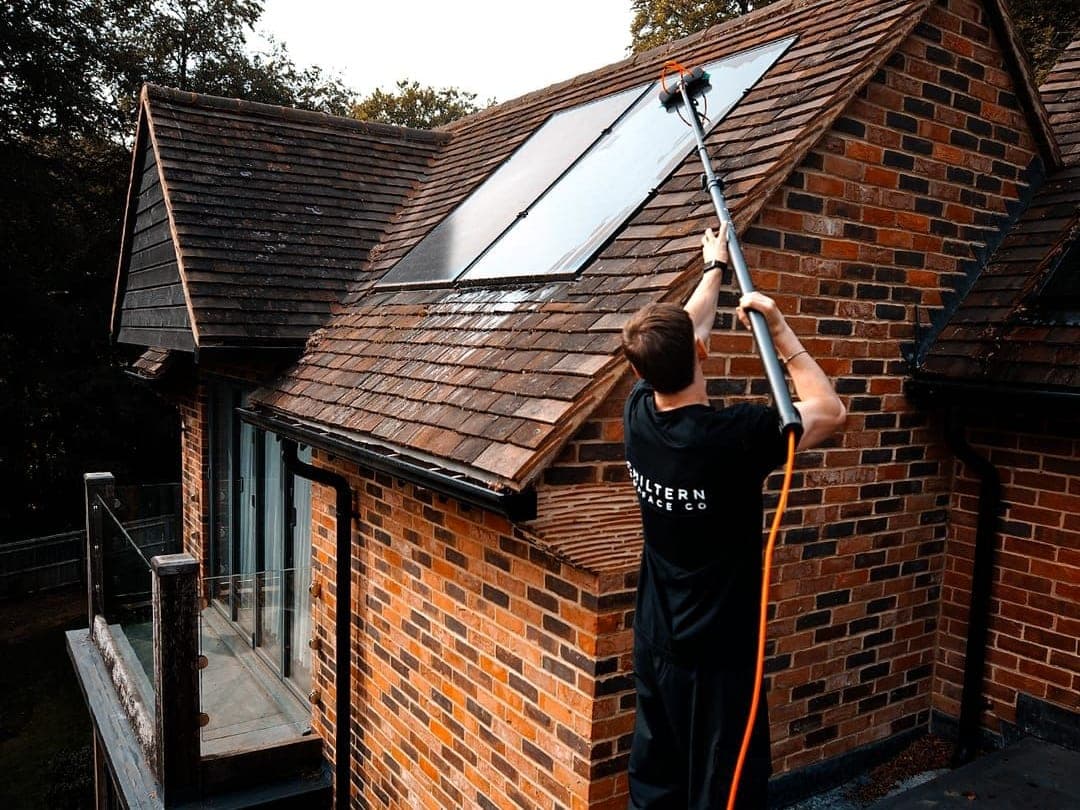
Pure-water cleaning that removes grime and shading to restore your panels' output and efficiency.
Learn Moreabout Solar Panel Cleaning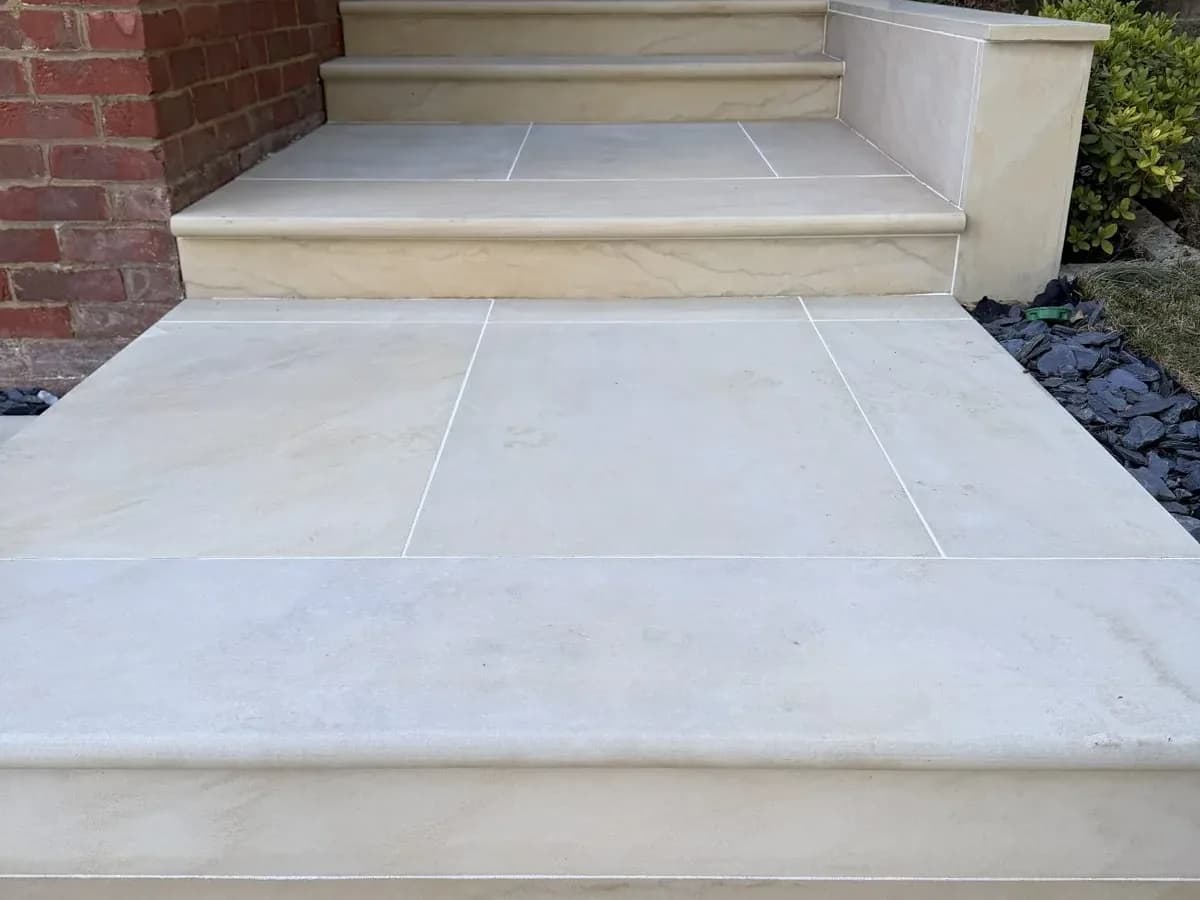
Winter cleaning that removes slippery algae and moss from paths, steps and patios, planned around the forecast.
Advice
Looking after a commercial building, a managed site or a portfolio? Commercial pressure washing is handled by our commercial team, surveyed and priced as a specified job.
Chiltern Surface Co
We will look at the paving with you, explain what is growing on it and recommend a method suited to the stone. A clear quotation follows, and you decide from there.
We assess your surfaces and recommend the right approach for the best, long-lasting results.
You'll receive a detailed, transparent quote with no hidden extras.
We'll provide honest advice so you can decide what's right for you.
Speak directly with the owner and get expert advice you can trust.