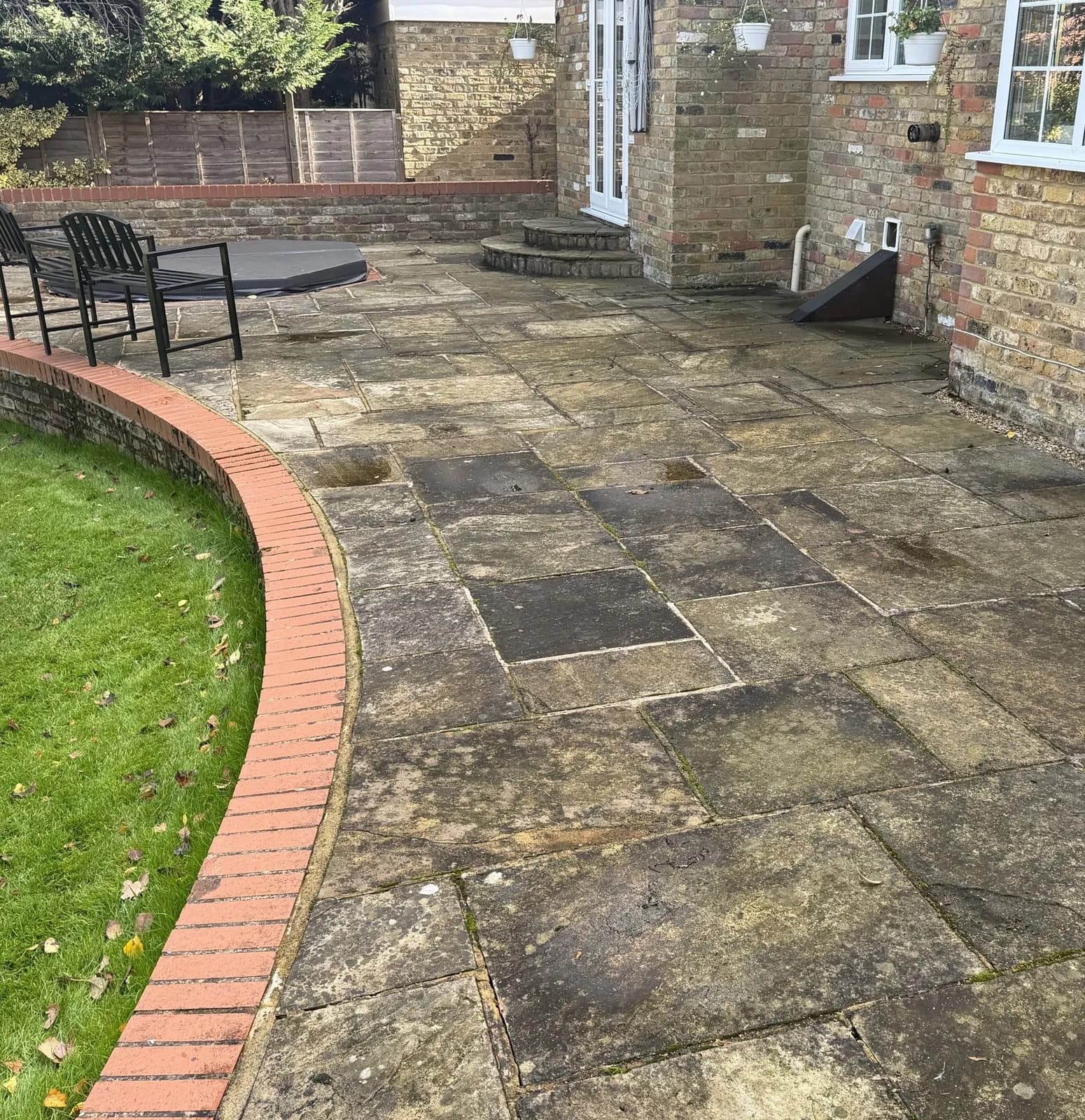
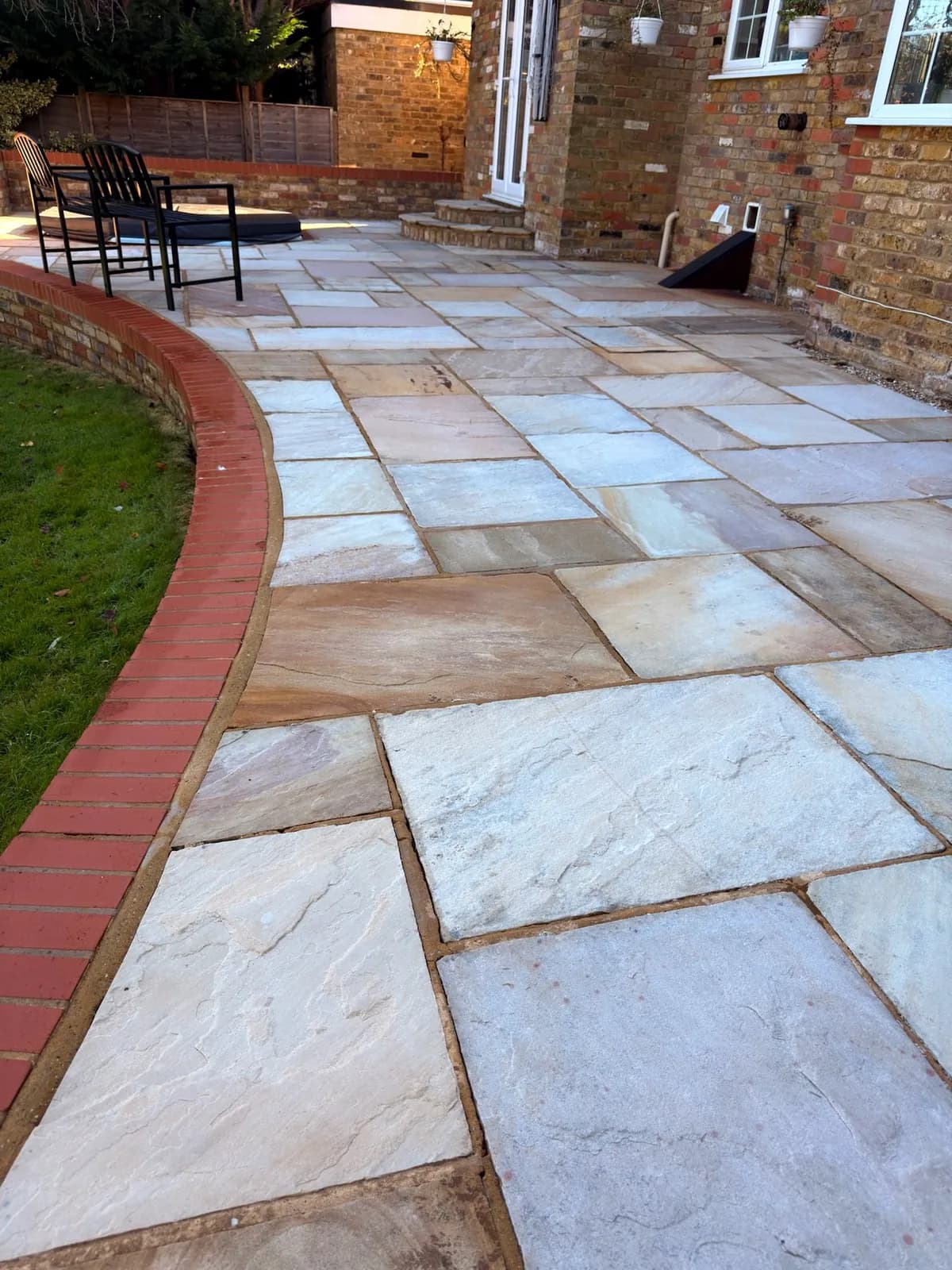
Sandstone Patio Cleaning and Repointing in Princes Risborough
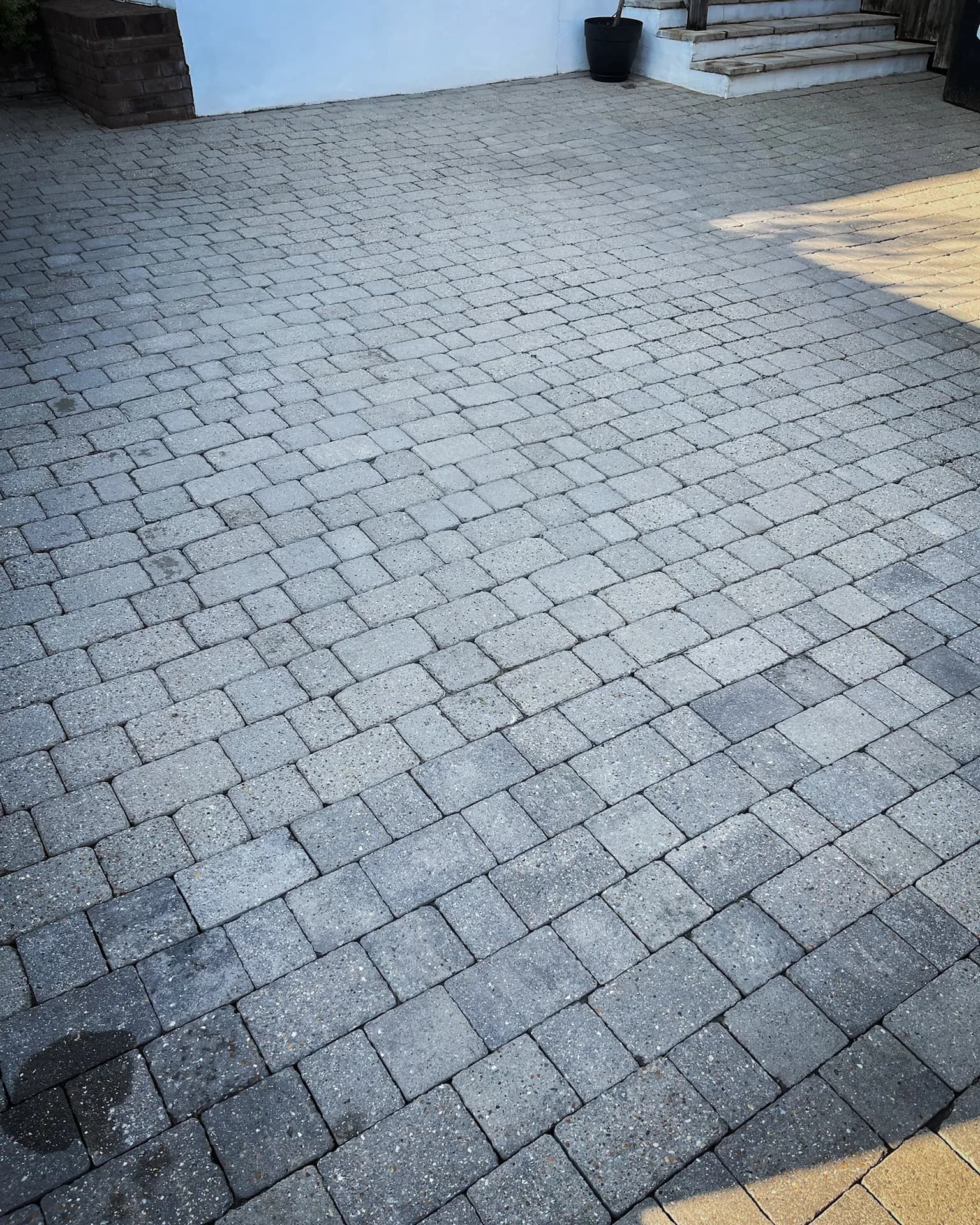
Indian sandstone patio cleaning in Princes Risborough: black spot and algae treated, back steps relaid and repointed, protected with Chiltern EverGuard™.
Solar Panel Cleaning · Buckinghamshire
Aylesbury sits on the open Vale below the Chiltern escarpment, where the wind carries dust and pollen in off the surrounding fields. We clean panels on homes across the town with de-ionised water and a soft brush.
The basics
On flat, open ground the wind does much of the soiling. Dust from ploughed and harvested fields, pollen from hedgerows and crops, and grit from busy roads drift across the town and settle on any glass facing the sky. From the street it is hard to see, but up close it forms an even grey film, often with darker patches where birds have rested.
Aylesbury homes
Aylesbury's historic core, with its conservation-area streets, older brick buildings and slate roofs, is surrounded by a much larger ring of later housing. Established neighbourhoods such as Bedgrove and Walton sit alongside newer developments like Fairford Leys and Watermead, and building has continued around the edges of the town.
Plenty of the newer roofs carry panels, often on simple slopes with few trees nearby. That suits generation, but it also leaves the glass open to everything blown in from the countryside. Wind-blown dust, bird droppings and pollen in spring and early summer are the usual culprits here, rather than the shade-loving moss found in the wooded Chiltern towns to the south.
Seasonal soiling
Soiling on an open roof tends to follow the calendar. Pollen arrives in spring and early summer; it is fine and slightly sticky, so a light shower spreads it rather than washing it off. Late summer brings dust from harvest and fieldwork, which dries onto the glass in dry spells.
Homes near main roads collect a greasy traffic film through the year. None of this looks dramatic on its own, but together it builds into a layer that rain does not clear.
Low-pitched arrays
Some newer roofs, extensions and garages carry arrays at a fairly shallow angle. Rain runs off them slowly, so instead of rinsing dust away it carries it down to the bottom edge, where it dries in a line along the frame.
Over time that line becomes a band of grime, and in damp corners moss starts to take hold. Shallow arrays are among those we suggest cleaning more often, because the water that ought to help them actually concentrates the dirt in one place.
Scope
We clean the outside of the panels and their frames. We do not open junction boxes, test the wiring, check the inverter or diagnose why a system is under-performing. If your monitoring shows a sudden fall in generation that a clean does not explain, the right next call is to your installer or an electrician.
What we can do is tell you plainly about anything we notice from outside, such as a cracked panel, a lifted clip or a damaged cable run near the array.
Our process
Every clean runs in the same order. Access is confirmed at the free site visit, so the day itself is straightforward.
We note how many panels there are, their pitch and height, the condition of the glass and frames, and whether everything can be reached from the ground.
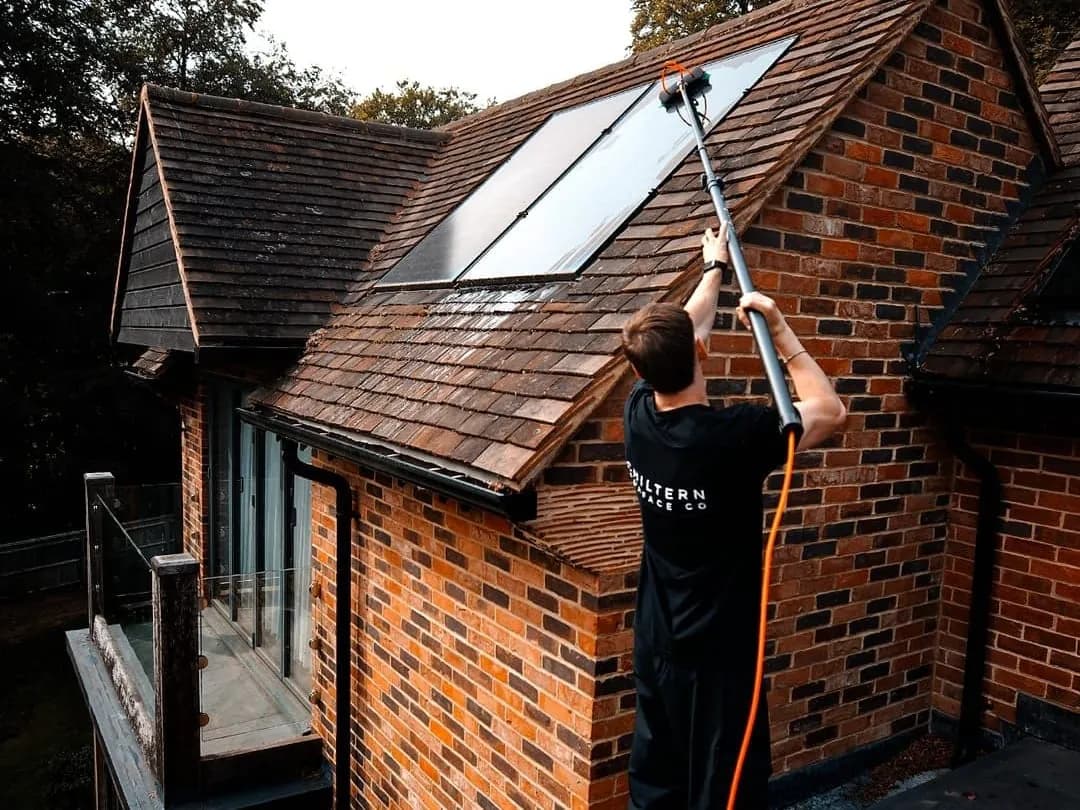
A soft-bristle brush fed with de-ionised water through a long pole loosens dust, pollen, droppings and road film. Nobody steps onto the array or the roof around it.
The band of grime and any moss along the lower frame are worked loose and rinsed off, since that is where shallow and exposed arrays collect most dirt.
Panels are given a final pure-water rinse and left to dry naturally, without wiping. We then look over the whole array and mention anything that needs an installer.
Before you book
The glass will be clear of film, droppings and edge grime, and the panels will look markedly better. The effect on generation is less predictable, so we do not promise a figure: it depends on how dirty they were, the weather and the system.
In open country, dust begins to settle again straight away, which is why a regular interval works better than a one-off clean.
Indian sandstone patio cleaning in Princes Risborough: black spot and algae treated, back steps relaid and repointed, protected with Chiltern EverGuard™.
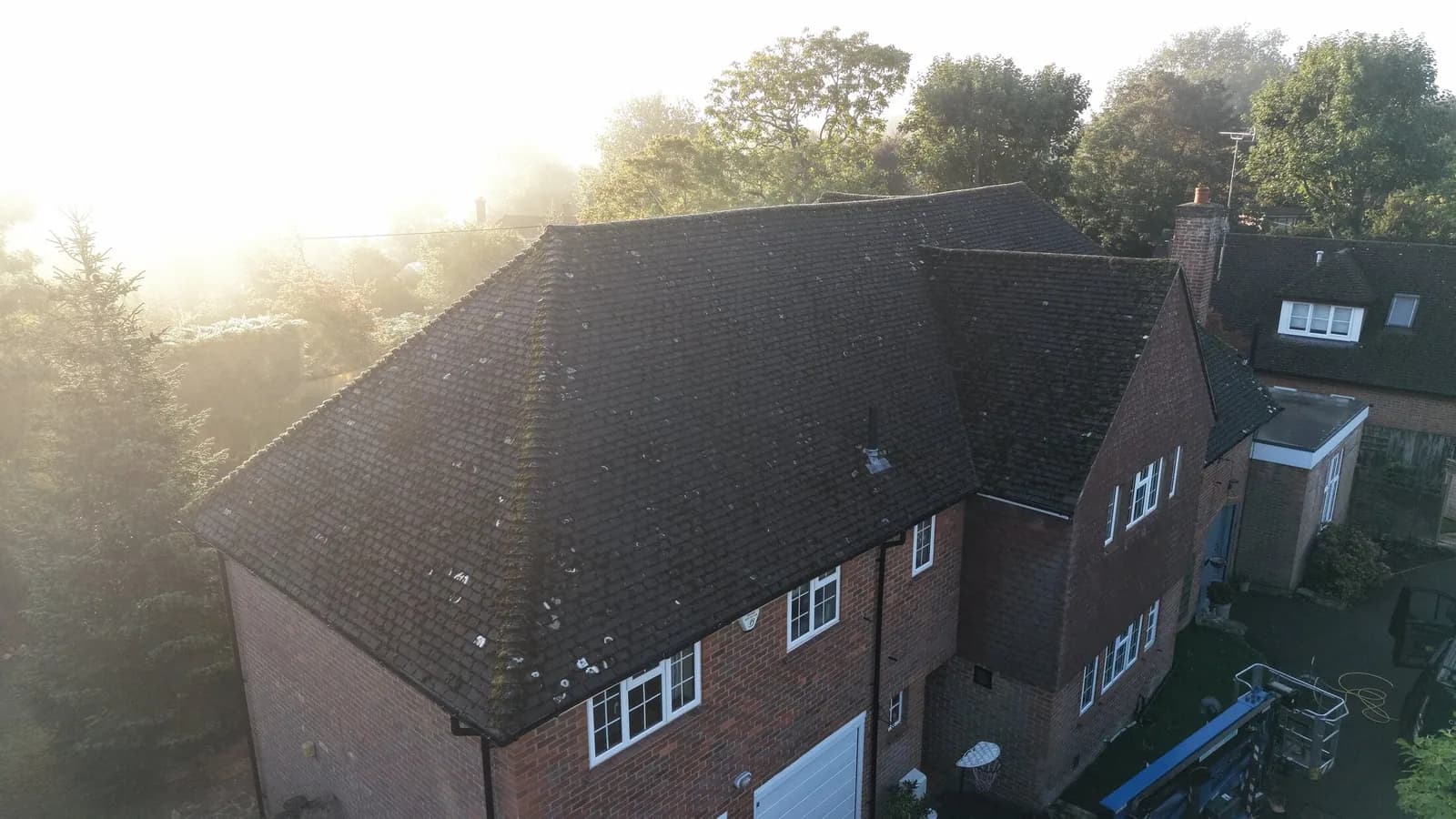
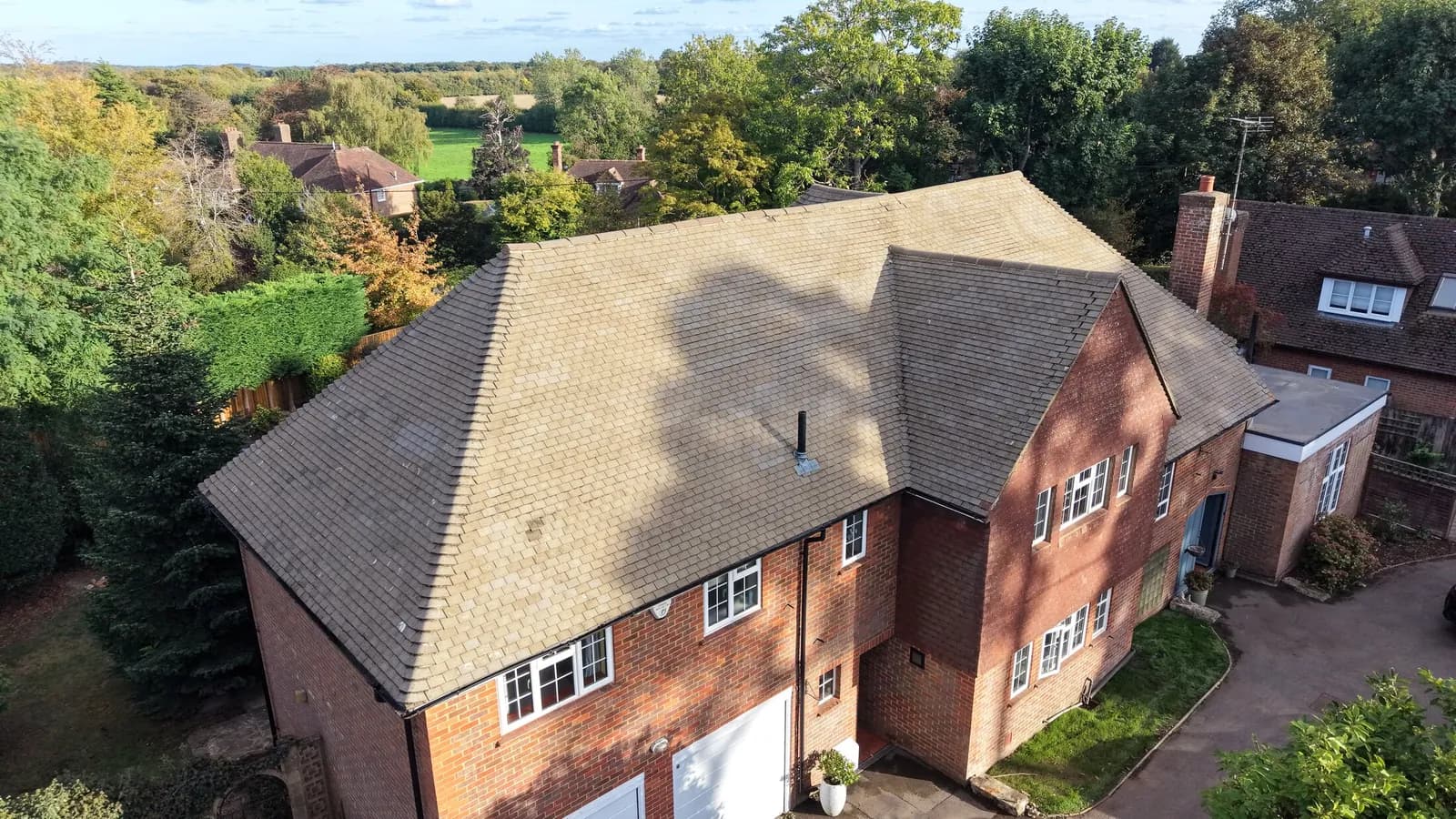
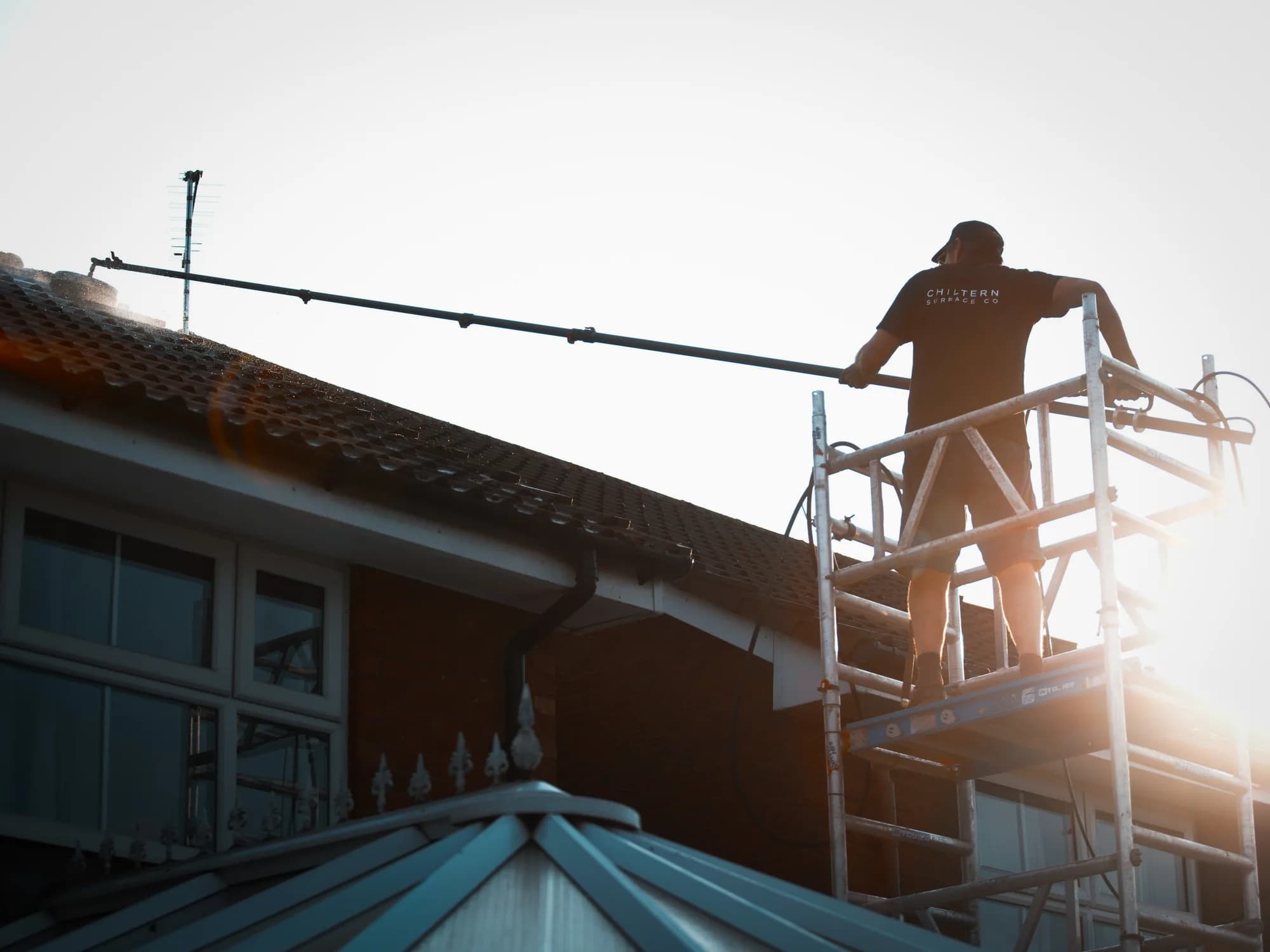
Roof cleaning in Great Missenden — moss and lichen removed from a concrete tile roof from powered access at low pressure, plus Chiltern EverGuard™ protection.
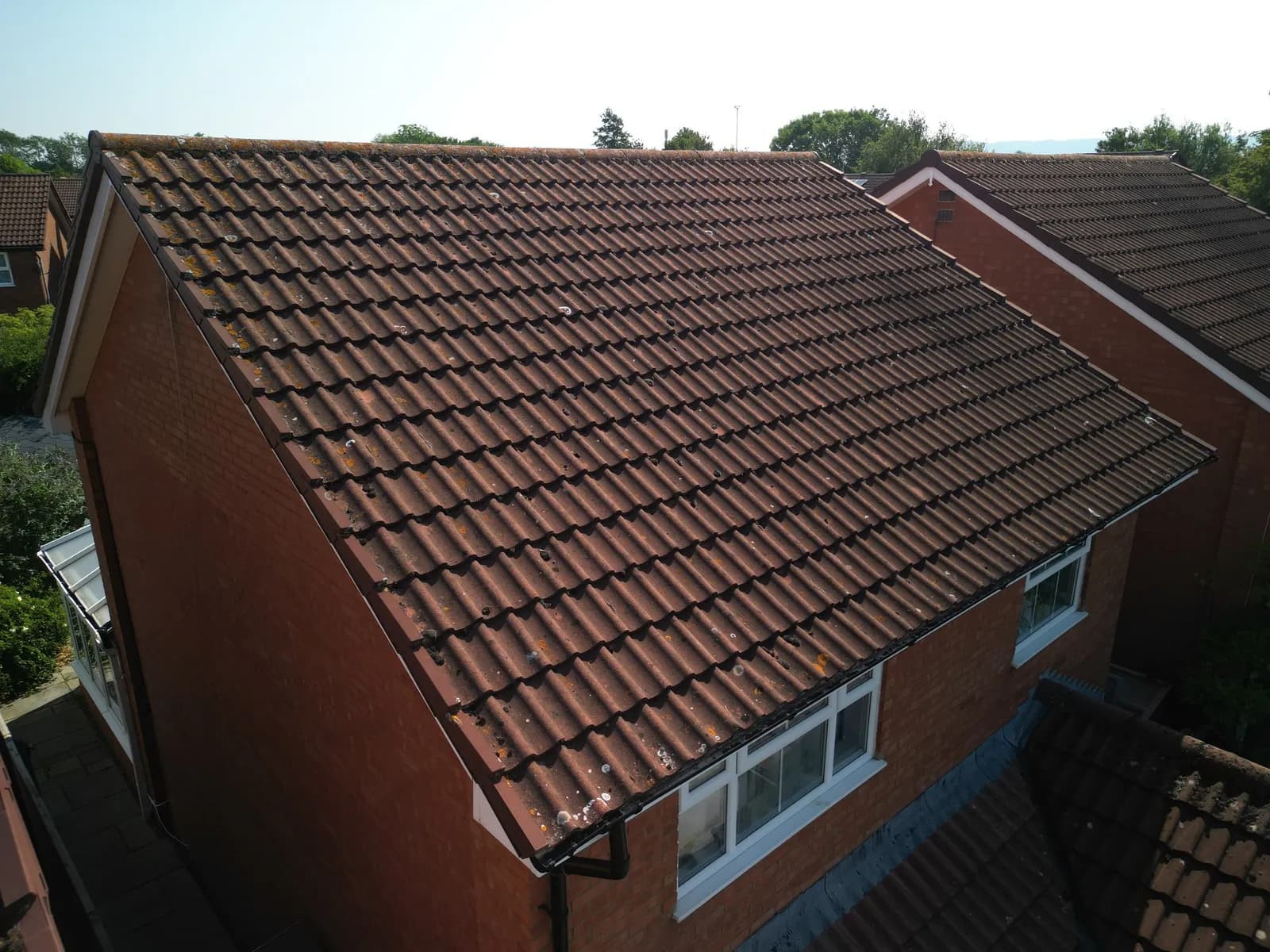
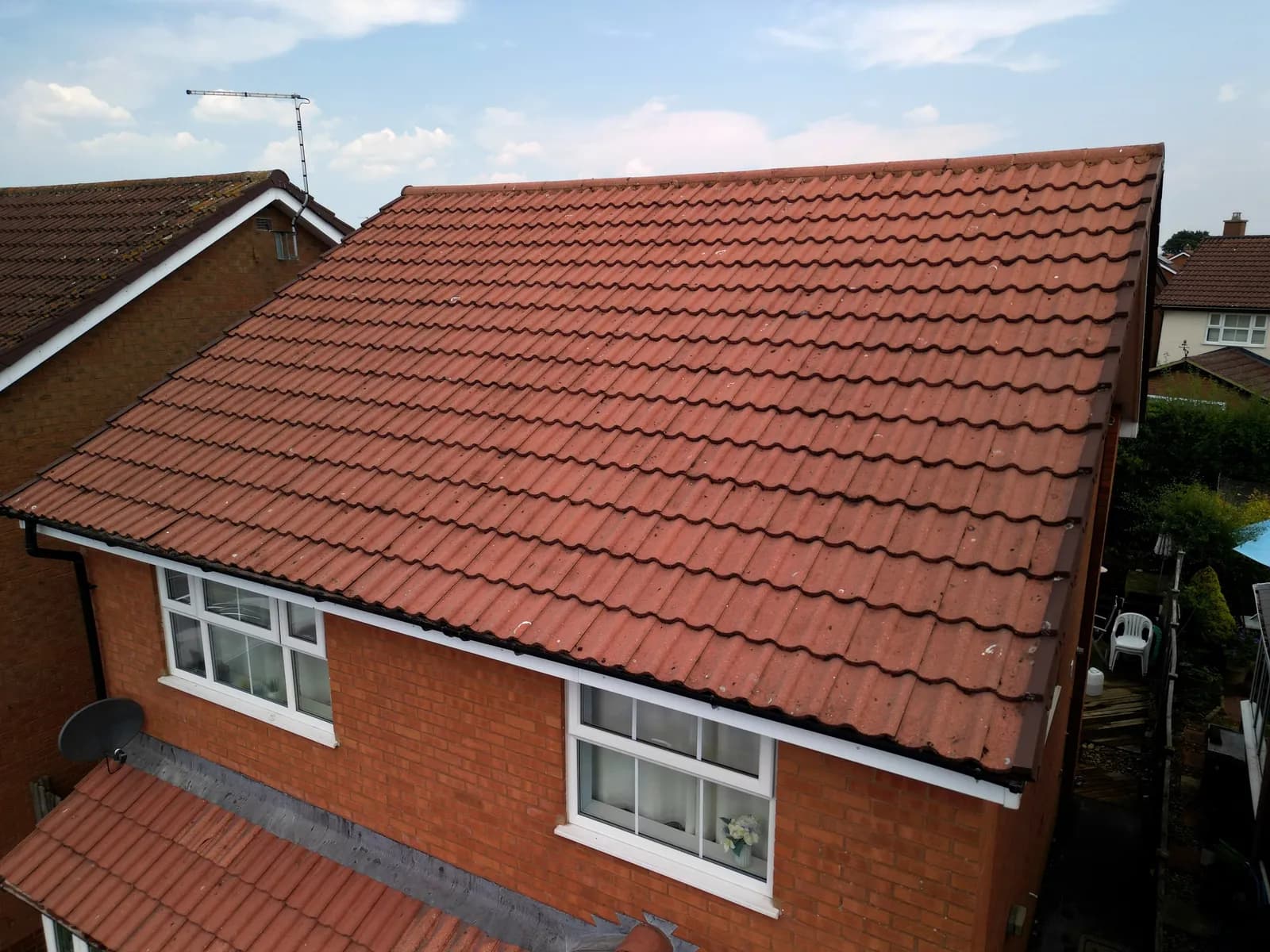
Roof and block paved driveway cleaning in Stoke Mandeville, Aylesbury: low-pressure roof clean, polymeric re-sand and Chiltern EverGuard™.
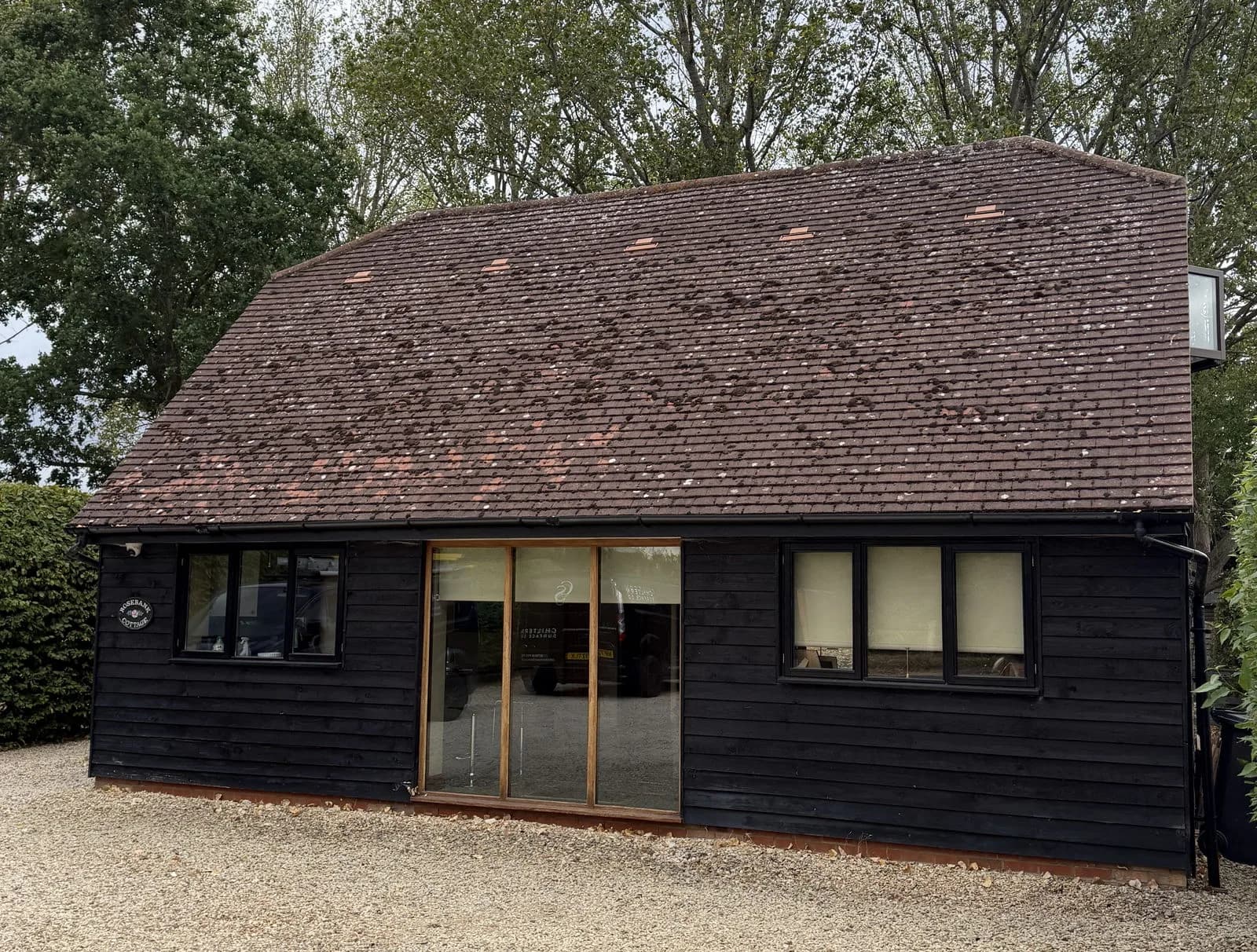
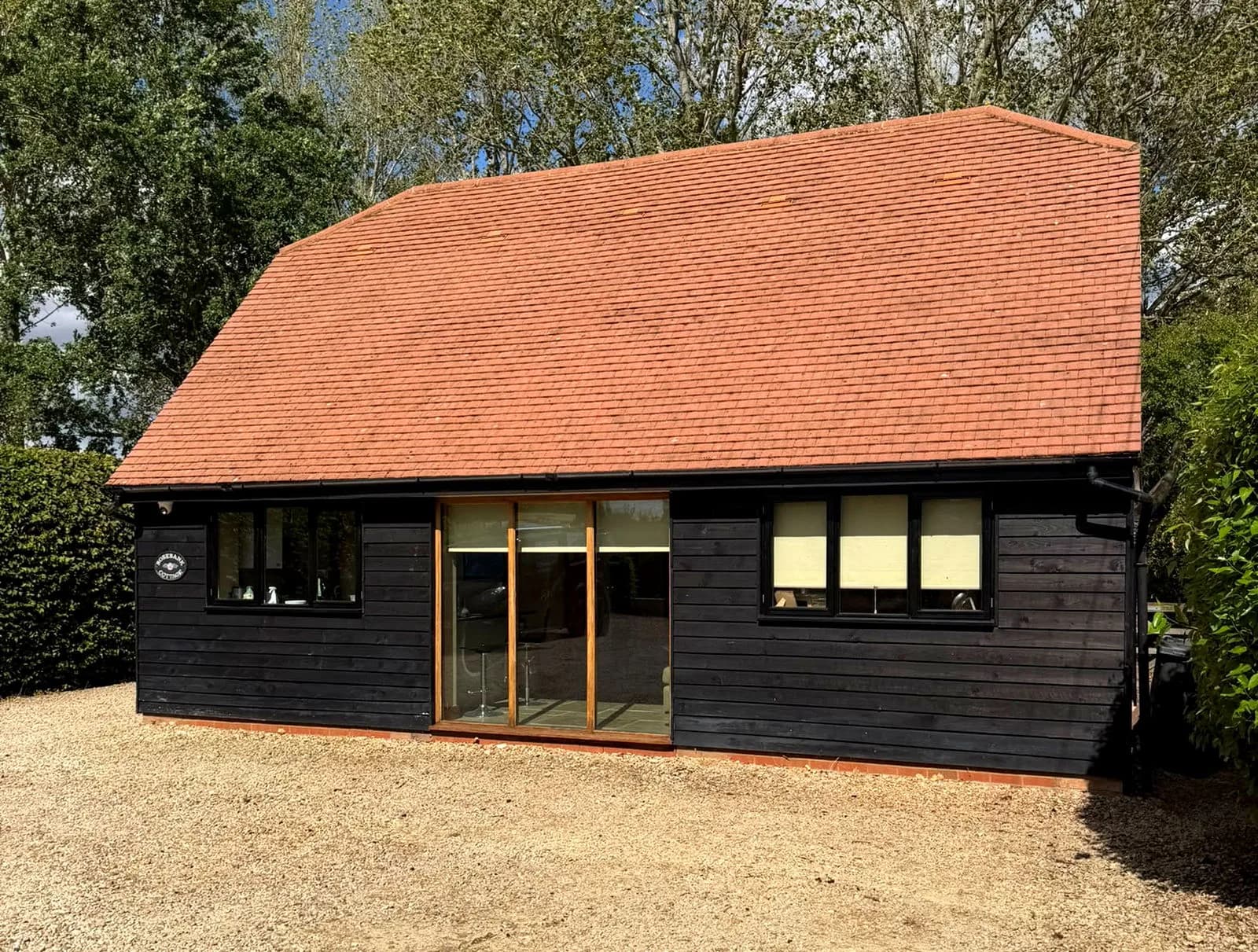
Clay tile roof cleaning in Aylesbury: 30+ years of heavy moss removed from this steep clay roof, then protected with Chiltern EverGuard™.
Why us
We have worked on homes in Aylesbury and understand how its open setting and newer housing affect the outside of a property.
Panels are washed and rinsed in de-ionised water alone, so no detergent residue is left on the glass or washed into the garden.
Arrays are cleaned with a water-fed pole from below wherever access allows, with any exceptions explained at the site visit.
We clean the panels and say what we noticed, and we tell you plainly when a question is one for your installer instead.
Nearby
Beyond the town, we clean panels in Bierton, Stoke Mandeville, Weston Turville and Stone, as well as on the newer estates at Fairford Leys and Watermead. Each shares the open, breezy conditions of the Vale.
Solar Panel Cleaning in nearby towns
What Clients Say
Thank you to every client who has trusted us with their home. Your reviews mean a great deal to us. We’re proud to be fully insured, certified professionals — delivering proven results with a customer-focused approach on every single project.
5-Star Rated On Google
Questions
Yes, often. Dust from fieldwork and harvest, and pollen from crops and hedgerows, drift onto roofs downwind. Homes on the edge of town facing open fields tend to need cleaning more often than those in the middle of an estate.
No, not on its own. Rain carries away loose dust but leaves droppings, pollen film and road grime behind, and on shallow arrays it can deposit dirt along the bottom edge rather than remove it.
Once a year suits most homes. Arrays facing open fields, near trees or set at a low angle may be better cleaned twice a year. After the site visit we suggest an interval based on what we have seen.
No. We clean the outside of the panels and report anything visible, such as cracked glass or a loose fixing. Questions about wiring, the inverter or generation figures need your installer or an electrician.
Removing film and droppings lets more light reach the cells, but how much that shows in your figures varies with how dirty the panels were, their pitch, shading and the season. We do not promise any particular increase.
Yes. Newer roofs are usually straightforward to reach from the ground with a water-fed pole. We still check the pitch, the height and what sits below the array, such as a conservatory, before confirming the approach.
More from us
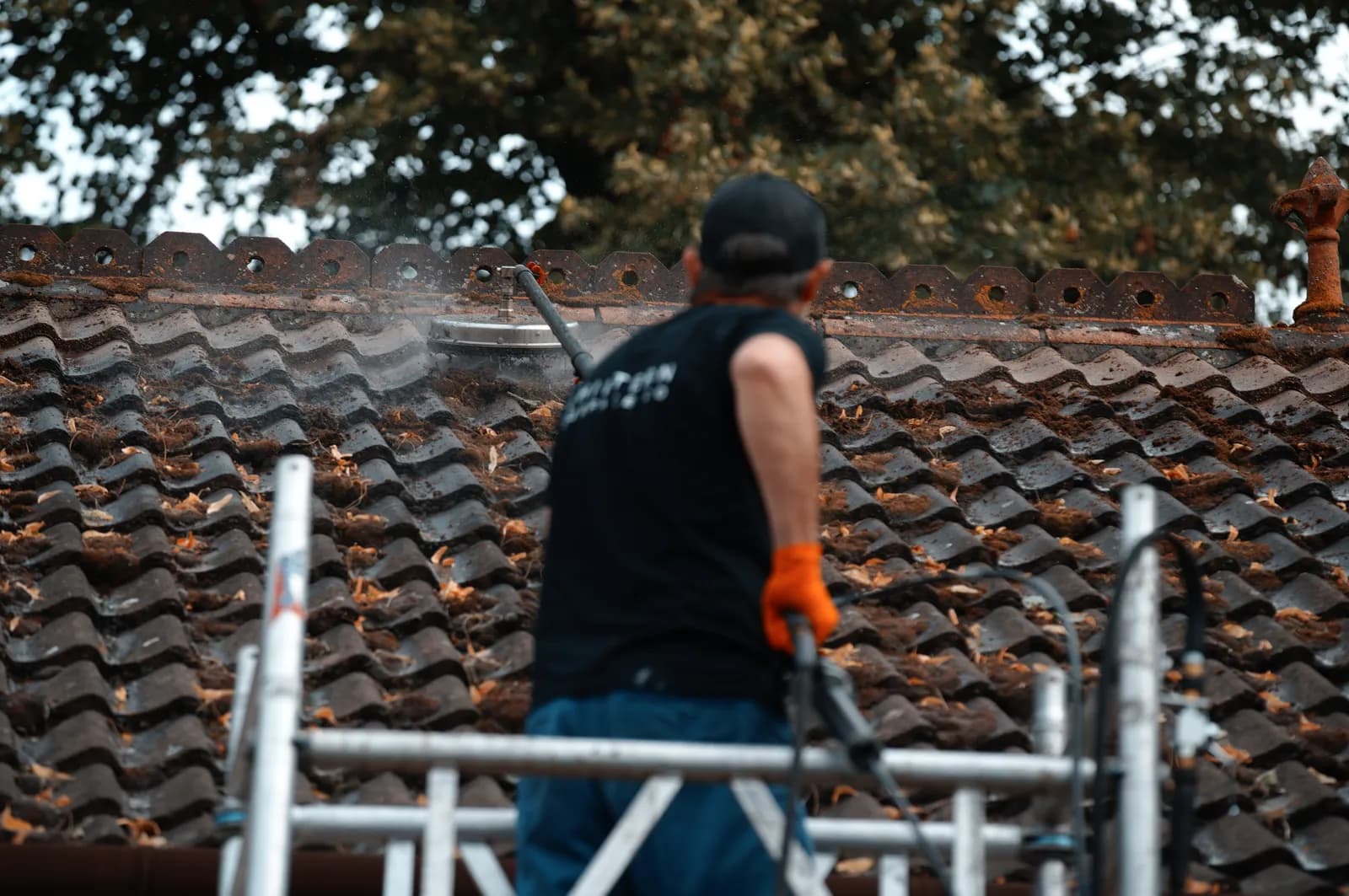
Carefully remove moss, algae and lichens to protect your roof and enhance kerb appeal.
Learn Moreabout Roof Cleaning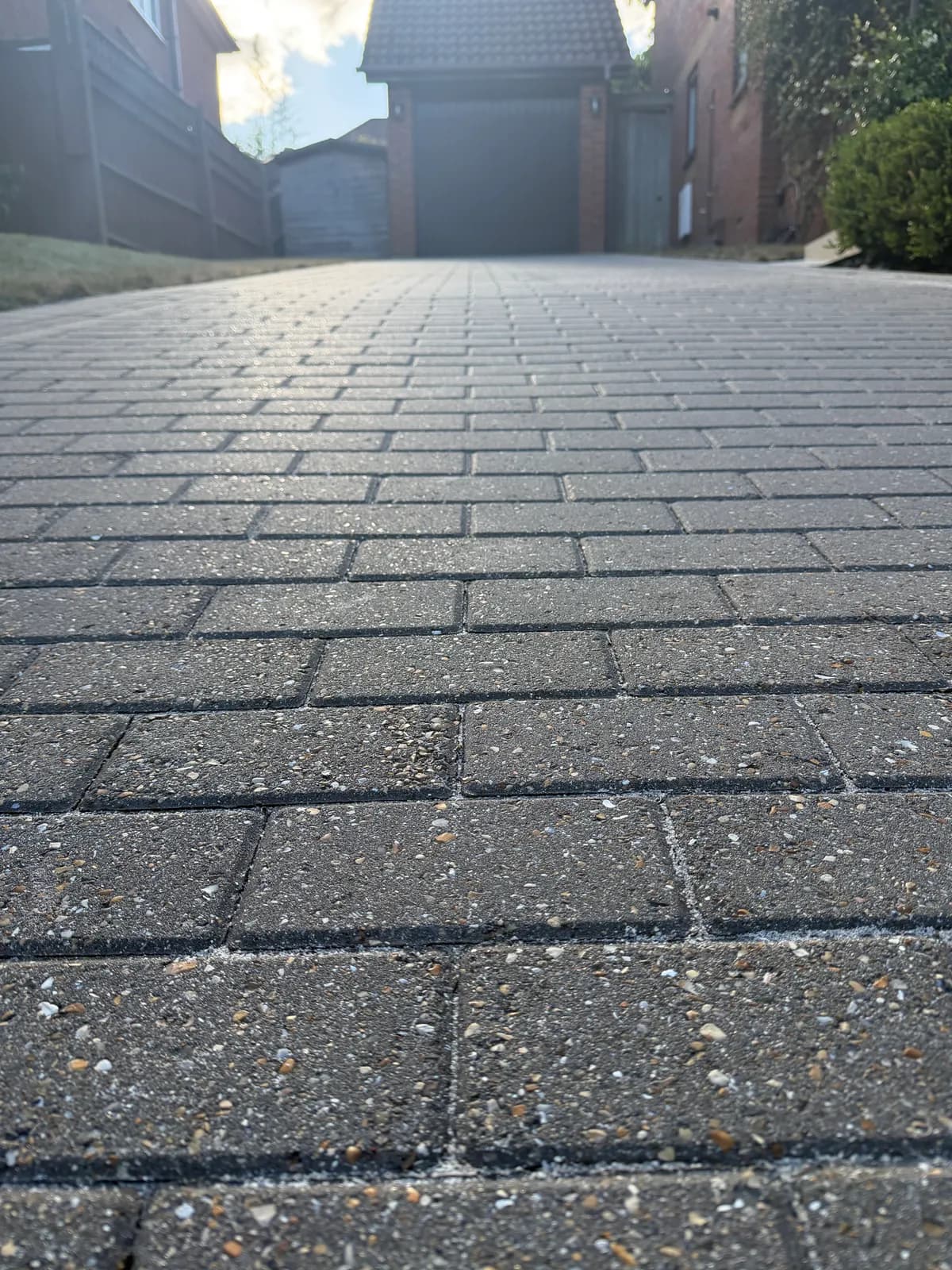
Professional cleaning for block paving, tarmac and resin driveways, restoring colour and removing stains.
Learn Moreabout Driveway Cleaning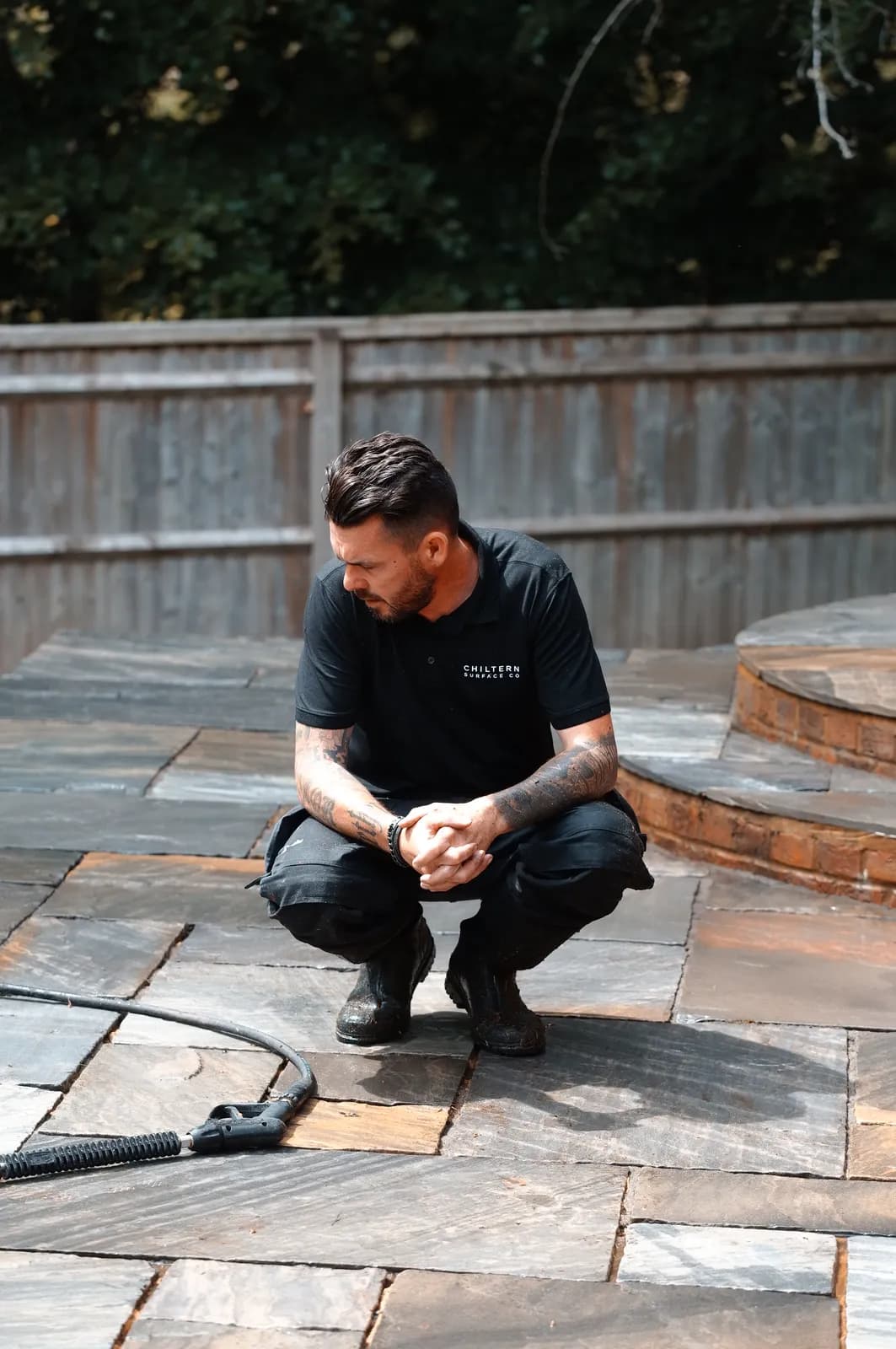
Specialist cleaning and restoration for natural stone, porcelain and concrete patios.
Learn Moreabout Patio Cleaning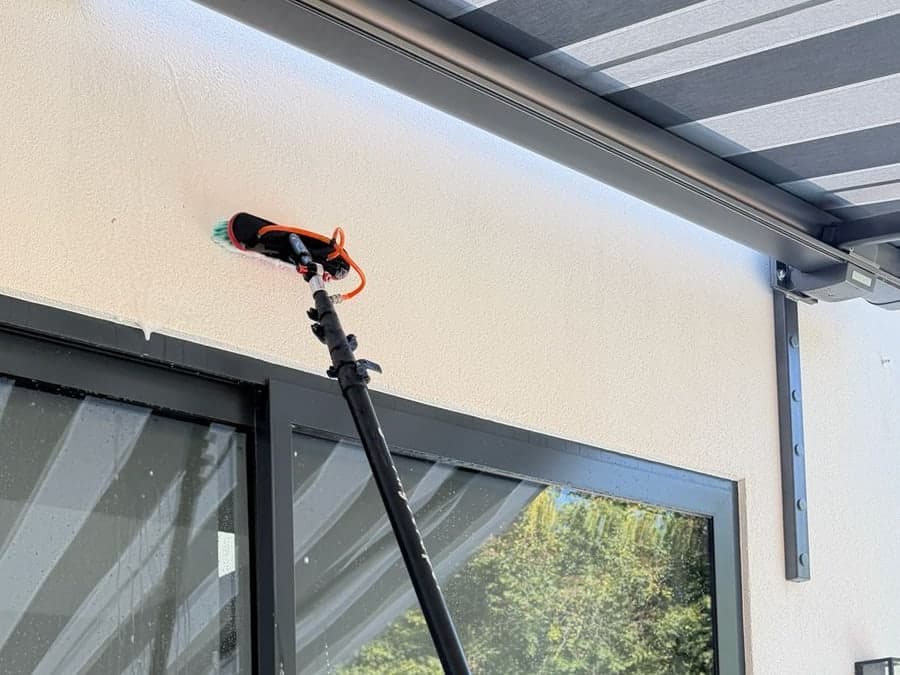
Low pressure soft wash treatment designed to safely remove algae, mould and grime from exterior surfaces.
Learn Moreabout Soft Wash Treatment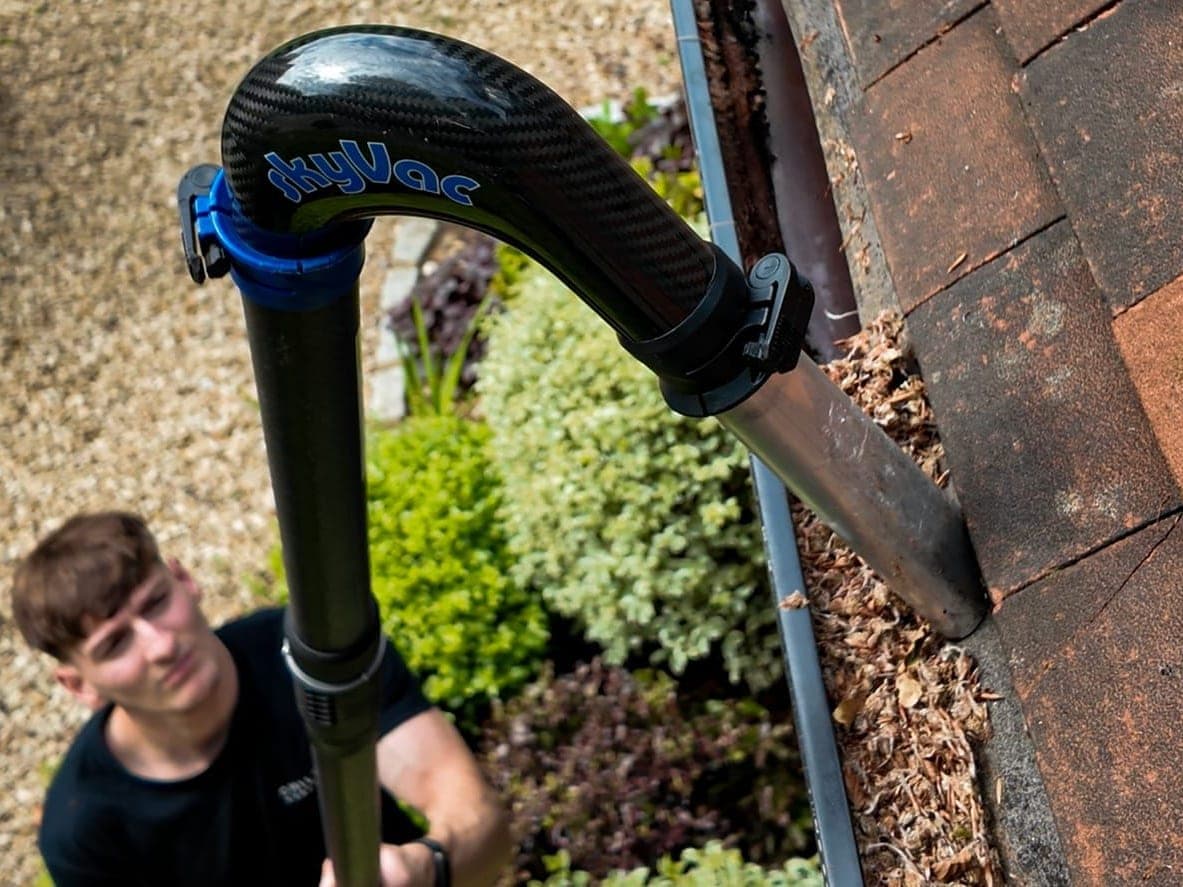
Clear and flush blocked gutters and downpipes to protect your walls, fascias and foundations.
Learn Moreabout Gutter Cleaning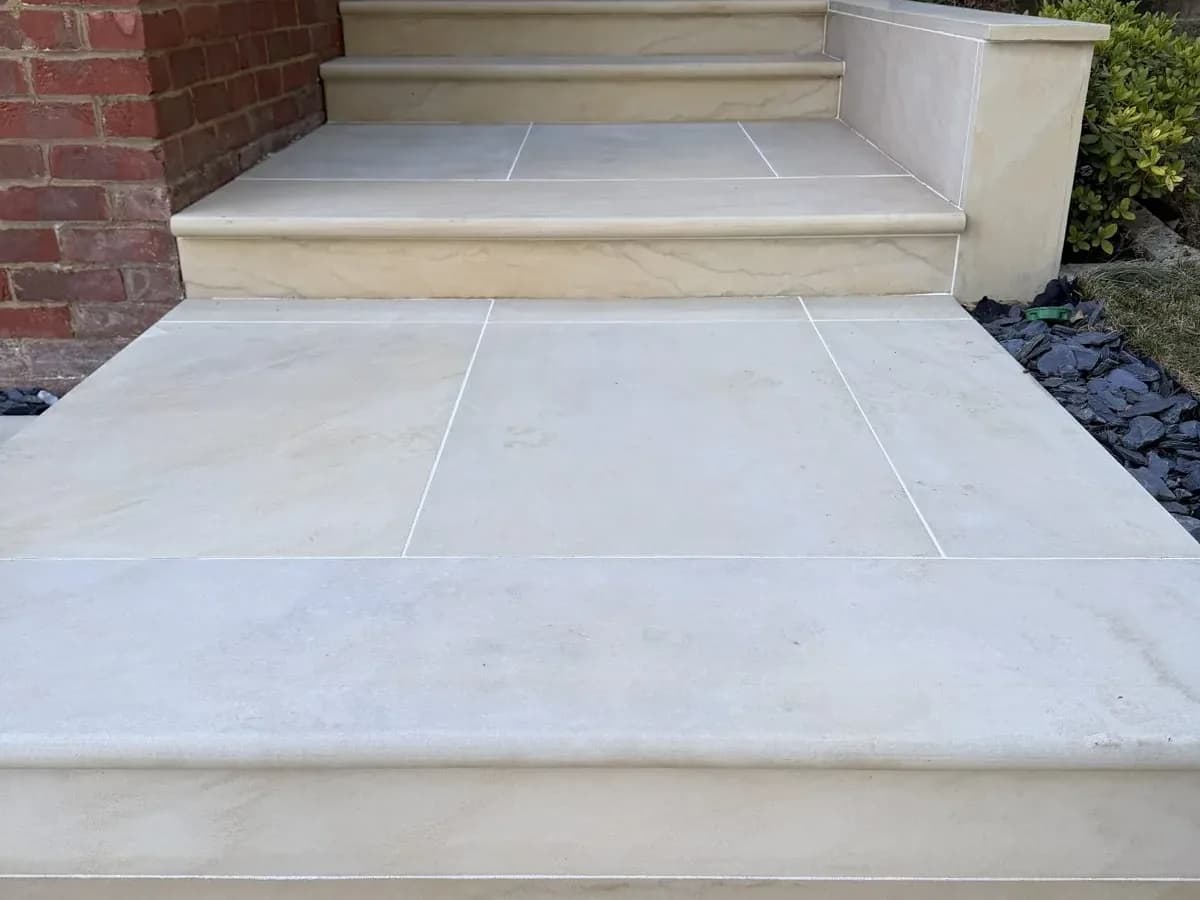
Winter cleaning that removes slippery algae and moss from paths, steps and patios, planned around the forecast.
Advice
Chiltern Surface Co
Tell us where the array is and we will come and look at it with you, explain what has settled on the glass and how we would clean it. A clear quotation follows the visit.
We assess your surfaces and recommend the right approach for the best, long-lasting results.
You'll receive a detailed, transparent quote with no hidden extras.
We'll provide honest advice so you can decide what's right for you.
Speak directly with the owner and get expert advice you can trust.