Sandstone Patio Cleaning and Repointing in Princes Risborough
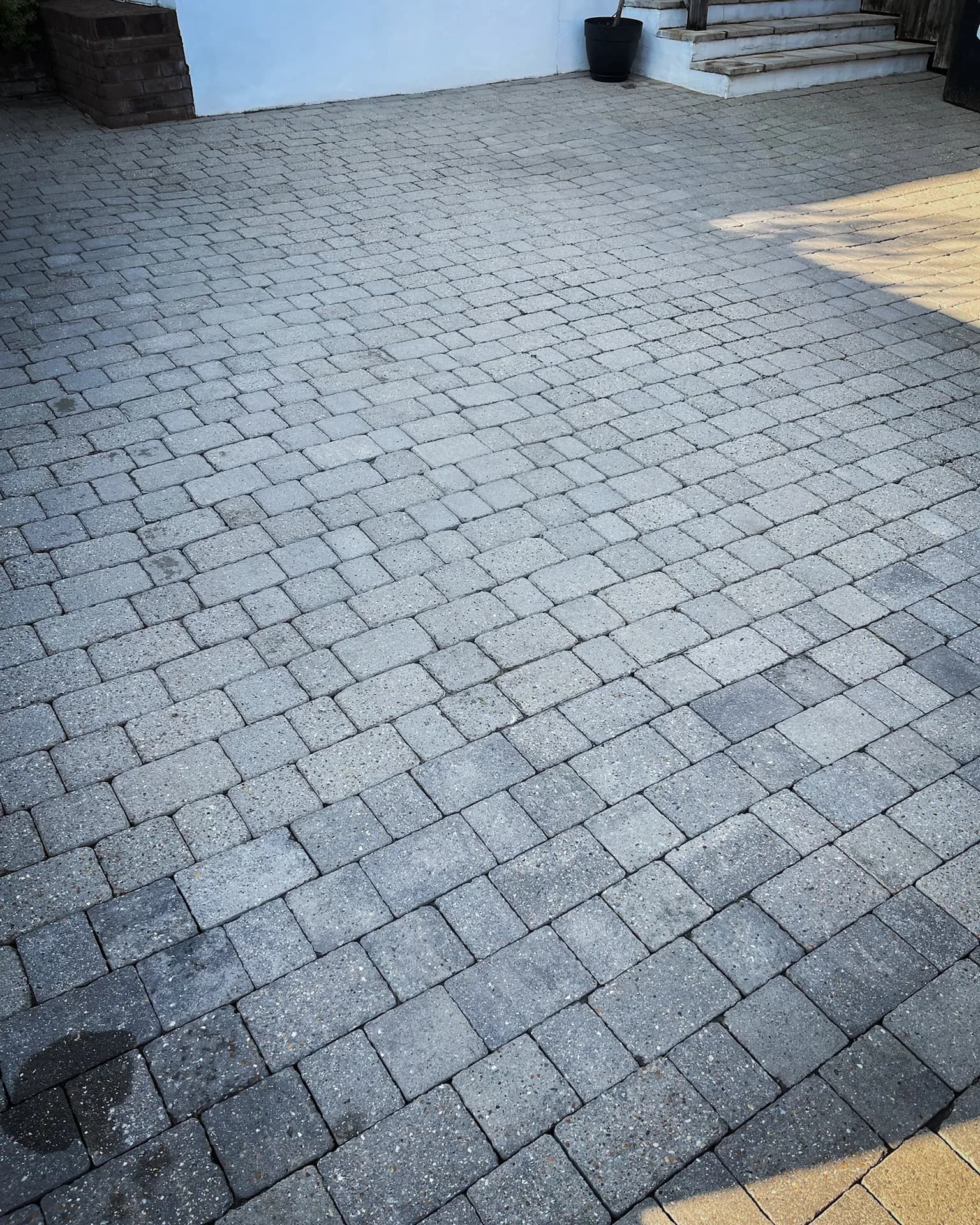
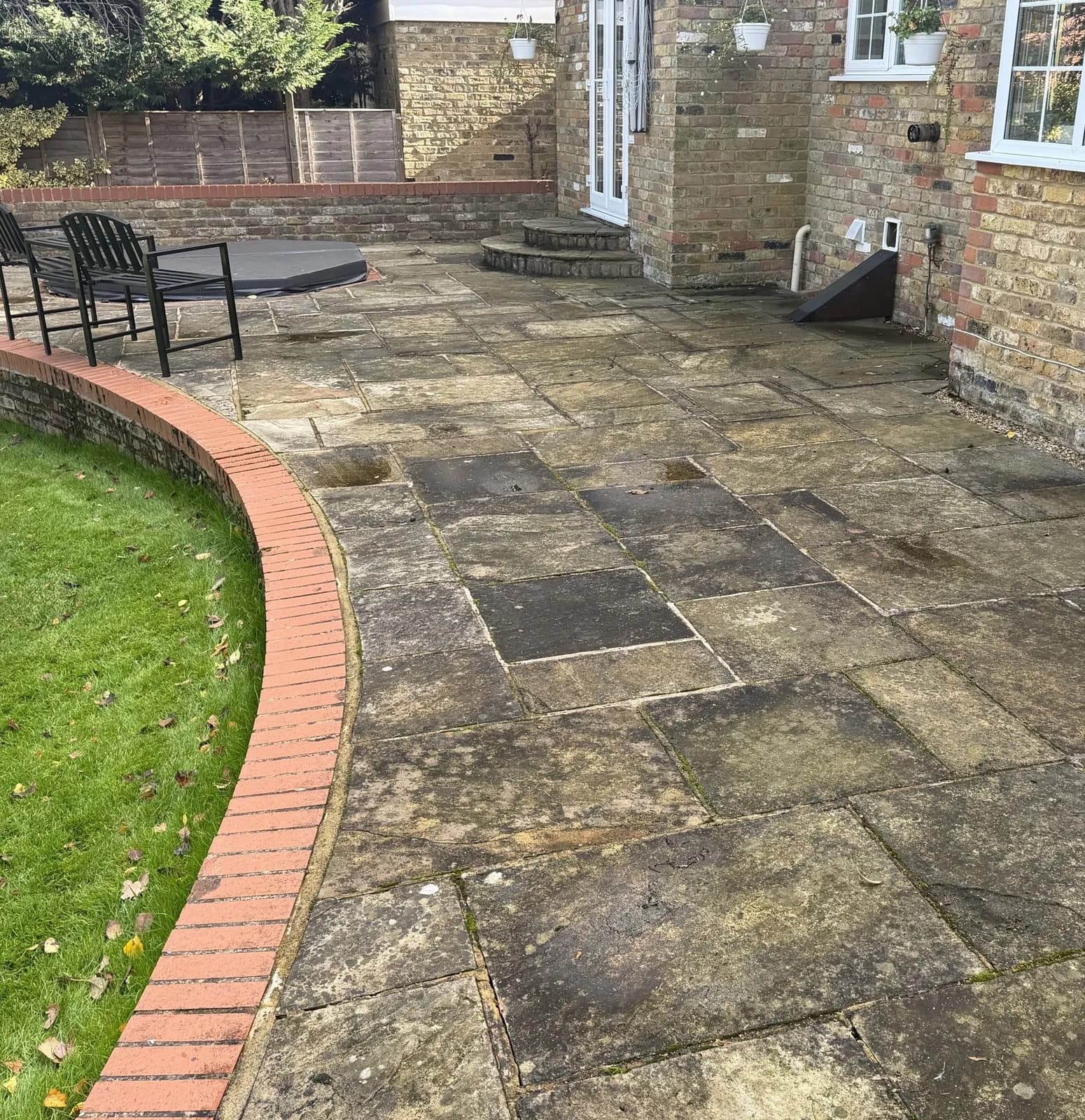
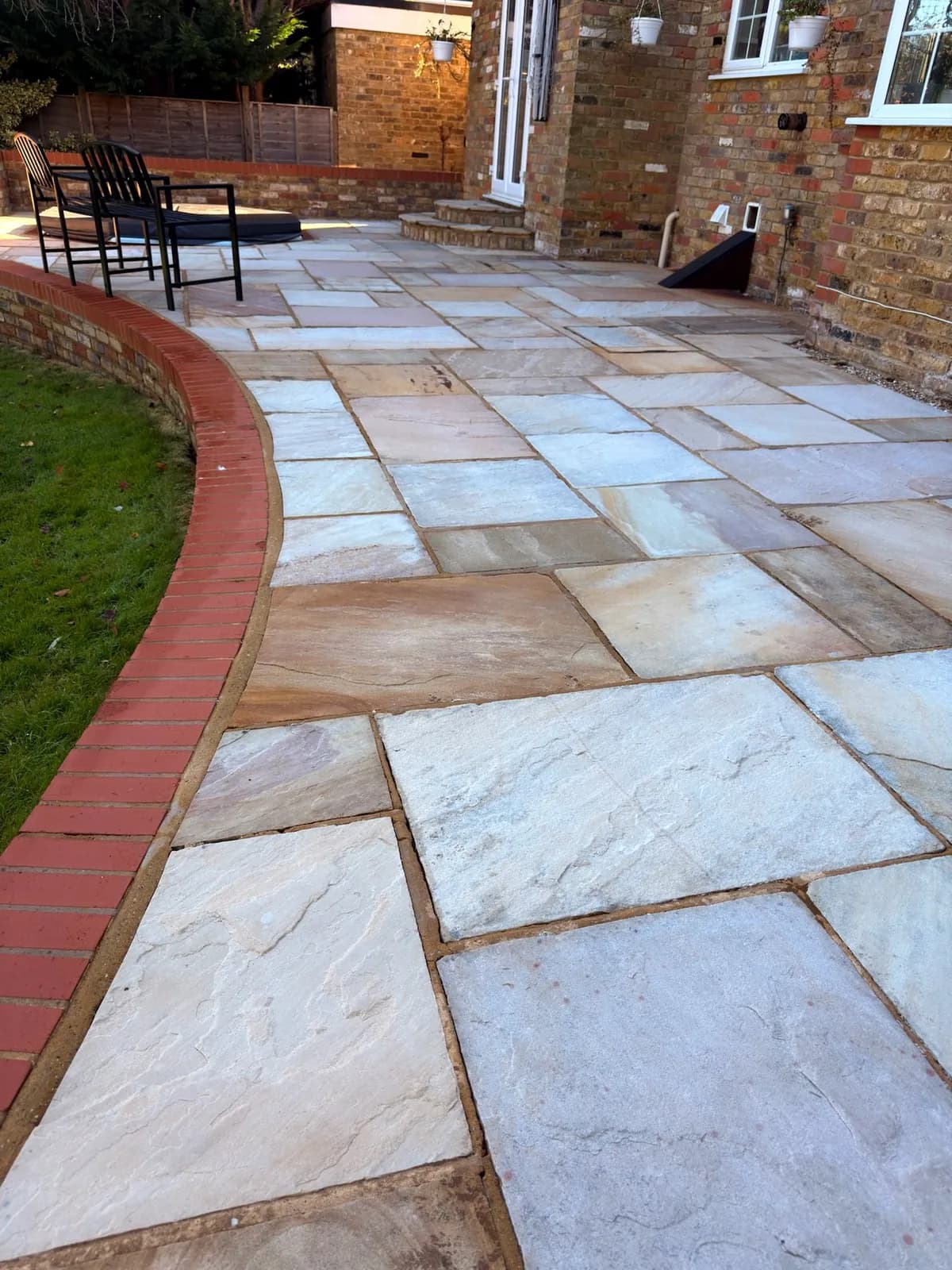
Indian sandstone patio cleaning in Princes Risborough: black spot and algae treated, back steps relaid and repointed, protected with Chiltern EverGuard™.
Solar Panel Cleaning · Buckinghamshire
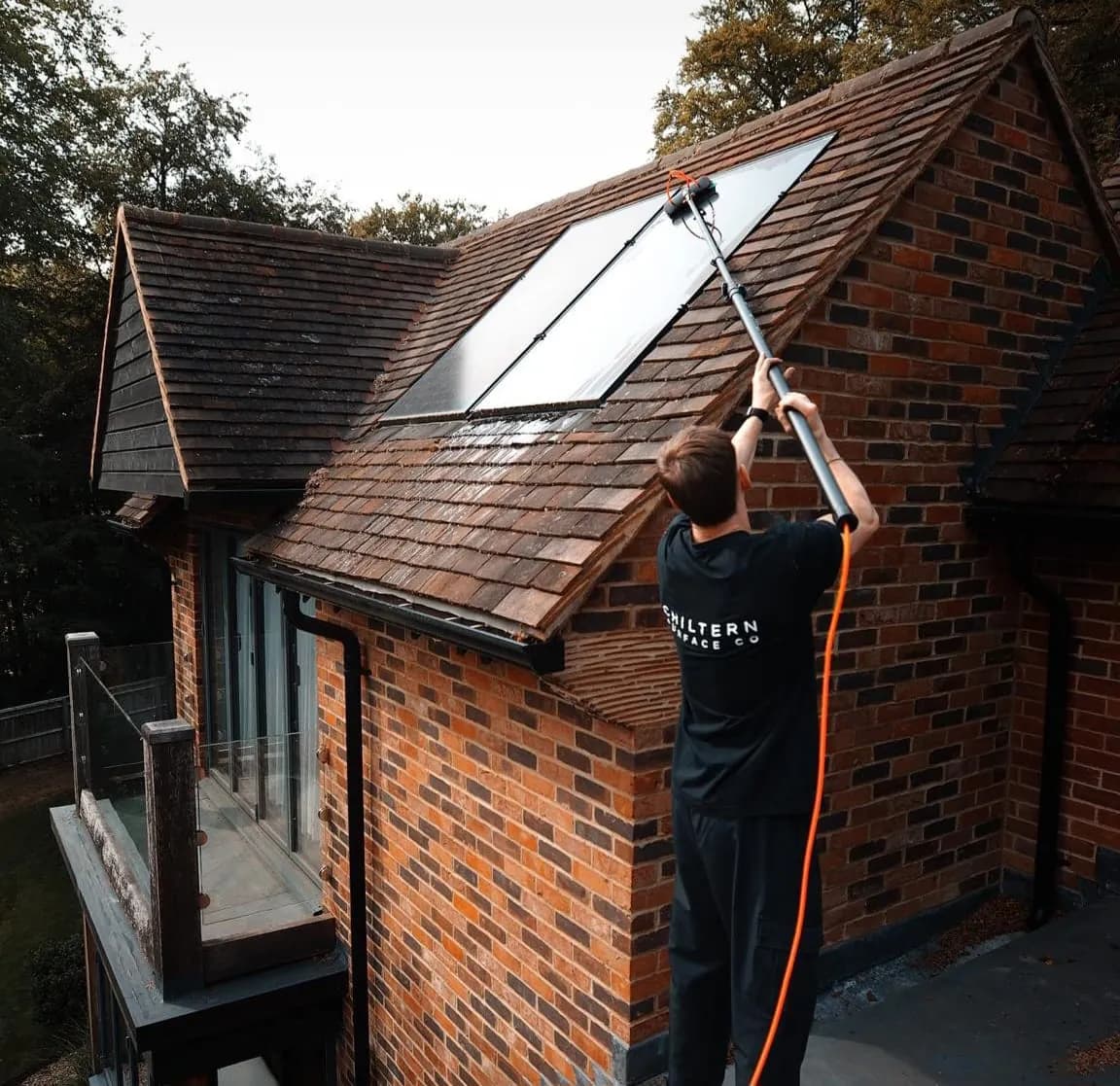
Princes Risborough sits where the Chiltern escarpment meets the open Vale of Aylesbury, so many arrays here face wide farmland and the wind that crosses it. We wash them with de-ionised water and a soft brush, working from the ground.
Where we start
Rain does a fair job on loose dust, which is why many arrays look fine from the road. What it leaves behind is the material that has dried onto the glass: bird droppings, a film of pollen and field dust, and moss packed along the bottom frame. Those are what a clean takes off, using pure water rather than anything stronger.
The town and the vale
Princes Risborough lies at the foot of the Chiltern escarpment, with wooded slopes rising steeply behind the town and the Vale of Aylesbury spreading out flat in front of it. That position gives local roofs two quite different settings. Homes tucked under the hills sit in sheltered, wooded ground and lose some of the low winter sun, while those on the vale side look out across open farmland with little to break the wind.
For a solar array, that difference shows in what lands on the glass. Panels facing the vale collect fine dust and plant material carried off the fields, especially in dry spells and around harvest. Panels nearer the wooded slopes see more leaf debris, pollen and moss. The housing runs from older homes close to the centre to newer developments on the edges of town, so the roofs carrying these arrays vary too.
Field dust
Dust from cultivated ground is fine and light, and on its own rain moves much of it. The trouble is that it rarely arrives on its own. Mixed with pollen, dew and the residue left as showers evaporate, it forms a thin, slightly sticky film that grips the glass and catches more dust each time it dries. From the garden the panels simply look a little greyer than they used to.
That film is lifted with de-ionised water and a soft-bristle brush, working across each panel rather than hosing it from a distance. Because the water has had its minerals removed, the glass can be left to dry without spotting, and nothing is added that would need rinsing off later.
Wind and exposure
Houses on the open side of town take the weather full on. Wind drives seed heads, grit and small debris up the roof and under the panels, and rooftops with a long view make popular perches for birds, whose droppings dry into dense, opaque patches. On the bottom frame, where run-off slows, fine material and moss settle into a narrow line.
We clear accessible frames and edges on every clean, not just the open glass. Droppings are wetted and left to soften before brushing, and we go back over a stubborn mark rather than scrape at it.
Under the hills
Closer to the escarpment, the picture changes. Gardens are more enclosed, trees stand nearer the house, and roofs stay damp for longer after rain. Arrays here pick up leaf fragments, tree pollen in spring and moss washed down from the surrounding tiles, and the lower row usually carries more of it than the top.
Shade from tall trees or the slope itself is something no clean can change, and we will say so if it is limiting an array. Where the roof around the panels is heavily mossed, we clean what is on the array and explain that the roof itself is a separate job.
How we work
The order of work stays the same on every array. How the panels are reached, and how long each deposit needs, is settled at the site visit.
We look at where the array sits, its pitch, the ground below and the condition of the frames and seals, then confirm whether a water-fed pole can reach every panel from a safe position.
De-ionised water is fed up the pole to wet the glass, giving dried droppings and the dusty film from the fields time to loosen before any brush touches them.
A soft-bristle brush is worked over each panel with steady, light contact. Nothing abrasive, no detergent and no high pressure goes near the glass, frames or seals.
Moss, seed and grit packed along the lower frame and accessible edges are cleared, so the panels are clean to their borders rather than only in the middle.
A final de-ionised rinse carries everything away. The panels dry on their own, and we look over the array and mention anything we noticed about the fixings or seals.
Worth knowing
Cleaning removes material that is shading the glass. What that is worth in generation depends on how dirty the panels were, which way they face, the season and the condition of the system, so we do not put a figure on it.
Indian sandstone patio cleaning in Princes Risborough: black spot and algae treated, back steps relaid and repointed, protected with Chiltern EverGuard™.
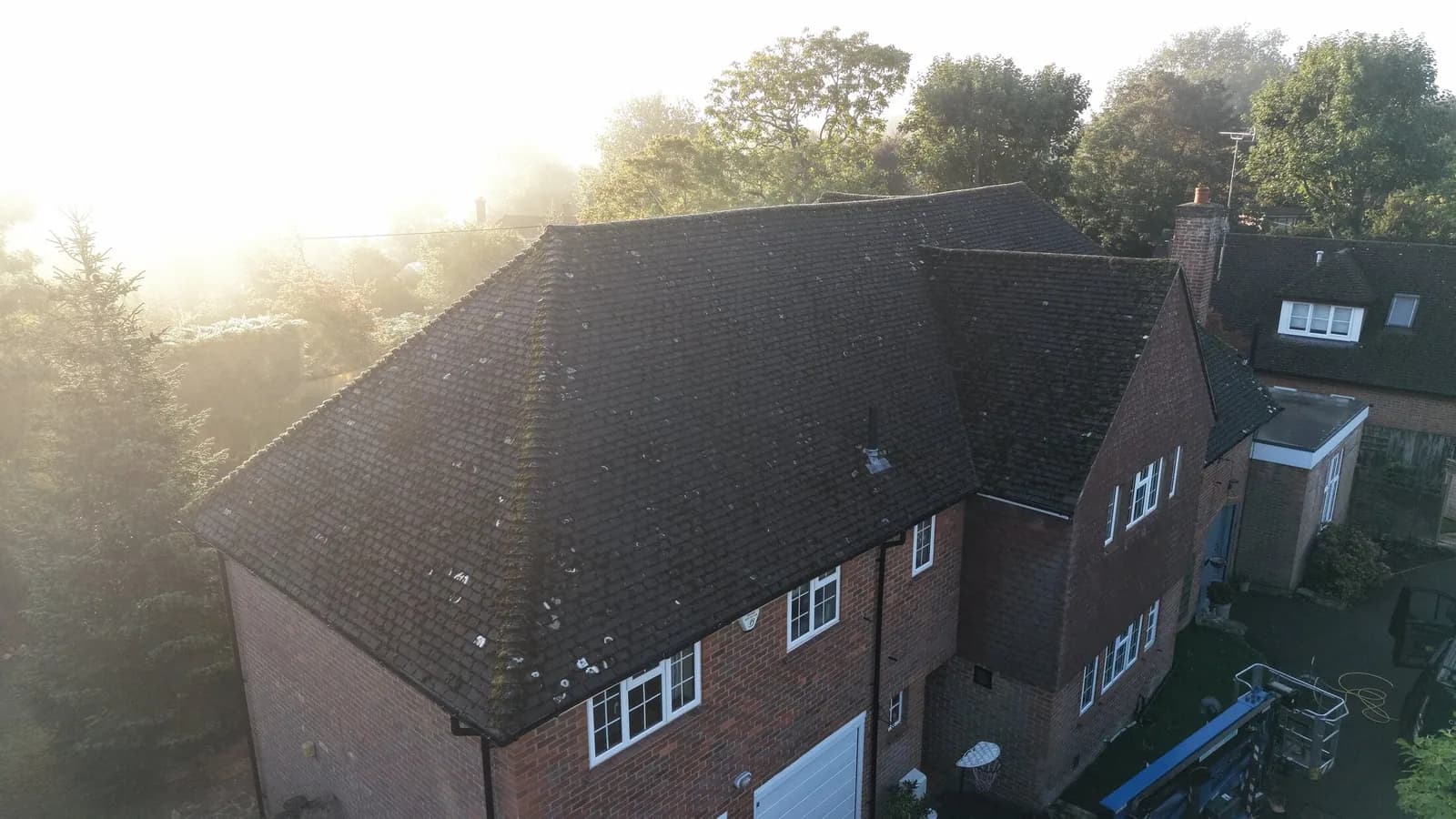
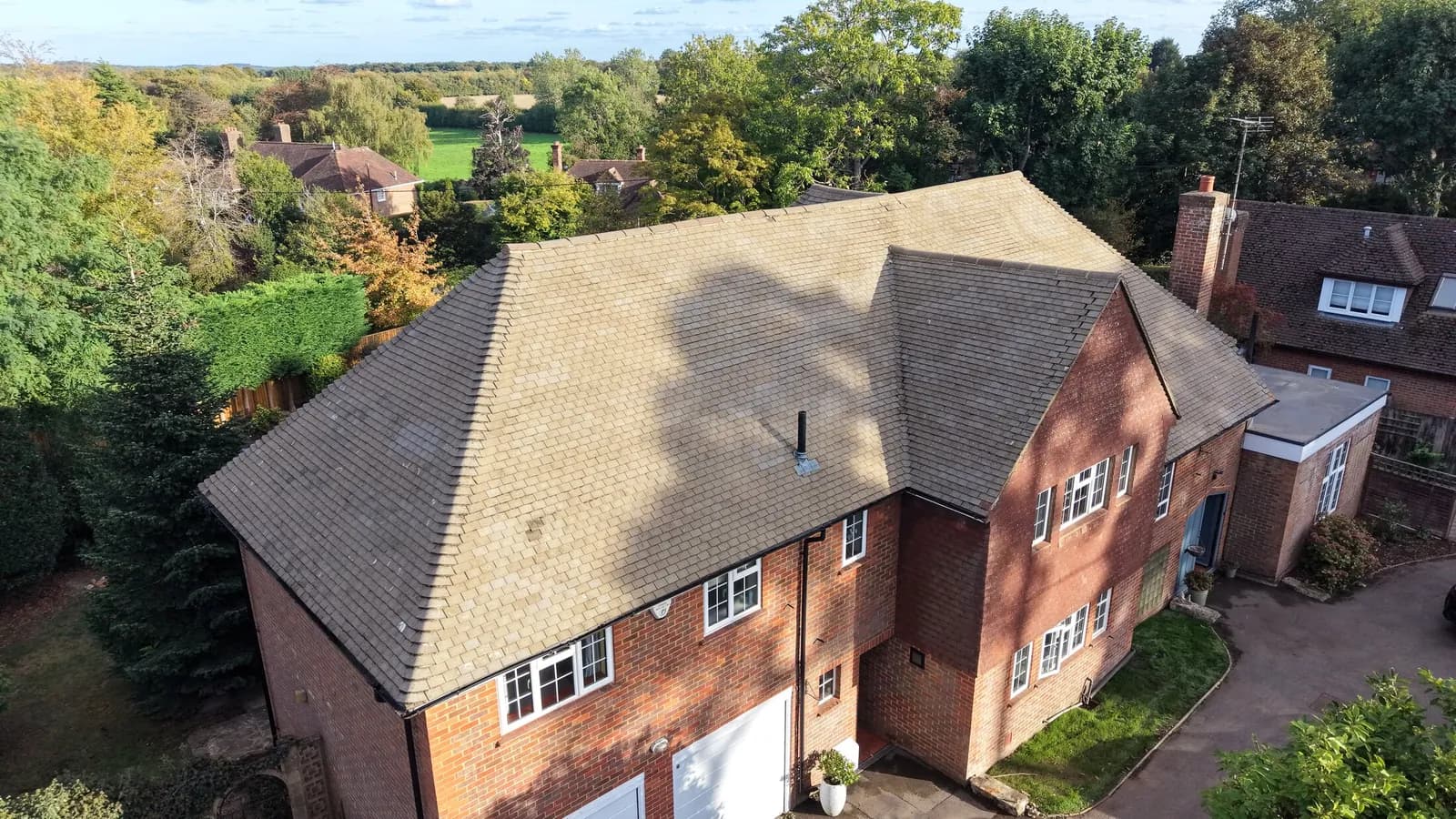
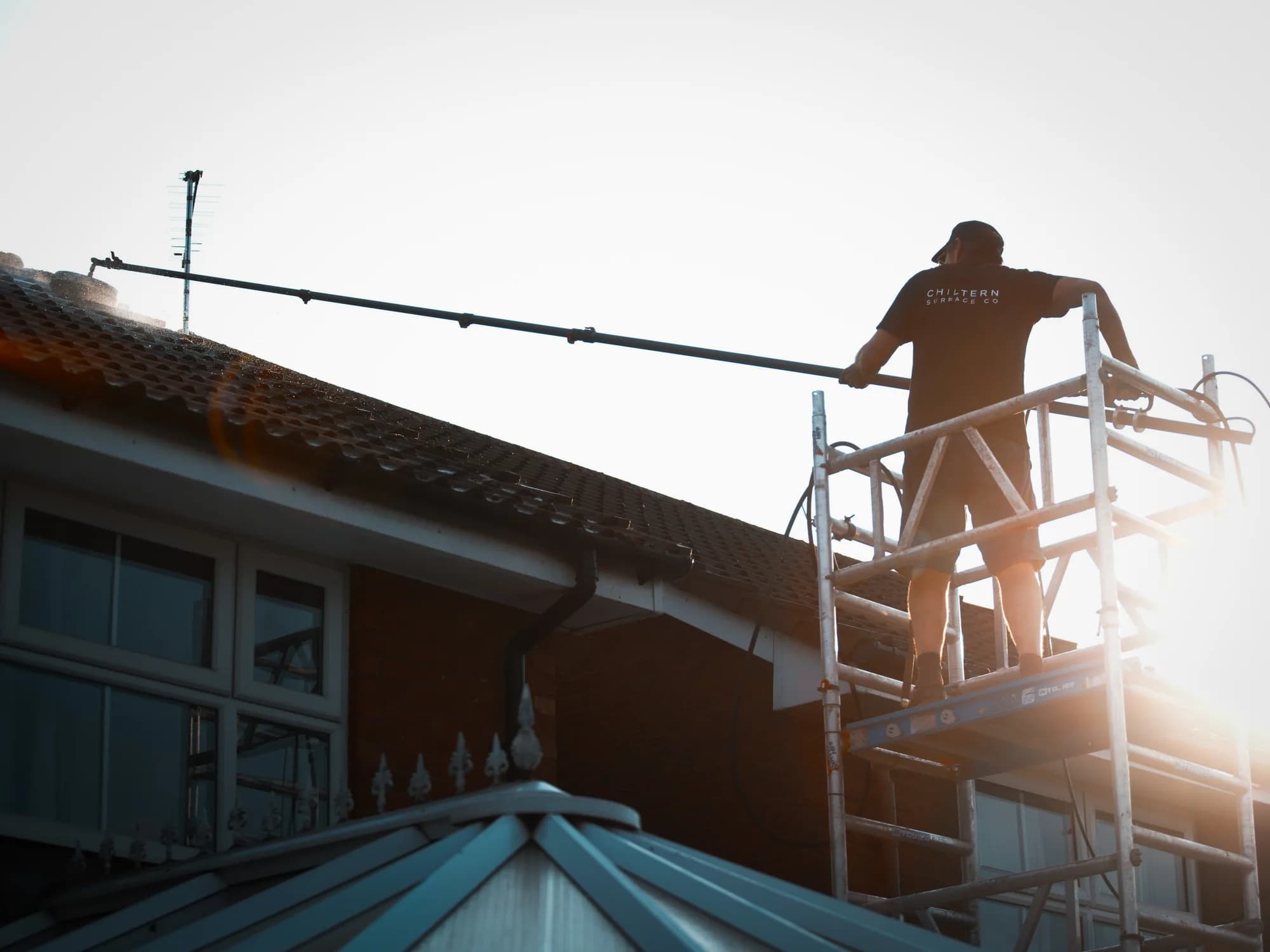
Roof cleaning in Great Missenden — moss and lichen removed from a concrete tile roof from powered access at low pressure, plus Chiltern EverGuard™ protection.
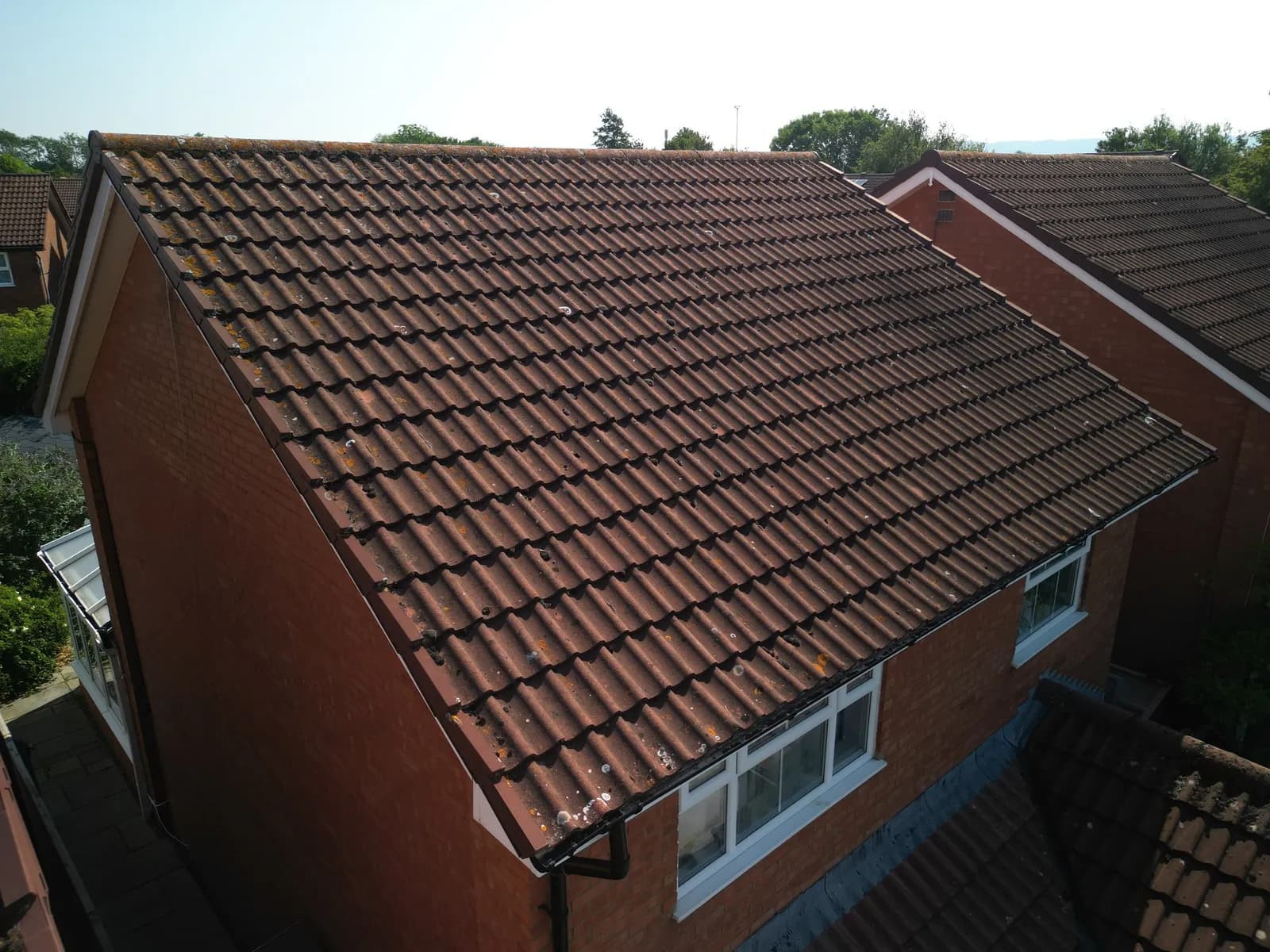
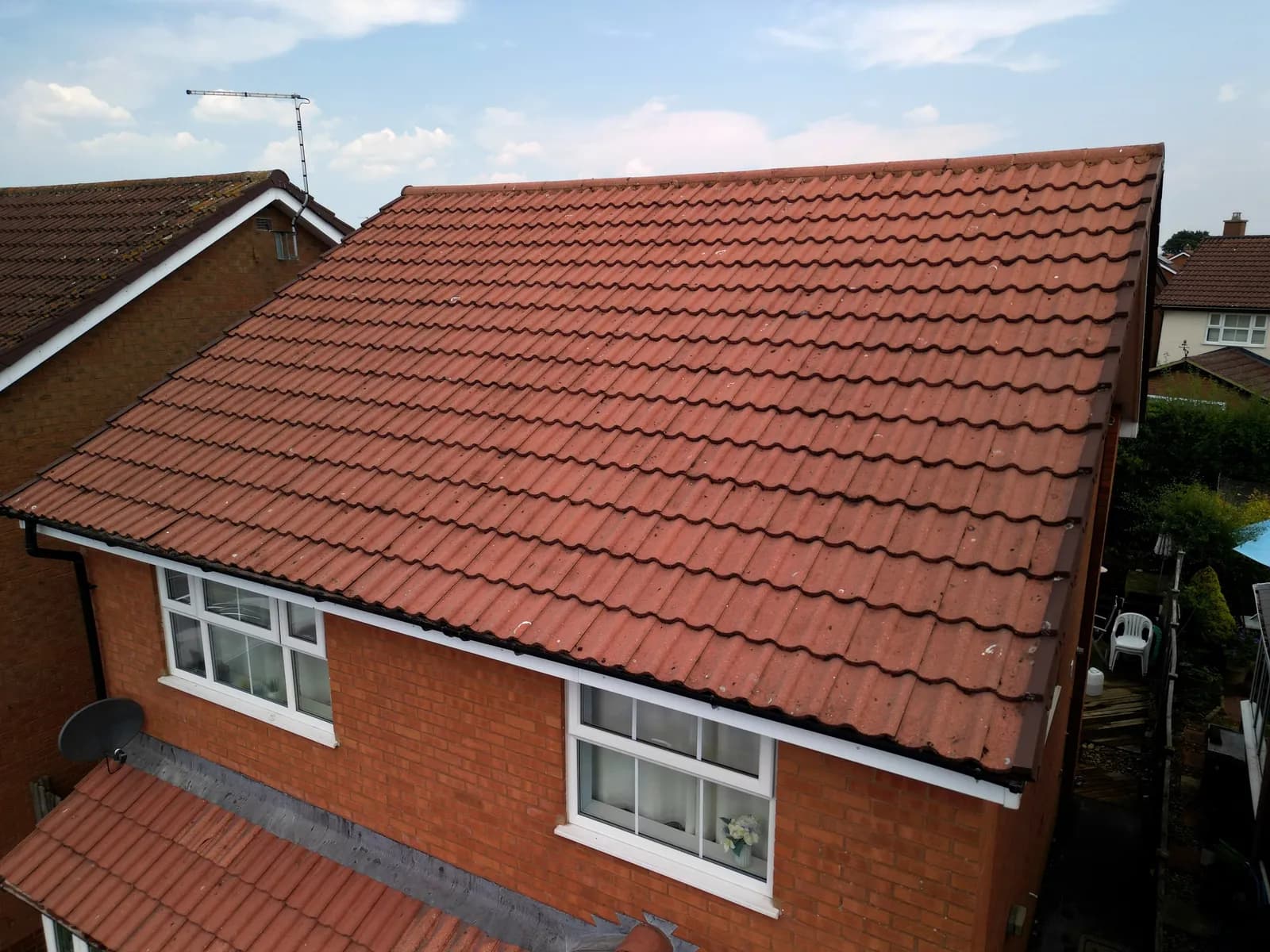
Roof and block paved driveway cleaning in Stoke Mandeville, Aylesbury: low-pressure roof clean, polymeric re-sand and Chiltern EverGuard™.
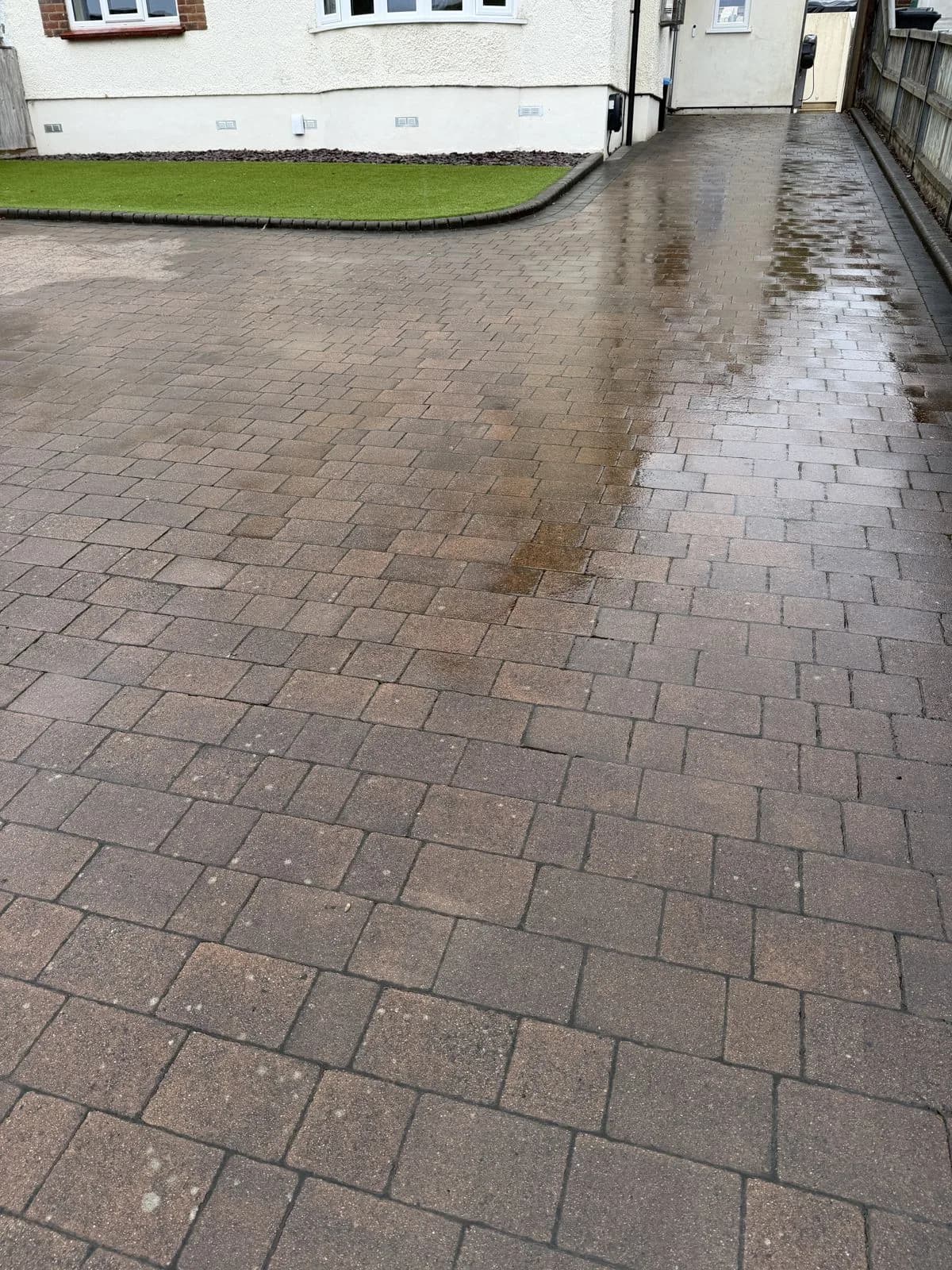
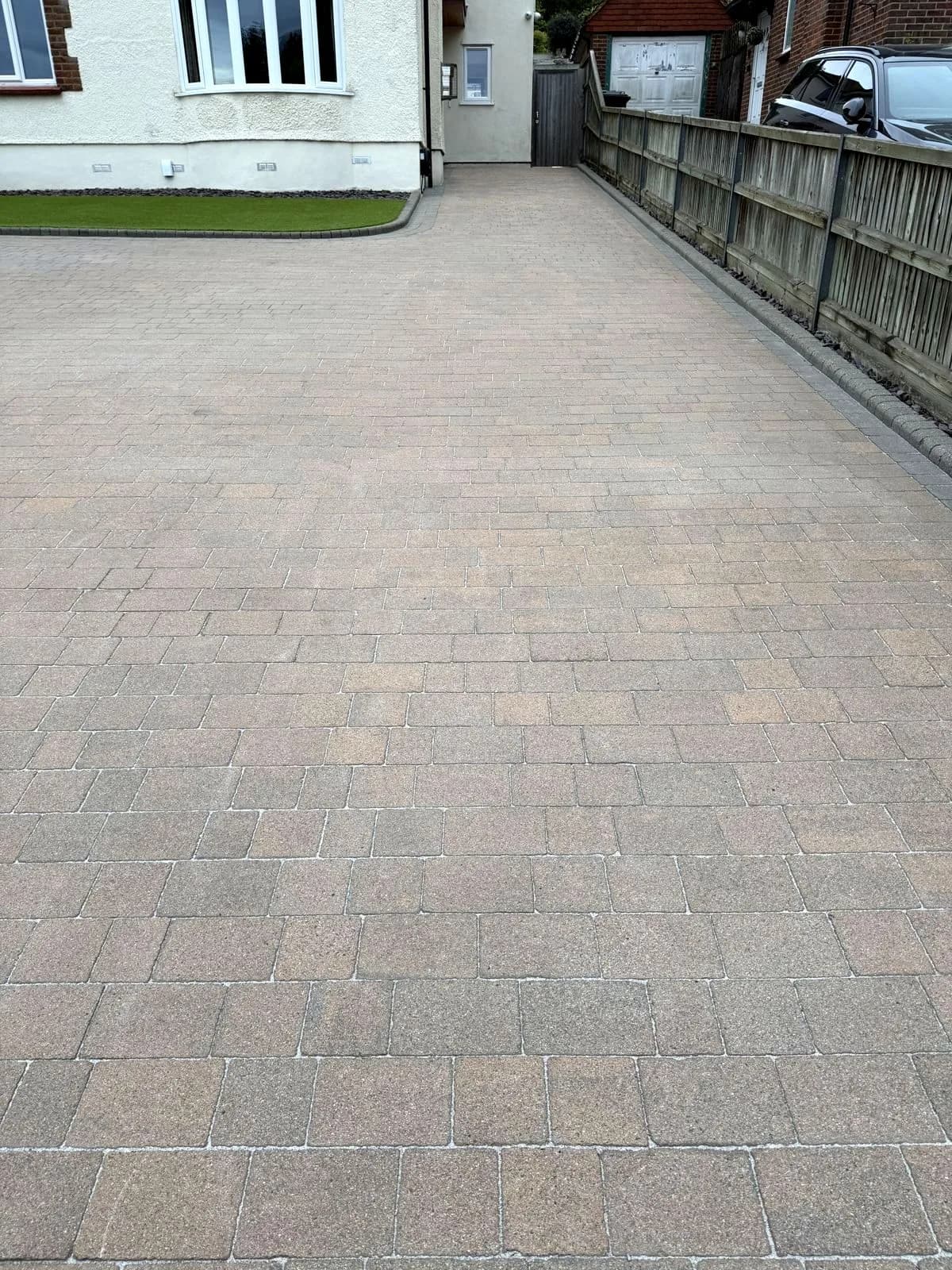
Restoring a 150m² block paved driveway in High Wycombe: deep clean, damaged blocks replaced, polymeric re-sanding, compaction and Chiltern EverGuard™.
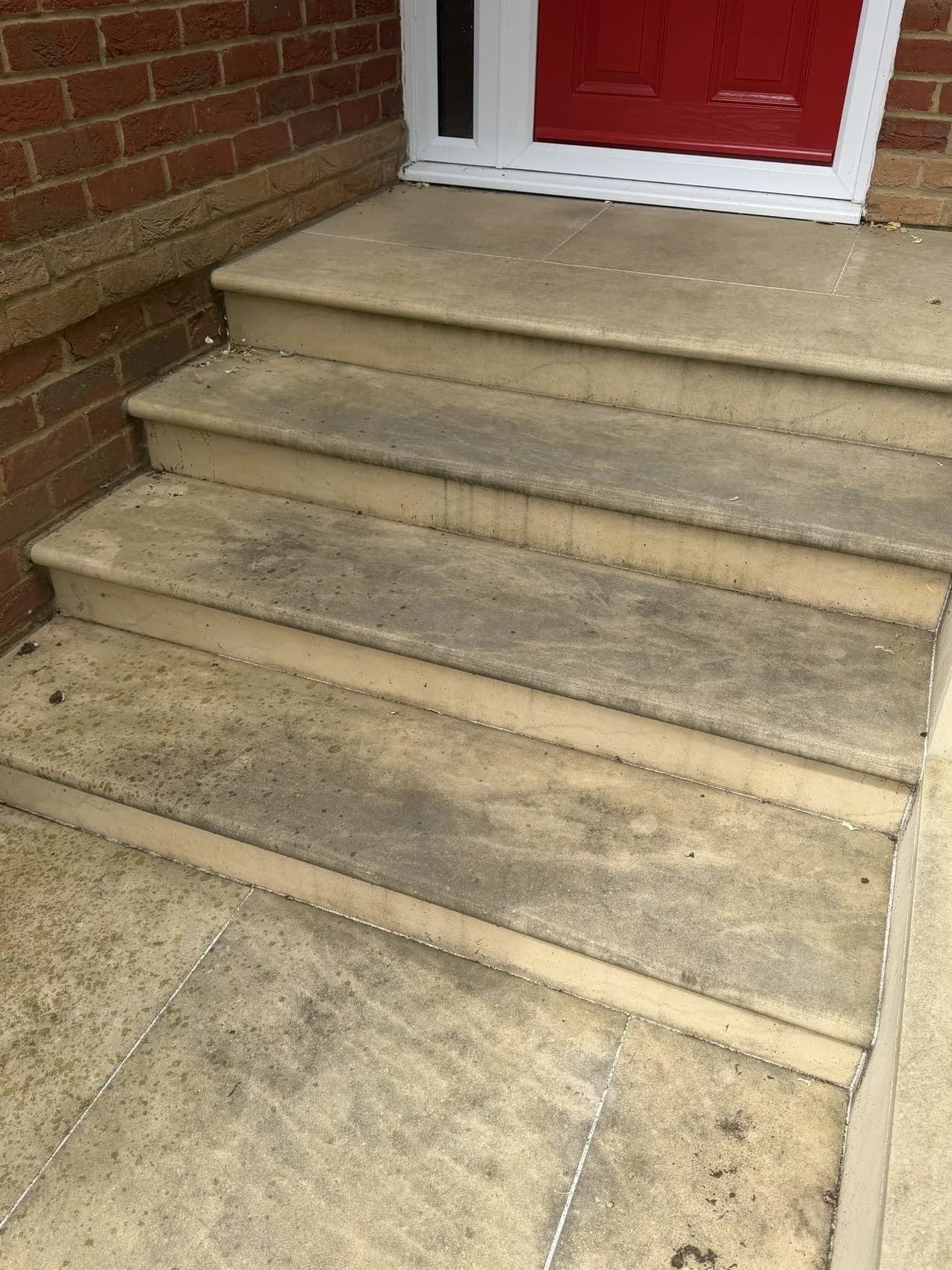
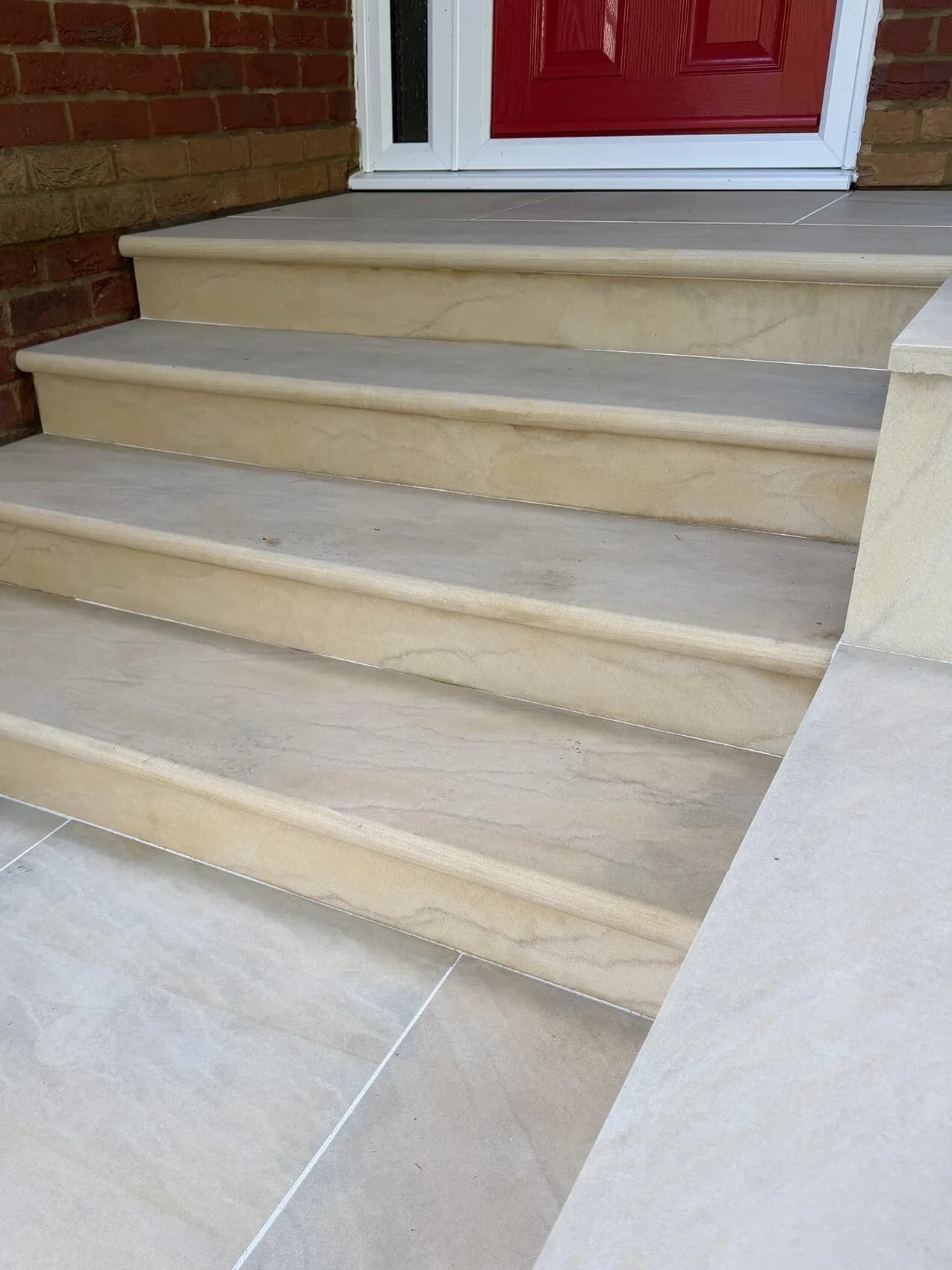
Indian sandstone step cleaning and block paving cleaning in High Wycombe, including polymeric re-sanding, compaction and Chiltern EverGuard™ treatment.
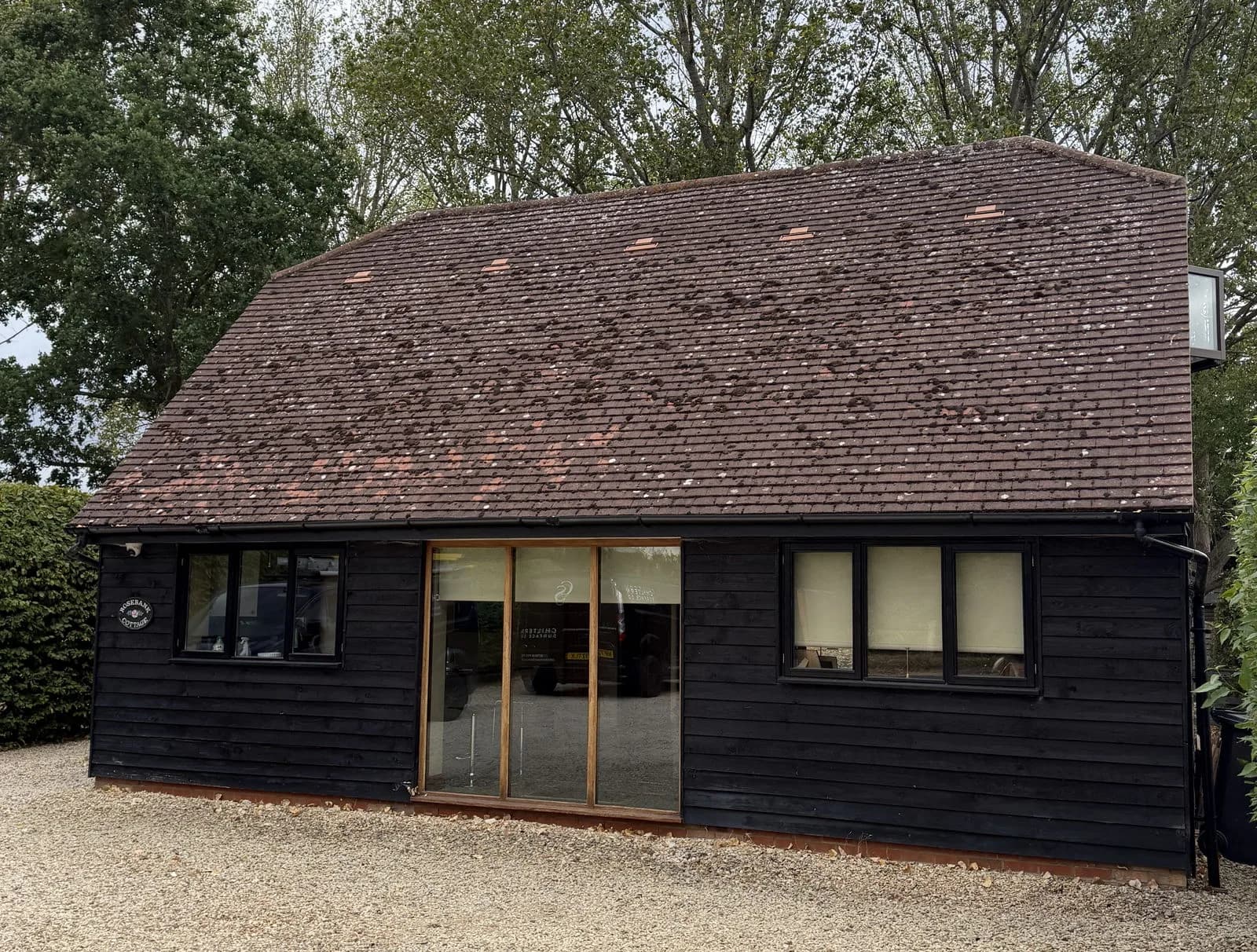
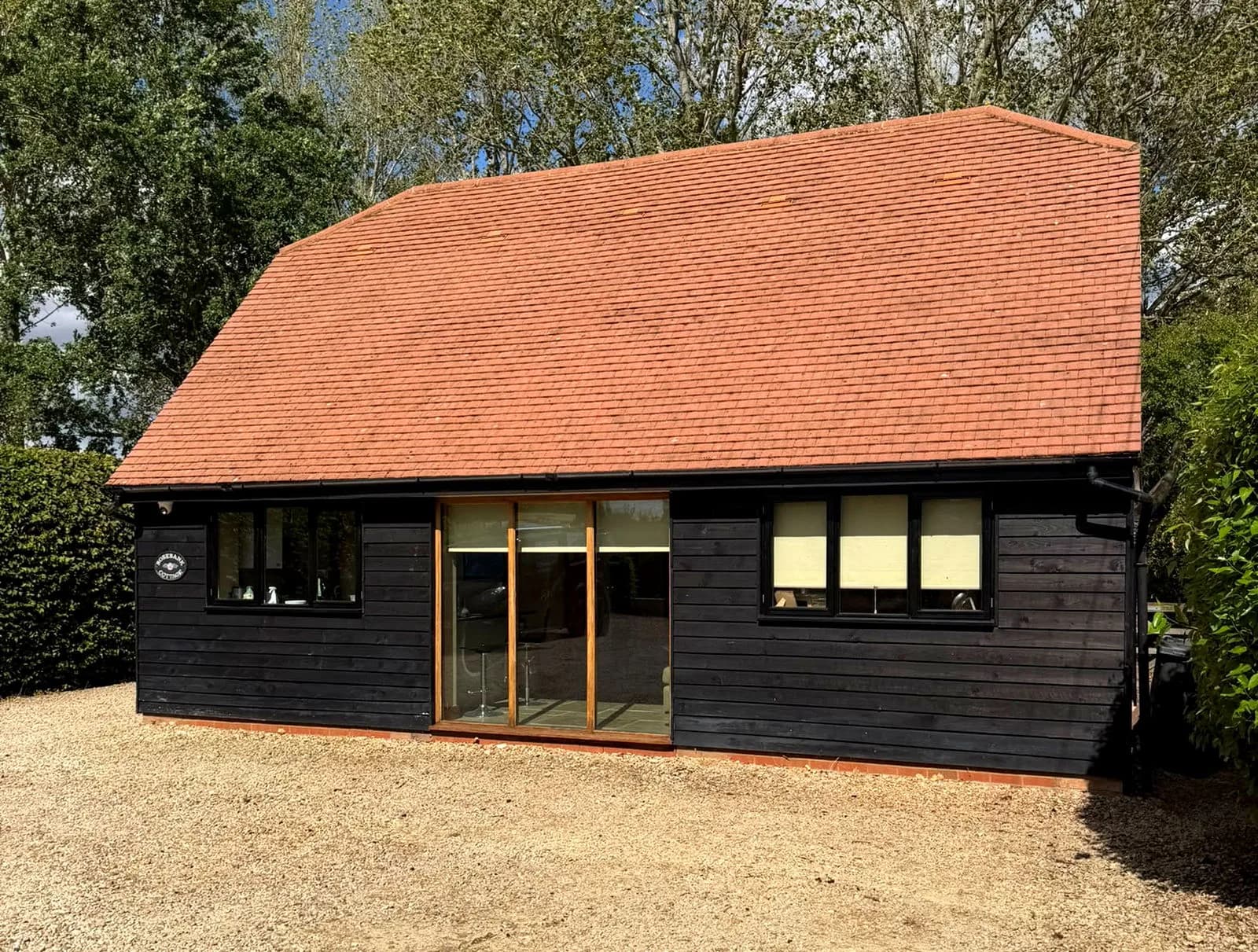
Clay tile roof cleaning in Aylesbury: 30+ years of heavy moss removed from this steep clay roof, then protected with Chiltern EverGuard™.
Why us
De-ionised water does the washing and the rinsing, so no detergent or chemical goes onto your roof or runs into the garden below.
Most domestic arrays are reached with a water-fed pole from the ground. Where that is not possible, we tell you at the site visit.
We explain what cleaning removes and leave the generation figures to your monitoring, rather than promising a gain no one can predict.
We are a fully insured company based in Marlow, and the access method for your array is agreed with you before the day of the clean.
Nearby
We also clean arrays in Monks Risborough, Askett, Longwick, Lacey Green, Bledlow and Saunderton. Homes out in the villages often sit closer to fields or woodland, so the same checks on dust, moss and access apply.
Solar Panel Cleaning in nearby towns
What Clients Say
Thank you to every client who has trusted us with their home. Your reviews mean a great deal to us. We’re proud to be fully insured, certified professionals — delivering proven results with a customer-focused approach on every single project.
5-Star Rated On Google
Questions
Open farmland lets wind carry fine soil and plant material a long way, especially in dry weather and around harvest. On its own the dust rinses off in rain, but mixed with pollen and dew it dries into a film that stays put.
No. The panels are washed and rinsed with de-ionised water only. Nothing is left on the glass, and nothing runs off into the gutters, the borders or the garden below.
No. Nobody stands on the array. A water-fed pole reaches most domestic panels from the ground. If yours cannot be reached that way, for example above a conservatory or a deep extension, we explain the options at the site visit.
Once a year suits many arrays. Panels facing farmland, near trees or set at a low angle that holds dirt often benefit from a second clean. We suggest an interval once we have seen how much had built up.
It depends on the array. Cleaning takes off droppings, dust and moss that shade the glass, but the effect on generation varies with orientation, season, weather and the system itself, so we will not quote a figure.
Yes. Solar thermal plates and tubes are cleaned with the same de-ionised water, with extra care around the manifolds and seals. Ground-mounted arrays in larger gardens are brushed panel by panel, frames included.
Only where it sits on the array. Moss on the bottom frame and edges is cleared as standard. Moss growing on the surrounding tiles is roof work, which needs a different method, and we will explain that separately if it is needed.
More from us
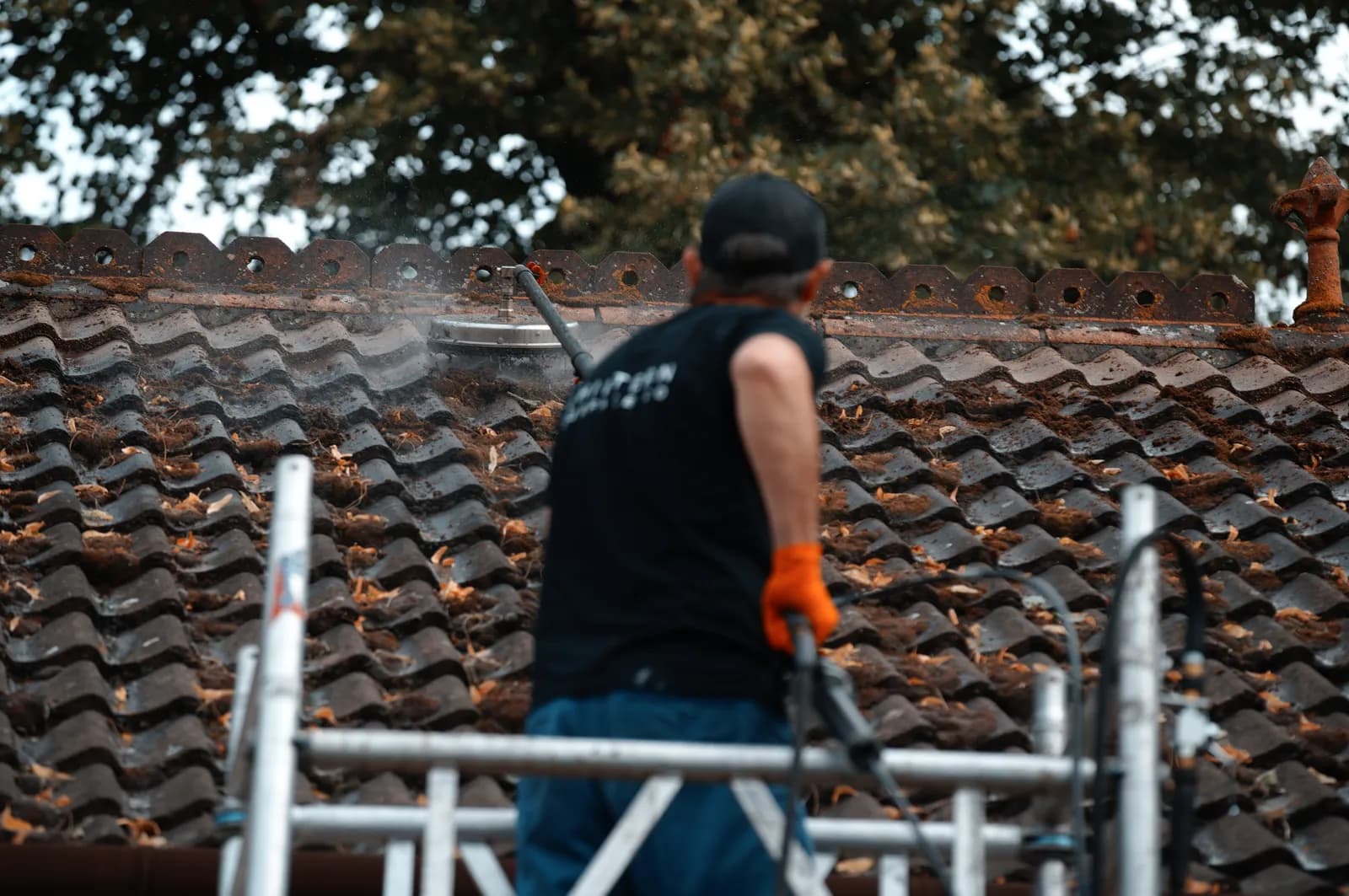
Carefully remove moss, algae and lichens to protect your roof and enhance kerb appeal.
Learn Moreabout Roof Cleaning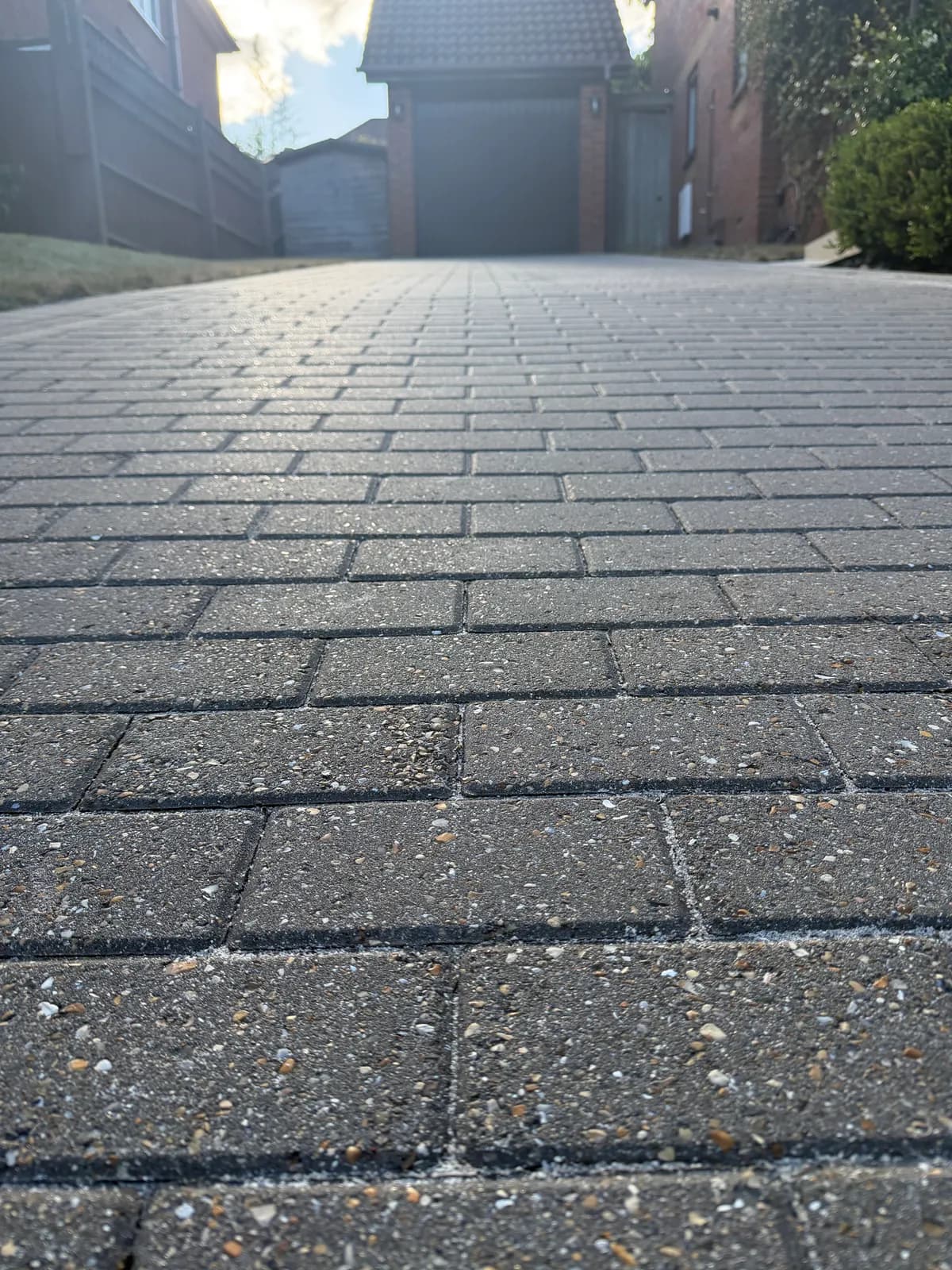
Professional cleaning for block paving, tarmac and resin driveways, restoring colour and removing stains.
Learn Moreabout Driveway Cleaning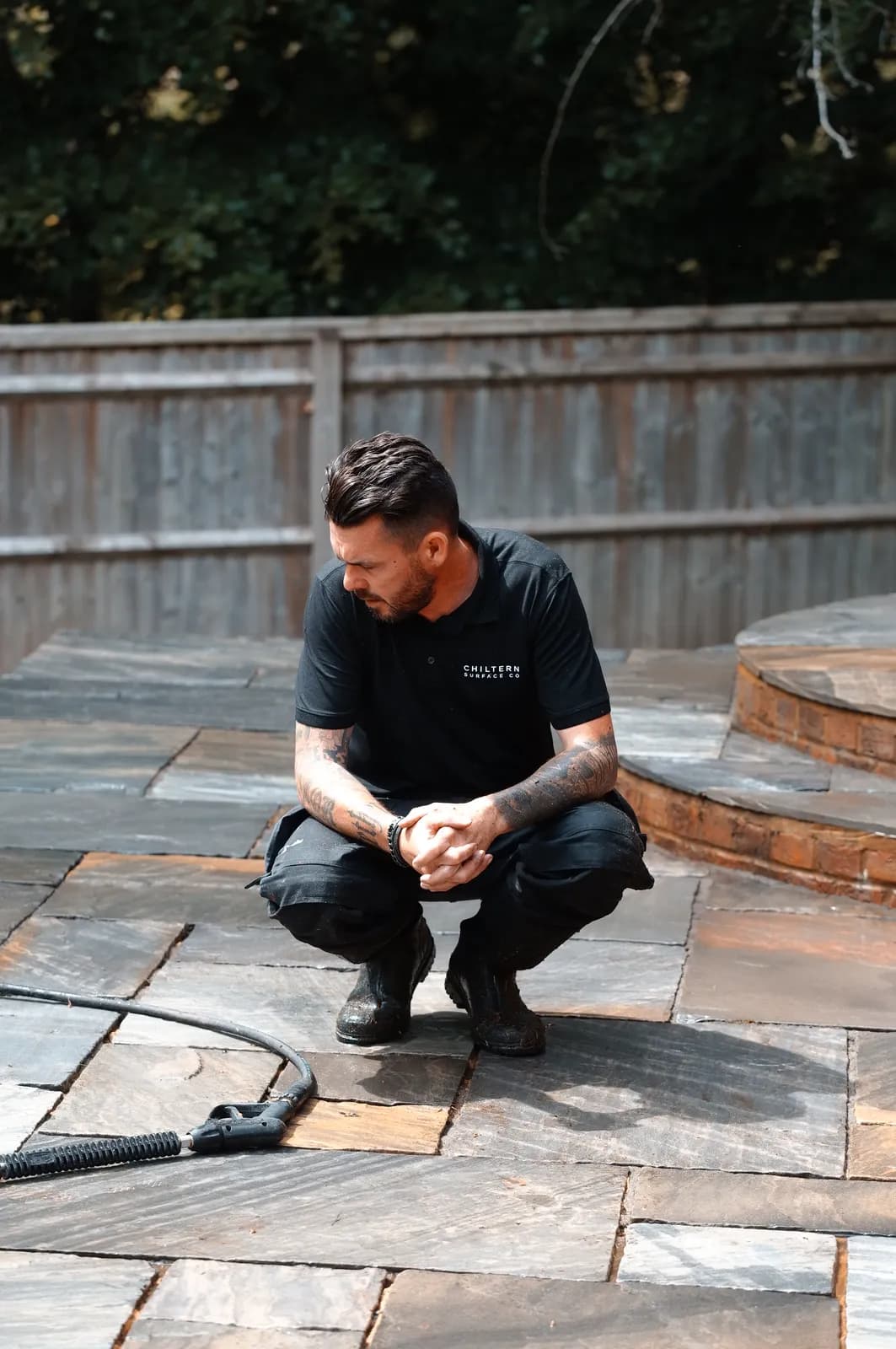
Specialist cleaning and restoration for natural stone, porcelain and concrete patios.
Learn Moreabout Patio Cleaning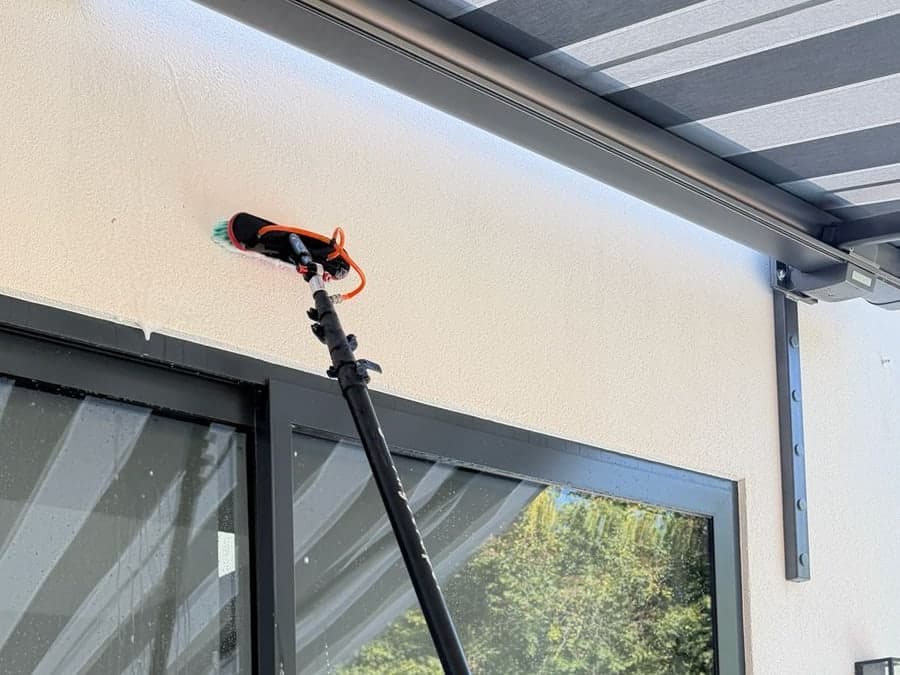
Low pressure soft wash treatment designed to safely remove algae, mould and grime from exterior surfaces.
Learn Moreabout Soft Wash Treatment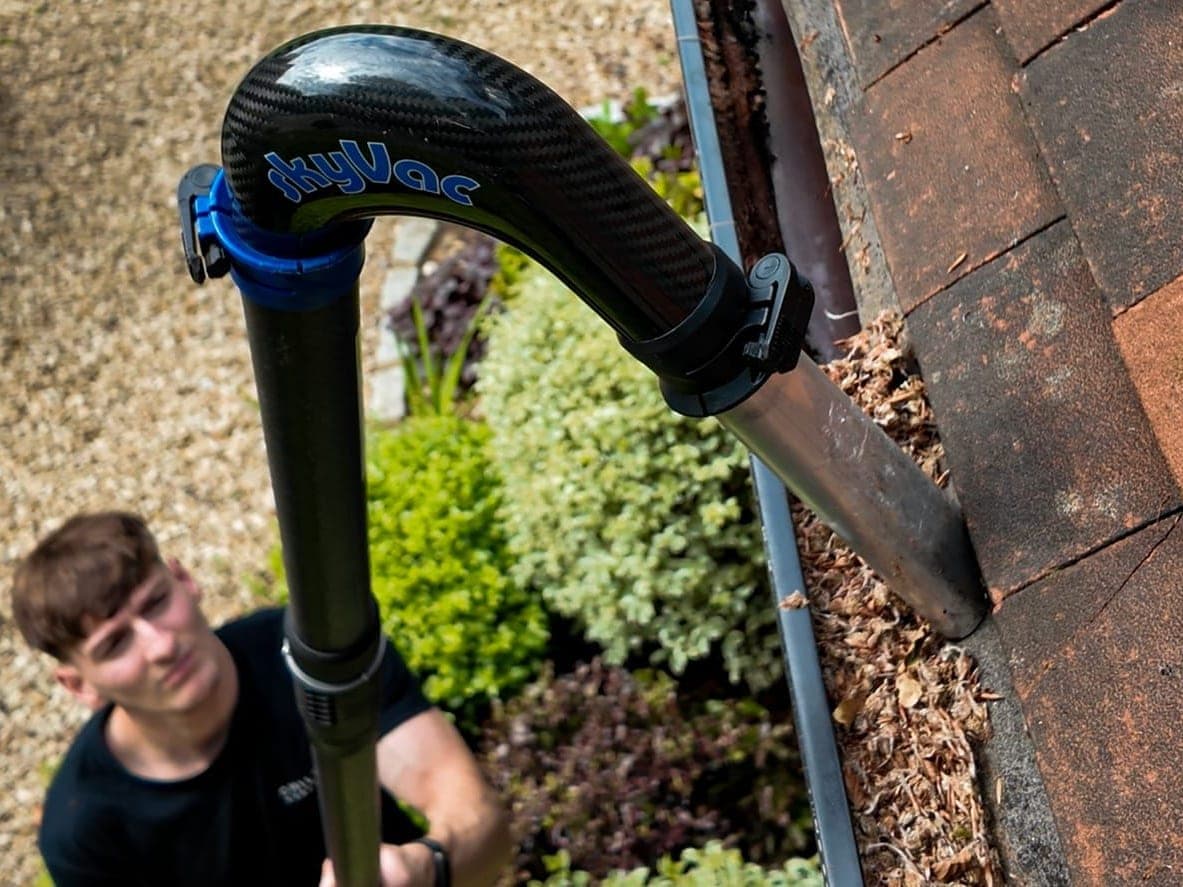
Clear and flush blocked gutters and downpipes to protect your walls, fascias and foundations.
Learn Moreabout Gutter Cleaning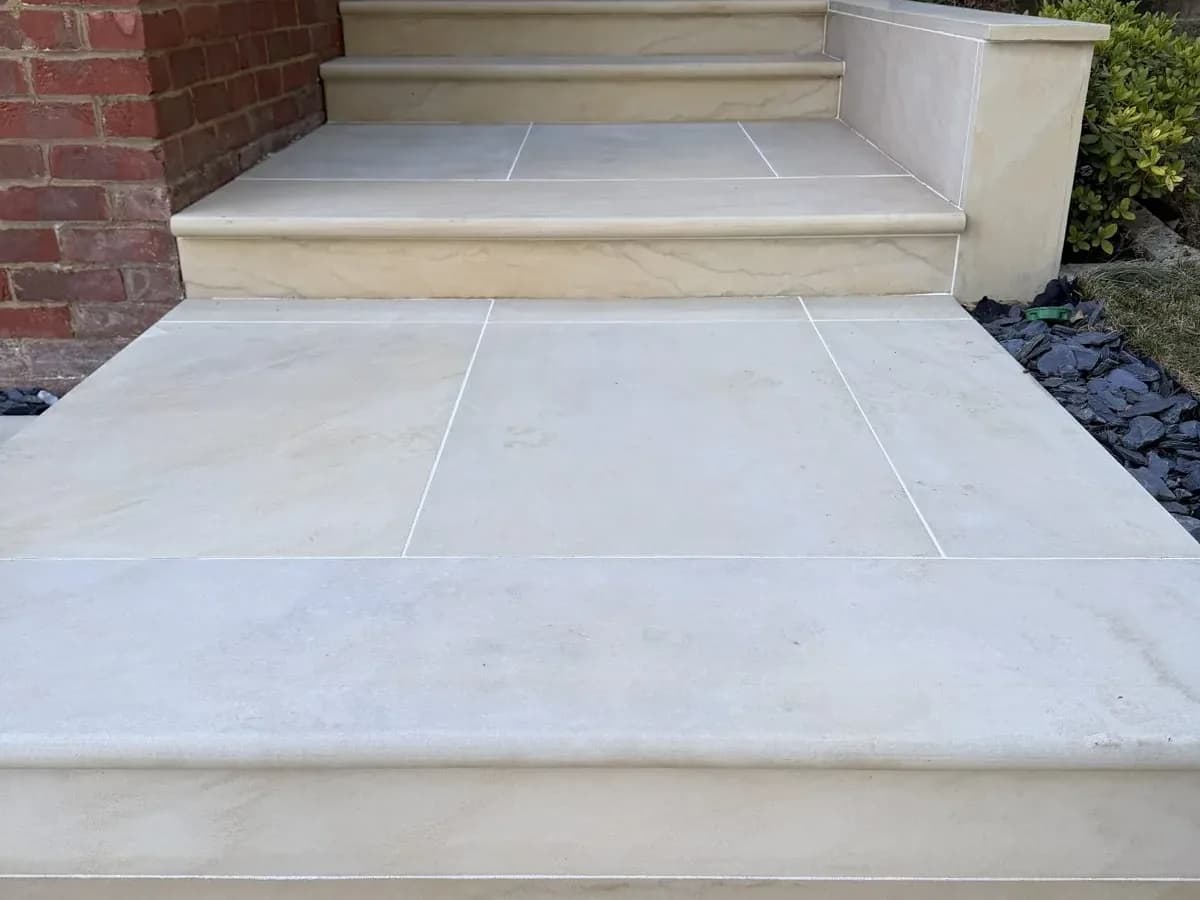
Winter cleaning that removes slippery algae and moss from paths, steps and patios, planned around the forecast.
Advice
Chiltern Surface Co
We will look at the array with you, explain what has built up on it and how we would reach it. A clear quotation follows, and the decision rests with you.
We assess your surfaces and recommend the right approach for the best, long-lasting results.
You'll receive a detailed, transparent quote with no hidden extras.
We'll provide honest advice so you can decide what's right for you.
Speak directly with the owner and get expert advice you can trust.