Block Paved Driveway Cleaning in Maidenhead
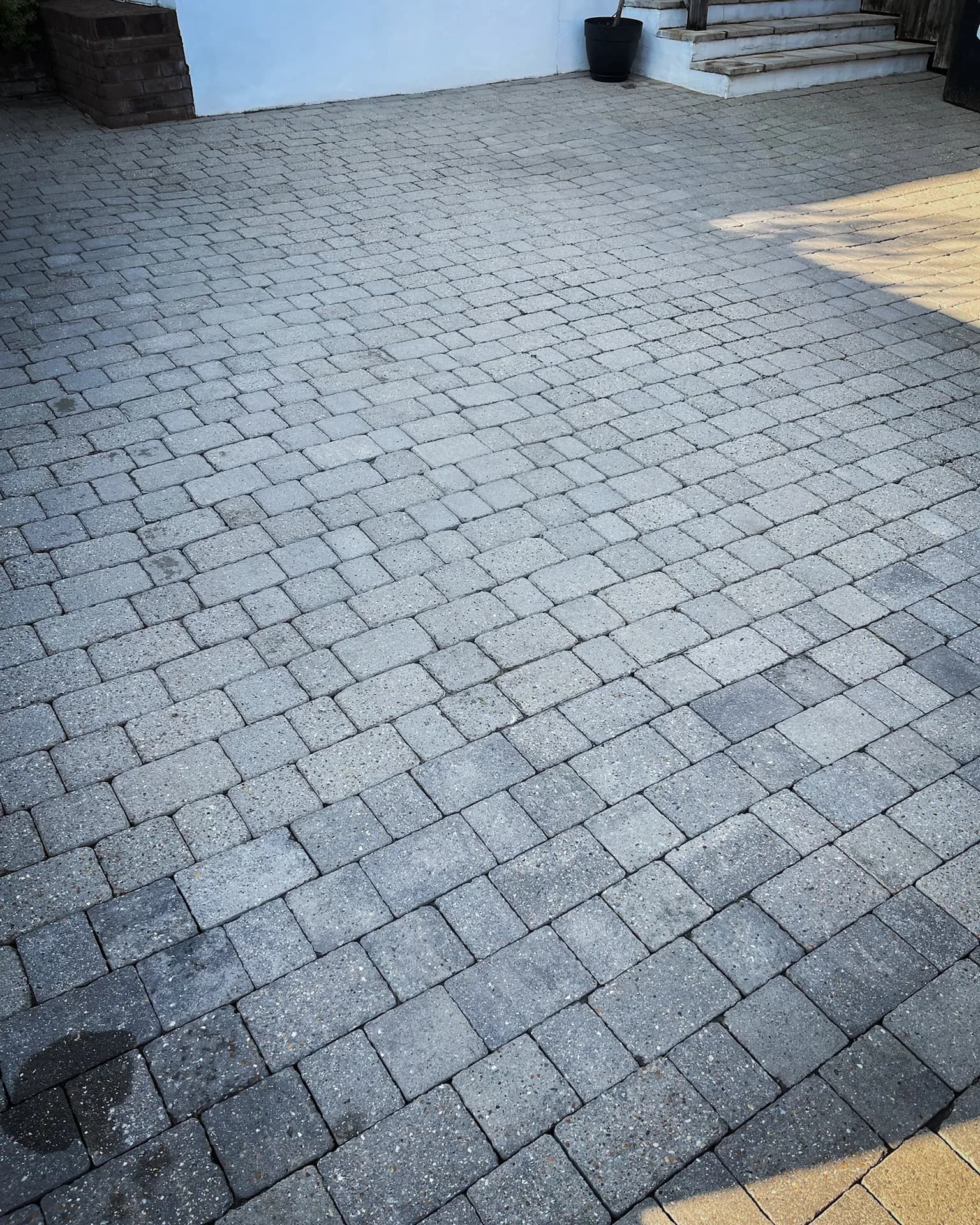
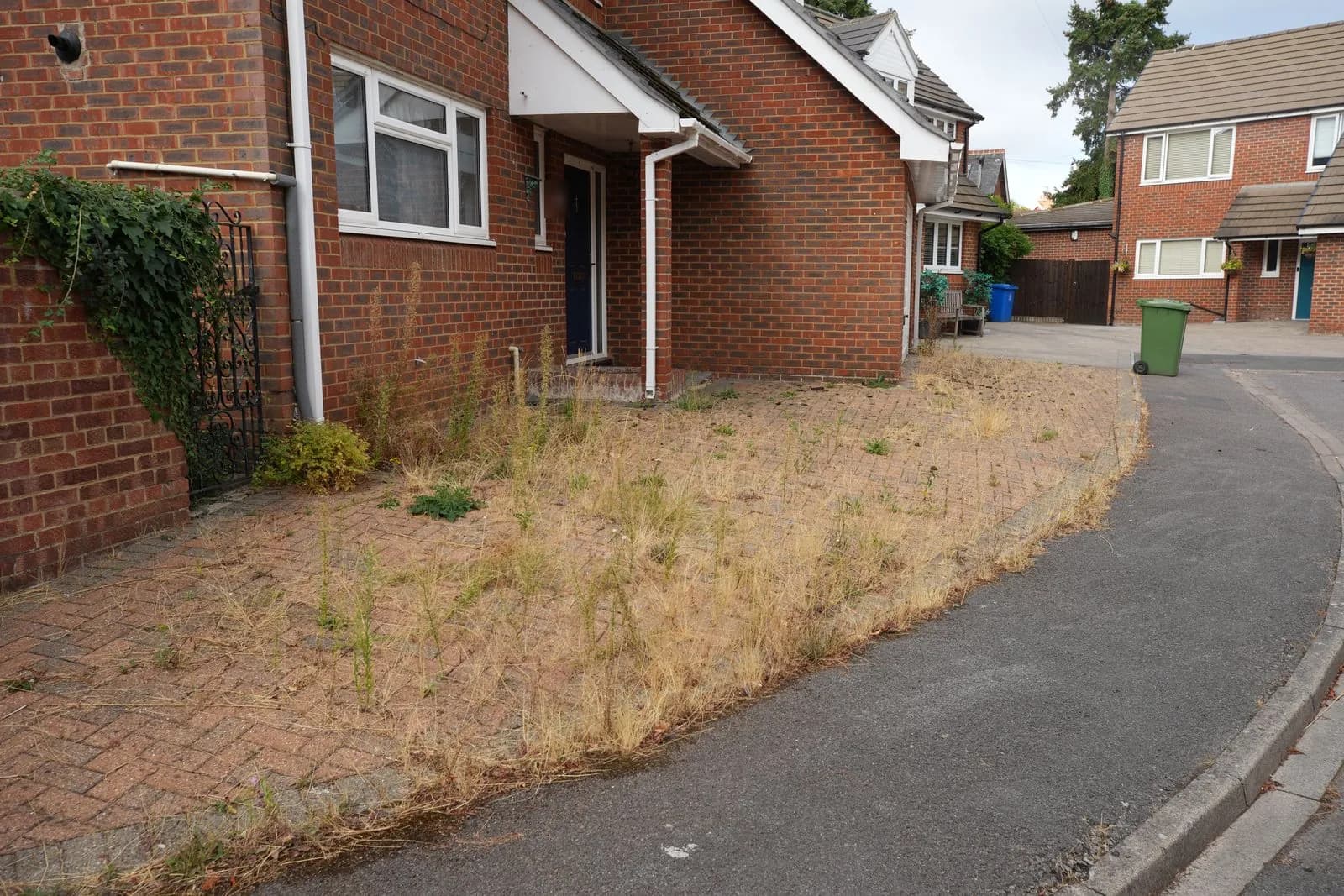
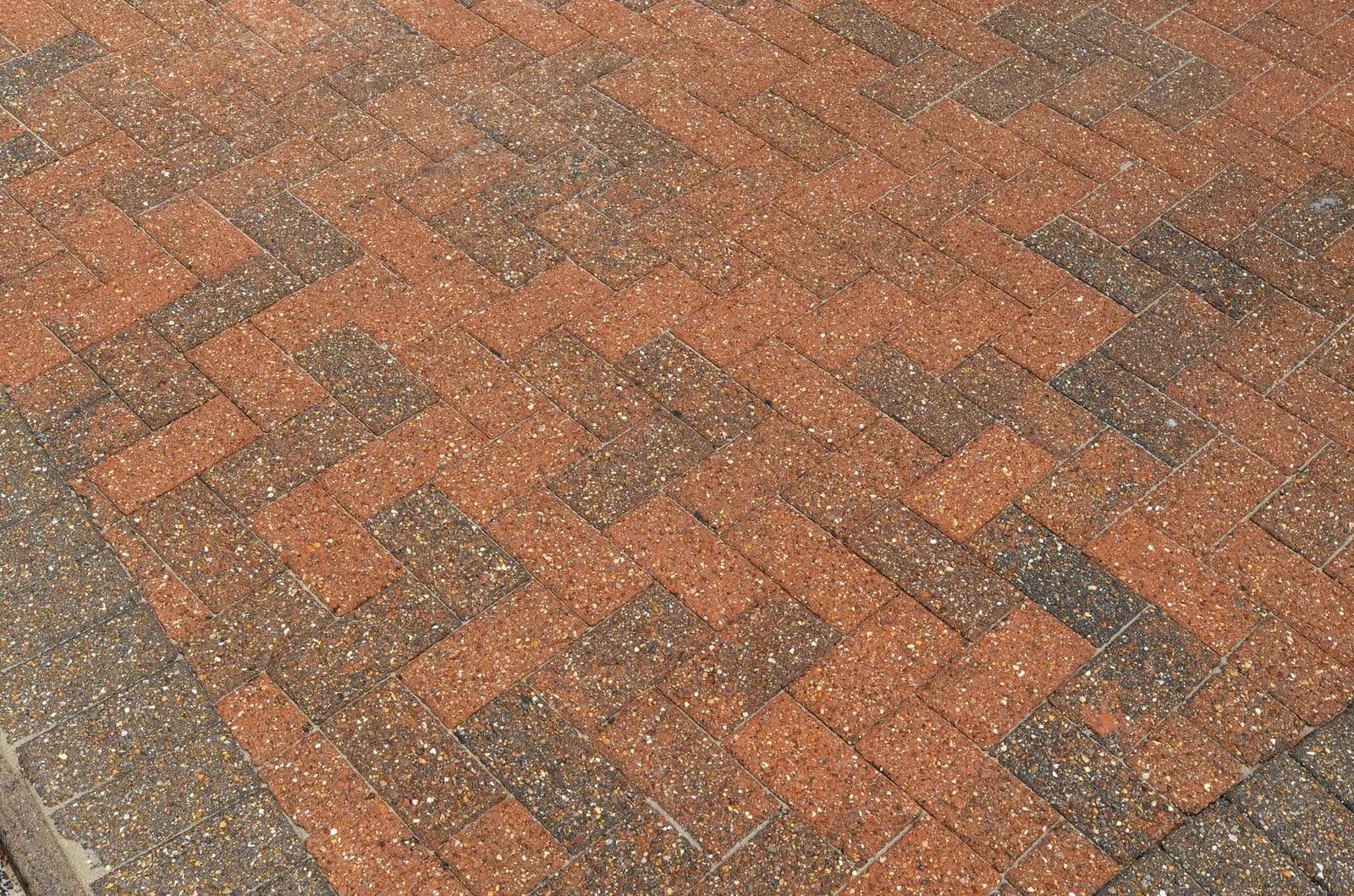
An overgrown block paved driveway in Maidenhead, cleared by hand, deep cleaned, treated with Chiltern EverGuard™, re-sanded with polymeric sand and compacted.
Solar Panel Cleaning · Buckinghamshire
Bourne End sits where the River Wye joins the Thames, and arrays near the water see plenty of birds and riverside trees. We soften droppings and sap with de-ionised water and a soft brush, then rinse the glass clear.

The two problems
Dust is light and most of it goes with the next shower. Bird droppings and tree sap are different. Both dry onto the glass, both grip it firmly, and sap catches airborne dirt for weeks afterwards. Neither should be scraped or attacked with detergent. Wetting, waiting and gentle brushing removes them without risk to the glass, frames or seals.
River village
Bourne End grew up on the north bank of the Thames, at the point where the River Wye flows in from High Wycombe. Moorings and riverside gardens line the water, and the mature trees along the banks and in older gardens give the lower part of the village a green, sheltered feel. Birds gather wherever there is water, and rooftops close to it make handy perches.
Away from the river, the ground rises towards Wooburn and Flackwell Heath, and the houses change with it: inter-war and post-war family homes, then newer developments with tidier rooflines. Roofs up the slope tend to be more open to the weather, while those nearer the river sit under trees that drop pollen, seed and sticky residue through the warmer months.
Bird fouling
A light layer of dust lets most of the light through. A dropping does not. It dries into a dense, opaque patch sitting right over the cells beneath, and rain rarely shifts it once it has baked on in sunshine. Near the river, arrays below favoured perches such as a ridge, chimney or aerial can collect several in the same spot.
Scraping one off with a blade or a hard edge risks scratching the glass. We wet each dropping with de-ionised water, give it time to soften, then work it away with the soft brush, going back as often as it takes.
Tree sap
Under some trees, panels pick up a sticky film in summer, from sap and from the sugary residue that aphids leave on the leaves above. On its own it is thin and almost clear, but it holds onto the pollen and dust that land on it, so the glass gradually turns hazy and blotchy.
Solvents and household cleaners are not needed and are not used. Pure water and repeated light brushing release the residue, and a thorough de-ionised rinse takes it away. Leaf fragments and seed caught at the bottom frame come out at the same time.
Access
Many homes near the water have long gardens running down towards the river, which usually gives plenty of room to work from. Others have a rear extension or conservatory directly beneath the array, or a narrow passage that is the only way round the house. A pole long enough to touch the panels is not the same as one that can be controlled across every panel from a safe spot.
We check where the operator will stand and how the hose will reach at the site visit. If an array cannot be cleaned properly from the ground, we say so before anything is booked.
The work
Each visit follows the same order. The time spent on each stage depends on how much fouling and sap the array is carrying.
We look at the array, the pitch, the ground and any structures below it, and note how heavily it is fouled before confirming how every panel will be reached.
De-ionised water is run onto droppings and sticky patches first and left to work, so they soften rather than being forced off the glass.
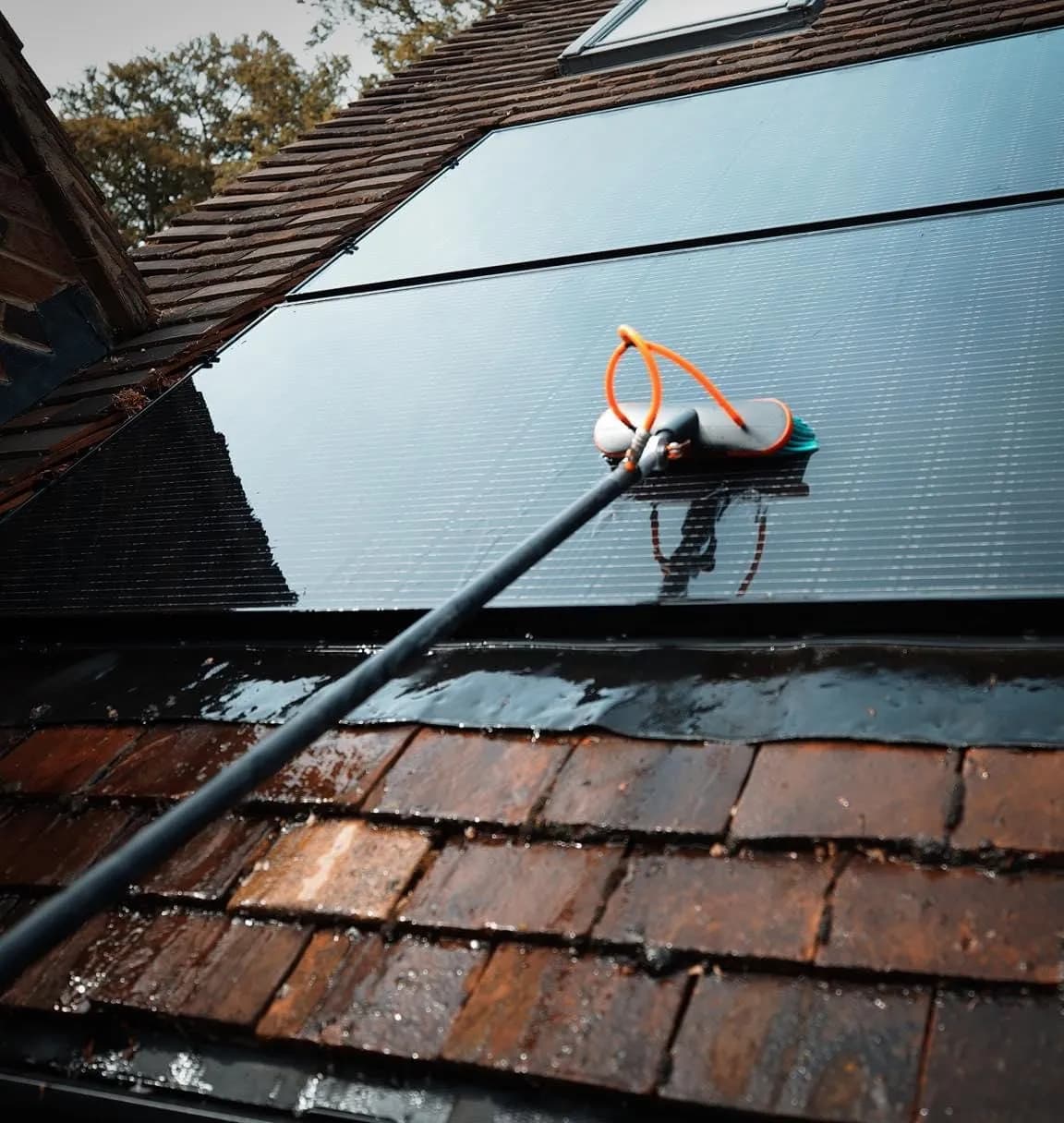
The whole array is brushed with light, even contact. Heavily marked panels get extra passes; the rest are not scrubbed for the sake of it.
Seed, leaf fragments and moss caught where the glass meets the bottom frame are cleared from every panel we can reach safely.
A final pure-water rinse, then the panels dry on their own. We look over the array and point out anything we noticed about the fixings or seals.
Be realistic
Removing droppings and film takes shading off the glass. How much that changes generation depends on how fouled the array was, its orientation, the season and the system's condition, so we do not quote a number.
An overgrown block paved driveway in Maidenhead, cleared by hand, deep cleaned, treated with Chiltern EverGuard™, re-sanded with polymeric sand and compacted.


Brick cleaning and soft washing in Beaconsfield: black algae and lichen treated on brick retaining walls and copings, then rinsed at low pressure.
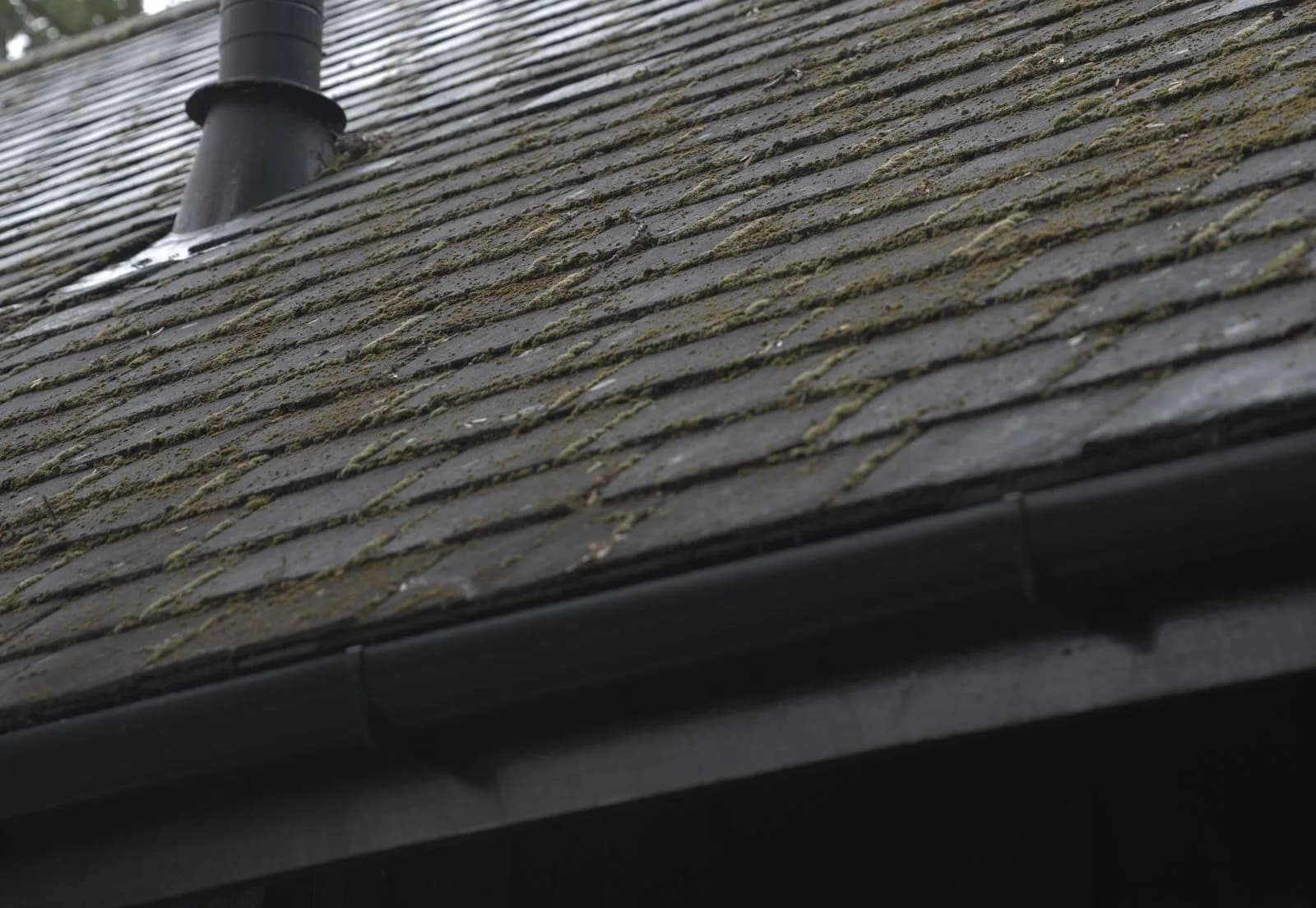
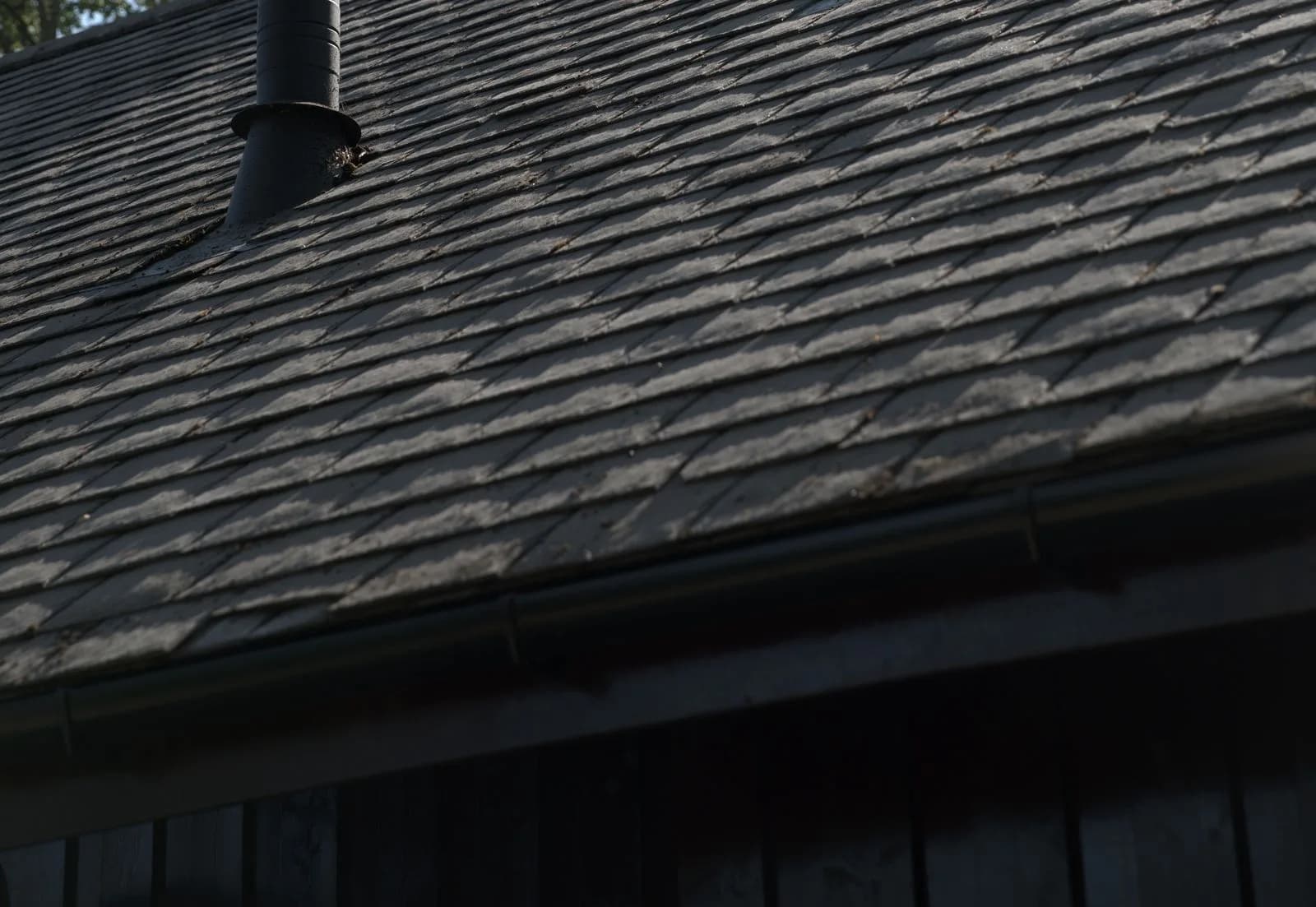
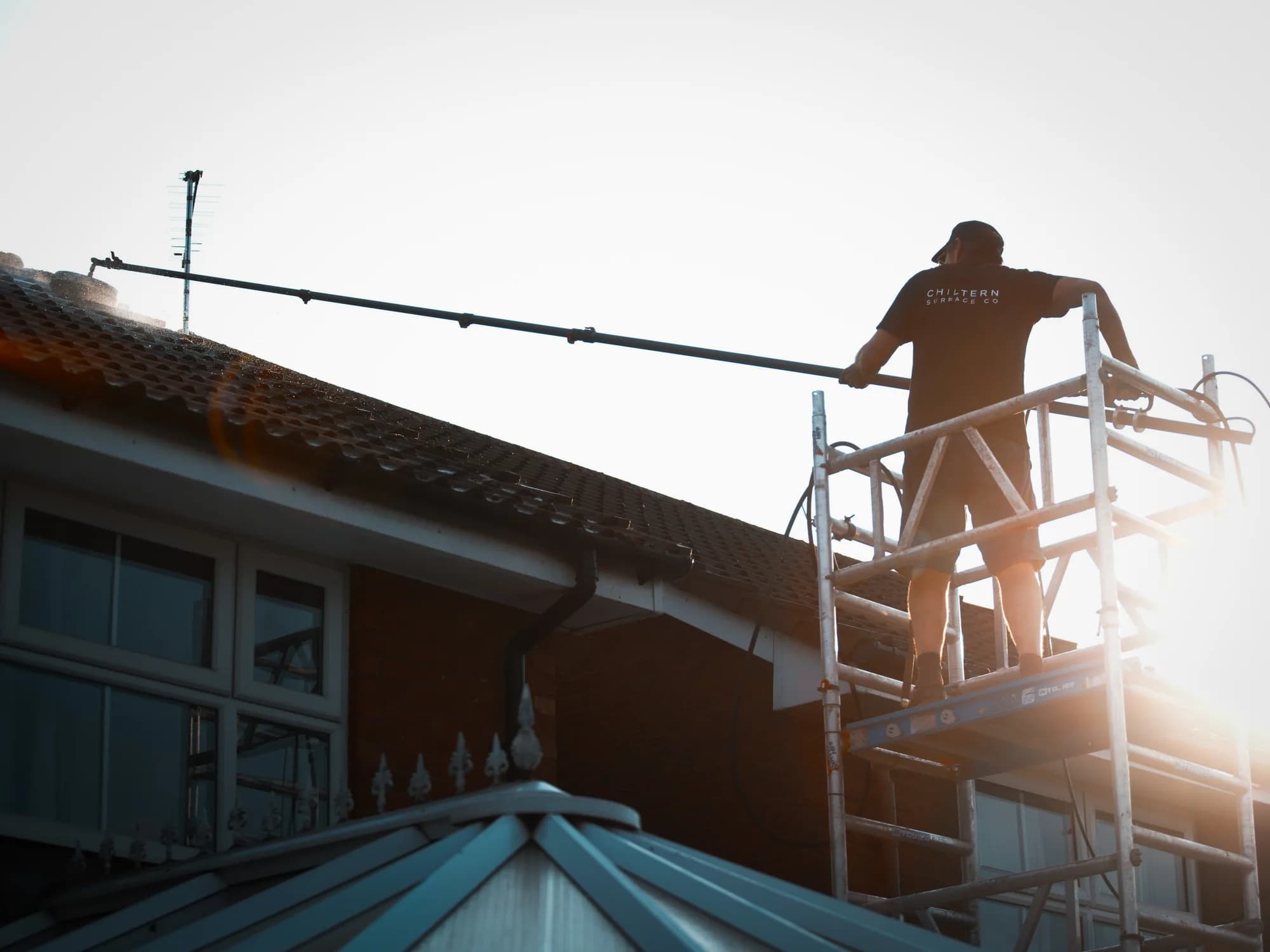
Slate roof moss removal and cleaning in Marlow: a drone survey, scaffold access, carefully controlled low-pressure cleaning and Chiltern EverGuard™.
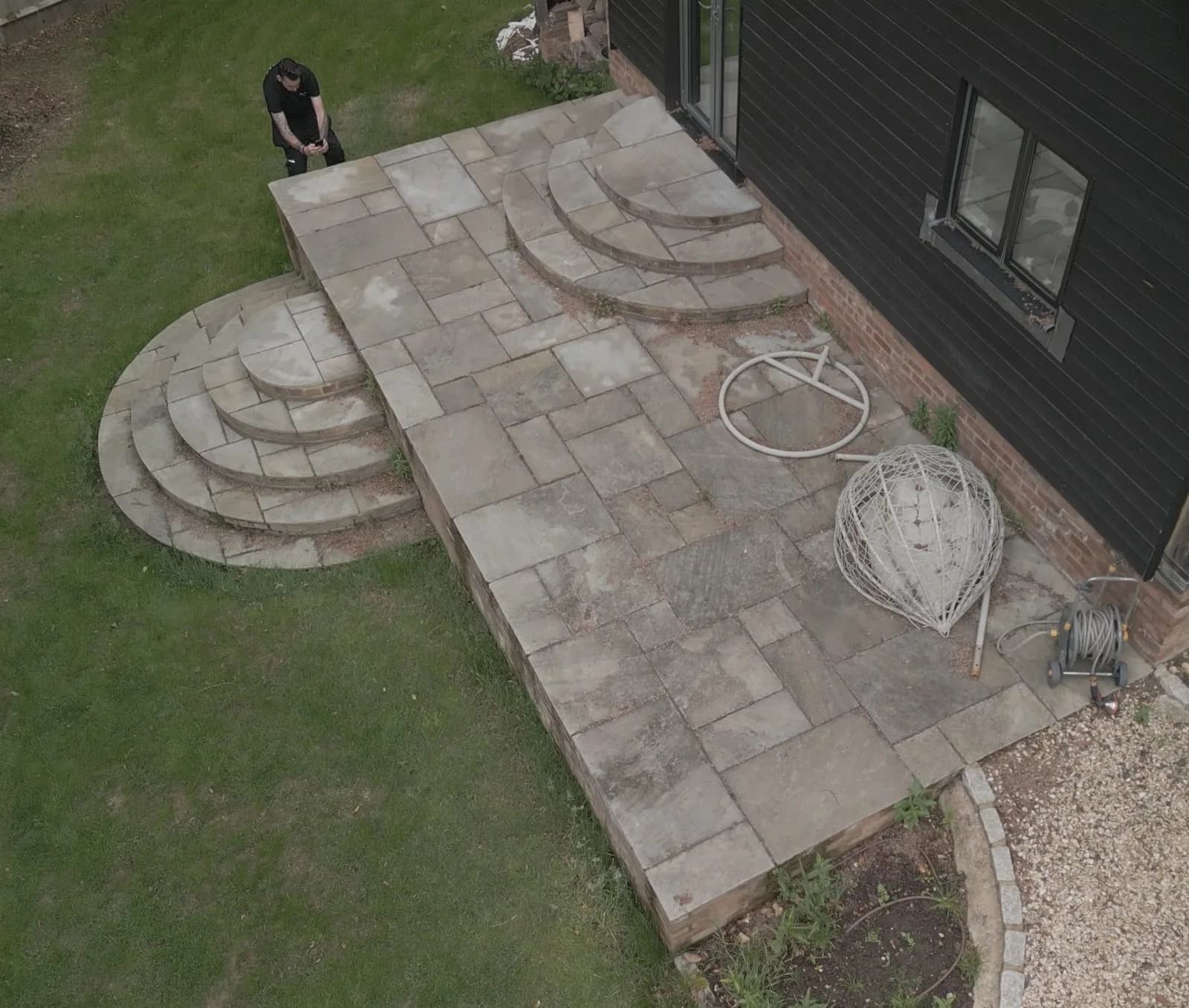
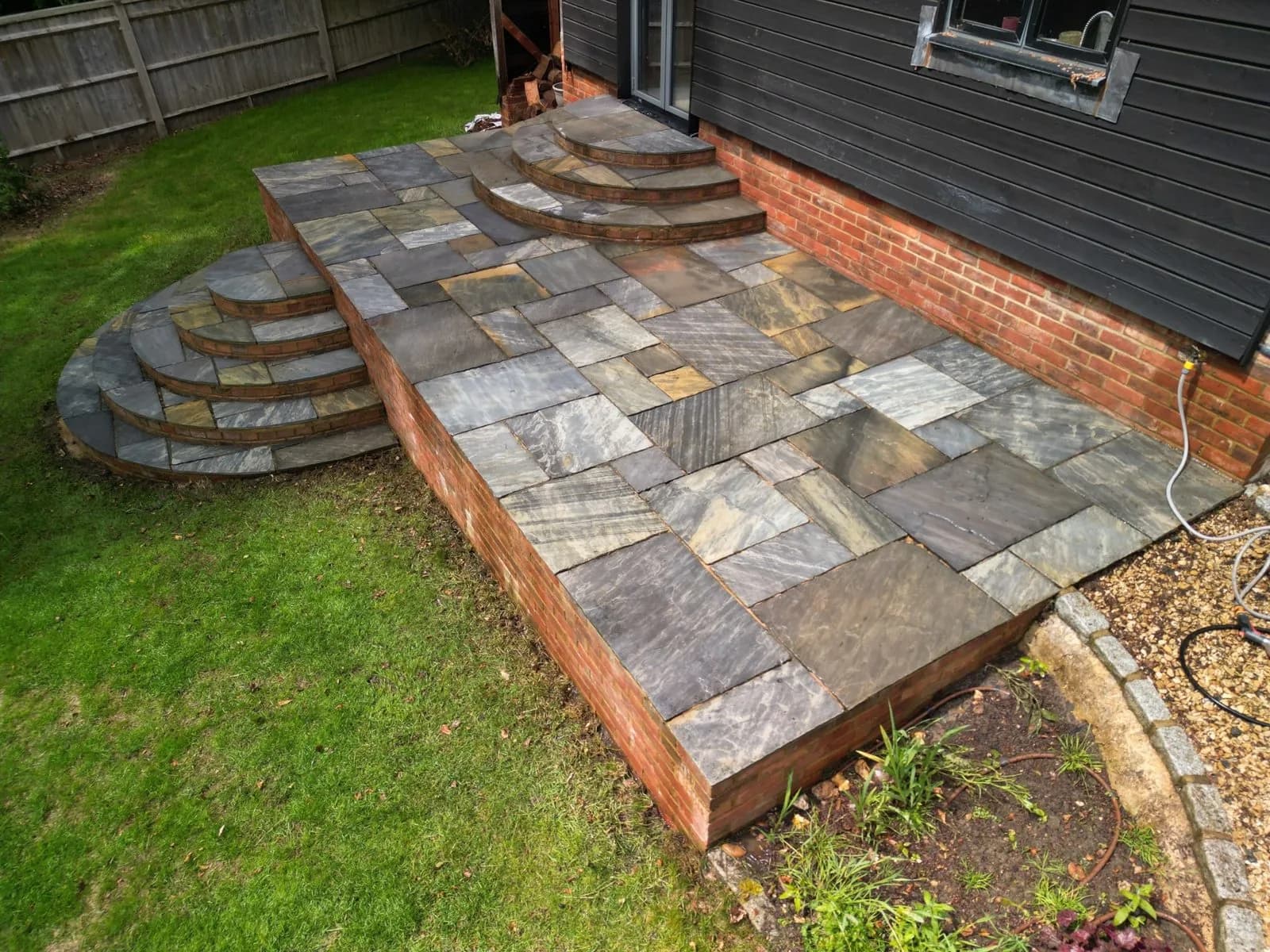
Natural sandstone patio cleaning in Marlow — heavy moss, algae and early black spot removed, protected with Chiltern EverGuard™, plus a full gutter clean.
Why us
Droppings and sap are soaked and softened before brushing, so nothing hard or abrasive is ever used to shift them from the glass.
No detergents, solvents or chemicals go on the array, and none can run off towards the garden or the river.
Arrays are reached from the ground with a water-fed pole wherever access allows, with the plan agreed at the site visit.
Fully insured and based just upstream in Marlow, we explain what we cleaned and anything we noticed while we were there.
Nearby
We also clean solar panels in Wooburn Green, Wooburn Moor, Hedsor, Flackwell Heath, Little Marlow and Cookham. Homes on the higher ground tend to be more exposed, while those near the water share the same birds and trees.
Solar Panel Cleaning in nearby towns
What Clients Say
Thank you to every client who has trusted us with their home. Your reviews mean a great deal to us. We’re proud to be fully insured, certified professionals — delivering proven results with a customer-focused approach on every single project.
5-Star Rated On Google
Questions
We wet them with de-ionised water and leave them to soften, then brush them away gently with a soft-bristle brush. A stubborn one is soaked and brushed again rather than scraped, which avoids scratching the glass.
Yes. Sap and the sticky residue left by aphids soften with pure water and come away with repeated light brushing. No solvents or household cleaners are needed, so none are used.
Birds favour the same perches, usually a ridge, chimney, aerial or a branch above the roof, so droppings collect below them. Cleaning removes the fouling but does not change where birds sit; deterring them is a job for a pest specialist.
No. Nobody stands on the array. A water-fed pole reaches most domestic panels from the ground, and where a conservatory or extension makes that impossible, we explain it at the site visit.
Once a year suits many arrays. Panels below regular perches, under trees or at a shallow angle often benefit from a second clean. We suggest an interval once we have seen how quickly yours builds up.
Yes, for the deposits found on domestic arrays. De-ionised water has had its minerals removed, so it lifts dirt well with a brush and dries without leaving spots, and nothing needs rinsing off afterwards.
More from us
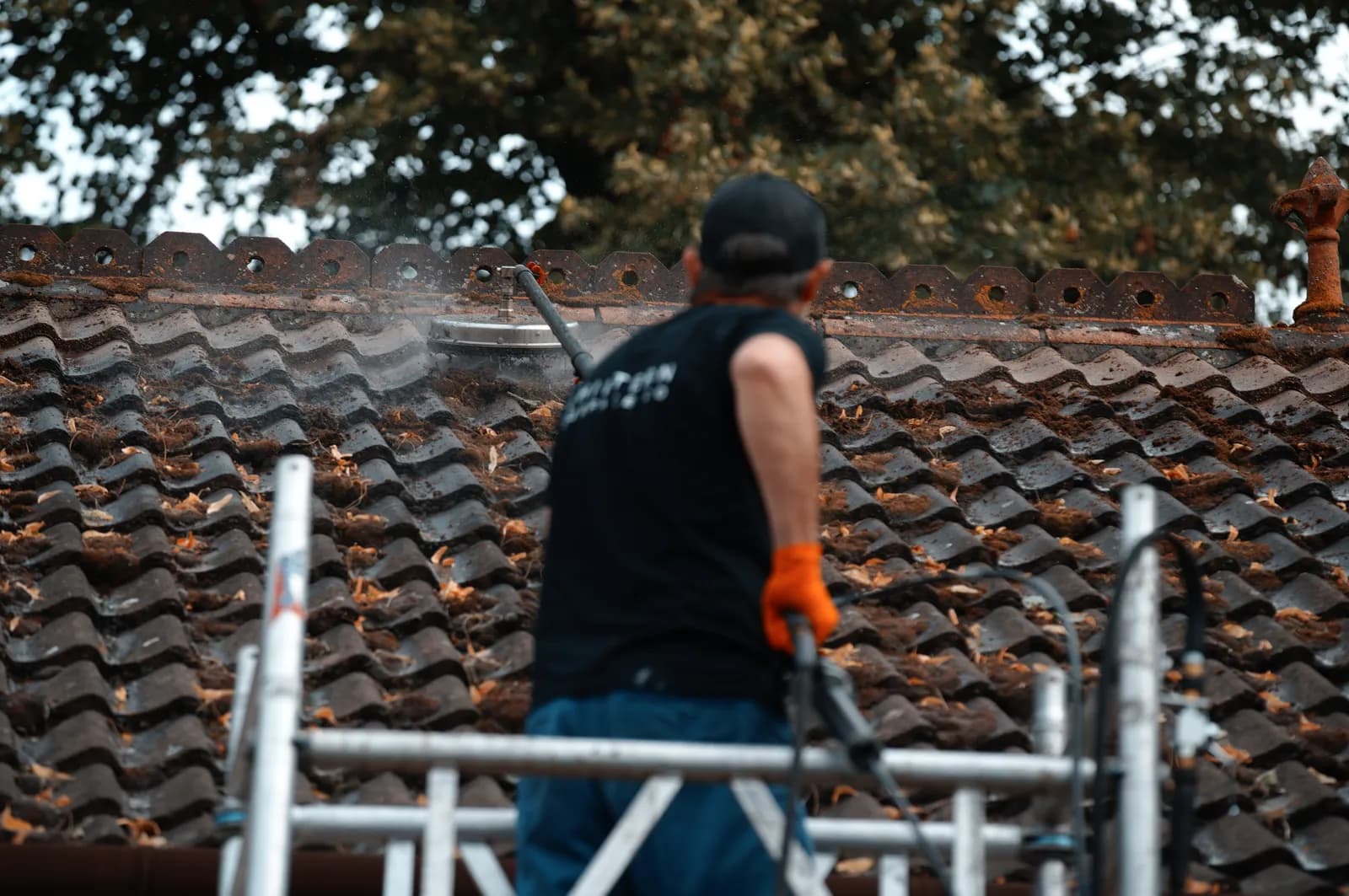
Carefully remove moss, algae and lichens to protect your roof and enhance kerb appeal.
Learn Moreabout Roof Cleaning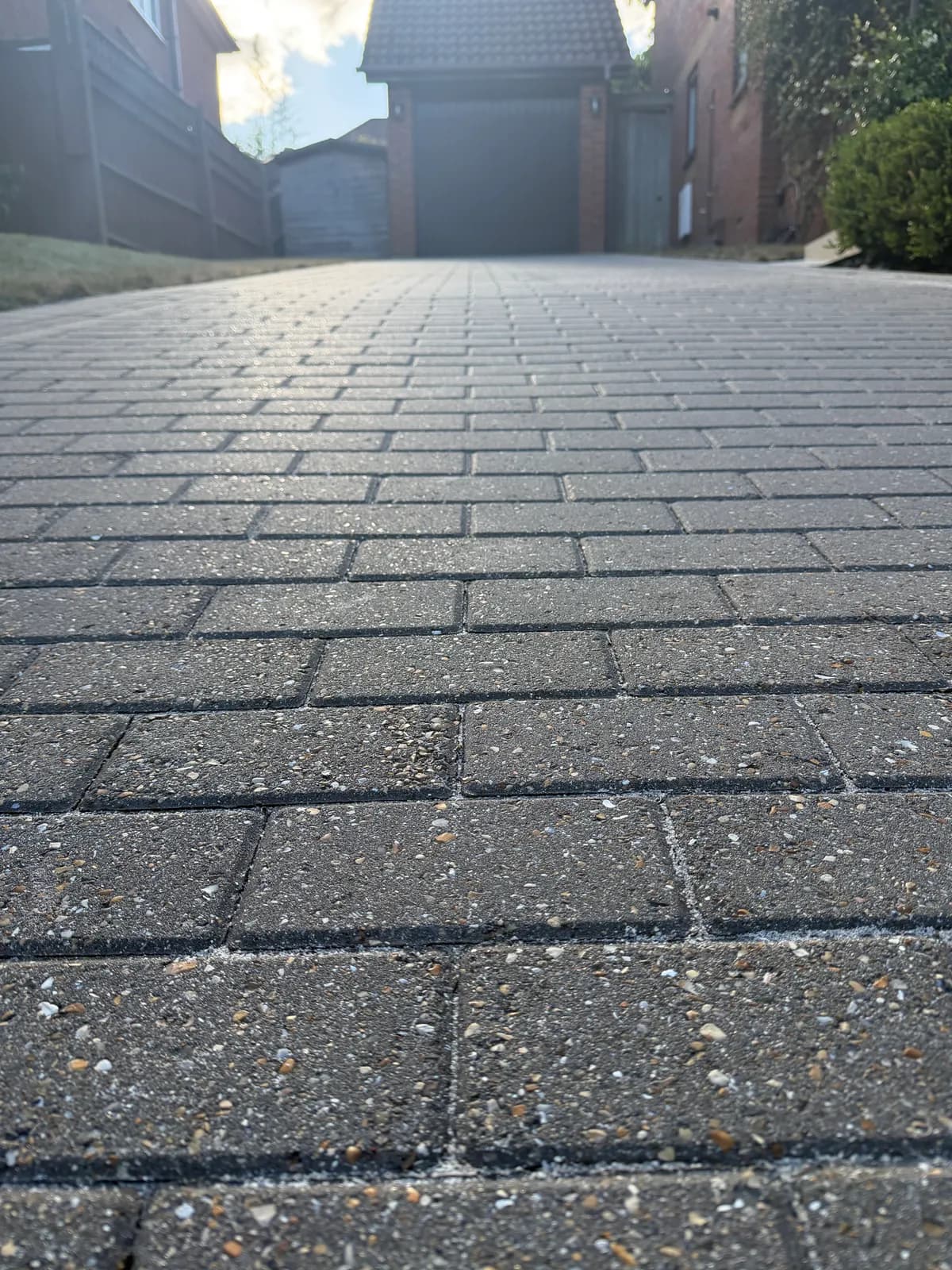
Professional cleaning for block paving, tarmac and resin driveways, restoring colour and removing stains.
Learn Moreabout Driveway Cleaning
Specialist cleaning and restoration for natural stone, porcelain and concrete patios.
Learn Moreabout Patio Cleaning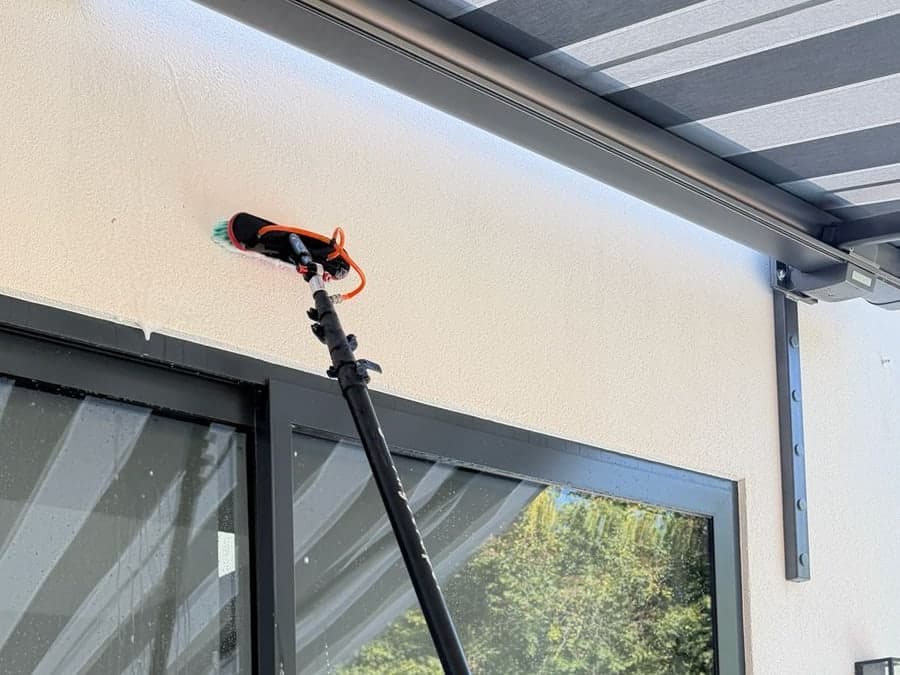
Low pressure soft wash treatment designed to safely remove algae, mould and grime from exterior surfaces.
Learn Moreabout Soft Wash Treatment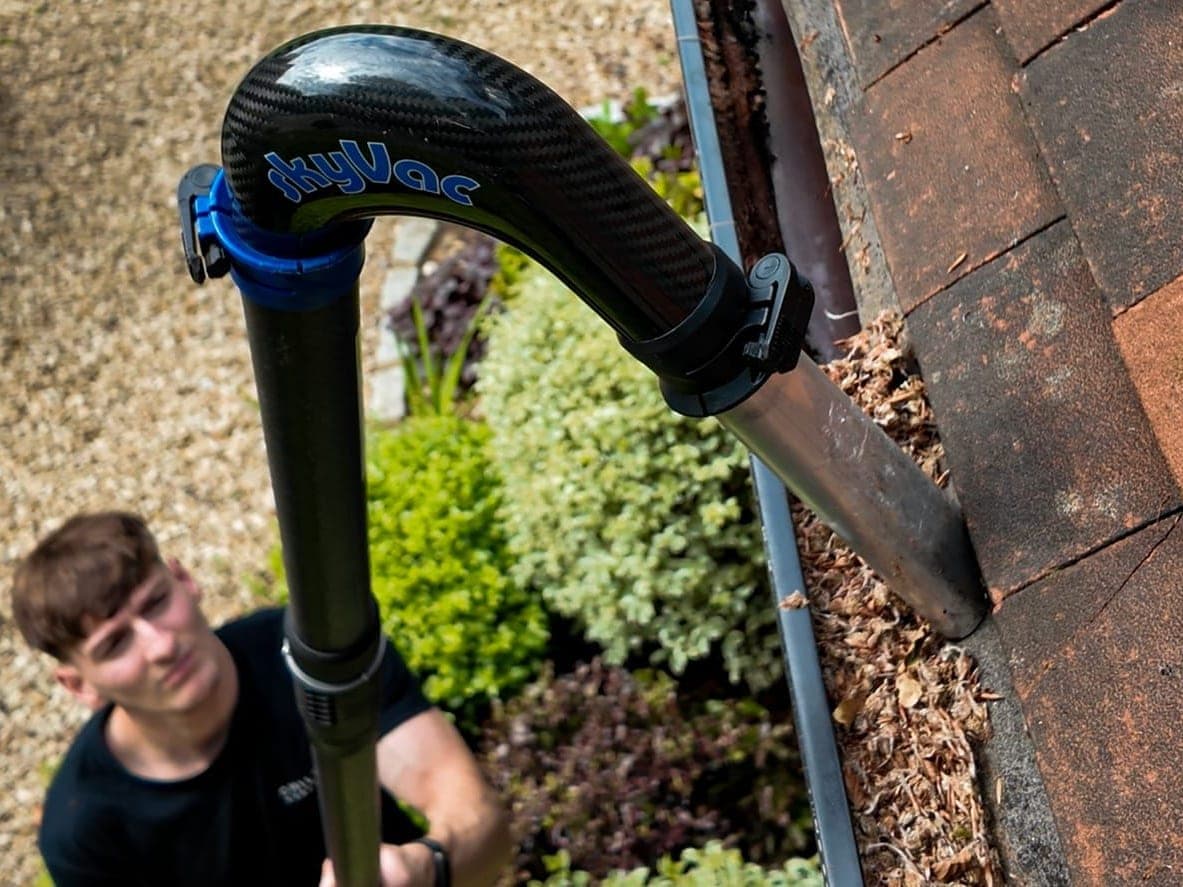
Clear and flush blocked gutters and downpipes to protect your walls, fascias and foundations.
Learn Moreabout Gutter Cleaning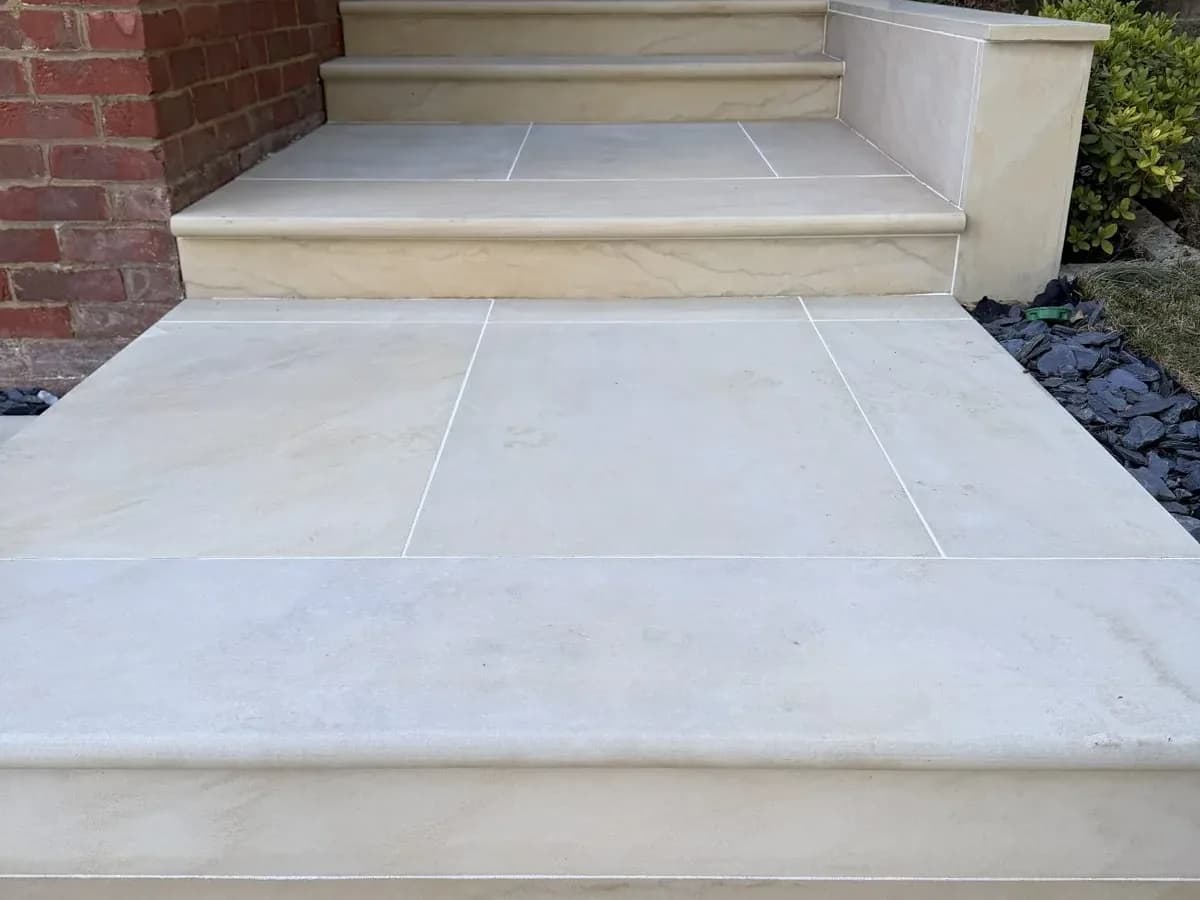
Winter cleaning that removes slippery algae and moss from paths, steps and patios, planned around the forecast.
Advice
Chiltern Surface Co
We will look at the panels with you, point out the fouling and sap and explain how we would reach them. A clear quotation follows the visit, and you decide from there.
We assess your surfaces and recommend the right approach for the best, long-lasting results.
You'll receive a detailed, transparent quote with no hidden extras.
We'll provide honest advice so you can decide what's right for you.
Speak directly with the owner and get expert advice you can trust.