
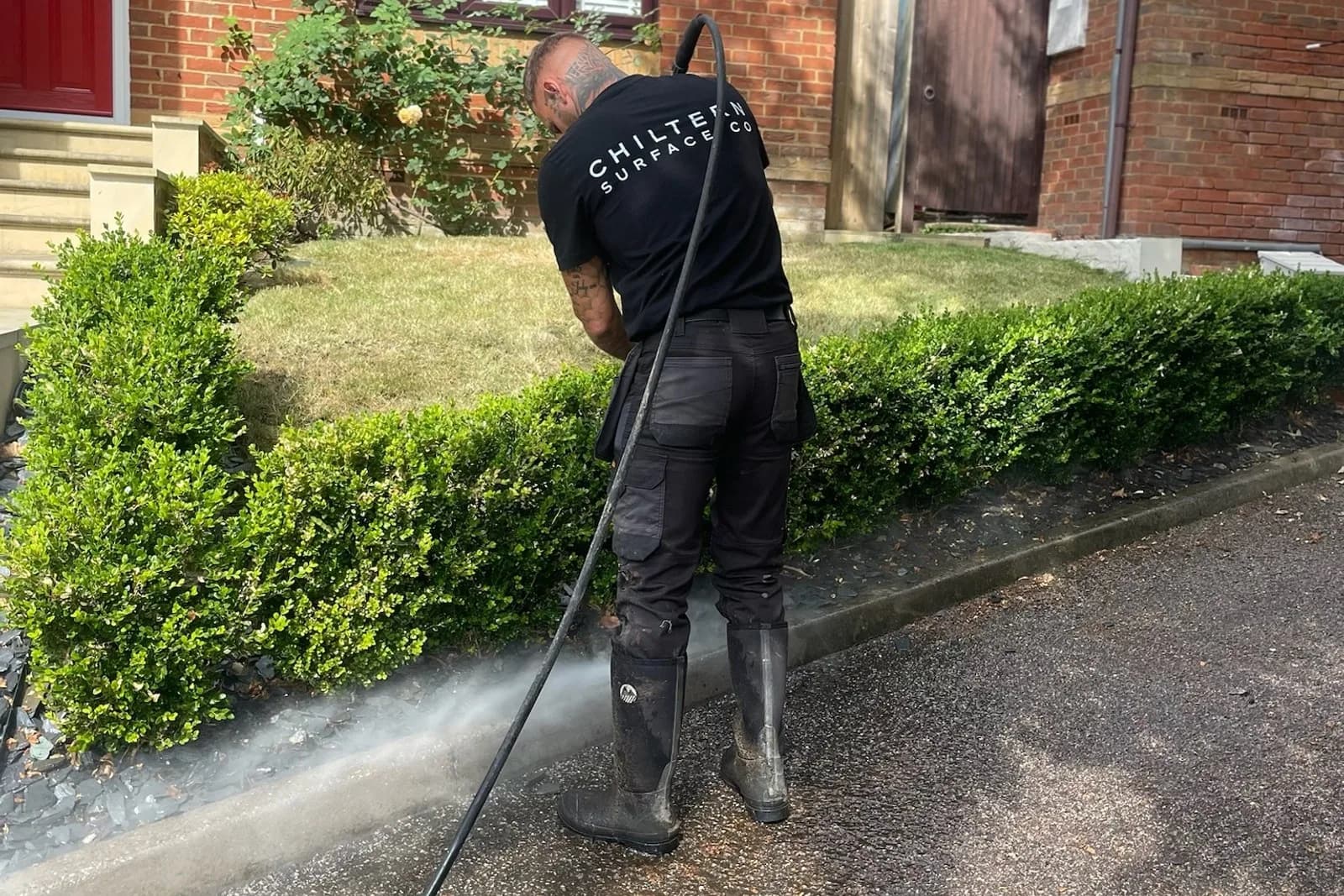
A pressure washer uses a motor or petrol engine to drive a pump, which raises water pressure. The nozzle then concentrates the pressurised water into a controlled cleaning jet.
If you ask how does a pressure washer work, follow the water path through each component. The inlet, pump, hose, gun and nozzle create useful cleaning force.
Correct pressure, flow and nozzle selection remove grime from suitable surfaces without stripping joints, coatings or fragile material. Professional operators also assess drainage, surface age and nearby property before cleaning.
How Does a Pressure Washer Work Step by Step?
A pressure washer moves ordinary tap water through 4 controlled stages: intake, pumping, delivery and release. Each stage supports stable pressure and safe cleaning.
Water Enters Through the Inlet
Water enters through a garden hose and passes through an inlet connector. A small filter catches grit, rust flakes and other debris.
The supply must deliver enough water for the machine. A starved pump loses performance and can overheat internal seals. The answer to how does a pressure washer work begins with stable inlet flow.
Use a clean 1/2-inch (12mm) hose unless the manufacturer specifies another size. Straighten kinks before starting the machine.
The Motor or Engine Drives the Pump
An electric motor powers domestic electric models. A petrol engine powers larger mobile machines and higher-output systems.
The drive shaft moves pistons or plungers inside the pump. The repeated movement draws water in and pushes water towards the outlet.
The Pump Raises Water Pressure
Most domestic machines use an axial cam pump. Professional machines often use a triplex plunger pump for longer working periods.
One-way valves control direction inside the pump. The piston cycle increases pressure while maintaining a continuous outlet flow.
Water also cools and lubricates pump components. Never run a pressure washer without a full water supply.
The Gun and Nozzle Release the Jet
The high-pressure hose carries water from the pump to the trigger gun. The lance keeps the operator away from the cleaning point.
The trigger opens the water path. The nozzle reduces the outlet area and shapes the water into a selected spray pattern.
That sequence answers how does a pressure washer work at the most practical level. The pump creates pressure, while the nozzle controls impact.
Which Parts Make a Pressure Washer Work?
Seven main parts control pressure washer performance: inlet, filter, power unit, pump, unloader valve, hose system and nozzle. Each part affects reliability.
Water Inlet and Inlet Filter
The water inlet joins the machine to the mains supply. The inlet filter blocks particles that can score valves or damage pump seals.
Check the filter before each long cleaning session. Replace a split filter because trapped debris can enter the pump.
Motor, Engine and Pump
The power unit turns mechanical energy into pump movement. Electric motors start quickly, while petrol engines support remote and demanding work.
The pump creates pressure through piston movement. Pump size and design also set the available flow rate.
Unloader Valve and Bypass System
The unloader valve redirects water when you release the trigger. The bypass path prevents a dangerous pressure rise inside the outlet system. Understanding how does a pressure washer work also requires the unloader valve.
Long bypass periods heat the water and pump. Release the trigger only for short pauses, then stop the machine.
Hose, Gun, Lance and Nozzle
The hose must contain working pressure without swelling or leaking. The gun gives the operator direct control over water release.
The lance supports distance and aim. Nozzles such as 15-degree, 25-degree and 40-degree tips change the spray width.
How Does a Pressure Washer Work with Pressure and Flow?
Pressure loosens contamination, while water flow moves loosened material away. Effective cleaning needs both values, not pressure alone. The phrase how does a pressure washer work covers pressure and flow together.
Pressure Breaks the Bond
Manufacturers state pressure in pounds per square inch (PSI) and bar. A machine rated at 2,000 PSI produces about 138 bar.
Higher pressure increases local impact. Excessive pressure can cut timber fibres, remove paint, erode mortar and disturb paving joints.
Flow Carries Contamination Away
Manufacturers state flow in gallons per minute (GPM) and litres per minute (L/min). Two GPM equals about 7.6 L/min.
Higher flow rinses a wider area and transports more soil. Strong pressure with weak flow can loosen dirt without clearing the residue efficiently.
Nozzle Angle Changes Impact
A narrow spray concentrates the same output into a smaller area. A wide spray spreads force across a larger surface.
Start with a 40-degree nozzle on an unknown surface. Move to 25 degrees only after a successful test patch.
Avoid a 0-degree nozzle for routine property cleaning. The concentrated jet can injure skin and damage hard surfaces.
This balance explains how does a pressure washer work across different tasks. Pressure, flow, distance and angle act together.
How Do Electric and Petrol Pressure Washers Differ?
Electric and petrol machines use the same water path, but different power sources change output, mobility and maintenance. Choose the system for the job.
Electric Pressure Washer Operation
An electric motor drives the pump after the user connects mains power. Many domestic models stop the motor when the trigger closes.
Electric machines suit lighter work on garden furniture, small patios and vehicles. Lower noise and simpler starting support occasional home use. Knowing how does a pressure washer work helps you compare electric and petrol models.
Petrol Pressure Washer Operation
A petrol engine turns the pump through a direct drive or belt drive. Petrol machines do not need a nearby electrical socket.
Higher-output petrol systems suit large driveways, commercial yards and long hose runs. Petrol engines require fuel, oil checks and regular servicing.
Cold-Water and Hot-Water Systems
Cold-water machines remove mud, algae and loose grime from suitable hard surfaces. Hot-water systems add a burner after the pump.
Hot water helps break down oil and grease on commercial surfaces. Trained operators must control heat, pressure and detergent together.
Electric or petrol power does not change how does a pressure washer work inside the water circuit. The pump still drives pressurised flow.
How Does a Pressure Washer Work with Detergent?
A detergent injector mixes cleaning solution into low-pressure water before the rinse stage. Chemical action loosens contamination that water alone leaves behind. The question how does a pressure washer work with detergent depends on low-pressure injection.
The Injector Draws Cleaning Solution
Many machines use downstream injection after the pump. Low outlet pressure creates suction that pulls detergent from a tank or pickup tube.
Use only a product approved for the machine and surface. Household chemicals can damage seals, coatings, plants or nearby materials.
Dwell Time Loosens Contamination
Apply detergent from the bottom upwards on vertical surfaces. Allow the product to work for the manufacturer's stated dwell time.
Keep the treated surface damp. Dried detergent can leave streaks, residue or uneven cleaning.
Clean Water Completes the Rinse
Switch to a suitable rinse nozzle after the dwell period. Rinse from the top down and direct wastewater towards safe drainage.
Detergent changes how does a pressure washer work on grease, traffic film and biological staining. Chemical action reduces the pressure needed.
How to Start and Stop a Pressure Washer Safely
Start water flow before starting the motor or engine. Stop the power unit before closing the water supply. The sequence protects the pump.
Prepare the Water Supply
Connect the hose, open the tap fully and hold the trigger until air leaves the system. A steady stream confirms a primed pump. Safe use starts with knowing how does a pressure washer work during priming.
Place the machine on stable ground. Keep electrical connections away from standing water and use a suitable residual current device (RCD).
Test the Nozzle and Distance
Start about 3 feet (0.9m) from the surface. Move closer gradually while checking the material after each pass.
Use a test patch about 6 inches (15cm) square. Stop immediately if the jet lifts coating, sand or surface material.
Release Stored Pressure After Cleaning
Stop the motor or engine first. Close the tap, squeeze the trigger and release pressure from the hose.
Disconnect fittings only after the hose loses pressure. Coil the hose without sharp bends and drain water before winter storage.
Safe start-up and shutdown form part of how does a pressure washer work reliably. Pump damage often follows poor operating order.
Quick Reference: Pressure Washer Setup and Use
Use the sequence below for a basic cold-water machine. Always follow the manufacturer's instructions for your exact model.
| Task | Timing | Method | Difficulty |
|---|---|---|---|
| Connect water supply | 2 minutes | Open the tap, purge air and confirm steady flow | Easy |
| Select the nozzle | 1 minute | Start with a wide spray and fit the correct tip | Easy |
| Apply detergent | 5-10 minutes | Use low pressure and follow the stated dwell time | Easy |
| Clean the surface | 15-45 minutes | Use overlapping passes and maintain even distance | Moderate |
| Rinse and shut down | 5 minutes | Stop power, close water and release hose pressure | Easy |
Which Surfaces Suit Pressure Washing?
Sound concrete, stable block paving and selected hard patio surfaces often suit controlled pressure washing. Surface condition still decides the safe method. Surface choice changes how does a pressure washer work against different materials.
Hard Driveway Surfaces
Concrete and sound block paving can tolerate controlled cleaning. The operator must use correct distance, angle and pressure.
Joint condition matters. Excessive force removes jointing sand and creates unstable paving edges.
Chiltern Surface Co provides professional driveway cleaning for block paving, resin-bound, concrete and tarmac surfaces across Buckinghamshire.
Patio Materials
Porcelain, concrete paving and some dense stone can accept controlled pressure. Limestone, sandstone and weathered stone need greater care.
A patio cleaning service should match treatment to stone type, condition, jointing and surrounding drainage.
Delicate Surfaces and Exclusions
Avoid direct high pressure on roofs, old mortar, painted timber and cracked render. Protect window seals and electrical fittings.
Use soft washing, low-pressure rinsing or manual cleaning for delicate materials. A professional assessment can prevent permanent damage.
Surface selection changes how does a pressure washer work in practice. The machine needs controlled settings, not maximum output.
Why Can Pressure Washing Damage a Surface?
Damage occurs when water force exceeds the strength of the surface, coating, joint or seal. The wrong technique can cause immediate or hidden defects.
Excessive Pressure Removes Material
High pressure can expose aggregate in concrete, remove protective coatings and cut soft stone. Damage often appears as pale lines or rough patches.
Narrow Nozzles Concentrate Force
A 0-degree or 15-degree nozzle creates a smaller impact area than a 40-degree nozzle. Small impact areas increase cutting action.
Keep the lance at least 12 inches (30cm) from uncertain materials. Increase distance whenever the surface sheds particles.
Poor Technique Creates Stripes and Erosion
Holding the nozzle still creates a concentrated mark. Uneven passes create stripes, missed bands and inconsistent colour.
Work with overlapping strokes and a constant distance. Direct the spray away from joints, vents, gaps and building openings.
Understanding damage risks strengthens the answer to how does a pressure washer work safely. Water force must remain below surface tolerance.
How Do Professionals Select the Right Settings?
Professional cleaners inspect the surface first, then choose pressure, flow, nozzle, treatment and access controls. The machine setting follows the assessment. Professional judgement completes how does a pressure washer work for real properties.
Inspect the Material and Condition
Professionals identify materials such as concrete, block paving, porcelain, sandstone, render and brickwork. Existing cracks and loose joints change the plan.
Select Pressure, Flow and Treatment
Professionals start with the least aggressive effective method. Detergent, soft washing or manual treatment can reduce required pressure.
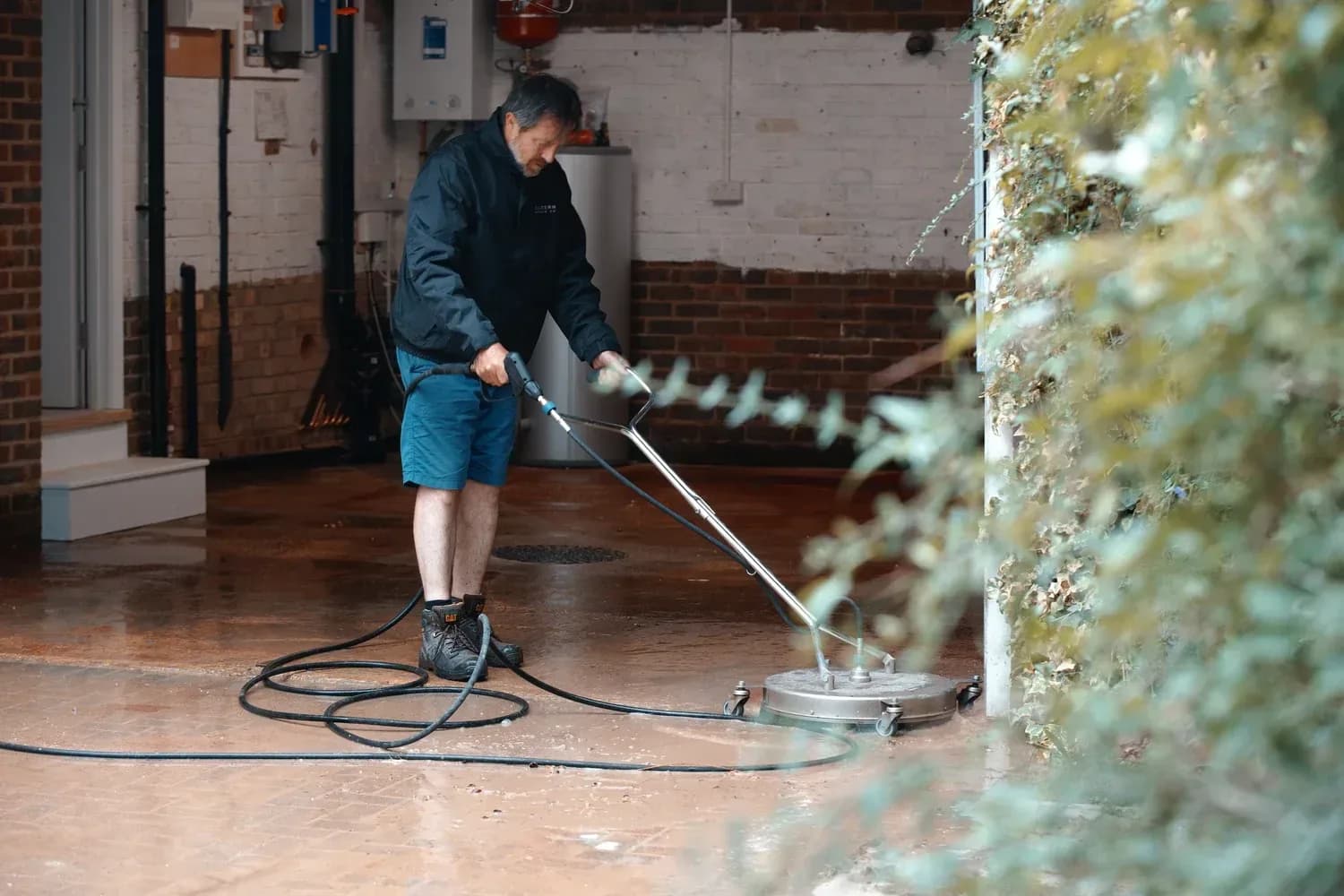
A surface cleaner supports even results on suitable flat areas. The enclosed head also reduces splashback and flying debris.
Protect Drainage and Nearby Property
Professionals control runoff, protect plants and cover sensitive fittings. Operators also keep hoses clear of doors, paths and vehicle routes.
A 25-foot (7.6m) hose can cross several access points. Careful routing prevents trips, kinks and sudden movement.
Chiltern Surface Co follows a surface assessment approach before selecting controlled pressure, soft washing or treatment-led cleaning.
That professional process shows how does a pressure washer work as one part of a wider exterior cleaning system.
Conclusion: Use Pressure, Flow and Method Together
A pressure washer works by pumping water at raised pressure, then controlling the jet through a hose, gun and nozzle. Safe results depend on surface assessment, water flow, spray angle, distance and treatment choice.
If you still wonder how does a pressure washer work on your property, avoid guessing with maximum pressure. Book a free site visit through Chiltern Surface Co's surface assessment approach. You will receive a clear recommendation and professional cleaning service.
Frequently asked questions
Does a pressure washer use more water than a garden hose?
No. Many pressure washers use less water per minute because the pump creates cleaning force through pressure and nozzle control.
Does a pressure washer create pressure from the tap?
No. The tap supplies water, while the motor-driven pump raises pressure before the hose and nozzle release the jet.
Can a pressure washer run from a water tank?
Yes, with a compatible model and adequate feed. Some machines need gravity pressure, while self-priming models can draw from a clean tank.
Can you use any detergent in a pressure washer?
No. Use a pressure-washer detergent approved for the machine and target surface. Incorrect chemicals can damage pumps, seals and finishes.
How does a pressure washer work without damaging paving?
Use controlled pressure, a suitable nozzle, steady movement and a successful test patch. Avoid weak joints, loose edges and damaged paving. These answers complete the practical explanation of how does a pressure washer work for common home cleaning questions.