
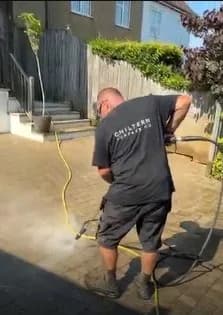
How Long Does It Take to Pressure Wash a Driveway?
Most residential driveways need 1–3 hours of active pressure washing and 2–5 hours for the complete cleaning visit. The answer to how long does it take to pressure wash a driveway changes with size and material. Stains, equipment and preparation also affect timing. A small single-car driveway can take 30–60 minutes to wash. A large or heavily stained driveway can require 4–8 hours of work. Block paving restoration can span 2 visits because joints must dry before re-sanding and compaction.
How Long Does It Take to Pressure Wash a Driveway by Size?
How long does it take to pressure wash a driveway by size depends on measured area and cleaning complexity. A rotary surface cleaner covers a level driveway faster than a hand wand. Edges, walls, drainage channels and narrow sections still need slower detail work.
How Long Does It Take to Pressure Wash a Driveway for 1 Car?
A single-car driveway usually covers 250–350 square feet (23–33m²). Active washing normally takes 30–60 minutes with suitable professional equipment. Preparation, treatment, edging, rinsing and tidy-down increase the visit to 1.5–3 hours.
How Long Does It Take to Pressure Wash a Driveway for 2 Cars?
A double driveway usually covers 450–650 square feet (42–60m²). Active pressure washing normally takes 1–2 hours. A complete professional clean usually takes 2.5–5 hours, depending on stains and joint condition.
How Long Does It Take to Pressure Wash a Driveway for a Large Home?
A large driveway can cover 800–1,200 square feet (74–111m²). Active washing usually takes 2–4 hours. Detailed treatment, obstacles and extensive edging can extend the project to 4–8 hours.
How Long Does It Take to Pressure Wash a Driveway from Start to Finish?
How long does it take to pressure wash a driveway from start to finish includes 6 separate stages.
Site Preparation: 20–45 Minutes
Move vehicles, bins, planters and furniture before cleaning. Sweep leaves, gravel, branches and loose debris from the surface. Protect doors, low vents, plants, painted surfaces and electrical items.
Pre-Treatment: 10–30 Minutes
Apply a suitable treatment for algae, moss, traffic film or oil contamination. Allow 5–20 minutes of dwell time, following the product instructions. Never let a cleaning treatment dry on the driveway.
Active Pressure Washing: 30 Minutes to 4 Hours
Wash the main surface in controlled, overlapping passes. Use a rotary surface cleaner on broad, level areas. Use a wand for edges, channels, corners and restricted sections.
Detail Rinsing: 15–45 Minutes
Rinse walls, doors, drainage channels and adjacent paving. Remove dirty water from low points. Check for stripes, missed edges and remaining treatment residue.
Post-Treatment: 10–30 Minutes
Apply suitable growth-control treatment after cleaning where the surface allows. Post-treatment targets remaining organic contamination. Chiltern Surface Co uses Chiltern EverGuard™ after driveway restoration.
Final Tidy-Down: 15–30 Minutes
Collect weeds, moss, jointing material and displaced debris. Rinse nearby glass, paintwork, walls and plants. Leave drains, paths and access points clean.
Which Factors Change How Long Does It Take to Pressure Wash a Driveway?
How long does it take to pressure wash a driveway changes with 8 practical factors.
Surface Material
Concrete tolerates different cleaning settings from resin, tarmac and natural stone. Block paving requires joint inspection and later re-sanding. Porcelain needs controlled cleaning around joints and edges.
Dirt and Organic Growth
Light road dust lifts faster than thick moss, algae and lichen. Heavy growth needs pre-treatment and slower cleaning. Deep black staining can require repeat treatment.
Oil and Rust Stains
Fresh oil needs absorption before washing. Older oil requires specialist degreasing and controlled repeat treatment. Rust, tyre marks and mineral staining need different products.
Obstacles and Edges
Parked items, raised beds, gates, steps and walls reduce working speed. A clear rectangular driveway cleans faster than an irregular courtyard. Detailed edging can add 30–90 minutes.
Drainage
Blocked channels slow rinsing and increase water management. Standing water hides remaining dirt. Poor gradients require careful runoff control.
Water Supply
A restricted tap reduces pressure-washer flow. Professional machines need a reliable water supply. A buffer tank can support consistent performance on low-flow properties.
Weather
Warm, dry conditions support treatment and drying. Strong sun can dry cleaning products too quickly. Heavy rain can dilute treatment and spread dirty runoff.
Previous Damage
Loose blocks, failed joints, cracked concrete and worn resin need gentler methods. Cleaning can expose existing defects. Repair planning adds inspection time.
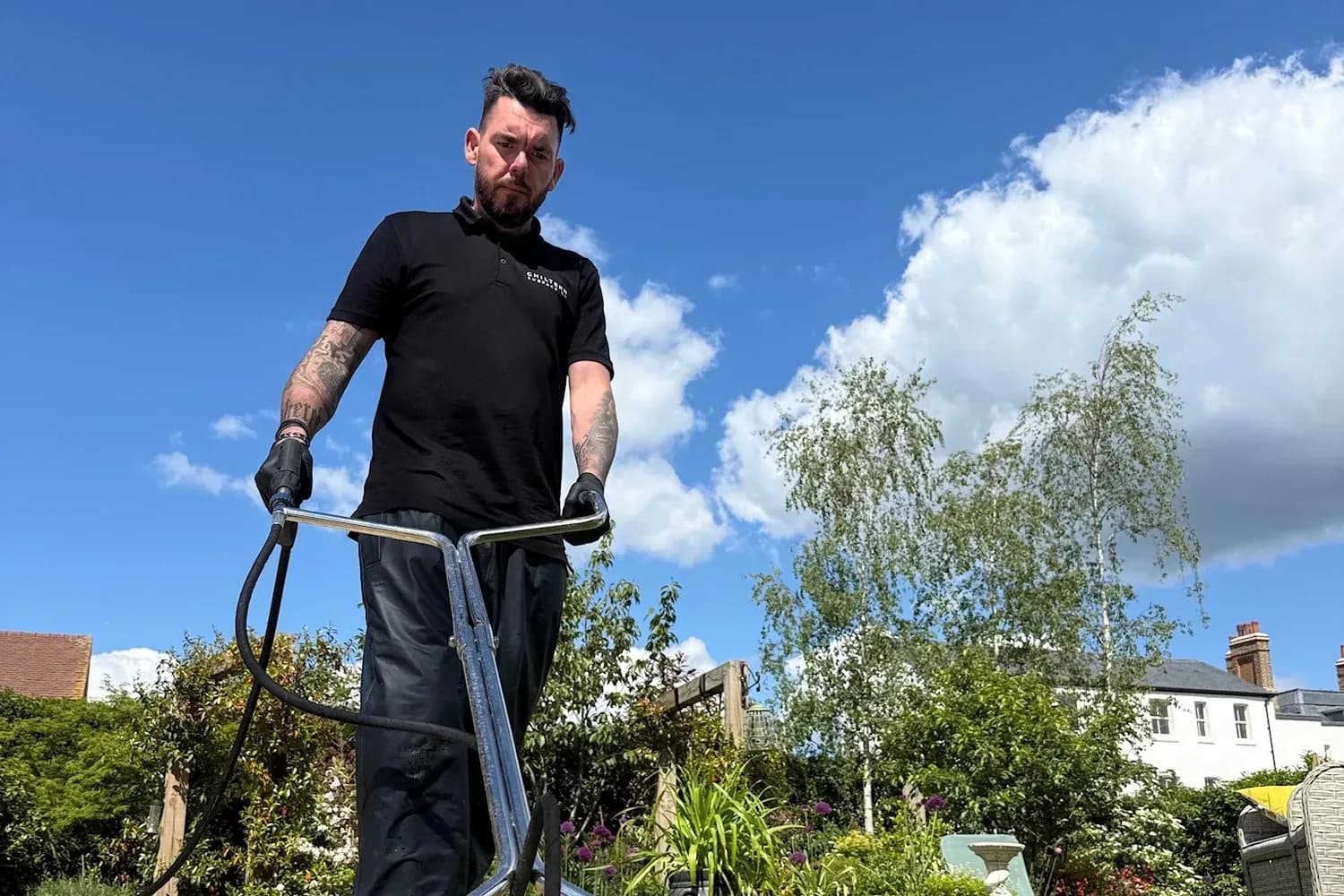
How Long Does It Take to Pressure Wash a Driveway by Material?
How long does it take to pressure wash a driveway depends heavily on the surface. Each material needs a different pressure, pace and finishing process.
Concrete Driveways
A standard concrete driveway usually needs 1–2 hours of active washing. A complete clean normally takes 2–4 hours. Oil treatment, porous staining and detailed edges increase the duration.
Concrete is durable but porous. A forceful narrow jet can create visible lines or expose aggregate. Use even passes and surface-compatible treatments.
Block Paving Driveways
A block paving driveway usually needs 1.5–3 hours of active cleaning. Weed removal and joint clearing can add 30–90 minutes. The surface then needs 24–48 hours of dry weather before joint restoration.
A complete block-paving restoration can span 2–3 days. The timeline includes cleaning, drying, polymeric re-sanding, compaction and protection. Chiltern Surface Co restores block interlock rather than providing a quick jet wash.
Resin-Bound Driveways
A resin-bound driveway usually needs 1–2 hours of controlled cleaning. Low-pressure methods protect the exposed resin binder. Frequent high-pressure washing accelerates wear.
Heavy organic growth needs treatment before cleaning. Damaged or loose aggregate needs specialist assessment. Cleaning cannot reconnect a failed resin surface.
Tarmac Driveways
A tarmac driveway usually needs 1–2 hours of gentle cleaning. Lower pressure protects aged aggregate and weak edges. Moss treatment and careful rinsing increase the total visit to 2–4 hours.
Natural Stone Driveways
Natural stone normally needs 2–4 hours for a standard residential driveway. Sandstone, limestone, granite and slate react differently to pressure and chemicals. Test the method before full cleaning.
Porcelain Driveways
Porcelain usually needs 1–3 hours, depending on size and joint detail. The dense surface releases dirt faster than porous stone. Edges, grout and drainage still need controlled work.
Gravel Driveways
High-pressure washing does not suit loose gravel. The water jet scatters aggregate and exposes the sub-base. Use raking, weed control, debris removal and gravel replenishment instead.
How Does Equipment Affect How Long Does It Take to Pressure Wash a Driveway?
How long does it take to pressure wash a driveway changes dramatically with flow rate and attachments.
Flow Rate
A domestic machine can deliver about 1.2–2.0 gallons per minute (4.5–7.6 L/min). A professional machine can deliver 3.0–5.0 gallons per minute (11.4–18.9 L/min). Higher flow clears dirty water faster.
Pounds per square inch (PSI) breaks contamination from the surface. Gallons per minute (GPM) carries contamination away. Balanced pressure and flow produce faster, more consistent results.
Rotary Surface Cleaner
A 15-inch (38cm) surface cleaner covers broad areas evenly. A 20-inch (51cm) professional unit covers more area per pass. A surface cleaner also reduces striping and splashback.
Pressure Washer Wand
A wand suits corners, kerbs, walls and drainage channels. A wand cleans large flat areas slowly. Uneven distance creates visible cleaning lines.
Hot-Water Equipment
Hot water breaks down grease faster than cold water. Commercial hot-water systems reduce repeated degreasing on suitable surfaces. A contractor must protect heat-sensitive materials.
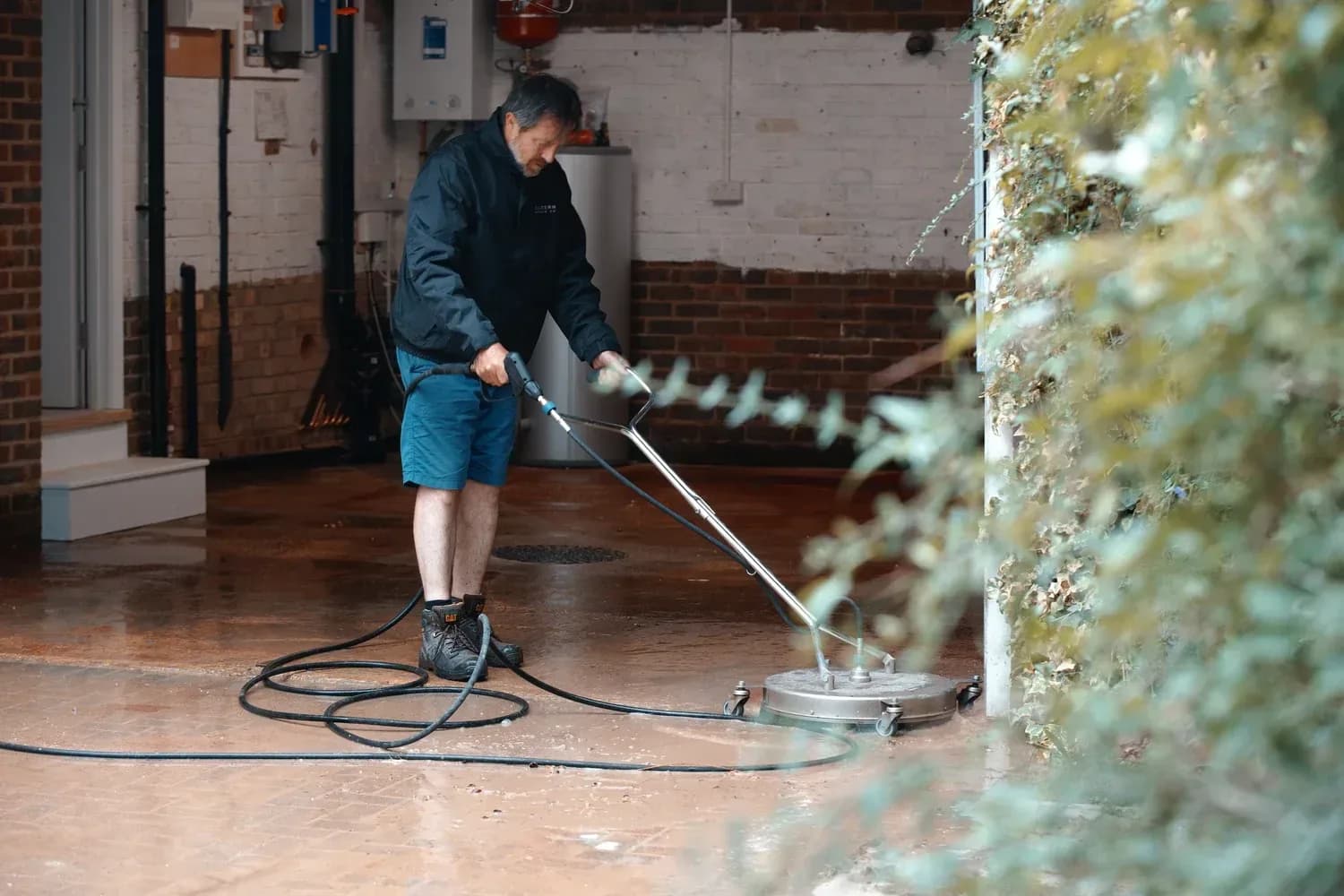
How Long Does It Take to Pressure Wash a Driveway Yourself?
Yes. DIY driveway pressure washing normally takes 2–4 times longer than professional cleaning. Domestic equipment provides lower water flow and smaller cleaning attachments.
Domestic Electric Machine
A domestic electric pressure washer can clean 200–400 square feet (19–37m²) per hour. The actual rate falls with heavy growth, low water flow and wand-only cleaning. A double driveway can occupy most of a day.
Professional Equipment
Professional equipment can clean broad, suitable areas much faster. Higher flow, rotary surface cleaners and planned treatments reduce repeat passes. Professional results still require careful preparation and detail work.
Experience and Surface Knowledge
Experienced operators choose the correct pressure before damage occurs. A homeowner often tests multiple settings and distances. Correct technique saves time and protects the surface.
How Long Does It Take to Pressure Wash a Driveway with Pre-Treatment?
Pre-treatment usually adds 10–30 minutes plus product dwell time. The treatment reduces repeated high-pressure passes.
Algae and Moss Treatment
Organic growth treatment usually needs 10–20 minutes of dwell time. Heavy moss needs physical removal before washing. Post-treatment reduces remaining spores.
Oil Degreasing
Oil degreaser often needs 10–30 minutes before agitation and rinsing. Old stains can require 2–3 treatment cycles. Complete removal remains impossible for some deeply absorbed stains.
Weed Removal
Joint weeds can add 30–90 minutes to block paving. Pull large weeds and remove roots before deep cleaning. Pressure washing alone can spread seeds and joint debris.
How Long Does It Take to Pressure Wash a Driveway and Re-Sand It?
Block paving usually needs 24–48 hours of dry weather before re-sanding. Shade, joint depth and air temperature change drying speed. Jointing wet paving traps moisture and prevents correct distribution.
Drying Inspection
Check the joint depth at shaded and low points. Delay re-sanding while dark or damp material remains.
Polymeric Re-Sanding
Re-sanding normally takes 1–3 hours for a standard driveway. Sweep polymeric jointing into every dry joint. Remove surface residue before water activation.
Mechanical Compaction
Compaction normally adds 30–90 minutes. A vibrating plate compactor settles jointing and restores block interlock. Unsuitable paving requires a different method.
How Long Does It Take to Pressure Wash a Driveway and Let It Dry?
Most driveways need 12–24 hours before normal foot traffic. Block paving needs 24–48 hours before re-sanding. Sealers and coatings need separate curing periods.
Concrete and Tarmac
Concrete often dries at the surface within 4–8 hours. Deep pores remain damp longer. Tarmac needs gentle cleaning and full surface drying before coating.
Resin and Porcelain
Resin and porcelain often dry faster than porous concrete. Avoid parking until the surface feels fully dry.
Before Sealing
Follow the sealer manufacturer's drying requirements. Many systems need 24–72 hours of dry conditions. Trapped moisture causes whitening, bubbling and poor adhesion.
How Long Does It Take to Pressure Wash a Driveway When Mistakes Slow Work?
Avoid 7 common mistakes that increase time and damage.
Using a Wand for the Entire Driveway
A narrow wand cleans slowly and creates uneven lines. Use a rotary surface cleaner on suitable broad areas. Reserve the wand for details.
Choosing Maximum Pressure
Maximum pressure can damage joints, resin, tarmac and soft stone. Use the lowest effective setting. Treat stains instead of blasting them.
Skipping Pre-Treatment
Water alone struggles with oil, algae and biological staining. Correct treatment loosens contamination before washing. Short dwell time prevents repeated passes.
Ignoring Water Flow
A weak tap starves the machine. Restricted flow creates pulsing pressure and slow rinsing. Test the supply before starting.
Washing Without a Plan
Random passes leave stripes and missed sections. Divide the driveway into exact zones. Maintain 10–20% overlap between passes.
Blocking Drainage
Loose moss and sand can block channels. Clear drainage before washing. Collect debris instead of pushing everything into drains.
Re-Sanding Too Soon
Damp joints reject new sand. Premature jointing wastes material and extends the project. Wait for complete drying.
How Can You Estimate Your Own Driveway Cleaning Time?
To estimate how long does it take to pressure wash a driveway, measure the area and score 5 time factors.
Measure the Driveway
Multiply length by width for a rectangular driveway. A driveway measuring 20 feet by 25 feet (6.1m by 7.6m) covers 500 square feet (46m²). Measure separate sections for irregular layouts.
Choose a Base Cleaning Rate
Allow 250 square feet (23m²) per hour for slow DIY wand cleaning. Allow 500 square feet (46m²) per hour for a capable domestic surface cleaner. Professional rates vary with flow, treatment and surface type.
Add Condition Time
Add 30 minutes for light stains. Add 60–120 minutes for heavy weeds, moss or oil. Add 30–90 minutes for complex edging and obstacles.
How Long Does It Take to Pressure Wash a Driveway? Quick Reference
| Task | Typical Timing | Method | Difficulty |
|---|---|---|---|
| Clear and sweep driveway | 20–45 minutes | Remove vehicles, debris and loose gravel | Easy |
| Apply pre-treatment | 10–30 minutes | Treat algae, moss, oil or traffic film | Moderate |
| Wash single-car driveway | 30–60 minutes | Surface cleaner plus edge wand | Moderate |
| Wash double driveway | 1–2 hours | Controlled overlapping passes | Moderate |
| Wash large driveway | 2–4 hours | Zoned surface-cleaner work | Advanced |
| Rinse and tidy | 30–60 minutes | Clear runoff, drains and nearby surfaces | Moderate |
| Dry block paving | 24–48 hours | Natural drying before jointing | Easy |
| Re-sand and compact | 1.5–4.5 hours | Polymeric jointing and compaction | Advanced |
How Long Does It Take to Pressure Wash a Driveway Professionally?
Book professional cleaning for large areas, deep stains, delicate materials and restoration work.
Delicate or Premium Surfaces
Resin, natural stone, porcelain and imprinted concrete need controlled methods. The wrong pressure or chemical can cause permanent damage. Review Chiltern Surface Co's surface-specific cleaning approach before choosing a method.
Block Paving Restoration
Block paving needs joint restoration after deep cleaning. A complete service includes weeds, cleaning, drying, jointing, compaction and protection. Pressure washing alone leaves empty joints and reduced stability.
Uncertain Stains or Damage
Request assessment for oil, rust, black spot, loose paving or recurring standing water. Cleaning can expose deeper problems. Read common driveway questions for realistic treatment and aftercare information.
How Long Does It Take to Pressure Wash a Driveway? Book a Full Restoration
The answer to how long does it take to pressure wash a driveway depends on more than spraying time. A professional visit includes preparation, treatment, controlled cleaning, detail work, drainage, rinsing and tidy-down.
Chiltern Surface Co provides driveway cleaning and restoration across Buckinghamshire, Berkshire and Oxfordshire. Book a free site visit for a surface assessment, realistic timeline and clear fixed quotation.
Frequently asked questions
Can you pressure wash a driveway in 30 minutes?
Yes, for a small, lightly soiled driveway with powerful equipment. Preparation, treatment, rinsing and tidy-down usually extend the complete visit beyond 30 minutes.
How long does it take to pressure wash a double driveway?
A double driveway normally needs 1–2 hours of active washing. The complete cleaning visit usually takes 2.5–5 hours.
Does a surface cleaner reduce driveway cleaning time?
Yes. A rotary surface cleaner covers broad areas faster and more evenly than a standard wand.
Can you re-sand block paving immediately after washing?
No. Block paving normally needs 24–48 hours of dry weather before re-sanding.
Can you park on a driveway immediately after pressure washing?
No. Wait until the surface dries fully and any jointing, coating or treatment reaches the required curing stage.