
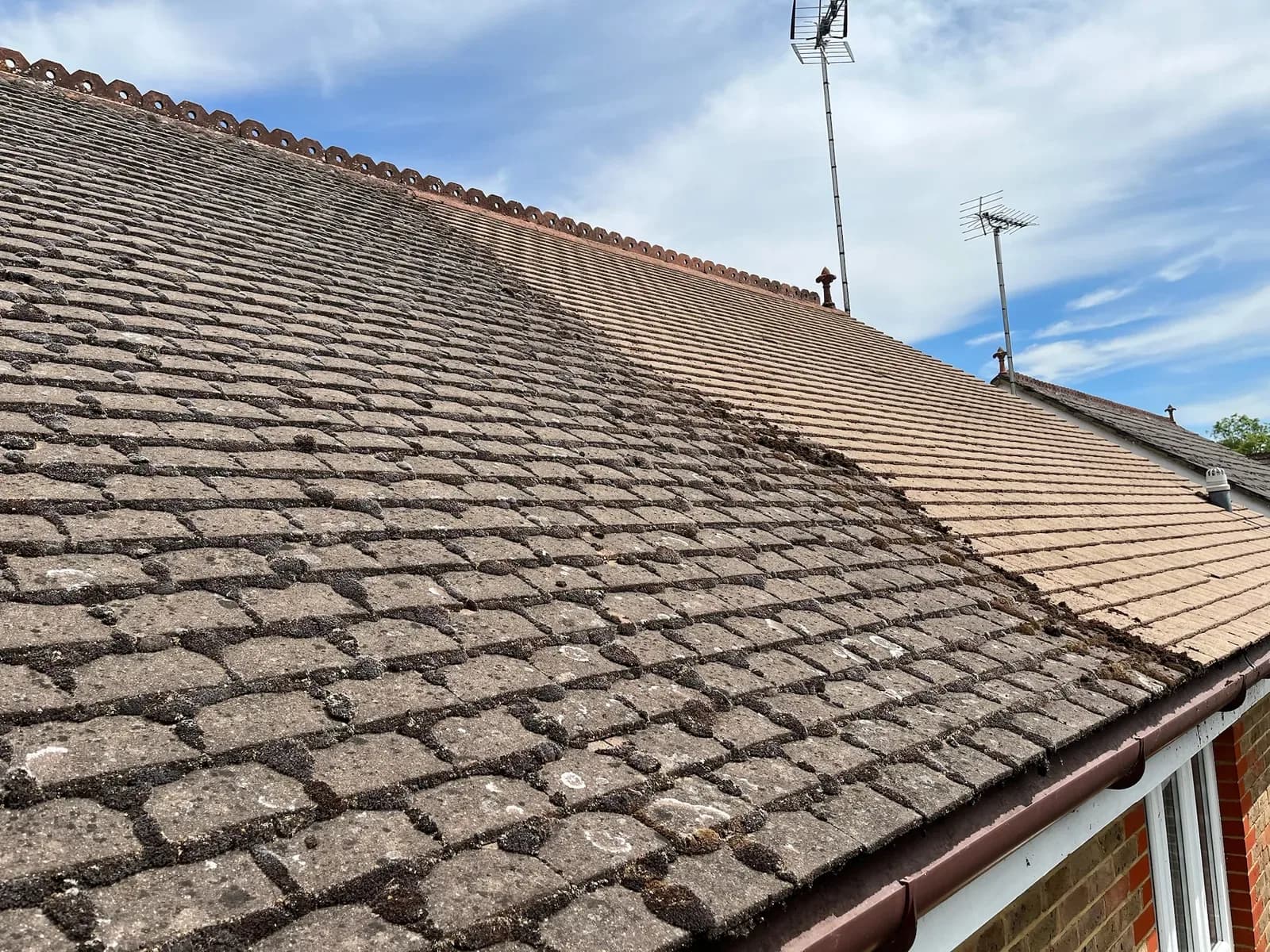
To understand how to clean a roof safely, start with an inspection and choose a method for the roofing material.
Professional cleaners usually combine careful moss removal, low-pressure treatment and controlled rinsing instead of aggressive pressure washing.
Never climb onto a roof without suitable training, access equipment and fall protection. Roof work creates serious fall and breakage risks.
The UK guide explains how to clean a roof while protecting tiles, gutters, gardens and surrounding exterior surfaces.
How to Clean a Roof Safely in 2026
To clean a roof safely, assess access, roof condition, material type and organic growth before choosing any cleaning method.
The correct process usually includes 4 stages: inspection, controlled removal, suitable treatment and a final drainage check.
Homeowners should inspect from ground level. Competent professionals should complete work that requires roof access.
The Health and Safety Executive treats all roof work as high risk, including short cleaning tasks.
| Task | Timing | Method | Difficulty |
|---|---|---|---|
| Ground-level inspection | Before any cleaning | Binoculars, photographs and visual checks | Easy |
| Loose debris removal | Before treatment | Controlled manual removal by trained workers | High |
| Moss and algae treatment | After debris removal | Low-pressure or soft wash treatment | High |
| Gutter and downpipe check | After cleaning | Clear debris and confirm free drainage | Medium |
| Final condition review | After surfaces dry | Check tiles, joints, gutters and runoff areas | Medium |
Why Does a Roof Need Cleaning?
A roof needs cleaning when moss, algae, lichen, leaves or staining disrupt drainage or affect the roof’s appearance.
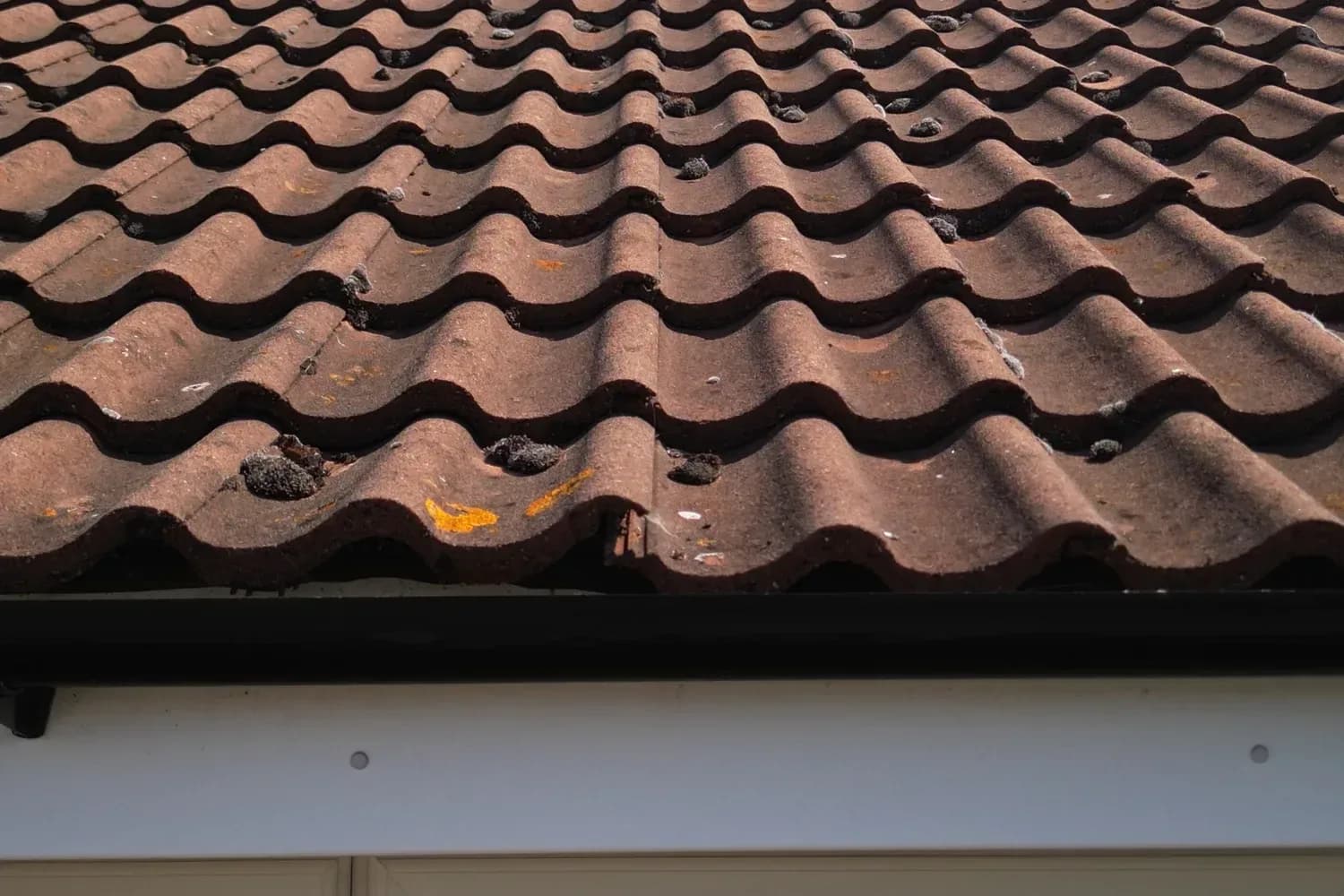
Moss holds moisture against tiles and can collect around laps, valleys, gutters and roof edges.
Loose moss can enter gutters and downpipes during heavy rain. Blockages can send water over fascias and exterior walls.
Learning how to clean a roof also helps you separate cosmetic staining from cracked tiles, failed flashing or drainage defects.
How to Inspect a Roof Before Cleaning
To inspect a roof before cleaning, start from the ground and record material, growth, damage, access and nearby risks.
Check the Roof from Ground Level
Use binoculars or a camera zoom to inspect both slopes, roof edges, valleys, ridges and gutters.
Stand at least 15 feet (4.6m) from the building when the viewing angle allows safe observation.
Look for moss depth, algae streaks, lichen patches, slipped tiles, damaged ridges and blocked outlets.
Never lean from an upstairs window or climb onto a wet extension roof for a closer view.
Identify the Roofing Material
Identify clay tiles, concrete tiles, slate, metal sheets or a flat-roof membrane before selecting a cleaner.
Clay and slate can break under concentrated loads. Concrete tiles can lose surface colour after harsh cleaning.
Flat-roof membranes need manufacturer-approved products and controlled water use.
Record Existing Damage
Record cracked tiles, loose ridge sections, failing mortar, exposed fixings and damaged flashing before cleaning begins.
Cleaning cannot repair structural faults. A qualified roofer should address defects before treatment.
Chiltern Surface Co follows a surface-specific cleaning approach for material, condition, drainage and surrounding areas.
How to Prepare Your Property for Roof Cleaning
To prepare your property, protect gardens, manage rainwater systems and create a controlled working area before cleaning starts.
Preparation also supports a safer answer to how to clean a roof near conservatories, extensions and neighbouring boundaries.
Protect Gardens and Exterior Surfaces
Move vehicles, garden furniture, plant pots and children’s equipment away from the working area.
Cover delicate features such as painted timber, decorative metalwork and vulnerable glazing where the method requires protection.
Pre-wet lawns, shrubs and planted borders before treatment application.
Careful preparation supports guidance on how to clean a roof without marking surrounding surfaces.
Manage Gutters and Rainwater Systems
Check gutters, downpipes, water butts and drainage outlets before moss removal begins.
Temporarily isolate rainwater collection where treatment runoff could enter stored water.
Place debris controls inside gutters where heavy moss removal could create blockages.
Clear the gutter system after cleaning and confirm that each downpipe drains freely.
Anyone planning how to clean a roof should include drainage management in the original method statement.
Create a Safe Working Area
Keep residents, pets and visitors outside the work zone during access, scraping and treatment application.
Mark areas beneath roof edges because loose moss and tools can fall during cleaning.
Protect conservatory roofs and lower extensions from dropped debris and concentrated foot loads.
A competent contractor should explain access equipment, exclusion zones and emergency arrangements before work starts.
Safe preparation makes how to clean a roof a planned service rather than an improvised maintenance task.
How to Clean Roof Moss and Organic Growth
To clean roof moss and organic growth, remove loose deposits carefully and treat remaining contamination with a suitable low-pressure product.
Remove Loose Moss Carefully
A trained cleaner can use profiled scraping tools that match the shape of clay or concrete tiles.
The cleaner should work without lifting tile edges or forcing debris beneath overlaps.
Workers should collect falling debris before moss reaches gutters, conservatory roofs, patios or neighbouring property.
Knowing how to clean a roof means controlling debris, not pushing moss down the roof with uncontrolled water.
Apply a Suitable Treatment
Professionals can apply a roof-compatible biocide or soft wash treatment after removing thick moss.
The treatment targets remaining algae, spores, lichen and microscopic organic growth.
Product strength, dwell time and application rate must match the roof material and manufacturer guidance.
Workers must protect plants, glass, painted surfaces, metalwork and drainage routes before application.
Allow Gradual Weathering
Some treated staining fades gradually through weather exposure rather than disappearing during the service.
Lichen often releases slowly because the growth bonds firmly to the tile surface.
A reliable contractor explains the expected timeline before starting and avoids unrealistic same-day promises.
Gradual weathering forms an essential part of how to clean a roof without unnecessary abrasion.
How to Clean a Roof Without Pressure Washing
To clean a roof without pressure washing, combine controlled manual removal with low-pressure treatment and careful runoff management.
Use Manual Removal for Heavy Moss
Manual removal suits heavy moss deposits on many tiled roofs when trained workers use suitable access and profiled tools.
The method gives the cleaner direct control around ridges, valleys, flashing, vents and roof windows.
Manual work also reduces the volume of water entering tile laps and roof details.
Homeowners researching how to clean a roof should not treat manual scraping as a safe ladder task.
Use Low-Pressure Treatment for Remaining Growth
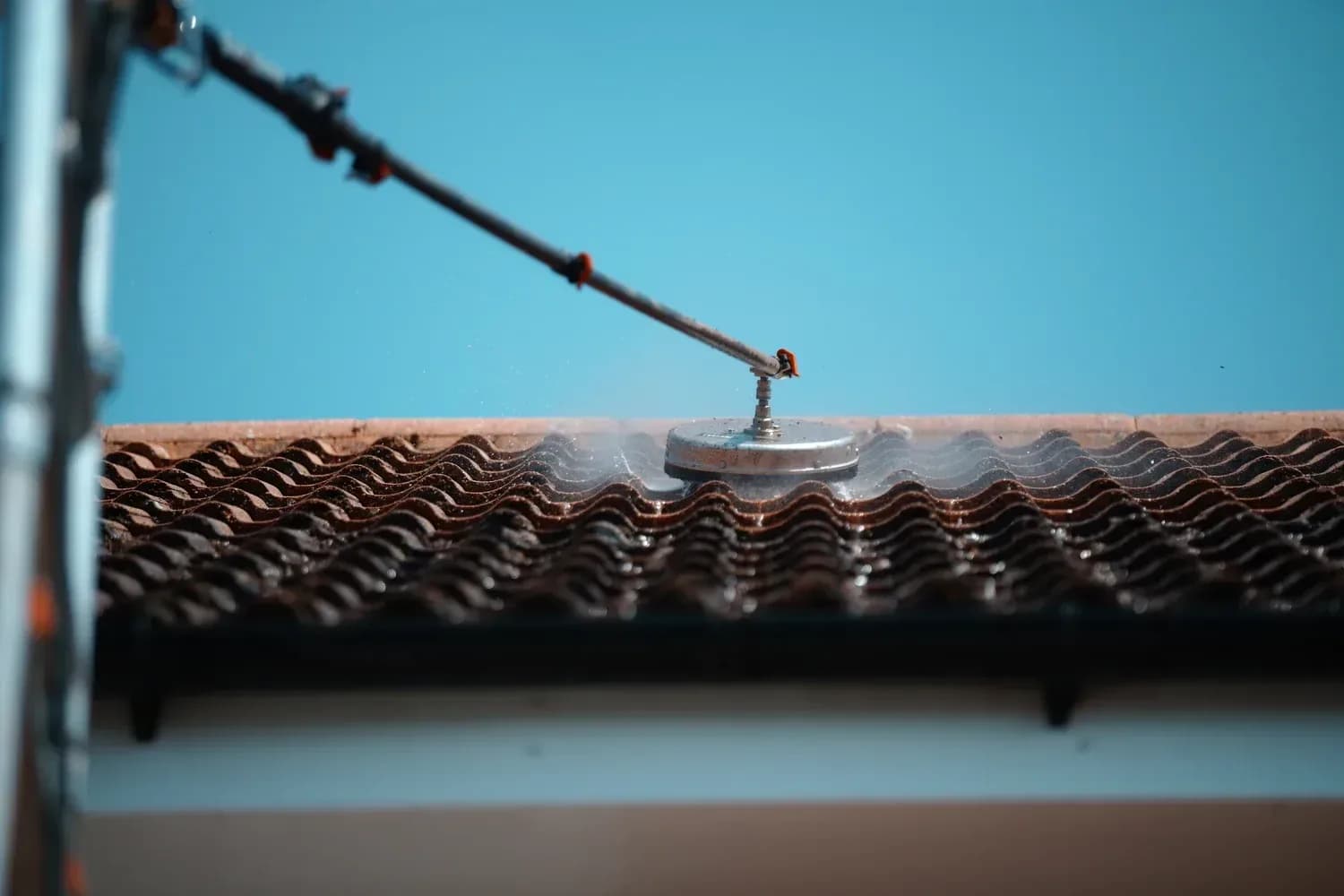
Low-pressure treatment spreads the selected product without directing a forceful jet at tiles, joints or flashing.
A soft wash system relies on treatment chemistry and controlled application rather than aggressive mechanical force.
Professional roof cleaning can combine both methods when roof condition and material support the process.
Control Water and Chemical Runoff
Workers should disconnect or manage rainwater collection systems before treatment where appropriate.
Workers should pre-wet plants, protect sensitive surfaces and control runoff into drains, lawns and ponds.
A responsible plan also covers neighbouring windows, vehicles, conservatories and outdoor furniture.
Runoff control separates professional roof-cleaning guidance from unsafe product spraying.
Which Cleaning Method Suits Each Roof Material?
The safest method depends on tile composition, age, surface condition, fixings and existing damage.
Clay and Concrete Roof Tiles
Clay and concrete tiles usually need careful inspection, controlled moss removal and a compatible treatment.
Older clay tiles can crack under foot pressure. Weathered concrete tiles can show colour loss after aggressive washing.
Material testing matters whenever you decide how to clean a roof with mixed replacement tiles.
Slate Roofs
Slate roofs need gentle handling because individual slates can crack, slip or detach from ageing fixings.
Cleaners should avoid walking directly across slates without a planned access system.
A contractor should inspect hooks, nails, flashing and loose slates before removing growth.
Slate often needs a lower-intervention method than heavily textured concrete tiles.
Metal and Flat Roof Surfaces
Metal roofs need cleaning products that protect factory coatings, fixings, seams and sealants.
Flat roofs need careful drainage control because standing water can remain around outlets and low points.
A roofing specialist should confirm compatibility before any treatment reaches coated metal or roof membranes.
The answer to how to clean a roof changes when the surface uses metal, felt, rubber or synthetic membranes.
What Should You Avoid During Roof Cleaning?
Avoid roof access without training, unsuitable chemicals and abrasive tools that can damage roofing materials.
The safest answer to how to clean a roof excludes methods that create uncontrolled fall, chemical or surface risks.
Avoid Unplanned Roof Access
Do not place a ladder against gutters or climb from a window onto an extension roof.
Do not walk across tiles because a surface looks dry or appears strong from ground level.
Treat every roof as fragile until a competent person confirms a safe access method.
A short cleaning task still needs proper planning, suitable access and edge protection.
Avoid Household Cleaning Experiments
Do not mix bleach, acids, ammonia or unknown roof products.
Mixed chemicals can release dangerous gases, damage coatings and harm plants or drainage systems.
Do not copy a treatment ratio from another roof material or overseas roofing guide.
Use only compatible products at the manufacturer’s stated rate and application conditions.
Product compatibility remains central to how to clean a roof without permanent discolouration.
Avoid Dry Scrubbing and Metal Tools
Do not attack lichen with wire brushes, metal blades or uncontrolled scraping.
Hard tools can scratch slate, expose concrete aggregate and chip clay tile edges.
Dry brushing can spread spores and dusty debris across gutters, gardens and neighbouring properties.
Choose profiled tools, controlled pressure and treatment-led methods instead.
Careful tool selection improves how to clean a roof while preserving weathered surfaces.
Why Can Pressure Washing Damage a Roof?
High-pressure washing can damage tiles, disturb joints, force water beneath laps and remove weathered surface coatings.
A narrow jet concentrates force on small areas. Concentrated force can chip edges and expose porous tile surfaces.
Water can enter beneath tiles around ridges, vents, valleys and damaged flashing.
Pressure can also spread moss, dirty water and treatment residue across walls, windows and neighbouring surfaces.
Some roofs can tolerate carefully controlled equipment, but a competent contractor must assess each roof first.
Never assume a wider nozzle automatically makes pressure washing safe.
Anyone learning how to clean a roof should treat maximum-pressure washing as a warning sign, not a default method.
What Equipment Does Professional Roof Cleaning Require?
Professional roof cleaning requires safe access equipment, surface-matched tools, controlled application systems and property-protection materials.
Access equipment can include scaffolding, mobile towers, roof ladders or mobile elevated work platforms.
Cleaning equipment can include profiled scrapers, soft brushes, low-pressure pumps and calibrated treatment applicators.
Protective equipment includes gloves, eye protection, suitable footwear and task-specific respiratory protection.
The tools alone do not define how to clean a roof safely; competent planning controls the main risks.
How Often Should You Clean a Roof?
Inspect a roof at least 2 times each year and after major storms, then clean only when condition requires work.
Roofs beneath trees or beside shaded woodland often need more frequent checks.
North-facing slopes usually dry more slowly and often support faster moss or algae growth.
Do not book annual aggressive cleaning without evidence. Repeated abrasion can create unnecessary wear.
The correct schedule for how to clean a roof depends on shade, roof pitch, drainage, material and previous treatment.
When Should You Book Professional Roof Cleaning?
Book professional cleaning when roof access, heavy moss, fragile materials, steep slopes or extensive staining make DIY work unsafe.
You should also request an assessment when debris repeatedly blocks gutters or stains reach several roof slopes.
A professional can distinguish cleanable organic growth from broken tiles, failed flashing or structural movement.
Professional work also protects conservatory roofs, solar panels, walls, gardens and adjoining properties.
Review common roof cleaning questions before booking, then ask the contractor about access, treatment, runoff and realistic results.
A site assessment offers the safest next step when ground-level checks cannot answer how to clean a roof.
How Does Chiltern Surface Co Clean Roofs?
To clean roofs, Chiltern Surface Co assesses roof type, age, condition, contamination, access and surrounding property before recommending work.
The selected process can include manual moss removal, low-pressure cleaning, soft washing or biocide treatment.
The team avoids one-size-fits-all pressure settings and explains realistic results before work begins.
The team also considers gutters, drainage, plants, lawns, windows, paintwork and neighbouring surfaces.
After the site visit, you receive a clear recommendation and a no-obligation quotation.
Chiltern Surface Co provides professional roof cleaning for homeowners who need safe, service-led how to clean a roof support.
Frequently asked questions
Can I clean my roof myself?
No. Avoid roof access unless you have training, suitable equipment and a safe working system.
Can I pressure wash roof tiles?
No, not as a default method. High pressure can damage tiles, joints, coatings and roof details.
Does roof moss need removal?
Yes, remove heavy deposits carefully. Thick moss can retain moisture and enter gutters or downpipes.
How long does roof treatment take to work?
Treatment can start immediately, but staining and lichen often fade gradually during later weather exposure.
Does Chiltern Surface Co offer a site visit?
Yes. Chiltern Surface Co offers a free site assessment and provides a clear, no-obligation quote.
What Should You Do Next?
A safe plan for how to clean a roof starts with ground-level inspection, material identification and access-risk assessment. Use controlled removal and treatment-led methods instead of assuming high pressure offers the best result. Book roof cleaning with Chiltern Surface Co for a free assessment, suitable service and clear quotation.