
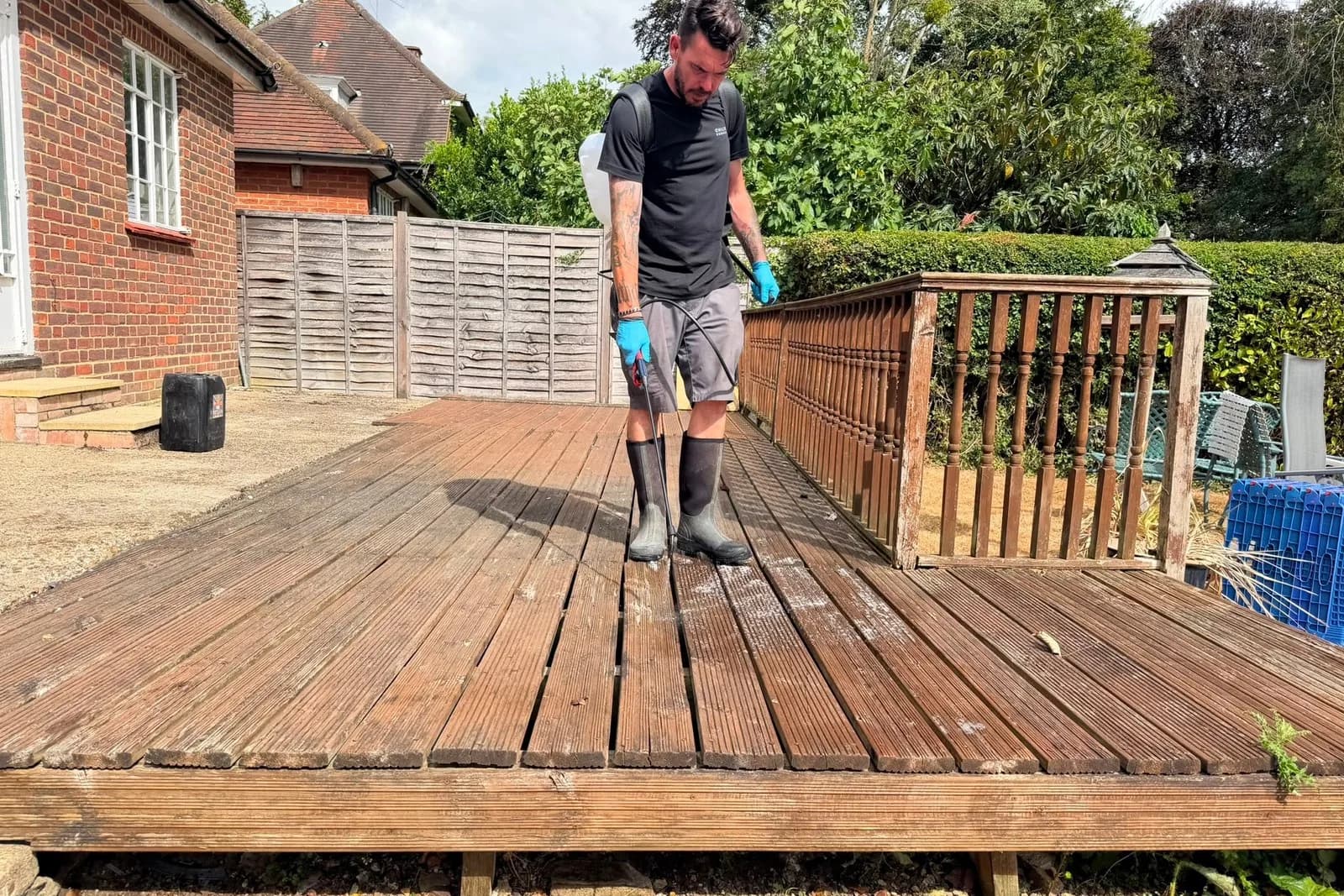
If you want to know how to clean exterior wood, this guide gives you the safe answer. You’ll learn how to clean decking, fences, cladding, gates, pergolas, and outdoor timber while removing dirt, algae, mould, mildew, stains, and grey weathering.
Exterior wood adds warmth, texture, and natural beauty to a property. However, it also needs care. Rain, shade, UV rays, foot traffic, moss, algae, and winter damp can all make timber look dull, slippery, stained, or tired.
At Chiltern Surface, we understand that exterior wood cleaning must be gentle and surface-safe. Timber is not like stone, concrete, or brick. If you use too much pressure or the wrong cleaner, you can raise the grain, splinter the surface, or force water deep into the wood.
Why Exterior Wood Gets Dirty
Outdoor wood is exposed to the weather every day. Over time, it collects moisture, dirt, pollen, leaves, bird mess, algae spores, and pollution.
Common causes of dirty exterior wood include:
- Rain and damp weather
- Green algae
- Mould and mildew
- Moss growth
- UV exposure
- Mud and foot traffic
- Leaf staining
- Garden debris
- Waterlogging
- Lack of regular maintenance
In the UK, damp autumn and winter weather often causes green deposits on wood, especially on shaded decking, fences, and timber cladding.
Why Cleaning Exterior Wood Needs Care
Wood is strong, but it is also absorbent. This means it can take in water and cleaning products. If cleaned too harshly, the surface can become rough, patchy, or damaged.
Poor cleaning can cause:
- Raised wood grain
- Splintering
- Uneven colour
- Water damage
- Streak marks
- Loose fibres
- Faster weathering
- Poor oil or stain absorption later
That is why the safest method is to clean gently, rinse well, and allow the wood to dry fully before applying oil, stain, or sealer.
Best Way to Clean Exterior Wood
The best way to clean exterior wood is to start with the gentlest method first. Sweep away debris, apply a suitable wood cleaner, scrub with the grain, rinse with clean water, and let the timber dry fully.
A safe basic process is:
- Clear the area
- Sweep loose dirt
- Wet the wood lightly
- Apply exterior wood cleaner
- Scrub with the grain
- Rinse thoroughly
- Allow the wood to dry
- Apply oil or protection if needed
This method works for many types of outdoor wood cleaning, including decking, fences, cladding, and garden timber.
Tools You Need for Exterior Wood Cleaning
Before cleaning, gather the right tools.
Useful tools include:
- Broom
- Soft brush
- Medium scrub brush
- Bucket
- Garden hose
- Sponge
- Exterior wood cleaner
- Gloves
- Safety goggles
- Low-pressure washer, if suitable
- Wood oil or sealer for aftercare
Avoid:
- Wire brushes
- Metal scrapers
- Harsh bleach
- High-pressure nozzles
- Dirty mop water
- Abrasive pads
- Strong acids
The goal is to lift dirt, not damage the timber.
Step 1: Clear the Wooden Surface
Before wooden decking cleaning, fence cleaning, or cladding cleaning, clear the area first.
Remove:
- Garden furniture
- Plant pots
- Outdoor rugs
- BBQ equipment
- Storage boxes
- Loose leaves
- Toys and tools
This lets you clean evenly and spot hidden algae, mould, or staining.
Step 2: Sweep Away Loose Dirt
Use a broom or soft brush to remove dry dirt, leaves, cobwebs, dust, and loose moss. This is a simple step, but it makes cleaning much easier.
For decking, brush along the boards. For fences and cladding, brush from top to bottom.
Loose debris can trap moisture, which encourages mould and algae. Regular sweeping helps keep wood cleaner for longer.
Step 3: Pre-Wet the Wood Lightly
Before applying cleaner, lightly wet the timber with clean water. This helps the cleaner spread more evenly and reduces the chance of patchy absorption.
Do not soak the wood heavily. Too much water can enter gaps, joints, and fibres.
Step 4: Apply an Exterior Wood Cleaner
A proper exterior wood cleaner is designed to lift grime, green deposits, mould, mildew, and weathering from timber.
Apply the cleaner as directed. Work in small sections so it does not dry before you scrub.
Always test a small hidden area first, especially on stained, painted, or treated wood.
Step 5: Scrub with the Grain
When cleaning timber, always scrub with the grain. This protects the natural direction of the wood fibres and helps avoid scratches.
Use steady pressure, not force. A medium brush is useful for decking and fences. A softer brush is better for delicate cladding or older timber.
Scrubbing with the grain helps remove:
- Dirt
- Algae
- Mould
- Mildew
- Grey surface marks
- Slippery film
Step 6: Rinse Thoroughly with Clean Water
After scrubbing, rinse the wood with clean water. Use a garden hose on a gentle setting.
Do not leave cleaner residue on timber. It may affect the finish, attract dirt, or interfere with oiling later.
Rinse from top to bottom on vertical surfaces, such as fences and cladding.
Step 7: Let the Wood Dry Fully
This step is very important. Exterior wood must dry fully before oiling, staining, or sealing.
Drying may take 24–48 hours or longer, depending on weather, shade, and timber type.
Do not apply wood oil to damp timber. It may not absorb properly and could leave a patchy finish.
Can You Pressure Wash Exterior Wood?
Yes, but only with great care. Pressure washing wood can cause damage if the pressure is too high or the nozzle is too close.
High pressure can:
- Raise the grain
- Splinter boards
- Strip soft timber
- Force water into joints
- Leave stripes
- Damage coatings
- Make wood rough
If using a pressure washer, use low pressure, a wide fan nozzle, and keep the spray moving. Never use a dirt blaster or turbo nozzle on exterior wood.
For delicate timber, professional cleaning is safer.
How to Clean Wooden Decking
Decking often becomes slippery because of algae, moss, mildew, and damp leaves. This can be a safety issue, especially after rain.
For decking cleaning:
- Remove furniture
- Sweep between boards
- Apply wood cleaner
- Scrub with the grain
- Rinse carefully
- Let it dry fully
- Oil or protect if needed
Do not blast between boards with high pressure. This may damage edges or force water into the structure.
How to Clean a Wood Fence
Fences collect dust, algae, cobwebs, and weather stains. Shaded fence panels often turn green or grey.
For wood fence cleaning:
- Brush away loose dirt
- Wet the fence lightly
- Apply wood cleaner
- Scrub from top to bottom
- Rinse gently
- Allow to dry before painting or staining
If the fence is old or weak, avoid heavy scrubbing and high pressure.
How to Clean Exterior Wood Cladding
Wood cladding cleaning needs extra care because cladding can be decorative, coated, or installed with gaps behind it.
Use:
- Soft brush
- Mild exterior wood cleaner
- Low-pressure rinsing
- Gentle top-to-bottom cleaning
Avoid forcing water behind cladding boards. This can create moisture problems.
If your cladding is stained, painted, or treated, test the cleaner first.
How to Remove Algae from Wood
Green algae is common on damp exterior timber. It can make decking slippery and cladding look neglected.
To remove algae from wood:
- Sweep the surface
- Apply exterior wood cleaner
- Let it work as directed
- Scrub with the grain
- Rinse with clean water
- Improve airflow and sunlight
If algae keeps returning, the timber may stay too damp. Trim nearby plants, clear leaves, and improve drainage where possible.
How to Remove Mould from Exterior Wood
Mould and mildew grow where wood stays damp. They may appear as black, green, or grey patches.
To remove mould from exterior wood:
- Wear gloves and a mask
- Wet the area lightly
- Use a suitable mould or wood cleaner
- Scrub gently
- Rinse fully
- Let the wood dry
Avoid dry brushing heavy mould because spores can become airborne.
How to Clean Grey Weathered Wood
Grey wood is often caused by UV exposure and weathering. It is common on decking, fences, and cladding.
A wood cleaner or wood brightener can help improve the appearance. Some products are made to reduce grey discolouration and bring back a warmer timber tone.
However, grey weathering is not always dirt. Sometimes the surface has aged naturally. If you want the wood to look richer again, cleaning should be followed by suitable oil, stain, or protection.
Should You Oil Exterior Wood After Cleaning?
In many cases, yes. Once timber is clean and dry, oiling can help protect it from moisture and UV damage.
Wood oil may help:
- Nourish the timber
- Improve colour
- Reduce water absorption
- Slow greying
- Make future cleaning easier
- Protect against weathering
Always let the wood dry fully before applying oil. Follow the product instructions carefully.
Should You Seal Exterior Wood?
Some exterior timber benefits from sealing or staining. This depends on the wood type, finish, exposure, and condition.
Sealing may help protect:
- Decking
- Fences
- Gates
- Pergolas
- Cladding
- Garden furniture
However, sealing dirty or damp wood can trap moisture. Clean and dry the timber first.
What Not to Use on Exterior Wood
Avoid cleaning mistakes that can damage timber.
Do not use:
- Very high-pressure washing
- Wire brushes
- Neat bleach
- Strong acids
- Metal scrapers
- Abrasive sanding pads for routine cleaning
- Dirt blaster nozzles
- Harsh cleaners without testing
Wood needs care. Strong cleaning may look fast, but it can shorten the life of the surface.
How Often Should Exterior Wood Be Cleaned?
Most exterior wood should be cleaned once or twice a year.
A good routine is:
- Spring clean after winter
- Autumn clean before wet weather
- Sweep decking weekly
- Remove leaves quickly
- Treat algae early
- Oil or protect when needed
Regular maintenance keeps wood safer, cleaner, and better looking.
How to Keep Exterior Wood Cleaner for Longer
After cleaning, prevention helps reduce future buildup.
Try these tips:
- Sweep leaves often
- Move plant pots regularly
- Improve airflow
- Trim plants near timber
- Fix drainage problems
- Keep gutters clear
- Clean spills quickly
- Avoid water pooling
- Reapply wood oil when needed
Small habits can make a big difference.
DIY vs Professional Exterior Wood Cleaning
DIY cleaning can work for light dirt and routine maintenance. However, professional cleaning is better for slippery decking, heavy algae, mould, delicate cladding, or large timber areas.
Professional cleaning offers:
- Surface-safe methods
- Correct pressure control
- Better cleaning equipment
- Proper product selection
- Reduced risk of timber damage
- Longer-lasting results
- Aftercare advice
Chiltern Surface can assess the wood and choose the safest cleaning method.
Professional Exterior Wood Cleaning by Chiltern Surface
Chiltern Surface provides careful professional exterior wood cleaning for homes and outdoor spaces that need expert care.
Our service may include:
- Timber surface inspection
- Algae and mould assessment
- Gentle cleaning method selection
- Low-pressure washing where suitable
- Soft washing where appropriate
- Decking cleaning
- Fence cleaning
- Cladding cleaning
- Rinsing and finishing
- Aftercare guidance
We do not treat every surface the same. Your timber gets the care it needs.
Why Choose Chiltern Surface?
Your exterior wood adds style and value to your property. It should be cleaned with care, not harsh shortcuts.
Chiltern Surface offers:
- Expert surface knowledge
- Safe cleaning methods
- Careful pressure control
- Premium attention to detail
- Local service
- Honest advice
- Long-lasting results
Whether your exterior wood is green, grey, slippery, stained, or weathered, we can help restore it safely.
About How to Clean Exterior WoodConclusion
Knowing how to clean exterior wood helps protect decking, fences, cladding, gates, pergolas, and outdoor timber from dirt, algae, mould, mildew, and weathering. The safest method is to clean gently, scrub with the grain, rinse well, and let the wood dry fully before applying oil or sealer.
For light dirt, DIY cleaning can work well. For slippery decking, mould, algae, delicate timber, or large exterior wood areas, professional cleaning is the better choice.
Chiltern Surface provides expert exterior wood cleaning with safe methods, careful pressure control, and premium results.
Contact Chiltern Surface today to restore your exterior wood and keep your outdoor surfaces clean, safe, and beautifully maintained.
Frequently asked questions
What is the best way to clean exterior wood?
The best way is to sweep first, apply a suitable exterior wood cleaner, scrub with the grain, rinse thoroughly, and let the wood dry fully.
Can I pressure wash exterior wood?
Yes, but only with low pressure and care. High pressure can raise the grain, splinter timber, and leave marks.
How do I remove algae from exterior wood?
Use an exterior wood cleaner, scrub with the grain, rinse well, and improve airflow to slow regrowth.
How do I remove mould from exterior wood?
Wear gloves and a mask, wet the area lightly, apply a suitable cleaner, scrub gently, rinse, and let the wood dry.
How do I clean wooden decking safely?
Sweep the decking, apply wood cleaner, scrub with the grain, rinse gently, and allow it to dry before oiling.
Should I oil wood after cleaning?
Yes, if the wood is suitable and fully dry. Oiling can protect timber from moisture and UV damage.
How often should exterior wood be cleaned?
Most exterior wood benefits from cleaning once or twice a year, especially after winter and before wet weather.
When should exterior wood be cleaned by a professional?
Call Chiltern Surface if the wood is slippery, mouldy, heavily stained, delicate, or if pressure washing may damage it.