
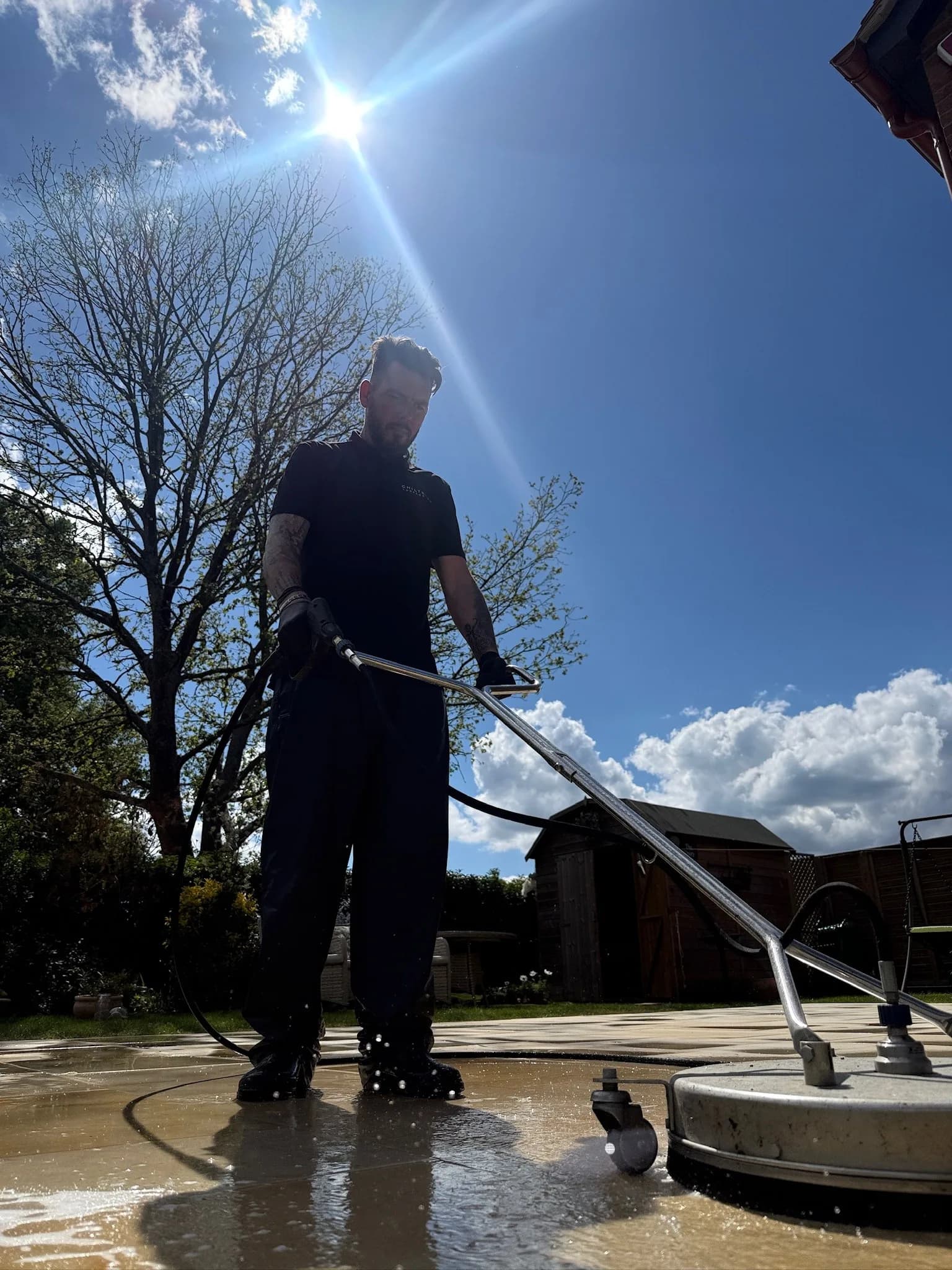
Clean the exterior of your house by matching the cleaning method to each surface. Use soft washing for render, cladding, fascias and painted finishes, and use controlled pressure only on strong surfaces such as concrete, brick and paving. If you want to know how to clean exterior of house safely, start with inspection, protection, low-pressure washing and careful rinsing.
How Often Should You Clean the Exterior of Your House?
Most UK homes need exterior cleaning every 12 to 18 months. Shaded homes, riverside homes and tree-lined homes need cleaning every 6 to 12 months because algae, moss and lichen grow faster.
The answer to how to clean exterior of house also depends on exposure. A north-facing wall stays damp longer than a south-facing wall. A home near trees collects pollen, sap, bird mess and leaf debris faster. A driveway near a busy road collects traffic film and oil marks faster.
Use 3 checks each season. Check gutters for streaking, check render for green algae, and check paving for slippery growth. Book cleaning before staining spreads across larger surfaces.
A seasonal plan for how to clean exterior of house prevents emergency cleaning after stains settle. Spring cleaning removes winter grime. Autumn cleaning removes pollen, leaf tannins and damp-weather growth.
Homeowners often ask how to clean exterior of house after noticing 3 signs: green wall staining, black roofline streaks and slippery paving. Treating these signs early protects finishes and improves kerb appeal.
| Task | Timing | Method | Difficulty |
|---|---|---|---|
| Inspect render, brick and cladding | Every 3 months | Check 6 inches (15cm) above sills and 5 feet (1.5m) from ground level | Easy |
| Wash light dust from walls | Every 6 months | Use a garden hose, soft brush and pH-neutral cleaner | Medium |
| Treat algae and moss | Every 6 to 12 months | Use low-pressure soft washing and approved treatment | Professional |
| Clean gutters, fascias and soffits | Every 12 months | Use safe access, low pressure and controlled rinsing | Professional |
| Clean patios and driveways | Every 12 to 18 months | Use pressure washing only where surface strength allows | Professional |
How to Clean Exterior of House Without Damaging Surfaces
To clean exterior of house without damaging surfaces, use the gentlest effective method first. Start with water, a soft brush and a surface-safe cleaner before you increase pressure or treatment strength.
A house exterior includes 8 common surfaces: render, brickwork, painted walls, cladding, roof tiles, gutters, fascias and paving. Each surface reacts differently to water pressure, cleaning products and scrubbing.
A safe plan for how to clean exterior of house separates soft materials from hard materials. Soft materials include render, painted timber and cladding. Hard materials include concrete, stable brick and modern paving.
Chiltern Surface Co focuses on a soft wash treatment for delicate exterior surfaces. Low-pressure treatment removes organic growth while reducing unnecessary surface wear.
How to Test 3 Surface Types Before Washing
To test 3 surface types before washing, check porosity, strength and finish. Choose render, brickwork and painted timber as your first test areas.
- Press a dry cloth against render and look for chalky residue.
- Spray 6 inches (15cm) of brickwork and check for loose mortar.
- Wipe painted timber and check for flaking paint or soft edges.
Stop DIY cleaning when surfaces show cracking, loose pointing or peeling paint. Professional cleaning protects weak finishes and reduces repair risk.
Testing also improves how to clean exterior of house because hidden damage changes the method. A safe cleaner never treats fresh render, failed paint or crumbling mortar like concrete.
How to Protect Plants, Lights and Drains
To protect plants, lights and drains, cover vulnerable areas before water or cleaner touches the wall. Use breathable sheeting, tape and drain guards.
- Cover plants such as lavender, box hedging and roses with light sheeting.
- Switch off outside lights, sockets and garden power points before cleaning.
- Block open drains with filters that catch moss, grit and loose debris.
Leave 12 inches (30cm) between covers and delicate stems. Remove sheeting quickly after rinsing so plants receive air.
Good protection supports how to clean exterior of house without creating new problems. Water must not enter lights, air bricks, door seals or old window joints.
How to Choose the Right House Exterior Cleaning Method
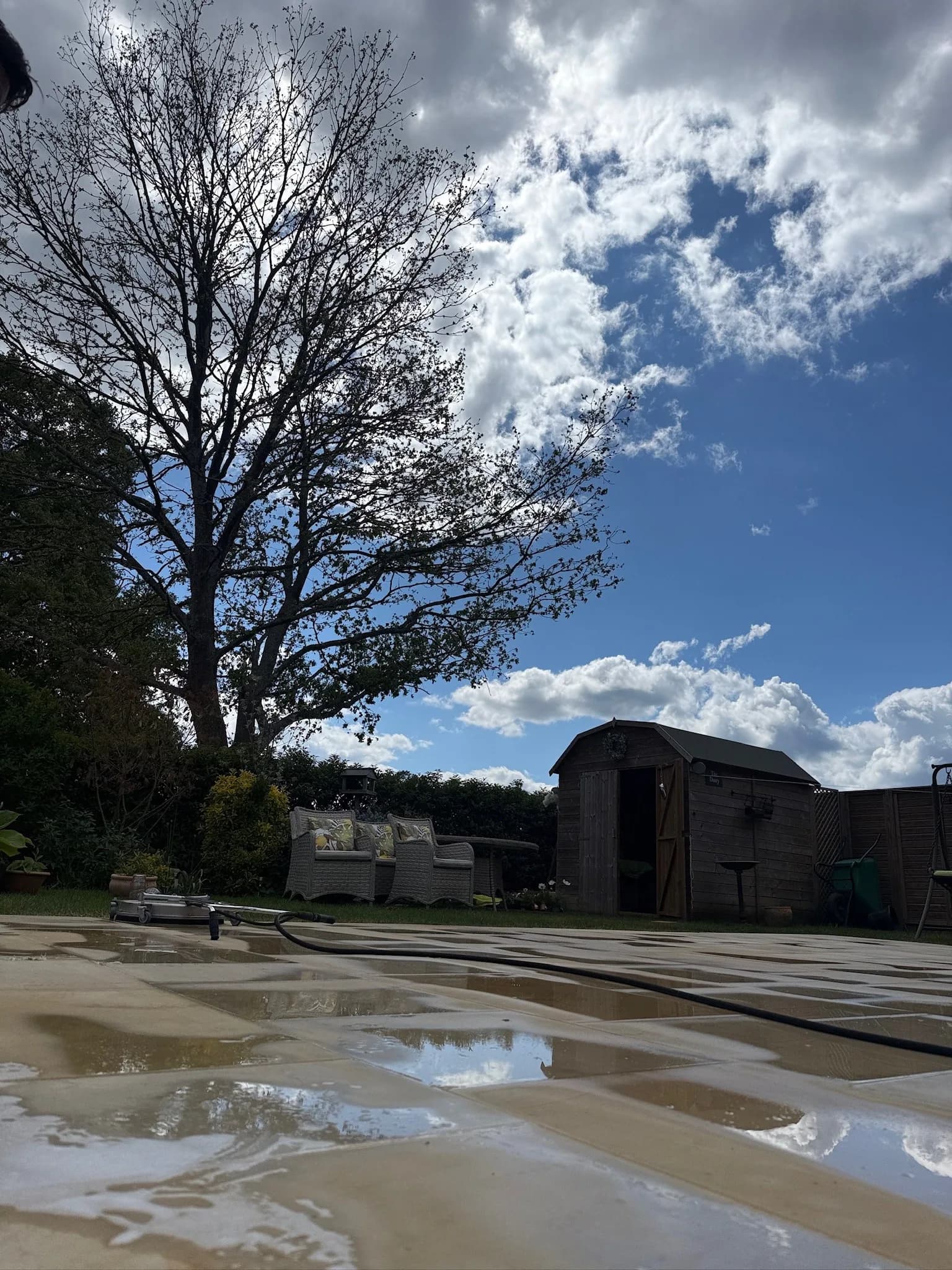
To choose the right house exterior cleaning method, match the method to surface strength and staining type. Use soft washing for organic growth and controlled pressure for durable hardstanding.
The wrong method creates 4 common problems: stripped paint, damaged render, loose pointing and water ingress. The right cleaning method starts with a site assessment, not guesswork.
Method choice controls how to clean exterior of house for long-term results. Pressure removes visible dirt fast. Soft washing treats algae, mould and lichen growth with less force.
How to Clean Render and Painted Walls Safely
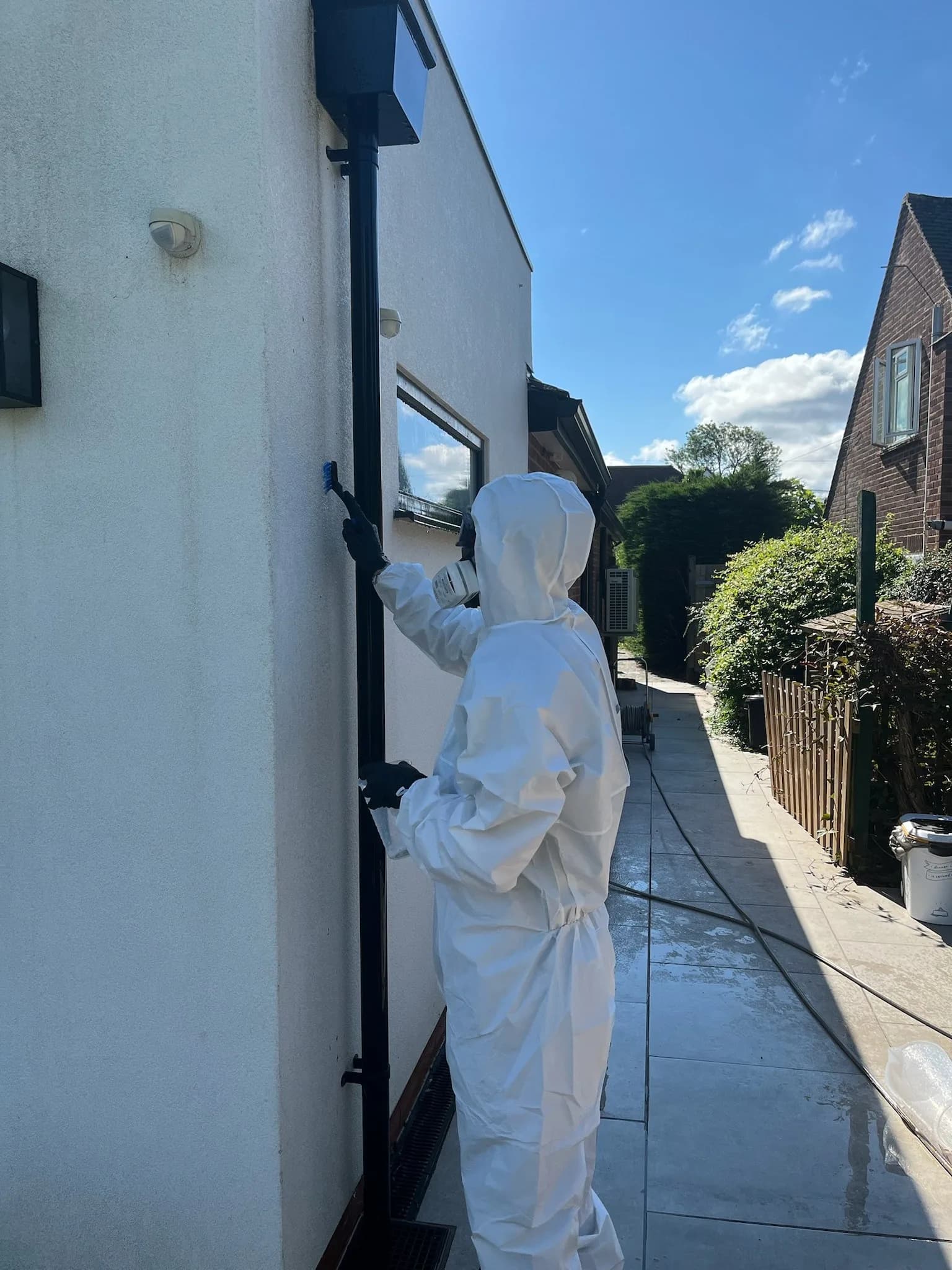
To clean render and painted walls safely, use low pressure and a suitable exterior cleaner. Avoid direct high-pressure jets on K-rend, monocouche render, painted masonry and soft timber.
Apply cleaner evenly, allow controlled dwell time, and rinse gently from a safe angle. Keep spray at least 12 inches (30cm) from delicate surfaces. Never force water under seals, vents, cracks or flashing.
Render cleaning needs patience because organic staining sits in texture. Soft washing treats algae and mould at the source rather than removing surface colour by force.
This surface matters most in guides on how to clean exterior of house because modern render marks quickly. Shaded render often needs treatment before the whole wall looks dirty.
How to Clean Brick, Stone and Masonry Correctly
To clean brick, stone and masonry correctly, inspect joints before pressure reaches the surface. Loose mortar, soft sandstone and aged brick need gentle treatment.
Strong modern brick can handle more pressure than old brick. Natural stone varieties such as limestone, sandstone and granite need different cleaning products. Acidic cleaners damage limestone and some sandstone surfaces.
Hold the nozzle at least 12 inches (30cm) from stable masonry. Use wider fan nozzles rather than narrow jets. Test a hidden area of 6 inches (15cm) before cleaning a visible wall.
How to Clean Gutters, Fascias and Soffits
To clean gutters, fascias and soffits, use low pressure and controlled access. These areas often hold algae, black streaks, cobwebs and overflow stains.
Clean gutters before wall washing because gutter debris can run down clean walls. Check brackets, joints and downpipes before rinsing. Avoid forcing water behind fascia boards or into roofline gaps.
Professional exterior cleaning suits high roofline areas over 10 feet (3m). Water, ladders and awkward angles create unnecessary risk for homeowners.
Roofline cleaning often decides whether the house is best cleaned as a full service. Dirty gutters and fascias release streaks onto clean walls after rain.
How to Prepare the House Exterior Before Cleaning
To prepare the house exterior before cleaning, clear access, protect weak areas and remove loose debris first. Preparation improves results and prevents avoidable damage.
- Remove garden furniture, plant pots and bins from a 5 feet (1.5m) working zone.
- Close windows, doors, vents and side gates before washing starts.
- Sweep patios, paths and steps before wall cleaning begins.
- Check outside sockets, lights, cameras and alarms before water reaches the area.
- Photograph stained areas such as algae patches, rust marks and bird mess.
Preparation helps you understand how to clean exterior of house without spreading dirt. Wall cleaning can move debris onto patios, steps and driveways. Clean from high areas to low areas after pre-treatment.
A clear working zone also helps service teams move equipment safely. Keep 3 feet (90cm) around taps, drains and side gates clear before the visit.
How to Clean Exterior of House in the Right Order
To clean exterior of house in the right order, start with inspection, then clean high areas before lower surfaces. A correct order stops dirty water from spoiling finished areas.
- Inspect surfaces from ground level and mark damaged areas.
- Clear gutters, roofline edges and high trim first.
- Wash render, brickwork, cladding and painted walls next.
- Clean windows, frames and sills after wall rinsing.
- Finish with patios, paths, steps and driveways.
Work in 3 metre (10 feet) sections on large walls. Keep each section wet while the cleaner works. Rinse before cleaning solution dries on glass, metal, render or paint.
The right order improves how to clean exterior of house because gravity moves dirt downward. A complete service should finish ground-level surfaces after wall and roofline cleaning.
How to Wash High Areas Safely
To wash high areas safely, keep your feet on stable ground where possible. Use extension poles, low-pressure systems and professional access equipment for upper levels.
Avoid leaning from windows or stretching from ladders. A wet ladder can slip within seconds. A 6 feet (1.8m) step ladder creates risk when the ground slopes or paving moves.
Book a professional service for areas above 10 feet (3m), conservatory roofs and roofline staining. Safe access equipment protects your property and your safety.
A 2-storey property changes how to clean exterior of house because access shapes the method. Poles, controlled pumps and professional ladders reduce unsafe stretching.
How to Rinse Exterior Walls Without Streaks
To rinse exterior walls without streaks, rinse evenly and keep water moving downward. Use gentle flow on render, cladding and painted walls.
Rinse from the top of each cleaned section after treatment has worked. Keep the spray angle shallow around windows, doors, vents and lights. A shallow angle reduces water ingress risk.
Check the wall after 20 minutes. Clean missed patches before surfaces dry fully. Some soft wash results brighten further over 24 to 48 hours because treatment keeps working.

What Cleaning Products Should You Use on House Exterior Surfaces?
Use pH-neutral cleaners for light dirt and professional biocide treatments for organic growth. Choose products for the surface, not only for the stain.
Mild detergent suits small areas of dust on uPVC, aluminium and painted trim. Biocide treatment suits algae, mould and lichen on render, stone and roofline surfaces. Degreasers suit oil spots on concrete driveways and garage thresholds.
Avoid 4 products on delicate surfaces: strong acids, undiluted bleach, wire brushes and abrasive powders. These products damage render colour, painted finishes, natural stone and soft mortar.
Product choice affects how to clean exterior of house more than many homeowners expect. The wrong cleaner can stain stone, dull paint or weaken plant health.
Read product labels before application. Keep cleaner away from ponds, water features and edible plants. Rinse overspray from glass, metal and paving within the product time limit.
What Mistakes Damage House Exterior Surfaces?
High pressure causes the most expensive house exterior cleaning mistakes. Narrow jets damage render, lift paint, scar timber and open gaps in mortar.
- Avoid spraying upward under cladding, vents, roof edges and window frames.
- Avoid using one pressure setting on render, brick, timber and paving.
- Avoid cleaning in strong sun because solutions dry too fast.
- Avoid ignoring cracks, loose pointing, failing paint and damaged seals.
- Avoid pushing debris into drains without filters or collection bags.
Weather also affects how to clean exterior of house. Choose a mild dry day between 10°C and 20°C (50°F and 68°F). Avoid frost, strong wind and direct summer heat.
Common damage starts when homeowners rush how to clean exterior of house with high pressure. A narrow jet can cut soft render in seconds and scar timber grain.
Cleaning in freezing weather traps water in cracks. Frozen water expands and stresses render, stone and mortar. Cleaning in hot weather leaves streaks and cleaner residue.
When Should You Book Professional Exterior Cleaning?
Book professional exterior cleaning when staining covers large areas, access looks unsafe or surfaces look delicate. Service-led cleaning gives you safer results than trial cleaning.
Professional help suits 6 common situations: stained render, black algae, mossy roof edges, blocked gutters, slippery paving and conservatory build-up. Service teams also handle mixed surfaces across one property.
Chiltern Surface Co provides exterior cleaning services across Marlow, Buckinghamshire and surrounding areas. The team inspects the property, identifies surface risks, and provides the cleaning service your home needs.
A professional visit also helps when you do not know how to clean exterior of house without damaging finishes. A trained cleaner checks access, drainage, surface type, staining level and nearby materials before work starts.
Chiltern Surface Co can provide the service after assessment, not just advice. The team can clean and treat suitable surfaces across the house exterior.
Conclusion
The safest answer to how to clean exterior of house is simple: inspect every surface, protect weak areas, use low pressure first, and book professional help for stained, high or delicate surfaces. Chiltern Surface Co can inspect your render, brickwork, cladding, gutters, fascias, patios and driveways, then provide the right cleaning service for your home. Book a free site visit and get a clear service recommendation for your property.
Frequently asked questions
Can I clean the exterior of my house myself?
Yes. You can clean light dirt yourself with a hose, soft brush and mild cleaner. Book professional cleaning for high areas, algae, moss, lichen, delicate render and unsafe access. Professional help gives a better answer to how to clean exterior of house when surfaces vary across one property.
Should I soft wash or pressure wash my house exterior?
Yes, for delicate surfaces. Soft washing protects render, cladding, painted walls and roofline areas. Pressure washing suits stronger surfaces such as concrete, stable brick and some paving.
How often should house exteriors be cleaned in the UK climate?
Clean most house exteriors every 12 to 18 months. Clean shaded, damp or tree-lined homes every 6 to 12 months because organic growth returns faster.
Can pressure washing damage render?
Yes. High pressure damages render, painted finishes and weak edges. Use low-pressure treatment for K-rend, monocouche render and painted masonry.
What is the safest way to clean a 2-storey house exterior?
The safest method uses ground-based equipment and professional access. Avoid ladder work near wet walls, windows, conservatories, sloped paving and roofline edges. Professional service teams know how to clean exterior of house without unsafe reaching.