
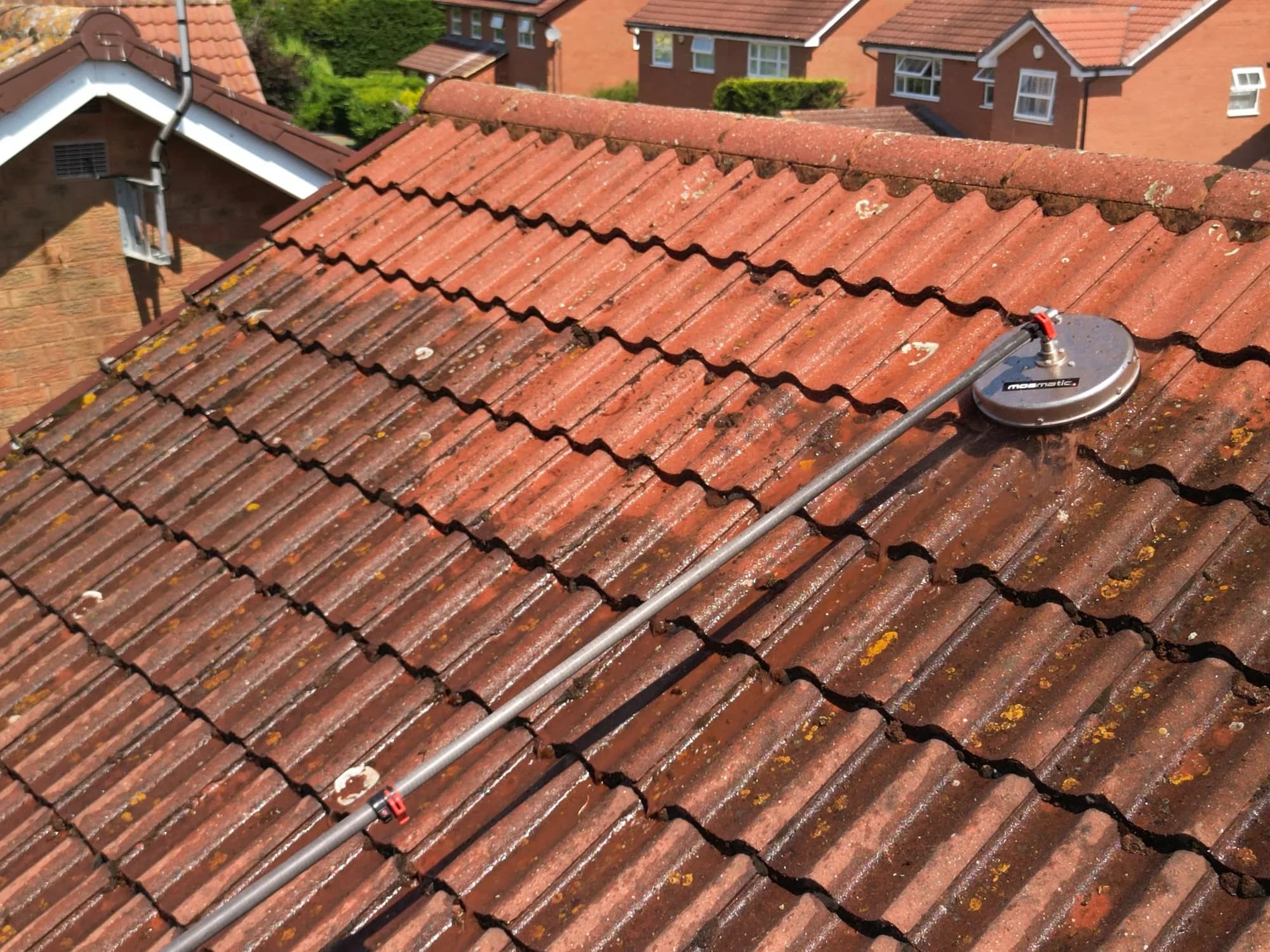
How to Clean a Roof from the Ground
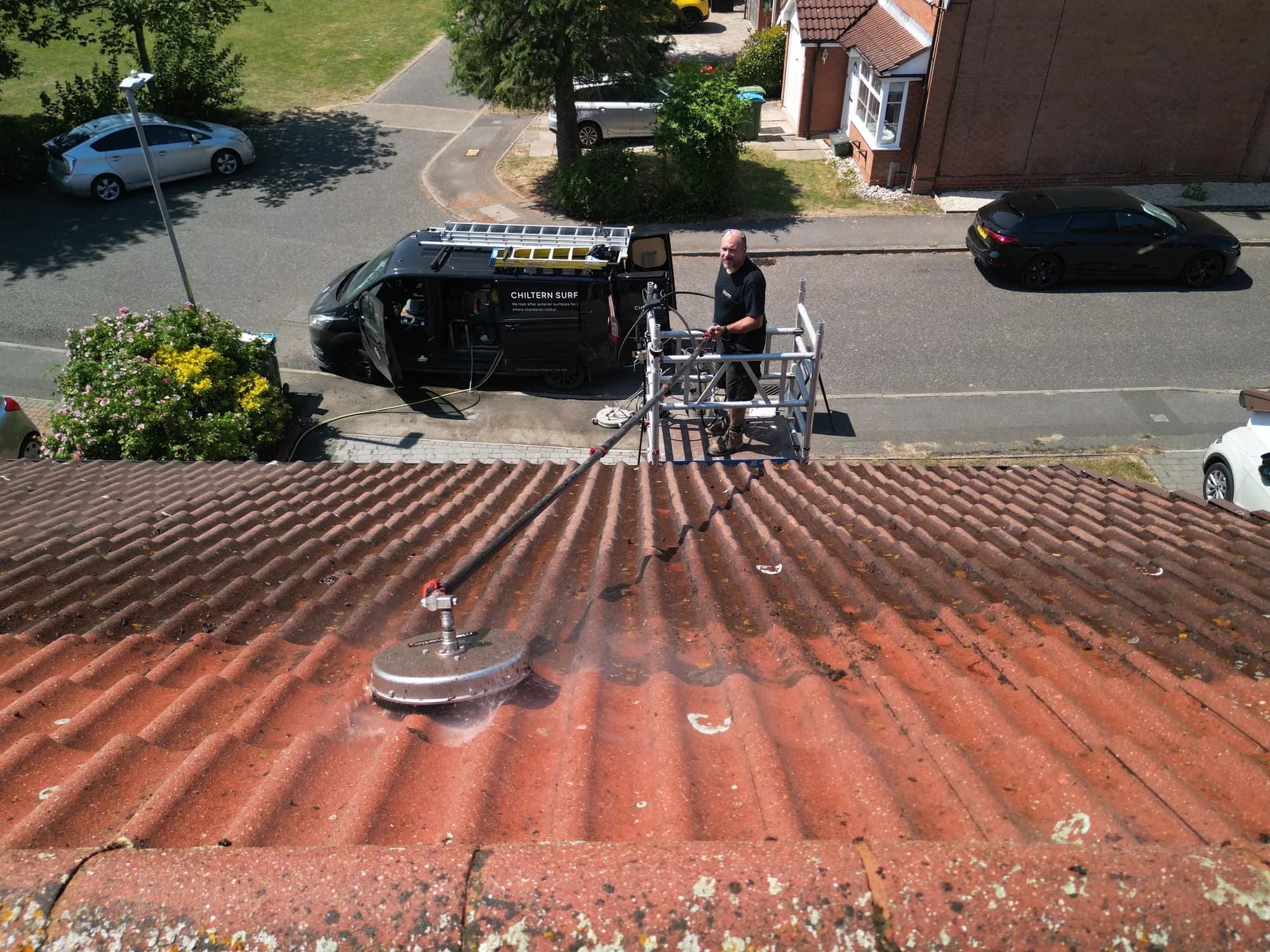
To clean a roof from the ground, inspect the roof first. Clear accessible gutters and use low-pressure treatment only where safe. Never walk on the roof or blast tiles with high pressure, because roof work creates serious fall and damage risks. A ground-based method suits light maintenance, lower roof edges, gutter debris, and some soft wash treatments. Thick moss, steep pitches, cracked tiles, fragile slate, and blocked valleys need professional assessment.
The safest answer to how to clean a roof from the ground starts with controlled ground-level work.
How to Clean a Roof from the Ground Without Climbing
How to clean a roof from the ground starts with distance, visibility, and safe tool control. You stay on firm ground and work only within stable reach. Ground cleaning does not mean every part of the roof receives manual contact.
Inspect the Roof First
Use binoculars or a camera zoom before using any pole or treatment. Look for slipped tiles, cracked ridge pieces, blocked gutters, heavy moss, and fragile rooflights. Stop the plan when damage, height, or poor access creates uncertainty.
Clear Ground Hazards
Move vehicles, garden furniture, planters, and loose tools away from the eaves. Wear safety glasses, gloves, long sleeves, and non-slip footwear. Falling moss, water, twigs, and grit can land several feet from the wall.
Choose Ground-Controlled Work
Choose 3 ground-safe tasks: gutter vacuuming, low-pressure treatment, and light edge debris removal. Do not scrape high tiles with uncontrolled force. Do not pressure wash roof tiles from ground level.
How to Clean a Roof from the Ground with the Right Tools
How to clean a roof from the ground depends on matching tools to the roof and contamination. Long reach increases control challenges, so lighter tools often work better than heavy attachments.
Use a Telescopic Inspection Pole
A telescopic inspection pole holds a camera or mirror for closer viewing. A 20-foot (6.1m) pole can check many lower roof edges. A 30-foot (9.1m) pole becomes harder to control in wind.
Use a Gutter Vacuum
A gutter vacuum removes leaves, moss, and silt from accessible gutter runs. Common attachments include carbon-fibre poles, curved nozzles, and camera monitors. Vacuuming protects drainage without scraping across the tile field.
Use a Low-Pressure Applicator
A low-pressure applicator can place treatment across reachable areas. Suitable applicators include pump sprayers, soft wash pumps, and controlled extension lances. Apply only products approved for the surface and surrounding area.
Avoid Pressure Washer Lances
A pressure washer lance can drive water beneath laps, vents, and ridge details. High pressure can strip surface coatings from concrete tiles. Force can also crack aged clay or loosen fragile slate.
How to Clean a Roof from the Ground: What Can You Clean?
Use this section to decide how to clean a roof from the ground without overreaching. Keep work within gutters, eaves, treatment zones, and visible lower surfaces.
Ground work can remove loose debris, clear gutters, and apply some treatments. Ground work cannot replace proper roof cleaning across every roof type.
Gutter Debris
You can remove leaves, pine needles, moss lumps, and roof grit from many gutters. Blocked gutters cause overflow across fascia boards, brickwork, paths, and foundations. Clear downpipe mouths after vacuuming to restore normal water flow.
Light Moss at Roof Edges
You can remove loose moss near eaves when the tool stays controlled. Do not force a scraper under tiles or lift tile edges. Manual moss removal across the full roof needs trained access equipment.
Organic Staining
Algae, lichen, and green staining respond to suitable treatment over time. Soft wash treatments work through low pressure and surface contact. Chiltern Surface Co uses soft wash treatments where the material and surroundings support treatment-led cleaning.
Snow or Loose Seasonal Debris
A roof rake can remove snow from lower roof edges during cold weather. A 20-foot (6.1m) rake suits many single-storey areas. Avoid gutters, skylights, vents, and solar panels during rake use.
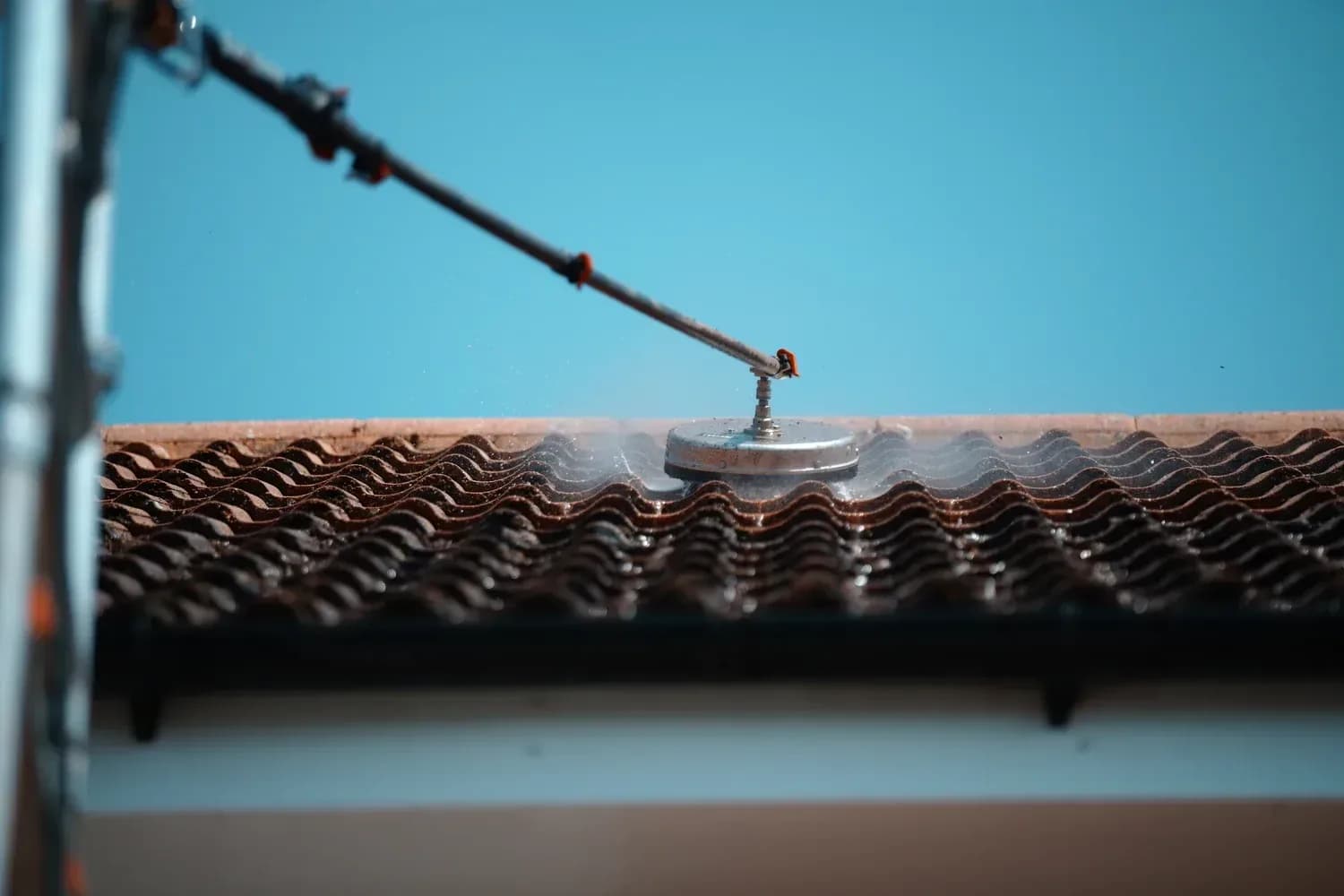
How to Clean a Roof from the Ground: When Should You Stop?
A safe plan for how to clean a roof from the ground includes clear stop points. Stop before tools lose control or products drift.
Stop ground-based roof cleaning when height, roof condition, weather, or product risk exceeds safe control. A ground position does not remove every hazard.
Stop for Roof Damage
Stop when you see cracked tiles, slipped slates, broken ridge mortar, or sagging sections. Cleaning can move already damaged components. A roofing contractor should inspect structural issues before surface treatment.
Stop for Heavy Moss
Heavy moss forms thick mats inside tile overlaps and valleys. Ground-level treatment cannot remove every trapped mass. Professional manual moss removal protects gutters and improves treatment contact.
Stop for Wind or Rain
Wind moves sprays, poles, and falling debris. Rain dilutes treatment and increases runoff. Choose calm, dry conditions for any safe ground-level maintenance.
Stop Near Sensitive Features
Protect solar panels, rooflights, leadwork, painted surfaces, ponds, and planting. Chemical drift can mark finishes or harm plants. Professional teams control runoff, rinse zones, and shield sensitive materials.
How to Clean a Roof from the Ground by Roof Type
Material checks decide how to clean a roof from the ground without shortening tile life. Treat older roofs more cautiously than new roofs.
How to clean a roof from the ground changes with roof material, pitch, and age. One method cannot protect every roof surface.
Clay Tile Roofs
Clay tiles can become brittle with age. Use visual inspection and gentle treatment only. Avoid hard scraping because aged clay can crack at corners and noses.
Concrete Tile Roofs
Concrete tiles tolerate careful treatment when the surface remains sound. Weathered concrete can lose colour coatings under pressure. Low-pressure methods protect the tile face better than aggressive washing.
Natural Slate Roofs
Natural slate needs specialist care because thin slates fracture under stress. Do not drag tools across slate edges. Ask for professional roof cleaning when slate shows delamination or movement.
Fibre-Cement Slate Roofs
Fibre-cement slate needs correct material identification before cleaning. Older fibre-cement materials can contain asbestos in some properties. Do not disturb unknown materials without specialist advice.
Metal Roofs
Metal roofs need gentle washing and safe runoff control. Avoid abrasive tools that scratch coatings. Check fixings, seams, and corrosion before treatment.
How to Clean a Roof from the Ground Step by Step
Follow this sequence when planning how to clean a roof from the ground. Each step reduces avoidable risk before treatment starts.
To clean a roof from the ground, follow a controlled 7-step process and stop when the roof needs specialist care. The process focuses on inspection, drainage, protection, and low-risk maintenance.
Step 1: Photograph the Roof
Photograph every roof elevation from ground level. Capture eaves, valleys, gutters, dormers, chimneys, and rooflights. Use photos to decide whether cleaning remains suitable.
Step 2: Clear the Work Area
Clear a 6-foot (1.8m) strip below the eaves where debris can fall. Move plants in pots and protect fixed planting. Keep children and pets away from the work area.
Step 3: Clear Gutters First
Use a gutter vacuum or suitable ground-level gutter tool. Remove moss lumps, leaves, twigs, and silt. Flush only when the downpipe and drain route can handle water.
Step 4: Apply Low-Pressure Treatment
Apply approved treatment from the ground only when the surface and access allow control. Work in small sections and keep drift away from windows, cars, and planting. Avoid strong mixes, unknown products, and unlabelled containers.
Step 5: Let the Treatment Work
Many roof treatments work over days or weeks. Do not expect instant brightening after low-pressure treatment. Rain and weathering help loosen dead organic matter.
Step 6: Rinse Surrounding Areas
Rinse walls, windows, paths, patios, and planting where product or debris lands. Collect moss and grit before material enters drains. Check downpipes for fresh blockages.
Step 7: Book Professional Cleaning
Book a specialist when the roof needs manual moss removal, controlled access, or surface-specific treatment. Chiltern Surface Co provides surface-specific roof cleaning for tiled and slate roofs across Buckinghamshire. The service protects roof surfaces while removing moss, algae, and organic build-up.
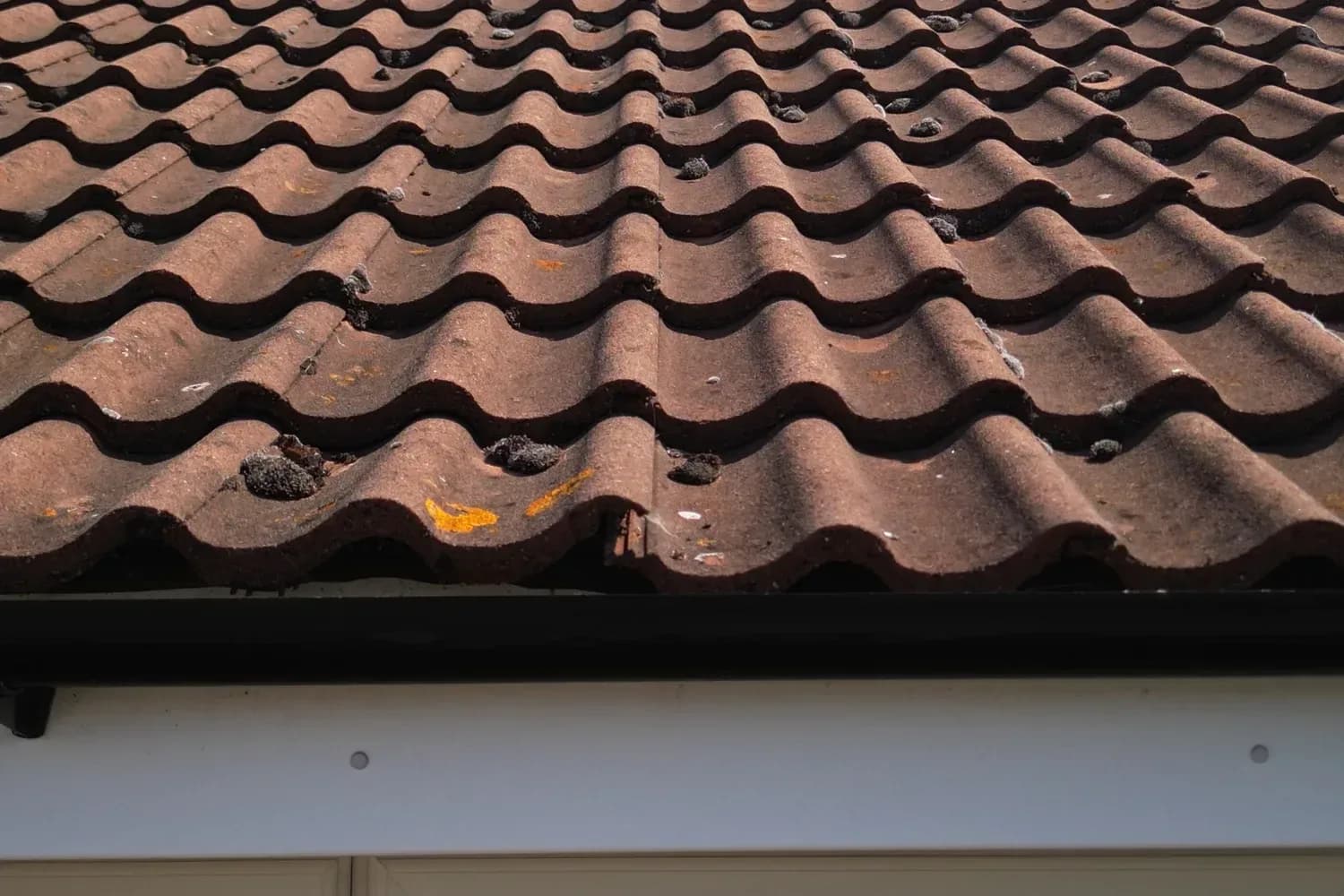
How to Clean a Roof from the Ground: Quick Reference
| Task | Timing | Method | Difficulty |
|---|---|---|---|
| Photograph roof condition | 10-20 minutes | Camera zoom or inspection pole | Easy |
| Clear ground below eaves | 10-15 minutes | Move items and protect plants | Easy |
| Vacuum accessible gutters | 30-90 minutes | Gutter vacuum and camera check | Moderate |
| Remove light edge debris | 15-30 minutes | Controlled pole tool | Moderate |
| Apply low-pressure treatment | 20-60 minutes | Pump sprayer or soft wash lance | Advanced |
| Rinse nearby surfaces | 15-30 minutes | Garden hose and clean water | Easy |
| Arrange professional cleaning | 10 minutes | Free site visit request | Easy |
How to Clean a Roof from the Ground Safely
Safety decides how to clean a roof from the ground more than equipment choice. Keep every task within stable reach.
Roof safety starts with avoiding work at height where possible. Ground-based work still needs planning, protection, and the correct limits.
Respect Roof Work Risk
The Health and Safety Executive classifies roof work as highly dangerous. Workers need proper planning, competence, training, and suitable precautions. Even short roof jobs need safe systems.
Avoid Ladders for Cleaning
A ladder is not a cleaning platform. Ladders suit short access tasks when properly secured and appropriate. Roof cleaning needs stable equipment, planned access, and controlled movement.
Protect Plants and Drainage
Pre-wet plants before treatment and rinse plants after exposure. Block or divert runoff where drains, ponds, and lawns need protection. Use a professional when runoff paths cross delicate areas.
How to Clean a Roof from the Ground Without Damage
Good judgement controls how to clean a roof from the ground without damage. Avoid force, blind scraping, and unverified cleaners.
Ground cleaning causes damage when force, chemicals, or tools exceed surface limits. A low position does not make every method safe.
Blasting Tiles with High Pressure
High pressure can lift tiles, force water beneath laps, and damage coatings. Avoid pressure washer attachments on roof tiles. Choose assessment-led cleaning instead of force.
Scraping Blindly Under Tile Edges
Blind scraping can lift laps, break corners, and move existing defects. Only remove loose material from areas you can see clearly. Professional moss removal works from safe access and controlled angles.
Using Household Products Randomly
Household cleaners can stain tiles, harm plants, or react with metals. Use only labelled products intended for roof materials. Never mix chemicals in unverified combinations.
Ignoring Gutters After Treatment
Dead moss and loosened debris can move into gutters after treatment. Schedule gutter checks after the roof weathers. Blocked gutters can undo the benefit of roof cleaning.
How Often Should You Clean a Roof from the Ground?
Check the roof from ground level 2 times yearly, usually in spring and autumn. Clean gutters more often where trees overhang the roof.
A shaded roof gathers moss faster than an open, sunny roof. North-facing slopes often stay damp for longer. Tree cover increases leaf fall, seed debris, and blocked outlets.
Book professional cleaning when moss returns heavily or staining covers large areas. A treatment-led maintenance plan keeps roof work safer and more predictable. Review roof cleaning questions before comparing methods, timing, and expectations.
Record roof photos 2 times yearly from the same garden positions. Consistent photos make moss growth, staining, and blocked outlets easier to compare. This habit supports safer maintenance decisions without guesswork.
How to Clean a Roof from the Ground Professionally
Professional assessment shows how to clean a roof from the ground where access allows. The team uses safer access when ground reach fails.
Yes, hire a professional for steep roofs, heavy moss, fragile materials, high areas, and uncertain products. Professional roof cleaning includes assessment, access planning, surface selection, debris control, and aftercare advice.
Chiltern Surface Co assesses roof type, age, condition, surroundings, and the safest cleaning route. The approach page explains that natural stone, roofs, render, brickwork, and exterior surfaces need different methods. The company avoids maximum pressure and uses treatment-led cleaning where appropriate.
A free site visit gives you a clear recommendation before work begins. Professional cleaning also protects gutters, patios, plants, glass, painted surfaces, and drainage.
A professional visit also checks access, gutter condition, runoff routes, plant protection, and realistic results. Clear advice helps you avoid unsuitable chemicals, unsafe ladders, and high-pressure shortcuts.
How to Clean a Roof from the Ground: Book Safe Help
Knowing how to clean a roof from the ground helps you understand safe limits and early maintenance. Ground-level work can support inspection, gutter clearing, and light treatment, but roof cleaning needs expert judgement.
Book a free site visit with Chiltern Surface Co for roof cleaning across Buckinghamshire, Berkshire, and Oxfordshire. The team will inspect the roof, explain the safest method, and provide a clear quotation.
Frequently asked questions
Can you clean a whole roof from the ground?
No. You can complete light maintenance from the ground. Full moss removal often needs professional access, controlled tools, and surface-specific treatment.
Can you pressure wash a roof from the ground?
No. Pressure washing roof tiles from the ground can force water under tiles and damage surfaces. Use low-pressure treatment or professional cleaning.
Can roof moss remover work from the ground?
Yes, for some roofs. Treatment can work when spray control, surface suitability, and runoff protection are adequate. Heavy moss still needs manual removal.
Is a roof rake safe for cleaning moss?
No, not for moss removal. A roof rake suits snow or loose seasonal debris near lower edges. Moss removal needs gentler, controlled methods.
Should you clean gutters before roof treatment?
Yes. Clear gutters before treatment so moss, leaves, and silt do not block water flow during cleaning. Check gutters again after weathering.