
The safest answer to how to clean gravel driveway surfaces is simple. Remove debris, pull weeds, treat stains, rinse at low pressure, and rake stones level again. Avoid strong pressure washing because force scatters stones and exposes the sub-base. The guide answers how to clean gravel driveway surfaces without unsafe force.
Why Does a Gravel Driveway Get Dirty?
A gravel driveway gets dirty because loose stones trap organic debris, soil, dust, vehicle residue, and moisture. Leaves, grass clippings, mud, moss, algae, and oil marks create most visible problems.
Gravel driveways drain well, but gravel still holds fine dirt between stones. Fine dirt builds a growing layer for weeds, moss, and algae.
Tree cover increases green growth. Vehicle parking adds tyre marks, oil spots, brake dust, and fuel residue.
Bad edging also spreads gravel into lawns, borders, paths, and road edges. Thin gravel then exposes membrane and muddy patches.
The right answer to how to clean gravel driveway areas depends on 3 conditions: gravel depth, drainage, and contamination. These checks decide how to clean gravel driveway surfaces without exposing the membrane.
What Dirt Builds Up Between Gravel Stones?
Fine dirt sits between stones after rain, wind, traffic, and garden work. Soil, sand, leaf mould, pollen, and road dust cause the main build-up.
A 1 inch (2.5cm) layer of trapped dirt encourages weeds. Roots grip the fine dirt instead of the membrane.
Clean gravel looks brighter after you remove organic debris first. That order answers how to clean gravel driveway areas before you add water.
Which Gravel Types Need Gentle Cleaning?
Rounded gravel, pea gravel, crushed stone, and decorative chippings need gentle cleaning. Loose surfaces move faster than block paving or concrete.
Pea gravel often shifts under foot traffic. Crushed stone locks together better because angled edges grip nearby stones.
Decorative chippings, such as Cotswold stone, slate, granite, and limestone, show staining faster than dark gravel.
How to Clean Gravel Driveway Without Moving Stones
To clean gravel driveway without moving stones, start dry, work in sections, and use low-pressure rinsing only. Preparation creates most of the visible improvement.
Work on 5 feet (1.5m) sections. Smaller sections help you control debris, weeds, and water.
Use the right tools before water touches the gravel. Use a leaf blower, plastic rake, stiff broom, garden gloves, bucket, hose, and soft brush. The right tools show how to clean gravel driveway areas without scattering stones.
For mixed surfaces, Chiltern Surface Co offers a driveway cleaning service for hard areas near gravel.
How to Remove Loose Debris First
To remove loose debris first, clear the dry surface with a leaf blower or plastic rake. Remove leaves, twigs, grass clippings, seed pods, and litter.
Use a plastic rake on decorative gravel. Metal rakes can pull stones out of position and scratch softer chippings.
Blow debris toward one edge, then collect debris in a garden bag. Do not blow debris into drains, lawns, or borders.
How to Rake Gravel Back Into Place
To rake gravel back into place, pull stones from high spots into thin patches. Keep the surface about 2 inches (5cm) deep.
Build the centre slightly higher than the edges by 1 inch (2.5cm). The raised centre helps rainwater move toward both sides.
Check edges beside paths, lawns, gates, and kerbs. Rake loose gravel back before stones move into drainage channels.
How to Rinse Gravel at Low Pressure
To rinse gravel at low pressure, use a garden hose with a shower setting. Hold the nozzle 12 inches (30cm) above the stones.
Move water across the gravel instead of aiming water into one point. Direct force creates channels and exposes the membrane.
Stop rinsing when water runs clear. Long rinsing wastes water and moves fine gravel toward the lowest edge. Low-pressure rinsing explains how to clean gravel driveway surfaces after rain.
How to Remove Weeds From a Gravel Driveway
To remove weeds from a gravel driveway, pull roots first, then treat regrowth only where needed. Root removal gives better control than cutting tops.
Weeds often grow in dirt trapped above the membrane. Dandelion, grass, nettle, plantain, and chickweed root in the upper layer.
Remove weeds after light rain. Damp soil releases roots better than dry compacted soil. Weed removal supports how to clean gravel driveway surfaces before roots spread.
Wear gloves and eye protection during weed removal. Sharp stones, glass, and old metal fragments can sit under gravel.
How to Pull Weeds Without Spreading Soil
To pull weeds without spreading soil, grip the plant low near the gravel surface. Pull the full root upward in one steady movement.
Shake loose stones back onto the driveway. Place roots and soil directly into a bucket.
Do not leave pulled weeds on gravel. Seeds can drop into gaps and restart growth after rain. Clean removal improves how to clean gravel driveway areas in summer.
How to Use Weed Treatment Safely
To use weed treatment safely, choose a path-and-driveway product and follow the label. Apply treatment only to active weed growth.
Protect nearby lawns, hedges, borders, and vegetable beds. Use a hand sprayer for small patches under 6 inches (15cm).
Avoid salt on driveways. Salt damages plants, edges, soil structure, and nearby drainage areas.
How to Treat Mud, Moss, Algae, and Stains
To treat mud, moss, algae, and stains, match the cleaning method to the mark. Mud, green growth, oil, and tyre residue need different actions.
Do not scrub every mark with the same product. Gravel stones, driveway edges, and drainage points react differently. Stain matching shapes how to clean gravel driveway areas safely.
Chiltern Surface Co uses a surface cleaning method based on material, condition, drainage, and surrounding areas.
How to Wash Mud from Gravel
To wash mud from gravel, scrape thick mud first with a flat plastic shovel. Remove heavy mud before rinsing.
Rinse the remaining mud with a hose on low pressure. Push dirty water toward a planted area, not a public drain.
Rake the gravel after the surface dries. Dry raking separates stones and breaks thin mud crusts. Dry raking finishes how to clean gravel driveway areas after mud.
How to Treat Moss and Algae on Gravel
To treat moss and algae on gravel, remove thick growth first with a stiff broom. Use low-pressure washing after manual removal.
Green growth returns faster in shaded areas. North-facing drives, tree-lined edges, and damp corners need closer care.
Use treatment products designed for exterior hard surfaces. Keep treatments away from ponds, lawns, and planted beds. Treatment choice guides how to clean gravel driveway areas with green growth.
How to Clean Oil Marks on Gravel
To clean oil marks on gravel, absorb fresh oil before washing. Cat litter, sawdust, and baking soda absorb liquid oil.
Leave the absorbent layer for 30 minutes on small stains under 6 inches (15cm). Leave absorbent overnight for larger spills.
Lift contaminated stones with a small shovel. Replace badly stained stones because oil grips porous gravel.
Should You Pressure Wash a Gravel Driveway?
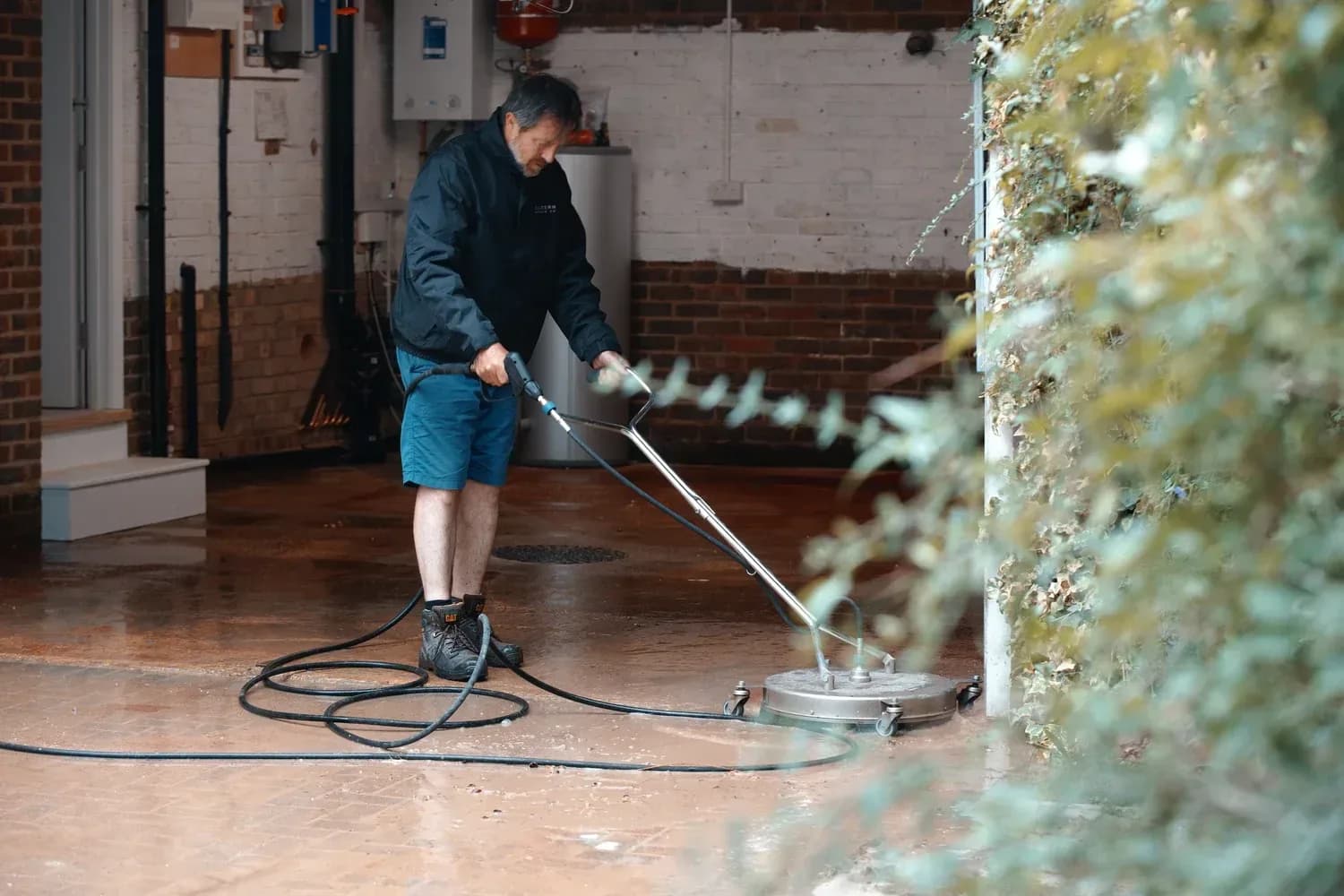
No, you should not pressure wash a gravel driveway at high pressure. Strong pressure scatters stones, exposes membrane, and damages the base layer.
A pressure washer can help only on low settings with careful control. Use pressure washing for stubborn contamination, not weekly cleaning.
Keep the lance at least 12 inches (30cm) from the surface. Wider fan settings reduce stone movement.
Avoid pressure washing near windows, painted doors, timber gates, drainage covers, and garden edging. Flying stones can cause damage.
Which Pressure Setting Protects Gravel?
A low-pressure setting protects gravel better than a narrow jet. Use the widest fan spray available on the machine.
Test the pressure on a hidden 2 feet (60cm) corner. Stop immediately when stones move or membrane appears.
A garden hose suits most gravel cleaning. Pressure washing suits small stained patches after manual preparation. The pressure limit answers how to clean gravel driveway surfaces with machines.
Which Driveways Need Professional Cleaning?
Mixed driveways need professional cleaning when gravel meets block paving, concrete, resin-bound, or tarmac. Each surface needs different pressure and treatment.
Block paving can lose jointing sand. Resin-bound surfaces can suffer damage from excessive force.
Concrete holds oil stains deeper than gravel. Tarmac softens under harsh solvents and aggressive cleaning.
How Often Should You Clean Gravel Driveway Surfaces?
You should clean gravel driveway surfaces lightly every 2 to 4 weeks. A deeper clean every 3 to 6 months keeps the driveway tidy.
Rake gravel after heavy rain, delivery vehicles, garden work, and autumn leaf fall. Fast raking stops thin areas from forming.
Clean weeds every 2 weeks during spring and summer. Treat moss and algae before winter surfaces become slippery.
The search for how to clean gravel driveway areas often starts after neglect. Regular maintenance needs less water and less product. A simple schedule explains how to clean gravel driveway surfaces before stains settle.
| Task | Timing | Method | Difficulty |
|---|---|---|---|
| Remove leaves and litter | Every 2 weeks | Leaf blower or plastic rake | Easy |
| Pull visible weeds | Every 2 to 4 weeks | Gloves and hand tool | Easy |
| Rake thin areas | Monthly | Wide rake | Easy |
| Treat moss and algae | Every 3 to 6 months | Manual removal and treatment | Medium |
| Rinse muddy patches | After heavy rain | Hose on low pressure | Easy |
| Replace stained stones | After oil spills | Shovel and matching gravel | Medium |
How to Keep Gravel Cleaner During Autumn
To keep gravel cleaner during autumn, remove leaves before rain breaks leaves down. Wet leaves create brown staining and soil build-up.
Use a leaf blower on a low setting for dry leaves. Use a plastic rake for damp leaves and twigs. Autumn care proves how to clean gravel driveway areas with less washing.
Check gutters, trees, hedges, and borders. Fallen material from these areas feeds moss and weed growth.
How to Prepare Gravel Before Winter
To prepare gravel before winter, clear drainage edges and level the surface. Good drainage reduces ice, puddles, and algae.
Remove soil from the lowest edge of the driveway. Clear 6 inches (15cm) beside channel drains, grids, and soakaway edges.
Top up thin patches before frost. A consistent gravel layer protects the membrane and sub-base. Winter checks support how to clean gravel driveway surfaces before ice forms.
How to Restore a Tired Gravel Driveway
To restore a tired gravel driveway, clean the surface, correct thin spots, and add matching gravel. Fresh gravel improves colour and coverage quickly.
A tired driveway often has 3 problems: dirt build-up, weed growth, and low gravel depth. Fix the surface in that order.
Add gravel only after cleaning. New gravel placed over dirt traps contamination below the fresh layer. Restoration follows how to clean gravel driveway areas before new stone.
How to Top Up Thin Gravel Areas
To top up thin gravel areas, choose matching stone size, shape, and colour. Keep the finished gravel depth near 2 inches (5cm).
Use 20mm (0.8 inches) gravel for many driveways because larger stones stay in place better than pea gravel.
Spread new gravel with a shovel, then level the surface with a wide rake. Compact high-traffic strips with regular vehicle use.
How to Stop Gravel Moving to the Road
To stop gravel moving to the road, restore edging and rake stones away from the entrance. Strong edging holds gravel in position.
Timber edging, metal edging, block edging, and kerb edging all control movement. Broken edging lets stones spread quickly.
Keep 1 inch (2.5cm) of visible edge above the gravel level. The edge acts as a low barrier.
When Should You Book Professional Driveway Cleaning?
You should book professional driveway cleaning when stains, algae, drainage issues, or mixed surfaces need controlled treatment. Professional cleaning reduces surface risk.
Gravel cleaning often connects to other exterior surfaces. Block paving entrances, concrete parking bays, tarmac aprons, and resin-bound paths collect deeper stains.
A professional assessment also helps when runoff reaches drains, planted beds, walls, or neighbouring property.
Chiltern Surface Co assesses driveway surfaces, surrounding materials, and contamination before recommending the right service. That assessment helps decide how to clean gravel driveway areas near hard surfaces.
What Problems Need a Professional Assessment?
Oil staining, recurring algae, exposed membrane, poor drainage, and mixed hard surfaces need a professional assessment. These problems need more than raking.
Old stains often sit below the top gravel layer. Poor drainage keeps the driveway damp and encourages moss.
A professional can inspect access, water runoff, plants, walls, windows, and adjacent driveway materials.
What Service Can Chiltern Surface Co Provide?
Chiltern Surface Co can inspect the driveway and nearby surfaces, then provide the right cleaning service. The service suits the surface condition and property layout.
The team works with driveways, patios, roofs, brickwork, render, paths, steps, garden walls, soffits, and fascias.
That service-led approach matters when gravel borders delicate surfaces, stained hardstanding, or exterior masonry.
How to Clean Gravel Driveway Safely With Chiltern Surface Co
To clean gravel driveway safely with Chiltern Surface Co, start with a free inspection for the driveway and surrounding areas. A proper assessment avoids damage and guesswork.
You get clearer answers on drainage, stains, pressure limits, and nearby surfaces. You also avoid unsuitable pressure washing. The inspection confirms how to clean gravel driveway areas without guesswork.
Chiltern Surface Co can inspect gravel areas near block paving, concrete, resin-bound, tarmac, walls, gates, and paths.
The team can then provide the right exterior cleaning service for your property, rather than a generic clean.
Frequently asked questions
Will pressure washing a gravel driveway scatter the stones?
No. High-pressure washing scatters stones and exposes the base layer. Use low pressure only on small stained sections.
Can you remove weeds from gravel permanently?
No. Regular pulling, membrane care, and targeted treatment control weeds. Wind-blown seeds still land between stones.
What is the easiest way to clean gravel?
The easiest way is dry debris removal, hand weeding, low-pressure rinsing, and raking. That method protects loose stones.
Should you use bleach on a gravel driveway?
No. Bleach can damage plants, stain edges, and create runoff problems. Use exterior surface products with label guidance.
How deep should driveway gravel be?
A practical driveway layer sits near 2 inches (5cm). Thin areas expose membrane and collect mud faster.
How often should a gravel driveway be cleaned?
Clean light gravel mess every 2 to 4 weeks. Deep clean the surface every 3 to 6 months. That plan answers how to clean gravel driveway areas across normal seasons. The same plan explains how to clean gravel driveway surfaces after heavy use. For stained gravel, recurring algae, poor drainage, or nearby hard surfaces, book a free site visit. Chiltern Surface Co can inspect your driveway, surrounding surfaces, and access, then provide the right cleaning service.
What pressure washer settings are safe on a gravel driveway?
Use the lowest pressure and the widest fan spray the machine offers, and keep the lance at least 12 inches (30cm) from the surface. Test a hidden corner first and stop as soon as stones start to move.
Should you use a pressure washer on pea gravel?
Pea gravel scatters most easily because the stones are small, smooth and rounded. Raking, weeding and topping up are safer, with pressure washing kept for stubborn contamination only.