
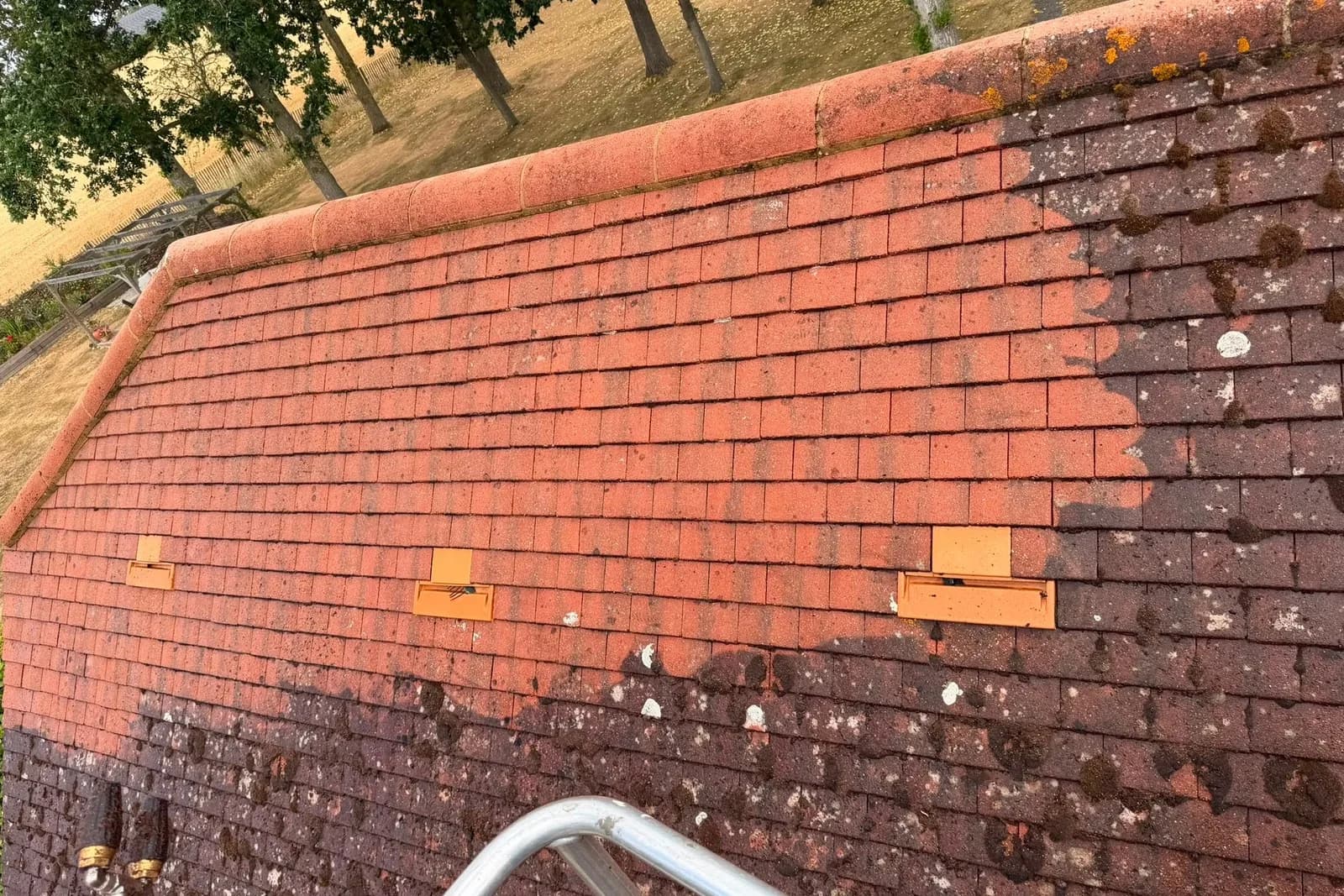
If you want to know how to clean moss off roof tiles, this guide explains the safe way. You will learn why moss grows, when it needs attention, what methods can damage tiles, and why professional roof moss removal is often the safest choice for UK homes.
Moss on a roof is very common across Britain. The damp weather, shaded gardens, tall trees and long wet seasons all create the right conditions for moss to grow. At first, moss may only look like a green patch on the tiles. Over time, it can spread, thicken and hold moisture against the roof surface.
Many homeowners search for how to remove moss from roof tiles because they are worried about damage. Others want the roof to look cleaner from the street. Both reasons are understandable. A roof is one of the most visible parts of a home, and heavy moss can make the whole property look older than it is.
Still, roof cleaning must be done with care. A roof is not the same as a patio or driveway. Roof tiles can crack, move or lose their surface if the wrong cleaning method is used. Strong pressure washing, harsh scraping and unsafe DIY climbing can lead to expensive problems.
Chiltern Surface Co provides careful exterior cleaning for homes across Marlow, Buckinghamshire and nearby areas. Our approach is based on assessment first, then the right method for the surface. With roof moss, that matters a lot. The aim is not just to make the roof look better. The aim is to clean it in a way that respects the roof and protects the home.
Why Moss Grows on Roof Tiles
Moss grows where there is moisture, shade and organic matter. Roofs often give moss everything it needs. Rainwater lands on the tiles, leaves and dust settle on the surface, and tiny moss spores are carried by the wind. If the roof stays damp for long periods, those spores can begin to grow.
Some roof areas are more likely to develop moss than others. North-facing roof slopes often stay wet for longer because they receive less direct sun. Roof sections under trees can also collect more leaves, shade and debris. Valleys, roof edges, dormers and areas near chimneys may also hold moisture.
Moss can grow on concrete roof tiles, clay tiles, slate roofs and other surfaces. It may appear with algae, lichen and general organic growth. These growths are not all the same, but they often appear together on damp roofs.
In the UK, it is normal to see moss on roof tiles, especially on older homes or properties near trees. A small amount of moss is not always urgent. But when it becomes thick, heavy or starts falling into gutters, it should be checked.
This is why roof cleaning should begin with a proper look at the condition of the roof. The amount of moss, the type of tile, the roof pitch and the state of the gutters all help decide the right method.
Is Moss on a Roof Bad?
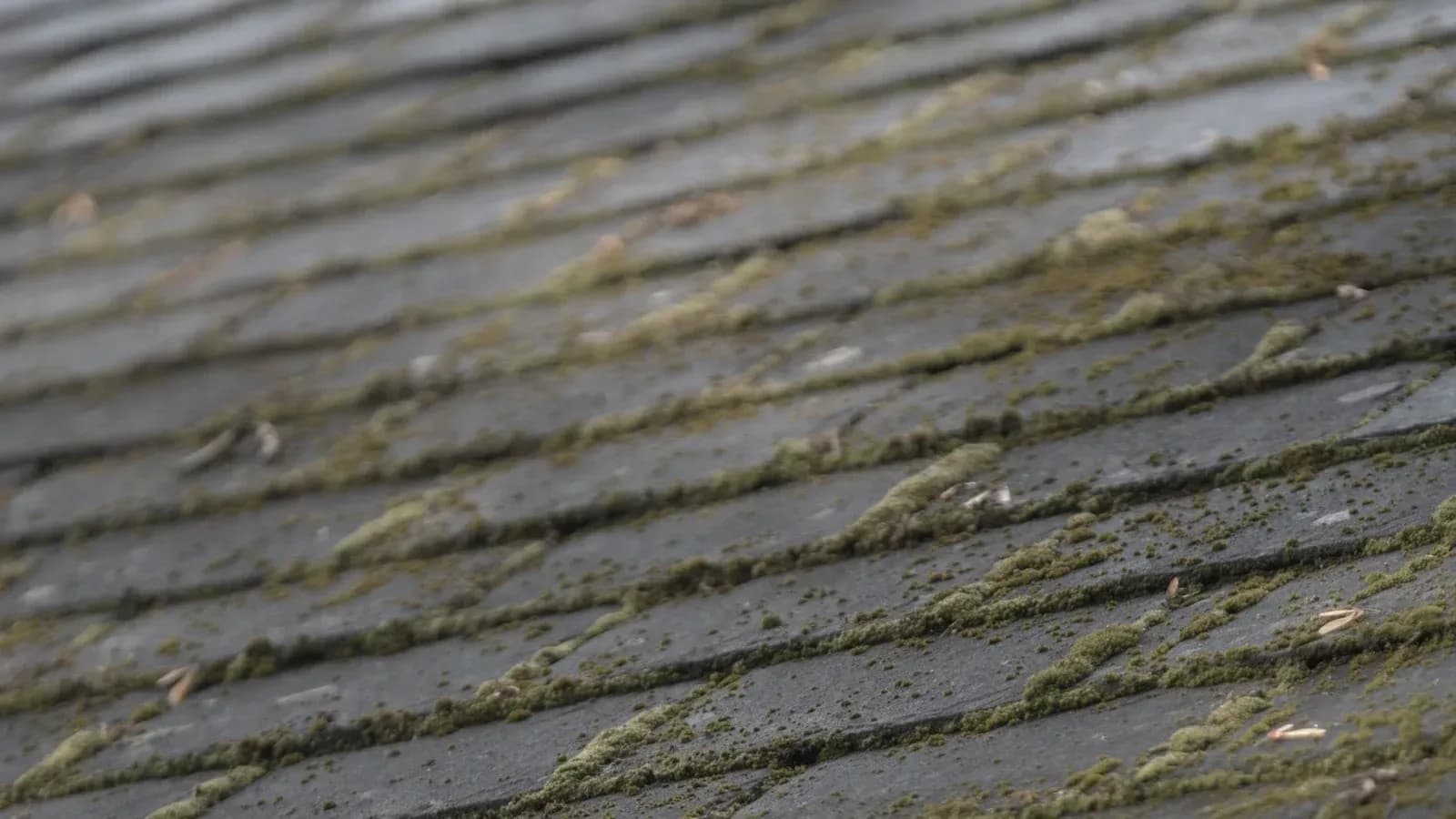
Moss is not always an emergency. A light amount of moss on a few tiles may not cause immediate harm. Many roofs have some moss for years. However, thick moss can create problems if it is left too long.
The main issue is moisture. Moss acts like a sponge. It holds rainwater and keeps parts of the roof damp for longer. In colder months, that moisture may freeze and expand. Over time, this can put stress on tiles and tile edges.
Moss can also loosen and slide into gutters. Once moss mixes with leaves, mud and roof debris, it can block gutters and downpipes. When rainwater cannot drain away, it may overflow onto walls, fascia boards, paths or driveways. This can cause staining and may lead to damp problems around the roofline.
Heavy moss can also hide the true condition of tiles. If tiles are cracked, loose or worn, thick growth can make those problems harder to see from the ground. A clean roof is easier to inspect and maintain.
So, while light moss may not be a serious problem, heavy moss should not be ignored. The safest option is to arrange a roof assessment before deciding how to clean it.
Signs You Need Roof Moss Removal
You may need roof moss removal if the moss is no longer light or patchy. The signs are often easy to spot from ground level, especially after rain or during winter.
- Thick green moss is covering large parts of the roof.
- Moss is falling into gutters, onto patios or onto driveways.
- Gutters overflow during rain because moss and debris are blocking drainage.
- Roof valleys, tile edges or drainage points look clogged.
- Algae, lichen and dark organic staining are spreading across the roof.
- The roof looks much greener on shaded or north-facing sides.
- Moss is growing around roof edges, chimneys, dormers or rooflights.
- Loose moss is making paths or paved areas below the roof slippery.
These signs do not always mean the roof is damaged. But they do show that the roof needs attention. If moss is affecting drainage or falling from the roof, it is better to deal with it before the problem becomes harder to manage.
Why You Should Not Pressure Wash Roof Tiles
Many people think pressure washing is the fastest way to clean moss from roof tiles. It may remove moss quickly, but it can also damage the roof.
High-pressure water can remove the surface layer of some tiles. It can push water under the roof covering, lift loose tiles, disturb pointing and force dirt into places where it should not go. On some roofs, it can also shorten the life of the roof surface.
Pressure washing may also create mess around the property. Moss and dirty water can be blasted into gutters, over walls, onto windows and across patios. If the work is not controlled, the clean-up can become another job.
The problem with pressure washing is that it uses force before thought. A roof needs the opposite. It needs inspection, care and the right method.
For many roofs, manual moss removal followed by a suitable biocide roof treatment is a safer choice. This approach removes the bulk of the moss without aggressive water pressure. Then the treatment helps deal with spores and organic growth that may remain on the surface.
Chiltern Surface Co takes a surface-specific approach. We do not believe every exterior surface should be cleaned in the same way. A driveway may need one method. A patio may need another. A roof needs extra care because damage can be costly and difficult to repair.
Can You Remove Moss from a Roof Yourself?
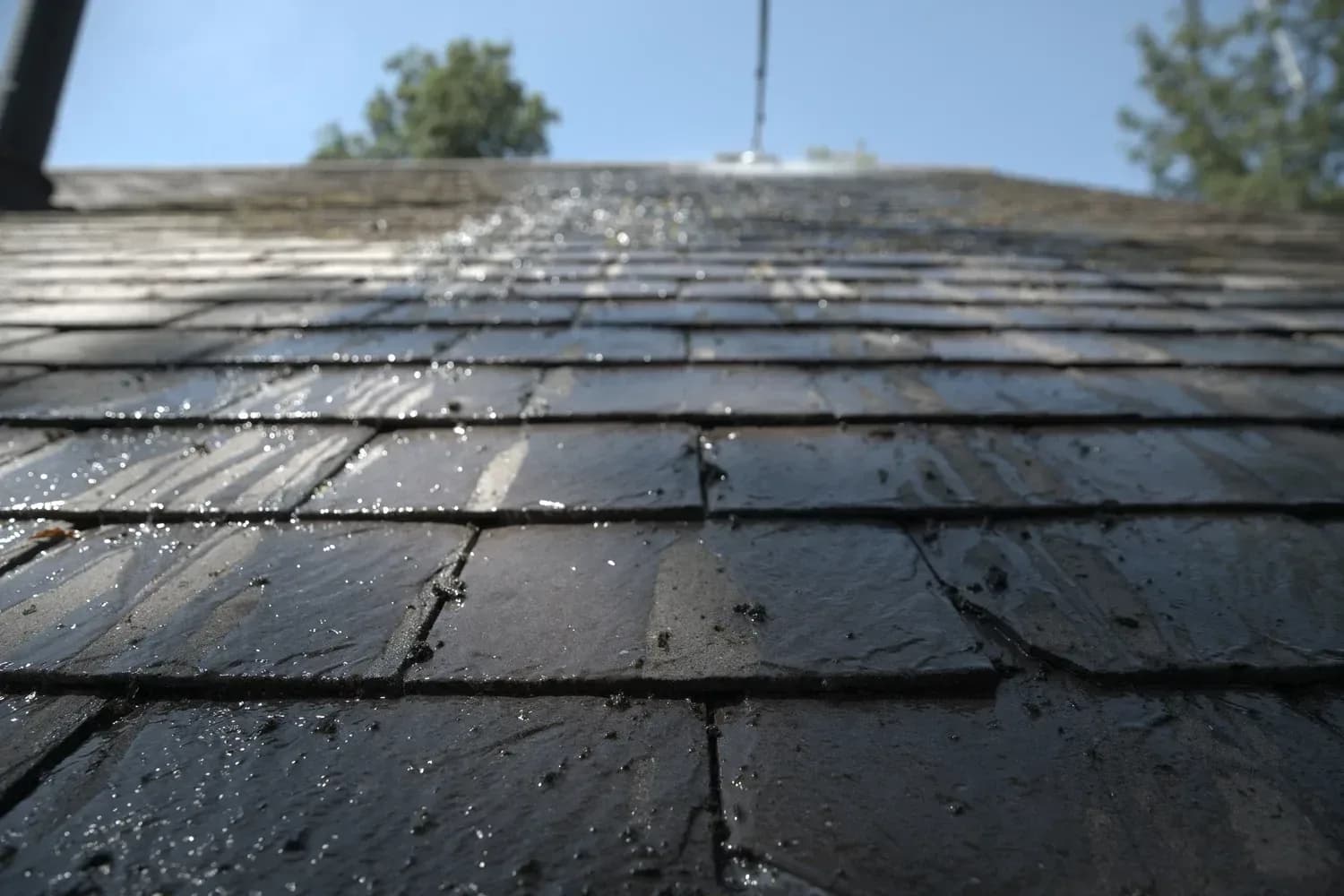
Some homeowners wonder if they can remove moss themselves. In simple terms, roof cleaning is risky. A roof may look easy from the ground, but it can be slippery, uneven and dangerous once you are close to it.
Moss makes the danger worse. Wet moss is very slippery. Even a small slip can cause serious injury. Ladders also bring risk, especially if the ground is uneven or the work takes longer than expected.
There is also the risk of damaging the roof. Walking on tiles can crack them. Leaning ladders in the wrong place can break gutters. Using hard tools can scratch or chip tiles. Using the wrong chemical can damage the roof surface, plants or nearby materials.
For these reasons, DIY roof moss removal is usually not worth the risk. If the moss is on a low, safe area, very light maintenance may be possible from the ground with suitable tools. But for most roofs, especially steep, high, wet or heavily covered roofs, a professional service is safer.
Professional roof moss removal is not only about getting the moss off. It is about knowing how to work safely, protect the surface and manage debris properly.
How to Clean Moss Off Roof Safely
The safest answer to how to clean moss off roof tiles is to start with inspection. Before any cleaning begins, the roof condition should be checked. The cleaner needs to know what type of roof it is, how heavy the moss is, whether tiles are damaged, and whether gutters are already blocked.
A safe roof moss cleaning method usually includes careful access planning, manual removal where suitable, debris control, gutter checking and roof-safe treatment. It should not begin with blasting water at the roof.
Manual removal is often used to remove thick moss. This may involve specialist tools that match the shape of the tiles. The goal is to lift moss away without damaging the surface. This must be done with patience and control.
After the bulk of the moss is removed, a treatment may be applied. A biocide roof treatment can help target remaining spores and slow regrowth. It does not make moss disappear forever, because roofs are always exposed to weather and spores. But it can help keep the roof cleaner for longer.
A safe method also includes protecting the property below. Moss should not be left in gutters, drains, patios or pathways. If moss falls onto a driveway or patio, it should be cleared so the surface is not left slippery.
This is why roof cleaning should be planned, not rushed.
Safe Roof Moss Removal Process
A careful roof moss removal service should follow a clear process. The exact method may change depending on the roof, but the steps below show the kind of approach that protects the home.
- Inspect the roof, tiles, gutters, access points and drainage before starting.
- Remove loose and heavy moss manually where the roof condition allows.
- Keep debris under control so moss does not block gutters, drains or paths.
- Clear affected gutters and check that water can flow away properly.
- Apply a roof-safe treatment where suitable to slow moss, algae and lichen regrowth.
- Review nearby patios, driveways and walls that may be affected by falling moss.
- Give simple aftercare advice so the homeowner knows how to reduce future growth.
This balanced method is safer than pressure washing. It also gives a better long-term result because it deals with both visible moss and the conditions that allow moss to return.
What Is Manual Moss Removal?
Manual moss removal means removing moss by hand tools rather than using high-pressure water. It is one of the most common ways to remove heavy roof moss safely.
A professional may use scrapers or brushes designed for roof tiles. These tools should match the tile shape as closely as possible. This helps remove moss while reducing damage to the tile surface.
Manual work is useful because thick moss often needs to be physically removed first. If treatment is applied over thick clumps, it may not reach the roof surface properly. Removing the bulk first allows later treatment to work better.
However, manual does not mean rough. Scraping too hard can damage tiles. Using the wrong tool can chip edges. Working carelessly can loosen tiles or push debris under them. The person cleaning the roof must understand the surface.
This is one reason why Chiltern Surface Co focuses on assessment before action. The safest tool and method depend on the roof.
What Is Biocide Roof Treatment?
A biocide roof treatment is a treatment used to reduce organic growth after moss has been removed. Moss, algae and lichen can leave tiny spores behind. These spores may not be easy to see, but they can lead to regrowth.
A suitable treatment helps target this remaining growth. It can also improve the appearance of the roof over time as organic staining fades. The effect is not always instant. Some roofs look better gradually after treatment.
The treatment must be chosen carefully. It should be suitable for the roof material and used with care around plants, ponds, pets and nearby surfaces. Runoff must be managed properly.
A roof treatment is not a magic shield. Moss can return because spores travel through the air and UK weather is damp. But treatment can slow the process and reduce the need for frequent cleaning.
For many homes, manual removal plus treatment gives a strong balance between appearance, safety and long-term care.
Soft Wash Roof Cleaning Explained
Soft wash roof cleaning is a low-pressure method that uses treatment rather than force. It can be helpful for moss spores, algae, lichen and organic staining.
Unlike pressure washing, soft washing does not rely on a powerful water jet. Instead, the surface is treated with a suitable cleaning solution. The treatment works on the organic growth and can help the roof improve over time.
Soft washing may be used after manual moss removal. This is because heavy moss usually needs to be removed first. Once the thick growth is gone, treatment can reach the surface more effectively.
Not every roof is suitable for the same soft wash method. Slate, clay, concrete and other materials may need different care. The amount of growth, the slope of the roof and nearby surfaces also matter.
Chiltern Surface Co chooses methods based on the actual surface. This helps avoid damage and gives a cleaner, more controlled result.
How Moss Affects Gutters and Downpipes
Gutters are one of the biggest reasons to take moss seriously. When moss grows thick, pieces can break away during rain, wind or frost. These pieces often end up in gutters.
Once moss enters the gutter, it mixes with leaves, mud and grit. This can create a dense blockage. During heavy rain, water may then overflow instead of flowing into the downpipe.
Overflowing gutters can stain walls, soak fascia boards, splash onto paths and create damp areas near the home. If water keeps running where it should not, the outside of the property can start to look tired and poorly maintained.
Roof valleys and drainage points can also be affected. If moss blocks these areas, rainwater may sit on the roof for longer. This is not good for the roof surface.
A proper roof cleaning service should think about drainage as well as appearance. Removing moss from the tiles is only part of the job. Gutters and downpipes should not be left blocked with the moss that has just been removed.
How to Stop Moss Growing Back
You cannot stop moss forever, but you can make your roof less welcoming to it. The key is to reduce shade, moisture and debris where possible.
Trimming overhanging branches can help more sunlight reach the roof. Sunlight helps tiles dry faster after rain. Keeping gutters clear also helps water drain away properly. If leaves sit in gutters for months, they create damp conditions around the roofline.
A roof-safe treatment can also slow regrowth. This is useful after remove moss from roof tiles work because it deals with smaller growth and spores that manual cleaning may not fully remove.
Regular checks are helpful too. It is easier to deal with light moss than thick moss. If you wait until moss is falling into gutters, the job may become more involved.
The aim is not to make nature disappear. The aim is to keep moss under control so it does not affect drainage, appearance or surface condition.
Common Roof Moss Cleaning Mistakes
Many roof moss problems become worse because the wrong cleaning method is used. Before starting any work, it is important to understand what to avoid.
- Do not pressure wash roof tiles, as high-pressure water can damage the surface and push water beneath tiles.
- Do not climb onto a wet or mossy roof without proper safety equipment and training.
- Do not scrape tiles with sharp metal tools that can chip, crack or mark the surface.
- Do not use strong chemicals without checking if they are safe for the roof material.
- Do not ignore gutters, valleys and downpipes after moss has been removed.
- Do not assume every roof can be cleaned in the same way.
- Do not leave fallen moss on patios, paths or driveways where it can become slippery.
Avoiding these mistakes is just as important as choosing the right cleaning method. A roof should be cleaned in a way that protects the home, not in a way that creates new damage.
When Is the Best Time to Remove Roof Moss?
Roof moss can be removed at different times of the year, but dry and settled weather usually makes the work easier. Spring and early summer are often good times because the weather is milder and surfaces can dry better.
However, if gutters are blocked or moss is falling from the roof, you should not wait for a perfect season. Drainage problems should be checked sooner.
Autumn and winter are the seasons when roof moss often becomes more obvious. Leaves fall, rain increases and damp surfaces stay wet for longer. After winter, many homeowners notice that moss has thickened.
A roof assessment can help decide if cleaning is needed now or if it can wait. Chiltern Surface Co can look at the roof and give honest advice based on the condition of the surface.
Roof Moss, Algae and Lichen
Moss is not the only growth that appears on roofs. Many roofs also have algae and lichen.
Moss is usually soft and green. It grows in clumps and holds water. Algae often looks like dark or green staining. Lichen can appear as pale, grey, white, yellow or green patches that stick firmly to the surface.
These growths may need different treatment. Thick moss may need manual removal. Algae and lichen may respond better to roof-safe treatment over time.
This is why roof algae and lichen removal should be part of a wider roof care plan. If only the obvious moss is removed, staining and smaller growth may remain.
A careful cleaner will look at the whole roof, not just the largest green patches. The goal is to improve the surface in a steady and safe way.
Will Roof Cleaning Make Tiles Look New?
Roof cleaning can improve the look of tiles, but it should not be seen as a magic fix. Older tiles may still show age after cleaning. Some staining may fade slowly after treatment. Lichen marks may take time to break down.
The aim of roof tile cleaning is to remove unwanted moss, improve appearance and help drainage. It is not to make old tiles look brand new.
If tiles are broken, loose, badly worn or near the end of their life, cleaning will not repair them. In that case, a roofing contractor may need to inspect the roof.
Chiltern Surface Co focuses on exterior cleaning. If we see signs that a roof may need repair, the right step is to speak to a qualified roofer. Honest advice matters more than forcing a cleaning job where repair work may be needed first.
Roof Cleaning for Homes in Buckinghamshire
Homes in Buckinghamshire often face the right conditions for moss growth. Many areas have mature trees, shaded lanes, garden planting and older roof surfaces. These features make properties attractive, but they can also encourage moss, algae and lichen.
Marlow and nearby areas also see plenty of damp weather. Roof slopes that face away from the sun may stay wet for long periods. This is why roof cleaning Buckinghamshire services should be based on local conditions.
A roof in an open sunny spot may need less moss control. A roof under trees may need more regular maintenance. A roof with blocked gutters may need attention sooner than one with clear drainage.
Chiltern Surface Co works with the surface in front of us. We do not use one fixed method for every property. This helps us give better advice and safer results.
How Chiltern Surface Co Can Help
Chiltern Surface Co provides careful exterior cleaning across Marlow, Buckinghamshire and nearby areas. Our services include roof cleaning, patio cleaning, driveway cleaning, soft washing and moss removal.
For roof moss, we begin with a proper look at the surface. We consider the roof material, the amount of moss, the safety of access, nearby gutters and the general condition of the roof. From there, we explain the most suitable method.
Our work may include manual moss removal, gutter debris checks, roof-safe treatment and advice on reducing regrowth. We can also clean patios, paths and driveways affected by falling moss and roof debris.
We do not believe in harsh cleaning where it is not needed. Roofs need respect. A safe result comes from using the right method, not the most powerful one.
If you are unsure whether your roof needs cleaning, a free site visit is a sensible first step.
Conclusion
Knowing how to clean moss off roof tiles safely helps protect your home and keep your exterior looking cared for. Moss may seem harmless at first, but thick growth can hold moisture, block gutters, affect drainage and make the roof look tired.
The safest method is not aggressive pressure washing. It is careful inspection, suitable roof moss removal, gutter attention and roof-safe treatment where needed. This approach helps clean the roof while reducing the risk of damage.
If your roof has thick moss, blocked gutters, algae, lichen or visible organic growth, Chiltern Surface Co can help. We provide careful professional roof moss removal, roof cleaning Buckinghamshire and exterior cleaning across Marlow and surrounding areas.
Book a free site visit with Chiltern Surface Co today and get honest advice on the safest way to clean and care for your roof.
Frequently asked questions
What is the safest way to clean moss off a roof?
The safest way is to inspect the roof first, then use a method that suits the surface. For many homes, careful manual moss removal followed by a suitable treatment is safer than pressure washing.
Can I pressure wash moss off roof tiles?
Pressure washing roof tiles is not recommended. High-pressure water can damage tiles, force water beneath them and disturb the roof surface. A gentler method is usually safer.
Is moss on roof tiles bad?
A small amount of moss is not always a serious issue. Heavy moss can be a problem because it holds moisture, blocks gutters and affects drainage. If moss is thick or falling into gutters, it should be checked.
How do I remove moss from roof tiles?
The best way to remove moss from roof tiles is usually careful manual removal from a safe position, followed by roof-safe treatment to slow regrowth. Avoid harsh scraping and high-pressure washing.
What kills moss on a roof?
A suitable biocide roof treatment can help target remaining moss spores, algae and lichen. The treatment should be safe for the roof material and applied with care.
How do I stop moss growing back?
Keep gutters clear, trim overhanging branches, reduce leaf build-up and consider a roof-safe treatment after cleaning. Moss can return over time, but these steps can slow regrowth.
Should I climb on my roof to remove moss?
In most cases, no. Roofs are slippery and dangerous, especially when moss is present. Walking on tiles can also cause damage. A professional service is safer.
Does roof moss cause leaks?
Moss does not always cause leaks directly. However, it can hold moisture, lift around tile edges and block drainage. These issues may increase the risk of water problems if ignored.
How often should roof moss be removed?
It depends on shade, trees, roof type and local weather. Some roofs need attention every few years. Others may need more regular checks if moss returns quickly.
Does Chiltern Surface Co offer roof moss removal?
Yes. Chiltern Surface Co provides roof moss removal Marlow, roof cleaning Buckinghamshire and careful exterior cleaning for nearby areas. A free site visit can help decide the safest method for your roof.