
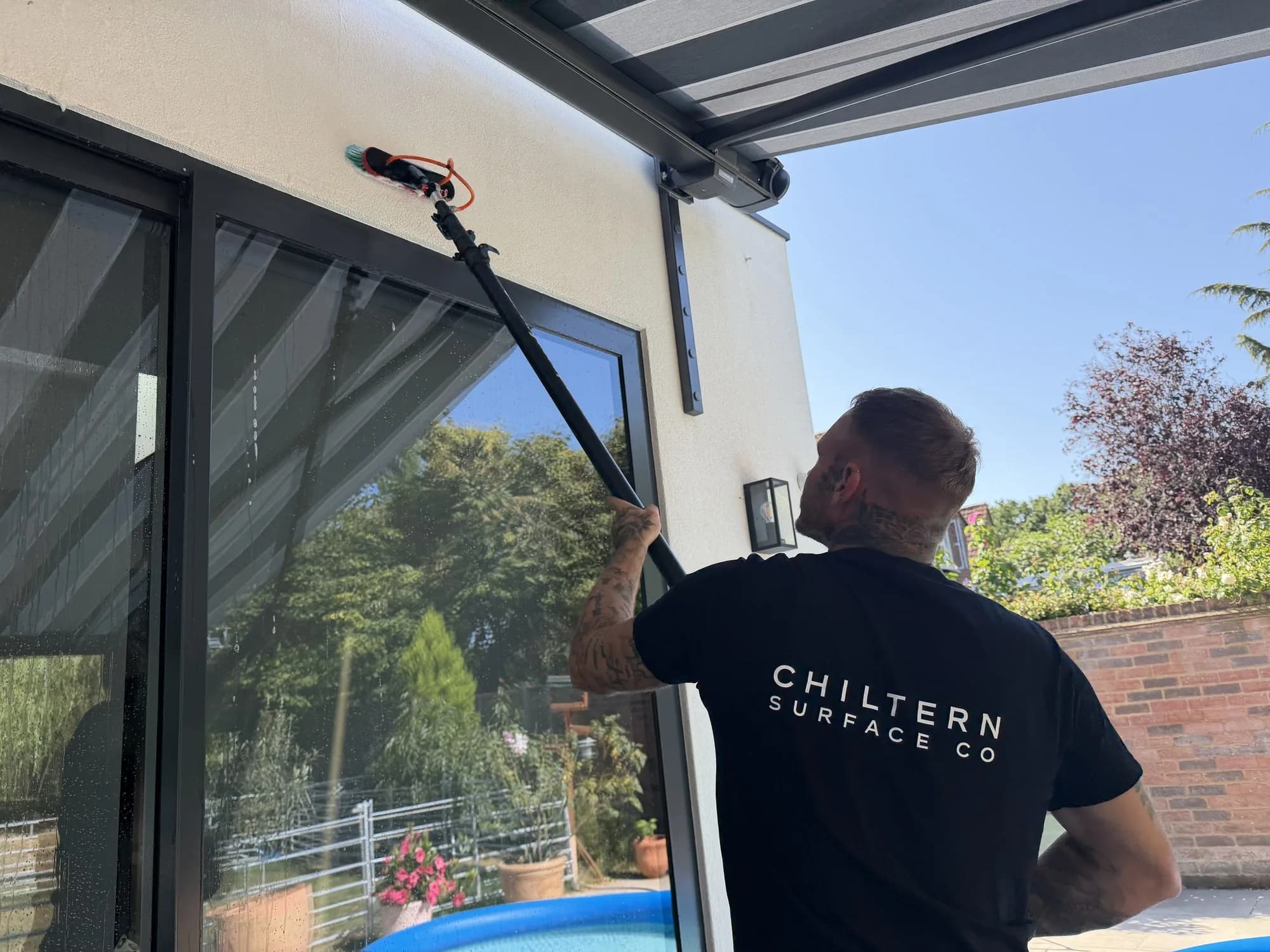
Soft washing is a cleaning technique that uses low-pressure water and specially formulated cleaning solutions to remove dirt and biological growth from exterior surfaces.
Unlike traditional pressure washing, which relies on high water pressure to blast away dirt, soft washing focuses on treating the source of the staining. The cleaning solutions break down algae, mould, mildew, moss, and bacteria, making it easier to wash them away.
This method has become increasingly popular because it can clean delicate surfaces safely while delivering long-lasting results.
A Simple Definition of Soft Washing
In simple terms, soft washing is a gentle cleaning process designed for surfaces that could be damaged by high-pressure cleaning.
The method combines low-pressure water with cleaning solutions that target organic growth and surface contamination.
Instead of simply removing visible dirt, soft washing also treats the microorganisms that cause staining in the first place.
As a result, surfaces often stay cleaner for longer than they would after traditional pressure washing.
Why Soft Washing Has Become Popular
More homeowners are choosing soft washing because many modern properties include surfaces that need careful treatment.
Render, roof tiles, painted walls, and cladding can all be damaged by excessive pressure.
Soft washing offers an effective way to clean these areas without the risks that sometimes come with high-pressure cleaning methods.
It is also highly effective at removing green algae, black mould, and lichen that commonly appear on exterior surfaces across the UK.
How Does Soft Washing Work?
Understanding what is soft washing also means understanding how the process works.
The cleaning method usually begins by applying a specially designed cleaning solution to the affected surface.
The solution is left to dwell for a period of time so that it can break down dirt and organic growth.
After the treatment has worked, the surface is rinsed using low-pressure water.
This process removes the contamination while helping to prevent it from returning quickly.
The Role of Low-Pressure Cleaning
Low-pressure cleaning is one of the main reasons soft washing is so effective.
High-pressure cleaning can sometimes force water into cracks, loosen materials, or damage delicate finishes.
Soft washing avoids these problems by using significantly less water pressure.
The cleaning solutions do most of the work, allowing the surface to be cleaned thoroughly without aggressive washing techniques.
This approach makes soft washing suitable for a wide range of exterior surfaces.
How Cleaning Solutions Remove Organic Growth
Algae, mould, moss, and mildew are living organisms.
Simply washing them away does not always remove the root of the problem.
Soft washing treatments are designed to break down and eliminate this organic growth.
The cleaning solutions target the organisms that cause staining, helping to reduce the chance of them returning quickly.
This is one reason why professional soft washing often provides longer-lasting results than traditional cleaning methods.
What Surfaces Can Be Soft Washed?
One of the biggest advantages of soft washing is its versatility.
The method can be used on many different exterior surfaces around a property.
Roof Tiles and Roof Cleaning
Roofs often develop moss, algae, and lichen because they remain damp for long periods.
Soft washing can remove these growths safely while protecting the roof tiles from unnecessary damage. Learn more about our roof cleaning services.
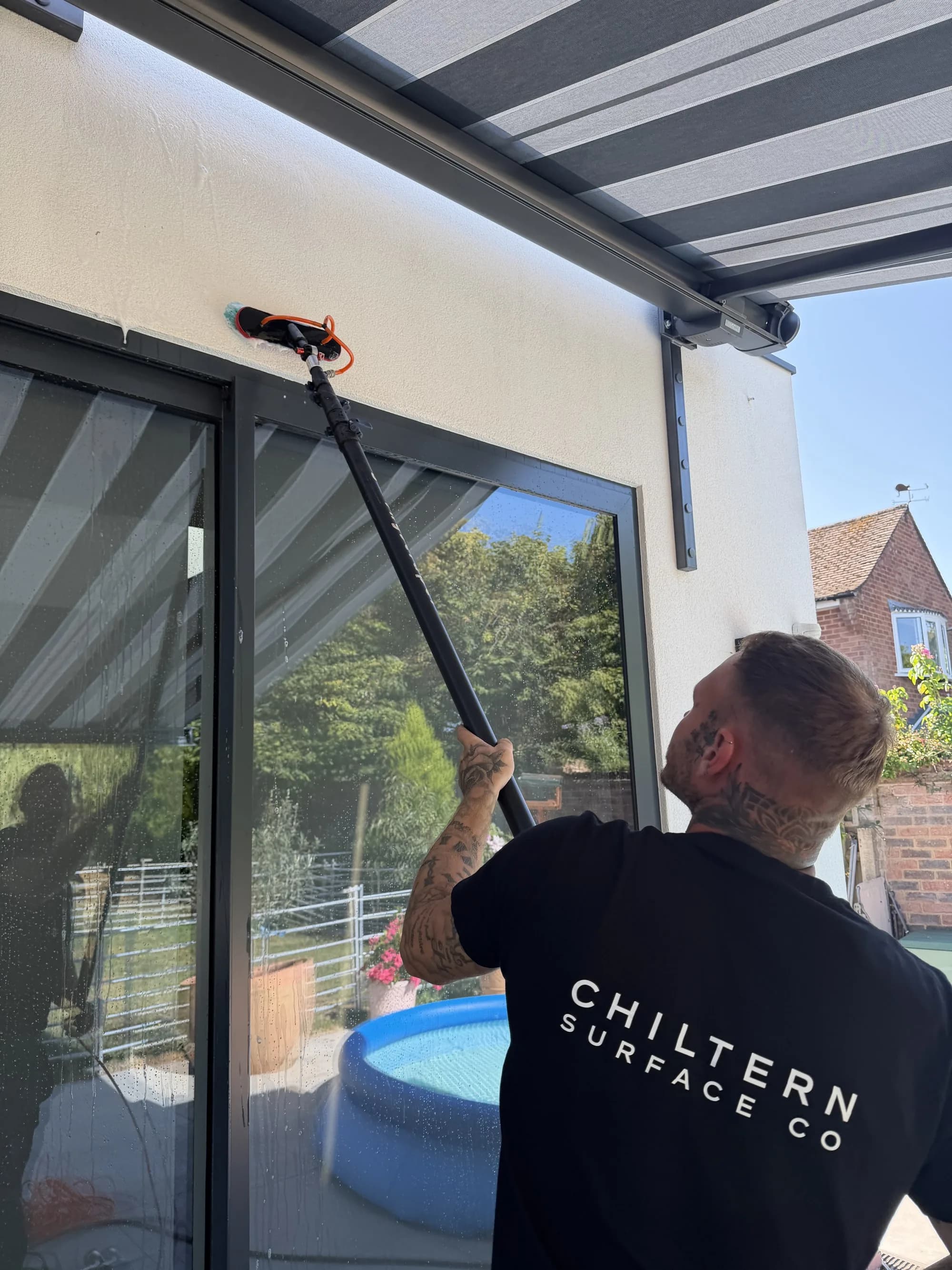
Render and Painted Walls
Render and painted surfaces can become stained by algae and pollution over time.
Because these materials are often delicate, soft washing is usually one of the safest and most effective cleaning methods.
Brick Walls and Stone Surfaces
Brick and stone can also benefit from soft washing, especially when biological growth is causing discolouration.
The treatment helps remove staining while preserving the appearance of the surface.
What Are the Benefits of Soft Washing?
There are many reasons why homeowners and businesses choose soft washing instead of traditional cleaning methods.
One of the biggest advantages is that it delivers long-lasting results. Because the cleaning solutions treat the source of the staining, surfaces often stay cleaner for much longer.
Soft washing is also a gentle cleaning method. It can remove algae, moss, and mould without exposing delicate surfaces to high water pressure.
Another major benefit is improved kerb appeal. Exterior surfaces can become dull and stained over time, making a property look older than it really is. A professional soft wash can restore the appearance of walls, roofs, and other outdoor surfaces, helping the entire property look cleaner and better maintained.
Long-Lasting Cleaning Results
One of the reasons homeowners prefer soft washing is because the results often last longer than standard pressure washing.
Pressure washing can remove visible dirt, but it does not always eliminate the microorganisms causing the staining.
Soft washing works differently. The cleaning solutions target algae, mould, mildew, and bacteria at their source. This helps slow down regrowth and keeps surfaces looking cleaner for longer.
Protecting Delicate Surfaces
Many exterior materials can become damaged if they are cleaned using excessive pressure.
Roof tiles, painted walls, render, and cladding all need a careful approach.
Because soft washing uses low-pressure water, there is less risk of damage to these surfaces. This makes it an excellent option for older properties and homes with delicate finishes.
Improving Kerb Appeal
A clean exterior can make a significant difference to the overall appearance of a property.
Algae stains, moss, and black marks can make even a well-maintained home look neglected.
Soft washing helps restore the original appearance of surfaces and can instantly improve the look of your property.
For homeowners planning to sell their property, exterior cleaning can also help create a positive first impression.
Is Soft Washing Safe?
A common question people ask when learning what is soft washing is whether the process is safe.
When carried out correctly, soft washing is considered a safe and effective cleaning method.
Because it uses low-pressure water, there is far less risk of damaging exterior materials compared with some high-pressure cleaning techniques.
Professional cleaning companies also use appropriate products and follow safe procedures to protect surrounding surfaces.
Is Soft Washing Safe for Homes?
Yes, soft washing is generally safe for most homes.
It is commonly used on roof tiles, render, painted walls, brickwork, and cladding.
The gentle cleaning process makes it particularly suitable for properties that may not cope well with high-pressure washing.
Can Soft Washing Damage Surfaces?
Soft washing is designed to minimise the risk of damage.
However, like any cleaning method, it should be carried out correctly.
Using unsuitable products or applying treatments incorrectly may affect certain surfaces.
This is why many homeowners choose professional soft washing services, particularly when cleaning large or delicate areas.
How Long Does Soft Washing Last?
The results of soft washing can last for a considerable period, although every property is different.
Several factors influence how long surfaces remain clean, including:
- The local environment.
- The amount of shade around the property.
- Nearby trees and vegetation.
- Weather conditions.
- The type of surface being cleaned.
Properties surrounded by trees or located in damp areas may experience faster regrowth of algae and moss.
Even so, many homeowners find that soft washing keeps their property cleaner for much longer than pressure washing alone.
Factors That Affect the Results
The condition of the surface and the amount of organic growth present before cleaning can both affect the final result.
Surfaces that receive plenty of sunlight often stay cleaner for longer because they dry more quickly after rain.
On the other hand, shaded areas may require more regular maintenance.
How to Keep Surfaces Cleaner for Longer
Simple maintenance can help extend the benefits of soft washing.
Keeping gutters clear, trimming back vegetation, and removing debris from around the property can all help reduce moisture and discourage organic growth.
Regular inspections also allow you to spot small problems before they become major cleaning issues.
Can Soft Washing Remove Algae, Moss, and Mould?
Yes, removing biological growth is one of the main reasons soft washing is so effective.
Removing Algae and Green Staining
Green algae commonly appears on walls, roofs, and other outdoor surfaces.
Soft washing treatments are designed to break down and remove this growth while helping to prevent it from returning too quickly.
Treating Moss and Lichen Growth
Moss and lichen can hold moisture against surfaces and create unsightly staining.
Soft washing can help remove these growths safely, particularly on roofs and exterior walls.
Removing Mould and Mildew
Mould and mildew often develop in damp and shaded areas.
Soft washing treatments can remove these organisms and improve the appearance of affected surfaces.
When Should You Choose Soft Washing Instead of Pressure Washing?
Choosing between soft washing and pressure washing depends on the type of surface you want to clean.
Driveways and patios are generally better suited to driveway cleaning and patio cleaning using pressure washing.
However, many exterior surfaces need a gentler approach.
Soft washing is often the better choice for roofs, render, painted walls, cladding, and surfaces affected by algae, moss, and mould. These materials can sometimes become damaged when exposed to excessive pressure.
If the surface is delicate or showing signs of biological growth, soft washing is usually the safer and more effective option.
Quick Reference: Soft Washing vs Pressure Washing
| Feature | Soft Washing | Pressure Washing |
|---|---|---|
| Cleaning Method | Low-pressure water and cleaning solutions | High-pressure water |
| Best For | Roofs, render, painted walls, cladding | Driveways, patios, concrete surfaces |
| Removes | Algae, moss, mould, mildew, bacteria | Dirt, mud, surface stains |
| Risk of Surface Damage | Low | Moderate to high on delicate surfaces |
| Long-Term Results | Longer-lasting because it treats organic growth | Shorter-lasting as it mainly removes surface dirt |
| Water Pressure | Low pressure | High pressure |
| Suitable for Delicate Surfaces | Yes | Not always |
| Main Benefit | Safe and effective treatment of organic growth | Fast removal of heavy dirt and grime |
Signs That a Surface Needs Soft Washing
Several signs may indicate that soft washing is required.
Green staining caused by algae is one of the most common issues. Black mould, moss growth, and lichen are also clear signs that a surface could benefit from treatment.
You may also notice that exterior walls look dull, discoloured, or remain damp for long periods after rain.
These issues are often caused by organic growth that can be treated effectively through soft washing.
Properties That Benefit Most From Soft Washing
Almost any property can benefit from soft washing, but it is particularly useful for homes that are surrounded by trees or located in damp areas.
Properties with rendered walls, roof tiles, painted surfaces, and older brickwork often respond very well to this cleaning method.
Many homeowners choose soft washing because it provides a thorough clean while helping to protect the surfaces being treated.
When Should You Hire a Professional Soft Washing Company?
Although some homeowners attempt to clean exterior surfaces themselves, professional cleaning can often provide better and longer-lasting results.
Professional companies understand which treatments are suitable for different surfaces and know how to apply them safely.
They also have access to specialist equipment and products that are designed for exterior cleaning.
Hiring a professional can save time and remove the risks associated with working at height or using unfamiliar cleaning products.
Benefits of Professional Soft Washing Services
Professional soft washing services offer several advantages. At Chiltern Surface, our experienced team carefully assesses every property to identify the cause of staining and recommend the most suitable treatment for each surface.
Our professional cleaning methods can significantly improve the appearance of your property while helping to protect exterior surfaces for longer. Many of our customers across Buckinghamshire choose regular maintenance services from Chiltern Surface to keep their homes looking clean, fresh, and well maintained throughout the year.
Final Thoughts
Understanding what is soft washing can help you choose the right cleaning method for your property.
Soft washing is a gentle yet highly effective way to remove algae, moss, mould, and other organic growth from exterior surfaces. By using low-pressure water and specialised treatments, it can clean delicate materials safely while delivering long-lasting results.
Whether you need roof cleaning, render cleaning, or exterior wall cleaning, soft washing can help restore the appearance of your property and keep it looking its best.
Need Professional Soft Washing Services?
If your property's exterior is looking tired, stained, or affected by algae and moss, the team at Chiltern Surface is here to help.
We provide professional exterior cleaning services across Buckinghamshire and the surrounding areas, using safe and effective soft washing techniques to restore exterior surfaces.
Whether you need roof cleaning, render cleaning, or other exterior cleaning services, our experienced team can recommend the best solution for your property.
Contact Chiltern Surface today for a free quote and let our professional team help restore your property's exterior with our expert soft washing services.
what is soft washing, soft washing, soft washing service, soft washing vs pressure washing, low pressure cleaning, professional soft washing, exterior soft washing, roof cleaning, render cleaning, house washing services, remove algae and mould, exterior cleaning services, biocide treatment, exterior wall cleaning, property maintenance
Frequently asked questions
What is soft washing?
Soft washing is a low-pressure cleaning method that uses specially formulated cleaning solutions to remove algae, moss, mould, and other organic growth from exterior surfaces.
Is soft washing better than pressure washing?
Neither method is always better than the other. The most suitable option depends on the surface being cleaned. Soft washing is often preferred for delicate surfaces and areas affected by biological growth.
How long does soft washing last?
The results can vary depending on the location and condition of the property. However, many homeowners find that soft washing keeps surfaces cleaner for much longer than traditional pressure washing.
Can soft washing remove black spots and algae?
Yes. Soft washing treatments are designed to remove algae, black staining, mould, and other forms of organic growth.
Is soft washing safe for render?
Yes. Soft washing is commonly used on rendered surfaces because it uses low-pressure water and reduces the risk of damage.